
Building Up Your Gut Flora Made Easy—Your Guide to a Healthy Microbiome
If you want to deliberately build up your gut flora, you can think of it as tending a valuable garden. It’s about nurturing and caring for the good bacteria while keeping the bad ones in check. The result? Noticeably better well-being. The simplest and most direct way to get there is through a mindful diet rich in probiotic and prebiotic foods.
What your gut flora really is
Don’t think of your gut flora—also known as the microbiome—as a rigid organ, but rather as a living, pulsating garden in your abdomen. This incredibly complex ecosystem is home to trillions of microorganisms. These are mainly bacteria, but also viruses and fungi, which are absolutely crucial to your health.
When this inner garden is in balance, you notice it immediately: You feel energized, your digestion runs smoothly, and your immune system is in top shape. But when the balance starts to falter, it can have a negative impact in countless ways. That’s precisely why deliberately building up your gut flora is one of the most important steps toward a better quality of life. If you want to dive deeper into the basics, take a look at our article “Healthy Gut Flora: Why Your Intestinal Microbiome Is More Than Just Gut Feeling”.
The composition of your gut flora is as unique as your fingerprint. It begins developing at birth—and yes, it makes a difference whether a child is born naturally or by C-section. However, this ecosystem is not set in stone; it is constantly changing due to your diet, lifestyle, and even environmental influences.
The following graphic gives you a brief insight into how the different types of bacteria are distributed in your gut.
You can see it immediately: There’s a lot going on down there! This enormous diversity of “inhabitants” is intentional, because each strain has its own important tasks.
Very important: A diverse gut flora is a healthy gut flora. The more different beneficial bacterial strains colonize your gut, the more robust and resilient your body is against disruptions and pathogens.
This basic understanding is the perfect foundation. Because when you know who is working for you in your gut, you’ll be much more motivated to actually put the following practical tips into practice.
What throws your microbiome out of balance
Before we begin lovingly replanting your inner garden, we first need to pull the proverbial weeds. Many of our everyday habits, which we barely question anymore, can seriously disrupt the delicate balance of your gut inhabitants and make building up your gut flora a real challenge.
Often, it is not the major catastrophes at all. Rather, it is the sum of many small, daily decisions that gradually but surely throw your microbiome off track. But once you know these troublemakers, the first step has already been taken. Then you can deliberately banish them from your life or at least reduce their power over you.
Diet as the main culprit
Your diet is probably the biggest lever for your gut health—for better or worse. A one-sided diet full of sugar, artificial sweeteners, and highly processed foods is pure poison for your beneficial bacteria. Sugar primarily feeds harmful germs and yeasts, which then spread at the expense of your tiny helpers.
Think of it this way: You deliberately fertilize the weeds in your garden while the flowers and useful plants next to them wither away. That is exactly what happens in your gut with a sugar-heavy diet. The result is a dangerous imbalance that experts call dysbiosis.
At the same time, a low-fiber diet literally starves your beneficial bacteria. They need the fibers from vegetables, fruit, and whole-grain products as food to survive and carry out their important work for you.
Medications and stress as accelerants
Besides diet, there are other powerful adversaries of your gut flora. At the very top of the list: certain medications and our often hectic, modern lifestyle.
- Antibiotics: They can save lives, no question. But in the gut, they act like an atomic bomb. They do not distinguish between friend and foe and kill countless beneficial bacteria at the same time. What remains is a devastated landscape that has to be painstakingly rebuilt.
- Other medications: Common painkillers such as ibuprofen and acid blockers can also negatively alter the composition of the microbiome when taken long term.
- Chronic stress: The so-called gut-brain axis is not a one-way street. Ongoing stress triggers the release of cortisol, which can attack the protective intestinal lining and reduce bacterial diversity. Your gut feels what your mind feels.
- Sleep deprivation: Too little or poor-quality sleep disrupts not only your own biorhythm but also that of your gut bacteria. This interferes with their nighttime regeneration phases and weakens the entire ecosystem from within.
This knowledge is your crucial first step. Only when you know the causes of an imbalance can you take targeted action and set the course for successfully rebuilding your gut.
Your step-by-step guide to building a healthy gut
Okay, you now know the biggest troublemakers for your gut microbiome. So let’s turn to the more pleasant part: the targeted development of your microbiome. It’s best to think of it as a carefully planned gardening project that unfolds in three logical steps. This ensures that you proceed systematically and create a truly sustainable foundation for your well-being.
Phase 1: Gentle cleansing
Before introducing new, beneficial bacteria, your gut first needs to settle down. Don’t worry—this doesn’t mean you have to go on a radical fast. Rather, it’s about avoiding for a while everything that feeds the wrong bacteria and fuels unnecessary inflammation.
Try to consistently reduce your intake of sugar, white flour, highly processed foods, and alcohol for one to two weeks. This essentially removes the food source from unwanted gut inhabitants and creates room for the beneficial helpers.
Phase 2: Targeted recolonization
Now the ground is prepared, and it’s time to sow the new, beneficial “seeds” in your gut garden. This is where probiotic foods come in. They are simply foods that contain live, health-promoting bacterial cultures. They colonize your gut and help restore the balance.
Ideally, incorporate one or more of these probiotic powerhouses into your diet every day:
- Plain yogurt and kefir: Make absolutely sure they contain “live cultures.” They are a fantastic source of lactobacilli and bifidobacteria.
- Sauerkraut (unpasteurized): Fresh sauerkraut from the refrigerated section is a true bacterial powerhouse. Unfortunately, the heated sauerkraut in a jar won’t help here, as the cultures don’t survive the heat.
- Kimchi and kombucha: These fermented specialties from Asian cuisine also provide a wide variety of beneficial microorganisms.
This infographic does a pretty good job of showing how you can build a diverse gut microbiome through your diet.
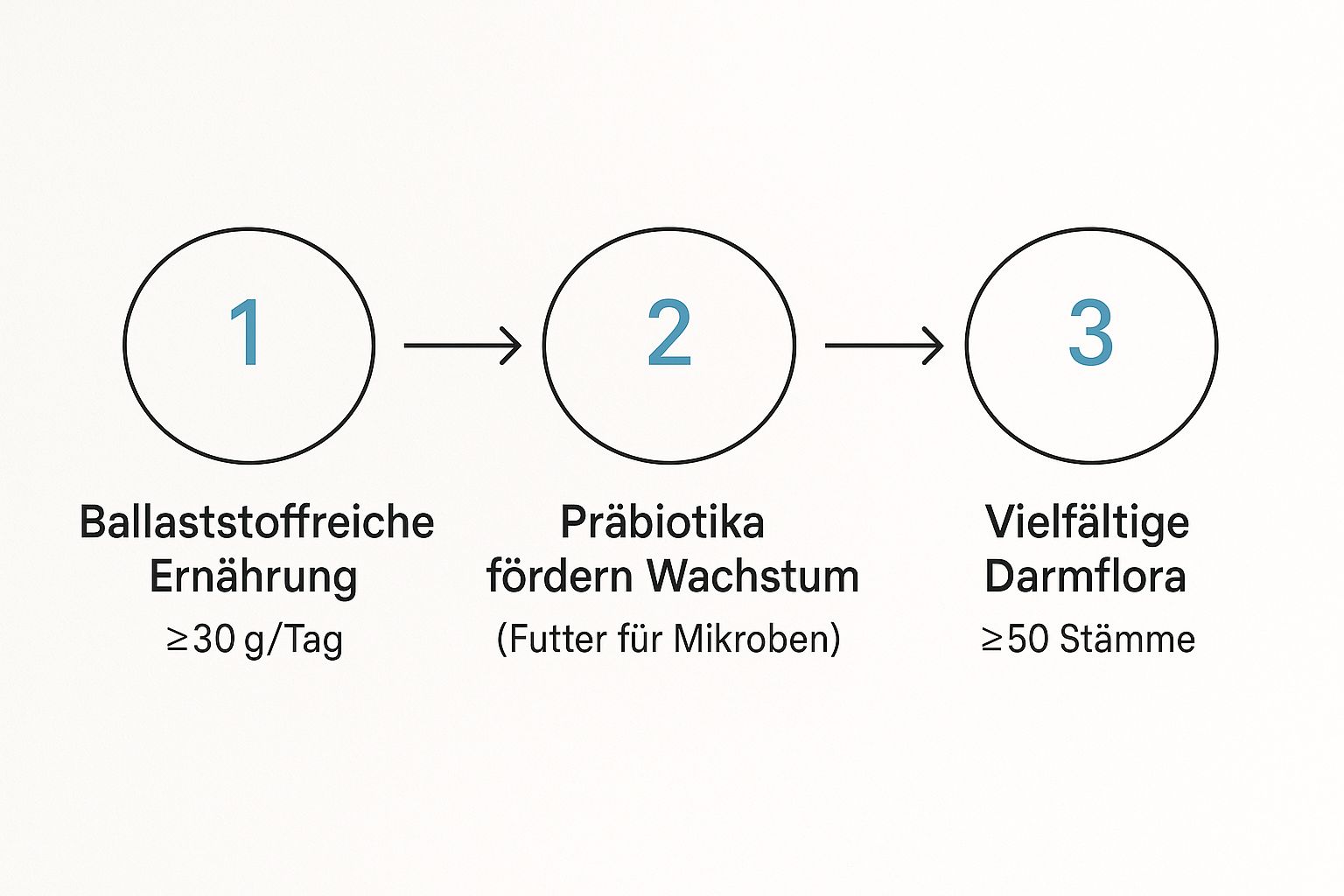
It’s clear: A fiber-rich diet is the foundation. Building on this, prebiotics promote the growth of beneficial microbes, ultimately leading to a healthy and diverse bacterial community.
Phase 3: Sustainable Nutrition
Great, you've now cleansed your gut and populated it with new, beneficial bacteria. But the most important step for long-term success is to feed these hardworking helpers well. That's the only way they can survive, multiply, and carry out their protective work for you.
This is where prebiotics come in. They are essentially indigestible dietary fibers that serve as food for your beneficial gut bacteria. They are the fertilizer for your inner garden.
Here's a brief overview of how probiotics and prebiotics work together:
Probiotic vs. Prebiotic Foods
A comparison of the most important food sources for specifically colonizing the gut flora with beneficial bacteria and then nourishing them.
| Function | Examples of foods | Effect in the gut |
|---|---|---|
| Probiotics (Colonize with new helpers) | Yogurt (with live cultures), kefir, raw sauerkraut, kimchi, kombucha | Introduce new, beneficial bacterial strains directly into the gut and support balance. |
| Prebiotics (Feed & nurture helpers) | Onions, garlic, leeks, artichokes, legumes, whole grains, cold potatoes | Serve as food for the beneficial bacteria, promoting their growth and activity. |
In short: Probiotics bring the workers, while prebiotics provide the building materials. Both are essential.
Your daily diet should therefore be rich in these prebiotic foods:
- Onions, garlic, and leeks
- Chicory, artichokes, and Jerusalem artichokes
- Legumes such as lentils, beans, and chickpeas
- Whole-grain products (oatmeal, whole-grain bread)
- Potatoes or pasta that have cooled down (contain resistant starch, a top prebiotic!)
Research also supports how important a robust gut flora is as a protective shield. A German study identified bacteria of the species Mucispirillum schaedleri that colonize the gut's protective mucus layer directly. These specialists are crucial for defending against pathogens and thereby strengthen our immune system. Remarkably, around 10 to 20 percent of people who ingest disease-causing germs remain healthy thanks solely to their intact gut flora. You can read more about these exciting research findings on protective gut bacteria directly from LMU.
This three-step plan—cleanse, seed, feed—is the most reliable way to systematically and sustainably build up your gut flora. But don't forget: Every gut is different. What works perfectly for one person may not be the optimal strategy for you.
How your lifestyle affects gut health
A balanced, colorful diet lays the foundation for a strong gut microbiome. Clearly. But if you really want to sustainably improve the ecosystem in your gut, focusing on your plate alone is not enough. Your entire lifestyle plays a major role here, because the development of the gut microbiome is not an isolated project—it is inseparably connected to your general well-being.
What is particularly fascinating is the direct connection between your brain and your gut. This is called the gut-brain axis, a kind of data highway along which information is constantly sent back and forth between your digestive system and your head. What you think and feel therefore has a very real impact on your gut—and vice versa.

Stress as an invisible enemy
Chronic stress is probably one of the biggest saboteurs of a healthy microbiome. If you are constantly under pressure, your body releases huge amounts of the stress hormone cortisol. This hormone can not only attack the protective mucus layer of your intestinal wall and make it more permeable, but also dramatically reduce the diversity of your beneficial bacteria.
In plain English: Constant stress opens the door wide to inflammation and can seriously throw the delicate balance of your gut microbiome out of sync. That is why targeted relaxation is not a luxury but a crucial building block for your gut health.
Even small but regular breaks can make a huge difference. Why not try meditation, deep-breathing exercises, a round of yoga, or simply a daily walk in nature? To improve your gut health, it is essential to take these mental aspects seriously.
The regenerative power of sleep
While you sleep, your body is working hard—and your gut is right in the middle of it. This nightly period of rest is absolutely crucial for the regeneration of the intestinal lining and the activity of your gut bacteria. Sleep deprivation, on the other hand, throws not only you but also your microbiome completely out of balance.
Studies have shown that just a few nights of poor sleep can negatively alter the composition of the gut microbiome. Good sleep hygiene is therefore worth its weight in gold. A few simple tips:
- Regular bedtimes: Try to maintain a reasonably regular routine even on weekends. Your body loves it.
- Relaxation rituals: A warm bath or a few pages of a good book can signal to your body: Now it’s time to switch off.
- Screen-free zone: Avoid using your phone, tablet, or television for at least an hour before going to bed. The blue light disrupts the production of the sleep hormone.
Exercise for greater bacterial diversity
Regular exercise is another incredibly effective lever. And no, you do not have to run a marathon. Even moderate activity such as brisk walking, cycling, or swimming is enough to demonstrably increase the diversity of your gut bacteria.
Exercise stimulates intestinal activity and improves the transport of nutrients. This creates an ideal environment for your little helpers. It is important to find a good balance, because the same applies here: Overtraining can cause pure stress for the body. So choose an activity you genuinely enjoy and make it a regular part of your daily routine.
Why your immune system is located in the gut
Did you know that most of your immune system is not located where you might expect? Incredible but true: Around 80% of your entire immune defense is housed in your gut. A strong and diverse gut flora is therefore your most important ally in the fight against pathogens—in a sense, your very own bodyguard.
This fascinating connection between your microbiome and your immune defenses is one of the most exciting areas of modern health research. Simply imagine your intestinal lining as a kind of living boundary between the outside world and the inside of your body. Your beneficial gut bacteria colonize this boundary and form a dense, protective biofilm.
Communication between the gut and the immune system
But your good bacteria do much more than simply form a passive barrier. They actively communicate with your immune cells, which lie directly beneath the intestinal lining. In a sense, they train these cells to distinguish between harmless food components and genuine threats such as viruses or harmful bacteria.
A healthy microbiome is like a well-trained security team. It immediately recognizes intruders, alerts headquarters (your immune system), and helps neutralize the threat quickly and precisely without causing unnecessary commotion.
That is precisely why an imbalance in the gut, known as dysbiosis, is so problematic. If the beneficial trainers are missing, the immune system may overreact or make the wrong decisions. If you would like to know what such an imbalance feels like, you can learn more in our article about why your gut is the key to your well-being.
Dysbiosis as a cause of chronic inflammation
If the gut flora is weakened, chronic inflammation can develop in the body. These “silent” inflammations are often at the root of many modern lifestyle diseases and weaken your defenses in the long term. This makes you more susceptible to infections and can worsen existing health problems.
In fact, around ten percent of the population in Germany suffers from chronic inflammatory diseases such as rheumatoid arthritis or psoriasis. Many of these conditions are directly linked to significant changes in the gut flora. Intensive research in this field, including in cooperation with Charité – Universitätsmedizin Berlin, is increasingly showing how essential the microbiome is to the functioning of our immune system.
This knowledge is incredibly valuable. It shows you that building up your gut flora not only supports your digestion, but is also a central pillar of a strong immune system and long-term health.
Your gut is unique – find out what it really needs
Okay, you've now read a lot about how you can theoretically get your gut flora back on track. But honestly: Where is the best place to start with all these tips? The truth is: Every microbiome is as unique as a fingerprint. So instead of groping in the dark and trying different things on the off chance, you can gain real clarity through a targeted analysis.
This is exactly where a professional snapshot of your gut ecosystem comes into play. It is like a look behind the scenes, revealing exactly which bacterial strains are present in your gut, how they are distributed, and whether there may be an imbalance (dysbiosis) affecting your well-being.
The following screenshot shows an example of what the results of such an analysis can look like. No complicated jargon, but a clear overview.
You can immediately see the most important points: the diversity of your bacteria, the ratio of key bacterial groups, and how the individual strains are distributed.
With such well-founded data in hand, you begin your journey toward better gut health not blindly, but with a clear roadmap. You receive personalized recommendations tailored precisely to your body's needs.
Although a test is not a medical diagnosis, it is the perfect tool for taking control. If you no longer want to guess but finally want to know what is really going on, the mybody-x Microbiome Test is the ideal first step. This allows you to build up your gut flora based on sound information and take charge of your well-being in a targeted way.
Frequently asked questions about rebuilding the gut microbiome
Finally, we want to address the questions that come up again and again in everyday life. They should resolve any remaining uncertainties and give you a good feeling about your journey toward a healthy gut.
How long does it take to rebuild the gut microbiome?
This is probably the question everyone is eager to have answered. Unfortunately, there is no one-size-fits-all answer, because rebuilding your gut microbiome is a marathon, not a sprint. The good news: Many people notice the first positive changes, such as improved digestion, after just one to two weeks when they consistently change their diet.
However, achieving a truly stable and sustainable change in your microbiome requires a little more patience. Allow at least three to six months—in some cases, even longer. This is the only way for a new, resilient balance to become established. So it is definitely worth sticking with it!
Are probiotic foods really enough?
For most people, a diet rich in probiotic foods such as yogurt, kefir, or sauerkraut is a fantastic foundation. These foods can make a huge difference to your well-being and help care for your gut every day.
Important to know: In some situations, such as after antibiotic treatment or in cases of very persistent symptoms, it can absolutely make sense to specifically support your gut with probiotic supplements. These provide highly concentrated doses of specific bacterial strains that would be difficult to consume in such quantities through food alone.
What can I do about bloating at the beginning?
You start eating more fiber (in other words, prebiotics) and probiotic foods, and suddenly your stomach starts rumbling with bloating? There is no reason to worry at first—in fact, it is usually a good sign! It shows that your new gut inhabitants are gratefully accepting the food and getting to work.
These initial side effects usually disappear on their own after a few days or weeks, once your system has become accustomed to the new food intake. My tip: Start slowly. Gradually increase the amount of fiber-rich foods so that your gut is not overwhelmed and has enough time to adjust.
As you can see, the path to a healthy gut microbiome is as individual as you are. Instead of simply guessing what your body really needs, you can also find out. mybody-x gives you the perfect opportunity to understand your gut in a targeted way with the microbiome test and establish your personal rebuilding plan on a solid foundation.



Share now:
Test your microbiome for better gut health