
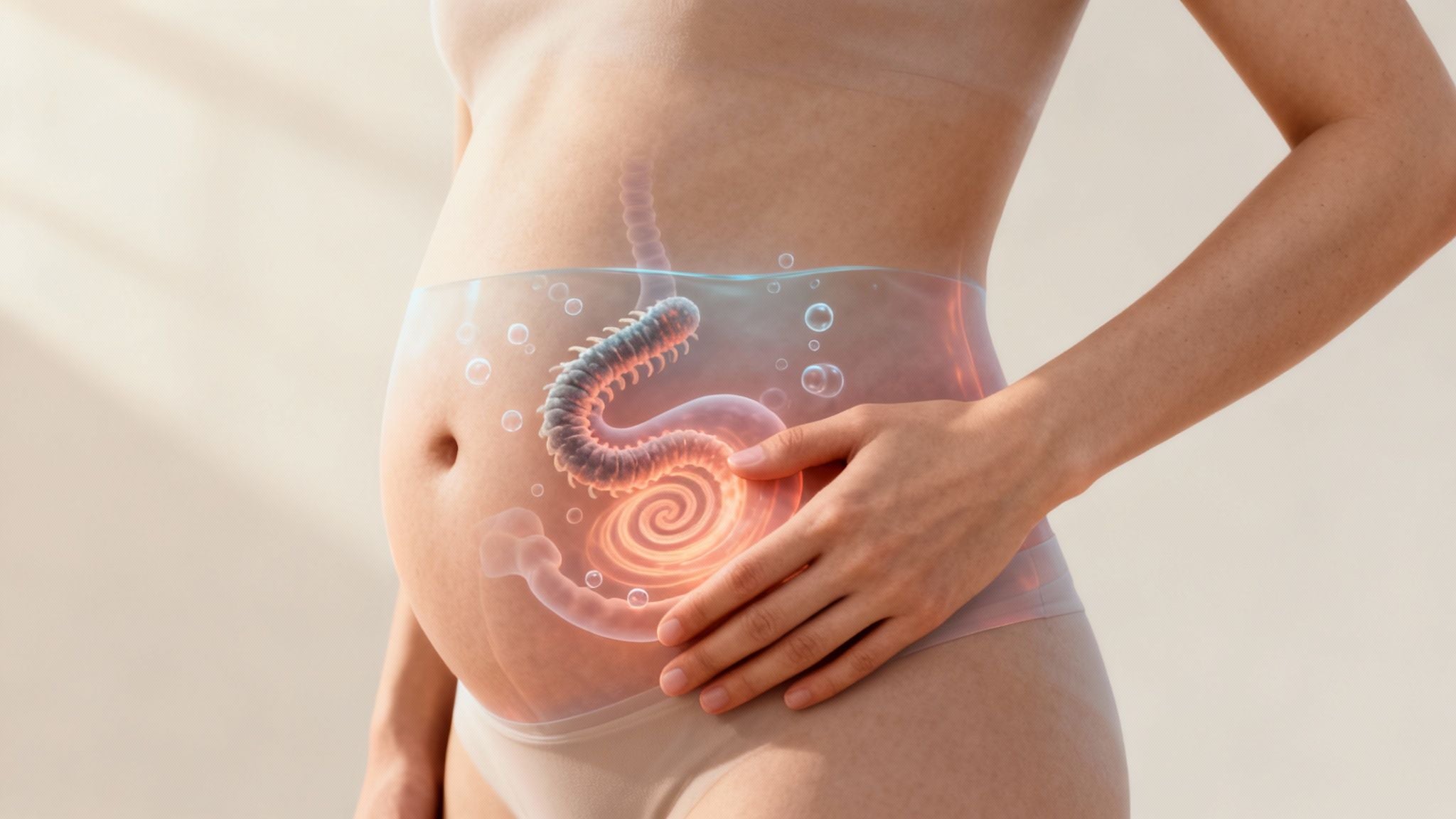
Bloated stomach due to Helicobacter: When a bacterium makes your stomach swell
Does your stomach often feel uncomfortably full and tight, even when you have barely eaten anything? Many people are familiar with this feeling of bloating, but the cause often remains hidden. In fact, a bloated stomach can be caused by Helicobacter because the bacterium disrupts stomach function, leading to gas formation and slower digestion.
Your stomach in focus: The mysterious connection to Helicobacter

You may have heard of Helicobacter pylori before but not known that this tiny bacterium can be responsible for noticeable symptoms such as persistent bloating. And that is not uncommon.
Helicobacter pylori infection is one of the most common chronic bacterial infections in Germany. Estimates suggest that approximately 30 to 33 million people are affected, corresponding to a rate of 30 to 35.5 percent of the total population.
It is interesting to see how sharply the infection rate increases with age: While only 9 percent of 20-year-olds are affected, the figure is already 47 percent among people over 60. You can read more details about the spread of Helicobacter pylori on the linked overview page.
What this invisible tenant does in your body
Imagine Helicobacter pylori as a persistent tenant who makes himself comfortable in your stomach lining. There, it thoroughly disrupts the delicate balance of your digestive system.
This article will guide you through the topic in an easy-to-understand way. We’ll reveal how this germ works and why it can cause a bloated stomach due to Helicobacter. You’ll understand why your stomach is rebelling and which mechanisms are behind it.
A bloated stomach is often more than just “air in your belly.” It can be an important signal from your body that something in your gastrointestinal tract has become unbalanced—and Helicobacter is a common culprit.
We’ll take a close look at the connections so you can better interpret your body’s signals. The goal is to give you the knowledge you need to understand the causes of your discomfort and take the right steps for your health. It’s about regaining control over your well-being.
What is Helicobacter pylori, and how does it survive in the stomach?
Imagine Helicobacter pylori as an extremely clever saboteur that settles in the hostile environment of your stomach. This spiral-shaped bacterium is no accidental guest—it is a master of camouflage and adaptation, managing to survive in a place where almost nothing should be able to exist.
The biggest hurdle for any bacterium in the stomach is the aggressive stomach acid. But this is precisely where Helicobacter has developed a brilliant survival strategy.
The shield against stomach acid
The bacterium’s real trick lies in an enzyme called urease, which it produces in large quantities. Urease acts as a kind of chemical shield: It converts the urea that naturally occurs in the stomach into ammonia.
Ammonia is strongly alkaline and directly neutralizes the stomach acid around the bacterium. This creates a kind of personal comfort zone, a small, habitable oasis in the middle of the acidic ocean of your stomach.
This ability to chemically alter its surroundings is the key to Helicobacter pylori’s survival. It practically builds its own safe home while attaching itself to the stomach wall.
This constant chemical defense reaction naturally does not remain without consequences. The continuous production of ammonia and the presence of the bacterium itself constantly irritate the sensitive stomach lining.
The hiding place in the mucous membrane
In addition to its chemical shield, Helicobacter uses its spiral shape and tiny flagella (small organs of locomotion) to burrow like a corkscrew deep into the protective mucus layer of your stomach wall. There, it is even better protected from the acid and can multiply undisturbed.
The consequence of this persistent colonization is almost always chronic inflammation of the stomach lining, better known as gastritis. This inflammation is the foundation for many other digestive problems that throw the entire system out of balance and can ultimately lead to symptoms such as a bloated belly caused by Helicobacter. You can also learn more about the bacterium’s many effects in our comprehensive article on Helicobacter pylori.
This chronic inflammation disrupts the normal function of the stomach, impairs the digestive enzymes, and can slow down stomach movement. Together, all of this creates the ideal conditions for fermentation, gas production, and the feeling of having a constantly bloated belly.
How Helicobacter actually causes your belly to swell
You may be wondering how a tiny bacterium can visibly and uncomfortably change your belly so much. The journey from invisible intruder to a bloated belly is not a single action, but a chain reaction involving several disruptions that Helicobacter triggers in your digestive system.
Essentially, there are three key mechanisms working together here and literally making your belly swell.
1. Chronic inflammation as a digestive brake
As we have already seen, the persistent presence of Helicobacter causes chronic inflammation of the stomach lining—a condition known as gastritis. Imagine your stomach as an engine that normally runs smoothly. This inflammation is like sand in the gears: suddenly, the stomach no longer works properly.
The result? Your food remains in your stomach much longer than it should. It is no longer properly broken down and transported onward; instead, it begins to ferment. These fermentation processes produce gases that accumulate and inflate the abdomen from the inside. The result is this distressing feeling of fullness and a visibly bloated stomach.
The following infographic clearly shows how the bacterium protects itself and triggers precisely the inflammation that sets this entire process in motion.

It becomes clear immediately: The neutralization of stomach acid and the resulting inflammation are the pathogen’s clever survival strategies—but for you, they directly lead to digestive problems.
2. Disrupted stomach acid and its consequences
Helicobacter disrupts more than just the mechanical process; it also affects the chemistry. The bacterium can completely disrupt stomach acid production, often leading to reduced acidity. Less acid may not sound so bad at first, but it is a real problem.
Properly balanced stomach acid is essential for good digestion. It not only wards off germs but is also absolutely necessary for breaking down proteins effectively.
When proteins are not properly broken down, they reach the small intestine only partially digested. There, they disrupt the delicate balance of intestinal bacteria and can promote small intestinal bacterial overgrowth (SIBO). These “wrong” bacteria in the small intestine also produce huge amounts of gas during digestion, making the bloated stomach even worse. A bloated stomach caused by Helicobacter is therefore often the result of several disrupted digestive processes. If you would like to learn more about the various causes of a bloated stomach, you will find more valuable information in our guide.
3. Slowed stomach movement
The third factor is gastric motility—the movement of the stomach muscles that pushes food through the digestive tract. The inflammation caused by Helicobacter can effectively paralyze these movements.
Your stomach becomes sluggish, so to speak, and empties only at a snail's pace. This not only intensifies the feeling of fullness but also causes food remnants and gases to accumulate in the upper abdomen for even longer.
This unfortunate combination of excessive gas production, delayed digestion, and sluggish stomach movement is the real reason for your ongoing discomfort and the feeling of having a permanently bloated belly.
Learning to interpret the typical symptoms correctly
A bloated abdomen is rarely the only signal your body sends when Helicobacter pylori is causing trouble. The infection often cleverly disguises itself with symptoms that you could easily mistake for ordinary stress, an upset stomach, or a food intolerance. The key is to pay attention to recurring patterns and the combination of signs.
Many people affected describe a feeling as though there were a stone in their upper abdomen. This pressing or sometimes burning sensation often occurs independently of meals. If you notice that these symptoms do not occur just once after a large meal but keep returning, you should take notice.
More than just bloating
The signs of a Helicobacter infection are often vague, but taken together they paint a fairly clear picture. Pay attention to whether you recognize a combination of the following signals in yourself:
- Constant belching: Do you often feel bloated for no apparent reason and have to burp constantly, even hours after eating?
- Feeling full after small portions: You eat only a little but immediately feel uncomfortably full and stuffed.
- Unexplained nausea: You repeatedly feel queasy without being able to identify the cause—no spoiled food, no stress.
- Persistent bad breath: Some people affected complain of a strange odor on their breath that has nothing to do with poor dental hygiene and simply will not go away.
It is important to understand that many people live with the bacterium for years without developing clear or severe symptoms. The symptoms may occur in episodes—sometimes they are more intense, and sometimes they disappear completely for a while. This very changeable nature makes it so difficult to identify the cause.
Many people first attribute bloating to their diet or everyday stress. But when classic stomach problems such as a feeling of pressure and early satiety are added, the connection between a thick belly caused by Helicobacter suddenly seems very plausible.
So, if you suffer from persistent bloating that simply cannot be explained and also notice some of the signs mentioned above, that is a strong indication. It is worth no longer ignoring these symptoms and having the connection to Helicobacter examined more closely. This could be the crucial first step toward finally finding and specifically addressing the true cause of your discomfort.
Modern diagnostic and successful treatment options

Do you suspect that Helicobacter pylori is behind your discomfort and persistent bloating? Seeing a doctor can finally give you clarity. The good news is that today’s diagnostic procedures are very reliable and usually surprisingly straightforward. There are several ways to track down the bacterium.
A very common method is the so-called C13 breath test. You drink a special liquid, and your breath is analyzed shortly afterward. This makes it possible to detect the presence of the bacterium very accurately—without any invasive procedure.
From suspicion to certainty
Your doctor can also use other non-invasive tests to confirm the infection. These methods are particularly gentle and also provide reliable results to identify the cause of bloating:
- Stool antigen test: For this test, a small stool sample is analyzed in a laboratory for specific components (antigens) of the bacterium. This test is very accurate and is also often used to check whether treatment has been successful.
- Blood antibody test: Your blood is checked for antibodies against Helicobacter pylori. A positive result tells you that your immune system has been in contact with the germ at some point. However, it cannot reliably distinguish between an active infection and one that has already been overcome.
The most accurate method remains a gastroscopy (gastroscopy). During this procedure, a tiny tissue sample is taken directly from your stomach lining. This step is usually recommended when symptoms are very severe or you are over 50, simply to safely rule out other conditions. By the way, there is also the option of performing a rapid Helicobacter pylori test at home. It can provide an initial indication, but this should always be followed up with a medical evaluation.
The treatment: Evicting the unwanted tenant
If the infection is confirmed, treatment is generally very effective. The so-called eradication therapy is considered the gold standard. It may sound complicated, but it is essentially a targeted combination therapy lasting 10 to 14 days.
Treatment typically consists of two different antibiotics to specifically target the bacterium, along with an acid blocker (proton pump inhibitor) that supports the antibiotics’ effectiveness and helps the stomach heal.
This treatment has a very high success rate and completely clears the bacterium in most people affected. For it to succeed, it is crucial that you follow your doctor’s plan exactly and take the medication as prescribed. This is the only way to ensure that the unwanted tenant finally moves out and give your stomach a chance to settle down again.
How you can support your stomach yourself
Of course, medical treatment is essential. But there is a lot you can do to actively support your stomach and accelerate the healing process. Your most important ally? A truly stomach-friendly diet that gives your irritated digestive system a much-needed break.
Imagine giving your stomach a little break. Anything that could further irritate it should be reduced for now. This mainly includes spicy seasonings, very fatty foods, and highly acidic foods such as citrus fruits or carbonated drinks. Your stomach will thank you.
The right foods for a calm stomach
Instead, focus on anything that is easy to digest. Steamed vegetables are ideal—they provide valuable nutrients without putting strain on your stomach. Lean protein from chicken or fish and easily digestible carbohydrates such as potatoes or rice are also an excellent foundation for your meals.
Antibiotic treatment can seriously disrupt the gut flora. That is why probiotic foods are especially valuable now:
- Plain yogurt or kefir: They contain live bacterial cultures that help restore the balance of your gut bacteria.
- Fermented vegetables: Sauerkraut or kimchi, initially in small amounts, can also provide a dose of beneficial bacteria.
Restoring the gut flora after antibiotic treatment is a crucial step toward stabilizing your digestive system in the long term and preventing bloating from recurring.
More than just nutrition: your holistic approach
Never underestimate the power of stress. Tension often directly affects the gastrointestinal tract and can unnecessarily intensify your symptoms. Relaxation techniques are not a luxury here but an effective tool for finding relief.
Try deep-breathing exercises, a short meditation, or a relaxing walk in nature. Even these brief breaks can noticeably ease tension in the abdominal area.
Another thing that helps is adjusting your meal structure. Smaller, more frequent meals throughout the day are much gentler on your stomach than three large, heavy portions. Soothing herbal teas such as chamomile, fennel, or anise can act like a gentle balm for your digestion.
If you would like to explore the topic of how important a healthy microbiome is in greater depth, you will find valuable tips in our guide on building up your gut flora. All these measures are a perfect complement to medical treatment and help you get back on your feet faster.
Your questions about Helicobacter—answered briefly
Do you still have unanswered questions about Helicobacter pylori and troublesome bloating? No problem. Here you will find the most important answers at a glance—clear, easy to understand, and without technical jargon.
Is a Helicobacter infection contagious?
Yes, the bacterium can be transmitted from person to person. It usually happens through the mouth, for example via saliva, or due to poor hygiene, such as through contaminated objects.
People are often infected as children within their immediate family without even noticing it. This is also why several family members are sometimes affected, often unknowingly for years.
Does every Helicobacter infection need to be treated?
Not necessarily. Many people live with the bacterium without ever experiencing symptoms. Treatment only becomes truly important when symptoms occur—such as inflammation of the stomach lining, ulcers, or significant distress caused by pain and persistent bloating.
Whether treatment is appropriate for you is always a decision you make together with your doctor. The aim is to weigh up whether therapy is necessary to noticeably improve your quality of life again.
Ultimately, your individual case is what matters. Based on your symptoms and state of health, your doctor will make the right recommendation for you.
Can Helicobacter return after treatment?
In countries with high hygiene standards, such as Germany, a genuine reinfection after successful treatment is quite rare. The probability is just 1 % per year.
If the symptoms return after therapy, it is often because the stomach lining has not yet fully healed. Sometimes other digestive disorders are also behind it. That is why patience is needed after treatment—and a stomach-friendly lifestyle helps your body regenerate enormously.
Do you finally want to get to the bottom of the causes of your digestive problems and take targeted control of your gut health? At MYBODY Lab GmbH, we offer scientifically sound analyses that help you understand your body better and take the right steps toward your well-being. Discover the possibilities now at https://mybody-x.com.



Share now:
Causes of hard stools: What your body is trying to tell you
Celiac disease: How to correctly interpret the symptoms in adults