
Causes of hard stools: What your body is trying to tell you
Hello and welcome! If you are reading this, you probably know the unpleasant feeling that comes with hard stools. It is usually caused by a combination of too little fiber, insufficient fluid intake, and a lack of exercise. But don’t worry, you are not alone in dealing with this issue, and there are absolutely effective ways to get your digestion moving again.
Understanding the cycle of hard stools
Hard stools are more than just an unpleasant feeling—they are a clear signal from your body that something in your digestive system has fallen out of balance.
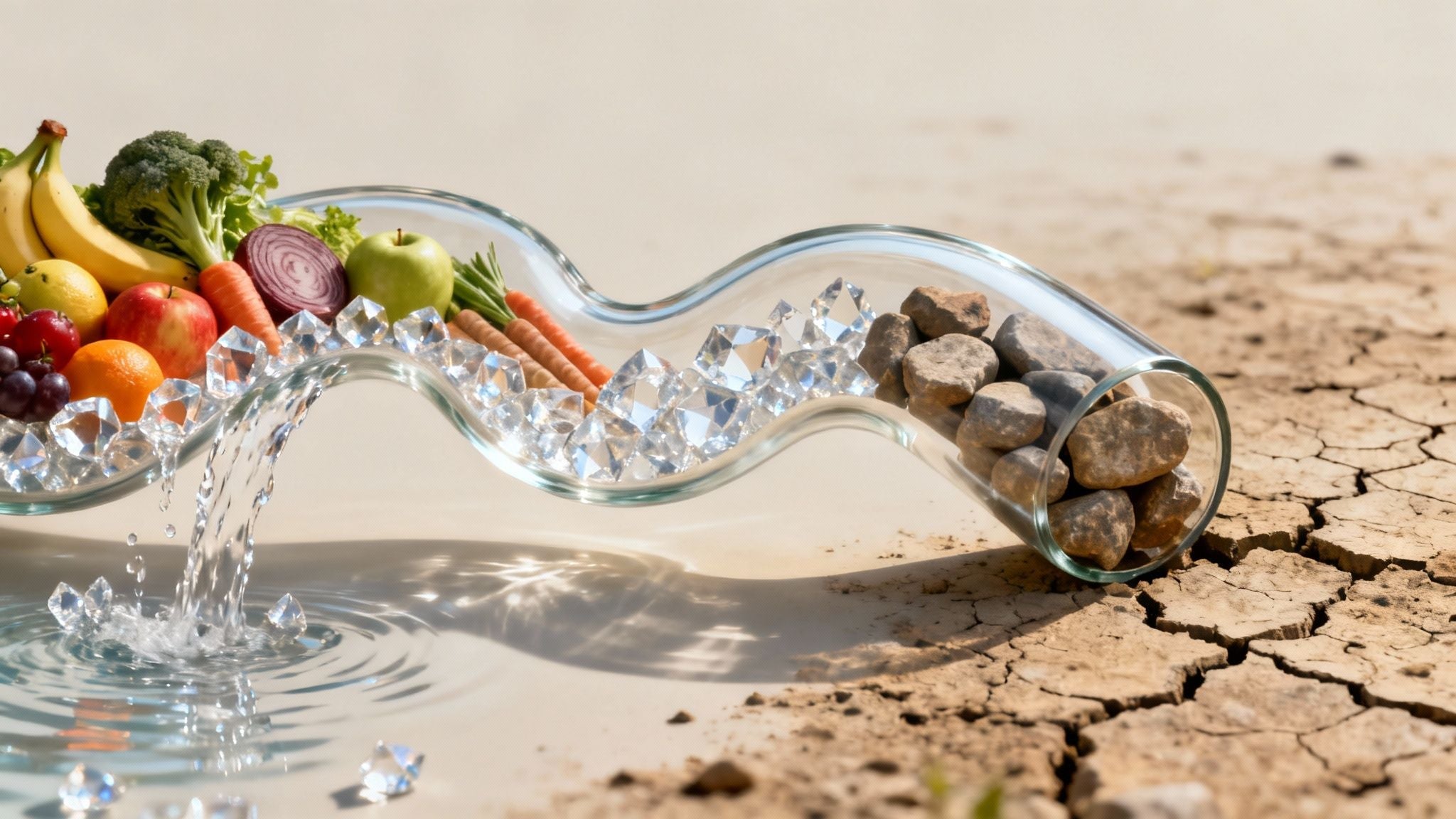
Imagine your intestines as a busy but sensitive river. For everything to flow smoothly, they need enough water and the right “transport material” in the form of fiber.
If one of these elements is missing, the entire process slows down. Your large intestine is responsible for removing water from the food pulp. However, if the stool remains in the intestine for too long, too much fluid is removed from it. The result: it becomes dry and hard and is difficult to pass. This can quickly lead to a vicious cycle of straining, discomfort, and avoiding bowel movements, which only makes the problem worse.
A widespread problem
You are definitely not alone in dealing with this issue. In fact, it is a very common concern, even though people rarely talk openly about it. In Germany, constipation, which often leads to hard stools, is a widespread problem.
A representative study shows that approximately 77 percent of people in Germany suffered from constipation at least occasionally over the past year. Less frequent and prolonged bowel movements, as well as hard or lumpy stools, were particularly common symptoms. You can learn more about the results of this study in this article about constipation in Germany.
Your body is giving you direct feedback through hard stools. It is an invitation to take a closer look and understand what it needs to function optimally again.
This infographic summarizes the three key pillars that significantly influence the consistency of your stools.
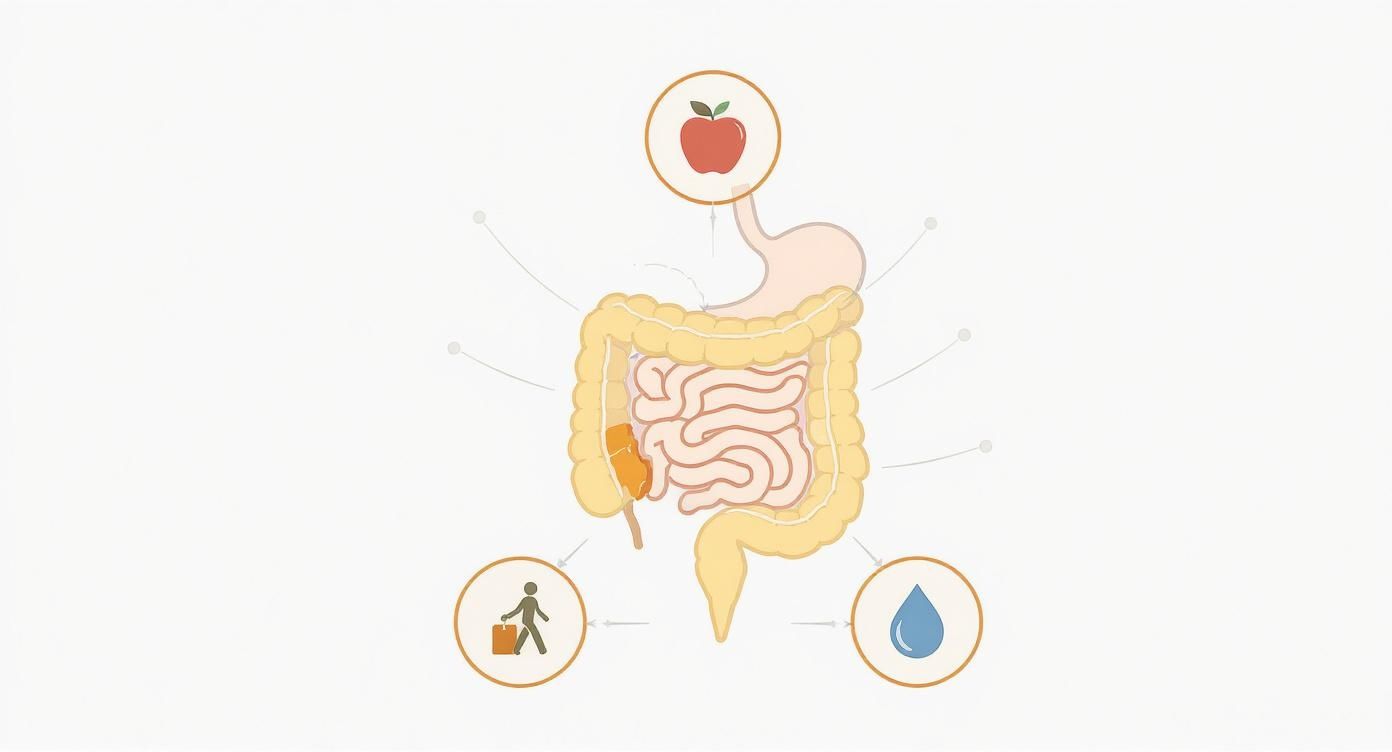
The illustration shows how closely diet, fluid intake, and your lifestyle are linked to the function of your intestines.
What are the most common causes?
The causes of hard stools are varied, but they can usually be traced back to a few key areas. Often, it is not just one factor but the interaction of several habits that slows down your digestion.
The following table provides a quick overview of the most common culprits.
Common causes of hard stools at a glance
This table summarizes the primary factors that can lead to hard stools and provides an initial indication of possible solutions.
| Cause category | Specific examples | Short-term effect on stool |
|---|---|---|
| Diet | Little fruit & vegetables, lots of white flour, fast food | Stool becomes bulkier and firmer |
| Dehydration | Less than 1.5 liters of water/tea per day | Stool dries out and becomes hard |
| Lack of exercise | Long periods of sitting at the office, little exercise | Bowel movement (peristalsis) slows down |
| Lifestyle | High stress, travel, suppressed urge to have a bowel movement | The intestine spasms, and stool remains in it too long |
These four areas are the most common levers. Sometimes, however, other deeper factors also play a role. In our article on genetic causes of digestive problems, you can learn more about how your predisposition may also play a role.
In the following sections, we’ll take a closer look at each of these causes and give you specific, practical tips.
How your diet and fluid intake affect your bowel movements
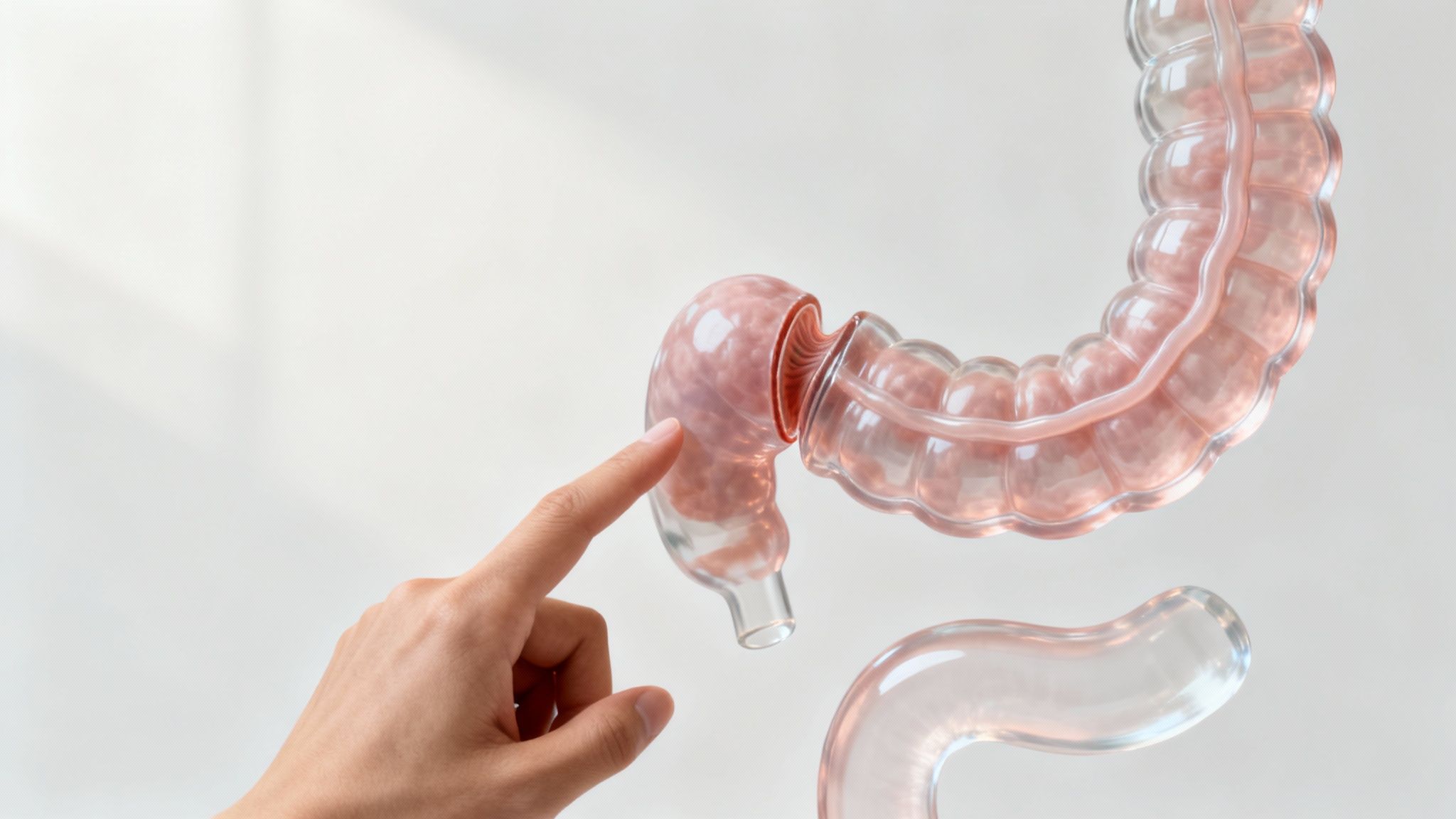
One of the biggest levers for good digestion is right on your plate and in your glass. Yes, it’s often that simple. Your daily eating and drinking habits largely determine how smoothly your gut works. Often, it is precisely these hidden habits that unknowingly become causes of hard stools.
Imagine your food bolus as a mass traveling through a long system of tubes. To remain smooth and avoid getting stuck anywhere, it needs two things: volume and moisture. This is where fiber and water come into play—the ultimate power duo for your gut.
But what happens when this duo gets out of sync? Let’s take a closer look at the two main players.
Fiber: the indispensable helpers
Fiber is the unsung hero of your gut health. It consists of plant fibers and bulking agents that your body cannot digest—and that is precisely their great advantage. They reach the large intestine undigested, where they perform crucial tasks.
You can think of them as small, hardworking sponges. As they pass through the intestines, they absorb water, swell, and thereby increase the volume of the stool.
This bulkier stool is softer and exerts gentle pressure on the intestinal walls. This signal, in turn, stimulates natural intestinal movement (peristalsis) and ensures that everything is transported onward efficiently. A low-fiber diet is therefore one of the most common causes of hard stools.
Here are some of your best allies for a high-fiber diet:
- Whole-grain products: Oatmeal, whole-grain bread, quinoa, and brown rice. They provide not only fiber but also important B vitamins.
- Legumes: Lentils, chickpeas, and beans are true powerhouses of fiber and plant-based protein.
- Vegetables: Broccoli, carrots, Brussels sprouts, and leafy greens fill your plate—and your gut—with valuable fiber.
- Fruit: Berries, apples, pears, and especially dried fruit such as prunes naturally get your digestion moving.
- Nuts and seeds: Flaxseeds, chia seeds, and almonds are an easy addition to muesli, yogurt, or salads.
Even small changes can make a huge difference. You don't have to change everything overnight. Why not start by replacing white bread with whole-grain bread or adding a spoonful of flaxseed to your muesli? You can find more practical tips in our guide to gut health and nutrition.
Water: the partner fiber needs
As important as fiber is, it can't do the job alone. It needs an indispensable partner: water. Without enough fluid, these hardworking sponges can't absorb anything. On the contrary, they can even make the problem worse and lead to more stubborn constipation.
Your body is clever and always tries to keep its fluid balance in equilibrium. If you don't drink enough, it removes as much water as possible from the stool in the large intestine so it can use it for other vital processes. The result is exactly what you want to avoid: dry, hard stool that is difficult to pass.
A lack of fiber and fluids is the most common combination leading to hard stools. They work hand in hand—or against each other.
Experts agree: A low-fiber diet, insufficient fluid intake, and lack of exercise are the main factors behind digestive problems. Around 15 percent of people in Germany, for example, suffer from chronic constipation. The cause is usually slowed intestinal activity, which removes too much water from the stool, making it dry and hard.
The recommended amount to drink is at least 1.5 to 2 liters per day. If you exercise or it’s hot outside, feel free to drink more. Water, unsweetened tea, or heavily diluted juice spritzers are best.
The impact of exercise and stress on your digestion
Your gut is anything but an isolated organ. It is deeply intertwined with your entire lifestyle and responds not only to what you eat and drink. Two factors we often underestimate but that have an enormous impact are exercise and stress. They can either boost your digestion or bring it to a complete standstill.
A daily routine spent mainly sitting is one of the typical causes of hard stools in our modern world. When you don’t move much, your gut becomes sluggish too. This is no coincidence, but pure mechanics: Your digestive tract needs external stimuli to keep moving.
Exercise as fuel for your gut
Imagine your gut as a long muscular tube. For food to move through it efficiently, this tube has to contract rhythmically—a wave-like movement called peristalsis.
Lack of exercise can literally lull this natural muscle activity to sleep. The result? Stool remains in the large intestine far too long, more and more water is extracted from it, and it becomes hard and dry. Regular physical activity acts like a natural, gentle laxative.
Even moderate exercise can make a huge difference:
- Walks: A brisk walk after a meal is worth its weight in gold for stimulating bowel activity.
- Yoga or stretching exercises: Certain twists and bends gently massage the abdominal organs and can specifically stimulate peristalsis.
- Gentle endurance exercise: Whether jogging, swimming, or cycling, all of these get your circulation—and therefore your digestion—going.
You don’t have to run a marathon. Consistency is what matters. It’s better to build short bouts of exercise into your daily routine, so your gut stays active too.
Stress: the direct connection to your gut
Have you ever heard of the gut-brain axis? It’s essentially the direct line between your brain and your digestive system. This connection ensures that what you think and feel reaches your gut directly—and vice versa.
Chronic stress is pure poison for this sensitive communication. If you’re constantly tense, your body releases stress hormones such as cortisol, which can seriously disrupt your digestion.
The gut-brain axis makes it clear: a relaxed mind is the best prerequisite for a relaxed belly. Persistent stress can slow intestinal movement and lead to painful spasms.
This hormonal response can slow intestinal peristalsis or even cause cramps. Stool transport becomes sluggish, which in turn promotes hard stools. If you notice that stress is an issue for you, feel free to read our article to learn more about the symptoms of high cortisol levels in women.
Don’t Ignore the Urge to Have a Bowel Movement
One final but crucial point: how you respond to the natural urge to have a bowel movement. In stressful everyday life, we often tend to ignore our body’s signal because the timing is inconvenient. A serious mistake.
If you regularly suppress the urge, your body learns to simply weaken this signal. The stool remains in the rectum longer, becoming drier and harder. In the long term, this behavior can significantly disrupt your gut’s natural emptying function and lead to chronic constipation. So consciously take your time when going to the toilet and listen to your body—it knows best what it needs.
The Hidden World of Your Gut Microbiome
So far, we’ve talked about tangible topics such as nutrition, hydration, and exercise. Now it’s time to look one level deeper—into a fascinating world that lives right inside your abdomen and has a huge impact on your digestion: your gut microbiome.
Don’t think of your gut simply as an organ, but as a huge, living garden. But no flowers grow in this garden—rather, trillions of microorganisms. These are mainly bacteria, but viruses and fungi are part of it too. This vast community is your very own microbiome—a highly complex ecosystem that is absolutely crucial to your health. It helps break down nutrients, trains your immune system, and even produces important vitamins.
As long as everything in your “gut garden” is in balance and the beneficial “plants” thrive, your digestion runs smoothly too. Problems only arise when this delicate balance is disrupted.
When Your Gut Garden Gets Out of Balance
Experts call this imbalance in the gut flora dysbiosis. And it is precisely one of the frequently overlooked causes of hard stools. With dysbiosis, essentially the following happens: The “weeds”—that is, harmful or less beneficial bacteria—start to proliferate and crowd out the good helpers.
This disrupted environment completely throws your digestive processes into disarray. Certain beneficial bacterial strains, for example, are responsible for fermenting dietary fiber. This produces short-chain fatty acids such as butyrate, which not only nourish the intestinal wall but also stimulate bowel movement (peristalsis). When these important helpers are lacking, the passage of stool through the intestines slows down. You know the result: It stays in there too long, more and more water is removed from it, and it becomes hard.
Imagine the good gut bacteria as diligent gardeners. They keep the soil moist and loose. When the gardeners are absent, the soil—in other words, your stool—becomes dry, cracked, and hard.
Dysbiosis can be triggered by many different things:
- Taking antibiotics: They often act like a clear-cutting operation in the gut and unfortunately wipe out not only the bad bacteria but also the good ones.
- Unbalanced, sugar-rich diet: This primarily feeds the unwanted microbes, which then multiply explosively.
- Chronic stress: As we have already discussed, the gut-brain axis directly interferes with the composition of your microbiome.
- Gastrointestinal infections: These, too, can seriously disrupt the delicate balance over time.
But the good news is that you are not helplessly at the mercy of it all. You can actively tend your gut garden and restore its balance.
How to feed and support your good gut bacteria
Taking care of your microbiome is actually quite simple. It comes down to two effective principles: You need to specifically feed the good bacteria already present while simultaneously introducing new beneficial helpers.
1. Prebiotics – food for your helpers
Prebiotics are essentially nothing more than indigestible food components that serve as the favorite food of the good bacteria in your gut. They are, so to speak, the best fertilizer for your garden. So if you consciously eat prebiotic foods, you specifically strengthen the population of your beneficial microbes.
Excellent sources of prebiotics include, for example:
- Onions, garlic, and leeks
- Artichokes and asparagus
- Bananas (especially those that are still a little green)
- Oats and legumes
2. Probiotics – the new settlers for your gut
Probiotics are living microorganisms that benefit your health when you consume them in sufficient quantities. They settle in your gut and help restore balance.
For example, you can find probiotic foods here:
- Plain yogurt and kefir
- Sauerkraut and kimchi (important: unpasteurized)
- Apple cider vinegar (cloudy)
By incorporating both prebiotics and probiotics into your diet, you create the best conditions for a diverse and resilient gut flora. If you want to delve deeper into the topic, our article explains in detail how you can build a healthy gut flora.
Caring for your microbiome over the long term isn’t a short sprint, but rather a marathon. But the effort pays off, because a healthy gut is the key to sustainably healthy digestion and greater well-being. To better understand and specifically care for your personal “gut garden,” a mybody-x gut test can provide valuable, personalized insights into the composition of your microbiome.
Your path to better digestion
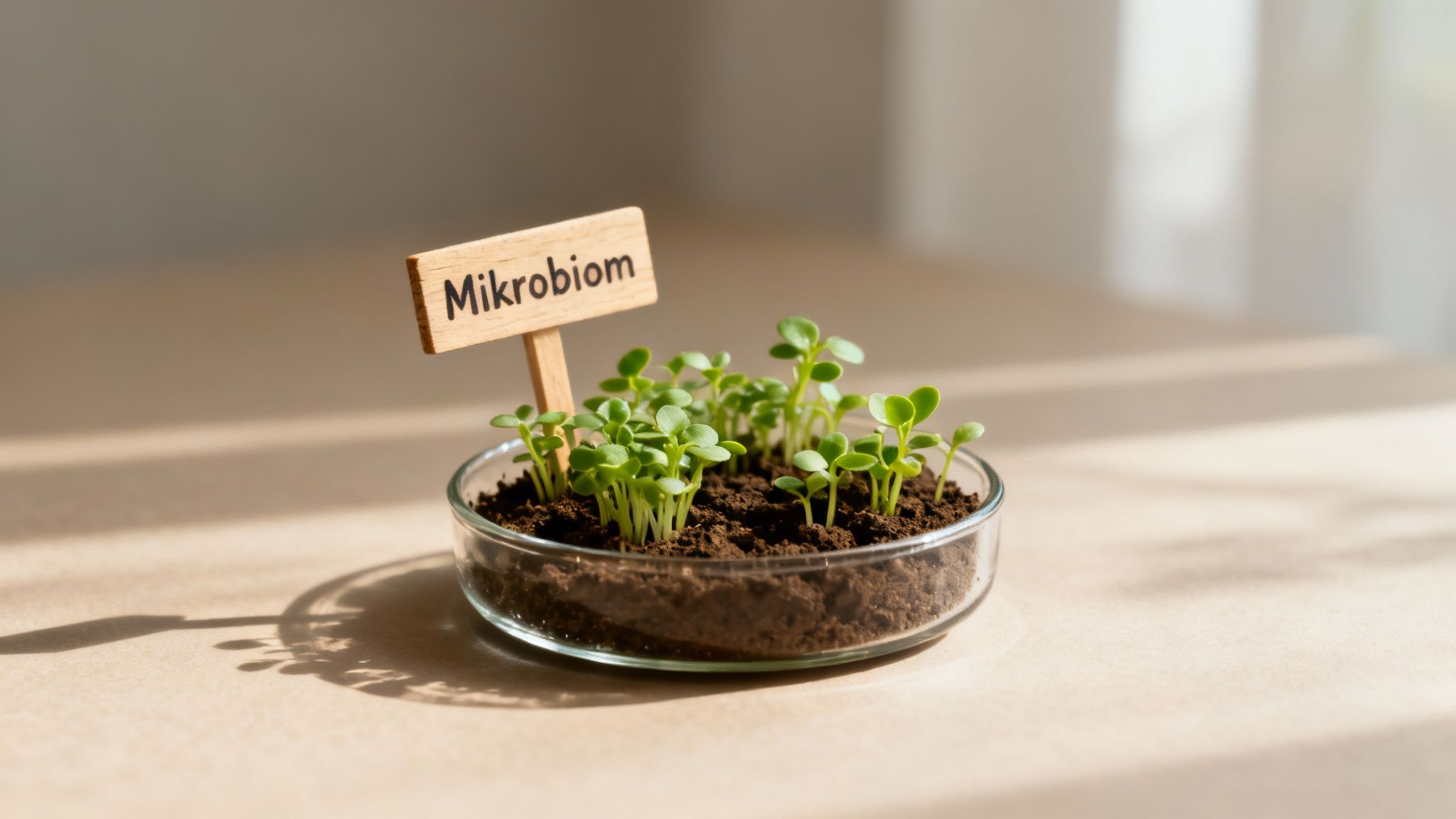
So, now you know the most common causes of hard stools. But knowledge alone won’t bring about change. The truly decisive step starts now: putting it into practice. This section is your personal roadmap to finally achieving a carefree feeling in your stomach and smooth digestion once again.
The key isn’t some radical diet, but building sustainable, healthy habits. It’s about small yet incredibly effective adjustments to your daily routine that make a big difference in the long term. Let’s turn the most effective strategies into a clear plan together.
An example daily plan for your digestion
To make getting started easier, here’s a small cheat sheet for the day. Think of it as inspiration that you can easily adapt to your taste and routine. The goal is simple: to show you how easy it is to incorporate fiber, fluids, and movement into your everyday life.
- Morning (7:00 a.m.): Start with a large glass of lukewarm water. This gently gets your metabolism going. Then have oatmeal with fresh berries, a spoonful of ground flaxseed, and a handful of nuts.
- Mid-morning (10:30 a.m.): An apple or a pear is the perfect snack. Most importantly, drink plenty of water or unsweetened herbal tea with it as well.
- Lunch (1:00 p.m.): How about a large mixed salad with chickpeas, quinoa, and plenty of colorful vegetables? It provides valuable fiber. Afterwards, take a short 15-minute digestive walk in the fresh air.
- Afternoon (4:00 p.m.): A handful of almonds or a small cup of plain yogurt can help with the mid-afternoon slump.
- Evening (7:00 p.m.): A light vegetable stir-fry with lentils and brown rice is rich in fiber but not too heavy. Try not to eat too late so your intestines can rest at night.
These simple building blocks alone can help your intestines find a reliable rhythm again.
When you need fast relief, there are a few immediate measures that can provide short-term relief. Here is a brief overview:
Immediate measures for hard stools
A clear summary of quick and effective tips that can provide short-term relief while you work on long-term solutions.
| Measure | Usage instructions | How it works |
|---|---|---|
| Warm water with lemon | Drink in the morning on an empty stomach. | Stimulates intestinal peristalsis (muscle movement) and helps soften the stool. |
| Prune juice | Drink a small glass (approx. 150 ml). | Contains sorbitol, a natural sugar alcohol with a laxative effect that draws water into the intestines. |
| Abdominal massage | Gently massage around your navel in a clockwise direction. | Stimulates bowel movements and can help loosen impacted stool. |
| Exercise | A brisk 20–30-minute walk. | Gets your circulation—and therefore your digestion—moving. |
These tips are great for acute situations, but remember: They do not replace a long-term change in your habits.
Gentle natural remedies
Sometimes the intestines simply need a little extra support to get moving again. But before you reach for chemical laxatives, why not try these gentle natural remedies—they can work wonders.
Psyllium husks are the absolute classic here. They are packed with soluble fiber and work as a bulking agent. As soon as they come into contact with water, they form a gel-like mass in the intestines. The result: Stool volume increases, the stool becomes softer, and intestinal transit flows smoothly again.
Ground flaxseed is also a fantastic choice. It likewise contains mucilage, which swells in the intestines, and provides a serving of healthy omega-3 fatty acids along the way. Important for both: Start slowly! One teaspoon per day is enough to begin with. Then gradually increase the dose while significantly increasing your fluid intake.
Instead of guessing what your gut is lacking, you can take targeted action. A personalized insight into your microbiome is the most direct way to address the causes of hard stools at their root.
The step toward a personalized solution with mybody-x
General tips are a great start. But every gut is as unique as a fingerprint. What works wonderfully for your friend may not necessarily achieve the same results for you. And this is precisely where the invaluable advantage of a personalized analysis comes into play.
A mybody-x gut test goes far beyond general advice. It provides you with a detailed snapshot of your gut microbiome. You learn which beneficial bacteria are present, whether there may be an imbalance (dysbiosis), and which nutrients your gut urgently needs to function optimally again.
With this precise information, you can tailor your diet and lifestyle exactly to your body's needs. Instead of continuing to experiment, you get a scientifically sound plan to follow. This allows you to specifically support your gut health and finally get to the real causes of hard stools in a sustainable way.
When you should seek medical advice
Fortunately, most causes of hard stools are harmless and can be managed well with a few adjustments to your daily routine. Nevertheless, it is important to listen to your body's signals. Sometimes hard stools are more than just an annoyance—they can be a warning sign that you should take seriously.
This section is intended to help you recognize when it is time to have a specialist take a look. It is not about causing fear, but about giving you peace of mind so that you can take responsibility for your health.
Warning signs you should pay attention to
Your body is constantly communicating with you. Most of these signals are harmless, but some should be professionally evaluated to make sure there is nothing more serious behind them.
Pay particular attention if, in addition to hard stools, you notice one or more of the following symptoms:
- Blood in the stool: Whether it is bright red blood on the toilet paper or dark, almost black stool, visible blood should always be medically evaluated.
- Severe, cramp-like pain: Persistent or sudden, stabbing abdominal pain that goes far beyond normal bloating is an important warning sign.
- Unexplained weight loss: If the scales suddenly show a lower weight without you having deliberately changed your diet or exercised more, you should investigate the matter.
- Sudden and drastic changes: Has your digestion suddenly changed significantly and for an extended period without an obvious reason, such as travel or a change in diet? You should have this checked.
- Fever and feeling seriously unwell: If these symptoms occur in addition to digestive problems, they could indicate inflammation or an infection.
Don’t panic: experiencing one of these symptoms does not automatically mean that something serious is wrong. It simply means that it is time to seek an expert opinion for clarity.
Why a medical diagnosis is so important
The main purpose of seeing a doctor is to rule out serious illnesses. There are several health problems that can also cause hard stools, including hormonal disorders such as an underactive thyroid, chronic inflammatory bowel diseases, and neurological causes.
A professional diagnosis gives you one thing above all: peace of mind. It not only rules out risks but also paves the way for targeted treatment if an illness is actually the cause.
So before relying solely on dietary changes and natural remedies in the long term, it is wise to have the matter thoroughly checked. This will ensure that you address the true causes of hard stools at their root and do not overlook any underlying problems. A doctor can help you find the best approach for your individual situation and strengthen your health in the long term.
Still have questions about hard stools? Here are the answers.
Finally, we want to clarify a few questions that come up time and again in practice when it comes to the causes of hard stools. This will give you quick and straightforward answers to specific concerns.
Can coffee cause hard stools?
That is indeed a very personal matter. On the one hand, the caffeine in coffee stimulates bowel movements (known as peristalsis) and can even promote bowel movements. For some people, their morning coffee is practically the starting signal for digestion.
On the other hand, coffee has a dehydrating effect on many people. This removes fluid from the body, and what the body lacks is ultimately also lacking in the intestines. The stool becomes firmer.
Simply observe how your body reacts. If you notice that your stool becomes harder after drinking coffee, try drinking an additional glass of water with each cup of coffee. This often compensates for the fluid loss.
What role do medications play in hard stools?
Medications are a cause that many people do not even consider. Certain active ingredients can slow bowel activity as a side effect, thereby causing or worsening constipation.
The most common suspects include:
- Certain painkillers, especially opioids.
- Iron supplements, which are often prescribed for a deficiency.
- Some antidepressants or medications for high blood pressure.
- So-called acid blockers, which are taken for heartburn.
If you notice a change in your digestion after starting a new medication, be sure to discuss it with your doctor or pharmacist. Important: Never stop taking medication on your own!
How quickly do dietary changes take effect?
Your digestive system is a creature of habit and needs some time to adjust to something new. When you start eating more fiber, you may notice a positive change after just a few days.
Patience is key here. Give your gut a good two to three weeks to fully adjust to the new, higher-fiber diet.
It is very important to make the change gradually. Increase the amount of fiber step by step while also increasing your daily fluid intake. This gives your gut a chance to adapt and helps you avoid uncomfortable bloating.
Are laxatives a good long-term solution?
Clear answer: No. Laxatives can provide quick relief in acute cases, but they should never become a long-term solution. The tricky thing about regular use is that the bowel gets used to them. It becomes “lazy,” so to speak, and relies on outside help instead of doing its own muscular work.
In the long term, this can even make the causes of hard stools worse. A much more sustainable approach is to tackle the problem at its root—with a mindful diet, sufficient exercise, and effective stress management.
Would you like to understand the exact causes in your gut instead of merely treating symptoms? mybody-x.com offers scientifically supported microbiome analyses that show you what your gut really needs. Discover your personal path to better digestion and greater well-being at https://mybody-x.com.

Share now:
Microbiome Testing and Health Insurance: What Your Insurer Covers and What It Doesn’t
Big Belly from Helicobacter: When a Bacterium Bloats the Abdomen