
Promote gut health for greater well-being
Your gut feeling is more than just an expression—it is the direct link to your overall well-being. Promoting your gut health means much more than simply ensuring regular digestion. It is the foundation for a strong immune system, a balanced mood, and even clear skin. Often, small, conscious changes to your everyday routine can have a tremendous impact.
Why your gut health is so important
Have you ever wondered why your stomach sometimes determines how you feel throughout the day? Your gut is a complex ecosystem that hosts trillions of microorganisms—together, they form your individual microbiome. But this ecosystem is much more than just a digestive aid. It is a kind of command center that controls countless processes in your body.
A healthy gut microbiome is essential because it not only helps with nutrient absorption but also trains your immune system. In fact, around 80% of your immune cells are located in the gut. A balanced gut microbiome enables your body to effectively defend itself against harmful invaders while learning to tolerate harmless substances at the same time.
More than just digestion
Another crucial factor is the connection between your gut and your brain, known as the gut-brain axis. The two organs communicate constantly via neural pathways and chemical messengers. This explains why stress can upset your stomach or why a “gut feeling” is often a reliable indicator. A disrupted gut microbiome can therefore also manifest as mood swings or concentration problems.
The effects can even extend to your skin. Skin problems such as acne or eczema are often linked to an imbalance in the gut. When the gut is overloaded, the body tries to eliminate toxins through the skin, which can lead to inflammation and blemishes.
You’re not alone with your symptoms
If you sometimes struggle with your digestion, you’re definitely not alone. Around three in five Germans, or roughly 60%, report digestive problems in the past six months. Interestingly, women are affected more often and are more likely to report having achieved an improvement through conscious lifestyle changes. This highlights how effective proactive approaches can be in reducing symptoms. You can learn more about these study findings on gut health in Germany.
This infographic visualizes the three fundamental pillars for promoting gut health.
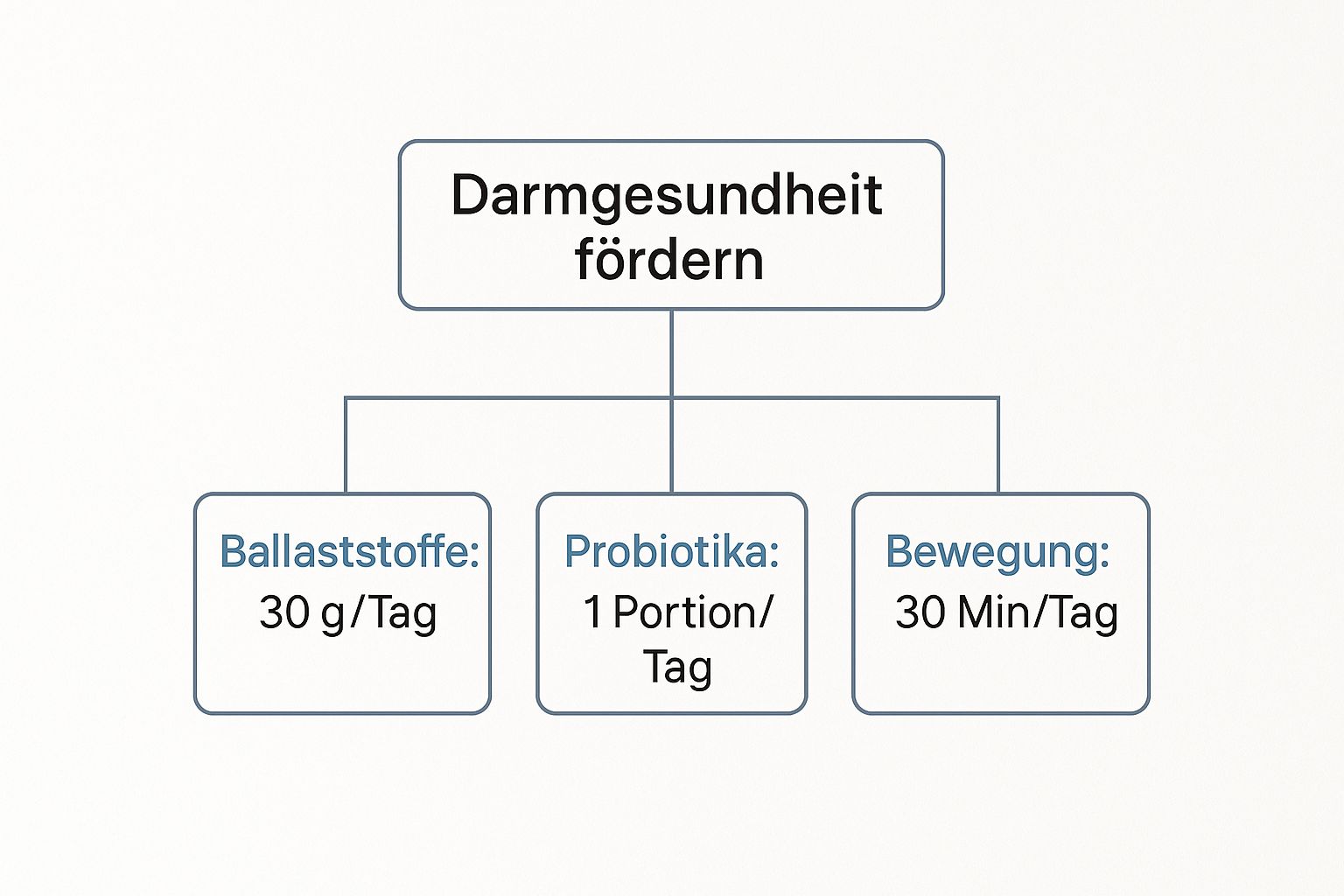
The graphic makes it clear that even moderate but regular adjustments to fiber, probiotics, and exercise can make a fundamental difference.
Your gut is not a passive organ, but an active contributor to your health. By taking care of it, you are directly investing in your quality of life, your energy, and your overall well-being.
To give you a quick overview, we have summarized the most important areas of action in a table. These four pillars are the key to sustainably improving your gut health.
The four pillars of a healthy gut
This table gives you a quick overview of the key areas through which you can specifically and sustainably promote your gut health.
| Pillar | Focus | Goal |
|---|---|---|
| Diet | Fiber, probiotics, prebiotics, polyphenols | Increase the diversity of gut bacteria and strengthen the intestinal lining |
| Microbiome analysis | Targeted examination of the gut flora | Identify imbalances and derive personalized recommendations |
| Lifestyle | Stress management, exercise, sleep | Reduce inflammation, support the gut-brain axis |
| Targeted tests | Blood, saliva & urine tests | Identify nutrient deficiencies, inflammation, and hormonal imbalances |
These pillars build on one another. A healthy lifestyle creates the foundation, the right diet provides the building blocks, and targeted analyses help you identify exactly the factors that make the biggest difference for you.
The good news is that you hold the reins yourself. With the right strategies, you can specifically support your microbiome and strengthen your well-being from within. If you would like to delve deeper into the fascinating world of gut bacteria, you will find valuable further information in our article on the basics of a healthy gut flora. This guide will now show you the practical steps to achieve exactly that.
How to strengthen your gut with the right diet
Imagine that every single meal is a direct message to the trillions of tiny inhabitants of your gut. With what you put on your plate, you decide whether to strengthen the beneficial helpers or feed their opponents. It’s not about strict diets or deprivation, but about turning your meal plan into a true source of strength for your microbiome and thereby actively promoting your gut health.
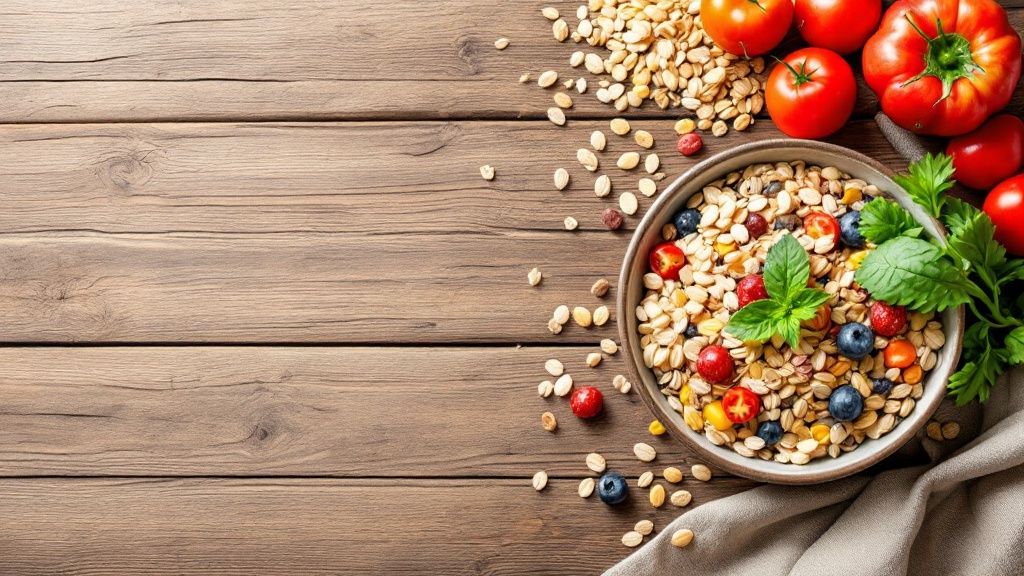
The key is understanding what your beneficial gut bacteria love and what weakens them. When you choose the right foods, you can not only improve your digestion but also positively influence your energy levels, mood, and overall resilience.
The Heroes of Your Gut Flora: Fiber, Prebiotics, and Probiotics
Let’s take a closer look at the three most important allies for a healthy gut. They work hand in hand to build and maintain a diverse and strong microbiome.
Fiber – Your Bacteria’s Favorite Food Fiber is essentially indigestible plant matter that serves as the most important food source for your beneficial gut bacteria. The German Nutrition Society (DGE) recommends a daily intake of at least 30 grams.
According to studies, increasing your daily fiber intake by just 10 grams can significantly improve stool frequency and consistency. You can often achieve this with small but targeted adjustments:
- Whole grains instead of white flour: Simply swap your white bread roll in the morning for a slice of whole-grain bread. That alone gives you 2–3 more grams.
- Incorporate legumes: One serving of lentils (approx. 200 g cooked) provides an impressive 10–15 grams of fiber. Perfect in a soup, salad, or curry.
- Nuts and seeds as a topping: Adding a tablespoon of flaxseeds or chia seeds to your yogurt or smoothie quickly adds 3–5 grams while also providing healthy fats.
Prebiotics – Targeted Growth Promoters Prebiotics are a special type of fiber that specifically stimulates the growth of health-promoting bacteria such as bifidobacteria and lactobacilli. You can think of them as targeted fertilizer for the beneficial inhabitants of your gut.
Prebiotics are not living organisms but the food your most beneficial gut bacteria need to thrive. They are the key to a diverse and resilient gut flora.
Examples of foods rich in prebiotics include:
- Chicory
- Artichokes
- Onions and garlic
- Leeks
- Asparagus
- Bananas (especially when they are still slightly green)
Probiotics – Living Support for Your Team Probiotics are living microorganisms that, when consumed in sufficient quantities, provide genuine health benefits. They settle in the gut and support the existing bacterial community.
Fermented foods are an excellent natural source of probiotics. A small cup of plain yogurt or a glass of kefir a day can already make a difference. Sauerkraut, kimchi, and kombucha are also excellent sources of live bacterial cultures. It is important to choose unpasteurized products, as heat destroys the valuable cultures. To systematically strengthen your gut flora, you can also read our guide on how to build a healthy gut flora.
Troublemakers for your gut: sugar, processed products, and unhealthy fats
Just as important as adding beneficial foods is leaving out those that harm your gut. Highly processed foods, excessive sugar consumption, and trans fats can promote an inflammatory environment in the gut and drastically reduce the diversity of your microbiome.
They essentially feed the “wrong” bacteria, which can cause gas and unpleasant digestive problems. High sugar consumption can upset the balance and lead to dysbiosis, in which harmful microorganisms gain the upper hand.
Practical tips for a gut-friendly everyday life
The path to better gut health begins with small, mindful choices. Here are some tried-and-tested tips you can put into practice right away:
When shopping:
- Rainbow principle: Buy as many different colors of fruits and vegetables as possible. Each color represents different plant compounds (polyphenols) that your gut bacteria love too.
- Check the ingredients list: The shorter the list, the better. Avoid products with many artificial additives, flavorings, and types of sugar.
- Fermented foods in the refrigerated section: Look for live sauerkraut or kimchi in the refrigerated section, not with the canned goods.
In the kitchen:
- Artichoke hearts as a booster: An often-underestimated hero is the artichoke. Its bitter compounds, such as cynarin, stimulate bile flow and support digestion. Marinated artichoke hearts are an easy way to enhance salads or pasta.
- Harness resistant starch: Let cooked potatoes, pasta, or rice cool down. This creates resistant starch, another form of prebiotic fiber that feeds your gut bacteria. So a potato salad the next day is a good idea!
A low-fiber diet is not only unfavorable for your well-being in the short term. In the long term, alongside obesity, lack of exercise, and the consumption of red and processed meat, it is one of the main risk factors for serious intestinal diseases. Preventive measures such as a high-fiber diet are therefore crucial for promoting gut health and reducing personal risk.
The impact of stress and sleep on your digestion
Your gut health depends not only on what ends up on your plate. Factors that may seem unrelated to digestion at first glance are just as important: stress, sleep, and exercise. Our modern lifestyle, with constant pressure and too little recovery, can disrupt your microbiome just as sensitively as an unbalanced diet.

The reason? A fascinating and incredibly close connection between your brain and your gut—the so-called gut-brain axis. This communication highway runs in both directions, ensuring that mental strain directly affects your gut and vice versa.
The direct connection between your head and your gut
Imagine you're about to attend an important meeting or take an exam. Your heart races, your hands become clammy—and often your stomach also gives you an uneasy feeling. That's the gut-brain axis in action. In moments like these, your body releases stress hormones such as cortisol.
These hormones put your body into “fight-or-flight” mode. During this process, digestion is shut down as nonessential for survival, blood flow to the intestines decreases, and intestinal movement (peristalsis) changes. For some people, this leads to constipation; for others, diarrhea. If stress becomes a permanent condition, it can permanently alter your microbiome and reduce the diversity of your beneficial gut bacteria.
Chronic stress is like a constant source of interference for your digestive system. It can make the protective intestinal lining more permeable, contributing to low-grade inflammation that affects your well-being throughout your body.
If you notice that stress is a constant issue for you, it's important to understand the connections. Learn more in our article about which symptoms high cortisol levels can cause in women and what you can do about them.
Practical relaxation techniques for your everyday life
You don't have to turn your entire life upside down to reduce stress. Often, just small, intentional breaks in your day can make a huge difference to how your gut feels. Here are two simple techniques you can try right away:
-
4-7-8 breathing: This simple exercise calms your nervous system within minutes. Inhale through your nose for 4 seconds, hold your breath for 7 seconds, then exhale audibly through your mouth for 8 seconds. Repeat 3–4 times whenever you feel stressed.
-
The 1-minute body scan: Sit upright and briefly close your eyes. Consciously direct your attention through your body, from your toes to your head. Simply notice what you feel without judging it. This brief mindfulness exercise brings you out of the cycle of thoughts and back into the present moment.
These techniques help activate the parasympathetic nervous system—the part of your nervous system responsible for rest and digestion.
Why sleep is the best medicine for your gut
While you sleep, your body is hard at work. Your gut in particular uses this time to regenerate. The cells lining your intestine renew themselves, inflammatory processes are regulated, and your microbiome returns to balance. Sleep deprivation interrupts this important repair process.
Studies show that just a few nights of poor sleep can negatively affect the composition of the gut flora. Bacterial diversity decreases, which in turn weakens your digestion and immune system. So maintain good sleep hygiene:
- Regular sleep schedule: Go to bed and get up at roughly the same time every day, including on weekends. This stabilizes your internal rhythm.
- Screen-free zone: Avoid the blue light from your phone or laptop for at least an hour before bed. It interferes with the production of the sleep hormone melatonin.
- Cool, dark environment: Create the ideal atmosphere in your bedroom for deep, restorative sleep.
Exercise: the gentle massage for your digestion
Exercise is another key factor in promoting gut health. And no, you don't have to run a marathon. Moderate but regular activity is ideal. Even a brisk 30-minute walk each day naturally stimulates intestinal activity and can help prevent constipation.
Exercise helps not only mechanically by speeding up intestinal transit, but also acts directly on your microbiome. Regular activity promotes the diversity of your gut bacteria and supports the production of butyrate. This short-chain fatty acid is the primary energy source for your intestinal cells and has a strong anti-inflammatory effect. Find an activity you enjoy—whether cycling, yoga, or dancing. Your gut will thank you.
Support your gut with targeted tests and nutrients
You have changed your diet, are working on your stress levels, and are sleeping better—but your gut still refuses to feel consistently better? That is frustrating, but no reason to give up. Sometimes your gut simply needs more targeted support that goes beyond general advice to fully regain its balance.

This is exactly where targeted analyses and specific micronutrients come in. Instead of fumbling in the dark and trying various supplements at random, modern laboratory tests can help you determine precisely what your gut is lacking. This approach helps you personalize your strategy and truly address the underlying causes.
When your gut needs more: important micronutrients
Your intestinal lining is an incredibly important barrier. It determines what enters your body and what must stay out. Its regeneration and function require specific vitamins and minerals.
If these building blocks are missing, the intestinal lining can become permeable—a condition known as leaky gut. As a result, undigested food components and toxins can enter the bloodstream and cause problems throughout the body.
Some of the most important helpers for a strong gut barrier are:
- Vitamin D: It plays a crucial role in regulating the immune system in the gut and strengthens the connections between intestinal cells.
- Zinc: It is essential for cell division and the constant regeneration of the intestinal lining. A deficiency is often associated with increased permeability.
- B vitamins: In particular, vitamin B12 and folic acid are essential for energy production and the constant renewal of rapidly growing intestinal cells.
Supplementing these nutrients may therefore be beneficial—but only if a deficiency is actually present. Taking them indiscriminately without prior testing is rarely the best approach.
Knowledge instead of guesswork: Targeted diagnostics are key. A test shows you in black and white where your individual weaknesses lie. This allows you to support your gut health with precise measures tailored to you.
A look inside your gut
Modern at-home laboratory tests now make it easy to gain precise insights into your personal gut ecosystem. Rather than merely treating symptoms, they allow you to identify the root of the problem.
Two particularly informative analyses deserve to be highlighted here:
-
The microbiome analysis: It provides you with a detailed picture of the composition of your gut flora. You learn which beneficial bacterial strains are present, whether there is an imbalance (dysbiosis), and how diverse your microbiome is.
-
The leaky gut test: The marker zonulin is often measured in stool. Elevated levels may indicate that the connections between intestinal cells (the so-called “tight junctions”) have loosened and that the intestinal barrier is more permeable than it should be.
Such a test provides you not only with data, but with a genuine basis for decision-making. For example, it shows whether you would be more likely to benefit from probiotics containing specific lactobacilli or whether your focus should be on anti-inflammatory nutrients. You can read more about how this works and what benefits it offers in our detailed article about the microbiome test.
From analysis to action
A test result is only as good as the measures that follow from it. That is why a mybody-x test not only provides you with the raw laboratory values, but also translates them into clear, actionable recommendations for your everyday life.
A practical example: Imagine that your microbiome analysis shows a deficiency of Faecalibacterium prausnitzii. This bacterium is an important producer of butyrate, a short-chain fatty acid that serves as the main energy source for your intestinal cells and has a strong anti-inflammatory effect.
Your personalized recommendation could then look like this:
- Adjust your diet: Specifically incorporate more prebiotic fiber, such as inulin from chicory or resistant starch from cooled potatoes.
- Increase food variety: Add more polyphenol-rich foods such as berries, dark chocolate, and green tea, which promote the growth of these beneficial bacteria.
Suddenly, you have a clear roadmap tailored precisely to your body's needs. You invest your energy in the measures that make the biggest difference for you.
The need for such preventive and targeted strategies is becoming increasingly clear. In Germany alone, around 2.1 million people were treated as inpatients for diseases of the gastrointestinal tract. Experts estimate that up to 70% of many chronic diseases could be prevented if risk factors such as an unbalanced diet were reduced. You can read more about these positions on prevention from professional medical societies here.
Through targeted tests, you take control and make the crucial step from general hope for improvement toward a knowledge-based strategy for your well-being.
Your practical roadmap to a healthy gut
Okay, now let's get specific. You've read a lot about how nutrition, stress, sleep, and targeted analyses work together to promote your gut health. But honestly, the best knowledge is useless if it remains theoretical. The goal is to find an approach that works for you—realistic, motivating, and without turning your entire daily life upside down.
Forget the idea that you have to make everything perfect right away. That's not the point. Much more important is to start with small but consistent steps. Simply choose one or two things that seem manageable and commit to them for the coming week. That's the starting point.
Your start to a better gut feeling
Don't let the abundance of options overwhelm you. Simply choose from the following list whatever appeals to you most. Even one small change is a huge gain for your well-being.
Checklist for your first week—pick something:
- The simple swap: Replace your white bread roll in the morning with a slice of real whole-grain bread. Or swap white pasta in the evening for the whole-grain version.
- One extra glass of water: Put a large glass of still water next to every meal and drink it before you start eating. Simple, but effective.
- The 5-minute island: Make a short breathing exercise, such as 4-7-8 breathing, a regular part of your day. Perhaps right after waking up or as a ritual before bed.
- Add some color: Consciously add an extra type of vegetable to your lunch or dinner. A few more tomatoes in your salad, a handful of spinach in your sauce, or strips of bell pepper as a snack.
- Move as you go: Take the stairs instead of the elevator. Get off one stop earlier and walk the rest of the way.
These small habits may seem insignificant, but they send your body positive signals every day. They lay the foundation for lasting change without overwhelming you.
Progress, not perfection, is the goal. Every step, no matter how small, is an investment in your well-being. Listen to your body's signals—it is your best guide on this journey.
Find your personal strategy
Everyone is different. What works really well for me may not be the best solution for you. You may quickly realize that changing your diet is very easy for you, while stress management is a real challenge. That’s completely normal.
At the end of the week, take a moment to reflect: What went well? Where might I want to make adjustments? Perhaps in the second week, you could add a fermented food such as plain yogurt or kefir. Or you could focus entirely on establishing a consistent bedtime.
The journey to better gut health is a marathon, not a sprint. It’s about finding new routines that feel so good you won’t want to do without them.
If you’re unsure where to start, a targeted test such as a microbiome analysis from mybody-x.com can give you clear, personalized guidance. This way, you can invest your energy exactly where it will make the biggest difference for you.
Be patient and kind to yourself. Celebrate the small successes and be proud that you are actively taking responsibility for your health. You now have all the tools you need to sustainably improve how you feel in your gut and your quality of life.
Your most frequently asked questions about gut health
Specific questions often come up on the way to feeling better in your gut. That’s completely normal. So we’ve collected the most frequently asked questions here and summarized them briefly, so you can quickly find the information you really need.
How quickly will I notice an improvement in my gut health?
It varies greatly from person to person and depends largely on where you are starting from. Some people notice the first positive signs after just a few days—for example, less bloating or more stable energy levels throughout the day. These are often the first encouraging signs from your body.
However, truly profound and lasting improvements, such as rebuilding the intestinal lining or repopulating the microbiome, take your body a little more time. Expect this to take several weeks to months.
Patience and consistency are your most important companions. It’s not about making everything perfect overnight, but about sticking with it and giving your body the time it needs to regenerate.
Are probiotics as dietary supplements beneficial for everyone?
Not necessarily. Supplements should always be taken with a specific purpose. Probiotics can be extremely helpful in certain situations—for example, after antibiotic treatment to rebuild the gut flora, or for very specific digestive complaints. But they are not a cure-all.
The absolute foundation of a healthy microbiome is and remains a balanced, fibre-rich diet. Think of it this way: you may introduce new, diligent workers (probiotics) into your gut, but you don't give them any food (prebiotics). As a result, they cannot establish themselves or develop their positive effects.
A targeted analysis of your microbiome can show you exactly whether, and which specific bacterial strains, you would benefit from most.
What are the first signs of an imbalanced gut flora?
The signs of a gut that has fallen out of balance are more varied than most people think. Clearly, classic digestive problems such as constant bloating, alternating constipation and diarrhoea, or a persistent feeling of fullness are obvious indications.
But also pay attention to the subtler signs, which are often not directly associated with the gut:
- Persistent fatigue and lack of energy, even though you are actually getting enough sleep.
- Skin problems such as acne, eczema, or rosacea that suddenly appear or become worse.
- An increased susceptibility to infections, because a large proportion of your immune system is located in your gut.
- Unexplained mood swings, concentration problems, or that feeling of “brain fog.”
All these symptoms may indicate an imbalance in your gut. They show how closely your gut feeling is truly connected to your overall well-being.
Can I support my gut health without completely changing my diet?
Yes, absolutely! Every small step in the right direction counts and has a positive effect. You don't have to overhaul your entire diet overnight. Simply start with a single habit that is easy for you to implement.
This could mean drinking one extra glass of water every day. Or replacing just one meal per week with a consciously fibre-rich alternative. Even a short, five-minute relaxation exercise can have a positive effect on the gut-brain axis.
Choose one small, manageable step and make it a regular part of your daily routine. Once it has become a habit, add the next one. This is how you build sustainable healthy habits without feeling overwhelmed.
Do you want to know exactly where to start to specifically support your gut health? The scientifically based analyses from mybody-x.com give you clear insight into your personal microbiome and show you which individual steps will make the biggest difference for you. Discover the right tests for your well-being now.

Share now:
Gut health nutrition: Your immune system booster for autumn
At-home stool tests: which test answers which question