
How to Rebuild Your Gut Flora After Diarrhea: Your Ultimate Guide
Getting through acute diarrhea often feels like a victory, but it is actually just the beginning. The real work—the rebuilding of your gut flora—starts right now. The first 48 hours are crucial: During this time, the goal is to replenish your body with fluids and electrolytes while calming the irritated gut with a gentle bland diet. This creates the perfect foundation for recovery.
What Your Gut Needs Immediately After Diarrhea
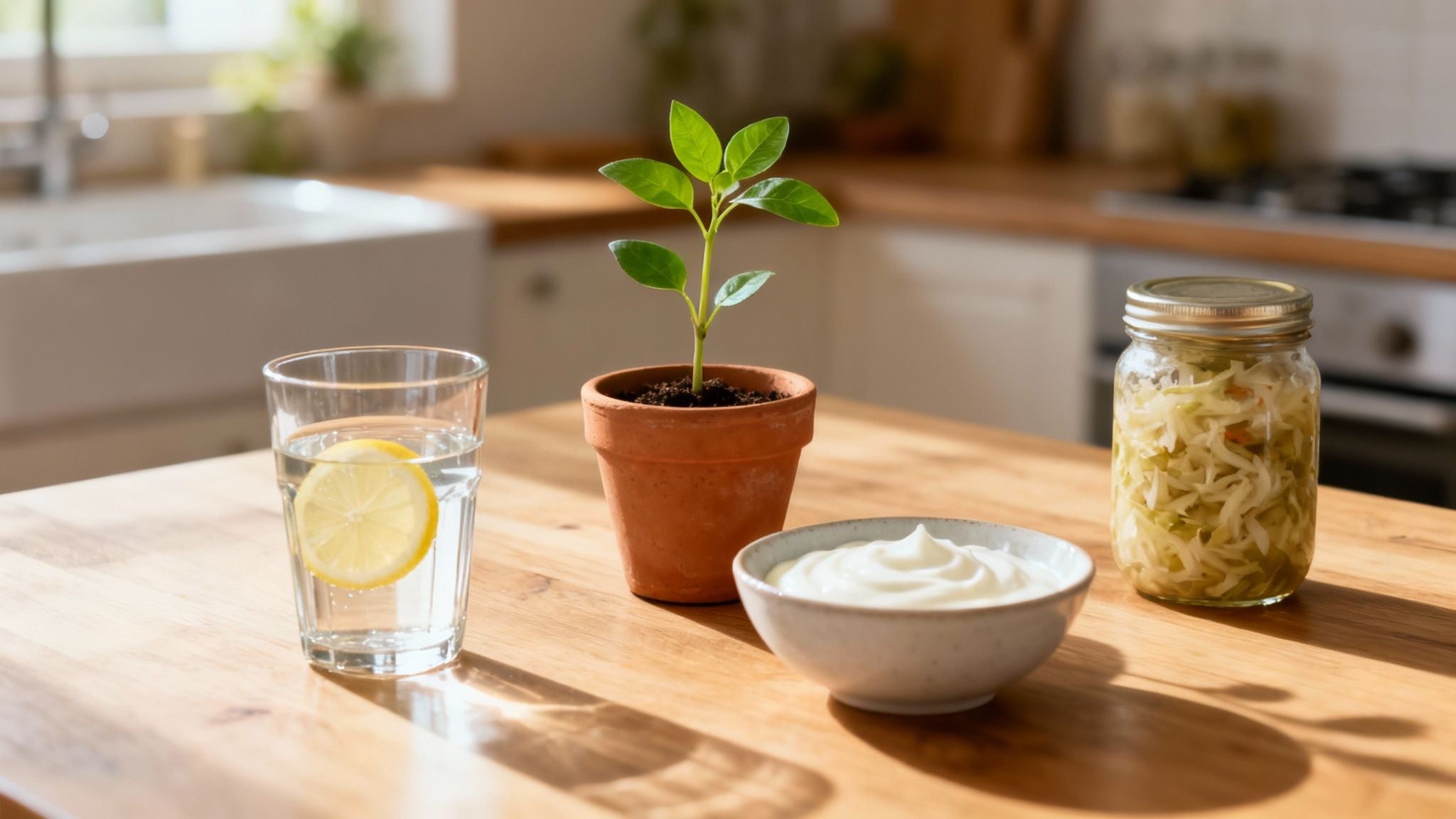
When the storm in your stomach finally subsides, you will probably feel completely drained. This is no wonder, because your body has lost not only huge amounts of fluid but also valuable minerals. Imagine your gut now as a freshly repotted plant: It is extremely sensitive and needs, above all, rest, gentle care, and the right nutrients to grow strong roots again.
This is exactly what you need to give it now. The first few days set the course for the rapid and lasting recovery of your entire gut ecosystem. Anyone who reaches for fatty or heavy foods too quickly now risks a setback and delays the healing process.
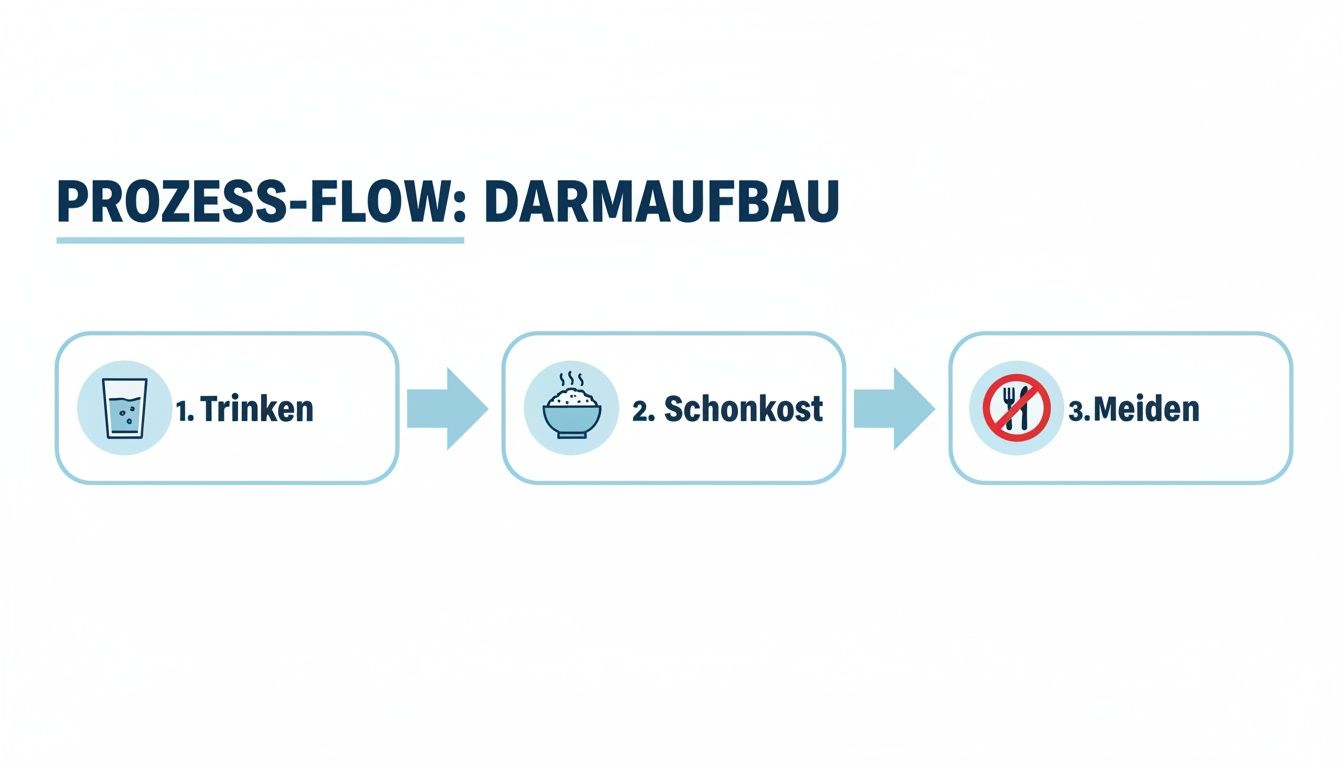
Immediate measures for the first 48 hours
An overview of the most important first steps to immediately support your body after diarrhea and initiate recovery.
| Measure | Why it matters | Practical implementation |
|---|---|---|
| Rehydration | Diarrhea causes the body to lose large amounts of water and important electrolytes (sodium, potassium), which are essential for nerve and muscle function. | Drink still water and unsweetened herbal teas (chamomile, fennel) in small sips. Stay away from sugary soft drinks or juices! |
| Replenish electrolytes | Without minerals, the body cannot properly retain and use fluids. A deficiency leads to weakness and cramps. | A lightly salted, clear vegetable or chicken broth is ideal. It provides fluids, salt, and minerals without putting a strain on your body. |
| Introduce a bland diet | Your gut is inflamed and overwhelmed. Heavy, fatty, or highly seasoned foods would irritate it further. | Start with zwieback, mashed banana, grated apple, or a light carrot soup. These foods are easy to digest. |
These first steps are the foundation for everything that follows. They stabilize your circulation and give your gut the much-needed break it needs.
Patience for Long-Term Recovery
Even if you feel fitter again after a few days, the work going on inside is far from finished. A study involving the Max Delbrück Center showed that after a major disruption (e.g., from antibiotics), the gut microbiome almost completely recovers within six months, but some sensitive bacterial species may disappear permanently. This means restoring your gut’s ecosystem is a marathon, not a sprint.
Remember: The symptoms often disappear much faster than the underlying problem in the gut. Give your microbiome the time it needs to fully regain its diversity and strength.
Strictly avoid anything that could burden your gut during the first few days: hard-to-digest, fatty, heavily seasoned, or very sugary foods. Raw foods, most dairy products, and, of course, alcohol are also off-limits for now. If you would like to learn more about what generally helps with digestion, you will find many more valuable tips for a healthy gut in our guide.
The right diet for rebuilding your gut
Your food is by far the most powerful tool for deliberately nourishing the beneficial bacteria in your gut and restoring balance after a bout of diarrhea. Forget complicated or strict diets—it is much more about simple yet extremely effective principles that you can put into practice immediately.
After the initial phase of the bland diet, during which you gave your digestive tract the necessary rest, active rebuilding now begins. You are gently guiding your gut back to a varied, nutrient-rich diet that provides an ideal foundation for a healthy microbiome.
The gentle transition from a bland diet back to normal
Your intestines are still sensitive, so making an abrupt switch to heavy foods would not be a good idea. Reintroduce new foods slowly and one at a time so you can closely observe how your body reacts. Ideally, gradually incorporate more complex foods over several days.
- Days 1–2 after the bland diet: Start with steamed, easily digestible vegetables such as carrots, zucchini, or parsnips. Boiled potatoes without the skin are also a great choice.
- Days 3–4: You can now add mild sources of protein. These include lean chicken, turkey, or steamed fish. Well-cooked eggs can also be added back to your diet.
- From day 5: Carefully begin adding small amounts of whole-grain foods such as oatmeal or quinoa, and pay attention to how you feel afterward.
Observe your body closely. A little rumbling is normal, but if you experience severe bloating or cramps, it may have been a little too soon for that particular food.
Prebiotics: the superfood for your gut bacteria
Now the true heroes enter the picture: Prebiotics. These are essentially indigestible fibers that serve as food for the beneficial bacteria in your gut. By providing them with this nourishment, you specifically stimulate their growth and multiplication.
Think of it this way: Probiotics are the "new settlers" you add. Prebiotics are the "building materials and food" that enable the good settlers already living in your gut to multiply and form strong colonies.
Prebiotics are the key to sustainable gut restoration. They strengthen your own, individual gut flora from within, instead of merely supplying new bacteria temporarily.
Incorporate these prebiotic powerhouses into your daily routine:
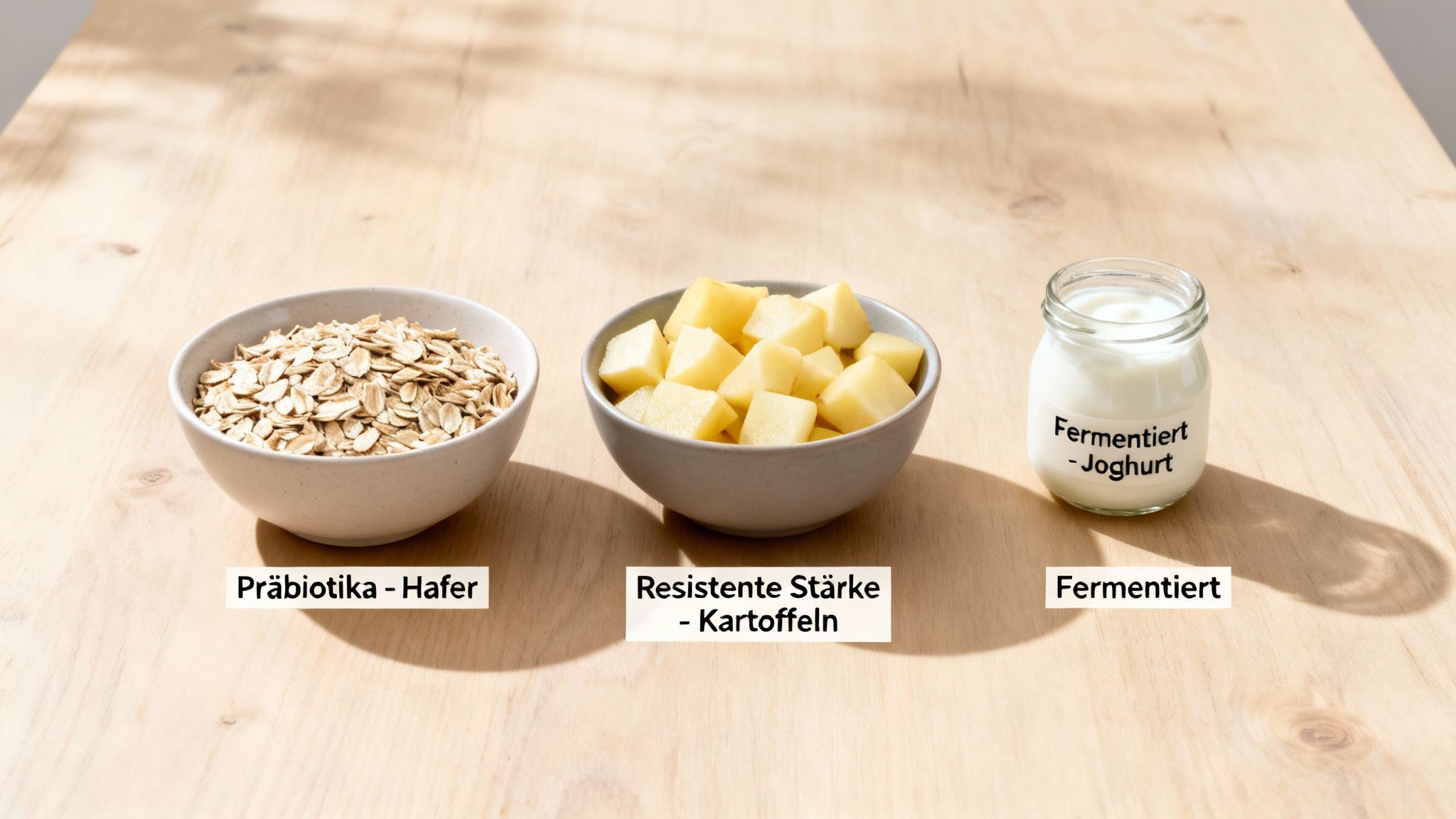
- Resistant starch: This forms when starchy foods such as potatoes, rice, or pasta are cooked and then cooled again. So a cold potato salad is not only delicious but also genuine food for your gut.
- Inulin and fructooligosaccharides (FOS): Abundant in chicory, artichokes, onions, garlic, and leeks.
- Pectin: Found in apples and carrots. A grated apple left to stand briefly until it turns brown is a tried-and-tested home remedy.
- Beta-glucans: Found in oats and barley, they also have positive effects on cholesterol levels.
If you would like to learn more about the basics of a gut-friendly diet, you can find further detailed information and practical tips in our guide on building your gut flora with the right diet.
Fermented foods and their role
Fermented foods such as plain yogurt, kefir, sauerkraut, and kimchi contain live lactic acid bacteria. These can positively influence the gut environment by slightly lowering the pH level, making it less hospitable to unwanted germs.
Although these bacteria usually settle in the gut only temporarily, they contribute to diversity during their passage. It is important to choose unpasteurized products here, as heat treatment destroys the valuable cultures.
What you should absolutely avoid
What you avoid is just as important as what you eat. Certain foods can promote the growth of harmful bacteria and effectively sabotage the rebuilding of your gut flora.
The biggest troublemakers for your gut:
| Food group | Why you should avoid them |
|---|---|
| Sugar & white flour | They are the preferred food for unwanted yeasts and bacteria, which multiply rapidly and disrupt the balance. |
| Highly processed products | Ready-made meals, processed meats, and fast food often contain many additives, unhealthy fats, and little fiber, which put a strain on the gut. |
| Excessive alcohol consumption | Alcohol can directly damage the intestinal lining and negatively alter the composition of the gut flora. |
Science also underscores the central role of diet. As recent statements show, dietary factors are crucial for the regeneration of the gut flora. A varied, fiber-rich diet supports bacterial diversity, while sugar and white flour promote the growth of undesirable microbes. Find further insights into how diet affects the gut flora in this Charité study.
In addition, certain Asian dietary approaches can provide helpful support for a balanced gut flora after diarrhea.
Use probiotics and prebiotics strategically
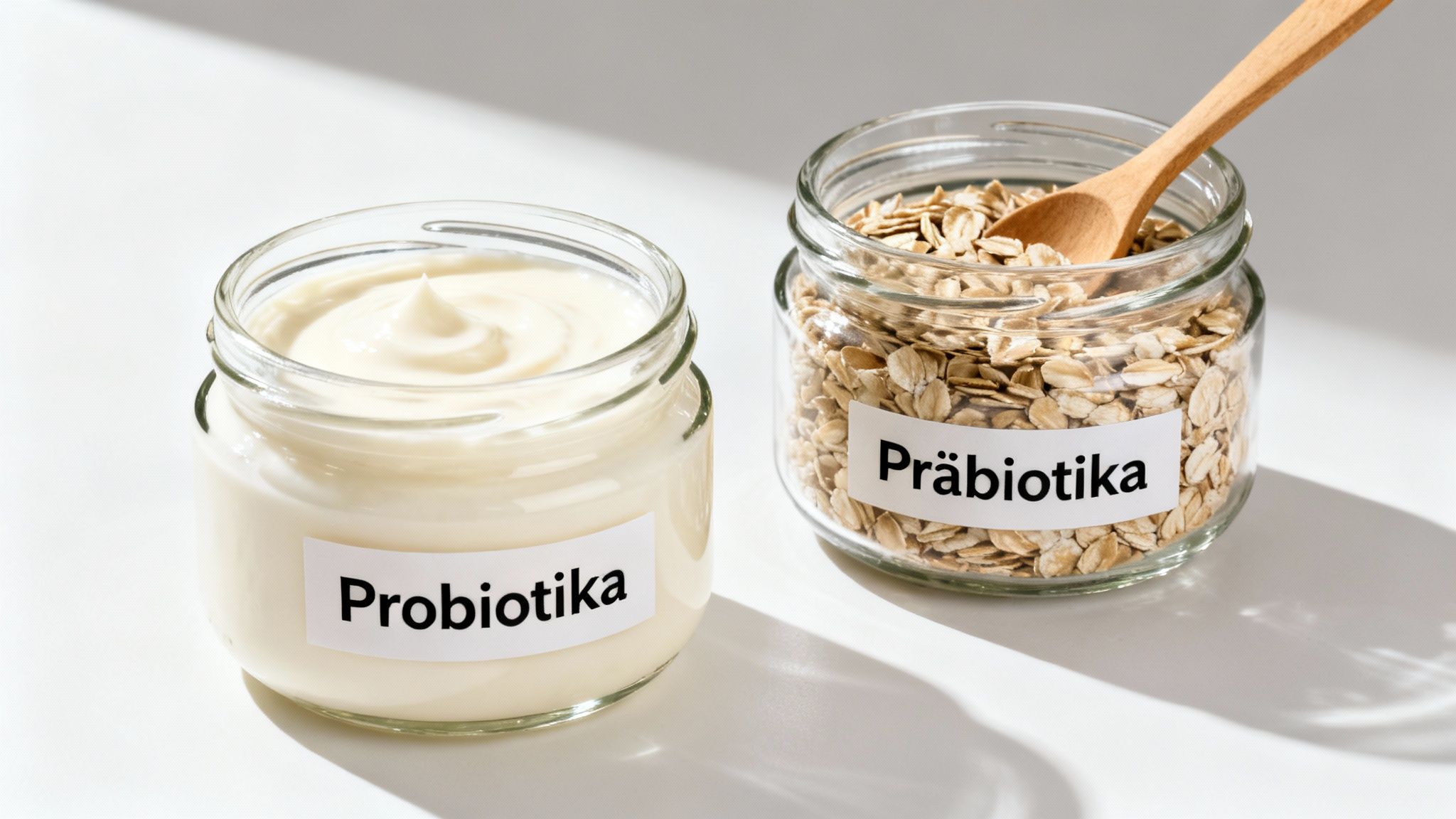
After a nasty bout of diarrhea, the first thought is often: Quickly take probiotics, and things will get better. It sounds logical, but it is only half the solution. To truly restore your gut flora sustainably, you should understand the clever difference between probiotics and prebiotics and use both strategically for your needs.
In short: Probiotics are the “good” bacteria themselves, which you introduce from outside. Prebiotics, by contrast, are food for the beneficial bacteria that already live in your gut. And that is precisely where the key lies.
Why prebiotics are often the smarter approach
Imagine your gut as a garden that has been completely shaken up by a severe storm—diarrhea. Probiotics would now be new seedlings that you plant in the devastated soil. Prebiotics, on the other hand, are the nutrient-rich fertilizer that helps the remaining resilient plants grow vigorously again and spread.
Often, strengthening these native plants is the more sustainable approach. Prebiotics support your individual, naturally occurring bacterial community—the strains that are perfectly adapted to you. Instead of introducing foreign bacteria that may survive only briefly, you strengthen your gut flora from within.
By deliberately enriching your diet with prebiotic foods, you give your gut the tools it needs to heal itself and build a strong, diverse microbiome.
Choose probiotics carefully
Of course, this does not mean that probiotics are useless. Quite the opposite: In some situations, they can be extremely valuable for restoring balance more quickly or specifically promoting certain bacterial strains. The only important thing is not to blindly reach for just any product on the shelf.
In Germany, the blanket use of probiotics after diarrhea or antibiotics is increasingly viewed critically. An insightful study even showed that the gut microbiome recovered more quickly without probiotic administration. Even after six months, the probiotic group had not regained the diversity that the control group had long since restored. Gastroenterologists therefore emphasize the importance of a personalized approach. You can read more about these research findings on probiotics after antibiotic therapy on springermedizin.de.
If you decide to take a probiotic supplement, pay attention to these points:
- Strain specificity: Not all probiotics work the same way. Strains such as Lactobacillus rhamnosus GG or Saccharomyces boulardii have proven particularly helpful in studies for shortening the duration of acute diarrhea.
- Culture density: The number of live bacteria is given in colony-forming units (CFUs). A high CFU count is often, but not always, a mark of quality.
- Survivability: The best bacteria are useless if they cannot survive stomach acid. Look for acid-resistant capsules so that these little helpers actually reach the gut.
Bifidobacteria and lactobacilli as important helpers
Two of the most important and best-known genera in your gut are bifidobacteria and lactobacilli. They are true all-rounders: They aid digestion, produce vitamins, and keep pathogens at bay.
With the right diet, you can specifically promote the growth of these important helpers. If you would like to delve deeper into the fascinating world of these microorganisms, read our detailed article about the role of bifidobacteria and lactobacilli in your gut health.
Practical implementation in everyday life
A combination of both often works best. Focus primarily on a prebiotic-rich diet and, if necessary, supplement it selectively with probiotic foods or a suitable product.
Here is a practical list of foods that your beneficial gut bacteria love and that help with rebuilding.
Prebiotic foods for your gut
A practical list of gut-friendly foods that serve as fuel for your beneficial bacteria and support the rebuilding of your gut flora.
| Food group | Examples | Preparation tip |
|---|---|---|
| Root vegetables & alliums | Chicory, Jerusalem artichokes, parsnips, onions, garlic, leeks | Raw in a salad (chicory) or gently steamed to preserve the valuable nutrients. |
| Legumes | Lentils, chickpeas, beans | Start slowly to avoid bloating. They are easier to digest when well soaked and cooked for a long time. |
| Whole-grain products | Oats, barley, rye bread | Porridge in the morning or whole-grain bread for dinner provides your gut microbes with nourishment for hours. |
| Resistant starch | Chilled potatoes, pasta, or rice | Cook these side dishes the day before and eat them cold as a salad. Valuable resistant starch forms as they cool. |
Remember: Rebuilding your gut flora after a bout of diarrhea is like caring for a delicate ecosystem. It takes some patience and a conscious decision to choose foods that make not only you but also your trillions of tiny helpers in your gut happy.
Which lifestyle factors affect your gut
A gut-friendly diet is the foundation for rebuilding your gut flora after diarrhea—but it is only half the battle. Your overall lifestyle has a tremendous impact on how quickly and sustainably your microbiome recovers.
Factors such as stress, sleep, and exercise are often the behind-the-scenes directors that determine your gut health. If you ignore these areas, you may find yourself making no progress despite eating a perfect diet. It is time to look at the often underestimated but extremely powerful levers for your gut health.
Stress: the direct connection to your gut
You surely know the feeling: Before an exam or an important appointment, your stomach starts to rumble. This is no coincidence. It is the direct result of the gut-brain axis, a permanent communication highway between your brain and your digestive system.
Chronic stress is like a permanent traffic jam on this highway. Stress hormones such as cortisol can negatively alter the composition of your gut flora, make the intestinal barrier more permeable (the so-called “leaky gut”), and promote inflammation. This makes it difficult for beneficial bacteria to become established again, while harmful germs can gain the upper hand more easily.
Stress is not just a feeling in your head; it is a measurable biochemical strain on your gut. Lowering your stress levels is therefore one of the most effective ways to support the regeneration of your gut flora.
Simple ways to reduce everyday stress:
- Conscious breathing breaks: Take just three minutes several times a day to breathe deeply into your abdomen. This immediately signals relaxation to your nervous system.
- Nature walks: Spending just 20 minutes outdoors in green spaces has been shown to lower cortisol levels.
- Digital breaks: Consciously put your smartphone away for an hour, especially before bedtime.
Sleep: your gut’s repair program
While you sleep, your body is hard at work. Nighttime is the most important period for regeneration and repair—especially for your intestinal lining. Sleep deprivation significantly disrupts this process.
Even a single night of poor sleep can reduce the diversity of your microbiome and shift the balance between beneficial and harmful bacteria. Chronic sleep deprivation also weakens your immune system, which is approximately 70 % in the gut, making you more susceptible to new infections.
Tips for restful sleep:
| Problem | Solution |
|---|---|
| Racing thoughts in the evening | Write down your worries and to-dos in a notebook before going to bed. This helps clear your mind. |
| Irregular sleep schedule | Try to go to bed and get up at similar times on weekends as well to stabilize your internal clock. |
| Bedroom too bright | Invest in blackout curtains or a sleep mask. Complete darkness promotes the production of the sleep hormone melatonin. |
Exercise: finding the right balance for your microbiome
Exercise is a fantastic way to promote the diversity of your gut bacteria. Regular, moderate activity stimulates intestinal function, improves circulation, and has been shown to support the growth of beneficial bacterial species.
But be careful: It’s all about finding the right balance. While a brisk walk, a bike ride, or yoga can work wonders, excessive, high-intensity training can have the opposite effect. Overtraining puts the body into a state of stress that can weaken the intestinal barrier and lead to digestive problems.
Find a form of exercise that you enjoy and that doesn’t completely exhaust you. The goal is to activate your body, not place additional strain on it. A healthy lifestyle that includes nutrition, stress management, sleep, and exercise creates the ideal environment in which your gut flora can not only survive but truly flourish.
When an at-home test really makes sense
You’ve changed your diet, consciously taken breaks from stress, and diligently incorporated gut-friendly foods into your daily routine. But somehow, it just isn’t getting better? Although the acute diarrhea has long since passed, you’re still troubled by bloating, irregular bowel movements, or that constant feeling of discomfort in your abdomen.
If you’ve reached this point, it’s time to stop guessing and gain clarity. Instead of continuing to fumble in the dark and trying one strategy after another, you can take a targeted look inside your body to get to the root of the cause.
When general tips are no longer enough
There’s no question that the advice mentioned so far provides an excellent foundation for anyone who wants to rebuild their gut flora after diarrhea. They work wonderfully for many people. But each of us is different, and sometimes the reasons for persistent digestive problems simply lie deeper.
Perhaps you’re dealing with an undiscovered food intolerance that disrupts your system with every meal and keeps irritating it time and time again. Just as well, a deficiency in certain nutrients could simply be slowing down the regeneration of your intestinal lining.
Clarity through targeted self-tests
This is where at-home tests come in. They allow you to stop treating only the symptoms and address the problem at its root. An analysis that you can conveniently perform at home gives you precise insights into your body.
For example, a test can answer these questions:
- Do I react to certain foods? An intolerance test can show you which foods may be promoting low-grade inflammation.
- Am I lacking important nutrients? A nutrient test detects deficiencies in vitamins or minerals that are essential for repairing the intestinal lining.
- Does stress play a hormonal role? A hormone test can reveal an imbalance in the stress hormone cortisol, which directly affects your gut.
A self-test is like a map for your body. It shows you exactly where the problem areas are, so you no longer have to act blindly but can take targeted, personalized measures.
With these results in hand, you have an individual roadmap. You then know exactly which foods you should temporarily avoid, which nutrients you need to replenish specifically, or whether stress management should be your top priority. If you’re wondering whether and how you can test your gut flora, you’ll find all the important information in our related article.
Blood tests as a valuable diagnostic tool
Digestive problems are often closely linked to other processes in the body. Persistent digestive issues can also be a warning sign of nutrient deficiencies or previously undetected food intolerances.
Here, an at-home blood test, such as the one from mybody-x.com, is an incredibly valuable addition. It can provide you with insights into whether:
| Test type | What it can reveal | Your benefits |
|---|---|---|
| Nutrient test | Deficiencies in important vitamins (e.g., vitamin D, B12) or minerals (e.g., zinc), which are crucial for a healthy intestinal lining and a strong immune system. | You can specifically address nutrient deficiencies and thus support the regeneration of your gut from within. |
| Food intolerance test | Sensitivities to certain foods that subtly fuel inflammation in the body and keep your digestion under constant stress. | You can tailor your diet precisely, avoid the troublemakers, and finally give your gut the chance to settle down. |
| Hormone test | An imbalance in hormones such as cortisol (the stress hormone), which directly affects gut health through the gut-brain axis. | You will better understand the connection between stress, hormones, and your gut problems and can take targeted measures to reduce stress. |
The combination of different analyses gives you a complete picture of your health situation. This finally enables you to make informed decisions and give your body exactly what it needs for lasting healing.
What else you should know
After so much information about rebuilding your gut, a few final, very specific questions often come up. That is completely normal! We have collected the most frequently asked questions to give you even more confidence on your way to a calmer gut.
How long does it really take for my gut flora to get back to normal?
This is probably the question we are asked most often. The honest answer: It depends entirely on you and your body.
Acute symptoms such as loud stomach rumbling or loose stools are often a thing of the past after just a few days. But the real hard work in the gut is still in full swing. The complete regeneration of bacterial diversity, which is so crucial for stable gut health, can take several weeks to months.
Especially after a major disruption, such as one caused by antibiotics, patience is needed. Studies show that even after six months, not all of the original bacterial species have necessarily returned. Staying consistent and following a gut-friendly lifestyle are therefore the keys to success.
Is probiotic yogurt enough to rebuild my gut?
Probiotic yogurt, kefir, or other fermented dairy products are a great addition to your diet. They provide live bacterial cultures that can temporarily have a positive effect on the gut environment and may promote greater diversity.
They are not a miracle cure, though. The bacterial strains you consume with yogurt are usually only temporary guests in your gut. A much more sustainable approach is to deliberately feed the beneficial bacteria already present in your body. So focus above all on a high-fiber diet rich in prebiotics from vegetables, legumes, and whole grains—this is the absolute favorite food of your beneficial gut bacteria.
When should I see a doctor about diarrhea?
Acute diarrhea is usually unpleasant but harmless and goes away on its own. In some cases, however, you should definitely see a doctor.
Watch for these warning signs:
- The diarrhea lasts longer than three days.
- You develop a high fever or suffer from severe, cramping abdominal pain.
- You notice blood in your stool.
- You feel severely dehydrated (extreme thirst, dizziness, dark urine, dry mouth).
- After the acute phase, new symptoms such as severe bloating or chronic digestive problems remain.
It is important to consult a doctor here to make sure there is no more serious underlying cause.
Can tests like those from mybody-x.com also help with chronic digestive problems?
Yes, absolutely. Especially when symptoms simply do not go away or keep returning, pure guesswork is no longer helpful. This is where the blood tests from mybody-x.com can provide valuable insights that you would never get from general advice. They uncover hidden causes that are often the true root of the problem.
Instead of continuing to grope in the dark, you receive a clear analysis of your body. This is the basis for finally taking targeted measures tailored to you.
The cause is often a combination of several factors. An intolerance test can show you which foods you should avoid, while a nutrient test reveals which vitamins and minerals your body urgently needs for recovery. This helps you understand the connections within your body much better and finally take control of your health.
Are you ready to stop guessing and find out the exact causes of your digestive issues? The self-tests from mybody-x.com offer you a simple, scientifically sound way to gain clarity about your gut health, nutrient levels, and possible intolerances—all from the comfort of your home. Start your journey toward feeling better on the inside at https://mybody-x.com.

Share now:
Build Your Microbiome: The Ultimate Guide to Your Gut
What white pieces in stool really say about your health