
Build up your microbiome: The ultimate guide to your gut
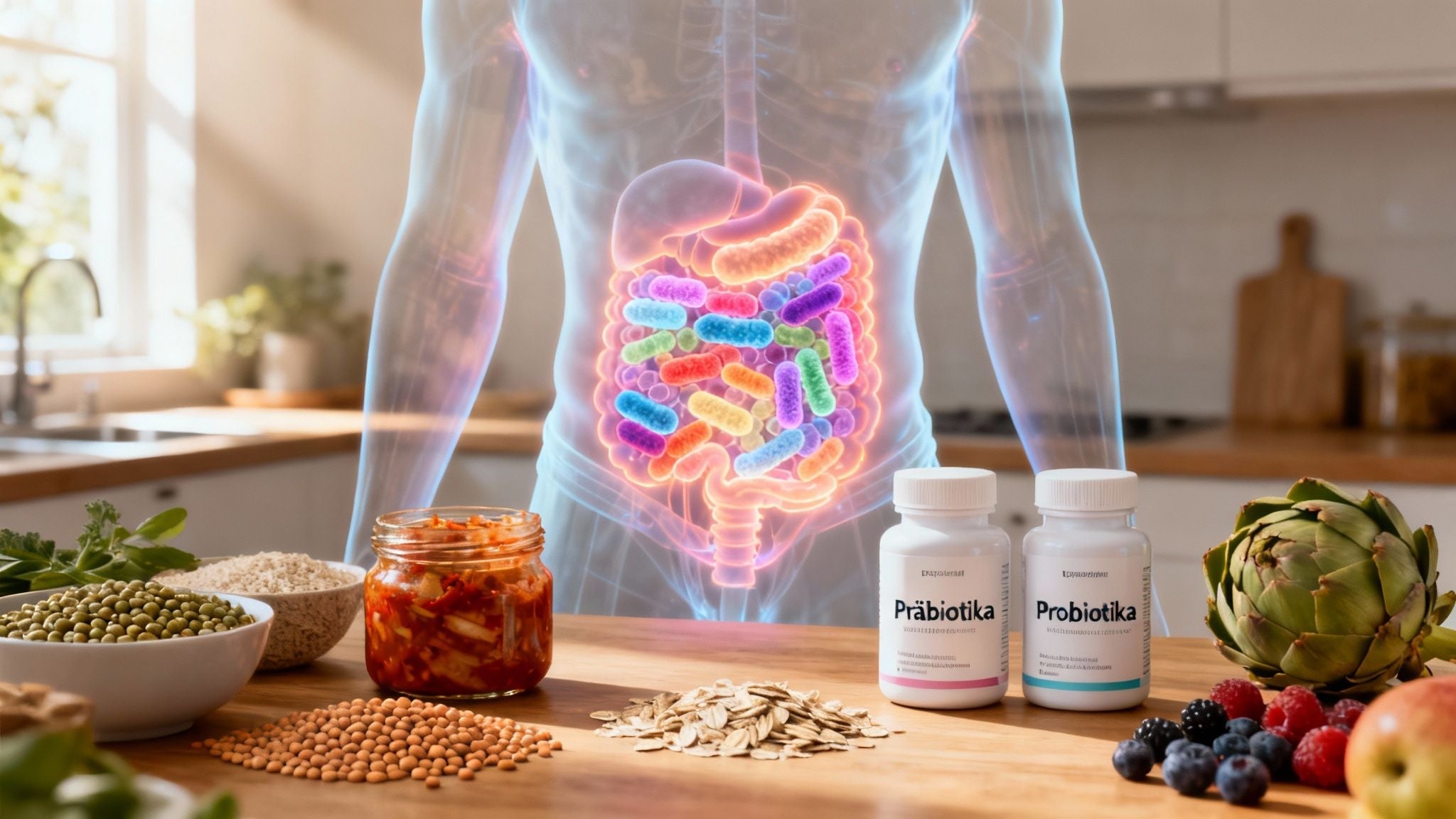
If you want to build up your microbiome, the basic idea is to deliberately feed and care for the trillions of tiny helpers in your gut. Imagine creating a strong, diverse team in your gut through a smart diet and a mindful lifestyle—one that works for your digestion, immune system, and overall well-being.
What your microbiome really is and how to strengthen it
You probably constantly hear and read about gut health, but what does “microbiome” actually mean? It isn’t a foreign entity, but a living, extremely important part of you. A gigantic community of trillions of bacteria, viruses, and fungi that primarily live in your gut.
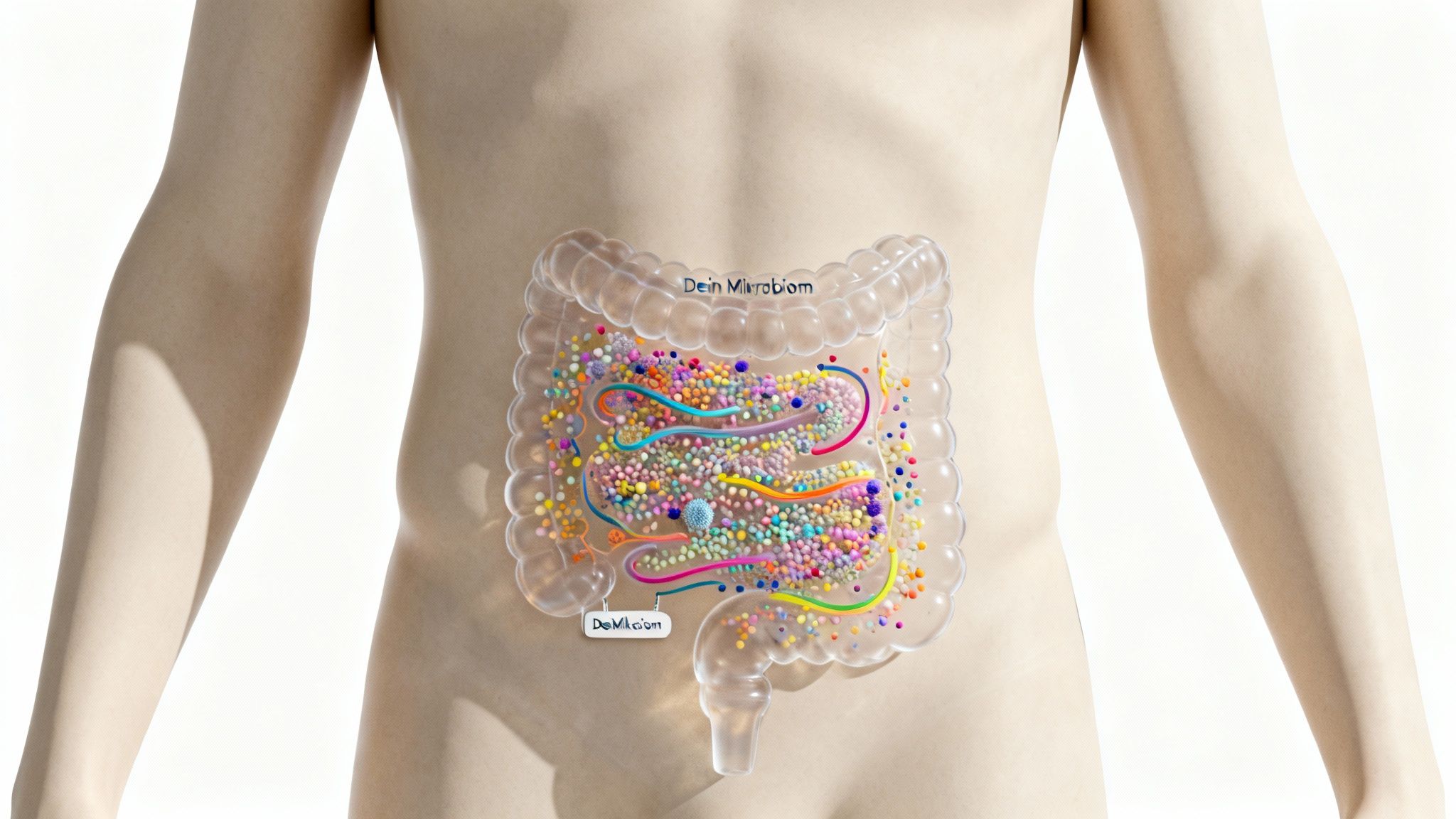
These microscopic inhabitants are anything but passive freeloaders. They work around the clock for you and play a role in far more than just digestion.
More than just digestion
A healthy microbiome is a true multitasker. It not only helps break down the nutrients in your food and make them usable. It also continuously trains your immune system—no wonder, since around 70% of your immune cells are located directly in your gut.
On top of that, your gut bacteria produce vital vitamins, such as vitamin K and several B vitamins. Via the so-called gut-brain axis, they even send signals directly to your brain. Put simply: The balance in your gut directly affects your mood, how well you cope with stress, and your mental fitness.
To explore this topic in greater depth, it’s best to read our detailed article about what the microbiome actually is.
When the balance tips
It becomes truly problematic when this finely tuned ecosystem gets out of balance. This imbalance—known to experts as dysbiosis—occurs when harmful bacteria take over and the diversity of beneficial microbes declines.
The effects are often diffuse and go far beyond classic stomachaches or bloating. Maybe you constantly feel tired, struggle with skin blemishes, or notice that you catch every infection going around. All of these can be subtle cries for help from your gut.
Dysbiosis is like a poorly functioning team. When the wrong players are in charge, your entire body’s performance suffers—from energy production to immune defense.
Building up your microbiome is therefore not a one-time project but a dynamic process. It is about regaining control and deliberately strengthening your gut with the right strategies. The following sections provide you with a concrete roadmap for achieving this goal so that you can feel more energy and well-being in the long term. Consider this knowledge your essential foundation.
Diet as your most important tool
Your daily diet is without a doubt the strongest lever when you want to build up your microbiome and stabilize it. This is not about complicated diet rules, but about deliberately feeding the beneficial bacteria in your gut. You need to create an environment in which they can feel comfortable and multiply.
Simply imagine your gut inhabitants as a garden: Without the right fertilizer and the right plants, only weeds will grow in the end.
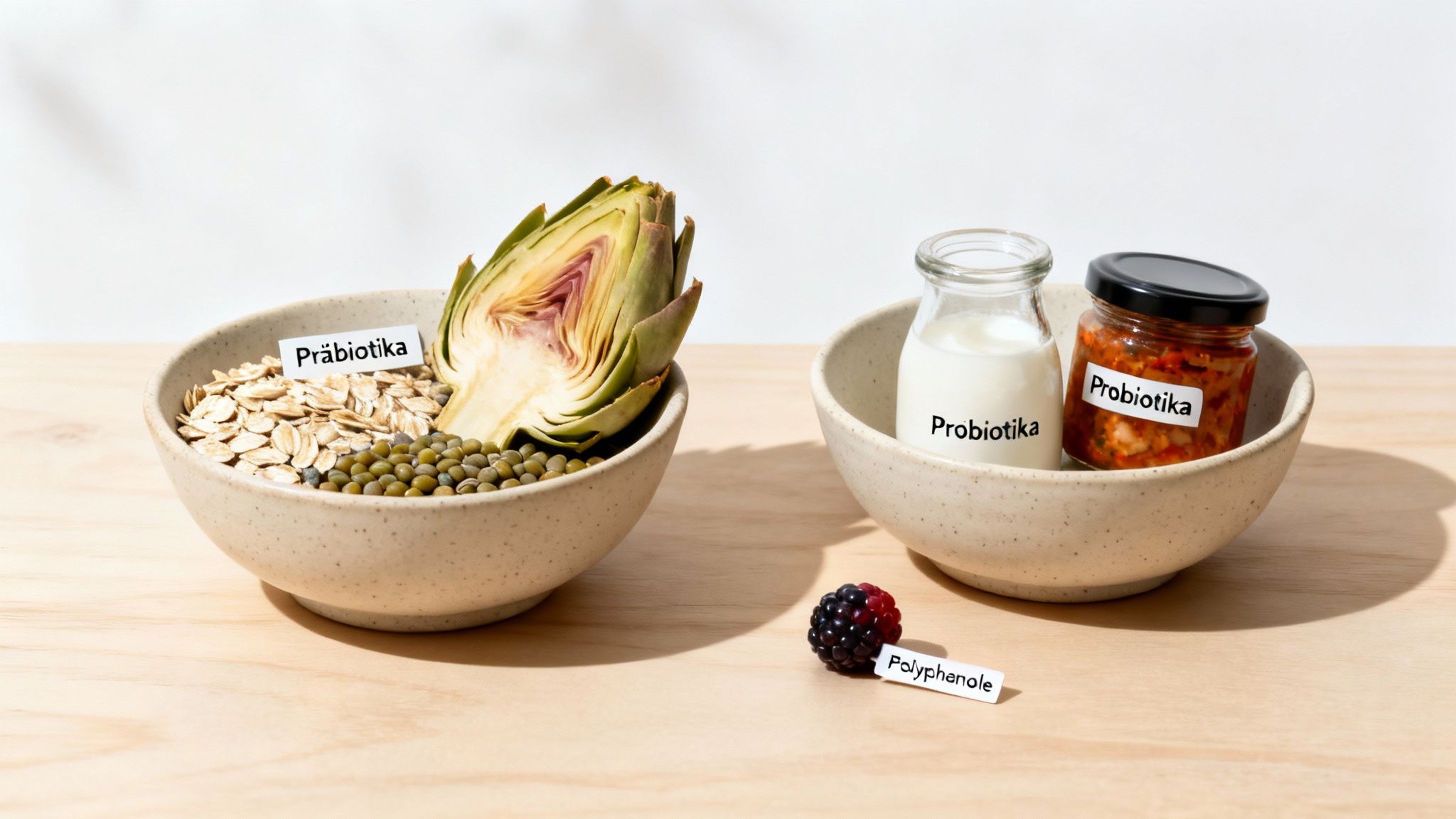
To make this inner garden bloom, two concepts in particular are crucial: prebiotics and probiotics. Although the terms sound similar, they serve completely different purposes for your gut health.
Prebiotics: Food for your good bacteria
Prebiotics are, so to speak, your beneficial gut bacteria’s favorite food. They are special, indigestible fibers that pass through the stomach and small intestine unharmed. Only in the large intestine are they fermented by your microbes.
This “fuel” specifically stimulates the growth of health-promoting bacterial strains such as bifidobacteria and lactobacilli. And it gets even better: When these bacteria metabolize prebiotics, they produce short-chain fatty acids such as butyrate—a true super fuel for the cells of your intestinal lining.
Prebiotics are not living organisms but the “fertilizer” for your inner ecosystem. Without them, your best helpers go hungry and cannot multiply.
The good news is that prebiotics are very easy to incorporate into your daily routine.
Top sources of prebiotic fiber:
- Legumes: Lentils, chickpeas, and black beans are true powerhouses.
- Vegetables: Artichokes, onions, garlic, leeks, and asparagus provide plenty of fuel.
- Whole grains: Oats, barley, and rye are excellent sources.
- Fruit: Slightly unripe bananas and apples also contain valuable prebiotics.
The key here is diversity. Try to combine as many different plant sources as possible. This promotes a broad spectrum of beneficial bacteria. A balanced diet is essential, as you can also read in our guide to the modern food pyramid and how it is structured.
Probiotics: The Living Helpers for Your Gut
Unlike prebiotics, probiotics are living microorganisms. They are the “good” bacteria themselves, which you consume through food. This directly increases the diversity and number of beneficial inhabitants in your gut.
They colonize your gut—at least temporarily—and help restore the balance, displace harmful pathogens, and strengthen the intestinal barrier. Regular intake is important to maintain the positive effects.
Fermented foods are the best natural source of probiotics. Fermentation not only produces valuable bacterial cultures; it also makes foods easier to digest.
Include these probiotic foods:
- Plain yogurt & kefir: Look for products with “live cultures” and no added sugar.
- Sauerkraut: Choose unpasteurized sauerkraut from the refrigerated section—heating kills the beneficial bacteria.
- Kimchi: This Korean fermented vegetable is a flavorful and effective source.
- Kombucha: This fermented tea drink contains a variety of yeasts and bacteria.
Polyphenols: The Underrated Protectors
In addition to prebiotics and probiotics, there is a third group of active compounds that is crucial for building the microbiome: polyphenols. These are secondary plant compounds that give fruits, vegetables, and tea their vibrant colors and partly bitter taste.
Polyphenols have powerful antioxidant and anti-inflammatory effects in the body. Some of them also reach the large intestine, where they are metabolized by your bacteria. There, they promote the growth of beneficial bacteria such as Akkermansia muciniphila (extremely important for a healthy intestinal lining) while simultaneously inhibiting the growth of unwanted pathogens.
Excellent sources of polyphenols include:
- Berries (blueberries, raspberries, strawberries)
- Dark chocolate (with a high cocoa content)
- Green and black tea
- Red wine (in moderation)
- Nuts and flaxseeds
These powerful compounds perfectly round out your gut-friendly diet.
Here is a brief overview to help you choose the right foods for your gut.
Top Foods for Building Your Microbiome
An overview of the most important nutrient groups and foods that specifically promote a healthy gut microbiome.
| Nutrient group | Effects in the gut | Examples of foods |
|---|---|---|
| Prebiotics | They serve as “food” for beneficial bacteria and promote their growth as well as the production of butyrate. | Onions, garlic, leeks, artichokes, lentils, chickpeas, oatmeal, unripe bananas |
| Probiotics | They provide live, beneficial bacteria that support the balance of the gut flora and increase diversity. | Plain yogurt, kefir, unpasteurized sauerkraut, kimchi, kombucha, miso |
| Polyphenols | They have antioxidant and anti-inflammatory effects and promote the growth of specific beneficial bacteria such as Akkermansia. | Berries, dark chocolate (>70%), green tea, nuts, flaxseeds, olive oil |
By combining foods from all three categories, you optimally nourish your microbiome and create the best conditions for robust gut health.
Your practical plan
Implementation does not have to be complicated. Even small but consistent changes can make a big difference. The German Nutrition Society (DGE) confirms that our diet measurably affects the gut flora within a few days to weeks.
While the recommended daily fiber intake is 30 g is, many adults in Germany consume only around 18–23 g. However, consistently changing your diet over 8–12 weeks can already produce noticeable positive effects on the gut’s bacterial profile.
A simple start could look like this: Begin your day with oatmeal (prebiotics) and a handful of berries (polyphenols), mixed with plain yogurt (probiotics). This way, you have already covered all three important components at breakfast and optimally prepared your gut for the day.
When probiotics and prebiotics really make sense
A varied, fiber-rich diet is and remains the foundation of a healthy gut. But honestly, there are situations in life when even the best diet reaches its limits.
Imagine that your inner garden has been completely devastated by a storm—such as a necessary course of antibiotics. In this case, simply fertilizing is often no longer enough. You need to deliberately plant new, resilient plants to restore the ecosystem.
This is exactly where probiotics and prebiotics as dietary supplements come into play. They are not miracle cures, but in certain situations they are extremely effective tools for targeted microbiome development.
Choose the right helpers for the right task
The probiotics market is huge and confusing. Simply grabbing any product off the shelf is often like playing the lottery. The key is to know which bacterial strains are right for your specific needs, because each strain has its own superpowers.
The best-known and most extensively researched groups are lactobacilli and bifidobacteria.
- Lactobacilli: These lactic acid bacteria are true all-rounders. Strains such as Lactobacillus rhamnosus GG or Lactobacillus plantarum are known to strengthen the gut barrier and can help regulate digestion.
- Bifidobacteria: They are particularly important inhabitants of the colon and play a key role in the production of short-chain fatty acids. Strains such as Bifidobacterium lactis are often associated with strong immune function.
Probiotics are not limited to humans, by the way; our pets can also benefit from them. You can find more information in this helpful guide about probiotics for dogs.
Choosing the right probiotic is like choosing the right tool. A hammer is great for driving in a nail but useless when you need to tighten a screw. In the same way, each bacterial strain has a specific function in the gut.
If you would like to delve deeper into the world of the most important gut bacteria, you will find many more fascinating details in our article about bifidobacteria and lactobacilli.
CFU – What the number on the package means
On every good probiotic package, you will find the abbreviation “CFU.” It stands for colony-forming units and tells you how many live, viable bacteria are contained in each dose.
More is not automatically better, but for effective support, there should be at least a few billion. Values between 5 and 20 billion CFU per daily dose are a good guideline for most applications.
Prebiotics as targeted nourishment
While probiotics are the new workers you send into your gut, concentrated prebiotics are the specialized food that ensures they stay there and multiply. This is especially useful if you do not get enough fiber from your diet alone.
Powdered prebiotics, such as inulin (derived from chicory root) or acacia fiber, can easily be mixed into yogurt or a smoothie. They serve as targeted nourishment for your beneficial bacteria, thereby promoting their long-term growth.
Specific everyday applications
So when is it really worth considering these helpers? Here are some typical situations in which targeted support can make a difference.
Scenario 1: After antibiotic treatment
- Problem: Antibiotics do not distinguish between good and bad bacteria. They often leave your gut like a scorched earth, drastically reducing the diversity of your microbiome.
- Solution: A course lasting several weeks with a probiotic containing various strains of lactobacilli and bifidobacteria can help replenish the gaps more quickly. Ideally, start during the treatment, but leave a gap of several hours between taking it and taking antibiotics.
Scenario 2: For irritable bowel syndrome
- Problem: Many people with irritable bowel syndrome suffer from an imbalanced gut flora, which leads to bloating, abdominal pain, or irregular bowel movements.
- Solution: Specific strains such as Bifidobacterium infantis 35624 or Lactobacillus plantarum 299v have been shown in studies to alleviate symptoms. Here, targeted selection, possibly following an analysis, is particularly important.
Scenario 3: Strengthening the immune system in winter
- Problem: During the cold season, you’re susceptible to every infection going around. Since a large part of your immune system is located in your gut, a strong gut flora is your first line of defense.
- Solution: Taking probiotics preventively, with strains such as Lactobacillus rhamnosus GG or Bifidobacterium lactis BB-12, throughout the winter months can support your immune defenses.
The targeted use of probiotics and prebiotics is therefore a powerful complement to a gut-friendly diet. The aim is not to try things blindly, but to understand what your gut really needs in a particular situation. This allows you to support the development of your microbiome effectively and purposefully.
How stress and sleep affect your gut flora
Building a strong microbiome is about more than just your diet. You can eat as mindfully as possible—but if your lifestyle doesn’t support you, you’ll undermine your own progress. Two of the biggest yet often underestimated factors are stress and sleep.
Your gut and brain are in constant communication via the so-called gut-brain axis. Think of it as a data highway on which messages are sent in both directions around the clock. What’s going on in your head therefore has a direct impact on your stomach—and vice versa.
The impact of chronic stress
Do you know that feeling? Before an important presentation or an exam, your stomach suddenly starts grumbling uneasily. That’s the gut-brain axis in action. Short-term stress is completely normal and usually not a problem. Chronic stress, meaning the everyday pressure that simply never lets up, is a real saboteur of your gut flora, however.
When you are constantly under pressure, your body releases stress hormones such as cortisol. These hormones can reduce the diversity of your beneficial bacteria, make the intestinal barrier more permeable (the so-called “leaky gut”), and fuel low-grade inflammation. Essentially, you create an environment in which the “good” microbes feel uncomfortable and the “bad” ones have an easy time.
Chronic stress is like a constant source of interference in communication between the gut and the brain. It weakens your beneficial bacteria and opens the door to an imbalance that can affect your overall health.
Practical tips for reducing stress on your gut:
- Mini breathing breaks: Take just three minutes several times a day for conscious, deep abdominal breathing. This directly signals your nervous system to switch from “fight-or-flight” to “rest-and-digest” mode.
- Head outdoors: A 20-minute walk in nature has been shown to lower cortisol levels.
- Digital break: Consciously put your smartphone aside, especially during meals. Eating mindfully and without distractions not only improves digestion but also reduces perceived stress.
These small but consistently practiced habits are what ultimately make a major difference to the balance in your gut.
Why your gut regenerates at night
Your sleep quality is just as important as your stress level. While you sleep, essential repair processes take place in your body—including in your gut. The cells lining your intestines renew themselves, and your microbiome gets the time it needs to stabilize.
Sleep deprivation completely disrupts this rhythm. Studies show that just a few nights of too little sleep can negatively alter the composition of the microbiome. Diversity declines, and the balance between beneficial and potentially harmful bacteria shifts.
Research from German centers such as Kiel and Jena also shows that the metabolic activity of the microbiome naturally declines with age. Factors such as chronic stress and sleep deprivation can accelerate this process and, for example, lead to a decline in health-promoting lactobacilli. A healthy lifestyle is therefore the key factor in maintaining a “young” and diverse microbiome, as you can also read in the findings of medical research on the microbiome.
Strategies for gut-friendly sleep:
- Establish an evening routine: Turn off all screens an hour before going to bed. Reading a book or listening to relaxing music prepares your brain for the rest phase.
- Pay attention to the timing of your meals: Heavy, fatty meals shortly before bedtime are off-limits. Your digestive system also needs a break at night.
- Create a cool, dark environment: An optimal sleeping temperature and complete darkness promote the production of the sleep hormone melatonin, which also has a protective effect on the gut.
Exercise: Finding the golden mean
Physical activity also communicates directly with your gut inhabitants. Regular, moderate exercise is fantastic for building your microbiome. It stimulates blood flow to the gut and promotes the production of the important anti-inflammatory short-chain fatty acid butyrate.
But be careful: more is definitely not always better. Excessive exercise, such as running a marathon without adequate preparation, puts the body under immense stress. This physical stress can temporarily make the intestinal barrier more permeable and significantly disrupt the balance of the gut flora.
So find a balance that feels right for you. A combination of moderate endurance training, such as jogging or cycling, and targeted strength training is ideal for supporting the diversity of your microbiome without overtaxing your body.
Making your progress visible instead of just guessing
You eat mindfully, pay attention to stress management, and incorporate fermented foods into your daily routine. That’s fantastic! But how do you really know whether your efforts to build your microbiome are bearing fruit and promoting exactly the right bacterial cultures?
Acting blindly is not a good strategy for your health. Assumptions and general advice will only take you so far. To proceed in a targeted and efficient way, you need a clear assessment—a kind of map of your inner ecosystem.
Why an analysis is the best starting point
A microbiome test is far more than just a snapshot. It is your personal compass, showing you the way forward. Instead of guessing which probiotic strains you need or whether you are eating enough fiber, you get measurable data to work with.
A modern stool analysis, such as the mybody® microbiome analysis, gives you detailed insights into the composition of your gut flora. It provides the scientifically sound basis for personalizing your approach. No more one-size-fits-all methods—instead, you can start targeting the right levers.
A microbiome test turns assumptions into knowledge. It shows you not only where you stand, but also which steps will be most effective for you personally.
With a report like this in hand, you can create a plan tailored precisely to your gut's needs. You can deliberately choose the right probiotics and adjust your diet so that it feeds exactly the bacteria you are lacking. You can find comprehensive information about how it works and its benefits in our article about the at-home stool test.
The following infographic shows how closely stress, the gut, and sleep are connected through the gut-brain axis—a cycle you can break with the right data.
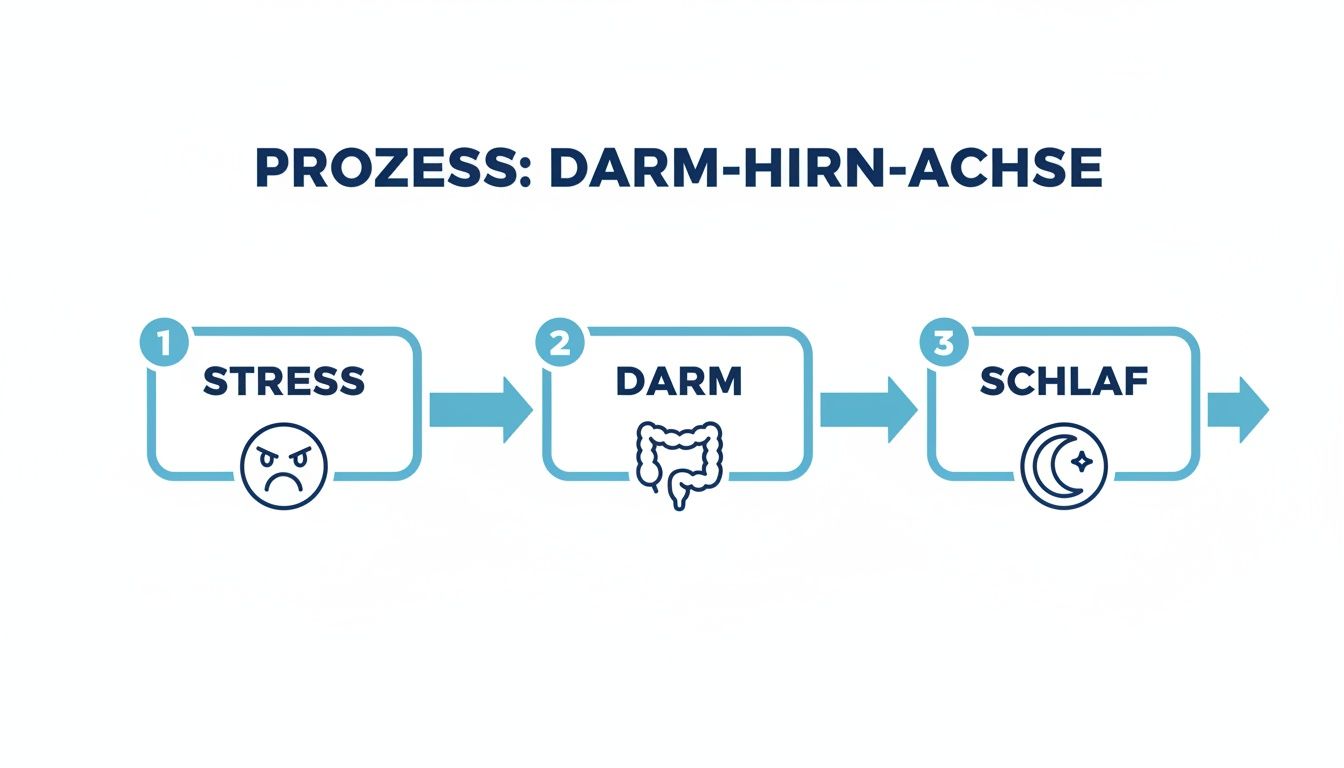
This visualization clearly shows how external pressure directly affects your microbiome, which can in turn impair your sleep quality—a test can make these connections visible to you.
Which markers really matter
A good analysis report provides you with more than just an unwieldy list of bacteria. It translates complex data into understandable, actionable information. Key markers examined include:
- Bacterial diversity: A key indicator of a healthy microbiome. High diversity means that your gut is more resilient to disruptions.
- Firmicutes-to-Bacteroidetes ratio: This ratio provides clues about how you process energy from food and may be associated with body weight.
- Presence of key bacteria: This is where things get really interesting. The analysis shows whether important helpers such as Akkermansia muciniphila (crucial for a healthy intestinal lining) or Faecalibacterium prausnitzii (a top producer of anti-inflammatory butyrate) are present in sufficient numbers.
- Dysbiosis index: A value indicating whether there is a general imbalance in your gut flora.
- Fungal load: This also examines whether yeasts such as Candida albicans have overgrown, which can likewise cause symptoms.
General approach vs. analysis-based improvement
Anyone looking to improve their gut often faces a choice: simply start with general tips or go straight into an in-depth analysis? The following table shows why the second approach is the smarter choice in the long term.
| Aspect | General approach (without a test) | Analysis-based approach (with the mybody® test) |
|---|---|---|
| Efficiency | Vague and often inefficient, as you can only guess what your gut needs. | Highly efficient, as measures directly target the deficiencies identified through testing. |
| Diet | You follow general advice such as “eat more fiber.” | You know exactly which specific dietary fibers (e.g., inulin) you should increase. |
| Probiotics | The selection is based on guesswork, often without any noticeable effect. | You can select specific bacterial strains that have been demonstrably lacking in your gut. |
| Motivation | Difficult to maintain because progress is not visible. | High motivation, as a repeat test after a few months objectively confirms your progress. |
| Costs | Low initial costs, but potentially high expenses for useless products. | An initial investment in the test that quickly pays for itself through targeted and effective measures. |
Another test after about three to six months is not just a check-up, but the strongest motivator of all. When you see in black and white how the diversity of your gut flora has increased and important bacteria have become re-established, you know that every step was worthwhile.
This gives you the strength you need to stay consistent and stabilize your gut health in the long term.
The most frequently asked questions about rebuilding your microbiome
On the path to a healthy gut, very similar questions often arise. That is why, to conclude, we have summarized the most important points that provide additional reassurance and clear up the last remaining uncertainties on your journey toward successful microbiome rebuilding.
How long does it really take to rebuild the microbiome?
This is probably the question we are asked most often—and the honest answer is: It all depends on you. Your microbiome is as individual as your fingerprint, and how quickly it recovers depends largely on your personal starting point.
You will often notice the first positive changes after two to four weeks of consistently changing your diet. You may notice that your digestion suddenly becomes much more regular or that you start the day with more energy in the morning.
However, if your microbiome is severely damaged, for example after a long course of antibiotics, it becomes a marathon, not a sprint. The process can take several months or even a year. Patience and consistency are your most important tools here.
Should I give up if I experience bloating during the transition?
Absolutely not! Even if it initially feels uncomfortable, early bloating or slight rumbling in your stomach is often a really good sign. It shows that something is finally happening in your gut.
Imagine serving your good gut bacteria their favorite food—fiber—again after a long time. They throw themselves at it and practically hold a feast. Gases are produced during this fermentation process; that is completely normal. Your gut first needs to get used to the new “workload.”
Consider initial bloating positive feedback from your gut. It signals that the new “employees” have started working and that the ecosystem is being rebuilt.
Our practical tip: Take it slowly. Gradually increase the amount of fiber-rich foods over several weeks. And most importantly: Drink enough still water! The symptoms usually subside on their own after one to two weeks.
Can I build up my microbiome without supplements?
Yes, absolutely. The foundation of successful microbiome development is and remains a varied, plant-rich, fiber-rich diet. For many people, this is already the key to strengthening their gut flora sustainably.
Dietary supplements such as probiotics are no substitute for a healthy lifestyle, but they can be an extremely powerful tool. They are especially useful support when:
- You have just completed a course of antibiotics.
- You are struggling with specific symptoms such as irritable bowel syndrome.
- A microbiome analysis reveals a clear deficiency in certain bacterial strains.
They help you target the weak points in your gut.
What role does sugar play in my microbiome?
Sugar is essentially “fast food” for the unwanted inhabitants of your gut—certain bacteria and yeasts such as Candida. A high intake of added sugar and rapidly digestible carbohydrates feeds these troublemakers and can seriously disrupt the balance of your gut flora.
These harmful microbes displace beneficial bacteria and can fuel low-grade inflammation in the body. Reducing added sugar in sweets, pastries, and ready-made meals is therefore one of the most effective steps to help your good gut bacteria regain the upper hand.
mybody-x.com knows that the path to a healthy microbiome looks different for everyone. If you no longer want to guess but want to know exactly what your gut needs, a scientifically grounded analysis is the first step. Discover the mybody® Microbiome Analysis now and receive your personal roadmap to greater well-being: https://mybody-x.com



Share now:
Why Test Your Microbiome? Greater Well-Being Through Gut Analysis
Rebuilding gut flora after diarrhea: Your ultimate guide