
Bifidobacteria and lactobacilli: The most important helpers for your gut
Bifidobacteria and lactobacilli are among the most important and well-known “good” bacteria in your gut. They are absolutely essential for healthy digestion, a strong immune system, and your overall well-being—because they maintain the balance in your gut flora.
Your inner garden and its diligent helpers
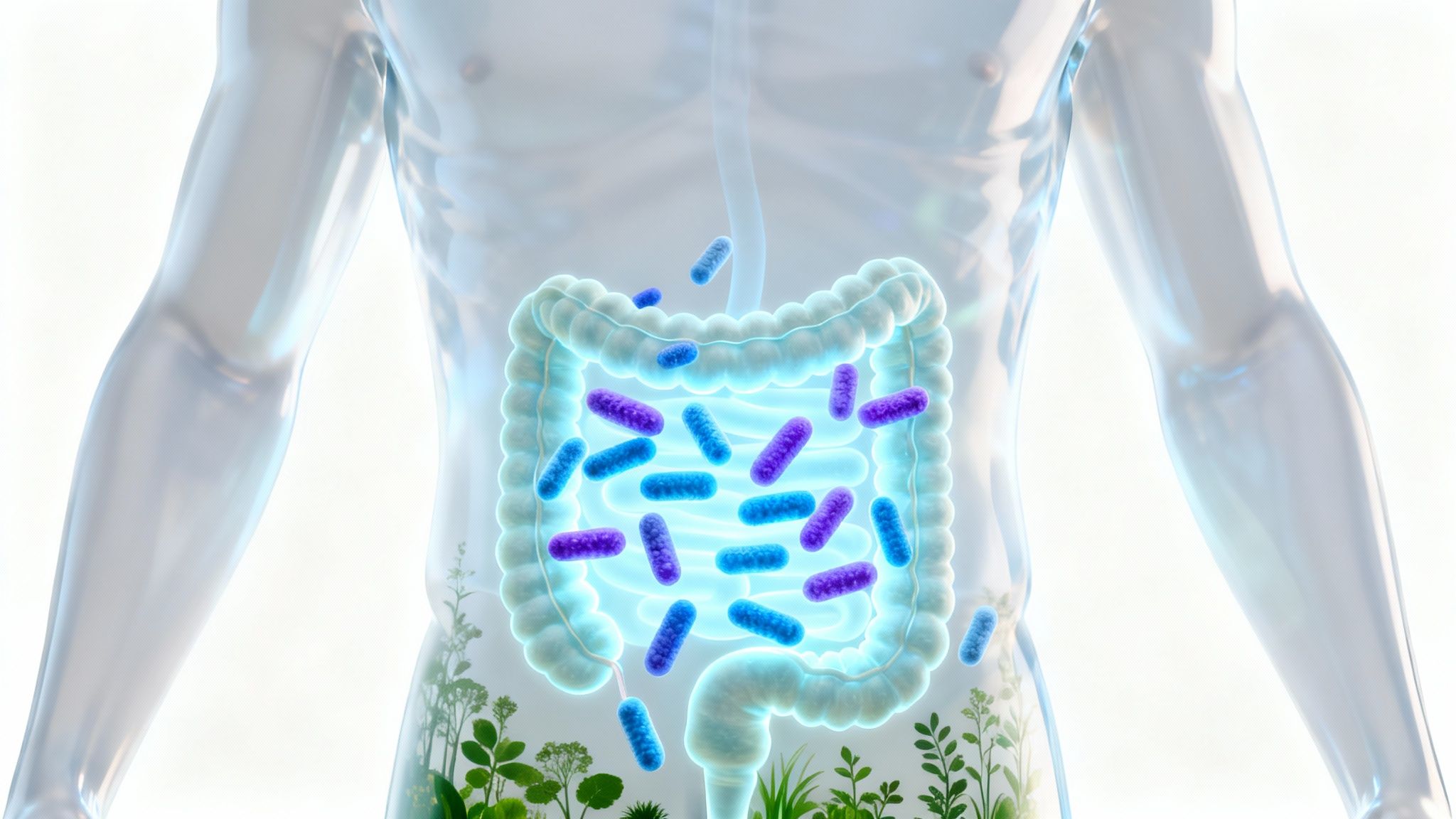
Imagine your gut as a vast, living garden. This complex ecosystem is home to trillions of microorganisms that together form your gut microbiome. Bifidobacteria and lactobacilli are the diligent gardeners in this picture, tirelessly maintaining order and health. Symbolically, they weed out the weeds (that is, harmful pathogens), fertilize the soil, and ensure that everything blooms and thrives.
These two groups of bacteria are the true superstars of your gut flora. They are among the very first colonizers of your gut after birth and serve you faithfully throughout your life. But they are far more than passive roommates—they actively shape your health.
Why balance is so important
The interplay in your gut is an incredibly delicate balance. As long as beneficial bacteria such as bifidobacteria and lactobacilli predominate, everything runs smoothly. But if this system gets out of balance—a condition known as dysbiosis—less beneficial or even harmful microorganisms can spread.
Such dysbiosis can manifest through a whole range of symptoms that you may know all too well:
- Digestive problems such as bloating, constipation, or diarrhea
- A weakened immune system and a higher susceptibility to infections
- Fatigue and a general feeling of exhaustion
- Skin problems or mood swings
The balance of your gut bacteria is not a fixed state but a dynamic process. Your lifestyle, diet, and stress level have a direct impact on which bacteria thrive best in your “inner garden.”
That’s why caring for your personal “gut gardeners” is one of the best investments in your long-term well-being. Understanding what these microorganisms are and what they need is the first step toward regaining control over your gut health. This is exactly where the analyses from mybody-x.com come in, providing you with precise insights into the composition of your gut flora.
If you want to dive even deeper into the fascinating world of the microbiome, you’ll find more information in our comprehensive guide on what gut bacteria are exactly and how they work.
The specialists for your gut compared directly
Now that you know the basics of your inner ecosystem, let’s take a closer look at the two main players: bifidobacteria and lactobacilli. It’s best to think of them as two highly specialized expert teams in your body. Although they work closely together, they have very different areas of responsibility and preferred “workplaces.”
Both are absolutely essential for a healthy gut flora, but nature has assigned them to different sections of your digestive tract. This clever division of labor ensures that every part of your gut is optimally nourished and protected.
Lactobacilli: the fast helpers in the small intestine
Lactobacilli, often simply called lactic acid bacteria, thrive in the small intestine. This is exactly where most of the nutrients from your food are absorbed. Here, they play a key role by rapidly breaking down simple carbohydrates—especially lactose (milk sugar)—and converting them into lactic acid.
This process has a huge benefit: it lowers the pH level in the small intestine. This mildly acidic environment is extremely inhospitable to unwanted microbes, making it difficult for them to become established. In this way, lactobacilli actively help maintain balance and protect your intestinal lining.
Bifidobacteria: the powerhouses of the colon
Further down, in the colon, the bifidobacteria take command. They are the undisputed rulers here. Their specialty is fermenting complex carbohydrates and dietary fiber—precisely the nutrients your body cannot break down on its own. For bifidobacteria, these fibers are a true feast.
This process produces what are known as short-chain fatty acids (SCFAs), chief among them the famous butyrate. These small molecules are true superheroes for your gut health. They are the main source of energy for the cells lining your colon, strengthen the gut barrier, and even have anti-inflammatory effects throughout the body. If you want to dive deeper into the fascinating world of these bacteria, you’ll find everything you need in our comprehensive guide to the function of bifidobacteria.
This graphic illustrates how crucial balance and diversity in your gut flora are for your health.
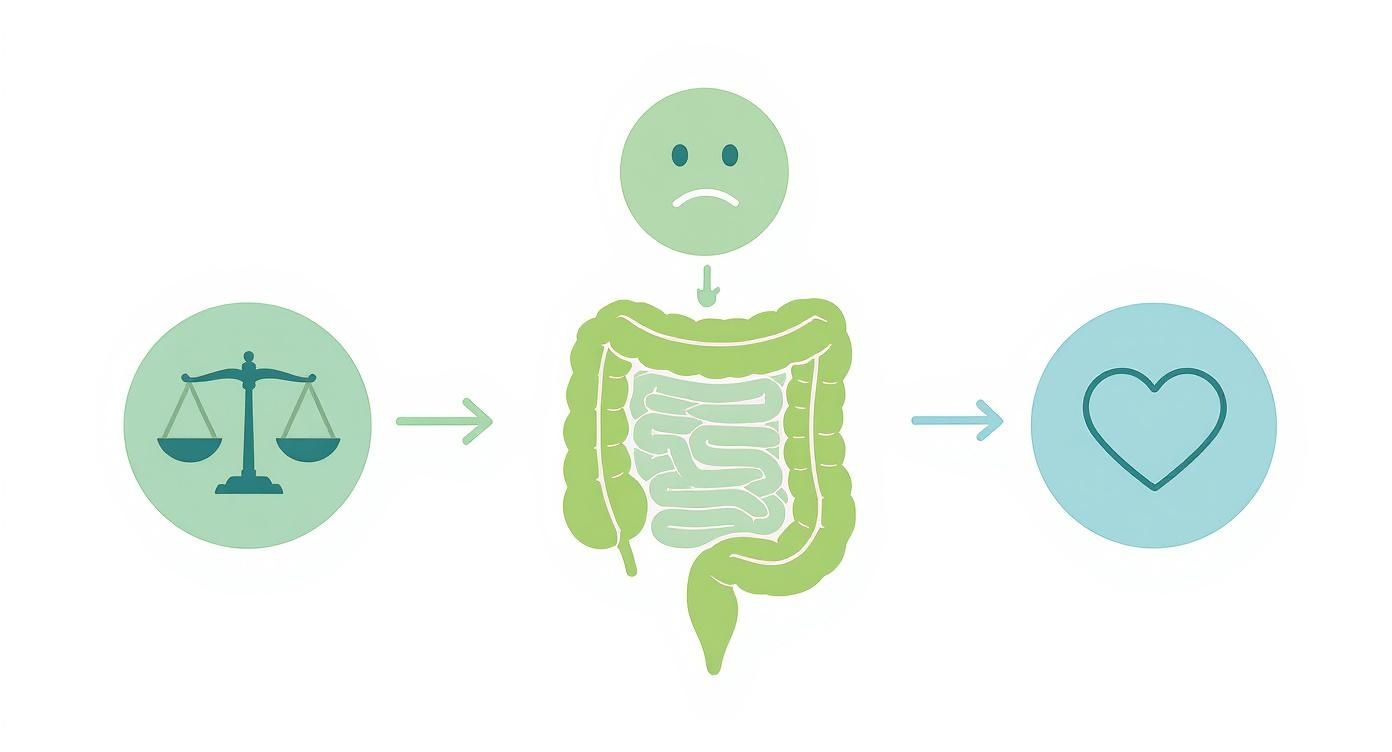
It is clear to see: A balanced microbiome (scales) is the foundation for well-being (heart), while an imbalance (dysbiosis) disrupts the entire system.
To make the whole thing even clearer, we have summarized the key differences and functions of the two bacterial teams in a table for you.
Lactobacilli vs. bifidobacteria at a glance
Here you can see at a glance who does what, where, and why both are so important for you.
| Characteristic | Lactobacilli (Lactobacillus) | Bifidobacteria (Bifidobacterium) |
|---|---|---|
| Main habitat | Predominantly in the small intestine | Predominantly in the colon |
| Preferred food source | Simple carbohydrates, especially lactose | Complex carbohydrates & fiber (prebiotics) |
| Most important product | Lactic acid | Short-chain fatty acids (e.g., butyrate) |
| Main function | Creates an acidic environment that inhibits harmful germs; supports the digestion of dairy products. | Nourishes the intestinal lining, strengthens the gut barrier, and has an anti-inflammatory effect throughout the body. |
| Distinctive feature | Crucial for nutrient absorption in the upper digestive tract. | Absolutely central to the health of the colon and the regulation of the immune system. |
This specialization makes it crystal clear why it is so important to support both groups of bacteria. One-sided support would strengthen only part of the system and throw the bigger picture out of balance.
That’s why at mybody-x.com, we rely on carefully considered combinations of different bacterial strains. This ensures that your gut ecosystem receives the comprehensive, targeted support it needs for your well-being.
How modern lifestyle habits disrupt the gut flora
Imagine your gut as a lovingly tended garden, where bifidobacteria and lactobacilli are the diligent gardeners. However, this inner ecosystem is quite sensitive. It reacts to almost everything: what you eat, how you feel, and how you live. Many of our modern habits can seriously disrupt this delicate balance and make life really difficult for your helpful allies.
The tricky thing is that it is often a gradual process. You may not notice it until your body sends you signals—constant fatigue, an unsettled digestive system, or blemished skin. These are often the first warning signs from your gut, showing you that something has fallen out of balance.
The impact of stress on your gut
Chronic stress is probably one of the biggest saboteurs of your gut health. When you’re constantly under pressure, your body releases stress hormones such as cortisol. These hormones interfere directly with your microbiome, can reduce blood flow to the gut, and attack the important protective layer of your intestinal wall.
The result? A climate in which unwanted microbes feel right at home while your good bacteria are left behind. Studies confirm this: In people with high stress levels, gut bacterial diversity is often significantly lower—especially populations of lactobacilli and bifidobacteria decline. So your gut feeling isn’t lying when it rebels during stressful periods.
Sugar and processed foods as disruptive factors
Your diet is the most direct link to your gut. While fiber-rich food is the ultimate superfood for your good bacteria, a diet full of sugar and highly processed products acts like poison to them.
Sugar is the favorite food of unwanted bacteria and yeast. If you give them plenty of it, they multiply rapidly and crowd out your helpful allies. Processed foods also often lack precisely the fiber that bifidobacteria and lactobacilli need as a food source.
Think of it this way: Every meal is a decision about whom you feed in your gut. A diet high in sugar and low in fiber lets the “weeds” in your inner garden run rampant while the diligent “gardeners” go hungry.
You often feel the consequences quickly: disrupted digestion, cravings for even more sweets, and a weakened immune system that 70–80 % depends on a healthy gut.
Antibiotics and medications as a scorched-earth attack
There’s no question that antibiotics are lifesaving in many cases. But for your gut flora, they often mean total devastation. They don’t distinguish between “good” and “bad” bacteria and simply wipe out a large part of the ecosystem you’ve worked so hard to build.
After antibiotic treatment, the diversity of gut bacteria is often drastically reduced for weeks or even months. This creates a power vacuum that unwanted microbes are only too happy to fill. But other medications can also cause problems for your gut:
- Painkillers such as ibuprofen can irritate the intestinal lining when taken over a prolonged period.
- Acid blockers (proton pump inhibitors) alter the pH level in the stomach, weakening the natural barrier against germs.
- The birth control pill can also cause hormonally induced shifts in the microbiome.
Other lifestyle factors at a glance
In addition to these major disruptors, there are other everyday habits that can harm your gut health.
- Lack of sleep: Too little or irregular sleep disrupts not only your hormones but also your gut’s internal clock.
- Lack of exercise: Regular, moderate exercise stimulates intestinal activity and promotes a diverse bacterial community.
- Excessive hygiene: An overly sterile environment can reduce contact with beneficial microorganisms from the environment that train your immune system.
Knowing these disruptive factors is the first and most important step toward taking back control. When you recognize where the causes of your discomfort might lie in your everyday life, you can take targeted action and actively support your gut.
How to specifically support your beneficial gut bacteria
You now know which factors can harm your hardworking gut helpers. But now comes the crucial part: How can you actively support them and make your “inner garden” bloom again? The good news: You have the power to do it yourself. With a few targeted, practical measures, you can have a huge impact on the well-being of your bifidobacteria and lactobacilli.
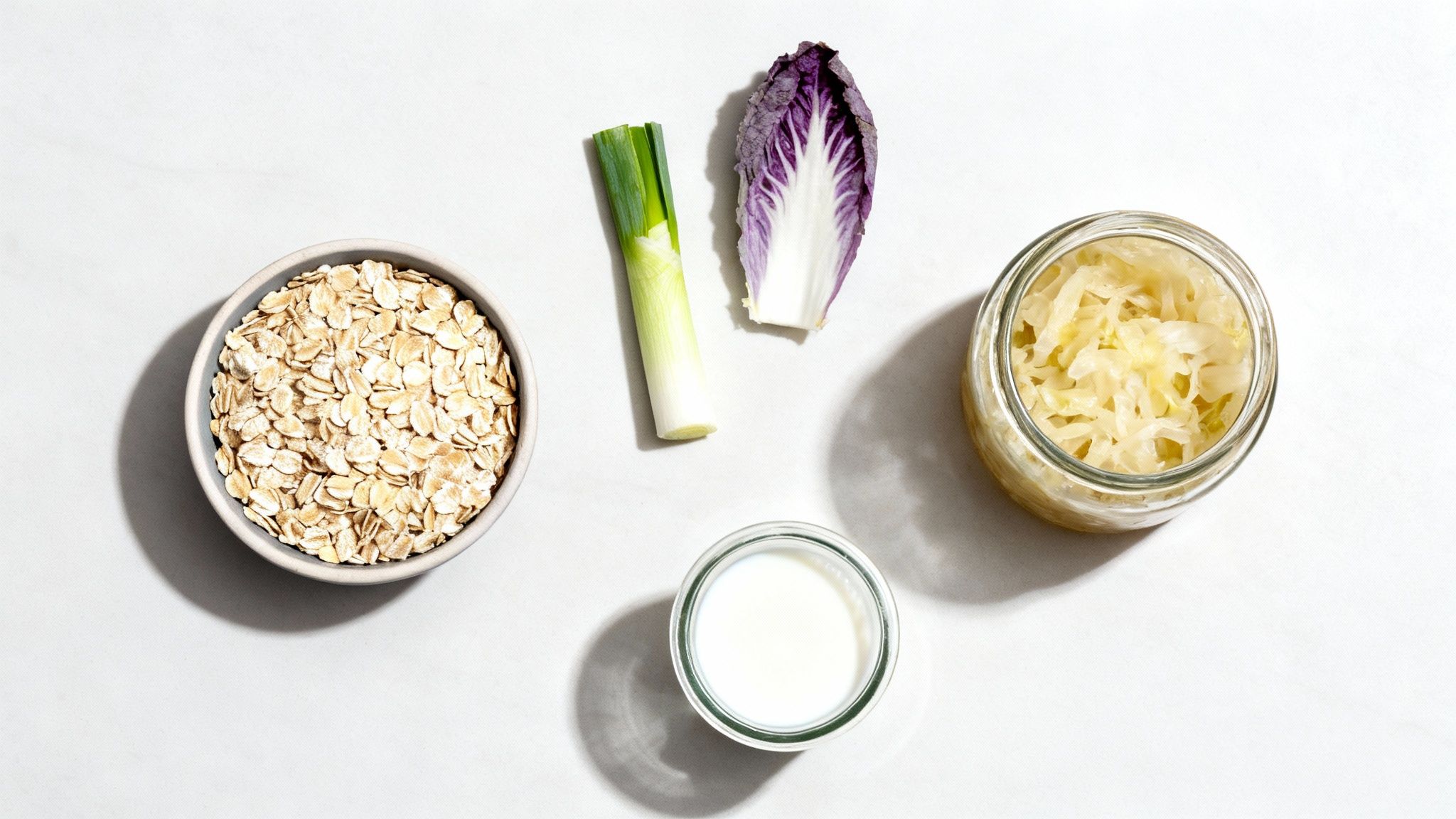
Essentially, it is about giving your beneficial bacteria exactly what they need to grow and thrive. Think of it this way: You create the perfect conditions for your best employees to feel comfortable, multiply, and perform at their full potential for your health.
Feed your helpers with prebiotics
The key to promoting your beneficial gut bacteria can be summed up in one word: prebiotics. Essentially, these are nothing more than indigestible plant fibers—dietary fiber—that are an absolute favorite food for your beneficial microbes. While you cannot break down these fibers yourself, your bifidobacteria feast on them in the large intestine.
Prebiotics are the “superfood” for your gut flora. They specifically stimulate the growth and activity of bifidobacteria and lactobacilli and help them prevail against unwanted germs.
Here are some of the best prebiotic foods that you can easily incorporate into your meal plan:
- Chicory, artichokes & Jerusalem artichokes: These are particularly rich in the prebiotic fiber inulin.
- Onions, leeks & garlic: These alliums provide valuable fructans.
- Oatmeal & barley: They contain beta-glucans, which also serve as food for beneficial bacteria.
- Legumes: Lentils, beans, and chickpeas are true fiber powerhouses.
- Chilled potatoes or rice: Cooling creates resistant starch—an excellent prebiotic.
By eating a colorful variety of these foods, you provide your microbiome with a broad spectrum of nutrients and promote healthy diversity. If you want to delve deeper into how to optimize your meal plan, our guide offers practical tips on nutrition for a healthy gut flora.
Strengthen your team with fermented foods
In addition to the right “food,” you can also supply your gut directly with new, beneficial bacteria. Fermented foods are a fantastic natural source for this, as they already contain live cultures of lactobacilli and bifidobacteria.
Through fermentation, foods are not only preserved but also enriched with probiotic bacteria. They are practically a direct delivery of reinforcements for your gut team.
Fermented products are like settling new, hardworking gardeners in your gut. They bring fresh energy to the ecosystem and support the teams already there in their important work for your health.
Some valuable fermented foods include:
- Plain yogurt and kefir: Classics that are rich in various strains of lactobacilli.
- Sauerkraut: Make sure to choose fresh, unpasteurized sauerkraut, as only this contains live cultures.
- Kimchi: The Korean counterpart to sauerkraut, often spicier and with a different diversity of bacteria.
- Kombucha: A fermented tea beverage that provides a blend of bacteria and yeasts.
Incorporate these foods into your diet regularly, but in moderation. This allows you to enrich your gut flora in a completely natural way.
When a targeted addition makes sense
Sometimes diet alone is not enough to restore or specifically support the balance in the gut. In certain situations, taking high-quality probiotic supplements can be a very sensible strategy.
Such targeted supplementation is especially worth considering if you:
- you have undergone antibiotic treatment that has severely affected your gut microbiota.
- you suffer from chronic digestive complaints such as bloating or irritable bowel syndrome.
- you have a weakened immune system and get sick more often.
- you want to specifically rebuild your gut microbiota after a period of high stress or an unhealthy diet.
When choosing a probiotic, quality is absolutely crucial. It is not just about introducing any bacteria, but the right strains in the right combination and dosage.
Look for products containing scientifically studied strains of bifidobacteria and lactobacilli. A high number of microorganisms, stated in CFU (colony-forming units), and gastric acid-resistant capsules ensure that the bacteria actually reach the gut alive. This is exactly what we place the greatest importance on at mybody-x.com: Our products are based on scientific findings and are designed to support your gut health effectively and specifically.
Crucial from the very beginning: The role at birth
The foundations for a healthy and resilient gut microbiota are not established only in adulthood—the groundwork is laid at birth. The very first moments and months of your life are absolutely crucial in determining the foundation of your inner ecosystem. It is a fascinating journey in which bifidobacteria play a particularly important role.
A baby is not born with a fully developed gut microbiota. Its gut is initially almost sterile and is colonized by the first microorganisms during and shortly after birth. During a natural birth, the newborn receives, so to speak, a first “starter kit” of beneficial bacteria from the mother's birth canal.
The first settlers and their important roles
Among these pioneers, bifidobacteria are the undisputed superstars. In the first weeks and months of life, they often account for more than 90 % of the entire gut microbiota of a breastfed infant. They are perfectly adapted to the conditions in an infant's gut and perform vital functions for the child's healthy development from the very beginning.
These early colonizers are not passive residents but active trainers for the still immature immune system. They teach it to distinguish between friend (beneficial bacteria, food) and foe (pathogenic germs). This early learning process is fundamental to reducing the later risk of allergies, autoimmune diseases, and chronic inflammation.
Imagine a baby’s gut flora as a young plant. The first seeds sown largely determine how strong and resilient the plant will become later. Here, bifidobacteria are the most nutrient-rich soil a child can receive.
How breast milk specifically guides development
Nature has developed a brilliant mechanism for this: breast milk. It is so much more than just food. It contains special sugars that infants cannot digest—so-called human milk oligosaccharides (HMOs). These serve almost exclusively as food for bifidobacteria, specifically stimulating their growth.
This close connection between mother and child via breast milk ensures that exactly the right bacteria settle and multiply in the baby’s gut. Various studies confirm how important this early colonization is. They show that targeted administration of probiotics such as Lactobacillus acidophilus and Bifidobacterium bifidum can enrich the gut flora. High concentrations of bifidobacteria have been found particularly in exclusively breastfed babies, which is crucial for the development of a robust immune system. Learn more about the research findings on this early gut colonization.
This early imprinting shows how deeply the health of mother and child are intertwined and why a healthy gut flora is so important from the very beginning. If you would like to better understand and support your child’s gut health, a gut flora microbiome test specifically for children can provide valuable insights.
How your gut influences your mood
Have you ever wondered where that “gut feeling” actually comes from? It’s far more than just an expression. Your gut and brain are connected via a direct data highway known as the gut-brain axis.
This axis is in constant exchange—and your gut bacteria are actively involved. Above all, bifidobacteria and lactobacilli not only regulate your digestion but also have a remarkable influence on your stress tolerance, concentration, and even your mood.

Serotonin—the happiness hormone from the gut
The best example is the production of neurotransmitters—the chemical messengers that control your emotions. It may be hard to believe, but more than 90 % The famous “happiness hormone” serotonin is not produced in the brain, but directly in your gut. And who plays a major role in this? That’s right: your gut bacteria.
If important bacterial strains are missing, serotonin production can come to a halt. The result is often low moods, inner restlessness, or even feelings of anxiety. A healthy gut is therefore literally the foundation for a sunny disposition.
Stress management starts in the gut
How well you cope with stress is also determined to a large extent in your gut. Beneficial bacteria help regulate the stress hormone axis and keep cortisol release in check. When your gut microbiome is balanced, you are simply more resilient to the demands of everyday life.
You can think of gut bacteria as an inner buffer that can cushion the peaks of stress. If this buffer is weakened because beneficial bacteria are lacking, you feel the effects of stress much more directly and intensely.
Current studies, such as one from Tübingen University Hospital, now also support this connection. The study demonstrated that the bacterial strain Bifidobacterium longum 1714 not only strengthens the gut flora but also improves stress processing in healthy people. This is impressive evidence that the effects of bifidobacteria and lactobacilli extend far beyond the gut and directly shape our mental health. You can read the comprehensive body of evidence on this topic in Germany here.
This holistic perspective makes it clear why a balanced microbiome is so fundamental to our emotional equilibrium. Taking care of your gut health therefore means directly investing in your psychological stability.
Frequently asked questions about gut bacteria
After so much information, a few specific questions often remain in everyday life. That’s perfectly normal, because gut health is a truly multifaceted topic. To clear up your remaining uncertainties and reinforce your knowledge, we’ll answer the most common questions about bifidobacteria and lactobacilli here.
How quickly do probiotics with bifidobacteria and lactobacilli work?
This is a very individual matter and depends heavily on what your personal starting point looks like. Some people notice the first positive changes in their digestion after just a few days, such as less bloating. That is always a good first sign.
However, for truly sustainable colonization of the gut and noticeable effects on your general well-being or immune system, you should give these little helpers more time. Taking them for at least four to twelve weeks is ideal. Your gut ecosystem adapts slowly but steadily—patience really is the key to success here.
Can I consume too many beneficial gut bacteria?
For healthy people, overdosing on common probiotic supplements is practically impossible. Your body has quite clever mechanisms for regulating the bacterial population in your gut and keeping everything in balance.
What can happen, however, is that some people experience mild adjustment symptoms such as bloating or changes in bowel movements at the beginning of use.
See this as a positive sign! It usually just shows that something is happening in your gut and that the new support is taking effect. These symptoms generally disappear on their own after a few days, as soon as your gut flora gets used to its new inhabitants.
Should I take probiotics with a meal?
Yes, in most cases, that is the best strategy. If you take probiotics shortly before or directly with a meal, the food acts as a natural buffer against aggressive stomach acid.
This simple trick increases the survival chances of the sensitive bifidobacteria and lactobacilli on their journey to the intestines, where they are supposed to start doing their job. However, some modern products already contain special acid-resistant capsules. With these, the timing of intake is not quite as important. It is best to take a quick look at the recommendation on the packaging.
Do you want to know exactly how your personal gut flora is doing and which bacteria you should specifically support? The scientifically backed microbiome analyses from mybody-x.com provide precise insights and personalized recommendations to help you take control of your health. Discover the possibilities now at https://mybody-x.com.


Share now:
Rebuilding gut flora after antibiotics: what is supported by evidence and what is not
How to Collect a Stool Sample Properly: Your Guide to a Successful Bowel Test