
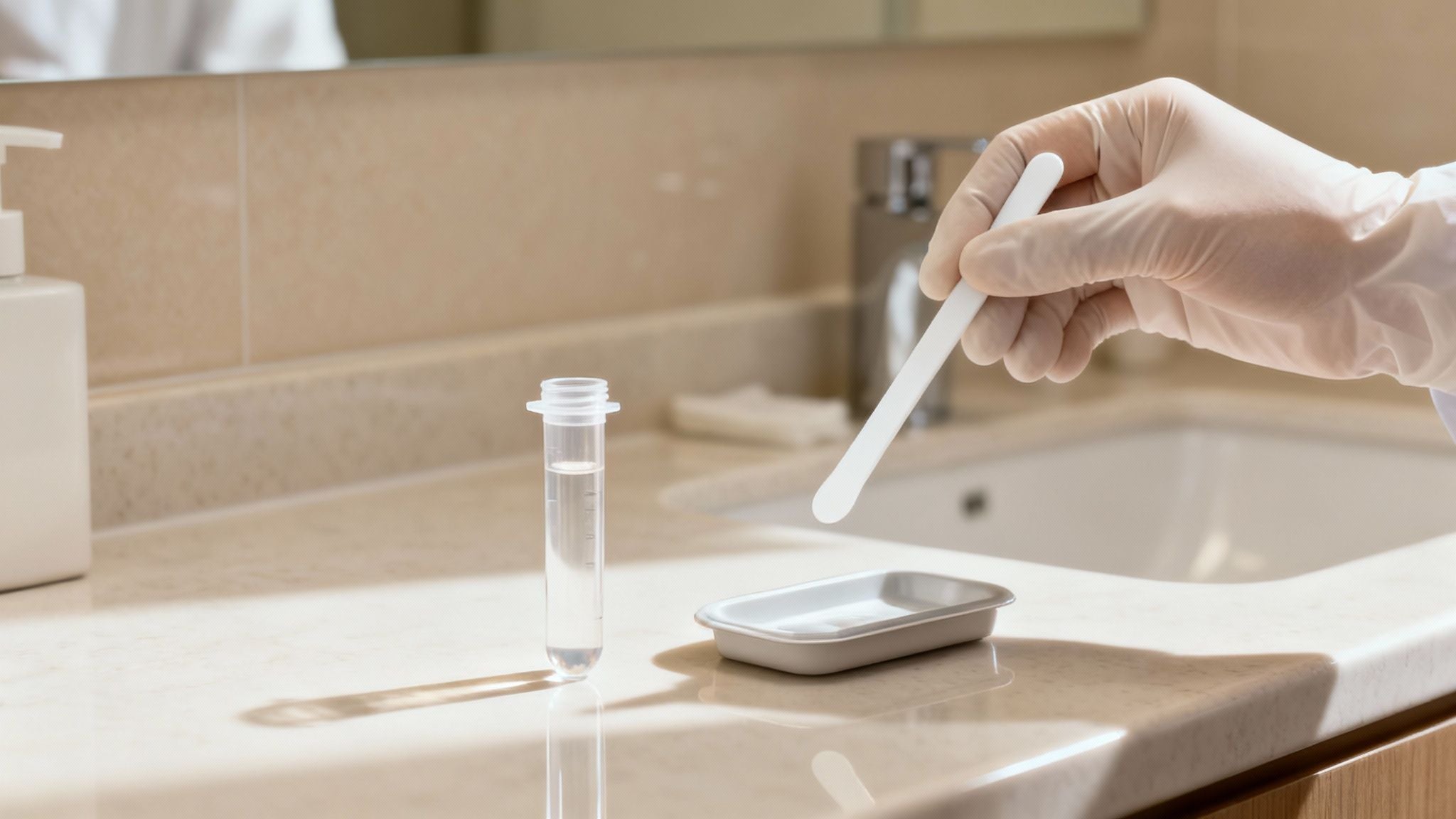
How to collect a stool sample correctly: Your guide to a successful gut test
Collecting a stool sample may initially sound complicated or unpleasant, but it isn’t—once you know what matters. The key is a clean, unaltered sample that does not come into contact with toilet water or urine.
That is why your mybody-x test kit contains everything you need, in particular a collection aid and sample tube. Use both consistently, and nothing will stand in the way of an informative result.
Preparing for an informative stool sample
Before moving on to collecting the sample itself, let’s briefly go over how to prepare everything optimally. This is truly the most important step, because only a clean, correctly collected sample gives the laboratory the opportunity to obtain precise data about your gut health.
Think of the following points as your personal checklist. They are intended to give you confidence and help you avoid the most common mistakes from the outset.
Create the right timing and environment
Choose a time when you can truly be undisturbed. Hurrying is definitely the wrong companion here. Make sure your bathroom is clean and that you have all the parts of your test kit within reach.
What you should have ready:
- Sample tube: Have it ready so you can collect the sample immediately after your bowel movement.
- Stool collection aid: A clever piece of paper that you simply place in the toilet before using it. This prevents any contamination.
- Disposable gloves (optional): Some people simply feel more comfortable wearing them. If that applies to you, put them within reach.
Good preparation is essential to avoid mistakes and ensure that your results are as accurate as possible. Here is a brief overview to help you remember everything:
Checklist for preparing your stool sample
An overview of the most important points to keep in mind before collecting your stool sample.
| Preparation step | Why it matters | Practical tip |
|---|---|---|
| Take your time and stay calm | Hurry leads to mistakes and unclean samples. | Choose a time when you are alone at home and not under time pressure. |
| Clean toilet | Prevents dirt or cleaning products from contaminating the sample. | Ideally, clean the toilet the day before to avoid residue from harsh cleaning products. |
| Wash your hands | Reduces the risk of transferring bacteria from your hands to the sample. | Wash your hands thoroughly with soap before opening the test kit. |
| Position the collection aid correctly | This prevents the sample from coming into contact with toilet water or urine. | Stretch the paper tightly across the toilet bowl so that it forms a depression without hanging into the water. |
If you follow these simple points, you will create the perfect foundation for a reliable analysis of your sample.
By the way, correct collection is also absolutely crucial in medical diagnostics. In Germany's colorectal cancer screening program, for example, the immunological fecal occult blood test (iFOBT) is used, where the highest accuracy is essential. It is recommended to collect approximately three milliliters of sample—about the size of a walnut—from three different spots. This ensures a representative sample for analysis.
A well-prepared at-home stool test is the basis for a result you can truly trust. After all, the aim is to obtain a clear picture of your microbiome without external factors distorting the results.
How to collect your stool sample correctly: A practical guide
Now for the nitty-gritty. But don't worry, collecting the sample is really straightforward once you know how it works. With the right tools and clear instructions, we will guide you calmly through every step so that, in the end, you have a perfect sample for analysis in your hands.
The most important thing first: Your sample must never come into contact with toilet water or urine. That is exactly why your mybody-x test kit includes a stool collection aid. It is specially coated paper that you simply attach to the toilet. It safely catches your stool before it touches the water.
This overview shows you at a glance what matters.

As you can see, successful sample collection rests on three pillars: handling the test kit correctly, watching your diet beforehand, and making a few preparations in the bathroom.
How to handle the sample tube correctly
As soon as the stool is on the collection aid, take the sample tube. You will find a small spoon or stick in the lid. The trick to obtaining a representative result is not to take a sample from just one spot.
Instead, insert the swab into three to four different areas of the stool. This collects a mixed sample that provides a much better cross-section of your gut flora. Here, variety is more important than the amount alone.
Make sure to fill the tube only up to the mark. Too much material can make the laboratory analysis just as difficult as too little. Usually, an amount the size of a pea or hazelnut is completely sufficient.
Then tighten the lid firmly until you hear or feel a soft click. This signals that everything is sealed securely and cannot leak. You do not need to shake the tube—simply place it back in the packaging.
The final steps before shipping
Have you safely stored the sample in the tube? Perfect. You can now simply flush the stool collection aid down the toilet, as it is biodegradable. Then, of course, wash your hands thoroughly.
Most importantly, don’t forget to label the tube and all enclosed documents with your personal information. This is the only way the lab can clearly assign the sample to you. You can also find a detailed step-by-step guide specifically tailored to our tests here: Instructions for Performing the Gut Flora and Microbiome Test.
Your sample is now ready for shipping. You did everything correctly and ensured a clean, informative sample—a crucial step toward learning more about your health.
Common stool sample mistakes and how to avoid them
Even with the best preparation, small mishaps can happen that make your stool sample unusable. But don’t worry—if you know the most common pitfalls, you can easily avoid them.
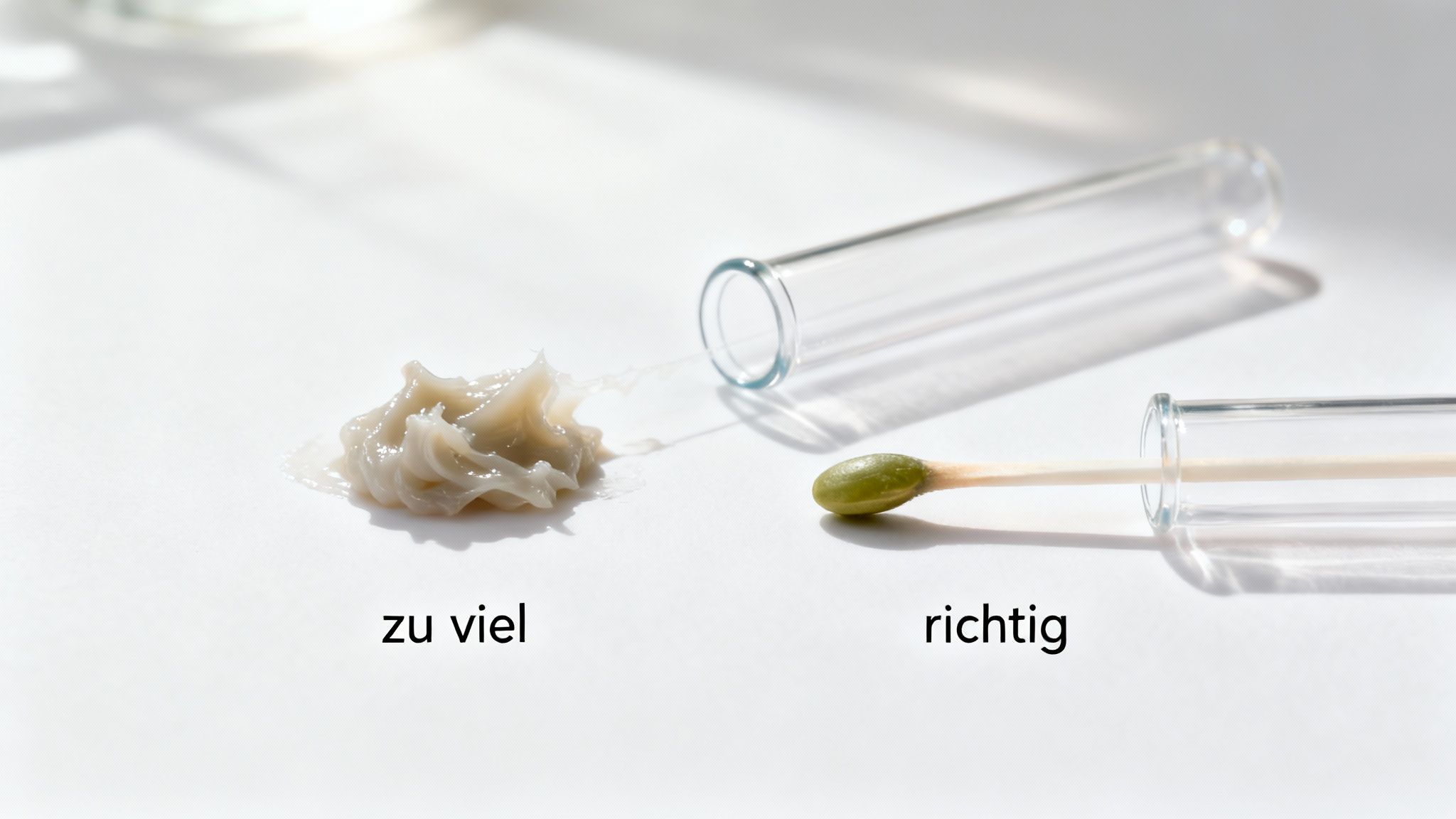
A true classic is the wrong sample amount. Many people try to be overly thorough and fill the tube to the brim—but this is counterproductive. For an accurate analysis, the lab needs a very specific amount.
Your goal should be an amount roughly the size of a pea or hazelnut. Always use the fill line on the sample tube as a guide. In this case, more is definitely not better.
Cleanliness is everything
Another critical point is sample contamination. It happens more quickly than you might think and can distort the entire analysis.
You should absolutely avoid the following types of contamination:
- Toilet water: It often contains chemical cleaners and germs that can render your sample unusable. Therefore, always use the supplied stool collection aid.
- Urine: The composition of urine is completely different and interferes with the bacterial culture of your stool sample.
- Blood (outside the stool): Do not collect a sample during menstruation or in the case of acute external hemorrhoidal bleeding. The blood would particularly distort tests for occult blood.
The complexity of proper handling is one reason why participation in preventive screenings is often low. A BARMER analysis shows that between 2010 and 2022, only 22.9% of men and 55.5% of women aged 50 to 54 underwent a stool test for colorectal cancer screening.
After collecting the sample, you should store it in a cool, dry place—ideally in the refrigerator—and send it as quickly as possible. By avoiding these common mistakes, you lay the foundation for truly meaningful results. You can find out how to have your microbiome analyzed in detail afterward in our comprehensive guide to microbiome testing.
How to safely package and send your sample
The sample is safely secured in the tube—great job! Now comes the final, equally important step: preparing it correctly for shipping so that your sample arrives safely at the laboratory.
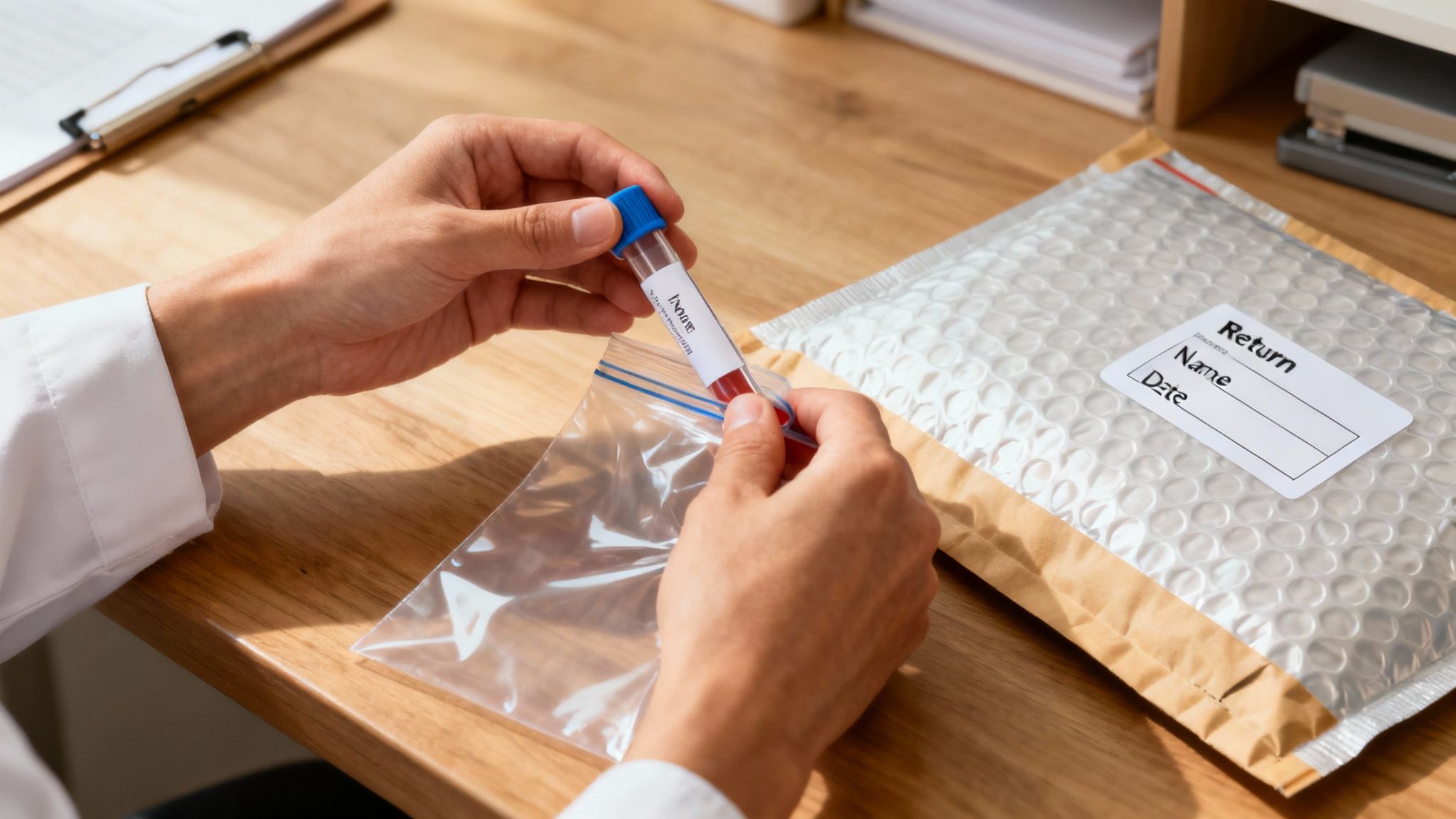
Take a moment to label the sample tube carefully. With mybody-x test kits, you’ll usually find special stickers or fields for this directly on the tube. This identification is absolutely essential, as it is the only way your sample can later be correctly identified in the laboratory.
The right time to send your sample
Once the tube has been labeled, place it in the enclosed protective or transport bag. This provides additional safety during mailing. Then place everything together in the return envelope that has already been prepared.
Our expert tip: It’s best to send your sample from Monday to Wednesday. This ensures that it doesn’t remain at the postal center over the weekend. That could affect the quality of the sample and distort the analysis results.
By packaging your sample correctly and shipping it promptly, you ensure that it is analyzed under optimal conditions. Don’t worry, return shipping is already fully prepared and straightforward with the mybody-x test kits. You can also find more details about the process in our shipping information. This way, your analysis can begin as quickly as possible, and you will soon receive valuable insights.
What Your Gut Analysis Result Means for You
Your sample is on its way to the laboratory—the first important step is complete. But what actually happens afterward, and what does the result ultimately really say about your health? A report like this is much more than just a collection of data. Think of it as a personal window into the fascinating ecosystem of your gut.
The analysis provides a comprehensive picture of your gut microbiome. You can see in black and white which bacterial strains are dominant in your gut, whether the balance between “good” and “bad” bacteria is right, and how diverse the species in your gut are overall. In addition, the analysis can provide important clues, for example about your digestive function or hidden inflammation.
From Results to Action
A basic understanding of the anatomy of the gastrointestinal tract can help you put the results into context. However, mybody-x tests are designed precisely for this purpose: They present this complex information in a way that you can understand immediately and use for yourself.
Your result is your personal tool. It shows you exactly where the levers for your health lie:
- Diet: Which foods are especially beneficial for your beneficial gut bacteria? Do you perhaps need more fiber or probiotic foods?
- Lifestyle: Could you benefit from targeted stress management or more exercise to boost your gut health?
- Nutrients: Are there signs that your body is not absorbing certain vitamins or minerals optimally?
Remember: The quality of your sample is the be-all and end-all for meaningful results. Only by taking care during collection can you gain reliable and precise insights on which to base the right decisions for your health.
Studies on colorectal cancer screening also show how crucial understandable instructions are. Unfortunately, participation has declined in recent years. Between 2009 and 2018, participation among women in the primary target group fell by 21%—a clear signal of how important simple and clear instructions are. You can read more in the Versorgungsatlas study.
Stool sample: Your questions, our answers
You have your test kit in hand and are ready to go, but still have a few questions on your mind? No problem. Here you will find quick and clear answers to the most common uncertainties that may arise during sample collection.
How much stool do I really need for the sample?
Here, less is more. An amount approximately the size of a pea or hazelnut is more than sufficient.
The correct technique is much more important than the amount alone. Do not take the sample from just one spot; instead, collect it from three to four different areas of your stool. This ensures that the result is truly representative. Most sample tubes have a fill line anyway—consider this the upper limit and do not exceed it.
Do I need to ship the sample immediately?
Ideally, yes. The fresher the sample arrives at the laboratory, the more accurate and unaltered the analysis will be. The laboratory can only measure what actually arrives.
If immediate shipping is not possible, that is not the end of the world. You can store the sample in the refrigerator for a few hours, for a maximum of until the following morning. Make sure to package it securely so that it is stored safely and hygienically.
Darn, the sample is contaminated—what now?
It can happen. If the sample has accidentally come into contact with toilet water, urine, or, in women, menstrual blood, it is unfortunately unusable for analysis.
In this case, there is no way around it: You must repeat the collection during your next bowel movement. This is the only way to ensure a clean and reliable result that you can trust.
Do you finally want clarity about your gut health? The scientifically grounded analyses by mybody® Lab GmbH provide precise insights and personalized recommendations. Discover your path to greater well-being now at https://mybody-x.com.

Share now:
Bifidobacteria and Lactobacilli: The Most Important Helpers for Your Gut
Improve digestion guide: Step by step to greater well-being