

Tired despite getting enough sleep: causes, tests, and clear steps
You wake up, the clock shows eight hours of sleep, and yet you feel completely drained. Does that sound familiar? This frustrating feeling is more common than you think, and the cause is often hidden deeper.
Imagine trying to fill a car with the wrong fuel—it simply will not run smoothly. The same applies to your body when it lacks essential nutrients or your hormone balance is disrupted. This is exactly where a mybody-x self-test comes in, helping you gain clarity so you can better understand your body and take targeted action.
When sleeping more alone is not the solution

Do you often feel unmotivated and drained even though you actually spend enough time in bed? You are not alone. This phenomenon is an important signal from your body that you should take seriously—and it rarely has anything to do with laziness.
So instead of simply hitting the snooze button, it is worth tracking down the real energy drains. Many people look for the answer in their sleep routine, but the actual culprits often work behind the scenes. They are silent processes in your body that sabotage your energy levels without you noticing directly.
The hidden reasons for your tiredness
Your constant exhaustion can take many forms that go far beyond the amount of sleep you get. Often, biochemical imbalances are quietly draining your batteries.
Here are some of the most common hidden energy drains:
- Nutrient deficiencies: Your body is a power plant. If it lacks important building blocks such as iron, vitamin B12, or vitamin D, it simply cannot produce enough energy. The result: unexplained exhaustion.
- Hormonal imbalances: An underactive thyroid or disrupted cortisol levels can put your entire metabolism into low-power mode and leave you constantly tired.
- Poor sleep quality: You may sleep for a long time but not deeply. Unnoticed pauses in breathing (sleep apnea) or other disorders can prevent you from reaching the truly restorative deep-sleep stages.
- Psychological stress: Ongoing stress puts your body in a permanent state of alert. This uses up an enormous amount of energy and leads to a feeling of complete exhaustion.
The good news is that you do not have to feel left in the dark. According to a representative survey, 31 percent of people over the age of 16 in Germany often complain of fatigue despite getting enough sleep. Stress makes the problem even worse, as only 43 percent of those affected wake up feeling refreshed in the morning.
A mybody-x blood test can provide targeted clarity by identifying possible causes such as a vitamin B12 deficiency, which affects around one in ten people. Learn more about the Barmer's findings on fatigue.
This table summarizes the most common hidden reasons for your exhaustion and shows how you can identify them specifically.
Common causes of constant fatigue at a glance
| Possible cause | Typical signs in everyday life | How a mybody-x test can help you |
|---|---|---|
| Nutrient deficiency (e.g. iron, B12) | Paleness, difficulty concentrating, brittle nails, feeling weak. | A nutrient test specifically measures your vitamin and mineral levels and identifies deficiencies. |
| Hormonal imbalance | Weight gain, sensitivity to cold, mood swings. | A hormone test checks important hormones such as thyroid levels (TSH) and cortisol. |
| Hidden inflammation/intolerances | General fatigue, joint pain, energy dips after eating. | An intolerance test analyzes your reaction to foods and provides important insights. |
| Sleep apnea (not detectable by blood test) | Loud snoring, pauses in breathing at night, headaches in the morning. | A blood test cannot detect apnea itself, but it can reveal its effects. |
| Psychological stress & adrenal glands | Inner restlessness, sleep disturbances, irritability, cravings for salty foods. | The hormone test can measure your daily cortisol pattern and uncover signs of adrenal insufficiency. |
Taking a targeted look at your blood values is often the first and most important step toward finally regaining your full energy.
When your body lacks the building blocks for energy

Your constant exhaustion could be a silent cry for help from your body—a sign that it is lacking essential building blocks for energy production.
Think of your body as a power plant: It can produce energy efficiently only when the right fuels are available. Without them, the entire organism runs on low power—no matter how long you sleep.
These invisible deficiencies are often the real culprits when you feel as though you have pulled an all-nighter after eight hours of sleep. It is like trying to set out on a long journey with an almost empty tank.
Nutrient deficiencies—the invisible energy thieves
Some vitamins and minerals are like the spark plugs of your metabolism. Without them, energy production stalls, and deep, unexplained fatigue sets in.
The most common suspects are:
- Iron: This trace element is the key to transporting oxygen in the blood. With an iron deficiency, your cells simply do not receive enough oxygen to produce energy. It feels like the handbrake is permanently on—you are constantly sluggish, pale, and unable to concentrate.
- Vitamin B12: A true all-rounder for your nerves and blood formation. A deficiency not only disrupts energy production but can also cause tingling or memory problems.
- Vitamin D: The “sunshine vitamin” plays a central role in your immune system and muscles. A deficiency, especially during the darker months, often manifests as fatigue and increased susceptibility to infections.
- Magnesium: Involved in more than 300 metabolic processes, this mineral is essential for converting food into energy. If you lack it, you often feel tired and irritable and are prone to muscle cramps.
Nutrient deficiencies often creep into everyday life gradually. You may blame your fatigue on stress, even though the causes are biochemical and can easily be uncovered with a test.
By the way, such deficiencies are not uncommon in Germany. According to experts, vitamin D and iron deficiencies in particular are widespread. The results of the TK sleep study make this very clear: Among people aged 50 to 59, only 54 percent still feel well rested in the morning.
When your hormones get out of balance
Besides nutrients, your hormone balance is the main conductor of your energy levels. Hormones act as messengers, controlling everything important—from metabolism and the sleep-wake cycle to the stress response.
Two key players directly influence your energy:
- The thyroid: Think of it as the accelerator of your metabolism. An underactive thyroid (hypothyroidism) slows everything down. You not only feel constantly tired, but may also experience weight gain, sensitivity to cold, and hair loss.
- The adrenal glands and cortisol: The hormone cortisol manages your response to stress. Chronic stress disrupts this system and interferes with your sleep-wake rhythm. The result: You can barely get out of bed in the morning, but in the evening you can’t find any peace.
A hormonal imbalance often develops over many years and is easily overlooked because the symptoms are so nonspecific. You blame the fatigue on your job, while the real cause lies much deeper.
The key to clarity lies in your blood
The tricky thing about nutrient deficiencies and hormonal imbalances? You can’t see them from the outside. You can eat as healthily as possible and sleep regularly—but if your body is missing a crucial building block, the fatigue remains.
This is exactly where a mybody-x self-test comes in. Instead of continuing to stumble in the dark and trying different remedies on a trial-and-error basis, a test provides you with clear, objective data.
A nutrient or hormone test from mybody-x that you can take at home is the easiest way to track down these invisible energy drains. The analysis at a certified German laboratory shows you in black and white where the problem lies. This finally gives you a sound basis for taking targeted action and replenishing your energy reserves.
In our article, you can read more about which vitamins may be lacking when you feel tired to explore the topic in greater depth.
Why sleep quality is more important than sleep duration
Have you slept a full eight hours but still feel as though you were awake all night? This feeling is frustrating and, unfortunately, widespread. The catch is that the sheer amount of sleep shown on the clock says little about how restorative your night really was. It’s not about how long your eyes were closed, but whether your body was able to move through the crucial regeneration phases without interruption.
Think of your sleep as a nighttime repair shop for your body and mind. For everything to run smoothly again by morning, the specialists—your sleep stages—need to be able to do their work undisturbed. The most important departments in this workshop are clearly deep sleep and REM sleep.
The crucial phases for your recovery
While you sleep, your brain goes through several cycles, each lasting about 90 minutes. Each phase has its own specific purpose. But two phases in particular are essential for your energy the next day:
- Deep sleep: This is when physical recovery takes place. Your body releases growth hormones, repairs cells, and strengthens your immune system. If this phase is cut short, you often feel battered and physically drained in the morning.
- REM sleep (Rapid Eye Movement): This is the phase when your brain cleans up. It processes the day’s impressions, consolidates memories, and provides emotional balance. Too little REM sleep often manifests as difficulty concentrating, irritability, and the feeling that you simply haven’t recovered mentally.
The problem? Many factors can disrupt these important phases without you even noticing.
Silent disruptors at night
Sometimes processes are taking place in the background that sabotage your sleep. Your body is busy fighting problems at night instead of recovering. The result: You’re tired even though you got enough sleep.
A common but often undetected disruptor is sleep apnea. It causes brief pauses in breathing during sleep. Your body sounds the alarm, triggers a tiny stress response, and briefly wakes you so you can breathe again. These micro-awakenings repeatedly pull you out of restorative sleep stages, even if you don’t remember any of them the next morning.
Morning headaches, loud snoring, or waking up with a dry mouth can be early warning signs of sleep apnea. If this sounds familiar, you should definitely get to the bottom of it.
Other physical causes can also severely impair sleep quality, such as restless legs syndrome, in which an unpleasant urge to move your legs makes falling and staying asleep a torment.
How your lifestyle disrupts your internal clock
But it’s not just medical reasons that disrupt your sleep. Much more often, it’s our normal everyday habits that completely throw off our internal clock, known as the circadian rhythm.
Your body loves routine. A consistent sleep-wake schedule helps it perfectly time the production of sleep and wake hormones such as melatonin and cortisol. Irregular bedtimes, whether due to shift work or a wild weekend, completely throw this well-coordinated system out of sync.
A major disruptive factor in our modern world is the blue light from screens. If you spend a long time looking at your smartphone, tablet, or television in the evening, you signal to your brain that it’s broad daylight. The production of the sleep hormone melatonin is inhibited, and your body simply cannot switch into rest mode. One of the most effective ways to improve your sleep is therefore to put your smartphone away in the evening. You can find tips on how to avoid using your phone before bed here.
Late, heavy meals or alcohol in the evening can also put strain on your body. Instead of regenerating, your digestive system is working at full speed—preventing deep, restful sleep. Genetics can sometimes also play a role in how well our sleep-wake rhythm functions. If you want to delve deeper into the topic, read more in our article about the connection between sleep and genes.
How Stress and Your Mind Drain Your Energy
Do you often feel low on energy even though you’re actually getting enough sleep? Then you should take a closer look at your mental well-being. Your mind and body are a unit—and whatever burdens one is also felt by the other.
Persistent stress, constant worries, or a depressive mood are like a marathon with no finish line for your body. Your body switches into permanent “fight-or-flight” mode. This forces your adrenal glands to release the stress hormone cortisol continuously. The result: constant inner tension that makes falling asleep an ordeal and sabotages the quality of your sleep.
The Vicious Cycle of Stress and Poor Sleep
When you’re stressed, you usually sleep only lightly. Your brain remains in a kind of state of alert, causing you to wake up briefly again and again during the night—often without even noticing it the next morning.
Yet these very brief interruptions are detrimental. They prevent you from reaching the crucial deep-sleep phases during which your body truly regenerates. Your brain can’t process the day’s impressions, and your emotional batteries don’t recharge.
Fatigue isn’t always just a physical symptom. Often, it’s an important signal from your mind that you’ve reached your limits and urgently need a break.
You know the result all too well: You wake up in the morning feeling as though you’ve been run over, even though you may have spent eight hours in bed. This exhaustion makes you even more susceptible to new stress—and before you know it, you’re stuck in a vicious cycle that seems almost impossible to escape. You feel drained, become irritable quickly, and your concentration starts to fade.
Cortisol: Your Friend and Foe at Once
Cortisol is not inherently bad. On the contrary, it is a vital hormone that controls your sleep-wake cycle. Normally, its level is highest in the morning—your natural alarm clock, getting you ready for the day. It then falls over the course of the day so that you can unwind and fall asleep in the evening.
Chronic stress completely throws this finely tuned system out of balance. Your cortisol level remains elevated throughout the day or spikes at the wrong time.
What happens when the cortisol rhythm is disrupted?
- Morning fatigue: You simply can't get out of bed in the morning because the important morning cortisol peak is missing.
- Restlessness in the evening: You lie wide awake in bed and can't switch off because your cortisol level is still too high in the evening.
- Waking up at night: Your blood sugar level drops at night, triggering the release of cortisol—and promptly waking you up.
This hormonal chaos is one of the main reasons for the fatigue despite getting enough sleep that plagues so many stressed people. You feel simultaneously “wired” and completely exhausted. Learn more about the role of this important hormone in our article explaining what cortisol is.
Recognize the connection and take action
Psychological strain is not an invisible enemy. It leaves clear, measurable traces in your body. Your constant fatigue is a real, physical symptom of this chronic stress—the desperate attempt by your body to force you to rest.
So if you're constantly tired despite getting enough sleep and are also suffering from tension, worries, or a low mood, you've probably already found the cause. A mybody-x hormone test that measures your daily cortisol pattern can provide valuable clues as to whether your stress level is draining your energy. With these insights, you can target the right levers and finally regain your balance and full strength.
Your personal roadmap to more energy
No more guessing why you're constantly tired. It's time to finally get to the root of the true cause of your exhaustion. With this practical roadmap, we'll guide you step by step through the analysis—from simple self-checks to targeted at-home self-tests.
You don't have to keep groping in the dark. By taking a systematic approach, you can regain control and find out which levers you need to adjust to get your energy back.
Step 1: The self-check for identifying initial patterns
Before you delve deeper into diagnostics, you can already gather valuable clues through careful observation. The best starting point is a combined sleep and food diary that you keep for one to two weeks.
This simple step helps you recognize connections that often get overlooked in the hectic pace of everyday life. Pay attention to the following points:
- Sleep: When do you go to bed, and when do you get up? How often do you wake up during the night? And, most importantly, how do you feel immediately after waking up—exhausted, refreshed, or completely groggy?
- Diet: What and when do you eat and drink? Also note heavy evening meals, your sugar intake, or how much coffee you actually drink.
- Energy level: Rate your energy throughout the day on a scale from 1 to 10. Are there typical lows, for example after lunch or in the late afternoon?
- Symptoms: Write down anything else you notice. This could include headaches, digestive problems, or mood swings.
Clear patterns often emerge here. You may notice that your fatigue always gets worse after certain foods or that irregular sleep times are your biggest problem.
Stress is also a major energy drain. This infographic shows you the direct connection.
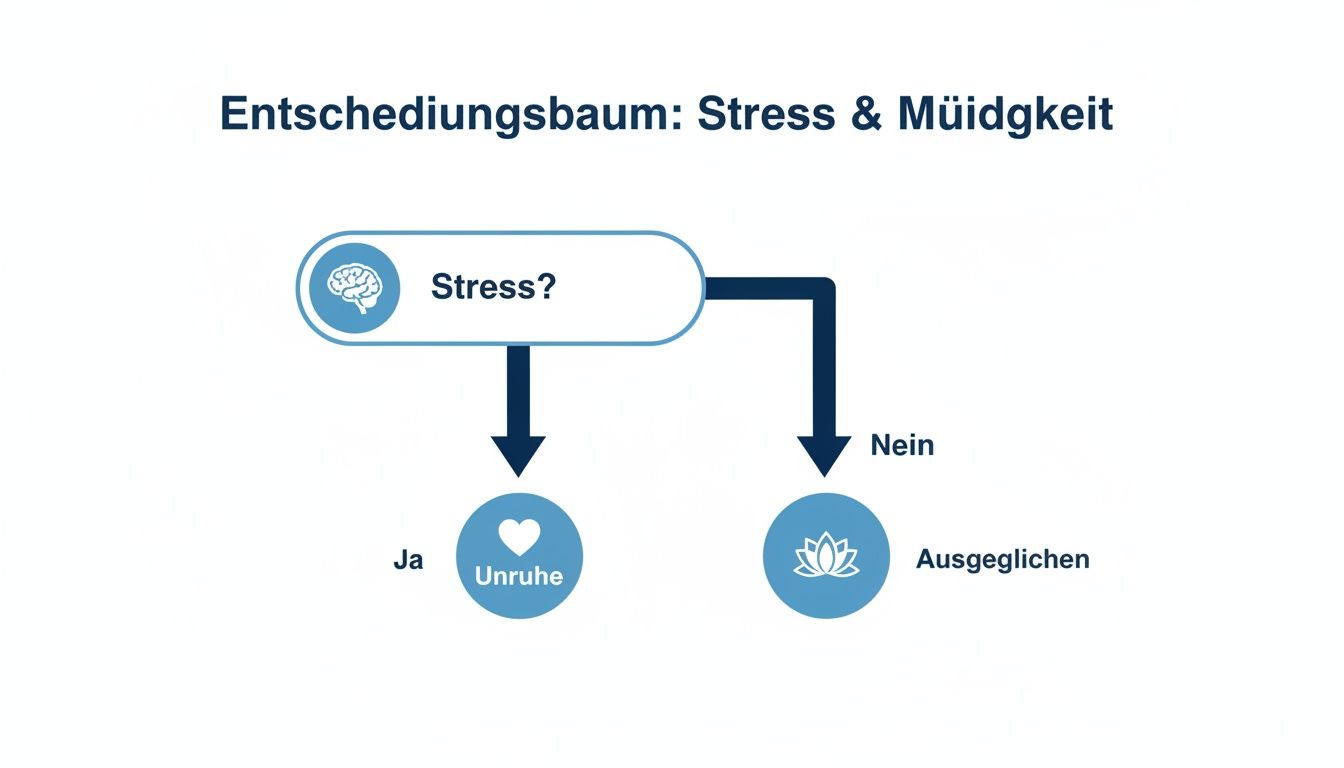
As you can see, stress often causes inner restlessness that literally drains your energy reserves.
Step 2: When seeing a doctor is important
A self-check is a great starting point. However, if you notice certain warning signs, don’t hesitate to seek medical advice.
These include, above all:
- Sudden and extreme exhaustion without an apparent reason.
- Additional symptoms such as significant weight loss or gain, fever, or pain.
- Loud snoring combined with pauses in breathing during the night (a possible indication of sleep apnea).
- Signs of depression, such as persistent low mood or loss of interest.
These symptoms may point to more serious medical causes that require professional evaluation.
Step 3: Looking at your blood with mybody-x
If lifestyle changes don’t help and there are no acute warning signs, the cause of your fatigue often lies deeper—namely in your biochemistry. Looking at your blood is then the logical and often decisive next step.
This is where mybody-x comes in. Instead of waiting months for a doctor’s appointment, you can easily, quickly, and conveniently test the most important levels from home. You take a small blood sample from your fingertip, send it to our certified German laboratory, and receive your detailed results and personalized recommendations within a few days.
A blood test isn’t a guess—it provides you with concrete data. It shows you in black and white whether your body is lacking important energy-building nutrients or your hormones are out of balance.
Choosing the right test depends entirely on your individual symptoms. If, in addition to fatigue, you experience difficulty concentrating and paleness, a nutrient deficiency could be behind it. If you also feel stressed or restless, or are gaining weight for no apparent reason, your hormones could be the cause.
This comparison helps you find the right mybody-x test for your specific symptoms and investigate the causes more precisely.
Which mybody-x test is right for your symptoms?
| mybody-x test | Ideal for these symptoms | What exactly is measured? |
|---|---|---|
| Nutrient test | General exhaustion, difficulty concentrating, pale skin, susceptibility to infections, muscle cramps. | Iron (ferritin), vitamin B12, vitamin D, magnesium—the four most common energy drainers. |
| Hormone test | Morning fatigue, evening restlessness, weight gain, mood swings, hair loss, sensitivity to cold. | Thyroid levels (TSH, fT3, fT4) and the stress hormone cortisol (in a daily profile). |
| Food intolerance test | Energy slumps after eating, digestive problems (bloating, diarrhea), skin problems, headaches. | Your reaction to common foods through the analysis of IgG4 antibodies. |
| Home self-test (Comprehensive) | If you want a complete picture of your health and are unsure about the exact cause. | Combines important nutrient, hormone, and inflammation markers for a 360-degree analysis. |
With this roadmap, you have a clear strategy for finding the root of your fatigue. Instead of merely treating symptoms, you’re giving yourself the tools to sustainably increase your energy levels.
Frequently asked questions about fatigue and self-tests
Do you still have questions? Here we’ve collected the most important answers about “feeling tired despite sleeping.” This will help you better understand the connections and take the right steps toward more energy.
Can a nutrient deficiency alone really cause my fatigue?
Absolutely. Think of your body like a high-performance engine. Nutrients such as iron, vitamin B12, and vitamin D are essentially the oil and fuel. When these crucial building blocks are missing, your energy metabolism sputters—no matter how long you’ve slept.
A deficiency can manifest itself directly as heavy fatigue and persistent exhaustion. It is often even the main reason for feeling tired despite getting enough sleep, something that troubles so many people. A mybody-x nutrient test gives you quick and easy certainty.
How quickly will I notice an improvement when a deficiency is detected?
As soon as a mybody-x self-test reveals a deficiency, we provide you with tailored, practical recommendations for your diet and lifestyle. If you follow them consistently, most people notice a significant difference in their energy levels within just a few weeks.
Of course, the exact duration always varies from person to person. It depends on how severe the deficiency was and how well your body absorbs the nutrients again. Patience and consistency are essential here.
Is a home self-test really reliable?
Yes, absolutely. mybody-x tests are just as reliable as a blood analysis at the doctor’s office. Your sample is analyzed by a certified German specialist laboratory that works according to strict ISO standards and is also used by many doctors and clinics.
The major difference lies in convenience and speed. You don’t have to wait weeks for an appointment; instead, you receive your results and easy-to-understand recommendations directly at home. That means you can get started right away.
The key advantage of a home test is taking responsibility for your own health. You receive not only your results, but also the knowledge you need to take an active role in your health and make targeted changes.
Which test is best for getting started?
If you’re unsure, you can’t go wrong with the nutrient test. It checks iron, vitamin B12, vitamin D, and magnesium—the most common biochemical causes of fatigue—making it an ideal starting point.
But if you also experience symptoms such as a lack of energy in the morning, inner restlessness in the evening, or unexplained weight gain, the hormone test may be the better choice. If you want a truly comprehensive picture of your health, you can read in our guide which blood values are also relevant for fatigue.
Are you ready to finally uncover the cause of your fatigue? With a self-test from mybody-x, you’ll get clear answers and a personalized plan for more energy. Discover the right test for you now at https://mybody-x.com.



Share now:
Role of hormones – How they regulate health
Which nutrients does the body really need every day?