

Understanding Progesterone: The Women's Health Guide
TL;DR:
- Progesterone is a vital hormone that significantly influences fertility, pregnancy, and overall health. Levels fluctuate considerably throughout the cycle and should always be tested at the right time to accurately identify a deficiency. Stress, lifestyle, and hormone therapies play a crucial role in maintaining progesterone balance.
Progesterone is one of the most influential hormones in the female body, yet few women understand how much it fluctuates from day to day, what it actually does, and when testing makes sense at all. Your progesterone level changes twentyfold depending on the phase of your cycle, and even more dramatically during pregnancy. This may sound like a minor biological detail, but it is the reason so many women struggle with mood swings, irregular cycles, or fertility problems without knowing the underlying cause. This guide explains what your progesterone levels mean, when you should test, and what you can do specifically.
Table of contents
- What is progesterone, and what role does it play in the body?
- Understanding progesterone levels: cycle phases and typical reference ranges
- Measuring progesterone: Timing, methods, and meaningful tests
- What to do about progesterone deficiency? Causes, symptoms, and supportive measures
- Progesterone During Pregnancy: Protection, Risks, and Therapeutic Use
- Why Many Women Underestimate Their Progesterone Levels—a Practical Look
- Your first step toward progesterone balance: Test and support your levels with mybody-x
- Frequently asked questions about progesterone
Key findings
| Point | Details |
|---|---|
| Progesterone function | Progesterone prepares the body for pregnancy and helps maintain it. |
| Optimal testing time | Test progesterone 5–7 days after ovulation in the morning for reliable results. |
| Recognizing a deficiency | Levels below 5 ng/mL during the luteal phase may indicate fertility problems. |
| Natural support | Reducing stress and eating a vitamin B6-rich diet promote progesterone production. |
| Maintaining pregnancy | Progesterone protects against premature labor and supports milk production. |
What is progesterone, and what role does it play in the body?
Progesterone is a steroid hormone produced mainly in the corpus luteum, a temporary gland that forms in the ovary after ovulation. The name corpus luteum (Latin: corpus luteum) gives the second phase of the cycle, the luteal phase, its name. No ovulation, no corpus luteum; no corpus luteum, no significant progesterone surge.
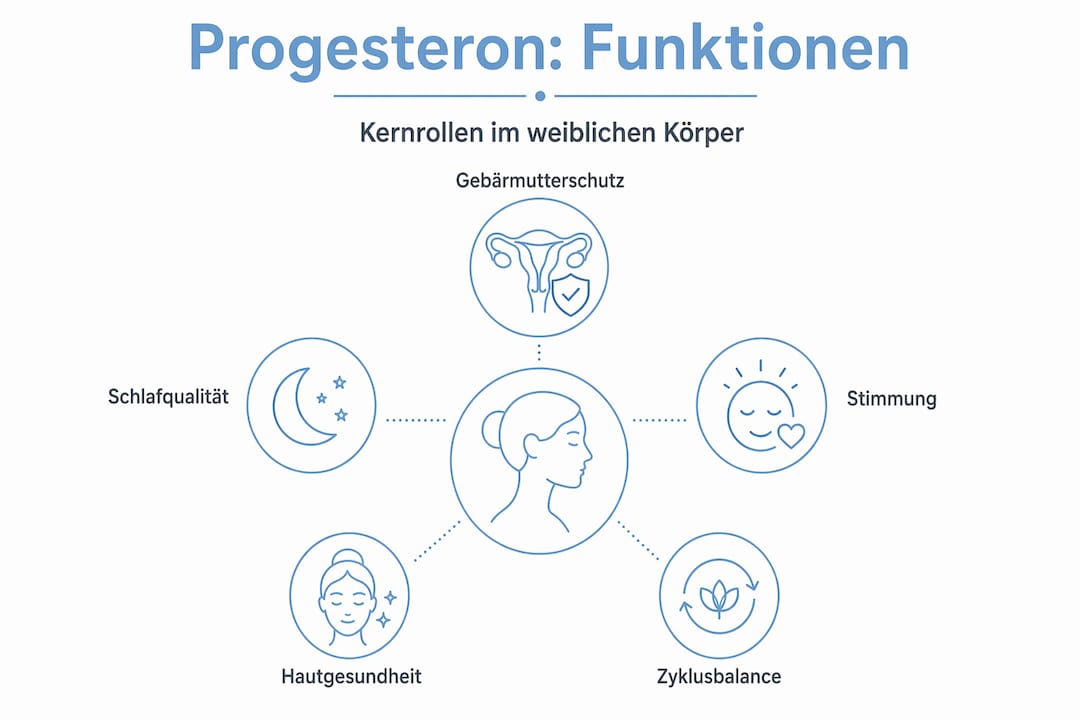
The main task of this hormone is to prepare the uterine lining for possible fertilization. It ensures that the lining thickens, receives an adequate blood supply, and is ready to receive a fertilized egg. As gynecologist Andreas Kopp explains, progesterone is essential for preparing the uterine lining and maintaining pregnancy.
What many people do not know is that progesterone has effects far beyond reproduction. It directly influences the nervous system, bone health, and even cancer risk.
The key functions of progesterone at a glance:
- Preparing the uterine lining for implantation
- Maintaining pregnancy by relaxing the uterine muscles
- A calming effect on the central nervous system (through its metabolite allopregnanolone)
- Protection against endometrial cancer through balance with estrogen
- Support for bone formation
- Regulation of thyroid function
- Promotion of deep sleep
“Progesterone is not just the pregnancy hormone. It is a well-being hormone that protects women throughout the entire life cycle, from puberty to menopause.”
What this means in practice: A woman with chronically low progesterone levels sleeps worse, reacts more emotionally to stress, and has a higher risk of bone density loss, even if she is still far from menopause. This makes progesterone a marker of overall health, not just fertility.
Now that you know how important progesterone is in general, let’s look at how levels typically change in the body.
Understanding progesterone levels: cycle phases and typical reference ranges
Most women who have their progesterone levels measured for the first time are surprised by the range of normal values. A laboratory value of 0.5 ng/mL can be completely normal, and so can 18 ng/mL. Context is everything.

Reference ranges by cycle phase
| Cycle phase | Typical progesterone level |
|---|---|
| Follicular phase (cycle days 1–13) | below 1 ng/mL |
| Ovulation (around cycle day 14) | 1–2 ng/mL |
| Early luteal phase (days 15–18) | 1.8–5 ng/mL |
| Mid-luteal phase (days 19–22) | 5–23.9 ng/mL |
| Late luteal phase (days 23–28) | declining to below 2 ng/mL |
| First trimester of pregnancy | 11–44 ng/mL |
| Second trimester | 25–83 ng/mL |
| Third trimester | up to over 200 ng/mL |
According to Cleveland Clinic Laboratories, normal progesterone levels during the luteal phase range from 1.8 to 23.9 ng/mL; a level below 5 ng/mL may indicate luteal phase deficiency.
What you should consider when interpreting the results:
- A level below 5 ng/mL in the mid-luteal phase is a warning sign of luteal phase deficiency
- Levels above 10 ng/mL are considered favorable for fertility
- Levels above 15 ng/mL during the luteal phase are ideal if you want to become pregnant
- A value below 1 ng/mL in the follicular phase is completely normal and not a sign of a deficiency
Understanding these phases is also crucial for testing progesterone levels correctly and avoiding hasty conclusions.
Pro tip: When interpreting your progesterone level, always note which cycle day and what time of day the test was performed. Without this information, a single value is nearly meaningless.
To accurately assess your own hormone status, the timing of the test is crucial.
Measuring progesterone: Timing, methods, and meaningful tests
Progesterone is one of the most difficult hormones to measure, not because the test is technically complicated, but because timing literally determines everything. Many women receive an unremarkable result and feel relieved, even though the test simply took place at the wrong time.
Here's how to obtain a meaningful progesterone test:
- Determine your ovulation. Use an ovulation test (LH strips) or track your basal body temperature for at least one cycle. A temperature rise of around 0.2 to 0.5 degrees indicates the beginning of the luteal phase.
- Count 5 to 7 days after ovulation. This is the window in which your progesterone level reaches its peak. In a typical 28-day cycle, this would be days 19 to 22.
- Test in the morning, ideally before 10 a.m. Progesterone levels follow a daily pattern and can fluctuate by up to 80% within 90 minutes, which is why precise timing and morning testing are crucial.
- Repeat the test in the next cycle. A single value is not enough. Only two or three consistent measurements provide a reliable picture.
- Combine the blood test with a cycle log. Basal body temperature, cervical mucus observation, and ovulation testing together provide significantly more information than the laboratory value alone.
Anyone planning a progesterone test should also make sure not to take hormonal contraceptives. These completely suppress the natural cycle and make progesterone measurements meaningless for assessing the cycle.
Pro tip: Have estradiol, FSH, and LH tested at the same time. Progesterone alone tells only part of the story. The ratio of estrogen to progesterone is often more informative than a single value.
If your test shows progesterone deficiency, the question arises of how it can be treated or naturally supported.
What to do about progesterone deficiency? Causes, symptoms, and supportive measures
Progesterone deficiency is more common than many people think. As many as one in eight women are affected, experience irregular cycles, and therefore often have difficulty trying to conceive. The tricky part is that the symptoms are often attributed to other causes.
Typical symptoms of progesterone deficiency
- A luteal phase that is too short (fewer than 10 days between ovulation and menstrual bleeding)
- Severe premenstrual syndrome (PMS) with mood swings, irritability, and sleep problems
- Cycles shorter than 25 days
- Difficulty becoming pregnant despite regular ovulation
- Persistent fatigue during the second half of the cycle
- Breast tenderness before your period
- Water retention and bloating
The most common causes of progesterone deficiency are:
- Luteal phase deficiency: The corpus luteum produces too little progesterone or does so for too short a time after ovulation
- Chronic stress: Cortisol competes with progesterone for the same precursor (pregnenolone). High stress levels literally mean less progesterone
- Calorie deficit or excessive exercise: Intense physical exertion and insufficient energy can impair corpus luteum function
- Perimenopause: Corpus luteum function naturally declines from the mid-30s onward
- Hypothyroidism: Poorly controlled hypothyroidism can affect progesterone production
Natural and medical support options
Before reaching for supplements, it is worth looking at your lifestyle and diet. Vitamin B6 is involved in the production and metabolism of progesterone. Good sources include tuna, salmon, chicken, chickpeas, and bananas.
Chaste tree (Vitex agnus-castus) is the best-known herbal remedy for luteal phase deficiency. It stimulates LH release and may indirectly improve corpus luteum function. Studies show effects with regular use for at least three months.
Medically, a vaginal progesterone therapy is generally used in cases of confirmed deficiency and when trying to conceive. This form of supplementation is very effective and has fewer systemic side effects than oral preparations because the progesterone reaches the area near the uterus directly.
Pro tip: Stress is the biggest invisible progesterone thief. If you are under chronic pressure and also have a short cycle, first try to lower cortisol (through sleep, moderate exercise, and breathing techniques) before turning to supplements.
Progesterone During Pregnancy: Protection, Risks, and Therapeutic Use
Nowhere does progesterone play as dramatic a role as during pregnancy. No other hormone changes so significantly during this time while being equally indispensable.
Progesterone levels over the course of pregnancy
| Pregnancy period | Average progesterone level |
|---|---|
| First trimester (weeks 1–12) | 11–44 ng/mL |
| Second trimester (weeks 13–26) | 25–83 ng/mL |
| Third trimester (weeks 27–40) | 58–214 ng/mL |
Progesterone rises sharply over the course of pregnancy and prevents premature labor by relaxing the uterine muscles. Without this relaxing effect, the uterus would respond to every irritation with contractions, which could endanger the pregnancy.
Main functions of progesterone during pregnancy:
- Maintaining the uterine lining during the first twelve weeks until the placenta takes over this function
- Suppressing the maternal immune system so that it does not reject the embryo
- Inhibiting premature contractions
- Promoting breast development in preparation for breastfeeding
- Protecting the fetus from maternal stress cortisol
When is progesterone used therapeutically?
Vaginal progesterone supplementation is recommended when trying to conceive and for certain pregnancy risks, such as threatened miscarriage. In practice, it looks like this:
- Use from embryo transfer onward in IVF treatments
- Use in cases of recurrent miscarriages during the first trimester
- Administration in cases of confirmed corpus luteum insufficiency and a positive pregnancy test
- Treatment usually once or twice daily until around the twelfth week of pregnancy
Common side effects of vaginal use include local discomfort, fatigue, and mild mood swings. These are generally well tolerated and subside after the treatment ends.
“Without sufficient progesterone during the first twelve weeks of pregnancy, a pregnancy cannot be maintained. During this period, the hormone is literally the embryo’s life support.”
Taken together, these aspects show how important a balanced progesterone level is throughout the life cycle.
Why Many Women Underestimate Their Progesterone Levels—a Practical Look
Here is something missing from most articles about progesterone: A single laboratory value can mislead you, not because the test is poor, but because progesterone is not a stable hormone from a biological perspective. It pulses.
Many people overlook that progesterone has strong pulsations and fluctuations, which is why individual measurements often cause confusion. A value measured at 8 a.m. can already be 60 to 80 percent higher or lower by noon. This is not measurement inaccuracy. This is physiology.
What does this mean for you in practice? A normal laboratory value does not rule out a deficiency. A one-time elevated value does not yet confirm a healthy luteal phase. What you need is context.
Basal body temperature charts covering two to three cycles, combined with targeted testing at the right time and a description of symptoms, provide a much more complete picture than any isolated blood test. If your temperature never rises by more than 0.2 degrees in the second half of your cycle or your luteal phase is shorter than ten days, this points to progesterone problems, even if an improperly timed blood test appeared normal.
The second underestimated factor is stress. Many women look for supplements or hormone treatments even though the actual cause is a persistently elevated cortisol level. Cortisol and progesterone share the same biochemical precursor. Under chronic stress, more of this precursor is directed toward cortisol production, and progesterone falls by the wayside. This is not a fringe topic in conventional medicine; it is biochemistry in action.
Our recommendation: Begin with an honest assessment of your stress level before supplementing with progesterone. If your body is under constant pressure, no supplement will address the underlying cause. Anyone who truly wants to understand their hormone status should combine hormone testing with consultation to interpret values and symptoms together.
Individual consultation and targeted testing are not a luxury but the only way to obtain truly meaningful results.
Your first step toward progesterone balance: Test and support your levels with mybody-x
You now have a solid understanding of how progesterone works, when you should test, and what may be behind abnormal levels. The next step is concrete and easier than you think.
At mybody-x, you can conveniently have your progesterone level tested from home, with ISO-certified laboratory analyses and easy-to-understand reports that provide more than just a numerical value—they explain what it means for your health. You receive personalized recommendations and, if desired, personal consultation. With more than 11,300 satisfied customers and an average rating of 4.77 stars, mybody-x stands for certified laboratory quality, transparent data processing, and honest results. Anyone who wants to take control of their hormonal balance will find the right starting point here.
Frequently asked questions about progesterone
When is the best time to have progesterone tested?
The optimal time to test is 5 to 7 days after ovulation, usually cycle days 19 to 22 in a 28-day cycle. The test should be taken before 10 a.m., as levels fluctuate significantly throughout the day.
What does a progesterone level below 5 ng/mL during the luteal phase mean?
According to Cleveland Clinic Laboratories, a value below 5 ng/mL during the luteal phase may indicate corpus luteum insufficiency, which can impair fertility and the ability of the embryo to implant.
How does progesterone support a healthy pregnancy?
Progesterone prevents premature labor by relaxing the uterine muscles and ensures that the uterine lining is maintained during the first weeks of pregnancy.
Can I support progesterone naturally?
Yes. Stress reduction, a balanced diet with vitamin B6, and the use of chasteberry can have a positive effect on natural progesterone production, particularly in cases of mild corpus luteum insufficiency.
When is progesterone therapy administered vaginally?
For those trying to conceive, confirmed corpus luteum insufficiency, or threatened miscarriage, vaginal progesterone is often prescribed for 10 to 12 weeks, usually once or twice daily.



Share now:
Understand progesterone deficiency and address it effectively
Food Allergy Test: Your Guide to Clarity