
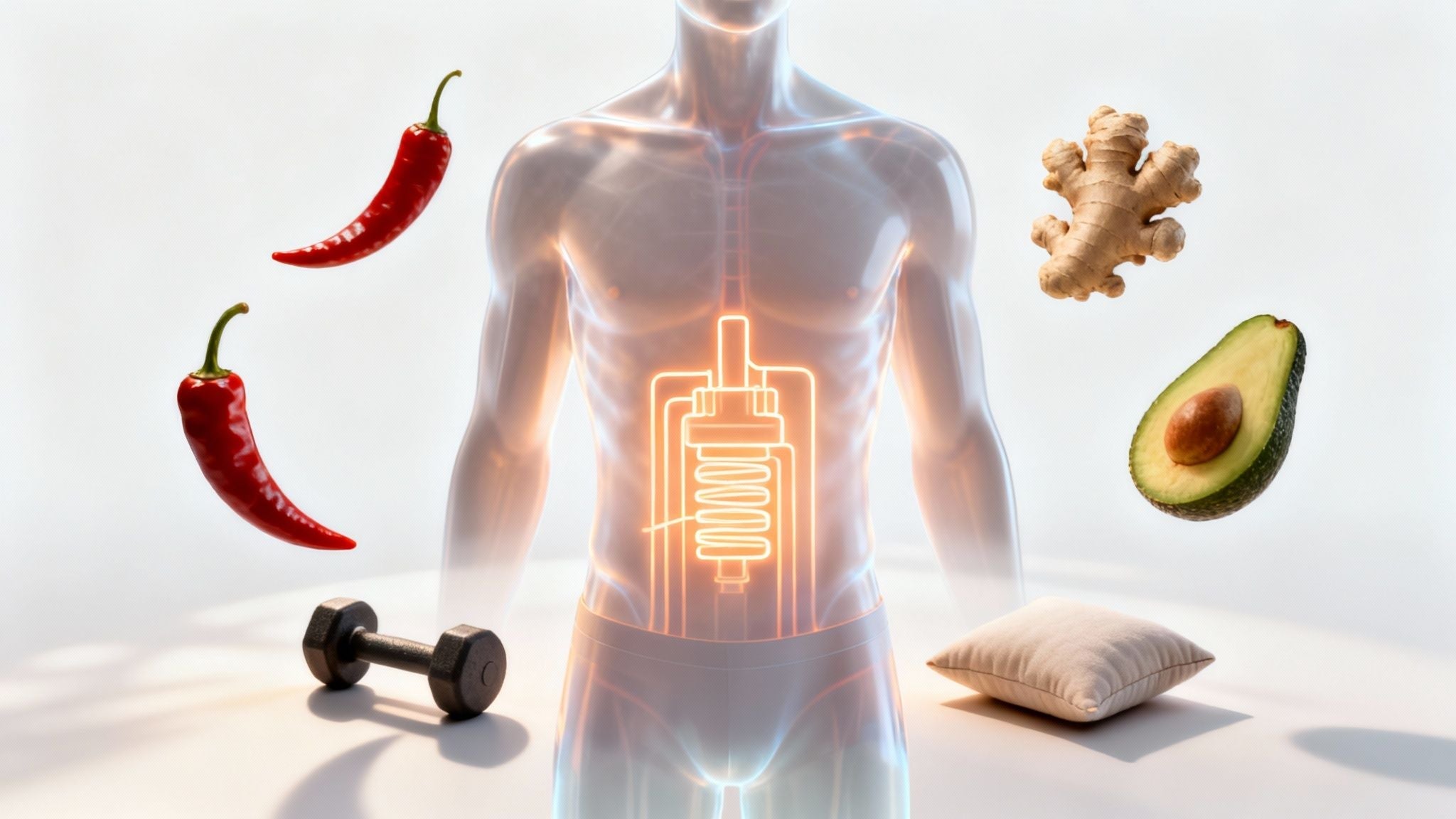
What stimulates the metabolism and how you can specifically boost it?
Do you often feel tired, can't seem to lose weight despite eating well, or are you struggling with digestive issues? The answer might lie in your metabolism. A smart combination of a protein-rich diet , regular exercise , and sufficient sleep is often the key to getting your body's engine running smoothly again. But sometimes the cause lies deeper. A closer look at your nutrient and hormone levels can provide clarity and pave the way to more energy and well-being.
Understand your metabolism and specifically activate it
When you hear "metabolism," do you immediately think of calorie burning and weight loss? While that's an important part, the term encompasses so much more. Think of your metabolism as your body's engine: It tirelessly converts everything you eat and drink into the energy your cells need to breathe, think, move, and repair themselves.
This engine is always running, even when you're asleep. The energy it consumes at complete rest is called the basal metabolic rate . This is the basis of your daily energy consumption and is influenced by very individual factors.
What determines your basal metabolic rate
Not every engine is the same. How fast yours runs depends on your individual circumstances:
- Muscle mass: Muscles are your personal power plants. Even at rest, they burn significantly more calories than fat tissue.
- Age and gender: Metabolism tends to slow down with age, often due to a loss of muscle mass. Men, on average, have a higher basal metabolic rate than women.
- Hormones: Thyroid hormones, in particular, are the spark plugs of your metabolism. An imbalance, which you can detect with a hormone test, can really cause your body to sputter.
- Genetics: Your predisposition also plays a role, but it is not your destiny.
This infographic provides a clear summary of the key drivers of your metabolism.
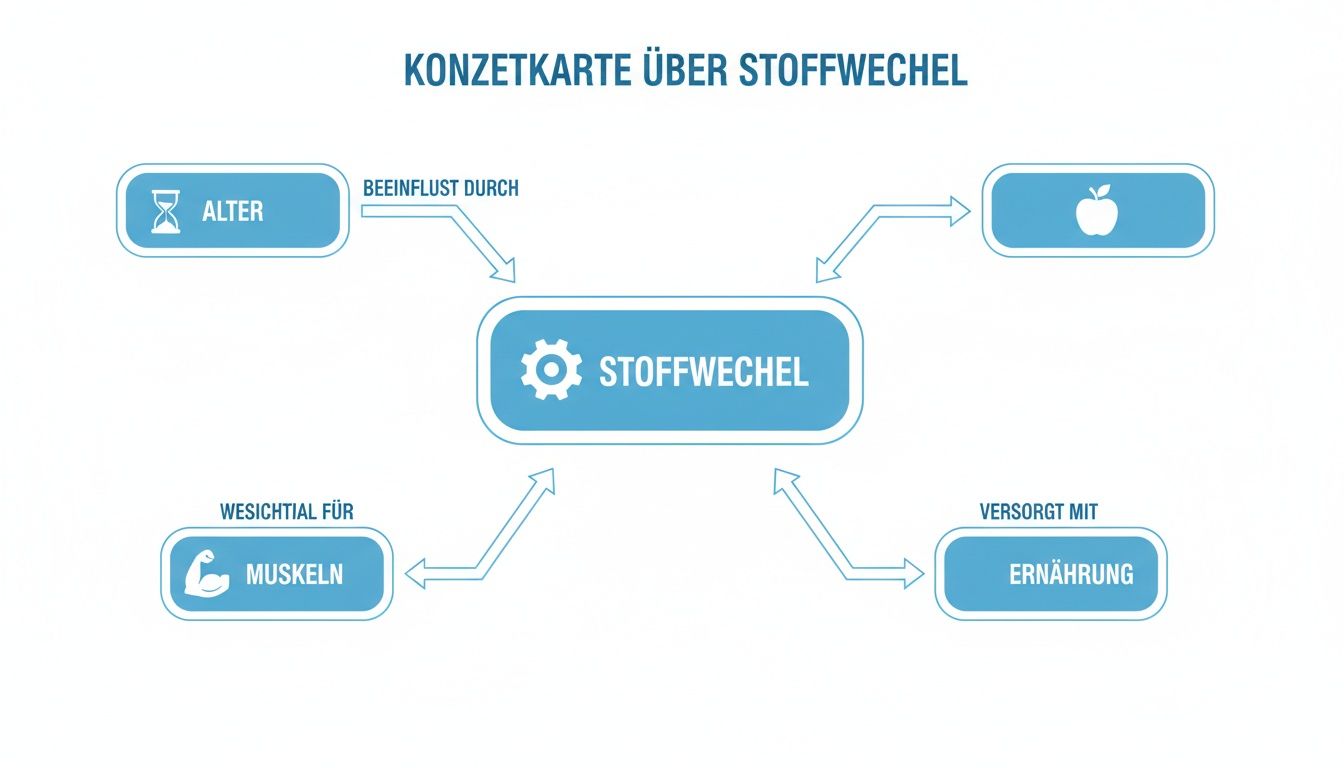
As the graphic nicely illustrates, your metabolism is not an unchangeable fate. It is a dynamic system that you can actively shape through targeted adjustments to your diet and muscle building.
A sluggish metabolism often shows up on more than just the scale. It can also lead to persistent fatigue, difficulty concentrating, and digestive problems. Unfortunately, this metabolic process is becoming increasingly disrupted in more and more people. In Germany, the number of obese adults (BMI ≥ 30) rose from 12.2% in 2003 to 19.7% in 2023 – a worrying increase of over 60%. You can find more information on current statistics about obesity at marcusknispel.com .
Nutrition that fuels your metabolism
What you eat is the fuel for your body's engine. A smart and conscious choice of foods can specifically boost your metabolism by stimulating thermogenesis – the body's heat production, which incidentally consumes additional energy.
Think of it this way: Some foods are like easily ignitable kindling that burns quickly, while others are more like slowly glowing coals. Your goal is a smart mix that keeps the fire going without overtaxing it. The key to this often lies in the nutrients themselves.

Proteins as a metabolism booster
The undisputed star among metabolism boosters is undoubtedly protein. Your body has to expend significantly more energy to digest proteins than carbohydrates or fats. This process is known as the thermic effect of food (TEF) .
Up to 30% of the calories from protein are burned directly during digestion. This is a huge difference compared to the meager 5–10% for carbohydrates and the barely measurable 0–3% for fats.
Proteins give your metabolism a real boost while you eat. At the same time, they provide a long-lasting feeling of satiety and protect your valuable muscles – which are your most important calorie burner at rest.
A protein-rich meal consisting of chicken breast, lentils and vegetables will therefore boost your metabolism noticeably more than a comparable portion of pasta with a light sauce.
Sharpness and heat that start the engine
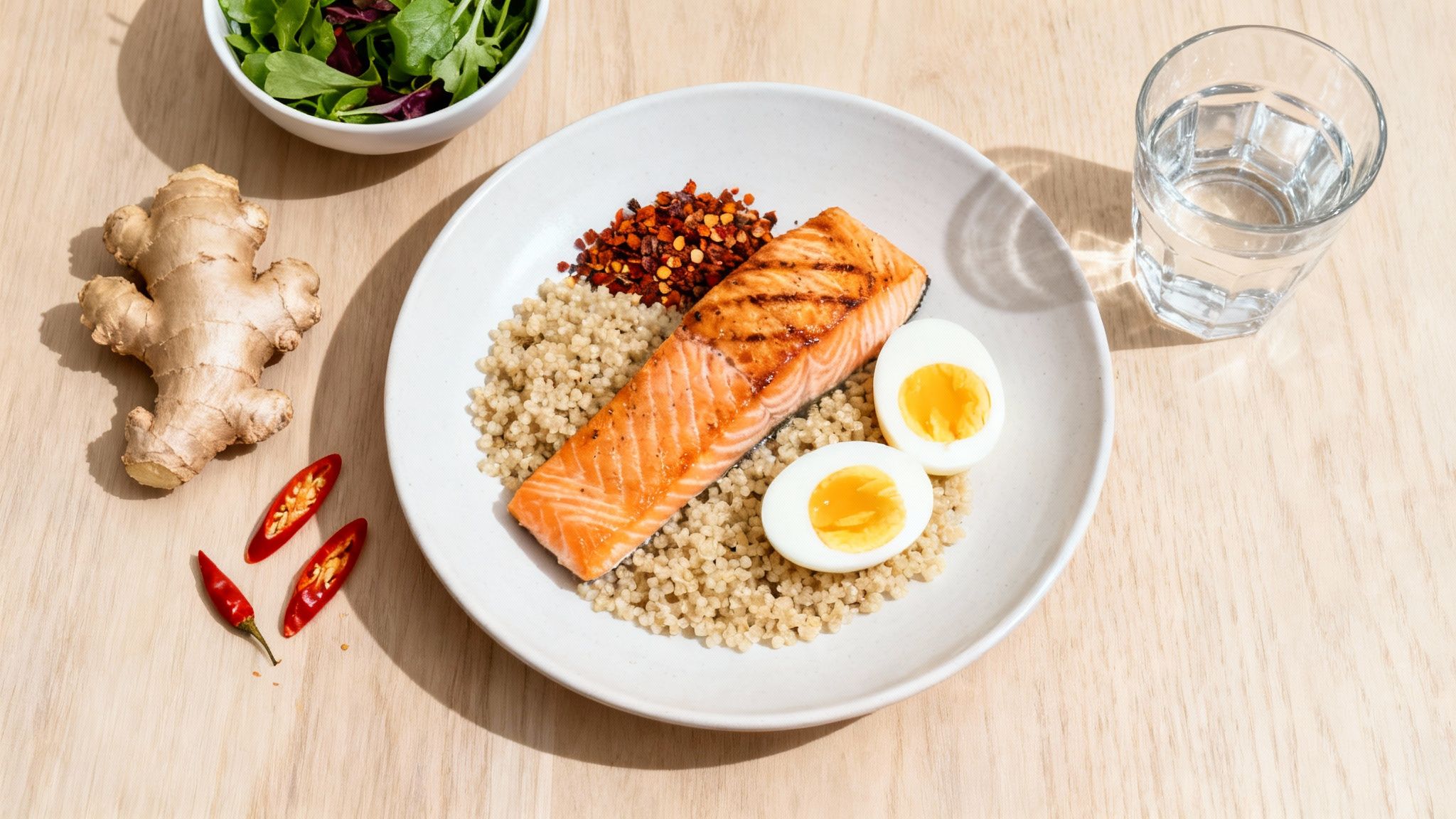
Certain spices can also give your metabolism a small but noticeable boost. Chili, ginger, and green tea contain substances that temporarily raise your body temperature, thus gently increasing energy expenditure.
- Chili: The capsaicin it contains stimulates heat production and makes you sweat.
- Ginger: The pungent substances (gingerols) have a very similar effect to capsaicin and can slightly increase calorie consumption.
- Green tea: The clever combination of caffeine and catechins can gently but sustainably stimulate the metabolism.
These effects may not be huge on their own, but in total they can definitely make a difference over the course of the day.
So, the point isn't to follow radical diets that can actually slow down your metabolism in the long run. Instead, you should focus on a balanced diet that provides your body with everything it needs to function optimally. This includes complex carbohydrates, healthy fats, and, most importantly, sufficient water. However, whether your body is optimally absorbing all these nutrients, or whether you might have an undetected food intolerance that's slowing down your metabolism, can be determined with an intolerance test.
If you would like to delve even deeper into the topic, you will find more exciting foods that stimulate the metabolism in our guide.
Exercise and muscle building as your metabolism turbocharger
If proper nutrition is the fuel for your body, then exercise is the key that really gets your metabolism going. It's about so much more than just burning calories during a workout. Regular activity sustainably transforms your body and ensures that your basal metabolic rate increases permanently.
The key factor? Your muscles. Think of your muscles as tiny power plants that constantly burn energy – even when you're relaxing on the couch. Every kilogram of muscle mass burns roughly three times as many calories at rest as one kilogram of fat tissue. Building muscle is therefore one of the smartest and most sustainable strategies for boosting your daily energy expenditure.
Strength meets endurance
To unlock your full potential, a smart mix of different training methods is the key. Each method has its own strengths that complement each other perfectly and boost your metabolism from very different angles.
- Strength training (e.g., with weights, resistance bands, or bodyweight): This is the most direct way to build new muscle mass. More muscle means a permanently higher basal metabolic rate, 24 hours a day.
- Endurance training (e.g. running, cycling, swimming): It strengthens your cardiovascular system and burns a high number of calories during the activity itself.
- HIIT (High-Intensity Interval Training): This method alternates short, extremely strenuous phases with short breaks. It not only burns a huge number of calories but also massively boosts the so-called afterburn effect.
The afterburn effect , scientifically known as EPOC (Excess Post-Exercise Oxygen Consumption) , describes the increased calorie consumption your body has after exercise to return to a resting state. HIIT can maintain this effect for up to 24 hours .
More movement in everyday life
You don't have to become a high-performance athlete to boost your metabolism. Often it's the small, regular habits that make the biggest difference and can even be integrated into a busy schedule.
Try this:
- Make active use of "waiting times": Do a few squats while the coffee is brewing, or calf raises while brushing your teeth.
- Move meetings outdoors: A walk in the fresh air not only stimulates the metabolism, but often also creativity.
- Focus on “workout snacks”: Integrate three to four short, five-minute sessions throughout the day, in which you do jumping jacks, push-ups, or a plank.
Every movement counts. Every single activity signals to your body that energy is needed. This way, your metabolism isn't just briefly boosted, but remains permanently active.
Hormones and nutrients as secret directors
Do you sometimes feel like you're doing everything right, but your metabolism just won't kick in? Sometimes the cause lies deeper than your diet or training plan. Behind the scenes, hormones and nutrients are pulling the strings – they are the secret directors of your entire energy balance.
If these key players get out of sync, even the best strategy can fail. You can think of it like an orchestra: even if the instruments (your lifestyle habits) are perfect, the music will sound off-key if the conductor (your hormones) sets the wrong tempo.

When the control center becomes unbalanced
Your body is a highly complex communication system in which hormones transmit crucial messages. Some of them have a direct connection to how fast or slow your metabolism runs.
- Thyroid hormones (T3/T4): They are the absolute bosses of your metabolism. An underactive thyroid can cause your entire system to run on low power. You'll notice this through constant fatigue, unexplained weight gain, and the feeling of always being cold.
- Insulin: This hormone is responsible for transporting sugar from the blood into your cells. With insulin resistance, this process no longer works properly – the sugar remains in the blood and is instead stored as fat.
- Cortisol: This "stress hormone," when chronically overproduced, can raise blood sugar levels and promote muscle loss. Both of these factors together noticeably lower your basal metabolic rate.
A hormonal imbalance can have far-reaching consequences that extend well beyond weight. If you'd like to delve deeper into this topic, our guide offers 7 effective tips for hormonal balance , providing valuable suggestions to help you bring your body back into harmony.
Small helpers with a big impact
Besides hormones, there are also micronutrients – vitamins and minerals – that act as tiny spark plugs for countless metabolic processes. If even one of these vital helpers is missing, the body can quickly start to sputter.
Imagine you're assembling a car. You can have the best engine and the best tires, but if a single, tiny screw is missing, the car won't run properly. It's the same with micronutrients in your body.
The following are particularly important for an active metabolism:
- Iron: Essential for oxygen transport in the blood. And without oxygen, there is no efficient energy combustion.
- Iodine and selenium: This duo is crucial for the production of thyroid hormones. A deficiency can directly lead to hypothyroidism.
- B vitamins: They are the all-rounders in energy metabolism and are involved in almost every step that converts food into usable energy.
Metabolic disorders are a growing problem in Germany. Between 2006 and 2020, rehabilitation measures due to such conditions steadily increased. At the same time, approximately 23% of Germans suffer from metabolic fatty liver disease, often accompanied by precisely the hormonal imbalances and nutrient deficiencies that slow down metabolism.
A targeted blood test, such as a nutrient or hormone test , can finally provide clarity. Often, this is the first step towards discovering the true causes of a sluggish metabolism, instead of continuing to grope in the dark.
Targeted analyses instead of general advice
You've changed your diet, exercised more, and tried to sleep better – but somehow you still feel held back and the results aren't there? That's frustrating and a clear sign that general advice has its limits. Every body is unique. What works wonders for one person might simply have no effect on you.
Instead of continuing to guess what's slowing down your individual metabolism, you can find out for sure. The key is to look from the outside in and give your body the opportunity to show you exactly where the problem lies. The at-home blood tests from mybody-x.com are the most direct way to go from guesswork to knowledge.
Find the brake in your system
Often, it's invisible blockages at the cellular level that are slowing you down. With the self-tests from mybody-x.com, you can specifically investigate these hidden causes. This gives you a clear picture of exactly which adjustments you need to make.
Imagine your car isn't running properly. You wouldn't just randomly replace parts, you'd have the error codes read first. You can now use this same principle for your body:
- The nutrient test: A deficiency in essential vitamins and minerals is one of the most common causes of a sluggish metabolism. For example, if your body lacks iron , it cannot transport enough oxygen to burn energy. A deficiency in B vitamins, on the other hand, paralyzes the entire energy production. A nutrient test precisely identifies such deficiencies so that you can replenish them effectively.
- The hormone test: As already discussed, hormones are the masterminds behind your metabolism. An undetected underactive thyroid or chronically elevated cortisol levels can sabotage all your efforts. A hormone test provides clarity and shows you whether your hormonal system is playing in harmony.
- The intolerance test: Chronic inflammation caused by undetected food intolerances can put a strain on your body and thus also on your metabolism. A test will tell you which foods you might be better off avoiding.
If you're wondering exactly how such an analysis works and what insights it can provide, we recommend our comprehensive guide to metabolic analysis for weight loss . There you'll learn everything about the background and benefits of targeted tests.
From result to solution
The process is incredibly simple and discreet. You take a small sample at home and send it to our certified laboratory in Germany. There, it is analyzed, and you then receive a clear and concise report detailing your test results.
The best part, however, is that you're not left alone with the results. You receive concrete, personalized recommendations. So instead of following general tips, you'll learn whether you should eat more iron-rich foods, support your thyroid health, or reduce your stress levels.
This personalized approach makes all the difference. It gives you back control and allows you to give your body exactly what it needs for optimal metabolism. The question " What boosts metabolism? " is answered individually for you – based on facts, not assumptions.
Your roadmap for an active metabolism in everyday life
You've now read a lot about what boosts your metabolism. Great! Knowledge is the first, crucial step. But real change only happens when this theory becomes part of your everyday life – completely stress-free and without rigid rules.
Don't see your body as an opponent you have to defeat, but as a partner. It's not about making everything perfect overnight. Far more important are the small, conscious decisions you make every day. These add up and lead to more energy and well-being in the long run.
An example day for your metabolism boost
To give you a better idea of what this could look like, we've put together a simple daily routine. This isn't a strict plan, but pure inspiration. Take what works for you and adapt it to your own rhythm.
-
In the morning (around 7:00 a.m.): Your first thing to do should be drink a large glass of lukewarm water. This gently wakes up your digestion and replenishes your fluids. Afterwards, have a satisfying and energizing breakfast – for example, scrambled eggs with some vegetables or creamy quark with fresh berries and a handful of nuts.
-
Mid-morning (around 10:30 a.m.): Time for a quick "workout snack" at your desk or wherever you happen to be. Stand up, stretch, and do a few squats or jumping jacks for five minutes. This will really get your circulation going and is the best weapon against that looming midday slump.
-
Lunch (around 1 p.m.): Your main meal should also be rich in protein and fiber . A large bowl of salad with grilled chicken breast, lentils, or chickpeas is ideal. Try to avoid heavy, carbohydrate-heavy meals that will leave you feeling sluggish afterward.
-
In the afternoon (around 4 p.m.): When hunger strikes, reach for a handful of nuts or an aromatic green tea instead of a chocolate bar. This will keep your blood sugar stable and give you sustained energy until the evening.
-
In the evening (around 7:00 pm): A light dinner such as steamed fish with plenty of vegetables is perfect. This way, your body doesn't have to work hard during the night and can fully concentrate on regeneration.
-
Late evening (around 10 p.m.): Turn off all screens at least an hour before bedtime. Blue light disrupts the production of your sleep hormone. A short meditation or a warm bath signals to your body that it's time to wind down and reduce the stress hormone cortisol.
View this plan as a guideline, not a rigid rule. Find out what feels good for you and your body. However, if you notice that despite all your efforts, your progress just isn't going smoothly, there could be a deeper underlying cause. A hormone or nutrient test from mybody-x.com can provide valuable insights into whether an imbalance might be hindering your progress.
What you've always wondered about metabolism
Here are the answers to the most pressing questions we receive time and again. Short, concise, and directly from practical experience, so you can quickly gain clarity for your path.
Is it really possible to reawaken a "dormant" metabolism?
Yes, absolutely! Your metabolism isn't a fixed fate, but a dynamic system that reacts to your lifestyle. You can specifically boost it again with the right stimuli.
Patience and the right measures are key here. It's about sending your body the right signals through smart nutrition, targeted muscle building, and a balanced daily routine so it can get back on track. Sometimes, however, you first need the clarity that a blood test can provide to find the truly effective levers.
What role does sleep play in metabolism?
A crucial point. Lack of sleep acts like a signal jammer for your hormones – it disrupts the important hunger and satiety hormones ghrelin and leptin, often leading to cravings. Furthermore, too little sleep can impair your body's response to insulin.
Good and sufficient sleep is one of the most effective and yet most underestimated ways to maintain your metabolism. Don't consider it a luxury, but rather one of the most important pillars of your health.
How quickly can I expect results?
This is of course very individual, but realistic expectations are invaluable. You'll often notice some positive effects after just a few days – for example, more energy in everyday life or a calmer digestion.
Other, more profound changes, such as a noticeable increase in your basal metabolic rate through muscle building, require several weeks to months of consistent effort. Always remember: sustainability beats any short-term sprint on this path.
Are you ready to move from guesswork to knowledge and uncover the real reasons for your sluggish metabolism? With the analyses from mybody-x.com , you can find out which nutrients you're lacking or whether your hormones are balanced.
Share:
Our real DNA Slim test experiences and what's behind them
Discover the DNA test for weight loss: Gene-based nutrition that works