

Metabolism explained simply: 9 facts you need to know
You constantly hear about “metabolism,” but what is really behind it? Is it a mysterious engine that only some people can get running, or a complex system that you can influence yourself? The truth is that your metabolism is far more than just burning calories. It is the sum of all the biochemical processes in your cells that convert nutrients into vital energy. This system determines not only your body weight, but also your energy levels, hormonal balance, and overall well-being.
In this article, we’ll put an end to the myths and provide you with a clear overview. We’ll explain the 9 fundamental pillars of metabolism in a simple and easy-to-understand way—from your basal metabolic rate at rest and the role of hormones to the influence of your muscle mass. You’ll learn that your metabolism is not an unchangeable fate, but a dynamic system that responds to your lifestyle.
We’ll show you how your body really works and how you can support it in targeted ways. Get ready to take control and consciously set the course for your health. Because when you understand your metabolism, you hold the key to more energy and vitality.
1. Basal Metabolic Rate (BMR): Your energy needs at complete rest
Imagine lying relaxed in bed all day and doing absolutely nothing. The amount of energy your body needs in this state to maintain vital functions such as breathing, heartbeat, brain activity, and body temperature regulation is your basal metabolic rate—also known as Basal Metabolic Rate (BMR). This value is the absolute foundation for understanding metabolism in simple terms, as it accounts for an astonishing 60 to 75% of your total daily energy expenditure.
Your BMR is influenced by factors you can only partly control, such as your age, sex, and genetics. However, the decisive factor is your body composition. Muscle mass is more metabolically active than fat tissue and burns more calories even at rest. For example, a 30-year-old man with a lot of muscle mass might have a BMR of 1,800 kcal, while an untrained person of the same age might only reach 1,200 kcal. Knowing your individual BMR not only helps you better understand your personal energy needs, but also provides the perfect foundation for setting realistic nutrition and fitness goals.
How to use your BMR to your advantage
To support your metabolism strategically, it is crucial to know your starting point. Here are practical tips for determining and positively influencing your basal metabolic rate:
- Calculate your BMR: Use online calculators based on recognized formulas such as the Harris-Benedict formula or the more accurate Katch-McArdle formula (if you know your body fat percentage). This gives you a solid initial estimate.
- Build muscle intentionally: Incorporate strength training into your routine. Every kilogram of muscle mass increases your daily calorie expenditure at rest and sustainably boosts your basal metabolic rate.
- Make sure you get enough protein: Your body requires more energy to digest protein than it does to digest fats or carbohydrates (the thermic effect of food). A protein-rich diet also supports muscle maintenance and growth.
Understanding your basal metabolic rate is the first step toward taking control of your energy metabolism. For deeper insights into the complex processes of metabolism, you can read more here about what metabolism actually is.
2. Thermogenesis: Calorie Burning Through Heat Production
Have you ever wondered why you feel warm after a large meal or an intense workout? Thermogenesis is responsible: the production of heat in your body. This process is a central component of understanding metabolism in simple terms, as it includes all calorie expenditure beyond your basal metabolic rate. Whether digesting food or exercising, your body constantly burns energy and releases it as heat.

Thermogenesis can be divided into three areas: The thermic effect of food (TEF) alone uses about 10% of the calories you consume for digestion. In addition, there is adaptive thermogenesis, which is activated by exercise and external stimuli such as cold. This means that every activity, from walking to an intense workout, generates additional heat and thus increases calorie expenditure. Even exposure to cold can activate brown adipose tissue, which is specifically designed to produce heat. Once you understand this mechanism, you can use it strategically to actively increase your daily energy expenditure.
How to use thermogenesis to your advantage
Consciously controlling thermogenesis is an effective way to naturally boost your metabolism. With these practical tips, you can specifically promote your body's heat production:
- Include protein in every meal: Protein digestion uses the most energy at 20–30%, compared with carbohydrates (5–10%) or fats (0–3%). This thermic effect of food (TEF) noticeably boosts your metabolism after eating.
- Prioritize regular exercise: Every form of physical activity generates heat. High-intensity interval training (HIIT) in particular produces a long-lasting afterburn effect that increases your calorie expenditure for hours after your workout.
- Use targeted cold exposure: A cold shower in the morning or regular sauna sessions followed by cooling down can stimulate metabolically active brown adipose tissue, thereby increasing the body's heat production.
3. Insulin Sensitivity: How Well Your Cells Respond to Insulin
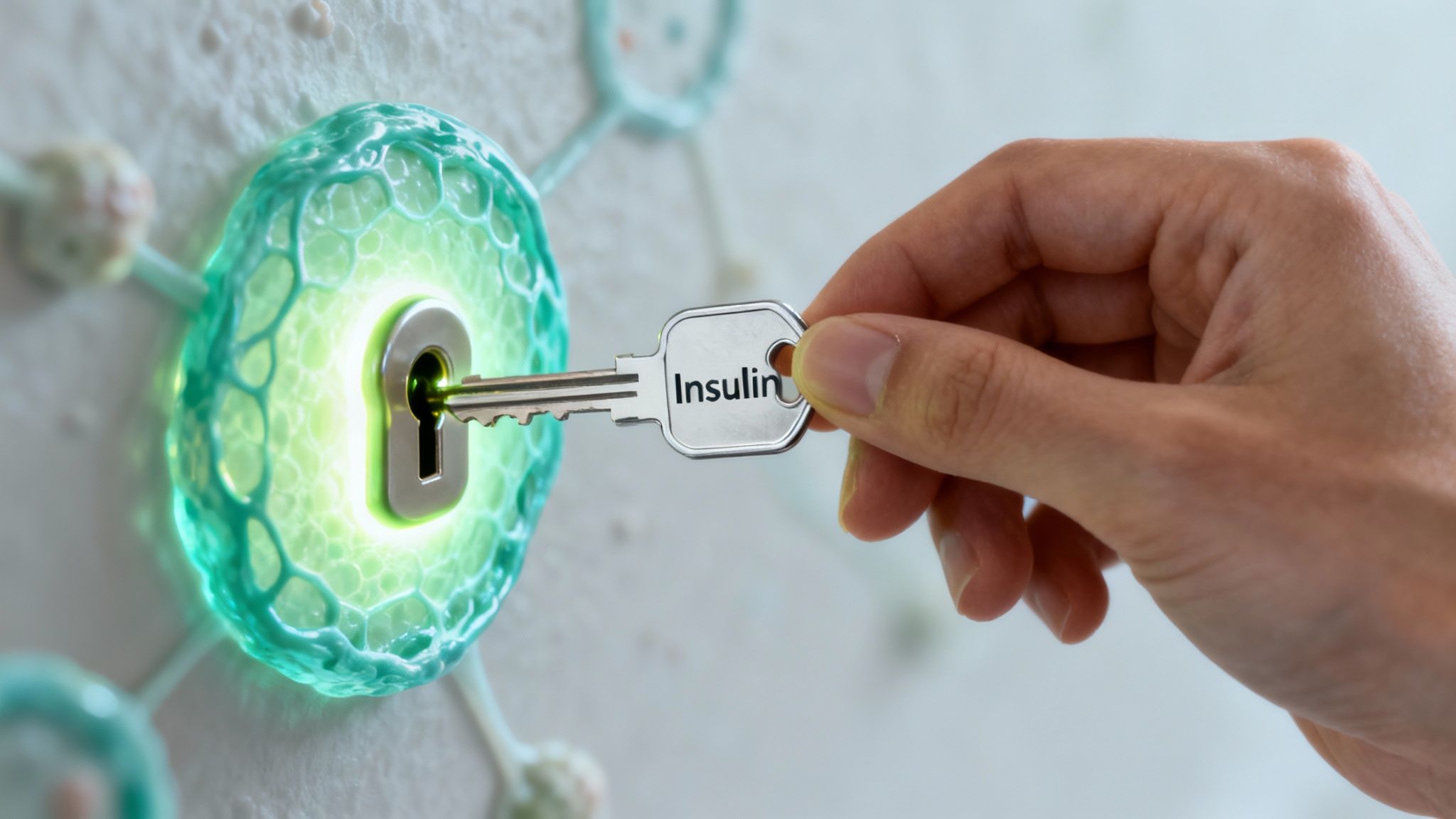
Think of insulin as a key that unlocks the door to your cells, allowing them to take in blood sugar (glucose) for energy. Insulin sensitivity describes how well this key fits the lock. High sensitivity means that your cells are highly receptive to the insulin signal and efficiently absorb sugar from the blood. This ensures stable blood sugar levels and an optimal energy supply. Poor sensitivity (insulin resistance), on the other hand, forces your body to produce more and more insulin to achieve the same effect. In the long term, this can lead to elevated blood sugar levels, increased fat storage, and metabolic disorders. This principle is central if you want to understand metabolism explained simply, as it directly affects your energy levels and body composition.

Insulin sensitivity is not a fixed value; it can be actively influenced. Athletes often have excellent insulin sensitivity because their muscles constantly need energy and practically soak up sugar. In contrast, people with a sedentary lifestyle and excess weight often develop insulin resistance. But even small changes, such as taking regular walks after meals, can noticeably improve insulin sensitivity within just a few weeks. Understanding your insulin sensitivity is crucial for weight management and disease prevention.
How to Use Insulin Sensitivity to Your Advantage
High insulin sensitivity is a cornerstone of a healthy metabolism. You can actively improve it with these targeted measures:
- Do strength training: Incorporate strength training into your routine 2–3 times per week. Muscles are the body's biggest consumers of blood sugar, and trained muscles respond significantly more sensitively to insulin.
- Exercise after eating: A 15-minute walk after a meal helps blunt blood sugar spikes and shuttle glucose directly into your cells.
- Reduce sugar and processed carbohydrates: A diet rich in added sugar and refined carbohydrates overloads your insulin system. Prefer complex carbohydrates from whole grains and vegetables.
- Prioritize your sleep: Chronic sleep deprivation (less than 7 hours per night) has been shown to impair insulin sensitivity.
Improving your insulin sensitivity is a powerful tool for optimizing your metabolism. For more information, particularly in the context of an adapted diet, learn more here about the right diet for diabetes.
4. Metabolic adaptation: Your body's emergency brake
Have you ever wondered why weight loss suddenly stalls after a few weeks, even though you continue to count your calories diligently? This is where metabolic adaptation comes into play. It is your body's clever survival mechanism, which reduces energy expenditure during a prolonged calorie deficit to counteract a perceived famine. Your body essentially becomes more efficient and burns fewer calories for the same tasks. This protective mechanism explains why metabolism explained simply is often more complicated than it seems, and why extremely restrictive diets fail in the long term.
Your metabolism can slow down by 10 to 25% during a strict diet. This means that someone who previously maintained their weight at 2,000 kcal may suddenly hit a plateau at just 1,600 kcal. This phenomenon is the main reason for the dreaded yo-yo effect: As soon as the previous eating pattern is resumed, the now-slower metabolism encounters a high calorie intake, leading to rapid weight gain. Understanding this process is crucial for losing weight sustainably and healthily without trying to outsmart your own body.
How to counteract metabolic adaptation
Instead of working against your body, you can take a strategic approach to keep your metabolism active and break through plateaus. Here are the most effective methods:
- Avoid crash diets: Aim for a moderate calorie deficit of no more than 500 calories per day. This signals to your body that there is no emergency and minimizes metabolic slowdown.
- Include “refeed” days: Deliberately plan one or two days per week on which you increase your calorie intake to maintenance level (or slightly above). This replenishes your energy stores and signals to your metabolism that sufficient energy is available.
- Take planned diet breaks: After 8 to 12 weeks of dieting, take a one- to two-week break during which you eat at maintenance calories. This helps “reset” your metabolism and prepares you mentally and physically for the next phase.
- Prioritize strength training and protein: Preserve your muscle mass at all costs! Muscle is metabolically active tissue. Strength training combined with a protein-rich diet (approx. 1.6–2.2 g per kg of body weight) protects your muscles and keeps your basal metabolic rate high.
5. The Thermic Effect of Food (TEF): Burning Calories While Eating
Did you know that your body uses energy to digest food? This fascinating phenomenon is called the thermic effect of food (TEF), also known as diet-induced thermogenesis. It describes the amount of energy your body must expend to break down, absorb, and metabolize nutrients. TEF accounts for about 10% of your total daily energy expenditure and offers a smart way to understand and apply your metabolism in simple, practical terms.
The key is that not all nutrients are the same. Protein is the undisputed champion: Your body burns 20–30% of its calories processing it. Carbohydrates are in the middle at 5–10%, while fats require the least energy for digestion, at just 0–3%. So, a chicken breast containing 100 kcal uses 20–30 kcal just for digestion, while the same number of calories from olive oil requires only 0–3 kcal. By deliberately choosing protein-rich foods, you can increase your daily calorie expenditure without any additional effort.
How to use TEF to your advantage
Strategic food choices can noticeably support your metabolism. With these tips, you can make targeted use of the thermic effect of food to achieve your goals:
- Include protein in every meal: Distributing protein evenly throughout the day (e.g., 25–40 g per meal) keeps TEF consistently high while also promoting satiety.
- Choose high-quality protein sources: Consciously choose lean meat, fish, eggs, legumes, or tofu. These unprocessed foods not only maximize TEF but also provide your body with important nutrients.
- Combine intelligently: Combine a protein-rich diet with regular strength training. This synergy not only boosts your metabolism but also effectively supports the development and maintenance of muscle mass.
6. NEAT (Non-Exercise Activity Thermogenesis) – Everyday movement matters
Have you ever wondered why some people seem able to eat whatever they want without gaining weight? Part of the answer often lies not in the gym, but in the small movements of everyday life. The energy you burn outside of purposeful exercise, sleep, and eating is called NEAT—or Non-Exercise Activity Thermogenesis. It includes everything from walking to the printer and fidgeting in your chair to climbing stairs, and accounts for a surprisingly large portion of your calorie expenditure, often 15 to 30%.
NEAT is perhaps the most underestimated, yet at the same time the easiest-to-influence factor when you want your metabolism explained simply. The difference can be enormous: Someone with an active job, such as in the hospitality industry, can burn up to 1,000 more calories per day through NEAT alone than someone with a purely sedentary desk job. These unconscious and conscious small activities add up and can make a decisive difference to your weight management and overall metabolic health.
How to use NEAT to your advantage
Making your daily routine more active is the key to awakening this sleeping giant of your metabolism. Instead of scheduling additional workouts, seamlessly incorporate movement into your day:
- Stand up regularly: Use a height-adjustable desk or set an hourly alarm to stand up briefly, stretch, or take a short walk around the office.
- Choose the active option: Deliberately park your car farther away, consistently take the stairs instead of the elevator, or get off public transportation one stop early.
- Get things done while moving: Take phone calls while walking or schedule “walking meetings.” Housework and gardening are also effective ways to increase your NEAT.
- Track your activity: A pedometer or smartwatch can be motivating. Set yourself a daily goal, such as 10,000 steps, to make sure you get enough movement.
7. Hormonal regulation: leptin, ghrelin, and metabolic messengers
Your metabolism is controlled not only by calories and exercise but also directed by a complex orchestra of hormones. Think of these chemical messengers as the managers of your energy balance. The main players are leptin, the satiety hormone, and ghrelin, the hunger hormone. Together, they signal to your brain whether you need energy or your stores are full. This hormonal fine-tuning is a key topic if you want your metabolism explained simply, as it directly influences appetite, energy expenditure, and fat storage.
Other important players are the thyroid hormones, which determine the speed of your metabolism, and cortisol, the stress hormone. An imbalance in this system can have far-reaching consequences. Chronic sleep deprivation, for example, increases ghrelin levels and reduces leptin sensitivity—which means you feel hungrier and experience satiety less strongly. Ongoing stress, in turn, drives cortisol levels up, which can promote the accumulation of abdominal fat. Understanding these connections is crucial for sustainable weight management and metabolic health.
How to Balance Your Metabolic Hormones
To optimally support your metabolism, it is important to keep an eye on your hormonal balance. With targeted lifestyle adjustments, you can make a big difference:
- Prioritize your sleep: Aim for 7 to 9 hours of high-quality sleep per night. This is the most effective lever for regulating the balance between leptin and ghrelin and preventing cravings.
- Actively manage your stress: Incorporate relaxation techniques such as meditation, yoga, deep breathing, or walks in nature into your daily routine to lower cortisol levels.
- Avoid extreme diets: An excessive calorie deficit can reduce leptin production and force your body into a conservation mode. A moderate, sustainable adjustment is more effective.
- Choose omega-3 fatty acids: Foods such as salmon, flaxseeds, and walnuts provide important building blocks for hormone production and support overall hormonal health.
8. Muscle Mass and Metabolic Rate: Lean Tissue Burns More Calories
Did you know that not all types of tissue in your body have the same energy requirements? Muscle tissue is significantly more metabolically active than fat tissue. While one pound of fat burns only about 2 calories per day at rest, one pound of muscle requires around 6 calories to maintain itself. That may not seem like much at first glance, but cumulatively it makes an enormous difference to your total energy expenditure. Having more muscle mass is one of the most effective long-term strategies for increasing your metabolism explained simply and sustainably.
A strength athlete who builds 10 pounds (approximately 4.5 kg) of muscle over the course of a year increases their daily resting metabolic rate by about 60 calories. Over a year, that adds up to more than 21,000 extra calories the body burns without having to do anything actively. Especially as we age, when metabolism naturally slows down, strength training helps both women and men maintain their muscle mass and therefore their metabolic rate. It is an investment that pays off in the long term.
How to Use Muscle Building to Support Your Metabolism
Building muscle mass is a strategic way to keep your body’s own “engine” running at full speed over the long term. Here are some practical tips for putting this into practice:
- Regular strength training: Incorporate resistance training into your routine 2–4 times per week. Focus on compound exercises such as squats, deadlifts, bench presses, and rows, as they work several large muscle groups at the same time.
- Progressive overload: To stimulate muscle growth, you need to challenge your muscles. Gradually increase the weight, number of repetitions, or intensity of your workouts.
- Consume enough protein: Muscles are made of protein. Make sure you consume enough of it, ideally 1.6 to 2.2 grams per kilogram of body weight. Find out more about how to calculate your individual daily protein requirement.
- Take breaks: Muscles grow during rest periods, not while you are training. Give your body enough time to recover between sessions.
9. Macronutrient Composition: How Proteins, Carbohydrates, and Fats Control Your Metabolism
It is not only the number of calories but, above all, their composition that determines how your body processes and stores energy. The breakdown of your food into the three macronutrients—proteins, carbohydrates, and fats—influences your metabolism, feelings of satiety, hormone regulation, and ultimately your body composition. To understand your metabolism in simple terms, it is crucial to recognize that each of these “macros” plays a unique role and triggers different metabolic responses.
Strategically adjusting your macronutrient distribution is a powerful tool for achieving specific goals. A high-protein diet (e.g., 30% of calories) promotes satiety and muscle retention during a diet because the body expends the most energy digesting protein (the thermic effect of food). A balanced approach (e.g., 40% carbohydrates, 30% protein, 30% fat) is sustainable and practical for many people. A reduced-carbohydrate diet, on the other hand, may help people with insulin resistance regulate their blood sugar levels more effectively.
How to use macronutrient balance to your advantage
The right distribution of macronutrients is your personal blueprint for energy and well-being. With these tips, you can optimize your diet strategically:
- Prioritize protein: Aim for an intake of 1.6 to 2.2 grams of protein per kilogram of body weight, especially if you are active or want to lose weight. This protects your muscle mass and keeps you full for longer.
- Adjust carbohydrates to your activity: You need more carbohydrates on training days than on rest days. Choose complex carbohydrates from whole grains, vegetables, and legumes as your primary energy source.
- Choose healthy fats: Include fats from avocados, nuts, seeds, and high-quality oils. They are essential for hormone production and the absorption of fat-soluble vitamins. A good guideline is about 0.8 to 1 gram of fat per kilogram of body weight.
- Monitor more than just the scale: Pay attention to changes in your energy, training performance, and body composition so you can adjust your macro distribution as needed.
Consciously managing your macronutrients is a fundamental step in guiding your metabolism. For a deeper understanding of how fat, carbohydrates, and protein work together in the body, you can read more here.
Metabolism at a glance: 9 factors compared
| Factor | 🔄 Implementation complexity | ⚡ Resources / effort | 📊 Expected results | ⭐ Ideal use cases | 💡 Key benefits & tips |
|---|---|---|---|---|---|
| Basal Metabolic Rate (BMR) – energy at rest | Medium — formulas are simple, accurate measurement is demanding | Low to high (formula vs. indirect calorimetry) | Stable basal value for calorie planning | Weight management, individualized nutrition planning | Use Mifflin/Harris-Benedict; building muscle increases BMR |
| Thermogenesis – heat production through metabolism | Medium — several subtypes (basal, TEF, adaptive) | Low to moderate (nutrition, exercise, cold) | Increases total energy expenditure, individually variable | Increased total energy expenditure, performance-oriented nutrition | Protein + exercise; cold can activate brown fat |
| Insulin sensitivity – cells’ response to insulin | High — multifactorial, diagnostic testing required | Moderate (blood tests, training, sleep optimization) | Better glucose control, lower diabetes risk | Prevention/treatment of insulin resistance, performance optimization | Resistance training, walking after meals, sleep |
| Metabolic Adaptation – calorie conservation during a deficit | High — complex hormonal adaptations | Moderate (strategic nutrition, breaks, training) | Reduced weight loss, plateaus possible | Long-term diet planning, avoiding extreme cuts | Moderate deficits, refeeds, diet breaks, protein & strength training |
| Thermic Effect of Food (TEF) – digestion-related energy expenditure | Low — well-documented effects | Low (protein-rich foods) | Moderate additional expenditure (~10% of daily energy) | Nutrition strategies for satiety and weight control | 25–40 g protein/meal; prioritize whole foods |
| NEAT – Non-exercise activity | Low to moderate — behavior-based and highly modifiable | Very low (everyday behavior, tracker) | Highly variable (±500–2000 kcal/day) | Practical ways to increase energy expenditure in daily life | Standing desk, more steps, hourly movement reminders |
| Hormonal regulation – leptin, ghrelin, thyroid, etc. | Very high — complex feedback systems | Moderate–high (sleep, stress management, possible testing) | Affects appetite, storage, and metabolic rate | People with hormonal issues or chronic stress | Sleep/stress reduction, omega-3, moderate calorie deficit |
| Muscle mass & metabolic rate | Moderate — requires consistent training and nutrition | Moderate (resistance training, protein, time) | Long-term increase in resting metabolic rate, better body composition | Long-term metabolic improvement, protection against age-related decline | Strength training 2–4×/week, progressive overload, 0.7–1 g protein/ lb |
| Macronutrient composition | Moderate — adjust to your goal | Low–moderate (tracking, food choices) | Affects satiety, performance, and body composition | Goal-oriented nutrition (weight loss, muscle gain, performance) | Prioritize protein, adjust carbohydrates to activity, choose whole foods |
Your metabolism in your hands: The next step toward your health goal
You now have a comprehensive map of your metabolism in front of you. Together, we have explored the most important mechanisms—from the invisible yet powerful Basal Metabolic Rate (BMR), which consumes energy even at rest, to the crucial role of your muscle mass as a calorie-burning engine. You now understand why not only sweat-inducing exercise, but also everyday movements through NEAT, can make a huge difference.
We have seen how the thermic effect of food (TEF), particularly from proteins, boosts your energy expenditure after every meal, and how good insulin sensitivity determines how efficiently your body utilizes nutrients instead of storing them as fat. At the same time, you are now aware of the clever but sometimes frustrating metabolic adaptation through which your body shifts into energy-saving mode during calorie restriction.
The key findings at a glance:
The central message of this article is that your metabolism is not a rigid, unchangeable fate. It is a dynamic system that responds to your lifestyle habits. Each of the points discussed offers you a concrete lever that you can actively pull.
- You are in control: Through targeted strength training, a protein-rich diet, more everyday movement, and sufficient sleep, you can positively influence your metabolism.
- Knowledge is power: When you understand how hormones such as leptin and ghrelin regulate your hunger or how thermogenesis works, you can make more conscious decisions that work for you rather than against you.
- Individuality is key: There is no one-size-fits-all solution. Your genetic inheritance, lifestyle, and health history shape your unique metabolism. What works for one person may be ineffective for another.
The next logical step is therefore to move from general knowledge to personalized application. Instead of fumbling in the dark and trying out different diets or training plans, you can find out specifically what your body really needs. Modern science now offers tools that make exactly that possible. Rather than guessing, you can measure and understand how your individual metabolism explained simply can be optimized for you. Use this knowledge as a foundation not only to achieve your health goals, but also to integrate them into your life in the long term and sustainably.
Are you ready to decode your unique metabolic signature and take your health strategy to the next level? The DNA metabolism test from MYBODY Lab GmbH analyzes your genetic predisposition and provides you with precise, scientifically sound insights into how your body processes fats, carbohydrates, and proteins. Learn more and start your personalized journey at MYBODY Lab GmbH.



Share now:
Protein requirements for women: How to meet them optimally
7-Step Checklist for Healthy Eating: Easy to Follow