

Performing self-tests safely: Step-by-step workflow
TL;DR:
- Self-tests require careful preparation, such as hygiene, fasting, and following instructions.
- Results should always be evaluated in the context of reference values, trends, and symptoms.
- Regular measurements are more valuable than one-off tests for long-term monitoring.
Anyone who wants to take a self-test at home quickly faces the same questions: Do I need to fast? How sterile does everything need to be? And what should I do with the result if a value looks abnormal? These uncertainties are completely normal, because most people do not have someone beside them to explain what a safe process really looks like. That is exactly what this article changes. You will receive a clear workflow for online questionnaires, at-home blood tests, and body fat analyses, along with specific tips for avoiding errors and an honest assessment of when a self-test really makes sense and when it is better to consult a doctor.
Table of contents
- Fundamentals: Requirements and materials for safe self-tests
- Step-by-step guide: Workflow for online, blood, and body fat self-tests
- Avoiding mistakes, safety, and edge cases: What you should pay particular attention to
- Assessing results and next steps: What should you do after the self-test?
- Our experience: What really matters with self-tests
- Get started now: Safe self-tests and personalized advice
- Frequently Asked Questions About Safe Self-Tests
Key insights
| Point | Details |
|---|---|
| Preparation is crucial | Hygiene, instructions, and the right materials determine the success of your self-test. |
| Step-by-step workflow | A structured process minimizes errors and increases the test's validity. |
| Follow safety rules | A doctor should be consulted in cases of specific risks, such as pre-existing conditions or pregnancy. |
| How to assess results correctly | Self-tests provide guidance, but abnormal findings should always be medically evaluated. |
| Limitations of at-home tests | Commercial tests are convenient but not always accurate—experts recommend critical evaluation. |
Fundamentals: Requirements and materials for safe self-tests
After the introduction, you will learn which preparations are essential for a safe start. Three types of tests dominate the at-home sector: online questionnaires about nutrition, at-home blood tests for nutrients and hormones, and body fat analyses using a BIA scale (bioelectrical impedance analysis). Each method has different preparation and material requirements.
For online questionnaires, you essentially only need time and honesty. Standardized tools such as the EAT-26 questionnaire record eating habits anonymously and analyze results locally. For at-home blood tests, you need a sterile lancet, a sample tube, a bandage, and a prepaid shipping bag; the kit usually includes everything. For BIA scales, the scale itself is sufficient, but the time of measurement significantly affects the result.
| Test type | Required materials | Features |
|---|---|---|
| Online questionnaire | Device with an internet connection | Anonymous, evaluated locally |
| Home blood test | Lancet, tube, shipping bag | Fasting, sterile technique |
| BIA body fat measurement | BIA scale | Hydration status is crucial |
| DNA saliva test | Cotton swab, shipping tube | No food or drink for 30 minutes beforehand |
The most important requirements for all types of tests at a glance:
- Hygiene first: Wash your hands and use a sterile lancet; this significantly reduces the risk of contamination
- Test while fasting: Do not eat anything for at least 8 hours before blood and saliva tests
- Read the instructions in full: Before starting, not during the test
- Choose a quiet environment: Stress and movement distort blood pressure readings and body fat measurements
- Note the date and time: Essential for comparing results later
You can find a good overview of medical at-home tests and their applications in our guide. If you are specifically interested in genetic analyses, our article on at-home genetic tests explains the exact procedure.
Pro tip: Have all the materials ready 30 minutes before the test and check the expiration dates of the lancet and test strip. An expired kit produces unreliable results, and this is easy to avoid.
A practical step-by-step guide to preparing your results shows you how to evaluate your findings clearly afterward.
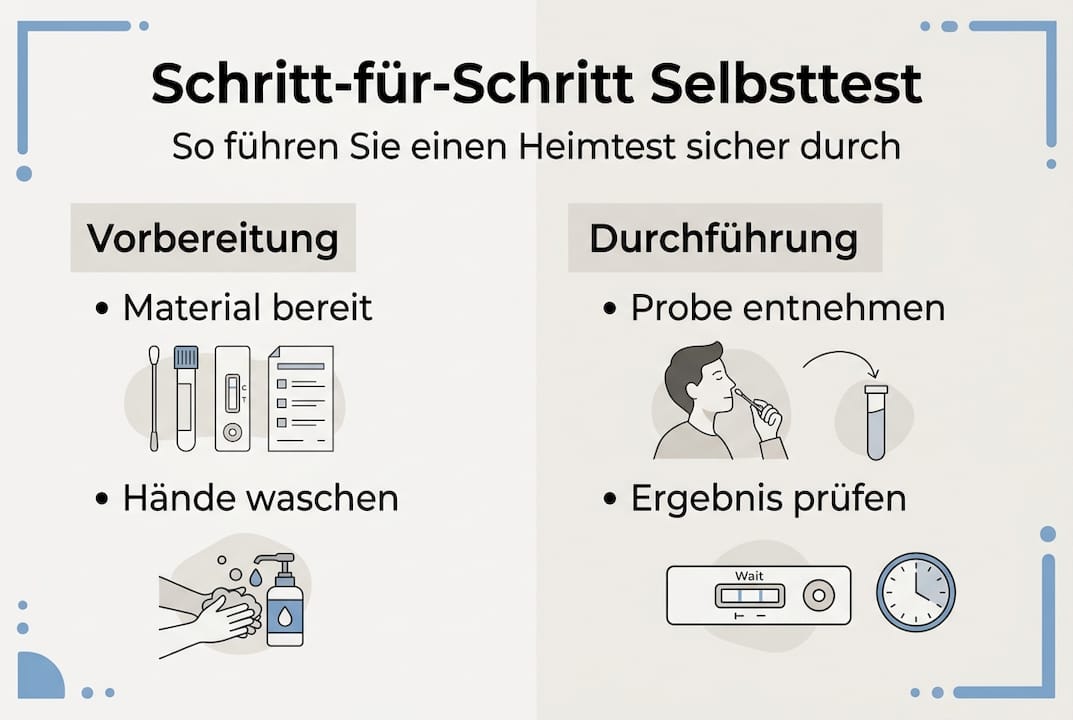
Step-by-step guide: Workflow for online, blood, and body fat self-tests
Now that you have the necessary knowledge and all the materials, it is time for the precise step-by-step procedure. The three most common types of tests follow a similar basic principle but differ in crucial details.
Online nutrition questionnaire:
- Choose a quiet moment without distractions
- Complete the questionnaire fully and honestly; do not skip any answers
- Save the results locally or print them
- Compare the reference ranges in the instructions with your own values
- If you notice anything unusual: keep a food diary for one week
At-home blood test:
- Fast for at least 8 hours; do not eat
- Wash your hands thoroughly and clean your fingertip with the enclosed wipe
- Place the lancet on the side of the fingertip, not on the tip
- Discard the first drop of blood and collect the second drop in the tube
- Label the sample, place it in the shipping bag, and send it within 24 hours
For blood tests, accuracy varies depending on the laboratory and method, with possible deviations of up to 8% compared with laboratory values from a doctor. This is not a product defect, but a known limitation of capillary blood collection.
Body fat measurement with a BIA scale:
- Always measure at the same time of day, ideally fasting in the morning
- Stand barefoot on the scale, with your heels on the electrodes
- Take three consecutive measurements and calculate the average
- Enter values in an app or table to monitor changes over time
BIA scales achieve measurement accuracy of ±3 to 5% compared with clinical methods. Individual measurements say little; the trend over several weeks says a lot.
| Test type | Time required | Accuracy | Evaluation |
|---|---|---|---|
| Online questionnaire | 10–20 min. | Indicative | Immediately, locally |
| Home blood test | 15 min. plus shipping | Good, ±8% | 2–5 business days |
| BIA body fat scale | 5 min. | ±3-5% | Immediately |
Our guides explain in detail how to perform a blood test at home and avoid common sources of error when collecting a sample. In addition, our article on home laboratory tests shows which analyses are particularly suitable for use at home.
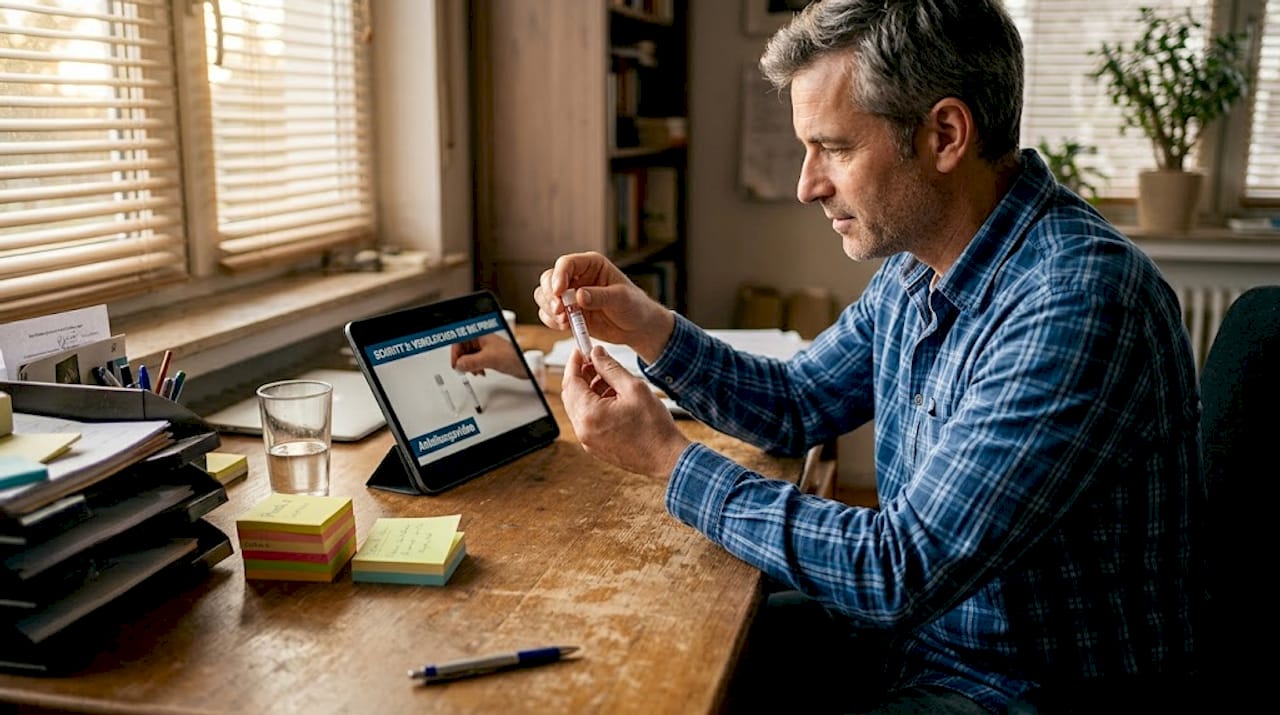
Pro tip: Never use the first drop of blood for a home blood test. It often contains tissue fluid that can distort the result. Simply press gently on your finger and use the second drop.
Avoiding mistakes, safety, and edge cases: What you should pay particular attention to
Now that you know the process, you will learn how to avoid common mistakes and act correctly in special cases. The most common problems with home tests are not caused by poor-quality products, but by errors in use. Following the points below gives you a clear advantage.
Common mistakes and how to avoid them:
- Send the sample too late: Blood samples must arrive at the laboratory within 24 hours
- Do not test while fasting: This increases glucose levels and distorts lipid profiles
- Use the wrong finger: The middle and ring fingers provide the best samples
- Perform the test when you have a fever or acute illness: Inflammatory markers are naturally elevated then
- Interpret a result without reference ranges: Every laboratory value needs a reference range for comparison
Particular caution is required in certain situations. Pregnant women, people with chronic illnesses, and those taking medication should consult a doctor before taking any self-test. Medication can significantly affect test results.
Important notice: Hair analyses for determining nutrient levels are considered invalid in medicine. Several scientific studies have shown that identical hair samples produce completely different results in different laboratories. Rely on blood or saliva tests from ISO-certified laboratories.
Another important aspect: Self-tests for symptoms do not replace a diagnosis. If you feel physically unwell, are chronically tired, or have pain, an at-home test can provide guidance at most. It cannot explain why a result is abnormal. Clinical examinations are needed for that.
Statistically interesting: Errors by laypeople during sample collection are the most common reason for invalid test results, more common than product defects. This shows that preparation and care are more important than the kit itself.
Read about what other users experienced with at-home blood tests in our user experiences with blood tests. If you want to find out whether a food intolerance is present, our guide explains the appropriate methods. A supplementary guide shows you how to review a medical report yourself.
Assessing results and next steps: What should you do after the self-test?
Once you have completed your test, you will learn here how to handle the results sensibly and safely. A result on its own has limited significance. Only in context—with reference ranges, trends over time, and personal symptoms—does a meaningful picture emerge.
Proceed systematically:
- Check the reference ranges: Every laboratory result comes with reference ranges. Values just outside the range are not automatically cause for concern
- Monitor the trend: A single result says little. Two to three measurements over several months show whether anything is changing
- Compare with your symptoms: Do you feel tired even though your iron levels are normal? Then the cause lies elsewhere
- Document abnormal results: Take a screenshot or print them out, note the date, and present them to your doctor
- Do not self-medicate: A slightly elevated potassium level does not justify self-treatment
Consumer protection experts explicitly warn against commercial tests that directly sell products. Anyone who buys a test and is immediately recommended a dietary supplement afterward should be skeptical. Independent laboratories clearly separate analysis from product recommendations.
An important difference between an at-home test and a laboratory result: At-home tests provide screening values, meaning an initial indication. Medical laboratory results are more precise, take your medical history into account, and are interpreted by a medical professional. Both have their place, but neither can completely replace the other.
Pro tip: Keep a simple health diary, preferably digitally. Record test results, dietary irregularities, sleep, and stress levels. Patterns become visible over the course of weeks that a single test can never reveal.
You can find further guidance on how to safely compare results and better understand your diagnosis. Suitable at-home tests for specific complaints, such as a food intolerance test or a general food intolerance test, are available in our range.
Our experience: What really matters with self-tests
We observe how people use at-home tests every day, and one thing keeps standing out: The biggest mistake is not choosing the wrong test, but placing too much trust in a single result. A value that is slightly elevated once immediately causes concern for some people. Yet fluctuations are normal.
Commercial providers advertise convenience, while consumer protection experts warn against overdiagnosis and a lack of clinical context. Both sides are right. At-home tests are valuable when used as a tool for long-term monitoring, not as a diagnosis based on a single finger prick.
Our honest assessment: A good at-home test gives you data points. What you do with them determines their usefulness. Those who measure regularly, document their results, and consult a doctor when there are genuine abnormalities can benefit enormously. Those who buy a test, measure once, and then take action risk drawing false conclusions. An overview of rapid at-home tests can help you choose the right methods for your goals.
Get started now: Safe self-tests and personalized advice
After these practical tips, you are now ready to get started in a more targeted way. At mybody-x, you will find a wide range of ISO-certified home tests, from DNA metabolism analyses and nutrient checks to hormone tests, all GDPR-compliant and convenient to perform at home. Samples are pseudonymized and destroyed after evaluation. You receive scientifically validated reports with personalized nutrition recommendations—not general advice, but concrete steps to take. Shipping is free for orders over 49 euros. And if no measurable results are obtained, a money-back guarantee applies. More than 11,300 customers with an average rating of 4.77 stars speak for themselves.
Frequently Asked Questions About Safe Self-Tests
Which self-tests are suitable for nutrition and weight management?
For nutrition and weight management, standardized online nutrition questionnaires, BIA scales, and home blood tests are particularly suitable, although all require a clear process. DNA metabolism tests complement these methods with genetic data for personal nutrition optimization.
How safe and accurate are blood tests at home compared with blood tests performed by a doctor?
Home blood tests provide useful indications, but may differ by up to 8% from laboratory values obtained by a doctor. Careful hygiene and following the instructions precisely are essential for reliable results.
What should I consider when performing a self-test, especially if I have pre-existing conditions?
If you have pre-existing conditions, are pregnant, or take medication, you should always consult a doctor, as self-tests are only intended as a guide when symptoms are present and do not replace a medical diagnosis.
How can I correctly evaluate the results of a self-test?
Compare your values with the supplied reference ranges and use step-by-step instructions for a structured comparison of findings. If you are unsure or have abnormal values, consulting a doctor is always the safest next step.
Are commercial self-tests recommended?
Commercial providers promise convenience and data protection, but the consumer advice center warns of overdiagnosis and a lack of clinical context. ISO-certified providers that clearly separate analysis from product recommendations offer the best balance of reliability and convenience.
Recommendation
- Self-Tests: How Personalized Analyses Can Improve Your Well-Being – mybody®x
- Self-Test Process 2026: How to Use Personalized Analyses – mybody®x
- Self-Tests: Everything You Need to Know About Medical Home Tests – mybody®x
- How to Perform a Blood Test at Home: Instructions for Accurate Results – mybody®x



Share now:
Self-Diagnosis Checklist: Recognize Health Problems Early
Personalized Health: Your Path to Greater Well-Being