

Self-Test Checklist: The Best Tests for Your Health
Anyone who wants to take responsibility for monitoring their health soon faces an overwhelming choice: blood sugar, microbiome, DNA, nutrients, hormones. The home-test market is growing rapidly, and not every test suits every goal. A structured checklist helps you choose the right self-tests, avoid misinterpretations, and use your budget wisely. In this article, you will learn which criteria to use when selecting tests, what categories are available, how reliable different methods are, and when a doctor’s visit remains essential.
Table of contents
- How do I choose useful self-tests?
- What self-tests are available? The most important categories
- Comparison of Important Self-Tests: Benefits, Limitations, and Reliability
- Diet and microbiome check: The role of checklists
- Recommendations: When each self-test really makes sense
- Get More from Your Self-Tests – Our Products
- Frequently asked questions
Key insights
| Point | Details |
|---|---|
| Selection criteria | Define your objective and assess the quality, method, and meaningfulness of each self-test. |
| Test overview | Blood sugar, FIT, microbiome, and DNA tests cover the most important areas of health. |
| Comparison and interpretation | Use different tests meaningfully in context and combine them with nutrition checklists. |
| Recommendations for practical use | Choosing the right tests and documenting the results support your health goals in the long term. |
How do I choose useful self-tests?
The first step is always to define your objective: What exactly do you want to measure? Anyone who wants to monitor their blood sugar needs a different test from someone who wants to have their gut microbiome analyzed. Without a clear objective, you risk spending money on tests whose results you cannot interpret.
Several criteria play a role in the selection:
- Purpose and reason: Prevention, symptom monitoring, or optimization?
- Test type: Immediate result (rapid test) or laboratory analysis with a detailed report?
- Sample type: Finger-prick blood, urine, saliva, or stool?
- Certification: Is the test approved in Switzerland and tested according to recognized standards?
- Interpretation: Does the test provide understandable results with recommendations for action?
Important to know: Home tests use a finger-prick, urine, or saliva sample shipped dry to certified laboratories, but they are not a substitute for a doctor. False results are possible, and proper regulation protects against misuse. If you are unsure which test suits your profile, the Medical Self-Tests Guide provides structured guidance.
Not every check-up is automatically worthwhile. Targeted risk assessments are more valuable than general routine examinations without a specific reason. Those who use personalized analyses receive results that genuinely fit their life situation.
Pro tip: Start with established tests such as blood sugar or the FIT test for early colorectal cancer detection before investing in specialized or genetic analyses. These basic tests provide immediately useful information and help you become familiar with the testing method.
What self-tests are available? The most important categories
The market can broadly be divided into two groups: classic rapid tests and specialized laboratory analyses. Both have their place, depending on the question and health goal.
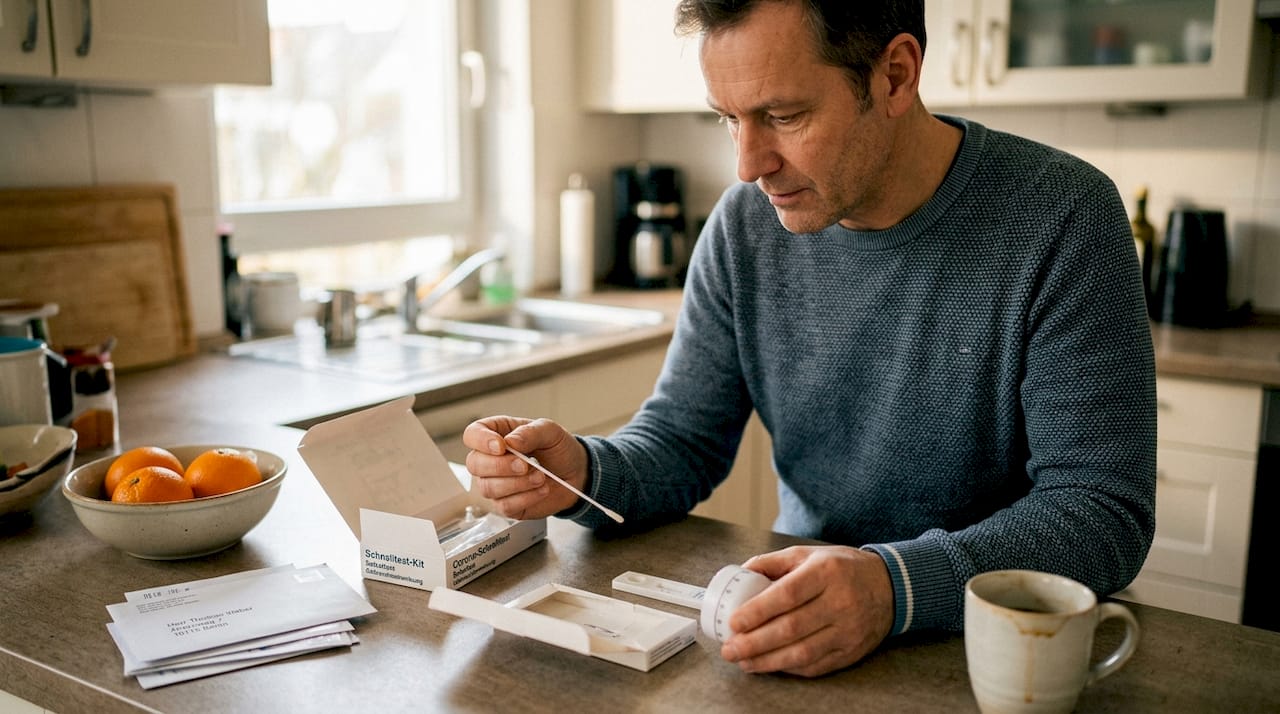
Classic self-tests are available in pharmacies and usually provide a result within minutes. Home tests such as blood sugar, blood pressure, cholesterol, urinary tract, and pregnancy tests can be conveniently performed at home using a finger prick or urine sample. They are affordable, easy to use, and well suited for regular self-monitoring.
Specialized laboratory analyses go deeper. They analyze the microbiome (the entirety of the gut bacteria), genetic markers, nutrient status, or hormone levels. The sample is sent by mail to a certified laboratory, and the result comes as a detailed report with personalized recommendations.
Here is an overview of the most important categories:
| Category | Sample type | Evaluation | Typical use |
|---|---|---|---|
| Blood sugar | Blood (finger prick) | Immediate | Diabetes monitoring, prevention |
| Blood pressure | Measurement | Immediate | Cardiovascular prevention |
| Cholesterol | Blood (finger prick) | Immediate or laboratory | Heart health |
| Urine test | Urine | Immediate | Kidneys, urinary tract, pregnancy |
| FIT test | Stool | Laboratory | Early colorectal cancer detection from age 50 |
| Microbiome analysis | Stool | Laboratory | Gut health, diet |
| DNA metabolism test | Saliva | Laboratory | Diet, weight, fitness |
| Nutrient check | Blood | Laboratory | Detecting deficiencies, supplementation |
| Hormone test | Blood or saliva | Laboratory | Hormone status, well-being |
Choosing the right category depends on your health goal. Anyone looking to optimize their gut health can benefit from a personalized self-analysis that goes far beyond a simple rapid test.
Comparison of Important Self-Tests: Benefits, Limitations, and Reliability
Not all tests are equally reliable. A rapid test provides quick guidance, while a laboratory test offers depth and precision. The difference lies not only in the technology but also in the potential for error.
| Test | Speed | Cost (approx.) | Reliability | Typical source of error |
|---|---|---|---|---|
| Blood glucose rapid test | Immediate | CHF 1–3/test | High when used correctly | Incorrect technique, outdated test strips |
| Cholesterol rapid test | 5 minutes | 15-30 CHF | Medium | Time of day, diet before the test |
| Pregnancy test | 3 minutes | 5-15 CHF | Very high (early) | False negative possible after 3 months |
| FIT test | 1–2 weeks | 20-50 CHF | High | Sample collection, storage |
| Microbiome analysis | 2–4 weeks | 80-200 CHF | Very high | None, if ISO-certified |
| DNA metabolism test | 3–6 weeks | 100-300 CHF | Very high | None, valid once for life |
A key point: Regular measurements are more informative than one-off measurements. A single blood sugar reading says little. Those who measure over several weeks can identify patterns and trends.
Important: Self-tests do not replace a medical diagnosis. An abnormal result is always a reason to discuss it with a doctor, not to self-diagnose. Learn more about home tests to understand how to interpret results correctly.
The HbA1c test for long-term blood sugar monitoring in people at risk of diabetes and the FIT test for early colorectal cancer detection are particularly valuable. Both tests provide clinically relevant information that can be directly translated into preventive measures.
Diet and microbiome check: The role of checklists
Self-tests alone are often not enough. A complete picture of your health situation emerges only when they are combined with structured dietary checklists. The Simple 7 checklist is based on the principles of the Mediterranean, MIND, and DASH diets and covers seven key areas:
- Vegetables and fruit: At least 5 servings daily
- Proteins: High-quality sources such as legumes, fish, and lean meat
- Fiber: Whole-grain products, legumes, and vegetables
- Probiotics: Fermented foods such as yogurt, kefir, and sauerkraut
- Fats: Healthy sources such as olive oil, nuts, and avocado
- Fluids: At least 1.5 to 2 liters of water daily
- Sugar and processed foods: Deliberately reduce
This checklist is particularly relevant for people over 40, because metabolism and nutritional needs change with age. Those who systematically document their diet can interpret microbiome or DNA analysis results much more effectively.
Combining self-tests with nutrition checklists enables personalized optimization that goes far beyond general dietary recommendations. For example, a microbiome test shows which bacterial strains are over- or underrepresented in your gut. The nutrition checklist then helps you deliberately choose the right foods to restore balance. Anyone who wants to compare different approaches can find a detailed overview at microbiome tests compared.
Pro tip: Document your test results and checklist evaluations in a simple health journal. Note the date, result, and current eating habits. After three to six months, you will identify patterns that individual measurements would never reveal.
Recommendations: When each self-test really makes sense
Not every test is useful for everyone. The decision depends on age, risk profile, and personal health goals. Here are specific recommendations:
- Blood Sugar and Blood Pressure Tests: Ideal for people with a family history, overweight, or early signs of metabolic syndrome. Regular self-monitoring is a useful supplement to medical check-ups.
- FIT test for colorectal cancer screening: Recommended from age 50 and covered by health insurance in Switzerland. This test is easy to perform and can save lives.
- Rapid Cholesterol Test: Useful if there is a family history of heart disease or an unhealthy diet. Always consider the result in the context of HDL, LDL, and triglycerides.
- Microbiome Analysis: For anyone suffering from digestive problems, food intolerances, or chronic fatigue. Also interesting for nutrition optimizers and biohackers.
- DNA Metabolism Test: One-time, but relevant for life. Shows genetic predispositions for nutrient utilization, weight regulation, and fitness.
Studies show that general check-ups are not always useful. Targeted risk assessments are significantly more valuable than broad routine examinations without a specific reason. Supporters emphasize convenience and the potential for early detection, while critics point to the limited usefulness of nonspecific tests.
Combining your gut health test with professional guidance helps you avoid common misinterpretations. And having your microbiome tested regularly allows you to track changes over time and take targeted action.
Pro tip: Combine your test results with a food diary, and always seek a nutritional medicine assessment if any values are abnormal. Self-tests are a tool, not a verdict.
Get More from Your Self-Tests – Our Products
Self-tests only provide their full benefit when the results are interpreted correctly and translated into concrete measures. At mybody®, you will find at-home self-tests analyzed in ISO-certified laboratories that provide detailed, personalized reports. Whether it is a microbiome analysis, DNA metabolism test, or nutrient check, every test comes with clear recommendations for action tailored to your individual situation. More than 11,300 satisfied customers with an average rating of 4.77 stars speak for themselves. Anyone looking to take their next step toward optimized health and greater well-being will find the right place at mybody®.
Frequently asked questions
How reliable are at-home self-tests?
Self-tests provide valuable guidance but can produce false-positive or false-negative results. Regular measurements and combining them with medical supervision significantly increase their reliability.
Which self-tests should I take every year?
The FIT test from age 50 for early detection of colorectal cancer and blood glucose testing for diabetes risk are particularly recommended. Which other tests are useful depends on your personal risk profile.
Are nutrition checklists such as Simple 7 useful?
Yes, the Simple 7 checklist clearly organizes the most important nutritional components and helps you apply test results from microbiome or DNA analyses in a targeted way.
How can I recognize high-quality self-tests?
Look for Swiss certification, clear instructions for use, and dry shipping to laboratories with recognized regulatory oversight. Reputable providers pseudonymize your sample and destroy it after analysis.


Share now:
Blood collection at home: Guide to safe home testing
What really helps with gas and bloating