
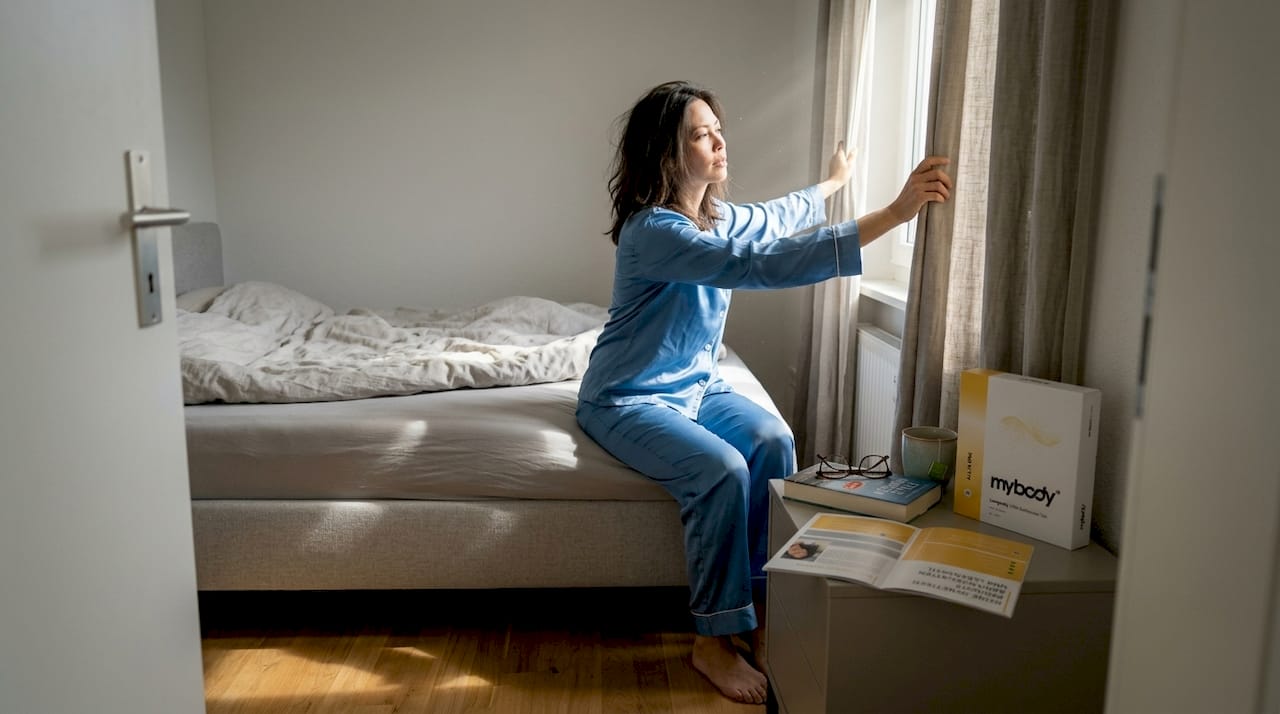
Understand and optimize your sleep patterns: Swiss strategies
TL;DR:
- According to the study, one in two people in Switzerland suffers from sleep problems influenced by stress, lighting, and genetic factors. The two-process model explains how sleep pressure and the circadian rhythm regulate sleep and how routines and lighting conditions can improve your own rhythm. Personalized analyses enable targeted sleep optimization, particularly for genetically determined chronotypes and hormonal fluctuations.
Every second person in Switzerland sleeps poorly. Not a myth, but a reality: According to a YouGov survey, 50% of Swiss people regularly experience sleep problems, while 19% have significant difficulty falling asleep. Anyone who believes that simply going to bed earlier will solve the problem underestimates how deeply biological processes influence our sleep patterns. Stress, muscle tension, light, and genetic predisposition collectively shape when and how well we sleep. Anyone who truly wants to optimize their sleep does not need a home remedy, but well-founded knowledge of their own biology.
Table of contents
- The two-process model: fundamentals of sleep patterns
- Optimizing Your Sleep Rhythm: Practical Everyday Strategies
- Sleep problems in Switzerland: Causes and individual risks
- Genetic influence and chronotype: What can be changed?
- Special situations: adolescents, hypersomnolence, and flexible rhythms
- What research overlooks: Social jet lag, shifting sleep schedules, and personalized analysis
- How to Improve Your Sleep Schedule with Personalized Analysis
- Frequently Asked Questions
Key insights
| Point | Details |
|---|---|
| Sleep patterns are based on biology | Process S and Process C determine when and how you sleep. |
| Daily routines help | Consistent schedules and targeted light exposure measurably improve your sleep. |
| Stress is a central problem | Stress and muscle tension are the main causes of sleep problems in Switzerland. |
| Genetic factors limit adaptation | Chronotype is genetically determined, and changes are possible only within a narrow range. |
| Personalized analysis makes a difference | Individual testing and consultation are crucial for lasting improvement. |
The two-process model: fundamentals of sleep patterns
Sleep is not a simple on-off switch. It results from the interaction of two independent processes that sleep researchers call Process S and Process C. Understanding these mechanisms provides a crucial tool for optimizing sleep.
Process S: accumulated sleep pressure
Process S represents the so-called homeostatic sleep pressure. Adenosine, a signaling substance in the brain, builds up continuously during waking hours. The longer we stay awake, the more adenosine accumulates and the stronger the urge to sleep becomes. When we sleep, adenosine is broken down again. This explains why a long nap makes it so difficult to fall asleep in the evening: sleep pressure has already been partially reduced.
Caffeine, by the way, works directly against adenosine. It occupies the same receptors in the brain and thus blocks the sleepiness signal. This is not a permanent trick, but a postponement, because when the caffeine wears off, the accumulated fatigue hits all the harder.
Process C: The Internal Clock
Process C is the circadian rhythm. Circadian comes from Latin and means roughly “around the day.” Over a period of around 24 hours, this internal pacemaker regulates when body temperature, hormone levels, and alertness rise or fall. The main pacemaker is located in the so-called suprachiasmatic nucleus (SCN), a small area in the brain’s hypothalamus.
Light is the strongest external signal for Process C. In the morning, daylight suppresses melatonin and increases cortisol, making us alert and productive. In the evening, darkness signals the SCN to release melatonin, which prepares the body for sleep. The interaction of both processes is crucial in determining when we can fall asleep and how refreshed we wake up.
“The optimal time to sleep is where high sleep pressure from Process S and the sleep signal from Process C converge. If either is missing, sleep quality suffers.”
| Process | Mechanism | Controls | Influenced by |
|---|---|---|---|
| Process S | Adenosine Accumulation | Sleep Pressure | Time Awake, Naps, Caffeine |
| Process C | Circadian Rhythm | Sleep-Wake Timing | Light, Melatonin, Temperature |
The practical relevance is clear: Anyone who consciously regulates both processes can sustainably improve their sleep rhythm. This requires no sleeping pills, but rather consistent routines.
Quick overview: What specifically influences Process S and C:
- Late naps reduce sleep pressure and make it harder to fall asleep
- Blue light from screens in the evening disrupts Process C and delays melatonin release
- Irregular sleep times weaken both processes at the same time
- Physical activity strengthens the natural buildup of adenosine during the day
Optimizing Your Sleep Rhythm: Practical Everyday Strategies
With these scientific foundations in mind, we will now present practical, everyday strategies for deliberately improving your own sleep rhythm. The good news: Many measures cost nothing and produce noticeable effects after just a few days.
1. Establish consistent sleep times
The most important single measure of all. Getting up at the same time every day, including weekends, gives Process C a stable anchor signal. The body learns when to build up cortisol and when to release melatonin. Variations of more than 30 minutes can noticeably shift the rhythm.
2. Get targeted morning light
Getting natural light into your eyes within the first 30 minutes after waking activates the SCN optimally. Go for a walk outside, open the curtains immediately, or use a light therapy lamp. This step is especially important during the winter months in Switzerland, when there is still little sunshine.
3. Reduce evening light
Reducing bright and blue light in the evening is just as important as getting morning light. Dimmable lighting after 8 p.m., screens with a blue-light filter, or simply putting them away earlier: All of this supports melatonin release and makes it easier to fall asleep.
4. Schedule naps properly
A short nap of 10 to 20 minutes between 1 and 3 p.m. can significantly improve performance without jeopardizing nighttime sleep. Sleeping longer or napping too late in the afternoon reduces adenosine pressure and makes it harder to fall asleep in the evening.
5. Use exercise as a sleep aid
Regular physical activity increases natural sleep pressure, improves sleep quality, and stabilizes the circadian rhythm. However, intensive workouts should not take place later than two hours before bedtime, as core body temperature and adrenaline levels are still elevated.

6. Establish an evening routine as a ritual
The nervous system needs time to transition. A consistent evening routine, such as a warm bath, reading, or gentle stretching, lowers body temperature and signals to the brain that it is time to switch to sleep mode. Those who also establish healthy routines benefit twice over: Not only does sleep improve, but digestion and stress resilience do too.
Pro tip: Keeping a sleep diary for two to three weeks is worthwhile. Write down the time, sleep duration, mood, and activities, then look for patterns. Many people only realize then how strongly stress or caffeine shifts their rhythm.
Women going through menopause often experience particularly pronounced sleep disturbances due to hormonal fluctuations. Anyone who would like to learn more about sleep problems during menopause will find targeted background information there.
Sleep problems in Switzerland: Causes and individual risks
To increase the likelihood of successful optimization measures, it is worth looking at Swiss statistics and individual risk factors.
The figures are clear. According to YouGov and the BICO study, stress (31%) and muscle tension (34%) are the most common causes of poor sleep in Switzerland. Pain, mental strain, screen use, and shift work also contribute. These factors directly affect both sleep processes.
Statistics: One in two people in Switzerland has sleep problems. Stress-related difficulties falling asleep are particularly common among people under 35.
Main causes of sleep problems in Switzerland:
- Chronic stress and mental overload
- Muscle tension in the neck and back
- Irregular working hours and social jet lag
- Excessive consumption of caffeine and alcohol in the evening
- Insufficient physical activity
- A sleeping environment that is too warm or too bright
Social jet lag versus temporary jet lag
An important but often underestimated concept: social jet lag. This refers to the discrepancy between the biological sleep-wake rhythm and social demands, such as work start times, school hours, and social obligations. Anyone who is naturally a late chronotype but has to start work at 7 a.m. is living in permanent social jet lag. This has a chronic effect on the body, similar to shift work.
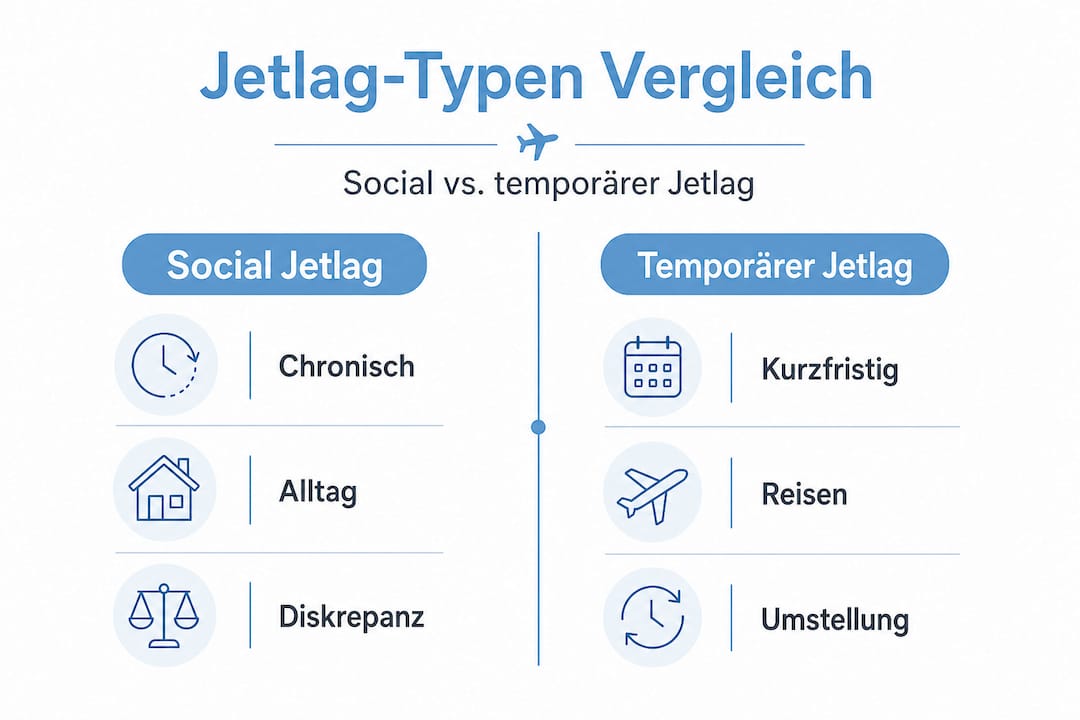
| Characteristic | Social jet lag | Temporary jet lag |
|---|---|---|
| Duration | Chronic, often permanent | Temporary (days to weeks) |
| Cause | Social pressure vs. internal clock | Changing time zones |
| Symptoms | Fatigue, concentration problems | Sleep disorders, hunger at the wrong time |
| Solution | Adjusting your rhythm, routines | Time and light exposure |
Anyone seeking to determine whether their own stress symptoms are affecting their sleep problems should also include physical signs such as muscle tension, digestive problems, and lack of energy in the assessment. In some cases, genetic factors may explain why stress affects certain people more severely than others. A genetic stress test can provide valuable insights here.
Genetic influence and chronotype: What can be changed?
Many people wonder whether their sleep rhythm is determined by lifestyle or genes. The answer is both, but not in equal measure.
Chronotype and the role of genes
Chronotype describes whether someone is naturally an early riser (lark) or a late type (owl). This type is determined to a considerable extent by genetic variants, particularly the so-called PER3 gene. The chronotype influenced by PER3 genes is not completely changeable, no matter how consistently someone goes to bed early.
In concrete terms, a genetically pronounced night owl can shift toward the middle through fixed sleep times and light therapy, but cannot become a true early bird. Anyone who tries to force this is permanently fighting their own biology and pays the price in the form of reduced productivity and sleep deprivation.
What can and cannot be changed:
- Changeable: Time of falling asleep by one to two hours through consistent light exposure
- Changeable: Sleep duration through sleep-pressure management
- Limited changeability: Chronotype (can be shifted toward the middle)
- Not changeable: Basic genetic sleep profile
Anyone who wants to learn more about their genetic sleep predispositions can use the sleep DNA test as a practical way to analyze their genetic foundations. Interesting connections can also be seen in the genetic connection between caffeine and sleep: Some people metabolize caffeine more slowly due to their genes and are therefore more sensitive to drinking coffee late in the day.
Polyphasic sleep versus monophasic sleep
Polyphasic sleep means distributing sleep across several shorter periods throughout the day. Some proponents report increased alertness, but research shows clear limitations. Monophasic sleep, meaning one longer nighttime sleep period, remains better adapted to social reality and the basic biological architecture of humans.
Pro tip: Anyone who wants to learn their chronotype without taking a test right away should sleep for two weeks without an alarm while on vacation. When do you naturally fall asleep? When do you wake up? This reveals your natural rhythm more clearly than any self-assessment.
Learn more about the connection between sleep genes and chronic fatigue for background information on why some people remain tired despite getting enough sleep.
Special situations: adolescents, hypersomnolence, and flexible rhythms
Special groups and stages of life can also have a decisive impact on sleep patterns. Let us look at some relevant special cases.
Adolescents and flexible school hours
Adolescents have a biologically later chronotype than adults. This is not laziness but physiology. Their melatonin rise shifts later during puberty, making early rising for a 7:30 a.m. school start a genuine sleep deprivation problem.
Flexible school hours in Switzerland increase adolescents' sleep duration by an average of 45 minutes per night and demonstrably improve quality of life, mood, and academic performance. This is not a marginal effect but a measurable gain that could be directly influenced by political decisions.
Statistics: Increasing adolescents' sleep duration by just 45 minutes per day measurably improves concentration, mood, and quality of life.
Factors influencing adolescents' sleep:
- Biologically later chronotype during puberty
- Early school start times conflicting with the internal clock
- Increased screen use with exposure to blue light
- Social activities and peer pressure in the evening
- Caffeine consumption from energy drinks
Hypersomnias and narcolepsy
A special group comprises people with hypersomnias, meaning sleep disorders involving excessive daytime sleepiness, including narcolepsy. A Zurich study with 36 participants revealed an interesting finding: In narcolepsy, the circadian rhythm remains largely intact, but nap efficiency reaches an exceptional 94.3%.
This means that the biological clock is functioning normally, but sleep regulation itself is impaired. This distinction is clinically important because many affected people go a long time without receiving a correct diagnosis and live with the misguided advice to simply go to bed earlier or be more disciplined.
| Sleep rhythm type | Description | Challenge |
|---|---|---|
| Monophasic | One sleep period at night | Socially dominant, biologically optimized |
| Biphasic | Nighttime sleep plus an afternoon nap | Culturally widespread in Southern Europe, well documented |
| Polyphasic | Several short sleep periods | Little scientific evidence for long-term benefits |
| Narcolepsy | Uncontrollable sleep attacks during the day | Circadian rhythm intact, but daytime sleepiness |
Understanding these differences helps put your own symptoms into perspective. Chronic daytime sleepiness despite getting enough sleep at night should be medically evaluated, as it could indicate a treatable sleep disorder.
What research overlooks: Social jet lag, shifting sleep schedules, and personalized analysis
There is a gap between what sleep research knows and what people actually do. Most advice assumes that someone has a normal 9-to-5 schedule, is not dealing with chronic stress, and can freely live according to their chronotype. This is not true for the majority of people in Switzerland.
Social jet lag is the best example. It is estimated to affect one in two working people who show major differences in their sleep-wake rhythm between weekdays and weekends. Anyone who falls asleep at 11 p.m. during the week and stays up until 1 a.m. on weekends shifts their internal clock twice a week. Over the course of months, this accumulates into a chronic strain that is almost as harmful as actual shift work.
The tricky part: Social jet lag causes no obvious symptoms. Anyone who is tired every Monday and in a good mood on Fridays considers this normal. Yet this exact pattern signals a persistent dysregulation of the circadian rhythm.
The solution does not lie in radical changes. Gradual shifts in sleep schedules of 15 to 30 minutes per day are demonstrably more effective than abrupt changes. Anyone who wants to move their sleep time one hour earlier needs at least two weeks, not two days.
Our experience shows that the most common mistake in sleep optimization is impatience. People change everything at once, sleep better for two nights, then go back to their old habits and conclude that routines do not work.
Light therapy is an often underestimated tool. Especially for people with genetic sleep profiles that tend toward late sleep onset, a targeted light therapy lamp in the morning can stabilize the rhythm over several weeks. Melatonin as a supplement is useful when resetting a shifted rhythm, but it is not a long-term solution.
What really helps: Understanding your own biology before starting with strategies. Chronotype, genetic sensitivities to caffeine or stress, nutrient deficiencies that affect sleep. All of this can now be measured objectively with personalized analyses. Those who optimize blindly often end up optimizing the wrong problem.
How to Improve Your Sleep Schedule with Personalized Analysis
Those who want to use the strategies they have learned effectively can take the next step toward personalized analysis. General recommendations are helpful up to a point. But general tips cannot show why you cannot fall asleep in the evening, whether your cortisol rhythm is on track, whether a magnesium deficiency is sabotaging your deep sleep, or which genetic sensitivity shapes your chronotype.
At mybody®, you receive precisely these personalized insights. ISO-certified laboratory analyses from a simple saliva or blood sample, conveniently collected at home, can accurately determine DNA profiles, nutrient status, and hormone levels. The results are incorporated into a scientifically validated report with specific recommendations for sleep, nutrition, and lifestyle. With more than 11,300 satisfied customers and a rating of 4.77 stars, mybody® provides a reliable foundation for evidence-based sleep optimization.
Frequently Asked Questions
How can I change my sleep rhythm if my chronotype is genetically determined?
Chronotype is genetically influenced by PER3 genes and can only be adjusted to a limited extent. With morning light therapy and consistent sleep times, the rhythm can be shifted by one to two hours, but completely turning a night owl into an early bird is not biologically possible.
What role does exercise play in the sleep rhythm?
Regular exercise increases natural adenosine sleep pressure during the day and particularly improves the time it takes to fall asleep and sleep depth. Intensive workouts less than two hours before bedtime can have the opposite effect.
Is polyphasic sleep recommended in Switzerland?
Polyphasic sleep is biologically possible, but monophasic sleep is better adapted to social structures and shows more stable results for long-term health in research. A short midday nap as a biphasic model, on the other hand, is well supported by evidence.
How can social jet lag be minimized in the long term?
Social jet lag can be significantly reduced by gradually shifting your schedule by 15 to 30 minutes per day, getting targeted morning light exposure, and maintaining consistent sleep times on weekends. Personalized guidance can help address persistent cases.



Share now:
Gene test costs: Find reputable DNA tests and providers
Genetic nutrition test: what it shows and how much it costs