
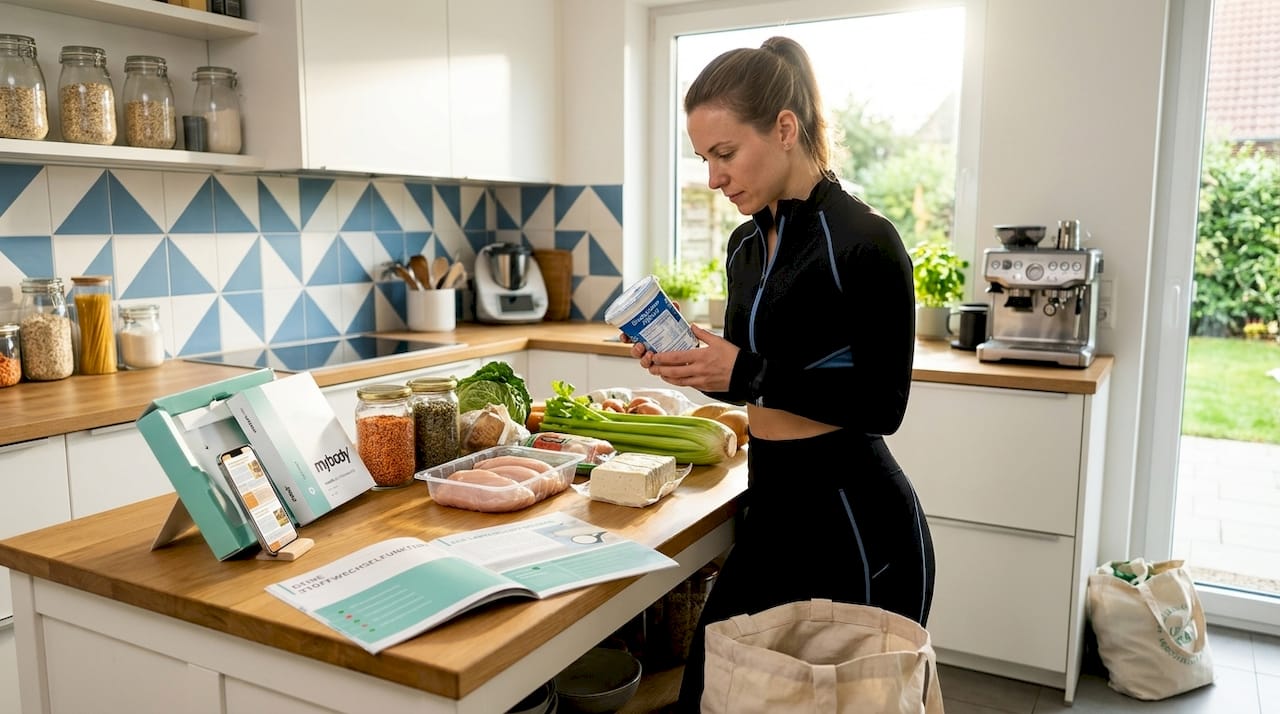
Protein-Rich Foods: Top Sources for Fitness & Health
TL;DR:
- Many people in Switzerland do not know their exact protein requirements and are unsure which foods provide them with optimal nutrition. The most important sources include animal products such as cottage cheese, eggs, and fish, as well as plant-based alternatives such as seitan, lentils, and tofu, which can be combined effectively. Evenly distributing protein intake throughout the day, tailored to individual needs, supports muscle growth, recovery, and long-term health.
Protein is the building material your body needs every day—for muscles, hormones, a strong immune system, and rapid recovery after training. Yet many people in Switzerland face the same problem. They know they need more protein, but not which foods truly provide it, how much per serving is realistic, and whether plant-based sources work just as well as meat or fish. This article clears up the uncertainties, shows you the ten best protein-rich foods in a clear table, compares animal-based and plant-based sources based on current studies, and gives you practical tips you can implement in your everyday life.
Table of Contents
- Important Criteria for Protein-Rich Foods
- The Top 10 Protein-Rich Foods by Serving
- Animal Vs. Plant Protein Sources: Myths and Facts
- Practical Tips for Everyday Life
- Our Perspective: What Really Matters in a High-Protein Diet
- Optimize Your Protein-Rich Diet Now: With Mybody®x
- Frequently Asked Questions About Protein-Rich Foods
Key Findings
| Point | Details |
|---|---|
| The Amount of Protein per Serving Matters | The actual amount of protein per serving is more useful than values per 100 grams. |
| Plant-Based and Animal-Based Sources Are Equally Valuable | Building muscle works with both; the decisive factors are the amount and a sensible combination. |
| Distribute Protein Wisely Throughout the Day | Distribute 20–40 grams of protein per meal for optimal intake. |
| Individual Adjustment Is Essential | Adjust your protein sources to your goals, age, and daily routine to achieve the best results. |
Important Criteria for Protein-Rich Foods
Before you fill your shopping list with chicken breast and lentils, it is worth clarifying a few basic questions. How much protein do you actually need? And which foods really provide what your body can use?
How Much Protein Per Day Is Realistic?
According to the DGE & EFSA, protein requirements vary significantly depending on life stage and activity level: The DGE generally recommends 0.8 g per kilogram of body weight per day, while the EFSA recommends 0.83 g/kg for Switzerland. For athletes and physically active people, requirements increase to 1.2 to 2.2 g/kg of body weight per day. People aged 65 and over also benefit from an increased intake of 1.0 to 1.2 g/kg, as muscle loss increases with age.
This may sound abstract, but it becomes concrete: A person weighing 70 kg who trains three times a week needs between 84 and 140 grams of protein daily. That is roughly four servings of cottage cheese or three large chicken breasts. Knowing the optimal protein requirement is the first step before comparing foods.
- Calculate protein per serving, not just per 100 g
- Consider biological value (egg = reference value 100)
- Check the amino acid profile: Are all 9 essential amino acids included?
- Plan distribution throughout the day: 20 to 40 g per meal every 3 to 4 hours
- Consider individual factors: age, training goal, dietary pattern
Statistics: According to the EFSA recommendation for Switzerland, an 80 kg athlete needs between 96 and 176 grams of protein daily for optimal performance and recovery.
Biological value (BV) refers to how well your body can convert the protein in a food into the body's own protein. The hen's egg has a BV of 100 and is considered the reference value. Animal sources often range between 70 and 100, while plant sources are somewhat lower. However, clever combinations can offset this.
Pro tip: Use the Swiss Nutrient Database of the Federal Food Safety and Veterinary Office (FSVO) to look up the exact protein content per serving for every Swiss food. There, you can sort foods directly by protein and plan your shopping precisely.
The distribution of protein intake throughout the day is just as important as the total amount. The body can only use a limited amount of protein efficiently for muscle building per meal. That is why it makes more sense to eat five meals with 25 to 35 g of protein each than to consume 100 g all at once once a day. Anyone interested in protein in sports nutrition will find further information there on timing and quantity.
Now that it is clear why protein and its quantity are important, let’s take a look at the best natural protein sources.
The Top 10 Protein-Rich Foods by Serving
Many people compare foods based on 100 g. This sounds logical, but is not very helpful in everyday life. Nobody eats 100 g of Parmesan in one sitting. What matters more is: How much protein is in a realistic serving?
The following table is based on Swissmilk protein sources, a nationally recognized Swiss nutrition resource, and shows the top 10 by actual protein content per serving.
| Food | Serving | Protein (g) | Special feature |
|---|---|---|---|
| Seitan | 120 g | 33,6 g | Highest value among vegan sources |
| Lean beef | 110 g | 23,5 g | Rich in zinc and B12 |
| Fish (e.g., salmon) | 110 g | 23,0 g | Includes omega-3 fatty acids |
| Cottage cheese | 175 g | 21,7 g | Affordable, low-fat, Swiss favorite |
| Tempeh | 120 g | 21,1 g | Fermented, easy to digest |
| Lentils (cooked) | 200 g | 18,0 g | High fiber content |
| Plain yogurt (Greek) | 200 g | 17,4 g | Probiotic, for gut health |
| Chickpeas (cooked) | 200 g | 15,6 g | Versatile to combine |
| Egg | 2 pieces | 12,6 g | Reference protein source (BW 100) |
| Low-fat quark | 150 g | 16,5 g | Casein source for the night |
Cottage cheese and quark are particularly popular in Switzerland because they are affordable, versatile, and available in every supermarket. Cottage cheese provides 21.7 g of protein per serving with a low fat content. Quark is rich in casein, a slowly digested protein that works particularly well as an evening snack.
Seitan surprises many people: This vegan wheat-protein alternative provides more protein per serving than meat or fish. The catch: Seitan does not contain a complete amino acid profile. It is low in lysine, which is why combining it with legumes is advisable. Anyone who wants to learn more about protein sources at a glance will find a useful overview there.
- Prefer whole-grain options for grain products; they also provide fiber
- Fresh fish from Swiss aquaculture is locally and freshly available
- Greek yogurt contains twice as much protein as regular yogurt
- Lentils and chickpeas are ideal for cooking and portioning in advance
- The protein information for Swiss foods can be accessed directly online
Pro tip: Buy cottage cheese, quark, and Greek yogurt in large containers. This saves money and makes portioning easier. A 500 g container is enough for two to three protein-rich snacks or meals.
After this specific overview, it is worth looking at the comparison: What really distinguishes animal and plant sources?
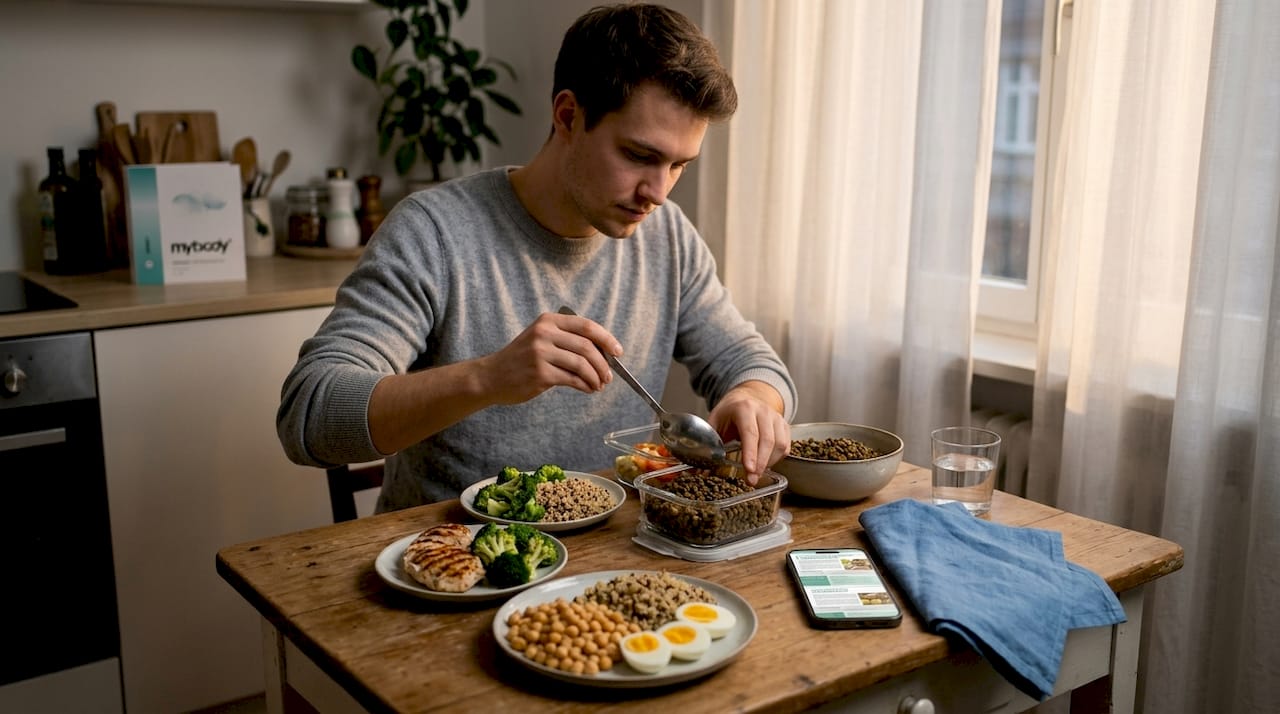
Animal Vs. Plant Protein Sources: Myths and Facts
Few topics divide the nutrition world more: Do you need meat and dairy products for genuine muscle growth, or is a plant-based diet enough? The answer is more nuanced than many people think.
What the Science Really Says
A widely cited analysis shows: There is no significant difference between animal and plant protein sources for muscle growth when the amount and distribution are right. This is an important finding. It is not the protein’s origin that matters, but the completeness of its amino acid profile and the total amount.
| Criterion | Animal protein | Plant-based protein |
|---|---|---|
| Biological value | High (70 to 100) | Medium (50 to 80) |
| Complete amino acid profile | Yes (usually) | Often only through combination |
| Digestibility | High | Varies (legumes are somewhat lower) |
| Health risks | Red meat: cardiovascular risk when consumed in excess | Minimal |
| Nutritional cofactors | B12, zinc, iron | Fiber, antioxidants |
| Environmental impact | Higher | Significantly lower |
| Cost-effectiveness | Medium to high | Often more affordable |
“Those who cleverly combine plant-based protein sources benefit not only from equivalent muscle growth, but also from better gut health and a reduced risk of inflammation."
Myth 1: Plant-based protein does not build muscle. False. Studies clearly disprove this. What matters is that all nine essential amino acids are present in sufficient quantities. This can be achieved through targeted combinations. Tofu with brown rice, lentils with quinoa, or combinations of seitan and tempeh can provide the full spectrum.
Myth 2: Animal protein is always healthier. This is not universally true. Too much red and processed meat increases the risk of cardiovascular disease and certain types of cancer. Swiss dietary recommendations advise limiting red meat to a maximum of two to three portions per week.
- Vegans should definitely supplement vitamin B12 and vitamin D
- Iron from plant-based sources is absorbed better when vitamin C is consumed at the same time
- Lysine is the most critical amino acid in seitan. Supplement it with edamame or peas
- Quinoa is one of the few plant-based sources with a complete amino acid profile
- Those who prefer plant-based protein sources should know the principles of combining them
The good news for everyone who eats a mixed diet: In Switzerland, the selection of high-quality animal and plant sources is excellent. Quark, cottage cheese, eggs, salmon, lentils, tofu, and tempeh are available in every large supermarket. This makes it easy to combine them flexibly while meeting all individual protein needs.
To make the information even more tangible, here is how you can deliberately integrate suitable foods into your everyday life.
Practical Tips for Everyday Life
Knowing about protein is one thing. Putting it into practice every day is another. Many people do not fail because they lack information, but because they lack a routine. Here are concrete strategies that work.
Spread Protein Intake Throughout the Day
The most important principle: Plan every meal around a protein source. This is easier than it sounds. According to Swissmilk, a protein intake of 20 to 40 g per serving every 3 to 4 hours is recommended for fitness goals. Consistently following this approach will help you reach your daily requirement almost automatically.
- Breakfast: Greek yogurt with nuts and berries (approx. 20 g protein) or two eggs with whole-grain bread
- Morning snack: Cottage cheese with vegetable sticks or a handful of edamame
- Lunch: Lentil and quinoa bowl with vegetables or chicken breast with brown rice
- Afternoon snack: Quark with fruit or a hard-boiled egg
- Dinner: Salmon with broccoli and sweet potato or tempeh and vegetable stir-fry
This pattern provides a steady supply of amino acids throughout the day and keeps blood sugar stable. This supports not only muscles but also concentration and mood. Anyone who wants to optimize their macronutrients should always view protein as the foundation of every meal.
Portion Management Without an App or Scale
You don't need a kitchen scale to estimate portions. Your hand is your best measuring tool:
- Palm = approx. 80 to 120 g meat or fish (20 to 25 g protein)
- Clenched fist = approx. 150 to 175 g cottage cheese or yogurt
- Thumb = approx. 15 g nuts or cheese
- Cupped hand = approx. 40 g legumes (dried)
Pro tip: Anyone who wants to calculate their daily protein intake will find a practical guide there, including specific examples for different body weights and training goals.
Special situations and target groups
For workout days, the rule is: Consuming protein around your workout maximizes the muscle-building effect. Ideally, eat a small protein-rich meal (15 to 20 g) 30 to 60 minutes before training and a larger portion (25 to 40 g) immediately afterward. This could be quark with berries before training and cottage cheese with rice cakes afterward. Simple, affordable, effective.
Older people need more attention when planning their protein intake. From the age of 50, muscle protein synthesis declines, which means that the body uses protein less efficiently. Anyone who wants to learn more about protein in later life should read the recommendations there. Small, protein-dense meals are particularly useful in this case.
For plant-based diets, the complementary protein principle applies: Legumes plus grains provide a complete amino acid profile. Specific combinations with benefits:
- Lentils and quinoa in a bowl
- Chickpeas and whole-grain bread as a hummus sandwich
- Black beans and corn in a burrito
- Red lentils and rice in dhal
- Tofu and sesame in an Asian wok dish
In conclusion, we would like to offer our own perspective: Why everyday implementation and individualization are crucial.
Our Perspective: What Really Matters in a High-Protein Diet
The world of nutrition is constantly introducing new superfoods, hypes, and promises. Hemp protein, insect flour, pea protein isolate. Attention is often focused on what is new and unusual. But in practice, the most exotic food does not determine success or failure. Routine does.
We observe the same pattern among thousands of users: People who succeed in the long term do not eat perfectly. They eat consistently. Someone who incorporates cottage cheese, eggs, lentils, and chicken every day reaches their protein targets more reliably than someone who spends weeks searching for the perfect protein stack while neglecting the basics.
A second point that is often overlooked: Switzerland’s diverse food offerings are a real advantage. From high-quality Swiss cheese and seasonal fish to organically certified legumes, there is an excellent foundation available here. Use it. You do not need imported products or expensive supplements if you combine local sources cleverly.
A common mistake is perfectionism. Many people start well, then have a more difficult week and give up completely because they failed to reach their protein target on one day. This is counterproductive. It is better to be consistent 80% of the time and remain flexible during the other 20%. Protein is not a medication dose that has to be exact to the minute.
At mybody®, we firmly believe that individual data make the difference. Knowing your exact metabolic type, genetic predispositions, and nutrient status allows you to apply protein recommendations much more precisely. A general recommendation such as “1.5 g/kg” is a good starting point. But if you know that you are genetically predisposed to breaking down muscle more quickly or have an increased need for certain amino acids, you can take more targeted action. A sports-appropriate diet is recommended as a foundation.
Our conclusion: Rely on proven foods, use Swiss nutritional sources as a guide, distribute protein throughout the day, and stick with it over the long term. That delivers more than any short-lived trend.
Optimize Your Protein-Rich Diet Now: With Mybody®x
You now know which foods really deliver, how to plan portions, and how to cleverly combine plant-based and animal-based sources. The next step is personalization. General recommendations are a good starting point, but your body has individual needs. At mybody®x, you will find scientifically validated analyses showing which nutrients you are actually lacking, how your metabolism responds to protein, and which foods are optimal for your body type. ISO-certified lab tests that can be conveniently completed at home, with personalized nutrition recommendations as the result. Start now instead of waiting any longer.
Frequently Asked Questions About Protein-Rich Foods
Which Protein-Rich Foods Are Suitable for Vegans?
Seitan, tempeh, lentils, chickpeas, and combinations such as lentils with quinoa are excellent vegan protein sources. By combining these regularly, you can easily cover your complete amino acid spectrum.
How Much Protein per Day Is Optimal for Building Muscle?
For muscle building, experts recommend 1.2 to 2.2 g/kg of body weight per day. The exact amount depends on training volume, training experience, and individual goals.
Do I Have to Eat Animal Protein to Build Muscle?
No, studies show that plant-based sources are just as effective for building muscle when properly combined. What matters is a complete amino acid profile and even distribution throughout the day.
What Are Typical Symptoms of Protein Deficiency?
Common symptoms include muscle weakness, slow recovery after training, hair loss, and a weakened immune system. Anyone who notices several of these signs should check their daily protein intake and, if necessary, consult a nutritionist.
How Can I Calculate My Personal Protein Requirement?
The requirement depends on body weight, activity level, and age. Online calculators, the Swiss Food Composition Database, or personalized nutritional counseling can help determine your individual requirement precisely.



Share now:
Home remedies for stomach ache: immediate relief and dietary tips
Gene test costs: Find reputable DNA tests and providers