
Recognizing nutrient deficiencies: 7 important signs & tips
Do you often feel exhausted for no apparent reason, struggle with constant infections, or notice your concentration declining? These are not minor complaints that you simply have to put up with. A nutrient deficiency is often the underlying cause—a silent energy drain that can severely affect your quality of life. Many people live with undetected deficiencies because symptoms such as fatigue, pale skin, or brittle nails seem so commonplace and are often blamed on stress or too little sleep.
But your body is a complex system that requires a constant supply of vitamins, minerals, and trace elements to function optimally. Every single nutrient performs specific tasks, from producing energy in your cells and strengthening your immune system to regulating your mood. If even one building block is missing, the entire system can become unstable. The consequences are noticeable not only physically but also mentally and can significantly limit your performance in everyday life.
In this article, we take a close look at the most common nutrient deficiencies. We show you how to recognize a deficiency of iron, vitamin D, B12, and other important substances, what causes may be behind it, and how you can take targeted action. The aim is to help you understand your body better and give it exactly what it needs. The first and most important step toward improvement is identifying the problem. A simple at-home blood test, such as the mybody®x nutrient test, can help you finally gain clarity and take charge of your health based on facts.
1. Iron deficiency: When the energy runs out
Do you often feel tired, unfocused, and lacking in motivation even though you have actually had enough sleep? One of the most common reasons for this type of chronic exhaustion is a nutrient deficiency, more specifically an iron deficiency. Worldwide, this is the most widespread deficiency of all and affects far more people than you might think.
Iron is not an ordinary trace element but the central building block of hemoglobin. This is the red blood pigment in our red blood cells, which performs a vital task: It binds the oxygen we breathe in and transports it to every single cell in the body. If you lack iron, your body cannot produce enough hemoglobin. Your cells therefore do not receive enough oxygen, which can feel as though you are constantly running your body on low power. This condition can range from depleted iron stores (low ferritin) to manifest iron-deficiency anemia, which can severely impair your physical and mental performance.
Who is particularly affected by iron deficiency?
Some groups of people have a significantly higher risk of developing an iron nutrient deficiency. This is often due to increased requirements, greater losses, or impaired absorption of the trace element.
- Women of childbearing age: Through monthly menstruation, women regularly lose blood and therefore valuable iron. This loss can be considerable in cases of heavy menstrual bleeding.
- Vegetarians and vegans: Iron from plant-based sources (non-heme iron) is absorbed by the body much less efficiently than iron from animal products (heme iron).
- Competitive athletes: Intense training increases the need for iron. At the same time, iron is lost through heavy sweating, which further increases the risk of a deficiency.
- Pregnant and breastfeeding women: During these stages of life, the iron requirement for supplying the child and supporting the mother’s increased blood volume is significantly higher.
The following overview summarizes the most important aspects of iron deficiency for you.
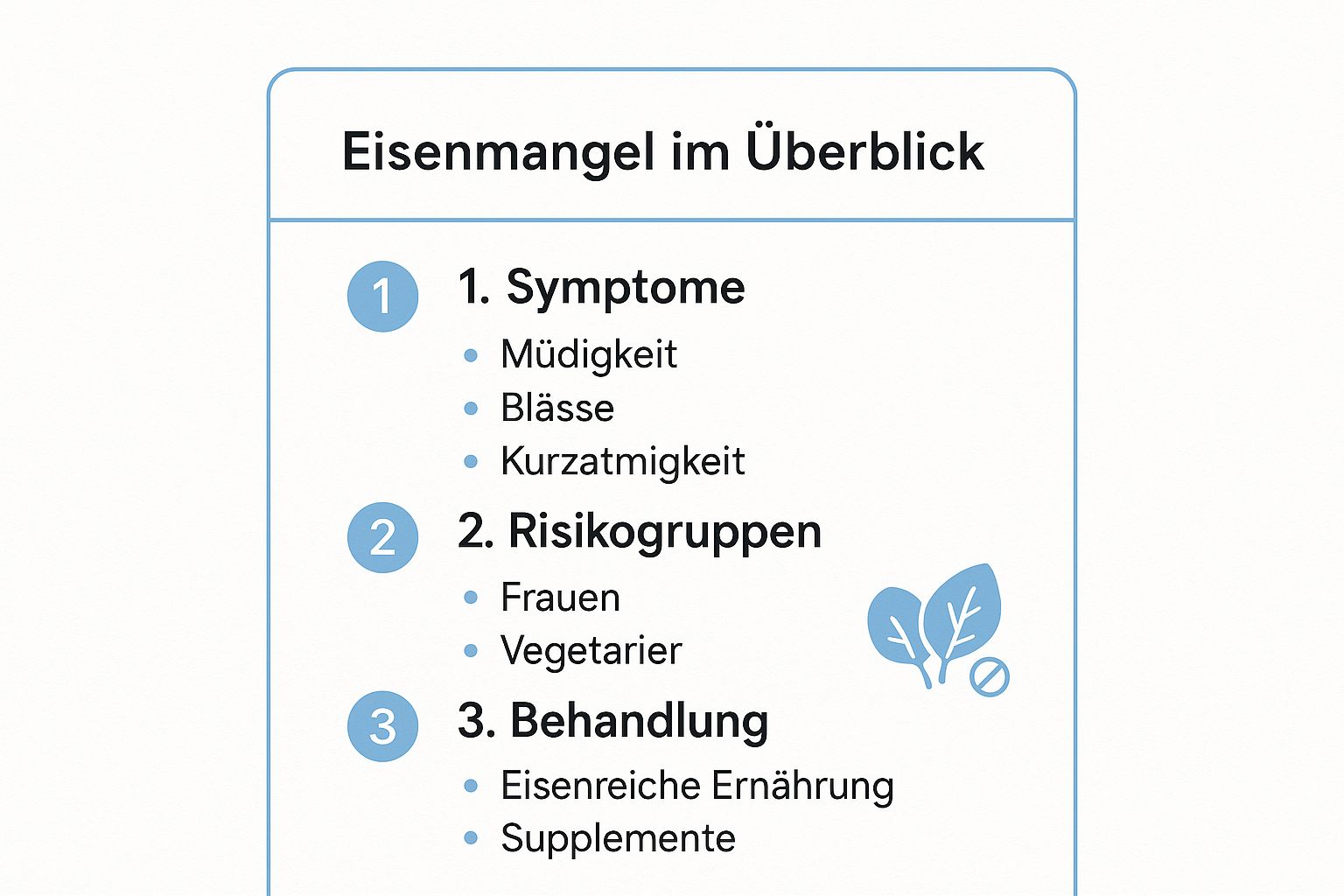
As the infographic illustrates, the symptoms are often nonspecific, but the risk groups can be clearly defined, making targeted prevention possible.
Practical tips for improving your iron intake
Fortunately, you can take action yourself to improve your iron levels. A balanced diet is the first and most important step.
Our tip: Always combine plant-based sources of iron with vitamin C. This vitamin transforms poorly available iron into a form that your intestines can absorb much more easily and increases the absorption rate severalfold.
- Smart combinations: Always eat iron-rich foods such as lentils, chickpeas, pumpkin seeds, or oatmeal together with foods containing vitamin C. A glass of orange juice with your cereal or red peppers in a lentil salad can make a big difference.
- Avoid “iron blockers”: Certain substances in coffee, black tea, and dairy products (calcium) can inhibit iron absorption. Therefore, leave at least one hour between your iron-rich meal and these drinks.
- Cooking with cast iron: Cooking in cast-iron pots or pans can naturally slightly increase the iron content of your food.
Are you unsure whether your fatigue is due to an iron deficiency? If you would like to learn more about the causes, symptoms, and treatment options, you can find further information in our detailed article: Learn more here about what you can do if you have an iron deficiency.
2. Vitamin D deficiency: When sunlight is lacking
Do you often feel low in winter, feel sluggish, or are more susceptible to infections? These widespread complaints are often caused by a nutrient deficiency that is particularly common in our latitudes: vitamin D deficiency. Although our bodies can produce it themselves, many people—especially during the dark season—suffer from an insufficient supply of the so-called “sunshine vitamin.”
Vitamin D is not actually a classic vitamin, but a hormone precursor that is essential for countless processes in the body. Its best-known function is regulating calcium and phosphate metabolism, making it indispensable for strong bones and healthy teeth. However, its importance extends much further: It is crucial for a properly functioning immune system, supports muscle function, and plays an important role in psychological well-being. A deficiency can therefore manifest not only as fatigue, but also as bone pain or increased susceptibility to infections.

Who is particularly affected by vitamin D deficiency?
The risk of vitamin D deficiency is closely linked to lifestyle and place of residence. The body’s own production depends directly on the intensity of sunlight reaching the skin, making certain groups particularly vulnerable.
- Office workers and people who spend little time outdoors: Anyone who spends most of the day indoors exposes their skin to very little of the necessary UVB radiation.
- People in northern latitudes: In Germany and other northern European countries, the sun is too low in the sky from October to March to stimulate sufficient vitamin D production.
- Older people: As we age, the skin’s ability to synthesize vitamin D declines significantly. Reduced mobility is also often a factor.
- People with darker skin: A higher melanin content in the skin acts like natural sun protection and slows vitamin D production.
The overview above shows that the risk factors are diverse and affect many people, making it especially important to consciously consider your own vitamin D status.
Practical tips for improving your vitamin D supply
Fortunately, there are effective strategies to prevent or remedy a deficiency. A combination of an adapted lifestyle and diet is the key.
Our tip: Diet alone can barely correct an existing deficiency. Only a few foods contain significant amounts of vitamin D, which is why the sun remains your most important source and targeted supplementation is often worthwhile.
- Use the sun mindfully: During the sunny months (April to September), try to expose your face, hands, and arms to the midday sun without covering them for 10–30 minutes several times a week. However, always consider your skin type and avoid sunburn.
- Incorporate vitamin D-rich foods: Regularly include fatty fish such as salmon, herring, or mackerel in your diet. Egg yolks and certain edible mushrooms can also make a small contribution.
- Consider taking a supplement: Especially during the winter months, supplementation is advisable for most people in our latitudes. Ideally, the dosage should be based on your current blood level, which you can determine with a nutrient test.
Are you unsure whether you are getting enough of the sunshine vitamin? If you would like to learn more about which foods can support your vitamin D levels, you can find further information here: Discover here which foods contain vitamin D.
3. Vitamin B12 deficiency: The nerve vitamin
Tingling in your hands and feet, constant exhaustion, or memory problems? These symptoms may indicate an often-overlooked nutrient deficiency: vitamin B12 deficiency. This vitamin, also known as cobalamin, is a key player in our body and is essential for nerve function, red blood cell formation, and cell division.
Unlike many other vitamins, vitamin B12 is found almost exclusively in animal products. It is produced by microorganisms that are then consumed by animals. When this vitamin is lacking, vital processes begin to falter. The protective coverings of the nerves (myelin sheaths) can become damaged, leading to neurological disorders. At the same time, blood formation is impaired, which can result in a specific form of anemia (megaloblastic anemia). A deficiency often develops gradually over several years because the body has large stores in the liver.
Who is particularly affected by vitamin B12 deficiency?
Some groups face a systematic risk of developing a deficiency of this important vitamin, whether due to their diet or impaired absorption in the digestive tract.
- Vegans and vegetarians: Since vitamin B12 is found almost exclusively in animal-based foods such as meat, fish, eggs, and dairy products, a purely plant-based diet is the greatest risk factor.
- Older people: As people age, stomach acid production often decreases, which is necessary to release vitamin B12 from food. Absorption in the intestine may also decline.
- People with gastrointestinal diseases: Conditions such as Crohn's disease, celiac disease, or chronic gastritis can significantly impair the absorption of vitamin B12 in the intestine.
- People who have undergone stomach surgery: Procedures such as gastric reduction or the removal of parts of the stomach or small intestine can impair the areas responsible for B12 absorption.
Practical tips for ensuring an adequate supply of vitamin B12
An adequate intake of vitamin B12 is crucial for at-risk groups and can usually be achieved easily.
Our tip: Plant-based foods such as sauerkraut, algae, and shiitake mushrooms often contain only inactive B12 analogues that the body cannot use. Do not rely on these sources to meet your needs.
- Supplementation for vegans: If you follow a vegan diet, regular intake of vitamin B12 in the form of tablets, drops, or toothpaste is essential. This is the safest way to prevent a deficiency.
- Use fortified foods: Many plant-based products such as soy milk, breakfast cereals, and meat substitutes are now fortified with vitamin B12. Check the nutrition information on the packaging.
- Take action in cases of absorption problems: If you have absorption problems due to an illness or your age, conventional tablets may not be sufficient. Talk to your doctor about high-dose supplements, sublingual forms (under the tongue), or injections.
Because the symptoms of vitamin B12 deficiency are often nonspecific, it is particularly important to establish clarity if you suspect one. A blood test can show you your exact status and help you take targeted measures. If you would like to learn more about the causes, symptoms, and treatment options, you can find further information in our detailed article: Learn more here about how to identify and correct a vitamin B12 deficiency.
4. Magnesium deficiency: When muscles and nerves rebel
Is your eyelid twitching uncontrollably, do you often struggle with calf cramps, or do you feel restless and stressed inside? These signs may indicate a nutrient deficiency that is often overlooked: a magnesium deficiency. Magnesium is a true all-rounder among minerals and is involved in more than 300 enzymatic reactions in the body. It is essential for muscle and nerve function, a stable heart rhythm, and energy metabolism.
Magnesium acts as calcium’s natural counterpart. While calcium causes the muscles to contract, magnesium is responsible for their relaxation. When magnesium is lacking, this balance is disrupted. As a result, the muscles remain in a state of heightened excitability, which can manifest as cramps, tension, and even cardiac arrhythmias. Modern dietary habits and depleted soils contribute to magnesium deficiency occurring far more often than many people realize.
Who is particularly affected by magnesium deficiency?
Certain circumstances and habits increase the need for magnesium or promote its excretion, significantly raising the risk of deficiency.
- Athletes: Intense training and heavy sweating cause the body to lose more magnesium, while the need for muscle recovery and energy production increases at the same time.
- People experiencing chronic stress: Stress hormones such as cortisol lead to increased magnesium excretion through the kidneys. At the same time, the body uses more of this mineral under stress, which can quickly create a vicious cycle.
- People with diabetes or insulin resistance: Poorly controlled blood sugar levels can increase magnesium excretion through the urine, which heightens the risk of deficiency.
- Consumers of highly processed foods: A diet rich in processed products, white flour, and sugar often provides only small amounts of magnesium.
Practical tips for improving your magnesium intake
Adequate magnesium intake is crucial for your well-being. With a few targeted adjustments, you can effectively replenish your stores.
Our tip: Not all forms of magnesium are equally well absorbed. Magnesium glycinate or citrate are particularly well absorbed by the body, while magnesium oxide can often cause digestive problems.
- Choose magnesium-rich foods: Make a point of including nuts (especially almonds and cashews), seeds (pumpkin and sunflower seeds), whole-grain products, legumes, and green leafy vegetables such as spinach in your diet.
- Topical application for cramps: In cases of acute muscle cramps or tension, magnesium oil applied directly to the skin can provide quick relief because it works locally.
- Pay attention to the correct dosage: If you use dietary supplements, start with a lower dose and increase it slowly. Excessively high individual doses can have a laxative effect and cause gastrointestinal discomfort.
A magnesium deficiency can cause a wide range of nonspecific symptoms. If you would like to find out whether your symptoms are due to a deficiency, you can read more about symptoms and diagnosis here: Learn more about the signs of magnesium deficiency and what you can do about it.
5. Zinc deficiency: When the immune system weakens
Do you notice more frequent infections, do minor wounds take a long time to heal, or does your hair seem to be getting thinner? These very different signs may point to a common cause: zinc deficiency. Zinc is an essential trace element involved in hundreds of enzymatic processes in the body and therefore plays a key role in our well-being.
This versatile nutrient is essential for a strong immune system, healthy skin, wound healing, cell growth, and even our sense of taste and smell. When zinc is lacking, this finely tuned system becomes unbalanced. Your body can no longer fully mobilize its defenses, regeneration processes slow down, and cell division is disrupted. Such a nutrient deficiency can therefore affect your quality of life in many ways, often without the cause being recognized immediately.
Who is particularly affected by zinc deficiency?
Certain life circumstances, dietary habits, or health conditions can significantly increase the risk of zinc deficiency. An increased need or reduced absorption are the most common causes.
- Vegetarians and vegans: As with iron, plant-based foods (e.g., legumes and whole-grain products) contain phytates, which can inhibit the absorption of zinc in the intestines.
- People with chronic inflammatory bowel diseases: Conditions such as Crohn’s disease or ulcerative colitis can severely impair the intestine’s ability to absorb zinc and other nutrients.
- Older people: Appetite often decreases with age, and the diet becomes less varied. At the same time, zinc absorption in the intestines may be reduced, increasing the risk of deficiency.
- Pregnant women, breastfeeding women, and athletes: These groups have a physiologically increased need for zinc to optimally support the body during growth, recovery, and increased physical strain.
Practical tips for improving your zinc intake
An adequate zinc intake can generally be managed well through a conscious diet. With a few targeted adjustments, you can effectively replenish your zinc stores.
Our tip: Bioavailability is key. Animal proteins improve the absorption of zinc from plant-based sources. Combining them can therefore be particularly effective in preventing a nutrient deficiency.
- Incorporate zinc-rich foods: Make a point of eating zinc-containing foods. Oysters are the leading source, but beef, pumpkin seeds, lentils, and hard cheese are also excellent sources.
- Avoid “absorption inhibitors”: Phytates in whole-grain products and legumes can block zinc absorption. Soaking, sprouting, or fermenting (e.g., in sourdough bread) reduces the phytate content and makes the zinc more available.
- Caution when supplementing: It is best to take zinc supplements on an empty stomach, as food can interfere with absorption. Avoid taking them at the same time as high-dose iron or calcium supplements, as they compete for the same absorption pathways in the intestine.
Do you suspect that your symptoms could be caused by a zinc deficiency? A deficiency of this important trace element often cannot be corrected through diet alone. To gain clarity and take targeted action, an accurate analysis of your levels is essential. Find out how well supplied with zinc you are with the mybody®x nutrient test and receive personalized recommendations.
6. Folate deficiency: Life-sustaining cell division at risk
Folic acid, also known as vitamin B9, plays an inconspicuous but absolutely crucial role in your body. Do you sometimes feel inexplicably exhausted, or do you have pale skin and difficulty concentrating? These nonspecific signs could indicate a folate deficiency, a nutrient deficiency that is often overlooked but can have far-reaching consequences.
This vitamin is the conductor of countless processes, especially cell division and cell growth. It is essential for the formation of new blood cells and the synthesis of our DNA, the blueprint of life. Without sufficient folate, these fundamental processes grind to a halt. The result can be megaloblastic anemia, in which red blood cells are too large and unable to function properly, causing fatigue and weakness. A deficiency is particularly critical during pregnancy, as it drastically increases the risk of serious birth defects in the child, such as spina bifida.
Who is particularly affected by folate deficiency?
Certain stages of life and circumstances significantly increase the risk of a nutrient deficiency in folic acid, either because the need increases or absorption is impaired.
- Pregnant women and women wishing to conceive: The need for folic acid almost doubles during this time to support rapid cell division and fetal development.
- People who consume a lot of alcohol: Alcohol interferes with the absorption and metabolism of folic acid in the intestines and liver, which can quickly lead to a deficiency.
- People with chronic inflammatory bowel diseases: Conditions such as celiac disease or Crohn's disease can severely impair the intestine's ability to absorb folic acid from food.
- Older people: A one-sided diet, reduced appetite, and taking certain medications can make it more difficult to get enough folic acid in old age.
Practical tips for improving your folic acid intake
You can actively replenish your folic acid stores by deliberately choosing certain foods and preparing them gently.
Our tip: Folic acid is extremely sensitive to heat and light. Prolonged cooking or keeping food warm can destroy much of this valuable vitamin. Therefore, prefer raw or only briefly cooked preparation methods.
- Choose leafy green vegetables: Include spinach, lamb's lettuce, kale, or broccoli in your diet every day. A green smoothie or a fresh salad are ideal sources of folic acid.
- Legumes as nutritional powerhouses: Lentils, chickpeas, and beans are not only rich in protein and fiber but also excellent sources of folic acid. Lentil stew or hummus are delicious choices.
- Gentle preparation: Steam or lightly simmer your vegetables for only a short time instead of boiling them for a long time. This helps preserve the heat-sensitive vitamins as well as possible.
- Supplementation when needed: Women who are planning a pregnancy or are already pregnant are strongly advised to take folic acid supplements to safely meet their increased requirements.
Folic acid deficiency often develops gradually and remains unnoticed for a long time. If you belong to a risk group or notice nonspecific symptoms, a targeted analysis can provide clarity. Find out more about how you can check your nutrient levels: Discover your options for nutrient analysis here.
7. Protein deficiency: When the body's foundation begins to crumble
Do you often feel weak, are your hair and nails brittle, or does it seem to take forever to recover from an intense workout? These signs may indicate an often-overlooked nutrient deficiency: protein deficiency. Proteins, also known as dietary proteins, are the fundamental building blocks of life and are responsible for far more than just muscle growth.
Proteins are made up of amino acids and perform countless vital functions in the body. They are the foundation of muscles, skin, hair, and organs; form enzymes that regulate our metabolism; and, as antibodies, are a central component of our immune system. A protein deficiency therefore means that your body is no longer able to repair tissue efficiently, produce hormones, or defend itself effectively against pathogens. Without enough building material, the “body house” cannot be maintained and gradually begins to deteriorate.
Who is particularly affected by protein deficiency?
Protein deficiency in industrialized nations is less often severe, but suboptimal intake is more widespread than you might think. Certain life circumstances and dietary habits significantly increase the risk.
- Older adults: As people age, appetite and the body's ability to use protein efficiently often decline. At the same time, the need increases to counteract age-related muscle loss (sarcopenia).
- Vegans and vegetarians: Although a plant-based diet can be rich in protein, it requires careful planning to combine all essential amino acids in sufficient amounts.
- People with chronic illnesses or eating disorders: Conditions that impair appetite or nutrient absorption can easily lead to a deficiency.
- Athletes with high training volumes: Intense training significantly increases the need for protein to repair and build muscle tissue.
Practical tips for improving your protein intake
Adequate protein intake is easy to achieve with a few targeted adjustments to your daily routine. The key is regularity and smart combinations.
Our tip: The quality of a protein is determined by its amino acid profile. Combine different plant-based protein sources to ensure that you get all nine essential amino acids, which your body cannot produce on its own.
- Protein with every meal: Include a source of protein in each of your main meals. This could be yogurt or quark for breakfast, lentils in your lunchtime soup, or tofu for dinner. This ensures a consistent supply.
- Combine plant-based power: Combine legumes with grains (e.g., rice with beans or hummus with whole-grain bread) to obtain a complete amino acid profile. Nuts, seeds, and soy products are also excellent sources.
- Determine your needs: As a general guideline, 0.8 grams of protein per kilogram of body weight is recommended for healthy adults. With physical activity or advancing age, requirements can increase to 1.2 to 1.6 g/kg.
- Pay Attention to Snacks: A protein-rich snack such as a handful of nuts, a protein shake, or Greek yogurt can help you meet your daily requirements more easily and prevent cravings.
Nutrient Deficiency: Overview & Comparison
| Deficiency Symptom | 🔄 Implementation Complexity | 💡 Resource Requirements | 📊 Expected Results | 💡 Ideal Use Cases | ⭐ Main Benefits |
|---|---|---|---|---|---|
| Iron Deficiency | Moderate – Blood Tests & Regular Monitoring Required | Dietary Changes and Supplements | Rapid Symptom Improvement | Women of Childbearing Age, Vegetarians, Athletes | Easy to Diagnose, Effective Treatment |
| Vitamin D Deficiency | Low – Sun Exposure & Supplements | Supplementation & Blood Tests Recommended | Wide-Ranging Health Improvements | Office Workers, Older Adults, People in Northern Regions | Easy to Supplement, Cost-Effective |
| Vitamin B12 Deficiency | High – Injections/Sublingual Supplements, Lifelong Monitoring | Often Requires Injections and Supplements | Symptoms May Be Reversible | Vegans, Older Adults, People with Absorption Disorders | High Treatment Effectiveness, Clear Diagnostics |
| Magnesium Deficiency | Moderate – Various Supplement Forms, Measurements Are Difficult | Various Preparations and Dietary Changes | Rapid Relief from Muscle Discomfort | Athletes, People with Diabetes, People Under Stress | Broad Health Benefits |
| Zinc Deficiency | Low – Can Be Supplemented Orally, but Monitoring Is Necessary Despite Its Simplicity | Dietary Supplements & Dietary Adjustments | Rapid Improvement in Immune Function | Vegetarians, Older Adults, People with Inflammatory Bowel Disease | Good Food Sources, Easy Access |
| Folate Deficiency | Low – Supplements & Diet, Prevention Is Important | Supplements and Fortified Foods | Rapid Improvement, Especially During Pregnancy | Pregnant Women, Older Adults, People with Malabsorption | Simple Prevention, Effective Treatment |
| Protein Deficiency | Moderate – Dietary Changes, Powder/Supplements if Needed | A Variety of Protein Sources, Supplements if Needed | Rapid Symptom Improvement | Older Adults, Vegans, People with Chronic Illnesses | Diverse Sources, Simple Correction |
From Knowledge to Action: Your Path to Optimal Nutrient Supply
You have now gained a deep insight into the world of nutrients. From iron and vitamin D to protein, we have explored the most common forms of nutrient deficiency, uncovered their subtle and obvious symptoms, and shown you how to improve your diet in a targeted way. Perhaps you recognized yourself in some of the descriptions, whether it was the unexplained fatigue associated with iron deficiency or the susceptibility to infections caused by a zinc deficiency.
This awareness is the crucial first step. Understanding your body and correctly interpreting its signals is the foundation for a healthy and vibrant life. A nutrient deficiency is not an unchangeable fate, but rather a valuable indication. It shows you precisely where your body needs support to return to its full potential.
The key findings summarized
Let’s review the key points that will help you on your journey:
- Symptoms are individual and often nonspecific: Fatigue, difficulty concentrating, or hair loss can indicate various deficiencies. A single symptom is rarely conclusive evidence.
- At-risk groups require special attention: Whether vegans, pregnant women, athletes, or older adults—certain stages of life and dietary patterns increase the risk of a nutrient deficiency.
- Nutrition is the foundation: A balanced, nutrient-rich diet is and remains the cornerstone of your health. The foods presented in this article are your daily tool for optimal nourishment.
- Knowledge alone is not enough: At best, assumptions and general advice from the internet may be ineffective; at worst, they may even be counterproductive. Without precise data about your body, you are groping in the dark.
The decisive step: From assumption to certainty
This is where everything comes together. You are now at a point where you can move from passive knowledge to active action. Instead of guessing which nutrient you might be lacking or taking dietary supplements indiscriminately, there is a precise, scientifically sound approach.
The key to genuine change is not trying everything at once, but targeting the areas where your body needs support most urgently. That is the difference between hope and a strategy.
An at-home blood test offers you exactly this strategic clarity. It transforms uncertainty into actionable insights. Imagine knowing exactly what your vitamin D level is or whether your B12 stores are truly replenished. With this knowledge, you can tailor your diet and, if necessary, your supplementation precisely—without detours or unnecessary expenses. You take full control of your health and make decisions based on facts, not assumptions. A nutrient deficiency can be addressed when you know where to start. Your journey toward more energy, well-being, and long-term vitality begins with the courage to take a close look.
Are you ready to stop guessing and gain clarity about your body? The mybody x blood test provides precise analyses of your nutrient levels and personalized recommendations for action, delivered directly to your home. Turn uncertainty into a clear plan for your health and find out what you really need: mybody x blood test.



Share now:
10 Tips for Sustainable Health Improvement
Selenium-rich foods: Top 8 for your health in 2025