
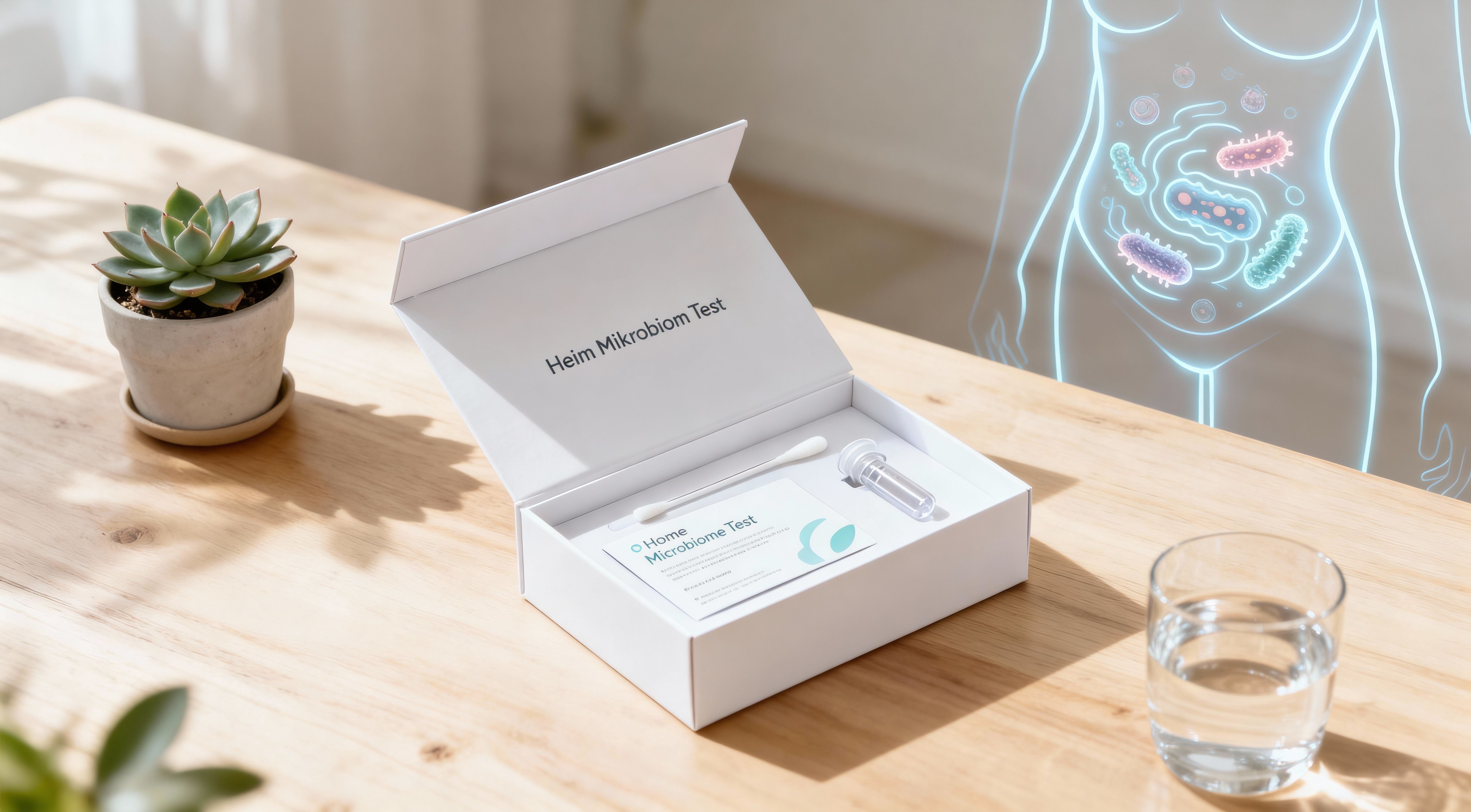
What a microbiome test really reveals about your gut health
A microbiome test is essentially a modern analysis of your gut flora that you can conveniently perform from home. It provides you with a fascinating insight into the community of trillions of microorganisms that live in your gut – your very own personal ecosystem that has a huge impact on your health.
What a microbiome test really reveals about you
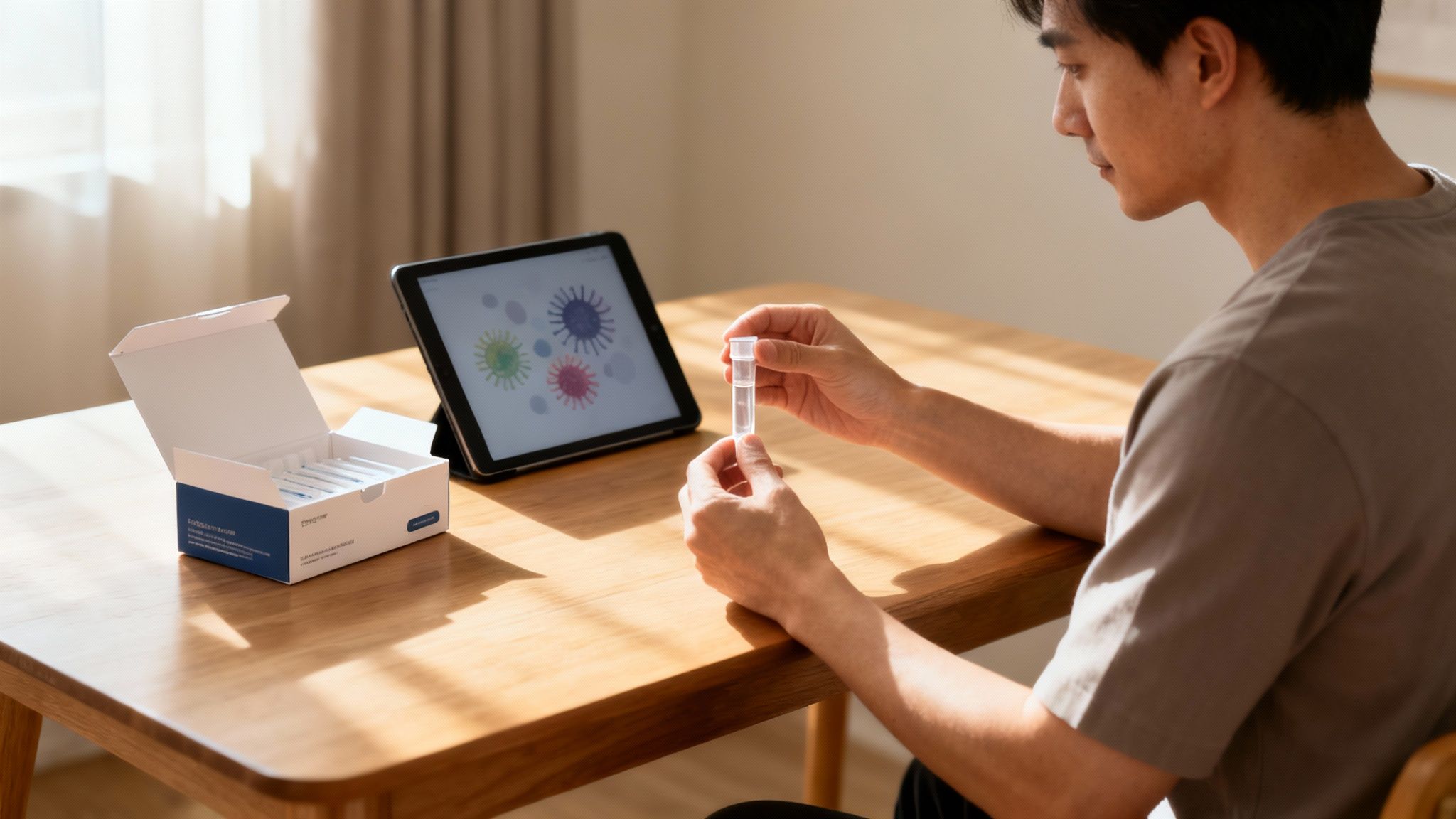
Do you sometimes feel sluggish, constantly struggle with digestive issues, or wonder why certain foods just don't agree with you? The answer could lie directly in your gut. Your microbiome is as unique as your fingerprint and plays a key role in your overall well-being.
A microbiome test unlocks this complex system for you. It's not hocus-pocus, but a scientifically sound snapshot of your gut health. Think of it like taking inventory of your inner garden: What helpful microbes are there? Are there perhaps too many unwanted guests? And how well do they all work together?
More than just digestion
Analyzing your gut flora goes far beyond digestion. It can give you valuable insights into completely different areas of health that you might never have associated with your gut.
An imbalance in the gut, also known as dysbiosis by experts, can manifest itself in a variety of ways. Perhaps it's persistent afternoon fatigue, recurring skin blemishes, or that constant feeling of fullness. A modern microbiome test can help you identify such connections.
Insights into your microbiome are like a personal health compass. They not only show you where you currently stand, but also point you in the direction of targeted improvements that truly make a difference.
Concrete insights into your health
A high-quality microbiome test provides you with more than just a long list of Latin bacterial names. It translates complex data into understandable and, above all, actionable information.
This table summarizes the most important insights you can gain from a microbiome analysis and what they are useful for.
At a glance: What a microbiome test reveals
| Analysis area | What is being measured? | Why is this important to you? |
|---|---|---|
| Bacterial diversity | The number of different types of bacteria in your gut. | High diversity indicates a strong, adaptable immune system and a robust intestinal barrier. |
| Balance (dysbiosis index) | The ratio of beneficial to potentially harmful bacteria. | A balanced ratio is crucial for digestion, the defense against pathogens, and the reduction of inflammation. |
| Butyrate production | The amount of short-chain fatty acids such as butyrate. | Butyrate is the main energy source for your intestinal cells, strengthens the intestinal mucosa and has an anti-inflammatory effect. |
| Potential for nutrient uptake | The ability of your bacteria to produce vitamins (e.g., B vitamins, vitamin K). | It shows you whether your gut is optimally supplied or whether you should supplement with certain nutrients. |
These insights are your starting point for taking control of your health. Instead of following generic advice, you'll get a personalized foundation for your diet and lifestyle. If you'd like to gain a deeper understanding of the fundamentals of your internal ecosystem, read our detailed article on what the microbiome actually is .
Ultimately, a microbiome test helps you move from guesswork to targeted action. You get to know your body on a completely new level and can tackle ailments at their root cause, instead of just treating symptoms. A powerful tool for anyone who wants to proactively strengthen their health and unlock their full potential.
What science reveals about your gut ecosystem

You might be wondering why the gut is suddenly in the scientific spotlight. Quite simply: we are gaining a better understanding that this complex ecosystem of trillions of microorganisms is a central control point for our overall health. The gut is much more than just a digestive organ.
Your microbiome plays a role in your immune system, influences your metabolism, helps produce important vitamins, and can even affect your mood. A microbiome test utilizes precisely these scientific findings. Using modern analytical methods, it deciphers the exact composition and balance of your tiny inhabitants in the gut.
The goal isn't to hunt down individual "good" or "bad" bacteria. Instead, science focuses on the bigger picture – the interplay of the entire gut microbiome. A high diversity of bacterial species is considered a sign of a robust and resilient gut. An imbalance, known as dysbiosis , is associated with numerous health problems.
The main characters in your gut
To understand what a microbiome test reveals, it's helpful to look at the most important bacterial groups. Two of the most dominant strains in the human gut are the Firmicutes and the Bacteroidetes . Think of them as two large families constantly vying for influence and resources.
- Firmicutes are known for extracting and storing energy from food with exceptional efficiency. They are, in essence, the "masters of calorie utilization".
- Bacteroidetes, in turn, are specialists in breaking down complex carbohydrates and fiber – precisely the food that your body cannot digest on its own.
The ratio of these two groups, the Firmicutes/Bacteroidetes ratio , is therefore a scientifically recognized marker. An imbalance can provide important clues about your metabolism. For example, studies often link an increased proportion of Firmicutes to a tendency towards being overweight, as the body simply obtains more energy from the same amount of food.
Science shows us that it's not just what you eat that matters, but also what's helping to process it in your gut. Your microbiome is the crucial link between your food and your health.
A reputable microbiome test analyzes precisely these scientifically sound markers. It doesn't simply provide you with a list of bacterial names, but places the results in a health context. This way, you learn whether your gut ecosystem is optimally balanced or whether there are areas where you can specifically support it.
From research to a very personal recommendation
A sound scientific basis is the cornerstone of any good microbiome test. The recommendations you ultimately receive are based on thousands of scientific studies that have investigated the connection between specific bacterial profiles and health aspects.
A concrete example: If your test detects a deficiency in butyrate-producing bacteria, that's important information. Butyrate is a short-chain fatty acid that serves as the main energy source for your intestinal cells and has strong anti-inflammatory properties. The personalized recommendation would then be to specifically eat more prebiotic fiber – for example, from leeks, asparagus, or whole-grain products – which serves as food for precisely these bacteria.
Clinical research repeatedly underscores the growing importance of the microbiome. A striking example is its role in chronic inflammatory bowel diseases. According to the Federal Ministry of Health, around 300,000 people in Germany suffer from Crohn's disease and ulcerative colitis. Studies have already shown that physicians can make the correct diagnosis in 80 percent of patients based on the bacterial composition of their gut microbiome. You can find more information about these fascinating findings on gut analysis at vorsorge-online.de .
It is precisely this solid data that makes a microbiome test such a valuable tool. It gives you the assurance that the recommendations are not based on mere assumptions, but on the current state of research. This finally allows you to make informed decisions for your well-being and proactively take charge of your health.
Here's how easy the at-home test is!
Do you associate microbiome testing with complicated lab visits and unpleasant procedures? Don't worry, those days are over. Modern gut analyses are designed so that you can perform them comfortably, discreetly, and hygienically in the comfort of your own home. The entire process is designed to give you maximum control and convenience.
From ordering your test kit and taking your sample to sending it to the lab – everything is incredibly easy and clearly explained. You don't need to be an expert to do everything correctly. Let's go through each step together so you feel confident every step of the way.
Your path to personal insight into your gut
The entire process can be divided into a few simple phases. Each step is designed to be easily integrated into your daily routine without much effort.
-
Ordering and receiving the test kit
It all starts with your order. Your personal test kit will arrive at your home in discreet packaging. Inside you'll find everything you need for sample collection: detailed, illustrated instructions, the sample tube with stabilizing fluid, a handy sample catcher, and a prepaid return box. -
The uncomplicated sample collection
This is the part most people might be a little apprehensive about – but that's completely unfounded. Taking a tiny stool sample is quick and clean thanks to the accessories. You only need a minuscule amount, which you collect with the small spoon in the lid of the tube. The whole process takes just a few minutes.To ensure everything goes smoothly, we've put together detailed instructions for you. There you can read everything you need to know about correctly taking a stool sample .
What happens after the sample is on its way?
Once you have taken the sample, place the tightly sealed tube in the return box and take it to the post office. From this moment on, our experts in an ISO-certified laboratory in Germany take over.
Data privacy is our top priority. Your sample is immediately pseudonymized. This means it receives a unique code and is no longer linked to your name or address. Your privacy is protected at all times according to the highest GDPR standards.
In the lab, science comes into play. Using state-of-the-art sequencing methods – often referred to as 16S rRNA sequencing – the DNA of the microorganisms in your sample is analyzed. This method is considered the gold standard in microbiome research. It allows for an extremely precise determination of your gut bacteria, both in terms of type and quantity. This creates a crystal-clear picture of your very own gut ecosystem.
Your personal results report – explained simply
The lab analysis will be completed after a few weeks. But don't worry, you won't receive an incomprehensible lab report, but rather a comprehensive yet clearly presented results report.
This report translates complex scientific data into simple language with clear graphics. You can see at a glance:
- Your bacterial diversity: A key indicator of a stable gut ecosystem.
- Your dysbiosis index: Shows you whether the balance between beneficial and potentially harmful bacteria is right.
- Important bacterial groups: A breakdown of the most important strains and what their distribution means for you.
- Personalized recommendations: Specific and actionable tips for nutrition and lifestyle that are directly tailored to your results.
A home microbiome test is therefore much more than just a measurement. It's a safe and easy way to gain deep insights into your health without having to leave the house. From the simple sample to a personalized roadmap for your well-being – you're in control.
Understand your results and take targeted action
You're finally holding your personal microbiome test report in your hands – a pivotal moment on your journey to greater well-being. But what do you do now with all the data, charts, and technical terms? Don't worry. This section is your practical guide, showing you not only how to understand your results but also how to translate them into concrete, positive changes for your everyday life.
The good news is: you don't need to be a biologist to grasp the key findings of your report. A high-quality results report is structured in such a way that it translates complex science into understandable recommendations for action. It's about identifying the most important key performance indicators and knowing which levers you can pull.
The most important key figures of your report decoded
Your results report is like a map of your inner ecosystem. Instead of getting lost in the details, focus first on the major signposts. Three key metrics are particularly meaningful and usually form the basis for all further recommendations.
- Bacterial diversity: This is one of the most important indicators of a healthy microbiome. Imagine your gut as a thriving rainforest: the more diverse the plant and animal species, the more stable and resilient the entire ecosystem. High diversity means your gut can respond better to various challenges – from unhealthy food to stress.
- Dysbiosis Index: This value summarizes the balance between beneficial and potentially harmful bacteria. A high value indicates an imbalance (dysbiosis), which is often associated with digestive problems, inflammation, or persistent fatigue.
- Key functions of your microbiome: Your report will also assess how well your gut bacteria perform important tasks. A key aspect here is the production of butyrate . This short-chain fatty acid is practically a superfood for your intestinal cells and has a strong anti-inflammatory effect.
Your test results are not a final diagnosis, but a valuable snapshot. They are the perfect starting point to understand what your body truly needs and to initiate targeted, positive changes.
From analysis to action: Practical implementation of your results
The true power of a microbiome test lies in the personalized recommendations. It's about transforming lab results into real-world strategies. Let's explore this with a concrete example.
Imagine your report shows low bacterial diversity and a lack of butyrate-producing bacteria. What does that mean for your shopping basket and your daily routine?
- Adjust your diet: Your mission is to specifically feed the good bacteria and ensure greater diversity. The magic word is prebiotics – these are indigestible fibers that serve as food for beneficial gut bacteria.
- Incorporate probiotic foods: You can also introduce live bacterial cultures through fermented foods to directly increase diversity.
The following graphic illustrates how uncomplicated the entire process is – from simple sample collection at home to detailed analysis in the laboratory.
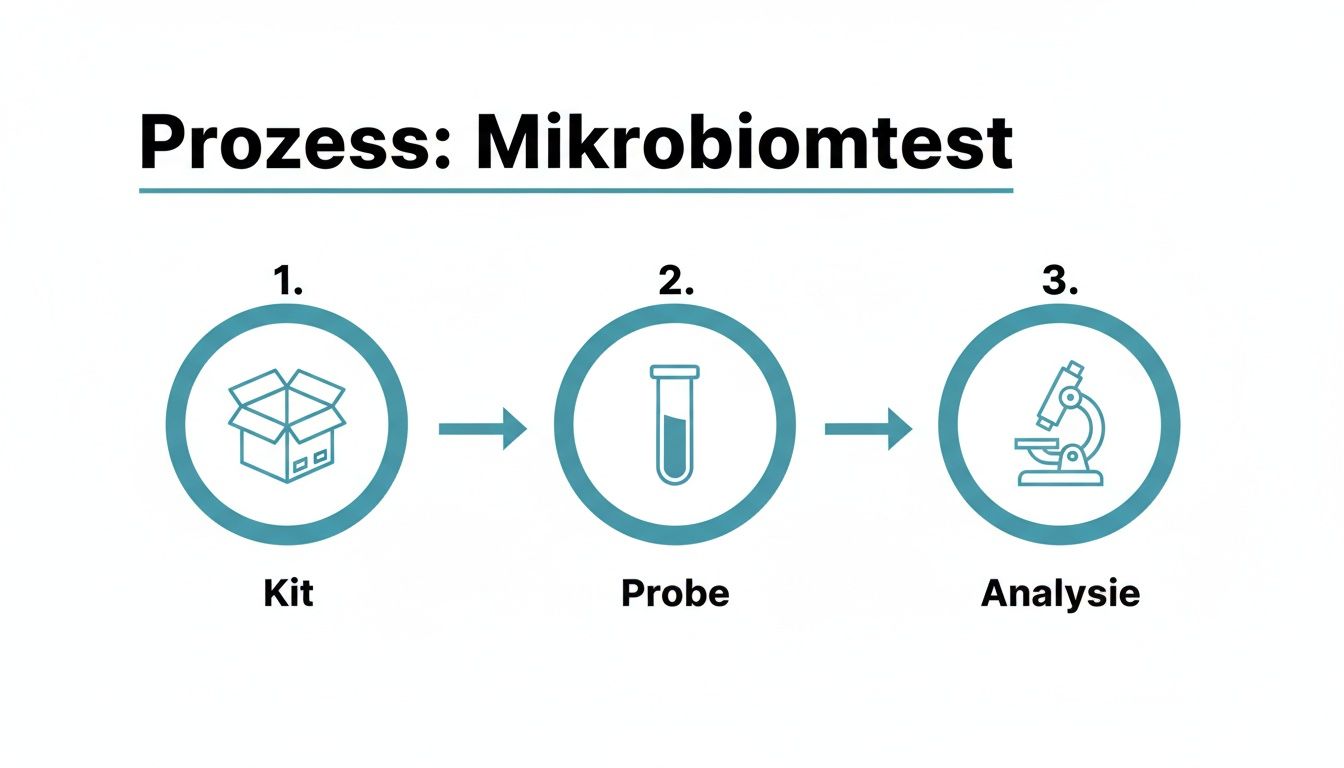
Accessing your personal health data is therefore easier than you might think.
To make implementation even more tangible, we have created an overview here. It shows you how you can translate typical results into very concrete actions.
From analysis to action: Practical implementation of your results
This table gives you concrete examples of how you can integrate typical results of a microbiome test into your everyday life.
| Typical result | What does that mean? | Examples for your diet | Lifestyle tips |
|---|---|---|---|
| Low bacterial diversity | Your gut ecosystem lacks a variety of bacterial strains, which can make it more susceptible to illness. | Eat the rainbow: Vary your vegetables and fruits daily. Artichokes, leeks, onions, and asparagus are excellent prebiotics. | Try out new recipes, shop seasonally at the weekly market to automatically ensure variety. |
| Shortage of butyrate producers | Your intestinal wall receives too little energy, which can promote inflammation. | Resistant starch: Cooled potatoes, rice, or legumes. Whole grain products (oats, barley) and green bananas. | Prepare salads for the next day (potato salad, lentil salad) to easily incorporate resistant starch. |
| Overgrowth of "bad" bacteria | An imbalance (dysbiosis) can lead to bloating, discomfort, and other symptoms. | Less sugar and processed foods. Include fermented products: natural yogurt, kefir, sauerkraut, kimchi. | Make sure you get enough sleep and actively reduce stress (e.g., through walks, yoga), as stress disrupts the balance. |
It's not about completely turning your life upside down overnight. Small but consistent adjustments are the key to success.
If you would like to delve deeper into the topic, you will find many more tips on building up your gut flora in our guide.
A microbiome test is also an important tool for prevention. The increase in metabolic diseases shows how important it is to take early action. Currently, at least 8.9 million people in Germany have type 2 diabetes. Since the link between dysbiosis and inflammatory processes is well-established scientifically, such analyses can play a crucial role in early detection.
Your results report is the starting point. It gives you the scientific basis to stop guessing and start taking targeted action. Strengthen your gut ecosystem sustainably and lay the foundation for more energy and health.
How to find the right provider for your microbiome test
The market for health tests is booming, and it's easy to lose track. Naturally, you want to be sure that your microbiome test is based on genuine scientific facts and that you get results you can actually use. But how do you distinguish reputable providers from empty promises?
Quite simply: it's about your personal data and your well-being. That's why choosing the right partner for your analysis is so crucial. Not every test is the same – the quality of the analysis, the presentation of the results, and above all, the protection of your data can vary significantly.
The checklist for your decision
To help you make an informed choice, we've compiled a checklist of the most important points. Go through these criteria before deciding on a test.
- Certified laboratory: This is the absolute minimum. Make sure the laboratory is certified according to ISO standards (e.g., ISO 15189). This seal of approval guarantees that all processes are standardized and controlled – i.e., at the highest scientific level.
- Scientifically recognized method: Reputable providers rely on established procedures such as 16S rRNA sequencing . In microbiome research, this is considered the gold standard for precisely identifying your gut bacteria.
- Understandable results report: You shouldn't receive incomprehensible lab jargon, but rather a clear, well-structured report. Good providers visualize the data in graphs and explain everything in simple language – including concrete, personalized recommendations for action.
- Data protection according to GDPR: Your health data is extremely sensitive. The provider must guarantee that your sample is pseudonymized (i.e., no longer directly linked to your name) and that all data is strictly protected according to the guidelines of the General Data Protection Regulation (GDPR).
A good microbiome test provides you not just with data, but with knowledge. It translates complex lab results into a clear roadmap for your health that you can immediately implement in your daily life.
Why the quality of the laboratory is everything
Imagine building a house on a shaky foundation. That can't end well. It's the same with your health analysis. A lab without certification and standardized processes could, in the worst-case scenario, deliver inaccurate or non-reproducible results. The core of your test is, and always will be, the lab's quality.
At mybody®, we therefore work exclusively with ISO-certified specialist laboratories in Germany. This gives you the assurance that your sample is analyzed according to the highest scientific standards. Every single step, from sample receipt to data evaluation, is subject to the strictest quality controls. This way, you can rely completely on your results.
The importance of such thorough analyses is even evident in clinical research. Microbiome tests are used for monitoring even in complex procedures like kidney transplants. One study analyzing 562 stool samples from patients showed how the microbiome regenerates after the procedure and slowly returns to a healthy state. You can read more about this dynamic development of the microbiome after transplants here.
More than just a test result
A reputable provider won't leave you alone with your results. Make sure you receive support after the test – whether it's through an easy-to-understand report, further information, or competent customer service that can help you with any questions.
Your results should be the starting point, not the end. They give you the tools to specifically improve your diet and lifestyle. If you'd like to know more about how such a test works and what it can specifically do for you, check out our guide on how to get your gut flora tested .
By taking these criteria into account when making your decision, you are not just investing in a test, but in reliable insights that will help you take control of your health.
Still have questions about the microbiome test? Here are the answers.
Are you considering a microbiome test , but still have a few questions? That's perfectly normal – and even a good thing. It shows that you take your health seriously and want to make informed decisions.
That's exactly what this section is for. We answer the most frequently asked questions we receive. Clearly, honestly, and without technical jargon, so you know exactly where you stand.
For whom is a look inside the intestine really worthwhile?
A microbiome test is no longer just for people with acute problems. It's a powerful tool for anyone who wants to better understand their body and proactively manage their health.
An analysis is particularly valuable if you recognize yourself in one of these situations:
-
You have unexplained digestive problems.
Do you experience bloating, a feeling of fullness, irregular bowel movements, or irritable bowel syndrome symptoms in your daily life? A test can finally show you what's behind it and whether an imbalance (dysbiosis) is the cause. -
You are health-conscious and want to stay that way.
You feel perfectly healthy, but you want to be sure that everything is running optimally behind the scenes? A microbiome test provides you with the data to secure your long-term health and prevent problems such as silent inflammation or metabolic disorders. -
You are an athlete and want to improve your performance.
Did you know that your gut has a direct impact on your energy, recovery, and nutrient absorption? A balanced microbiome can be the key factor that takes your athletic performance to the next level. -
You have just finished a course of antibiotics.
Antibiotics are often lifesaving, but they leave traces in your gut flora. A test afterwards will show you in black and white where the weaknesses lie and how you can specifically rebuild your beneficial bacteria.
In short: A microbiome test is useful for anyone who no longer wants to guess, but rather make informed decisions for their well-being.
How often should you repeat a test?
A perfectly valid question. Your microbiome isn't a static structure, but a living ecosystem that constantly adapts – to your diet, your lifestyle, your stress levels. The first test is a fantastic inventory, your personal starting point.
A follow-up test is your personal progress check. It shows you how your efforts have paid off and motivates you to keep going or to adjust your strategy accordingly.
A repeat test is particularly useful if you want to verify the effectiveness of the measures you've implemented. Have you changed your diet and are wondering if the diversity of your gut bacteria has actually increased? A second analysis will provide you with an objective answer.
A good guideline is to wait three to six months after the first test. This period is sufficient for positive changes in your gut ecosystem to solidify and become visible in the results. This way, you stay on track and can refine your health strategy if necessary.
Can a microbiome test replace a visit to the doctor?
Let's be very clear here: No, a microbiome test never replaces a visit to the doctor. It's important to understand the role of the test correctly in order to use it optimally for your health.
Think of the test as an extremely capable health advisor. It provides you with deep insights, uncovers imbalances, and gives you a personalized roadmap to optimize your well-being. It's a powerful tool for prevention and long-term health promotion.
However, if you are suffering from acute or chronic illnesses, severe pain, or other serious symptoms, a visit to the doctor is essential. A microbiome test does not provide a medical diagnosis and is not intended to treat diseases. Its purpose is to optimize your health based on your individual profile.
Think of it this way: The test is the perfect complement to conventional medicine. While your doctor takes care of illnesses, the test gives you the opportunity to proactively strengthen the foundation of your health – your gut ecosystem.
Ready to unlock the secrets of your gut and put your health on a new, data-driven foundation? At mybody® , you get scientifically sound microbiome analyses from ISO-certified laboratories. Discover how you can unlock your full potential with personalized recommendations. Find the right test for you at mybody-x.com .
Share:
7 Steps: Blood Test Checklist for Your Health
At-home blood test experiences: procedure, costs and what you need to pay attention to