

What to do about a slow metabolism and how to stimulate it naturally
Do you often feel weak, gain weight for no apparent reason, or feel as though your body is running on low power even though you are not doing anything differently than usual? If you are asking yourself, “Slow metabolism—what can I do?”, the answer begins with truly understanding your own body. Think of it like an engine—and you have more influence over its speed than you might think.
Understanding your metabolism and recognizing the first signs
Your metabolism, also known as your metabolic system, is like an invisible power plant operating in every single one of your cells. Its main job is to convert everything you eat and drink into vital energy. You need this energy for absolutely everything—your heartbeat, your breathing, your thoughts, and of course every tiny movement.
A “slow metabolism” does not mean that your body is somehow broken. It simply means that your basal metabolic rate—the amount of energy you burn in complete rest—is lower than that of other people. And there are many reasons for this.
What really affects your metabolism
Your personal metabolic pace is determined by several factors that work together like the controls on a mixing console:
- Genetics: Your genetic predisposition sets a certain baseline pace. Some people naturally use more energy. That’s simply how it is.
- Age: Around 30, metabolism tends to start slowing down. This is often because muscle mass decreases over time—and muscles are true energy furnaces that burn more calories than fat tissue even at rest.
- Body composition: More muscle mass means a higher basal metabolic rate. This is one of the strongest levers you can control yourself to change things.
- Hormones: Thyroid hormones in particular are the accelerator of your metabolism. If something gets out of balance here, it can noticeably slow down the engine.
- Lifestyle: Constant stress, lack of sleep, and irregular meals can switch your body into a “conservation mode,” in which it cautiously uses less energy.
A very common and frustrating sign is persistent fatigue that simply cannot be shaken off. Why fatigue despite getting enough sleep can be a warning sign is an important aspect of correctly interpreting your body’s signals. The symptoms are often subtle and simply creep into everyday life. In our article, you can read more about the specific symptoms of a slow metabolism to get a better understanding.
Your metabolism is not a fate you simply have to accept. It is a dynamic process that you can actively influence through conscious choices regarding nutrition, exercise, and recovery.
This problem is more widespread than you might think. According to data from the Robert Koch Institute from 2021, 53,5 % of the German population is overweight—a condition often closely associated with a slowed metabolism. Understanding your own body is the first and most important step toward taking targeted action and regaining control.
Common signs of a slow metabolism
The signs can be varied and may appear differently in everyone. The following table provides an overview of typical symptoms that may indicate a slowed metabolism. Consider it a guide for self-assessment, not a diagnosis.
| Signs | Description | Possible impact on your daily life |
|---|---|---|
| Unexplained weight gain | You are gaining weight even though you have not changed your eating habits. Even small indulgences seem to show up on the scale immediately. | You feel frustrated and powerless because your efforts seem to lead nowhere. |
| Constant fatigue | You often feel weak and lacking in energy, even after getting enough sleep. Your “battery” always feels half empty. | Your concentration suffers, you are less productive, and you have little motivation for leisure activities. |
| Sensitivity to cold | You feel cold more often than others, especially in your hands and feet, even in normally heated rooms. | You constantly have to dress warmly and feel uncomfortable, which limits your quality of life. |
| Dry skin & brittle nails | Your skin is often dry and tight, your nails split easily, and your hair looks dull or falls out. | You don’t feel comfortable in your own skin and are dissatisfied with your appearance. |
| Digestive problems | Your digestion is sluggish and prone to constipation. A feeling of fullness after eating is a constant companion. | You often feel bloated and uncomfortable in your stomach, which significantly affects your overall well-being. |
| Difficulty concentrating | You have trouble concentrating, are forgetful, and often feel foggy (“brain fog”). | Your work performance declines, and you feel mentally overwhelmed, which leads to additional stress. |
Do you recognize yourself in some of these points? There is no reason to panic; it is the perfect opportunity to take a closer look and take action. In the next section, we will show you exactly which levers you can adjust in your everyday life.
Hormones and nutrients as the key to your metabolism
Your metabolism is not an isolated system that simply works away on its own. Think of it more like a finely tuned orchestra in which hormones and nutrients play the most important instruments. If just one instrument is out of tune or missing entirely, the entire melody of your energy balance falls apart.
Some of these “instruments” have a particularly strong influence on how fast or slowly your engine runs. They determine whether your body burns energy efficiently or prefers to store it for leaner times.
The main performers in your metabolic orchestra
Two groups of players are particularly important here: hormones, which issue commands as messengers, and nutrients, which serve as building blocks and fuel.
-
Thyroid hormones (T3/T4): They are the undisputed accelerator of your metabolism. If your thyroid produces too little of them, for example due to an underactive thyroid, your entire body runs on low power. Fatigue, weight gain, and sensitivity to cold are often the result.
-
Cortisol (the stress hormone): While the thyroid steps on the gas, cortisol is more like the brake. During chronic stress, it is released continuously and can disrupt blood sugar levels, promote cravings, and encourage fat storage, especially around the abdomen.
-
Essential nutrients: Without the right tools, even the best machine cannot work. These include, above all:
- Iron: Essential for transporting oxygen in the blood and therefore for energy production in the cells.
- B vitamins: They are the spark plugs for countless metabolic processes. A deficiency can directly impair energy production.
- Iodine: The most important building block for producing thyroid hormones. Without iodine, there is no accelerator.
An imbalance in just one of these factors can be enough to noticeably slow down your metabolism. The tricky thing is that you often do not notice it right away, and the cause remains hidden.
This simple decision tree helps you classify initial symptoms and consider whether it might be useful to take a closer look at your levels.
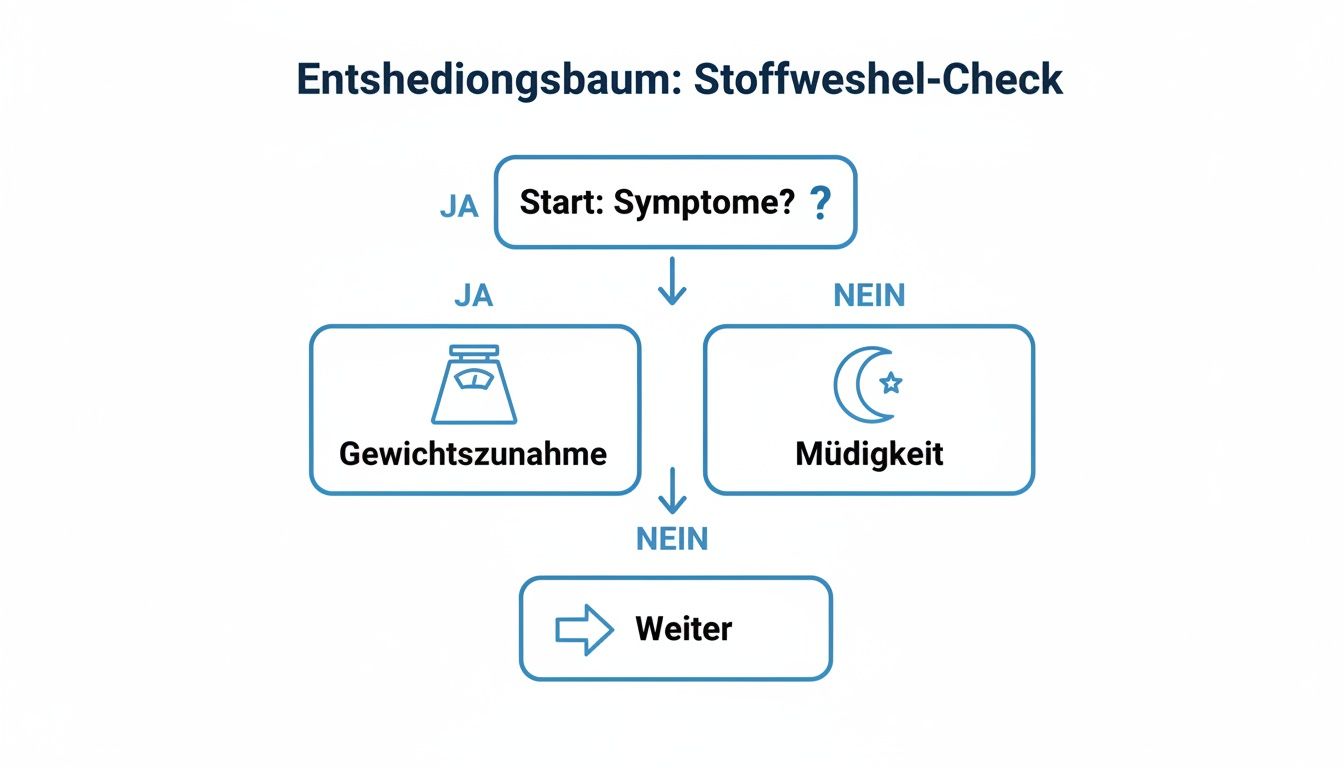
The graphic shows that symptoms such as fatigue or weight gain can be clear signs worth examining more closely.
Get clarity instead of stumbling around in the dark
Are you asking yourself, “Sluggish metabolism—what can I do?” and suspecting that hormones or nutrients could play a role? Then guessing is the worst strategy. The crucial step is to know your individual values.
This is where mybody-x.com’s targeted at-home self-tests come in. Instead of following general advice, you can use a simple test to get a clear picture of your situation.
A hormone test can show whether your thyroid is functioning optimally or whether stress hormones such as cortisol are out of balance. If you’d like to learn more about how to support your hormonal balance, you’ll find valuable advice in our guide 7 Effective Tips for Hormonal Balance.
A nutrient test, in turn, reveals whether you’re lacking important building blocks such as iron or B vitamins, which your body urgently needs to produce energy. With these data-based results in hand, you can finally stop guessing and take targeted action that is truly tailored to your body.
How your diet specifically boosts your metabolism
Forget strict diets and complicated meal plans. If you want to deliberately boost your metabolism, a smart and mindful diet is your most powerful lever. The key lies in a process called diet-induced thermogenesis. It sounds complicated, but it simply refers to the energy your body uses to digest and process food.
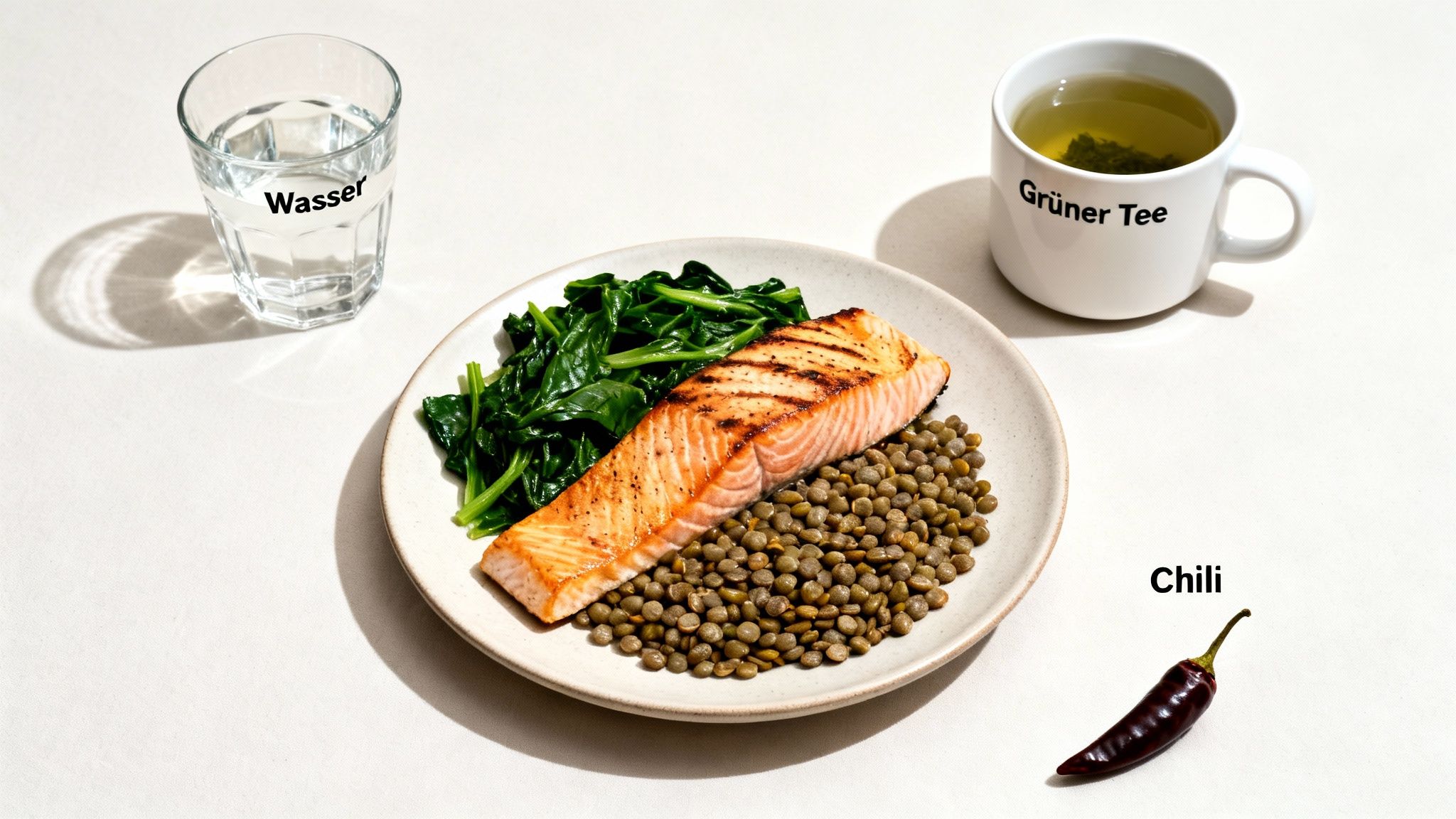
And there’s one clear champion here: protein. Your body has to work hard to break down protein, burning significantly more calories in the process than it does digesting fats or carbohydrates.
Choose the right building blocks
A protein-rich meal not only keeps you feeling full for longer and helps prevent cravings—it also really revs up your metabolism. But it’s not about suddenly relying only on protein. As so often, the right balance makes all the difference.
- Harness the power of protein: Include a high-quality source of protein with every main meal. This can be lean meat, fish, eggs, or quark, but legumes such as lentils or chickpeas work just as well.
- Choose complex carbohydrates: Instead of opting for white flour products and sugar, choose whole-grain bread, oatmeal, or quinoa. These cause your blood sugar level to rise only slowly, which prevents cravings and keeps your metabolism stable.
- Include healthy fats: Avocados, nuts, seeds, and high-quality oils such as olive or flaxseed oil are essential for hormone production and also help promote a long-lasting feeling of fullness.
A very practical example of a metabolism-boosting lunch would be a large mixed salad with grilled chicken breast, chickpeas, a few walnuts, and a light oil-and-vinegar dressing.
Small helpers with a big impact
In addition to the main nutrients, there are a few simple habits and foods that can give your metabolism an extra little boost. They are not miracle cures, but together they make a noticeable difference.
Water is the simplest and one of the most effective metabolism boosters. Just half a liter of water can increase your calorie expenditure for the next hour by up to 30 % increase it because your body has to use energy to warm the liquid to body temperature.
Certain spices and beverages can also have a mild thermogenic effect:
- Green tea: The catechins it contains can slightly increase energy expenditure in the short term.
- Chili and spicy seasonings: The capsaicin in chili peppers stimulates heat production in the body and can temporarily increase calorie expenditure.
- Coffee: Caffeine stimulates the central nervous system and can also temporarily boost the metabolism.
These adjustments are naturally particularly effective when combined with an active lifestyle. Studies show that around 60% of adults in Germany are overweight, which is often associated with a slowed metabolism. This condition is encouraged by a lack of physical activity, as the average daily walking distance has declined significantly in recent decades. Discover more about weight-loss trends and metabolism strategies for Germany on wellness.doktorabc.com.
A targeted diet is a fantastic start. In our guide, you'll find a detailed list of additional foods that boost your metabolism and can be easily incorporated into your daily routine.
Exercise and muscle building as your personal driving force
If nutrition lays the foundation for your metabolism, exercise is the ignition key that really gets the engine up to speed. Every activity sends a clear signal to your body: “Attention, energy is needed now!” It isn't about torturing yourself in the gym for hours. It's about smart, effective stimuli.
Your greatest allies are your muscles. They are the most metabolically active tissue in your body—which means they burn calories even when you're relaxing on the sofa. Every additional gram of muscle mass increases your basal metabolic rate, meaning the energy you expend at complete rest.

Build muscle for a higher basal metabolic rate
For targeted muscle building, strength training is the undisputed method of choice. But don't worry—you don't have to become a bodybuilder. Just two to three sessions per week, 20–30 minutes each, can make a tremendous difference.
The key is to challenge your muscles deliberately beyond their usual limits. This works wonderfully at home too, without any expensive equipment.
- Bodyweight exercises: Classics such as squats, push-ups (starting on your knees is perfectly fine), lunges, and planks are extremely effective. They engage large muscle groups at the same time, which drives up calorie consumption.
- Small helpers for home: With a small investment in resistance bands or a few dumbbells, you can make your workouts even more varied and intense.
But consistency is the most important thing. Only if you stick with it consistently will your body build muscle and sustainably increase your basal metabolic rate.
Think of your muscles as your personal power plant. The larger this power plant, the more energy it burns around the clock—even while you sleep.
HIIT for a turbocharged afterburn effect
If you have little time but want maximum results, high-intensity interval training (HIIT) is your secret weapon. With this method, very short, extremely strenuous phases alternate with short recovery periods.
A typical HIIT workout could look like this, for example: 30 seconds of jumping jacks at full intensity, followed by 30 seconds of rest. Then repeat the whole sequence 8–10 times with different exercises.
The key benefit of HIIT is the so-called afterburn effect (EPOC). Your body continues to burn significantly more calories for hours after the actual workout because it has to recover and adapt to the high level of exertion. So your metabolism remains elevated.
Every movement in everyday life counts
Never underestimate the power of small habits. Your metabolism responds not only to planned workouts but to every form of activity, no matter how small.
- Take the stairs instead of the elevator: A classic that is still worth its weight in gold.
- Take a walk during your lunch break: It gets not only your circulation but also your metabolism moving.
- Take phone calls while walking: A super easy way to sneak more steps into your day.
- Leave the car at home more often: Take care of small errands on foot or by bike.
These small activities add up throughout the day and keep your metabolism continuously active. The goal is to gradually replace an inactive lifestyle with an active one.
Every form of exercise has its own strengths when it comes to boosting the metabolism. The following table gives you a quick overview of which method is best suited to which goal.
Types of movement and their effect on the metabolism
A comparison of different training methods and their specific benefits for stimulating the metabolism.
| Type of training | How it affects the metabolism | Ideal for |
|---|---|---|
| Strength training | Increases muscle mass and thereby boosts your long-term basal metabolic rate. Every muscle is a small furnace. | Anyone who wants to sustainably and permanently raise their metabolism to a higher level. |
| HIIT | Leads to massive calorie expenditure during the workout and a strong afterburn effect afterward. | People with little time who want to create maximum metabolic stimulus in a short period. |
| Endurance training (LISS) | Improves the body’s ability to use fat as an energy source and increases calorie expenditure during activity. | Beginners and anyone looking to build basic fitness and optimize fat burning. |
| Everyday movement (NEAT) | Keeps the metabolism active throughout the day and prevents long periods of “metabolic standstill.” | One! These small activities add up and often make the biggest difference. |
Ultimately, the best strategy is a smart combination. Use strength training as your foundation, add HIIT sessions for an extra boost, and incorporate as much everyday movement as possible. This will turn your metabolism into a reliable, powerful engine.
Why stress and sleep deprivation sabotage your metabolism
Even the best diet and the toughest training will come to nothing if two invisible opponents control your daily life: stress and sleep deprivation. Think of them as a hidden handbrake on your metabolism that you often notice only when the engine is already sputtering.
When you’re constantly under pressure, your body releases more of the stress hormone cortisol. Cortisol used to be a survival aid in dangerous situations, but in modern daily life it can quickly become a problem. Chronically elevated cortisol levels can disrupt your blood sugar, trigger cravings for sweet and fatty foods, and specifically promote fat storage around your abdomen.
The vicious cycle of stress and poor sleep
Stress often leads directly to the next metabolic brake: poor sleep. And this is where things get tricky, because if you can’t unwind at night, the delicate balance of your hunger and satiety hormones gets completely thrown off.
Your body then produces less leptin, the hormone that signals, “I’m full.” At the same time, production of ghrelin, the “hunger hormone,” skyrockets. The result is an almost insatiable appetite the next day, even though your body doesn’t need any additional energy.
Sleep deprivation is not only an energy drain but also a direct saboteur of your metabolic regulation. Your body switches to energy-saving mode, reduces energy expenditure, and clings to every calorie.
To break this vicious cycle, you need to consciously make room for recovery. It’s about giving your body the breaks it urgently needs to function optimally.
Practical tips for greater relaxation and better sleep
Even small but consistent changes to your daily routine can make a huge difference. It’s not about perfection, but about deliberately creating moments of calm.
- Conscious relaxation techniques: Incorporate short sessions of breathing exercises, meditation, or yoga into your day. Even five minutes of deep breathing can demonstrably lower cortisol levels.
- Establish a consistent sleep routine: Go to bed at roughly the same time every day and get up at the same time—even on weekends. This stabilizes your internal rhythm.
- Structure the last hour before bed: Avoid screens such as your phone or television. The blue light inhibits the production of the sleep hormone melatonin. Instead, read a book or listen to relaxing music.
- Avoid caffeine and alcohol in the evening: Both substances can significantly disrupt sleep quality, even if you feel that you can fall asleep easily.
If you suspect that your cortisol levels are chronically elevated, a hormone test from mybody-x.com can provide clarity. This type of test uses data to help you determine whether stress is actually one of the causes of your slowed metabolism, allowing you to take targeted countermeasures.
The most frequently asked questions about a slow metabolism
To conclude, I would like to address the questions we keep receiving about this topic. Here you will find clear, easy-to-understand answers so that you can make informed decisions and take the right steps for yourself and your body.
Why does my metabolism slow down as I age?
This is a completely natural process that affects us all. Over time, often starting as early as 30, the body begins to break down muscle mass and slowly replace it with fat tissue. And since muscles are your biggest energy consumers—even when you are just sitting on the couch—your basal metabolic rate automatically declines.
At the same time, the processes in our cells also slow down. A large study has shown that our energy expenditure continuously decreases after our wild twenties, and in later life by as much as 1 to 2 percent per year. So if you eat and exercise as you always have, this can gradually lead to weight gain. You can find more about these fascinating findings on metabolism as we age on deutschlandfunk.de.
Can I permanently speed up my metabolism?
The idea of permanently shifting your metabolism into “turbo” mode with some miracle cure is, unfortunately, a myth. Your genetically determined basal metabolic rate is more or less set in stone. What you can control, however, is your total energy expenditure—and that makes the difference.
By far the most powerful lever you have is building muscle mass through strength training. More muscle means a higher basal metabolic rate—24 hours a day, 7 days a week. This is the only method that truly works sustainably.
Short-term boosters like spicy food or green tea have only a tiny and temporary effect. The key to success lies in combining regular strength training, a protein-rich diet, and an active daily routine.
Do menopause play a role in a slow metabolism?
Yes, a very significant one. The hormonal changes during menopause directly affect metabolism. In particular, declining estrogen levels can cause several changes:
- Different fat distribution: Fat tends to accumulate more around the abdomen (visceral fat), which is less favorable from a health perspective.
- Increased appetite: Hormonal chaos can significantly disrupt feelings of hunger and fullness.
- More difficult muscle growth: The body can no longer convert proteins into new muscle mass quite as efficiently.
That is precisely why it is particularly important for women in this stage of life to counteract these changes with a protein-rich diet and targeted strength training. A hormone test can also provide clarity and show exactly where your body needs support.
Can a diet cause my metabolism to shut down?
Radical crash diets that drastically reduce your calorie intake can actually force your body into “starvation mode.” It thinks a famine is imminent and lowers your basal metabolic rate to conserve energy. The result is the dreaded yo-yo effect as soon as you return to eating normally.
However, a moderate and sustainable change in diet does not have this negative effect. The goal is to achieve a healthy, modest calorie deficit without sending the body into a panic.
How can I find out whether hormones or nutrient deficiencies are to blame?
If you are constantly tired, gaining weight for no apparent reason, or always feeling cold, an underactive thyroid or a deficiency in important nutrients such as iron or B vitamins could be behind it. However, randomly taking any pills is rarely the solution.
A targeted blood test from home brings clarity. With a hormone test or nutrient test from mybody-x.com, you get hard facts about your body instead of guesswork. You can see in black and white where an imbalance exists and take targeted action.
Do you finally want to know what is really behind your symptoms? The at-home health tests from mybody-x.com provide precise insights into your hormone and nutrient status. Discover what your body really needs and take control of your health. Find the right test for you now at https://mybody-x.com.



Share now:
At-home genetic testing: Personalized health made easy to understand
Achieve your weight-loss goals step by step: Your path to success