

Home Genetic Testing: Personalized Health Explained Simply
More than 30 percent of Germans have already considered or taken a home genetic test. The possibility of gaining profound insights into your health without leaving home fascinates many people in Germany. A home genetic test promises personalized answers about nutrition, fitness, and disease risks based on your DNA. Anyone who wants to know how useful and safe such tests really are will learn here what matters when it comes to home genetic testing, as well as the opportunities and limitations involved.
Table of contents
- What Is a Home Genetic Test Really?
- Process: From Sample Collection to Results
- Different types of at-home genetic tests explained
- Opportunities and benefits of personalized health data
- Safety aspects, data protection, and legal requirements
- Common mistakes and what you should look out for
Key insights
| Point | Details |
|---|---|
| Modern genetic tests | Home genetic tests enable simple analysis of genetic data without a laboratory visit. |
| Personalization of health data | Results provide personalized recommendations for nutrition, fitness, and preventive healthcare. |
| Safety and data privacy aspects | Legal regulations protect users' confidentiality and rights. |
| Avoiding common mistakes | Important aspects include professional advice and understanding the test results. |
What Is a Home Genetic Test Really?
A home genetic test is a modern and innovative method for decoding your genetic information without having to visit a hospital or laboratory. Genetic tests precisely analyze genetic data, which can give you insights into various aspects of your health, fitness, and nutrition.
The principle is simple: You receive a test kit at home, collect a small saliva or blood sample, and send it back to the laboratory. Scientific experts then examine your DNA and prepare a detailed report on your individual genetic characteristics. The test can provide information about various areas:
- Metabolic predispositions
- Nutritional recommendations
- Fitness and athletic performance
- Risks of certain health conditions
- Genetic variants that influence your lifestyle
The major advantage of a home genetic test is personalization. Unlike standard recommendations, these insights are based directly on your individual genetic makeup. This allows you to make targeted decisions about your health and lifestyle that are perfectly tailored to your biological predisposition.
Process: From Sample Collection to Results
The process of a home genetic test is surprisingly simple and straightforward. With the right DNA analysis approach, you can gain valuable insights into your health. The process consists of several structured steps designed to provide maximum ease of use.
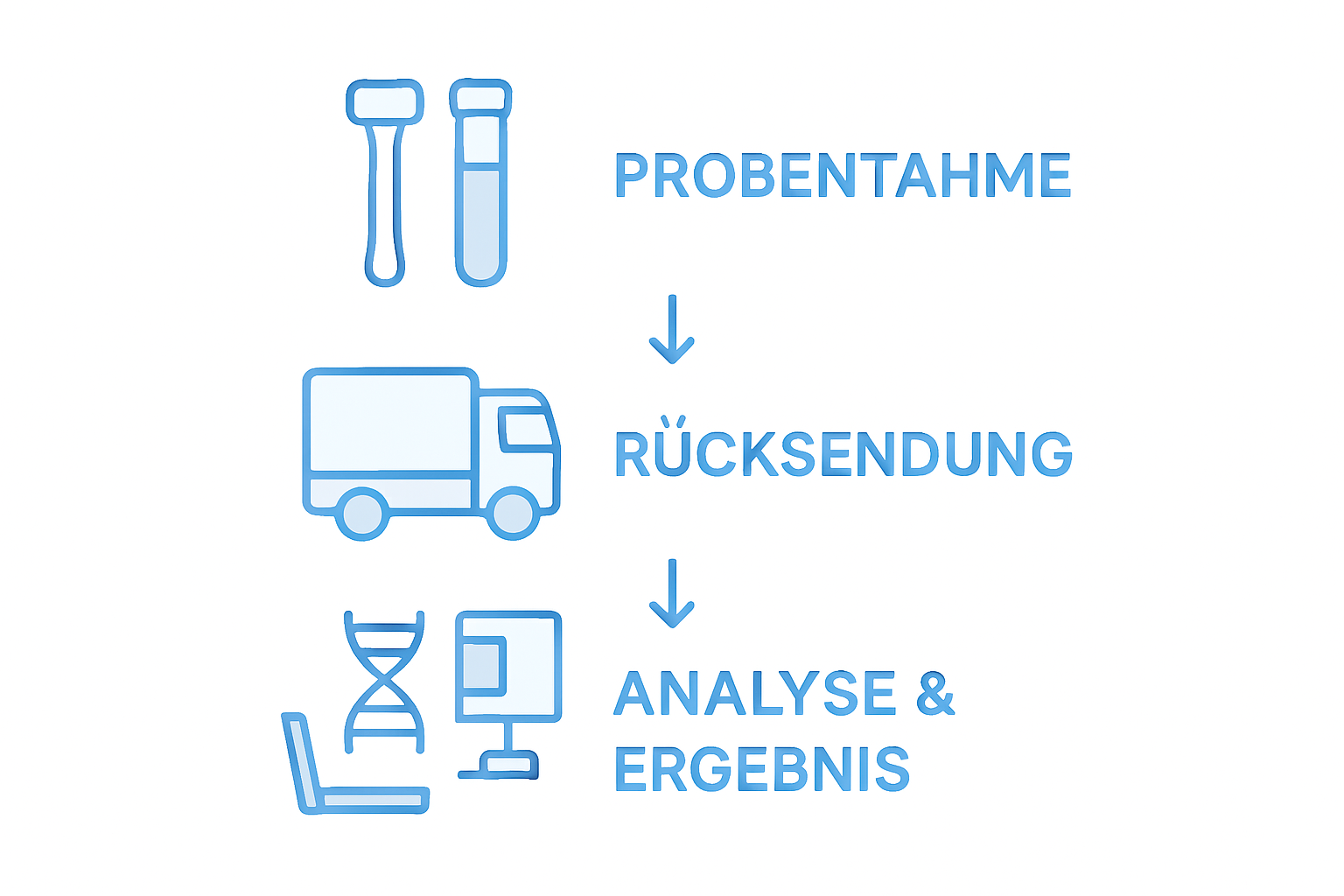
The typical process of a genetic test comprises the following phases:
- Ordering the test kit
- Collecting the sample at home
- Returning the sample
- Laboratory analysis
- Delivery of results
Once the test kit arrives, the first important step is collecting the sample correctly. Depending on the type of test, you will need saliva, blood, or other bodily materials. It is important to follow the included instructions carefully to ensure flawless sample quality.

The laboratory analysis itself is highly precise. Genetic experts examine your DNA using the most advanced scientific methods and prepare a detailed, personalized report. This contains not only results but also individual recommendations for actions regarding your health and lifestyle.
Different types of at-home genetic tests explained
There are various types of genetic tests that you can conveniently perform at home. Especially for food intolerances, genetic tests provide valuable insights into your individual health. The main categories include:
- Nutrition genetic tests: Analyze your genetic predisposition for nutrient utilization, metabolism, and nutritional recommendations
- Fitness genetic tests: Examine your genetic predisposition for athletic performance and training optimization
- Health risk tests: Identify genetic predispositions to specific diseases
- Metabolism tests: Provide insights into your individual metabolic predisposition
- Compatibility tests: Reveal the genetic basis of intolerances
Every genetic test follows a similar basic principle: You receive a test kit, collect a sample, and send it to a specialized laboratory. The analysis is precise and scientifically based, providing you with maximum transparency and meaningful results.
The benefits are diverse: You gain deep insights into your individual genetic makeup, can take targeted preventive measures, and optimize your health strategy individually. The results help you make informed decisions about your nutrition, fitness, and preventive healthcare.
Opportunities and benefits of personalized health data
Personalized health data offer a revolutionary way to proactively understand and shape your health. By analyzing genetic differences, researchers can now specifically identify disease risks and individual health opportunities.
The key benefits of personalized health data include:
- Early detection of health risks
- Tailored prevention strategies
- Optimization of diet and lifestyle
- Individualized training and fitness plans
- Targeted supplementation of nutrients
This data allows you to manage your health proactively rather than merely reactively. You gain scientifically sound insights into your genetic makeup and can make informed decisions about your health based on them.
The greatest benefit lies in prevention: Instead of merely treating diseases, you can take targeted precautions to identify and minimize potential health risks at an early stage. This means greater self-determination, a better quality of life, and a sustainable health strategy tailored precisely to you.
Safety aspects, data protection, and legal requirements
Genetic analyses involve data protection and legal frameworks as central concerns. The Genetic Diagnostics Act specifically protects against potential risks of genetic examinations and prevents potential discrimination.
Important safety aspects include:
- Complete confidentiality of your health data
- Pseudonymization of all samples and analysis results
- Voluntary participation
- Right not to know
- Informed consent before every examination
Modern genetic testing providers are subject to strict data protection regulations. Your personal health information is treated as strictly confidential and used exclusively for the agreed-upon analysis. Once the examination is complete, all samples are destroyed in accordance with legal requirements.
The legal regulations aim to protect your personal rights while preserving the scientific possibilities of genetic analysis. You retain full control over your data at all times and decide for yourself which information you want to learn.
Common mistakes and what you should look out for
There are several crucial aspects to consider when undergoing genetic testing. Legal regulations distinguish between different types of tests with varying levels of protection, highlighting the complexity of the selection process.
Here are the most common mistakes you should avoid:
- No professional consultation before the test
- Lack of understanding of the test results
- No verification of laboratory qualifications
- Ignoring data protection regulations
- Unrealistic expectations about the test results
Pay particular attention to the provider’s credibility. Reputable genetic test providers offer transparent information, qualified scientific support, and comprehensive explanations of your results. A good test not only provides data but also helps you interpret it.
Above all, you should be aware that genetic tests do not replace diagnoses. They are a tool for prevention and health optimization, not a medical guarantee. Treat the results as guidance and always consult a doctor if in doubt.
Start Your Personal At-Home Genetic Test Now
Would you like to use the insights gained from your at-home genetic test directly and improve your health individually? If you have specific concerns about food intolerances or personalized nutrition recommendations, you will find suitable solutions in At-Home Intolerance Tests | mybody®x. Here, you can conveniently collect samples at home and receive scientifically sound results that help you optimize your lifestyle in a targeted and safe way.
Discover a wide selection of At-Home Health Tests – Discover All Tests - mybody®x for a variety of health-related concerns. With certified laboratory tests from mybody®x, you benefit from personalized advice, maximum data security, and clearly understandable evaluations that actively support your self-determination and prevention. Take the opportunity today to improve your health sustainably at mybody-x.com.
Frequently Asked Questions
What Is an At-Home Genetic Test?
An at-home genetic test is a method for decoding genetic information that gives you insights into your health, fitness, and nutrition.
How Does an At-Home Genetic Test Work?
The process includes ordering the test kit, collecting the sample at home, returning the sample, laboratory analysis, and delivering the results.
What Different Types of At-Home Genetic Tests Are Available?
There are nutrition genetic tests, fitness genetic tests, health risk tests, metabolism tests, and intolerance tests, which provide different types of genetic information.
How Secure Are Genetic Tests Regarding Data Protection?
Genetic tests are subject to strict data protection regulations that guarantee confidentiality, pseudonymization, and the right not to know, protecting your personal data.
Recommendation
- Your Personalized Nutrition: Why a Diet Doesn’t Work – mybody®x
- Understanding Genetic Analysis: Your Personal Compass for Health – mybody®x
- At-Home Stool Test: How to Check Your Gut Health | MYBODY-X – mybody®x
- Personalized Nutrition: Everything Important for Your Health – mybody®x
- Signs of Dead Batteries: Complete Guide 2025 - accu.blog



Share now:
Metabolism analysis for weight loss: Your path to your desired weight
Slow metabolism: what to do and how to naturally boost it