

Fasting metabolism: How your body obtains energy
The idea of deliberately putting one's metabolism into fasting mode is sparking interest among many health-conscious people in modern analysis options. When the body switches to stored energy reserves in the absence of food and uses fat as its main source, it offers a new perspective on individual nutrition strategies. Those who understand fasting metabolism recognize opportunities to deliberately optimize health and well-being through personalized diagnostics and genomic tests.
Table of contents
- Understanding and defining fasting metabolism
- Phases and transition processes in the body
- Using energy sources in fasting metabolism
- Health benefits and molecular effects
- Risks, limitations, and scientific context
- Personalized diagnostics: DNA and microbiome
Key findings
| Point | Details |
|---|---|
| Fasting metabolism | Fasting metabolism is a complex process involving a shift in energy production from food intake to the body's own resources. |
| Phases of fasting | The process consists of three phases: the glycogen storage phase, the fat metabolism phase, and the ketone body phase, each involving specific hormonal changes. |
| Health benefits | Fasting can improve blood sugar regulation, reduce oxidative stress markers, and activate cellular cleansing processes. |
| Risks of fasting | Risks such as low blood sugar, nutrient deficiencies, and hormonal disorders must be taken into account, particularly for certain groups of people. |
Understanding and defining fasting metabolism
Fasting metabolism is a fascinating biological process in which the body switches from obtaining energy from food to using its own resources. Systematic changes in the body show how complex and intelligent this mechanism is.
The process begins when no more food is consumed. The body then goes through several phases of metabolic adaptation:
- Glycogen stores are depleted: During the first 24–48 hours, the body uses glycogen stores in the liver and muscles
- Switch to fat burning: After glycogen reserves are depleted, body fat is activated as an energy source
- Ketosis phase: The body produces ketone bodies as an alternative energy source
This adaptation is an evolutionary survival strategy that enabled humans to function even during periods without food intake. The metabolism adapts so efficiently that the body can even survive longer periods of fasting.
From a scientific perspective, this is a highly complex process in which various hormones and enzymes work together. Insulin levels fall, while glucagon and growth hormone levels rise to mobilize fatty acids and minimize muscle breakdown.
Pro tip: During fasting, ensure adequate fluid intake and consult a nutrition expert if in doubt to make fasting metabolism safe.
Phases and transition processes in the body
Fasting metabolism passes through various precisely defined phases in which the body fundamentally changes how it obtains energy. Metabolic adaptations during fasting demonstrate a complex transformation of energy production.
The transition processes can be divided into three essential phases:
- Glycogen store phase: First 24–48 hours, during which carbohydrate reserves are used up
- Fat metabolism phase: Activation of fat burning as the main energy source
- Ketone body phase: Production of alternative energy carriers to provide energy
In the first phase, insulin levels drop rapidly while glucagon and growth hormone levels rise. This initiates the mobilization of fat stores while simultaneously protecting muscle tissue. The body reduces its basal metabolic rate to conserve energy.

The following table provides a concise overview of typical changes in important hormones during the phases of fasting metabolism:
| Fasting phase | Insulin levels | Glucagon levels | Growth hormone |
|---|---|---|---|
| Glycogen store phase | Falling sharply | Rising | Rising slightly |
| Fat metabolism phase | Low | High | Significantly increased |
| Ketone body phase | Very low | Maximum | Rising sharply |
Adaptive thermogenesis enables the body to remain functional even when food is scarce.
The mechanisms of starvation metabolism demonstrate the efficiency of our metabolic system. Body temperature and metabolic activity are reduced to conserve energy.
Pro tip: Ensure adequate hydration and engage in regular, light exercise during fasting periods to optimally support your metabolism.
Using energy sources in fasting metabolism
Fasting metabolism transforms the way our body obtains energy in an extremely efficient manner. Energy conversion during fasting shows how intelligently our body stores and uses energy.
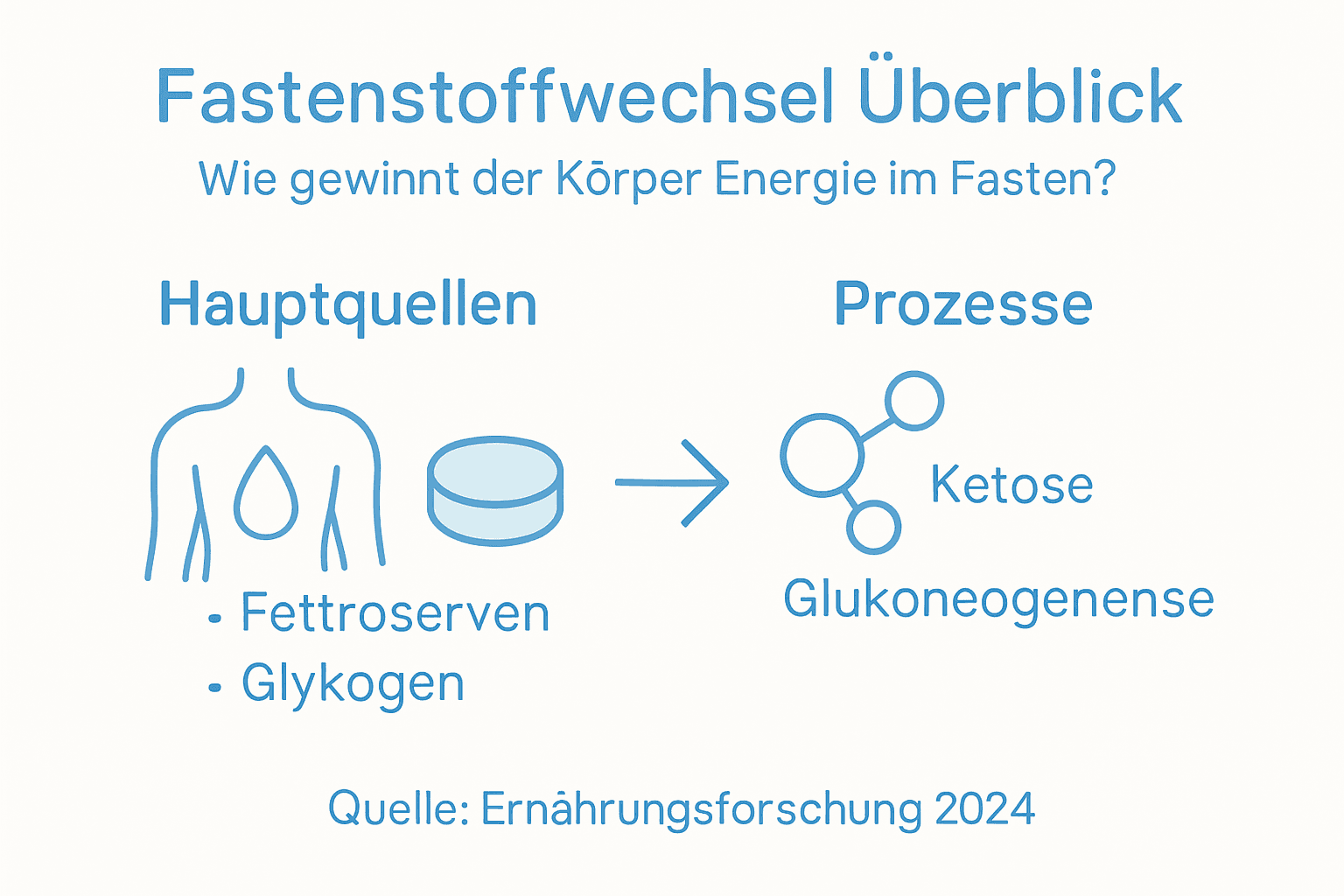
The main energy resources in fasting metabolism include:
- Glycogen stores: First energy source, rapidly available
- Body fat: Primary energy reserve after glycogen stores are depleted
- Ketone bodies: Alternative energy sources for the brain and muscles
- Proteins: Used as an energy source only in emergencies
Molecular processes play a crucial role in this. Coenzymes in energy production such as flavin adenine dinucleotide (FAD) enable the efficient conversion of fatty acids into usable energy.
The body's ability to switch between different energy sources is a remarkable survival strategy.
During fasting, ATP production is continuously maintained, while the body preferentially breaks down fat reserves and generates ketone bodies. This enables a stable energy supply even during longer periods without food.
Pro tip: Make sure you get sufficient nutrients and hydration to optimally support your metabolism during fasting periods.
Health benefits and molecular effects
The fasting metabolism offers far more than just an alternative way of producing energy. Health benefits of fasting show impressive effects on our bodies.
The most important molecular effects include:
- Improvement of blood sugar control
- Reduction of oxidative stress markers
- Activation of cellular cleansing processes
- Promotion of autophagy
- Regulation of circadian rhythms
During fasting, the body activates molecular repair mechanisms that reduce cellular damage and promote health. Autophagy plays a central role in this process—a process in which damaged cellular components are broken down and recycled.
The body's ability to renew itself during fasting is an amazing survival adaptation.
Inflammatory processes are reduced, insulin sensitivity is improved, and the risk of chronic diseases such as type 2 diabetes is lowered. These molecular changes underscore the far-reaching positive effects of controlled fasting.
Pro tip: Start gently with short fasting periods and observe how your body responds.
Risks, limitations, and scientific context
Fasting is not a universal solution, but a complex dietary strategy with individual challenges. The risks of intermittent fasting must be carefully weighed.
The most important risks and limitations include:
- Low blood sugar when performed incorrectly
- Nutrient deficiencies due to an unbalanced diet
- Possible hormonal imbalances
- Lack of energy during fasting periods
- Muscle loss during longer fasting intervals
Not everyone is suited to fasting methods. The following groups in particular should exercise caution:
- Pregnant and breastfeeding people
- People with eating disorders
- People with chronic underlying conditions
- Athletes with high energy requirements
The scientific assessment shows that fasting methods vary from person to person and that professional medical supervision is recommended.
The following table compares the health benefits with the potential risks of the fasting metabolism:
| Aspect | Potential benefit | Potential risk |
|---|---|---|
| Blood sugar regulation | Better control and stabilization | Risk of hypoglycemia |
| Cellular health | Activation of autophagy | Increased risk of muscle loss |
| Inflammatory status | Reduced inflammatory markers | Possible weakening of the immune system |
| Nutrition | Improved insulin sensitivity | Risk of nutrient deficiencies |
Fasting is not a cure-all, but a potential complement to a balanced diet.
Pro tip: Before starting a fasting regimen, be sure to consult a nutritionist or doctor to rule out potential health risks.
Personalized diagnostics: DNA and microbiome
The future of nutrition and fasting lies in personalized medicine. Genetic influences on metabolism reveal how individual our physical responses are.
The key aspects of personalized diagnostics include:
- DNA variations that influence metabolic processes
- Microbiome composition as the key to individual energy metabolism
- Genetic markers for fasting responses
- Immune response profiles
- Metabolic sensitivities
Diagnostic tests can provide precise insights. Personalized metabolic analyses help develop individual fasting strategies and maximize health benefits.
Science shows: Every body is unique and deserves a tailored nutritional strategy.
Through detailed analyses of the gut microbiome and genetic variations, researchers can predict how different people will respond to periods of fasting. These findings enable highly precise dietary recommendations.
Pro tip: Invest in a comprehensive DNA and microbiome test to optimize your personal fasting strategy.
Target your fasting metabolism with personalized tests
The article impressively demonstrates how complex and individual the fasting metabolism is in the body. If you want to understand how your body obtains energy during fasting and which molecular processes affect your health, it is important to pay attention to your own metabolic processes. Challenges such as properly switching energy sources and avoiding muscle loss or low blood sugar raise questions for many people. This is precisely where personalized DNA Metabolism Tests come in, providing you with individual insights.
With the DNA Metabolism Tests for Your Optimal Nutrition – mybody®x, you can analyze how your personal metabolism works and which fasting methods are ideal for you. At-home hormone tests can also help you understand your individual biochemical processes and scientifically improve your fasting strategy. Gain clarity about your personal metabolic processes now and optimize your nutrition and well-being through targeted tests from mybody-x.
Start your personalized fasting journey today with evidence-based analyses and turn your knowledge into tangible health results!
Frequently Asked Questions
How does the fasting metabolism work?
The fasting metabolism is the process by which the body switches from obtaining energy from food to using its own resources. First, glycogen stores are depleted, followed by a shift to fat burning and the production of ketone bodies as an alternative energy source.
What are the health benefits of fasting?
Fasting can offer various health benefits, including improved blood sugar control, reduced oxidative stress, the activation of cellular cleansing processes, and the promotion of autophagy, which helps break down and recycle damaged cell components.
What risks are associated with fasting?
The risks of fasting include possible low blood sugar, nutrient deficiencies, hormonal imbalances, and a lack of energy during fasting periods. People with certain health conditions should be cautious and seek medical advice.
How long does it take for the body to enter ketosis?
As a rule, it takes 24–48 hours after fasting begins for glycogen stores to be depleted and the body to enter ketosis, during which it produces ketone bodies as an alternative energy source.
Recommendation
- Boost Your Metabolism for Weight Loss: Your Path to Sustainable Success – mybody®x
- Naturally Boost Your Metabolism – 8 Simple Tips for More Energy and – mybody®x
- Naturally Boost Your Metabolism – 8 Simple Tips for More Energy and – mybody®x
- Boost Your Metabolism for Weight Loss: 10 Effective Ways – mybody®x



Share now:
7 steps to the optimal healthy lifestyle checklist
Who is a gut analysis really suitable for?