
Diet and Cholesterol: How to Lower Your Levels with Simple Tips
Perhaps you have just received the news from your doctor that your cholesterol level is too high and are now wondering what that actually means. Don’t worry, the topic is less complicated than it sounds. Cholesterol is not inherently bad—it is a fat-like substance that your body needs for many vital processes, such as building cell membranes and producing hormones.
Your body is quite clever and produces most of the cholesterol it needs itself in the liver. Only a smaller proportion actually comes from food. So the problem is not cholesterol itself, but how it is transported in the blood.
What Cholesterol Really Means for Your Body
Imagine your blood as a busy highway. For fatty cholesterol to travel along this watery route, it needs a kind of transport taxi—the so-called lipoproteins. And this is where the two famous abbreviations that often cause confusion come into play.
The Good and the Bad in Your Blood
There are two main types of these cholesterol taxis, and they have opposing roles:
-
LDL (Low-Density Lipoprotein): This “taxi” carries cholesterol from the liver to the cells where it is needed. But when too many of these taxis are on the road, it is like a traffic jam. LDL can build up on the artery walls and gradually narrow them. That is why it is known as the “bad” cholesterol.
-
HDL (High-Density Lipoprotein): This “taxi” is, so to speak, the arteries’ waste disposal service. It collects excess cholesterol that has built up and transports it back to the liver for disposal. For this reason, it is considered the “good” cholesterol.
A high LDL level is therefore a clear warning sign, while a healthy HDL level helps keep the blood vessels “clean.” If you would like to explore the topic in more depth, you can find more information in our guide about what to do if your HDL cholesterol is too low.
Which target levels are important for you
Optimal cholesterol levels are not one-size-fits-all; they depend heavily on your personal risk profile. LDL cholesterol is the main focus because it is the primary risk factor for cardiovascular disease.
Current medical guidelines recommend an LDL target level below 116 mg/dl for healthy people. However, if additional risk factors such as smoking or high blood pressure are present, this level drops to below 70 mg/dl. In the case of pre-existing conditions such as diabetes, a level of below 55 mg/dl is recommended. These figures clearly show how crucial an individualized assessment is. You can find more about the current recommendations for lowering cholesterol at the German Heart Foundation.
The key is not to look at just one number, but to understand the bigger picture. It is about actively shaping the balance between LDL and HDL—and this is exactly where your diet comes in.
Your lifestyle is by far the most effective lever you can control yourself. A conscious diet is the first and most important step toward positively influencing your levels and protecting your heart health in the long term. You decide what ends up on your plate—and thereby directly influence your body.
These foods actively lower your cholesterol
Okay, you now know the basics of cholesterol and your personal target levels. Time to get down to business! The good news first: A cholesterol-conscious diet has nothing to do with deprivation. It is much more about making smart choices and discovering new, delicious foods for yourself. Your shopping cart is your most powerful tool for actively doing something for your heart health.
The following infographic summarizes the most important cholesterol target levels once again, so you always have them close at hand.

As you can see, the recommended levels depend heavily on your personal risk profile. A good reason to tailor your diet specifically to them.
Harnessing the power of fiber
Some of your most powerful allies in the fight against high LDL cholesterol are soluble fibers. Just imagine them as a sponge moving through your digestive tract. Along the way, it binds bile acids—which your body makes from cholesterol.
Clever, right? So your body has to produce new bile acids and uses the cholesterol in your blood to do so. The result: Your LDL level drops.
Particularly rich in these little helpers are:
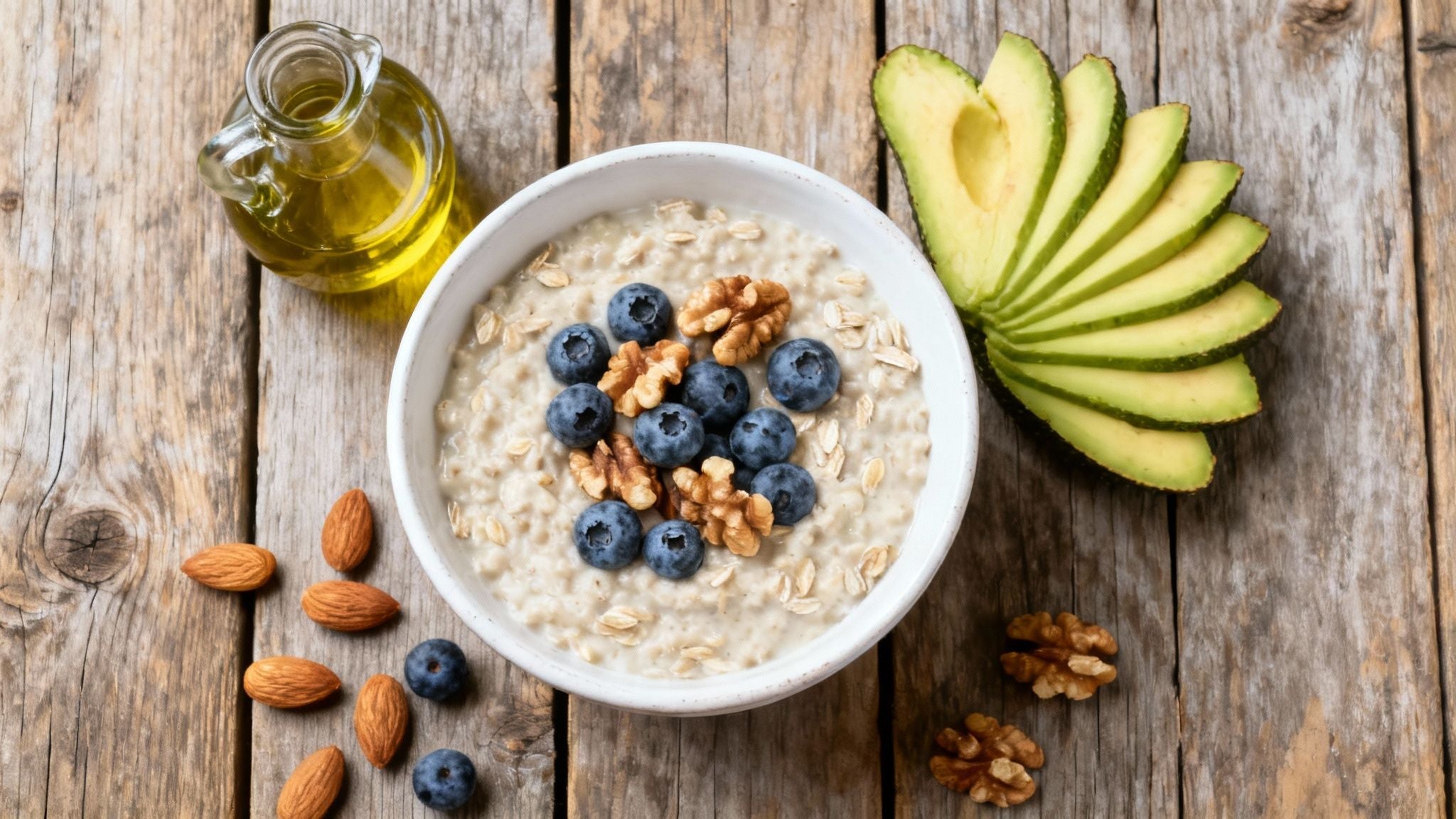
- Oats and barley: They score points with a special type of soluble fiber called beta-glucan. So a morning bowl of porridge is an ideal way to start the day. If you’d like to learn more about the benefits of oats, take a look at our article explaining why oatmeal is so healthy.
- Legumes: Lentils, beans, and chickpeas are not only excellent sources of protein but also true fiber powerhouses.
- Apples, citrus fruits, and carrots: The pectin they contain works very similarly to the beta-glucan in oats.
Choose the right fats
Fat is not just fat. While some fats can worsen your levels, others are absolutely essential for your health. The trick is to choose the right sources and simply replace the unhealthy ones.
You should reduce saturated fats, which are found mainly in fatty meat, sausage, butter, and full-fat dairy products. However, the so-called trans fats are particularly problematic. They are created during the industrial hardening of fats and often hide in fast food, baked goods, and ready-made meals. Their effects are doubly harmful: they raise your bad LDL while lowering your good HDL at the same time.
Instead, focus on these healthy sources of fat:
- Avocados, nuts, and seeds: They are packed with monounsaturated fatty acids, which have been shown to lower LDL cholesterol.
- High-quality olive oil: A cornerstone of the Mediterranean diet—and for good reason, as its heart-protective effects are well known.
- Fatty fish: Salmon, mackerel, and herring provide valuable omega-3 fatty acids. They not only have anti-inflammatory effects but can also improve your triglyceride levels.
It’s not about banishing fats completely. It’s about making smart swaps: olive oil instead of butter, nuts instead of chips, fish instead of sausage.
These small adjustments in your daily routine quickly add up and make a big difference. To help you keep track, we’ve put together a simple shopping list for you.
Your shopping list for better blood lipid levels
A practical overview of which foods to prefer and which to limit to lower your cholesterol.
| Food group | Prefer these foods | Reduce these foods |
|---|---|---|
| Grains | Oatmeal, barley, whole-grain bread, quinoa, brown rice | White bread, croissants, sweetened cereals |
| Fruit & vegetables | Apples, berries, oranges, carrots, broccoli, leafy greens | In moderation: very sugary fruit, sweetened fruit juices |
| Fats & oils | Olive oil, rapeseed oil, linseed oil, avocados, nuts, seeds | Butter, lard, palm oil, coconut fat, margarine with hydrogenated fats |
| Proteins | Lentils, beans, chickpeas, tofu, salmon, mackerel, herring, lean poultry | Fatty red meat, sausages, processed meat, bacon |
| Dairy products | Low-fat quark, plain yogurt, low-fat milk, skyr | Full-fat cheese, cream, crème fraîche, butter |
| Snacks & sweets | A handful of nuts, dark chocolate (min. 70%), vegetable sticks with hummus | Chips, pastries, sweets, fast food, ready-made meals |
Use this list as a guide for your next grocery trip. Even small, conscious choices can make a big difference to your levels.
An example meal plan for one week
Theory is one thing, but what does a cholesterol-conscious diet really look like in everyday life? Don't worry, it's easier than you think! A well-planned meal plan can help you stay organized and ensure that your body gets everything it needs for a healthy heart.
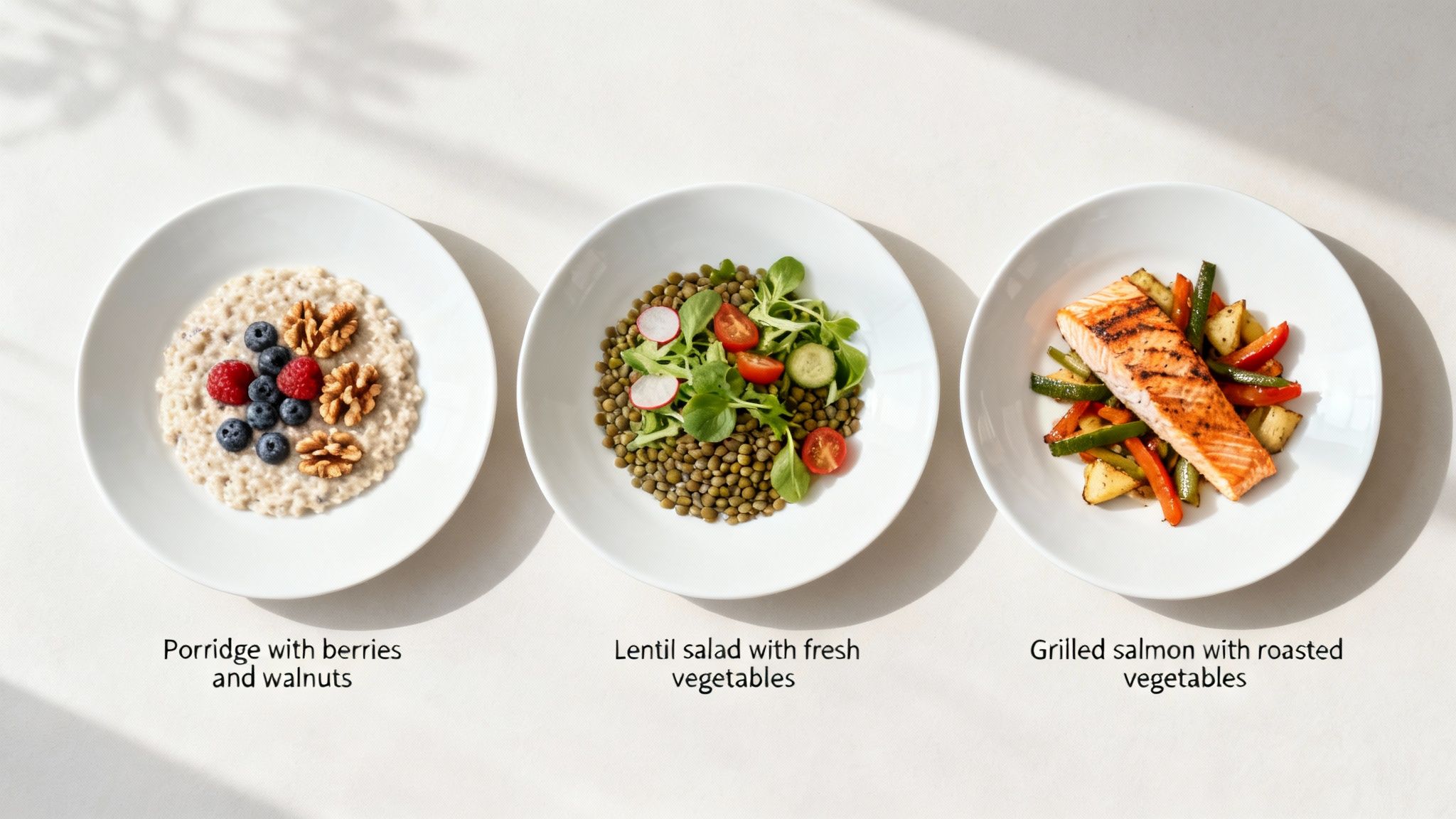
But please don't view this plan as a rigid set of rules. Think of it instead as a source of inspiration. It is meant to show you how enjoyable and uncomplicated a cholesterol-lowering diet can be. Feel free to swap meals or adjust ingredients according to your taste and seasonal availability.
Your start to the week
A good plan provides structure without being restrictive. We are starting the week with fiber-rich, plant-based meals, complemented by healthy fats and high-quality protein.
Monday
- Breakfast: Creamy oatmeal made with rolled oats (the classic source of beta-glucan!), cooked with water or low-fat milk. Served with a handful of fresh berries and 1 tbsp ground flaxseed.
- Lunch: A large, colorful salad with chickpeas, cucumbers, tomatoes, and bell peppers. For the dressing: 1 tbsp good olive oil, lemon juice, and fresh herbs.
- Dinner: A quick vegetable stir-fry with broccoli, carrots, zucchini, and tofu, seasoned with soy sauce and ginger. Served with a portion of brown rice.
Tuesday
- Breakfast: Plain yogurt or skyr with diced apple, a pinch of cinnamon, and a small handful of walnuts.
- Lunch: Leftover vegetable stir-fry from yesterday. Meal prepping is the best trick for eating healthily even on busy days.
- Dinner: Homemade lentil soup with plenty of vegetables such as carrots, celery, and leek. Add a slice of whole-grain bread—perfect.
My tip: Simply cook a larger portion in the evening. That way, you have a ready-made, healthy lunch the next day with no extra effort. This saves time and prevents unhealthy impulse purchases.
Mastering the middle of the week
Midweek, we deliberately include fish rich in heart-healthy omega-3 fatty acids. These fats are true multitaskers: they help regulate blood lipid levels while also having an anti-inflammatory effect.
Wednesday
- Breakfast: A slice of whole-grain bread with avocado and a few tomato slices. Simple but brilliant.
- Lunch: A light quinoa salad with cucumber, plenty of fresh parsley, mint, and a squeeze of lemon.
- Dinner: Pan-fried salmon fillet (packed with omega-3) with oven-roasted rosemary potatoes and steamed green asparagus.
If you would like to delve deeper into the fascinating world of these fats, our article has everything you need to know about the importance of omega-3 fatty acids for your body.
Thursday
- Breakfast: A quick smoothie made with a banana, a handful of spinach, 1 tbsp almond butter, and unsweetened almond milk.
- Lunch: Leftover salmon and potatoes from the previous evening. It also tastes great cold as a salad.
- Dinner: Chili sin carne—a hearty chili made with kidney beans, corn, tomatoes, and bell peppers that is truly filling.
Ease into the weekend
The weekend is here! Time for dishes that feel special while still fully supporting your cholesterol goals. The focus remains on fresh, unprocessed foods.
Friday
- Breakfast: Scrambled eggs made with two eggs (or scrambled tofu) with mushrooms and fresh herbs, served with a slice of whole-grain bread.
- Lunch: Leftover chili sin carne. It often tastes even better reheated.
- Dinner: Oven-baked chicken breast with a colorful mix of roasted vegetables (bell peppers, zucchini, eggplant, onions) and a little olive oil.
Saturday
- Breakfast: Low-fat quark with fresh seasonal fruit and a few sliced almonds.
- Lunch: A large lentil salad with diced vegetables and a light vinegar-and-oil dressing.
- Dinner: Pizza night! But make it healthy: homemade whole-grain dough, plenty of vegetable toppings, tomato sauce, and only a small amount of cheese.
Sunday
- Breakfast: Whole-grain pancakes, for example made with oat flour, topped with a generous serving of fresh fruit salad.
- Lunch: Vegetable soup made from the week’s leftovers. This prevents waste and gives you a light meal.
- Dinner: A light dish to end the week, such as steamed fish with boiled potatoes and a crisp cucumber salad.
Smart snacks between meals
Cravings can derail any good plan. The trick is to be prepared. Instead of reaching for cookies or chips, simply choose these alternatives:
- A handful of unsalted nuts (walnuts and almonds are top choices here).
- An apple or a pear.
- Vegetable sticks (carrots, cucumbers, bell peppers) with herbed quark or hummus.
- A small bowl of olives.
- A piece of dark chocolate with at least 70% cocoa content.
This plan is your flexible guide. The most important thing about a cholesterol-lowering diet is consistency. Every single healthy meal is a win and brings you closer to your goal: improving your blood values sustainably and protecting your heart health in the long term.
Your lifestyle as the key to heart health
A smart diet is your most powerful lever for lowering cholesterol—that much is clear. But to achieve truly sustainable results and protect your heart comprehensively, we need to look beyond diet. Your overall lifestyle plays the decisive role here.

Think of it like building a sturdy house: Nutrition is the foundation. But it’s the walls made of exercise, stress management, and good sleep that turn it into a safe home for your health.
Exercise that strengthens your heart
Regular physical activity is much more than just a way to burn calories. It actively boosts your “good” HDL cholesterol. You can think of this lipoprotein as a diligent cleaner in your arteries, transporting excess LDL cholesterol away.
Studies show that even moderate but regular exercise has a measurable effect. So you don’t have to run a marathon.
What matters is finding something you genuinely enjoy:
- Endurance training: Brisk walks, cycling, swimming, or jogging are ideal for getting your cardiovascular system moving. Aim for at least 150 minutes per week.
- Strength training: Building muscle improves your overall metabolism. Your body learns to process blood fats more efficiently. Two sessions per week are already an excellent start.
The most effective approach is a combination of both. Above all, it’s about breaking up long periods of sitting and making movement a regular part of your everyday life. Every step really counts.
Stress and sleep: The underestimated duo
Do you often feel rushed and overwhelmed? Chronic stress can actually have a direct impact on your blood lipid levels. Under constant tension, your body releases hormones such as cortisol. These can promote inflammatory processes and literally fuel cholesterol production in the liver.
At the same time, restful sleep is essential for your body's regeneration processes—including fat metabolism. Sleep deprivation can quickly throw this delicate system off balance.
Your body needs periods of rest to remain balanced. Relaxation is not a luxury but a biological necessity for your heart health.
An important factor is therefore the ability to actively reduce stress and regain your inner balance. For example, you can learn to positively influence your heart health through stress-reduction techniques such as grounding.
The greatest enemies of your blood vessels
Alongside all the positive things you can do for yourself, there are also clear risk factors you should avoid. Even small changes can make a huge difference here. Two of them are at the very top of the list.
Giving up nicotine to protect your blood vessels Smoking is pure poison for the inner walls of your blood vessels. It causes tiny injuries that make it much easier for LDL cholesterol to accumulate and form dangerous plaques. Smoking also demonstrably lowers protective HDL cholesterol. Giving up nicotine is therefore one of the most effective measures you can take for your cardiovascular system.
Keep an eye on sugar and alcohol The focus is often on LDL cholesterol. But there is another important value: triglycerides. An excess of refined carbohydrates, sugar, and alcohol can send this level soaring. Although high triglyceride levels are an independent risk factor, they are often given too little attention in Germany. The German Society for Lipidology strongly warns against this.
The good news: Reducing sugar and alcohol often leads to quick and noticeable results, especially in this area. You can find more detailed information about these recommendations on the Lipid-Liga website.
A holistic approach that combines nutrition, exercise, and mental health is the key to sustainably improving your blood lipid levels and enhancing your quality of life.
Understand your body for targeted results
You’ve changed your diet, you’re exercising more—and now you’re wondering: Is any of this actually helping? That’s a perfectly valid question. The key to long-term success is making progress visible and understanding what’s really happening in your body. That’s exactly why regular blood tests are so incredibly important.
They are your personal feedback system. Looking at total cholesterol, LDL, HDL, and triglycerides shows you in black and white how your body is responding to your new habits. These measurements are not just a monitoring tool for your doctor, but above all a huge motivation for you.
More Than Just Standard Values
Standard blood tests are a great starting point, but they don’t tell the whole story. Every one of us is unique. What works great for your friend or colleague may not have the same effect on you. The reason often lies deep within—more precisely, in your gut.
Your microbiome—in other words, the trillions of bacteria in your gut—plays a central role in your overall fat metabolism. These tiny helpers influence how you absorb, process, and store fats from food. A healthy, diverse gut flora can, for example, stimulate the production of bile acids, which in turn helps remove excess cholesterol from the blood.
Your gut health is an often underestimated but extremely effective lever for maintaining balanced cholesterol levels. When you know the composition of your microbiome, you can tailor your diet much more precisely.
This is exactly where modern analyses come in. With a mybody-x microbiome test, you can find out what your personal gut flora is like. You’ll learn which bacterial strains are dominant in your gut and which nutrients you need to feed the “good” bacteria and optimally support your metabolism.
The path to personalized nutrition
Just imagine knowing exactly whether your body responds particularly well to soluble fiber from oats or instead to polyphenols from berries and green tea. This knowledge takes your cholesterol-lowering diet to a whole new level.
A microbiome analysis gives you specific, personalized recommendations:
- Targeted fiber selection: You’ll learn which types of fiber (prebiotics) your beneficial gut bacteria like best.
- Personalized food tips: The analysis can reveal which food groups are particularly beneficial for your metabolic type.
- Understanding the connections: You understand why your body works the way it does and can finally make informed decisions about your health.
This knowledge is power. It frees you from endless guessing and trial and error and gives you a clear roadmap based on your unique biological signature. This is how you achieve sustainable results, because the measures are perfectly suited to your body.
Don’t forget triglycerides
With all the focus on cholesterol, another important blood lipid value sometimes gets overlooked: triglycerides. Elevated levels are also an independent risk factor for heart health and are often closely linked to the consumption of sugar, alcohol, and fast-acting carbohydrates.
If you’d like to understand why your triglycerides may be too high and what you can do about it, you’ll find valuable information in our guide. Here too, a personalized approach that takes your individual metabolism into account plays the decisive role.
By understanding your body on this deeper level, you transform general health tips into a precise, personal strategy. You’re no longer working against your body, but together with it—for strong heart health and greater well-being.
Your most frequently asked questions about lowering cholesterol
You’ve already learned quite a bit about cholesterol, nutrition, and a healthier lifestyle. Naturally, questions keep coming up—and that’s perfectly normal. It shows that you’re seriously engaging with the topic. Let’s answer some of the most frequently asked questions here to resolve any remaining uncertainties.
How quickly will I see improvements in my cholesterol levels?
This is probably the question we get asked most often. Understandably so—when you change your habits, you also want to see that the effort is worthwhile. The good news: Your body usually responds faster than you might think.
The first positive changes in your blood lipid levels can often already be detected in laboratory tests after four to six weeks of consistent dietary changes. A truly noticeable reduction in LDL cholesterol of 10–15% within three months is an entirely realistic goal. What matters, however, is that you stick with it. The positive effects are not a one-time sprint, but the result of a marathon—they last only as long as you maintain your new, healthier habits and make them a fixed part of your daily routine.
Do I now have to completely avoid eggs and cheese?
The fear of the breakfast egg persists, but we can put your mind at ease here. No, in most cases, strict avoidance is neither necessary nor sensible. As in so many areas of life, it’s about finding the right balance—and, above all, looking at the overall picture of your diet.
The influence of dietary cholesterol, such as that found in eggs, is now considered significantly lower than it was a few years ago. For most people, a few eggs per week are perfectly fine.
The key lies not in avoiding individual foods but in the pattern of your overall diet. A predominantly plant-based diet with plenty of vegetables, whole grains, and healthy fats should always form the foundation.
When it comes to cheese and meat, it’s about making smart choices. Choose lean options such as chicken breast or low-fat quark more often, and reduce your intake of high-fat processed meats. Enjoy good cheese mindfully and in moderation—as something special rather than a daily staple of your meals.
Do dietary supplements really help?
The supplements market is huge and confusing. Yes, certain products can play a supportive role, but they are never a substitute for a healthy lifestyle.
- Omega-3 fatty acids: Have been shown to help lower triglyceride levels.
- Red yeast rice: Contains monacolin K, a substance chemically similar to a statin that can inhibit cholesterol production in the liver.
- Soluble fiber: Psyllium husks or beta-glucan from oats are also available in concentrated form. They may further enhance the cholesterol-lowering effect of your diet.
But this is very important: You should never take such products on your own without consulting a doctor. They may cause side effects or interact with other medications. See them for what they are: a possible supplement, not the foundation of your success. Your diet and lifestyle will always remain the most important pillars.
To tailor your diet not just generally but specifically to your body’s needs, an analysis of your microbiome can provide crucial insights. At mybody-x, we offer scientifically sound tests that help you better understand the connections in your metabolism and take control of your health. Discover the possibilities now at mybody-x.com.


Share now:
Boost fat burning: 8 simple tips that really work
Coffee intolerance: Symptoms, causes & what really helps