
Zinc deficiency symptoms in women: what is proven and what is not
The essentials at a glance
The German Nutrition Society lists skin eczema, diarrhea, impaired wound healing, problems with perception and memory, and increased susceptibility to infectious diseases as signs of zinc deficiency (2025). Brittle nails and white spots are not listed, even though they are mentioned as signs almost everywhere.
The reference value for women is not a fixed number but depends on diet: 7, 8, or 10 milligrams per day, depending on how much phytate comes from grains and legumes. This is the most interesting distinctive feature of the topic and is rarely explained.
You will first read about what zinc does in the body. Then come the documented signs, the reference values with figures, the role of phytate, the groups at increased risk, the pitfalls of measurement, and a comparison of testing methods. The limitations are discussed at the end.
What to expect in this article
1. What zinc does in the body
2. Which signs are proven
3. How much zinc women need
4. Why your bread changes the reference value
5. Which women the topic really concerns
6. Why a blood zinc level is difficult to interpret
7. Who should and should not have their level measured
8. What to consider before taking the sample
9. Which test answers which question
10. How to determine your zinc level at home
11. Limitations: what a zinc level cannot answer
12. What matters about this level
Frequently asked questions
Sources
What zinc does in the body
Zinc is a trace element found in more than a hundred enzymes and is needed for healthy skin, wound healing, and growth. This is how the MSD Manual describes it in its patient edition (Larry E. Johnson, 2025).
Enzymes are the tools of metabolism. If the tool is missing, the process it was built for comes to a halt. This explains why the list of signs of zinc deficiency spans so many different areas of the body.
Key point
With zinc, requirements depend on diet, not just sex. The lowest and highest recommendations for women differ by three milligrams per day, and the deciding factor is the proportion of grains.
Why women get their own article
Not because zinc deficiency is a woman’s issue. Rather, the reference ranges and measurement thresholds for women are genuinely different from those for men, and pregnancy and breastfeeding have their own values.
This includes a research observation that plays a role in the chapter on measurement: Plasma zinc thresholds are consistently lower for women than for men. Anyone who compares their level with a general scale will misread it.
Which signs are supported by evidence
The German Nutrition Society lists the possible consequences of zinc deficiency in a single sentence. It is the most reliable German-language list on the subject.
Documented source
“Zinc deficiency can cause impaired linear growth, skin eczema, diarrhea, impaired wound healing, problems with perception and memory, and increased susceptibility to infectious diseases.”
German Nutrition Society (DGE)
Selected questions and answers about zinc, as of 2025
In its professional edition, the MSD Manual adds hair loss, loss of appetite, night blindness, anemia, impaired sense of taste, and delayed wound healing (Larry E. Johnson, 2025). This provides evidence for effects involving the skin, hair, immune system, wound healing, taste, and appetite.
What no source mentions
Brittle nails and white spots on the nails appear in none of the sources reviewed. Neither the DGE, either edition of the MSD Manual, nor the international review of zinc biomarkers lists the nails.
This is noteworthy because few signs are mentioned so frequently. It does not mean they are ruled out. It means that we found no evidence and therefore do not pretend that evidence exists.
Why the documented list seems so nonspecific
Skin eczema, diarrhea, and susceptibility to infections have dozens of causes. That is precisely what makes the list useless as a screening tool. It is useful for ruling things out, not for classification: Anything not on it is highly unlikely to be related.
That is why looking at the dietary situation leads to the answer more quickly than going through a list of symptoms. Anyone who knows how much grain and animal-based protein is on their plate has a better point of reference.
How much zinc women need
For women aged 19 and over, the German Nutrition Society does not specify a single figure but three. Which one applies depends on how much phytate the diet provides.
Zinc for women in figures
7 mg
per day with low phytate intake, meaning little whole grain and few legumes and predominantly animal-based protein
10 mg
per day with high phytate intake, meaning a diet rich in non-germinated whole grains and exclusively plant-based protein
8 mg
The average daily zinc intake is 8 mg for women in Germany and 11 mg for men
Source: German Nutrition Society (DGE), reference values for zinc (derived in 2019) and questions and answers about zinc (as of 2025), intake data from the German National Nutrition Survey II
The average intake is in the middle
Eight milligrams is exactly the value for medium phytate intake. People who eat a mixed diet therefore meet the recommendation on average. Those who eat a lot of unprocessed whole grains fall below it.
The German National Nutrition Survey II concludes in its key findings that intake of the minerals sodium, potassium, magnesium, and zinc is above the reference values for nutrient intake. An article that portrays zinc deficiency as a widespread disease therefore contradicts its own data.
Pregnancy and breastfeeding have their own values
For the first trimester of pregnancy, the DGE specifies 7, 9, or 11 milligrams per day; for the second and third trimesters, 9, 11, or 13 milligrams, respectively, according to low, medium, and high phytate intake. For breastfeeding women, the figures are 11, 13, or 14 milligrams (2019 derivation).
The MSD Manual points out that zinc deficiency during pregnancy can be associated with lower birth weight and preterm birth (2025). This is the only point in the article at which a zinc issue goes beyond well-being, and it belongs under medical supervision.
Why your bread changes the reference value
The DGE explains the mechanism in one sentence: “Phytate binds zinc in the gastrointestinal tract, so it can no longer be absorbed by the body; in other words, its bioavailability is reduced” (2025).
Phytate is found mainly in whole grains, legumes, and oilseeds. People who eat a lot of these foods do take in more zinc, but they utilize a smaller proportion of it. That is why the recommendation increases rather than decreases.
Vegetarian does not automatically mean the high category
That is the nuance that gets lost almost everywhere. The DGE explicitly places a vegetarian or vegan diet in the medium category, provided that the plate primarily contains highly refined, sprouted, or fermented grain products (2019 derivation).
People end up in the high category if they eat a lot of unsprouted, unfermented whole grains and obtain their protein primarily or exclusively from plants. What matters, then, is the processing—not the label attached to the diet.
What this means in practice
Sourdough bread, sprouted legumes, and soaked nuts contain less phytate than their untreated counterparts. This is not a magic trick, but the reason fermentation has been common in grain-based cultures for thousands of years.
So anyone who wants to change their level should change the preparation method, not the amount. You won’t find that in any dietary supplement, and it costs nothing.
Where zinc comes from in the first place
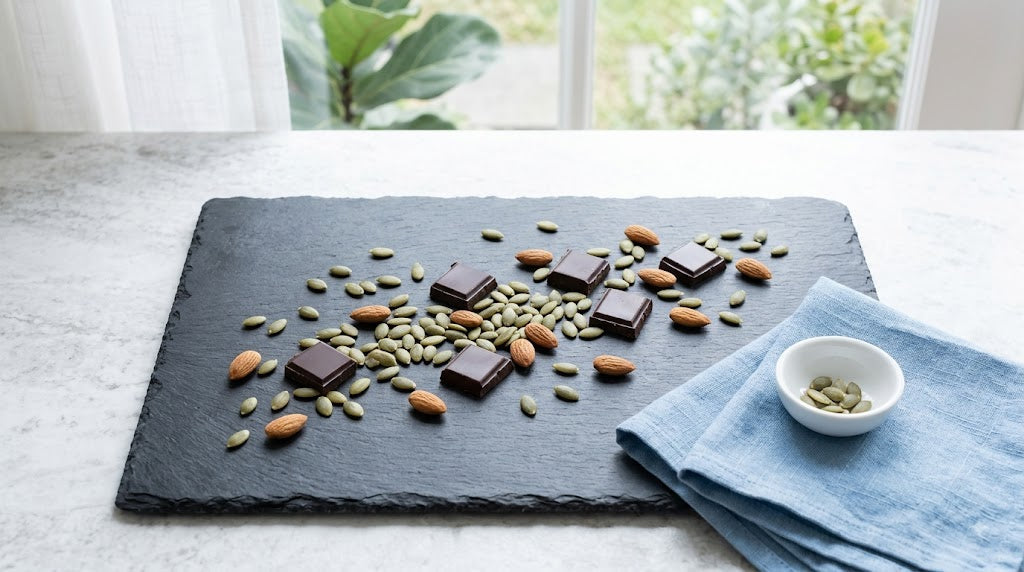
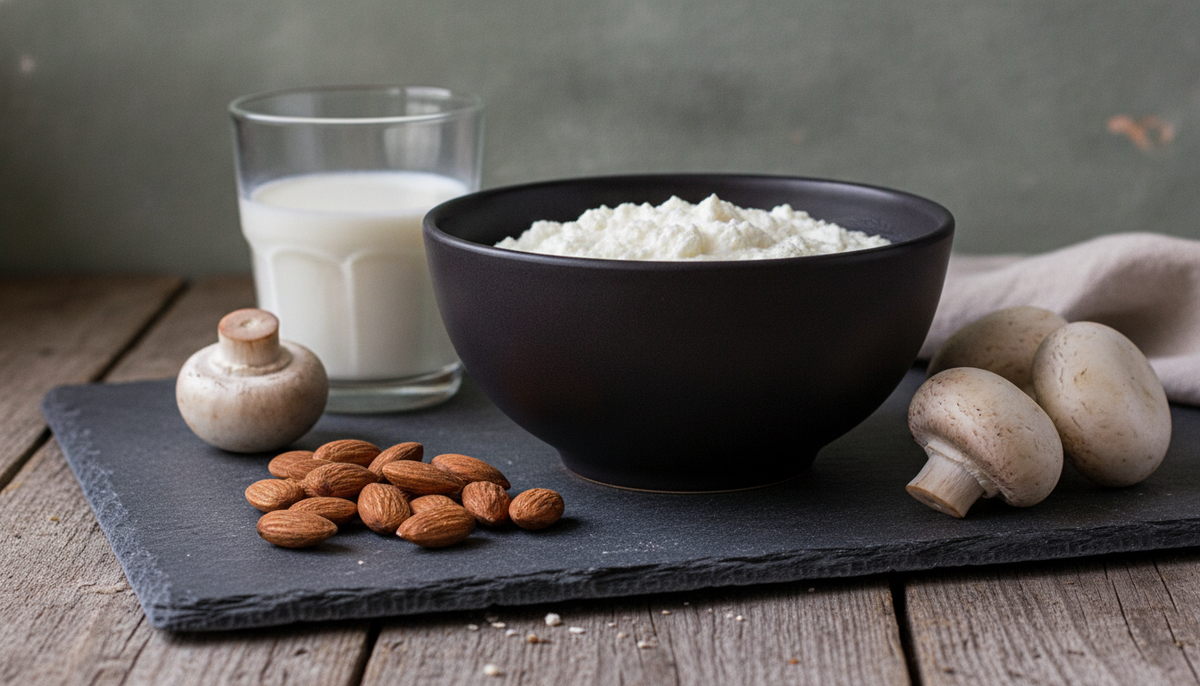
Zinc is found in meat, cheese, eggs, seafood, nuts, oilseeds, and legumes. The difference between animal and plant sources lies not only in their zinc content but also in how well it is utilized, and that is precisely what the DGE’s tiered recommendations address.
This explains why the recommendation for people with high phytate intake is around three milligrams higher than for those with low intake. It is not about having more zinc on the plate, but about the proportion that is absorbed.
The objection is valid: In that case, whole grains would be disadvantageous. More precisely, they are not. Whole grains provide fiber, minerals, and satiety, and the effect of phytates can be reduced through preparation. This is a calculation involving two variables, not a recommendation against whole grains.
Which Women Does This Topic Really Matter To?
A German study of dietary patterns provides concrete figures. In 2023, Klein and colleagues compared the nutritional status of people following different diets in the journal Nutrients.
Zinc intake was 11.99 milligrams per day among people following an omnivorous diet, 8.58 milligrams among vegetarians, and 7.12 milligrams among vegans. Serum levels below the reference range were found in 22.5 percent of omnivores, 33.3 percent of vegetarians, and 42.5 percent of vegans.
The Surprising Figure Comes First
Even among people following an omnivorous diet, more than one in five fell below the reference range. This figure supports the idea that the serum level is a weak standalone marker more than it supports the idea of widespread deficiency.
Both interpretations are possible, and we consider the first more likely. The reason is explained in the next chapter.
Which Situations Are Actually Supported by Evidence
In its professional edition, the MSD Manual lists a range of risk situations: chronic gastrointestinal disorders involving impaired absorption, such as celiac disease or Crohn’s disease; conditions following bariatric surgery; chronic kidney and liver disease; diabetes; alcohol use disorder; and severe acute conditions (Larry E. Johnson, 2025).
What stands out about this list is what is missing from it. Neither heavy menstrual bleeding nor taking the pill is listed as a cause of zinc deficiency, even though both regularly appear in advice articles.
The only established connection with the pill concerns measurement: oral contraceptives are among the factors that influence plasma zinc concentration (King et al., 2016). This is different from an increased requirement, and the distinction determines whether a sentence is a fact or a claim.
Chapter at a Glance
Established risk factors include a predominantly plant-based diet high in phytate, pregnancy and breastfeeding, and chronic gastrointestinal disorders involving impaired absorption. A German study found that 42.5 percent of people following a vegan diet were below the serum reference range, compared with 22.5 percent of omnivores (Nutrients, 2023). We found no evidence of an increased zinc requirement in cases of heavy menstrual bleeding.
Why a blood zinc level is difficult to interpret
The international review of zinc biomarkers by King and colleagues in the Journal of Nutrition (2016) states the crucial point very clearly. At the population level, low plasma zinc levels and inadequate intake correspond well. At the individual level, this association is weak.
Blood zinc levels are more useful for making statements about populations than for assessing you personally.
Blood zinc levels are more useful for making statements about populations than for assessing you personally. That is an uncomfortable sentence in an article accompanying a test, but it belongs here nonetheless.
Four factors that shift the value
The same review identifies the last meal, time of day, inflammation, and certain medications and hormones as influencing factors. It also lists age, sex, pregnancy, use of oral contraceptives, strenuous exertion, body position during blood collection, and the duration of tourniquet application on the arm.
To put the figures into perspective: Freiburg University Medical Center states that one percent hemolysis increases the serum zinc value by 15 percent and that the concentration in a whole-blood sample rises by three percent per hour (2025). This is why it also recommends taking the blood sample in the morning.
Thresholds differ by sex and time of day
The 2016 review gives thresholds for women aged ten and older of 70 micrograms per deciliter for a fasting morning blood sample, 66 for a nonfasting morning sample, and 59 in the afternoon. For men, the corresponding values are 74, 70, and 61.
Ulm University Hospital gives an indicative range for adults of 9 to 22 micromoles per liter for women and 12 to 26 for men (2023). The word “indicative” appears in the original, which is why this article does not interpret individual values.
Two different units for the same measurement make things even more complicated. International research uses micrograms per deciliter, while German laboratories usually use micromoles per liter. When comparing two numbers, first check the unit and then the value.
What this means in practice
The relevant range is the one on your own report. It comes from the laboratory that performed the measurement and matches its method and material. Figures from articles are a point of reference, not a benchmark.
And because so many factors can shift the result, preparation becomes more important. For zinc, it has a greater impact on the meaningfulness of the result than it does for most other measurements, and that is the subject of the chapter after next.
Who a measurement is useful for—and who it is not
Useful for you if …
you have been eating predominantly plant-based for some time and want to know where you stand in comparison.
you want to view zinc in relation to selenium, copper, and manganese rather than as an isolated value without context.
you have changed your diet and want to track the trend over several months.
Probably not if …
you currently have or have recently had an infection. Inflammation shifts zinc levels, so the result would not be interpretable.
you are pregnant or breastfeeding. In that case, the question belongs under medical care, not in a self-test.
you are hoping for a definitive finding. A serum result cannot provide that for an individual person.
What to keep in mind before the sample
For zinc, preparation has a greater impact on the result than it does for most other measurements. The following four points cost nothing and turn an arbitrary number into a comparable result.
In the morning and fasting
Zinc levels follow a daily rhythm and respond to meals. The reference point is the morning before breakfast.
Not during an infection
Inflammation shifts the result. Waiting two weeks after a feverish infection is a sensible rule of thumb.
Record the circumstances
Time, whether you were fasting, and contraceptive use. Without this information, the result cannot be interpreted later.
Send it back promptly
The zinc concentration in the whole-blood sample rises by around three percent per hour. Put it in the mailbox on the same day.
Which test answers which question
Zinc is included in both mybody®x blood tests that cover trace elements. The difference lies in the context in which the result is presented. The table compares both tests according to the same four criteria.
| Criterion | BalanceCheck | VitalCheck Complete | Medical evaluation |
|---|---|---|---|
| Includes zinc | Yes, with selenium, copper, manganese, chromium, and molybdenum | Yes, with selenium, copper, and manganese | On request, usually in connection with a specific question |
| Context of the result | Electrolytes and four heavy metals; no vitamins | Vitamins, iron status, and blood lipids; no heavy metals | Freely selectable, with inflammation markers for context |
| Answers the question | What are my mineral and trace element levels? | What is my vitamin, iron, and trace element status? | Is an illness or impaired absorption behind it? |
| Provides a diagnosis | No, explicitly not | No, explicitly not | Yes, that is their purpose |
The third column is not a mere courtesy line. Inflammation shifts zinc levels, and inflammatory markers are not included in the self-tests. Anyone who wants an abnormal value explained needs them.
How to determine your zinc level at home
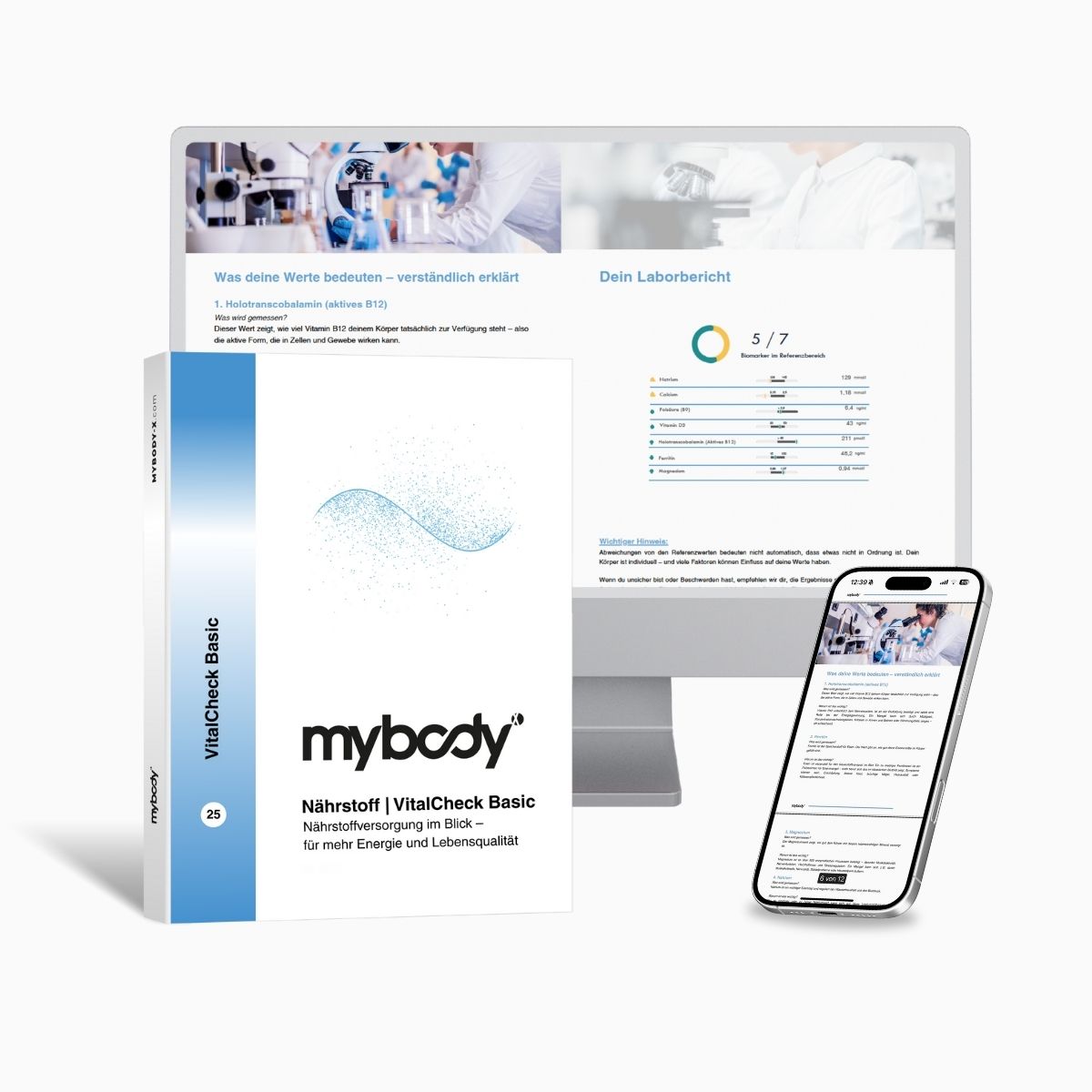
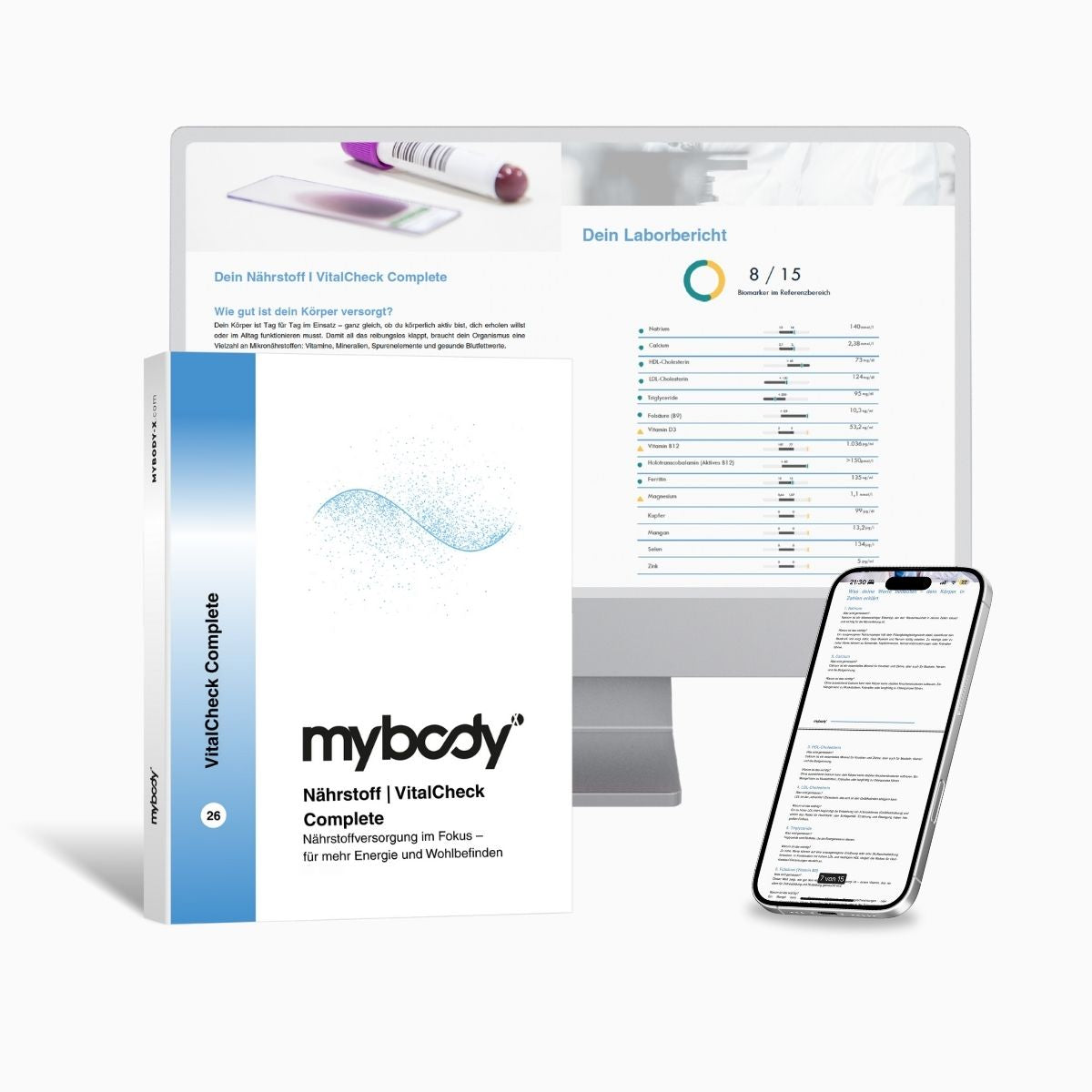
Both tests by mybody®x (MYBODY Lab GmbH) measure zinc from capillary blood. You collect the sample at home using a finger prick, and it is analyzed in a certified medical laboratory.
Capillary blood test
BalanceCheck | Electrolyte & Mineral Test
15 elements from one blood sample: zinc together with selenium, chromium, copper, manganese, and molybdenum, plus five electrolytes and four heavy metals. What the test does not provide: inflammatory markers are not included, so an abnormal zinc value cannot be distinguished from an infection. It does not provide a diagnosis.
Laboratory analysis within 3–5 business days after the sample is received
Product page information, accessed 10/08/2026
Capillary blood test
VitalCheck | Complete Nutrient & Mineral Test
Zinc combined with selenium, copper, and manganese, plus vitamin D3, vitamin B12, folic acid, ferritin, transcobalamin, blood lipids, and calcium, magnesium, and sodium. Useful if you want to assess zinc alongside your vitamin and iron status. What the test does not provide: no heavy metals, no potassium, no diagnosis.
Laboratory analysis within 3–5 business days after the sample is received
Product page information, accessed 10/08/2026
Limitations: what a zinc level does not answer
A blood test does not provide a diagnosis. In its patient edition, the MSD Manual explicitly states that zinc tests may not measure zinc levels accurately in some circumstances (2025). It is difficult to formulate a measurement limitation more clearly.
It also does not answer the question of the cause. A low value may be due to intake, absorption in the intestine, inflammation, or the time the sample was taken. These four possibilities cannot be distinguished from a single number.
The available data also have limitations. German figures are available for reference values, phytate levels, and average intake. We could not substantiate how many women in Germany fail to reach the reference value, so no such percentage is given here.
We deliberately left out two common claims. We found no evidence of an increased zinc requirement with heavy menstrual bleeding, and the claim that the pill causes zinc deficiency is also unsupported. The only established fact is that oral contraceptives can affect the measured level.
Finally, regarding supplements: The German Federal Institute for Risk Assessment recommends a maximum amount of 6.5 milligrams of zinc per recommended daily serving in food supplements, as confirmed by the BVL in 2023. According to the DGE, the tolerable total intake for adults is 25 milligrams per day. These are different measures and are regularly confused.
What matters about this value
If you take away just one action from this article, let it be this: For a week, observe how your grains make it onto your plate. Sourdough or yeast dough, sprouted or unsprouted legumes, soaked or dry nuts.
The reason is unspectacular. This observation determines whether 7, 8, or 10 milligrams per day apply to you—and therefore determines the only figure you can actually compare with your intake. Without it, any comparison with a reference value is guesswork.
At the beginning was the question about the symptoms. The most honest answer is that they are too nonspecific to point to zinc. The shorter route leads through your plate, and it costs nothing but a week of attention.
Frequently asked questions
What are the symptoms of zinc deficiency in women?
The DGE lists impaired growth in length, skin eczema, diarrhea, impaired wound healing, problems with perception and memory, and increased susceptibility to infectious diseases (2025). The MSD Manual adds hair loss, loss of appetite, impaired sense of taste, night blindness, and anemia (2025). Brittle nails or white spots on the nails are not mentioned in any of the sources reviewed.
How much zinc do women need per day?
The DGE specifies 7, 8, or 10 milligrams per day for women aged 19 and over, depending on low, moderate, or high phytate intake (2019 derivation). During pregnancy, the figures are 7, 9, or 11 milligrams in the first trimester and 9, 11, or 13 milligrams in the second and third trimesters. For breastfeeding women, they are 11, 13, or 14 milligrams. Which level applies depends on the proportion of whole grains and legumes and how they are processed.
Are vegetarians and vegans more likely to have a zinc deficiency?
A German study published in the journal Nutrients in 2023 found a zinc intake of 8.58 milligrams per day among vegetarians and 7.12 milligrams among vegans, compared with 11.99 milligrams among omnivores. Below the serum reference range were 33.3% and 42.5%, respectively, compared with 22.5% among omnivores. Food processing is important: The German Nutrition Society classifies a vegetarian or vegan diet with sprouted or fermented grain products as moderate, not high.
How reliable is a zinc level from a blood test?
Good at the population level, but only of limited relevance for an individual. The review by King and colleagues in the Journal of Nutrition (2016) identifies the last meal, time of day, inflammation, certain medications and hormones, body position during sampling, and the duration of tourniquet application as influencing factors. The University Hospital Freiburg states that one percent hemolysis increases the value by 15 percent (2025). Therefore: in the morning, fasting, not during an infection, and promptly sent to the laboratory.
How much zinc may a dietary supplement contain?
The German Federal Institute for Risk Assessment recommends a maximum of 6.5 milligrams per recommended daily serving, confirmed by the Federal Office of Consumer Protection and Food Safety in 2023. This should be distinguished from the tolerable total intake, which the German Nutrition Society states is 25 milligrams of zinc per day for adults and includes total intake from food and supplements.
Next step
Zinc in context rather than as an isolated value
A zinc level alone is difficult to interpret. Both tests show it together with other trace elements, allowing a pattern to be identified rather than relying on a single figure. They do not replace medical evaluation.
Go to BalanceCheck Go to VitalCheck CompleteRead more
You might also be interested in this
An overview of all minerals if you are not focusing only on zinc.
When a measurement is worthwhile—and when it is not.
Sources
- German Nutrition Society (DGE): Selected Questions and Answers About Zinc (as of 2025) – dge.de
- German Nutrition Society (DGE): Zinc Reference Values (derived in 2019) – dge.de
- King JC, Brown KH, Gibson RS and others: Biomarkers of Nutrition for Development, Zinc Review. The Journal of Nutrition 146(4), 2016 – pmc.ncbi.nlm.nih.gov
- MSD Manual, consumer and professional editions: Zinc Deficiency, Larry E. Johnson (as of 2025) – msdmanuals.com
The verbatim quotation about the consequences of zinc deficiency, the sentence on the phytate mechanism, the intake figures from the National Nutrition Survey II, and the tolerable total intake amount are taken from source [1]. All reference values, including phytate levels and the values for pregnancy and breastfeeding, are based on [2]. The statements on the significance of the plasma zinc level, the influencing factors, and the thresholds by sex and time of day are taken from [3]; the additional symptoms, risk situations, note on pregnancy, and sentence on measurement accuracy are taken from [4]. The information on hemolysis, transport, and the time of sample collection comes from the trace element analysis department of Freiburg University Medical Center (as of 2025); the figures for dietary patterns come from Klein L and others, Nutrients 15(16):3538, 2023; both are attributed in the text to the institution or authors and year. The BfR maximum amount is stated in the text together with the year and confirming authority. Information on price, biomarkers, sample type, and laboratory comes from the mybody®x product pages, accessed on 10 August 2026; processing times follow the central specification for blood tests. All sources were accessed and reviewed on 10 August 2026.

mybody®x Editorial & Expert Team
Laboratory diagnostics Nutritional science Blood analysis interpretation Nutrigenetics
This article was created by the mybody®x editorial and expert team. The team combines laboratory diagnostics, nutritional science, and the interpretation of blood analyses. Anyone who contributes to it is listed on the authors page.
Published on 10 August 2026 · Last updated on 10 August 2026
The content is for general information and does not replace medical advice, diagnosis, or treatment. Reference ranges depend on the laboratory, method, and age—your test report always provides the authoritative information.


Share now:
Healthy Weight Loss Plan: What Really Works Without a Crash Diet
Electrolyte loss through sweating: what is actually lost