
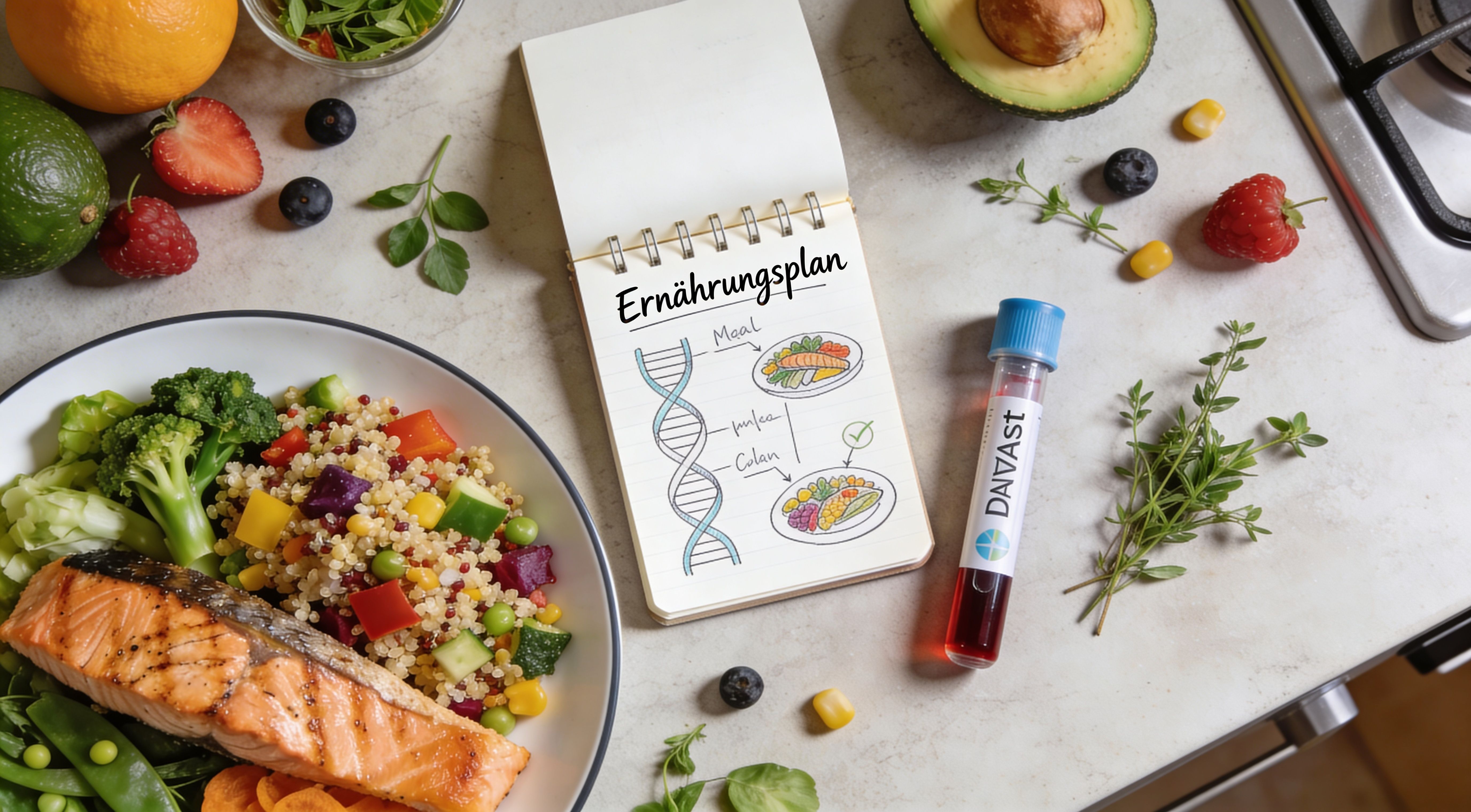
What should I eat? Your path to optimal nutrition in 2026
The question “What should I eat?” surely occupies your thoughts every day, too. But the answer is far more than a simple food choice—it is the linchpin of your health, performance, and overall well-being. Well-intentioned advice such as “just eat more vegetables” is a good starting point, but rarely the complete solution. The real key lies in a diet that is entirely personalized to you.
Why there is no one perfect diet for everyone
Who hasn't experienced this? You stand in front of the refrigerator and feel completely overwhelmed. The flood of nutrition trends, from low-carb and keto to vegan concepts, doesn't make things any easier. The uncomfortable truth is that a diet that doesn't suit you can have noticeable consequences—from constant fatigue and difficulty concentrating to serious health problems.
But how serious are the consequences really? A study by the German Diabetes Association has shown that in Western Europe, 15% of all deaths are attributable to an unhealthy diet. Worldwide, the figure is as high as 22%. The most common reasons: too much salt, too little whole grain, and too little fruit. You can find more details about these alarming figures in this article by the German Diabetes Association.
You won't find the truly right answer to the question “What should I eat?” in the next diet guide, but in your own body. Your genes reveal how you metabolize nutrients such as fats and carbohydrates.
Modern science now gives us the tools to decode this exact genetic blueprint. Instead of continuing to guess which diet works for you, you can find out precisely today. You can find deeper insight into the fascinating possibilities of personalized nutrition in this in-depth article.
Your path to optimal nutrition begins with truly understanding your body. With a mybody-x nutrition DNA test, you create a scientifically sound foundation for tailoring your diet precisely to your genetic needs—and answering the question of what to eat once and for all.
What is your personal nutrition goal?
Before we clarify what you should eat, we need to answer a much more important question: Why do you want to change your diet at all? A clear goal is like a compass that guides you safely through the jungle of conflicting nutrition advice. Without this “why,” the desire to “eat healthier” often remains just a vague thought that quickly gets lost in everyday life.
The goal is to become truly specific. Instead of simply setting a general intention, formulate a goal that you can measure. This not only gives you clarity, but also provides a basis for genuinely evaluating your progress later.
From a general desire to a specific goal
Most people who want to change their diet have one of three main motivations. Find out which one best fits you and your current situation. Your answer is the key filter for all the steps that follow.
- Weight management: Maybe you want to lose weight simply to feel more comfortable in your body again. That’s a great starting point! But let’s make it more precise: “I want to reduce my body fat percentage by 5% over the next 3 months without losing valuable muscle mass.” That’s a clear, measurable goal. An important foundation for this is understanding your calorie needs. You can find out more in our guide to calculating your daily calorie needs.
- Improved performance: Do you often feel tired, have trouble concentrating, and struggle with the afternoon slump at the office? Then your goal could be: “I want to overcome my energy dip after lunch and stay mentally sharp and productive until the end of the workday.” The focus here is clearly on stable energy levels and cognitive function.
- Healthy aging (longevity): Or are you thinking more long term and want to lay the foundations today for a vibrant life in later years? Then a suitable goal would be: “I want to reduce low-grade inflammation in my body in order to actively lower my risk of typical age-related health issues.”
The following table helps you translate the general question “What should I eat?” into a specific, actionable goal.
From a general desire to a specific goal
| General desire | Specific goal | Potential nutrition strategy |
|---|---|---|
| “I want to lose weight.” | “I want to lose 5 kg of fat in 3 months and reduce my waist circumference.” | Calorie and macronutrient tracking, with a focus on protein and fiber. |
| “I want to get fitter.” | “I want to overcome my afternoon slump and have more energy for my workouts.” | Blood-sugar-stabilizing meals, with nutrient timing adjusted around workouts. |
| “I want to grow old in good health.” | “I want to lower my inflammation markers (e.g., hs-CRP) and protect my cells.” | Anti-inflammatory nutrition focused on omega-3 fatty acids and antioxidants. |
These examples show how different the approaches can be, even though the starting point—improving nutrition—is the same.

As you can see, the path from everyday uncertainty to a well-founded solution is not a guessing game. It’s about understanding your own body—and this is exactly where your individual predisposition comes into play.
Your personal goal is the first and most important filter. It helps you separate relevant information from irrelevant information and motivates you to stay on track even on days when your willpower starts to wane.
Once you’ve found your “why,” it’s time to get specific. We’re taking stock. Think of it as preparing for a major trip: To reach your destination, you first need to know exactly where you are on the map.
Don’t worry, this doesn’t mean you have to become an amateur doctor. It’s about developing an understanding of your body and recognizing patterns. You become your own detective and uncover connections that may have escaped you before. This phase is crucial for asking the right questions later and getting the most out of a professional analysis.
Start with a food diary
The best and easiest place to start is a food diary. It may sound old-fashioned, but it’s incredibly effective. For one week, document absolutely everything you eat and drink. What matters isn’t just the what, but also the when and, above all: How did you feel afterward?
Whether you use an app like YAZIO or MyFitnessPal or simply a traditional notebook doesn’t matter. What matters are the patterns you uncover. Look out for things like these:
- The 2 p.m. slump: Do you regularly feel after lunch as though you could fall asleep immediately? That’s a sure sign of a meal with too many simple carbohydrates, sending your blood sugar on a roller coaster ride.
- Stomach rumbling & more: Bloating, a feeling of fullness, or discomfort after certain meals? It’s not your imagination. Your body is trying to tell you something important.
- Skin problems or cravings: These, too, are often direct signals connected to what ends up on your plate.
Your body sends you signals continuously. By learning to listen carefully and record these observations, you move from simply guessing to consciously understanding. That is the foundation for every targeted change.
This data is incredibly valuable. It helps you form initial ideas about why you sometimes feel full of energy and at other times completely exhausted. But what if that isn’t enough? What if you want to understand not only the symptoms but the actual cause—the genetic blueprint behind them?
This is where it gets exciting. A food diary shows you what happens in your body. An analysis of your genes can explain why it happens. The question is no longer just “What should I eat?” but “What does my DNA say about what I should eat?” The mybody-x DNA Nutrition Test provides you with precisely this scientifically grounded answer.
Discover your genetic metabolic type
Self-observation and food diaries are great for identifying initial patterns. But honestly, they only scratch the surface. They show you what happens, but rarely why it happens. This is exactly where we bridge the gap between mere speculation and scientific certainty.
The question “What should I eat?” becomes especially frustrating when you’ve already tried countless diets—with no lasting success. You’re not alone. Up to 95 % All conventional weight-loss attempts fail and end in the yo-yo effect. Why is that? Usually because they ignore one crucial factor: your unique genetic predisposition. So this failure is not your fault—it lies in the system of blanket dietary rules.
Stop guessing, start using facts: Your DNA knows the answer
Imagine not having to wonder anymore whether low-carb, low-fat, or another diet works for you. Your DNA provides the exact answers. A DNA test is like looking into your body’s personal manual. It analyzes how your genes regulate the metabolism of macronutrients such as fats and carbohydrates.
The modern alternative to diet hopping is therefore personalized nutrition based on your DNA analysis. The mybody-x DNA Test Nutrition was developed precisely for this purpose. It deciphers your genetic information and provides you with clear, actionable recommendations. And the best part: the entire process is incredibly easy to complete from home.

Among other things, such a test analyzes:
- Your metabolic type: Do you process fats, carbohydrates, or proteins particularly efficiently?
- Your tendency toward nutrient deficiencies: Do you have a genetically higher risk of a deficiency in vitamin D, B12, or iron?
- Your tendency toward inflammation: How does your body react to certain foods, and how can you support it optimally?
- Your sense of satiety: Could your feeling of hunger be genetically more or less pronounced?
Your genes do not change. The result of a DNA analysis is therefore a one-time investment in your health that remains valid for a lifetime. It provides the scientific foundation for permanently and successfully optimizing your diet.
The process is remarkably simple: You collect a saliva sample at home, send it to our ISO-certified laboratory in Germany, and receive an easy-to-understand report after a few weeks. Learn more about which metabolic type you might be in our comprehensive guide. With these insights, you're perfectly equipped to create your very own nutrition plan.
From knowledge to action: Your personal nutrition plan
Holding your DNA analysis in your hands? Perfect! This is the moment when guesswork ends and clarity begins. Now it's time for the most exciting part: turning these valuable insights into a plan that truly fits into your everyday life.
The question “What should I eat?” finally gets a personal, well-founded answer. Instead of following blanket rules, you can now follow the recommendations your own body gives you. And don't worry, it's not complicated—think of it as the personal user manual for your metabolism.
From genetics to your plate
The key to success lies in applying your new insights to your meals in a thoroughly practical way. The results of the mybody-x DNA Test Nutrition are not dry theory, but direct guidance for what goes into your shopping cart and ends up on your plate.
Let's get specific:
- Your result: The test shows that you have a genetic predisposition to metabolize carbohydrates somewhat more slowly (carbohydrate type).
- Your action: This is not a death sentence for pasta! It simply means that your plate needs a different balance. Reduce simple carbohydrates such as white bread and sugar. Instead, focus on more high-quality proteins (chicken, fish, lentils) and healthy fats (avocado, nuts, olive oil).
A simple everyday swap could look like this: Instead of a huge portion of pasta with tomato sauce, have a smaller portion of whole-wheat pasta combined with plenty of vegetables and a good piece of salmon. You’ll feel just as full, but your body can use the energy much more efficiently.
The 80/20 rule is your best friend here. Focus on adapting 80% of your meals to your genetic profile. The remaining 20% are for flexibility and the occasional indulgence. This keeps the plan manageable and helps you stay motivated.
What this can look like: Examples for different metabolic types
To make getting started easier, here are two simple daily plans based on different genetic predispositions. Consider them inspiration, not a rigid prescription.
Daily plan for the protein type: (Genetically metabolizes proteins and fats more efficiently)
- Breakfast: Scrambled eggs with avocado and a handful of spinach.
- Lunch: Large mixed salad with grilled chicken breast, walnuts, and an olive oil dressing.
- Dinner: Pan-seared salmon fillet with steamed broccoli and a dollop of quinoa.
Daily plan for the carbohydrate type: (Genetically metabolizes complex carbohydrates more efficiently)
- Breakfast: Oatmeal with fresh berries and a few almonds.
- Lunch: Hearty lentil soup with a slice of whole-grain bread.
- Dinner: Chicken curry with plenty of vegetables and a moderate portion of brown rice.

These plans are a kind of blueprint—they give you clear direction and a structure that lets you get started right away. If you want to dive deeper and perfect your plan down to the smallest detail, our guide provides complete instructions on how to create and customize your nutrition plan.
Your most frequently asked questions about personalized nutrition
You may have a few questions on your mind now. What exactly happens during a DNA analysis, and is this really the right approach for me? That’s completely normal. Let’s address the most common concerns we hear time and again.
What happens to my genetic data? Is it even safe?
One of the most important questions first: data protection. We take it extremely seriously. At mybody-x, your sample is processed in strict confidence and under a pseudonym.
In plain English: your personal data (name, address) is stored completely separately from your genetic data. This means your privacy is protected at all times in accordance with strict GDPR standards. The analysis itself is carried out in an ISO-certified specialist laboratory right here in Germany.
Do I need to radically change my diet now?
Quite clearly: no. This isn’t about starting an extreme diet overnight or giving up everything you enjoy. Instead, think of the DNA test as your personal compass.
The recommendations simply show you what your body responds particularly well—or less well—to.
Often, small, targeted adjustments can make a huge difference to your well-being. Swapping white bread for whole-grain bread or consciously incorporating more healthy fats—these can be real game-changers.
You alone decide how quickly you implement the tips. The goal is sustainable habits that fit easily into your everyday life—not rigid prohibitions.
And how long is such a result valid?
That’s the best part: for your entire life. Your genetic makeup doesn’t change.
The result of your DNA test is therefore a one-time investment in yourself and a lasting foundation for your nutrition decisions. It helps you finally tune out all the confusing diet myths and focus on what really matters for your body.
Are you ready to finally answer the question “What should I eat?” with scientific precision? With mybody-x.com, you get not just raw data, but clear, actionable guidance for your health.
Find out what your body really needs with the DNA Nutrition Test.



Share now:
Create a nutrition plan: Your path to perfect nutrition
Optimize Your Nutrition: The Guide for Your Body