
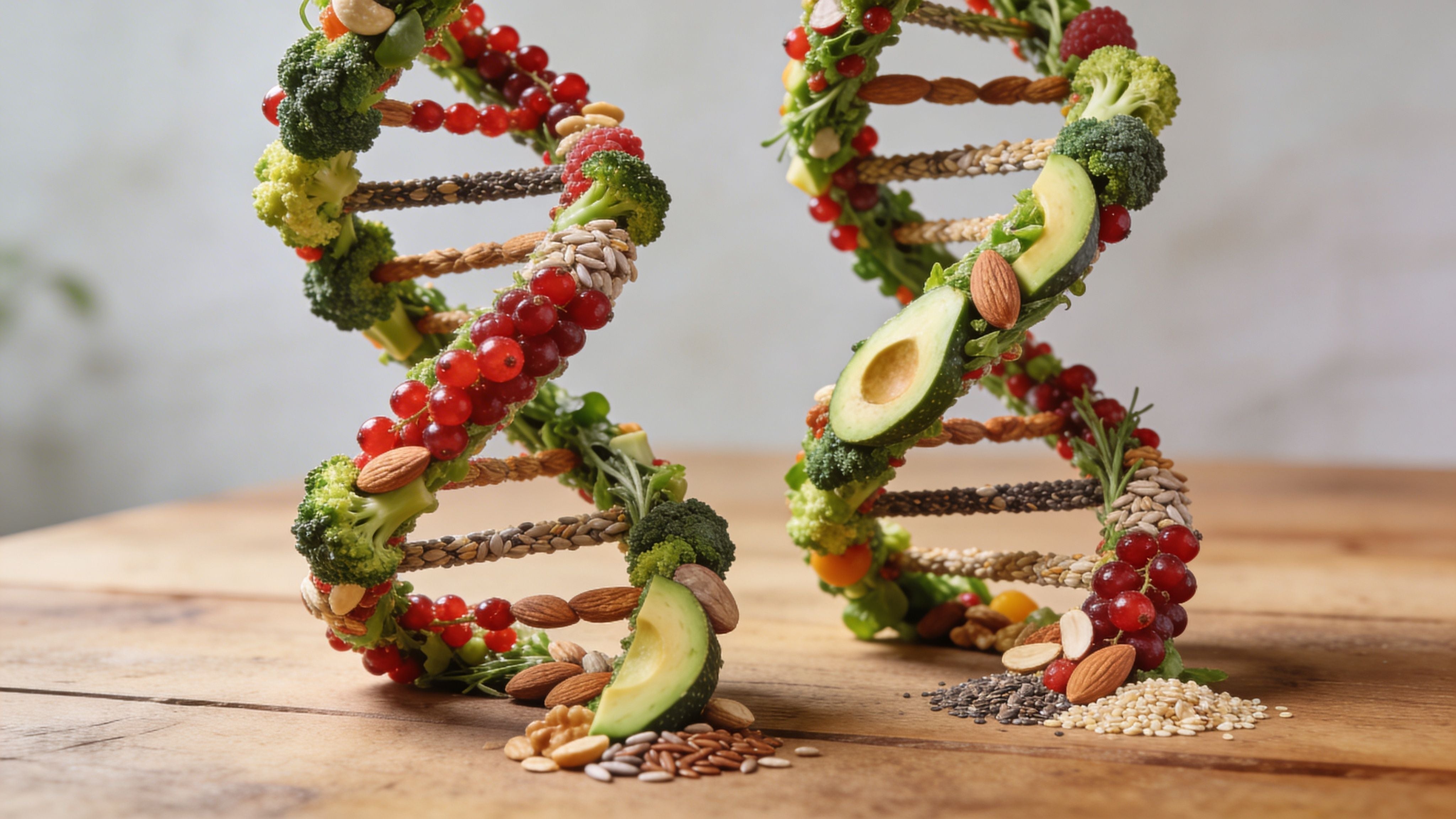
Optimizing your nutrition: The guide to your body
You are making an effort. You cook fresher meals, avoid sweets, try low-carb, intermittent fasting, or an app with calorie targets. At first, things often go well. Then everyday life returns. Hunger gets stronger, energy levels drop, or your weight goes down at first and then goes back up.
If this sounds familiar, it is not automatically due to a lack of discipline. With nutrition, many things fail because general rules are applied to very different people. Two people can eat the same breakfast and still feel completely different. One stays full for a long time, while the other quickly feels hungry again. One loses weight easily, while the other makes no progress.
That is precisely why it is worth viewing nutrition as more than just a list of “good” and “bad” foods. A more helpful approach is to look at the fundamentals, typical eating patterns, and what your body individually needs.
The endless cycle of dieting and why it is not your fault
You start a new diet feeling motivated. Suddenly, the refrigerator contains only “allowed” foods. For a few days or weeks, you feel in control and determined. Then a stressful day at work, dinner with friends, or simply the moment when you realize that you are constantly thinking about food arrives.

Many people experience exactly this cycle: start strictly, stick with it briefly, quit frustrated, and start over later. It is not only exhausting but also undermines your self-confidence.
Why standard plans often fail
Much of the usual nutrition advice follows the principle of “one solution for everyone.” In practice, that rarely works. People differ in their daily routines, sleep, digestion, exercise habits, and, of course, biologically.
An often-overlooked perspective in Germany is personalization based on genetic metabolic variations. According to the figure cited in the verified data, 56% of Germans between 25 and 55 are overweight, and 40% report that standard diets fail. At the same time, searches for “DNA nutrition” rose by 145% (background information in the verified data).
This primarily shows one thing: Many people realize that blanket rules do not adequately reflect their reality.
A typical everyday example
Take two friends. Both eat oatmeal in the morning, a salad at lunchtime, and bread-based snacks in the evening. Both go for a walk three times a week. Even so, Person A feels light and stable with this routine. Person B feels tired in the afternoon, gets cravings, and snacks in the evening.
Diets often fail not because of character, but because the plan does not suit the body.
If you want to better understand and avoid the yo-yo effect, you can also find a helpful overview on mybody at https://mybody-x.com/blogs/news/jojo-effekt-vermeiden.
What you can take away from this
Instead of constantly asking yourself, “Why can’t I do this?”, the better question is often: “Why doesn’t this approach work for me?”
- Strict rules can create order in the short term, but they do not automatically solve the underlying cause.
- Comparisons with others can easily lead you astray because your body does not respond the same way as your friend’s or partner’s.
- Personalization is not a luxury; it is often the missing step after several unsuccessful dieting attempts.
The building blocks of your body: macronutrients and micronutrients
Before nutrition can become personalized, you need a solid basic understanding. Your body is not a trash can, but it is not a calculating machine either. It works more like a well-coordinated system that needs energy, building materials, and many small helpers at the same time.

Macronutrients provide energy and structure
Macronutrients are the main building blocks of your nutrition. They include carbohydrates, proteins, and fats.
Carbohydrates
Carbohydrates are the fastest and most obvious source of energy for many people. Bread, oats, rice, potatoes, fruit, and legumes are all examples. They are not automatically “good” or “bad.” What matters is how well you tolerate them, the form in which you eat them, and how they fit into your everyday life.
For example: A plate of lentils with vegetables affects your body differently from sweet pastries in the afternoon. Both contain carbohydrates, but they do not have the same effect on satiety and energy.
Proteins
Proteins are building blocks. Your body uses them for muscles, enzymes, cells, and recovery. If you exercise, have a lot of stress, or are in a calorie deficit, getting enough protein is often even more important.
Typical sources include:
- Animal-based options such as yogurt, eggs, fish, or poultry
- Plant-based options such as tofu, tempeh, lentils, beans, or soy products
- Combined in practical everyday meals such as oatmeal with skyr or lentil curry with rice
Fats
Fats provide energy, are involved in hormone production, and help with the absorption of certain vitamins. For a long time, many people were taught to avoid fat across the board. In practice, it makes more sense to pay attention to quality and quantity.
Avocado, nuts, seeds, olive oil, and fatty fish play a different role here than highly processed snacks.
Micronutrients work behind the scenes
Micronutrients do not provide energy, but many processes do not run smoothly without them. They include vitamins, minerals, and trace elements.
Key point: Macronutrients are the fuel. Micronutrients are the mechanics working behind the scenes.
Among other things, they support the nerves, muscles, bones, immune system, and metabolism. If something is missing, you often do not notice it immediately through a dramatic illness, but rather through a vague sense of discomfort. Fatigue, difficulty concentrating, or fluctuating performance are typical everyday signals.
Anyone who would like to understand the basics more clearly can also find a simple explanation of nutrients at mybody under https://mybody-x.com/blogs/news/was-ist-ein-nahrstoff.
Why variety matters
The history of nutrition in Germany shows how strongly food supply and choice shape people’s lives. The famine during the First World War was one of the worst in 20th-century Western Europe and claimed around 800,000 lives. By comparison, the diet today is far more varied. For example, per-capita consumption of citrus fruits rose from 2 kg in 1900 to 31 kg in 2021, while bread and potato consumption declined (Federal Agency for Civic Education).
More choice is a good thing. But it does not automatically make nutrition suitable. Variety only really helps when you use it to select the foods that suit your body and your everyday life.
Popular diets at a glance
Most people are not looking for “nutrition” in general. They are looking for a specific solution. Mediterranean, low-carb, vegetarian, vegan, intermittent fasting, high-protein. Each approach promises clarity. That is understandable, because rules initially feel relieving.
Still, every way of eating has its blind spot. Not because it is fundamentally bad, but because it relies on average assumptions.
Four patterns you should know
| Way of eating | Basic principle | Focuses on | Potential challenge |
|---|---|---|---|
| Mediterranean diet | Lots of vegetables, legumes, fish, olive oil, simple meals | Balance and food quality | Can feel vague in everyday life when someone needs clear quantities or structure |
| Low-carb | Fewer carbohydrates, often more protein and fat | Blood sugar, satiety, weight management | Does not suit everyone. Some people feel low on energy or socially restricted |
| Plant-based | More or exclusively plant-based foods | Fiber, variety, mindful consumption | Requires planning to ensure adequate protein and micronutrient intake |
| Intermittent fasting | Eating within set time windows | Structure, appetite control, simple rules | Not suitable for every daily routine, especially with shift work or strong hunger in the morning |
Why every method attracts people
The Mediterranean diet appeals to many people because it is practical for everyday life and less dogmatic. Low-carb is attractive when someone wants to reduce cravings. Plant-based models often suit people who want to eat more consciously. Intermittent fasting appeals to those who would rather control eating times than lists of foods.
The problem only arises when helpful guidance becomes a rigid identity. Then you no longer eat according to tolerance, hunger, energy, or your goal, but according to a label.
Simple questions instead of entrenched camps
If you want to evaluate a way of eating, these questions can often help:
- Does it keep you full? If you are constantly thinking about food, that is not a good sign.
- Does it fit your everyday life? The best theory is of little use if it does not work in your week.
- Can you maintain your performance? Concentration, sleep, and mood are important feedback.
- Is it flexible enough? Good nutrition can withstand birthdays, travel, and stressful weeks.
The most common thinking error
Many people say: “This way of eating worked for others, so it should work for me too.” That is often exactly the catch. A method can sound logical and still not suit you biologically or practically.
A way of eating is a tool, not the truth.
That’s why it’s worth viewing popular models more as testing grounds. You can learn something from every approach. Perhaps you can take food quality from the Mediterranean diet, greater satiety from high-protein eating, and from fasting simply the idea of not constantly snacking in the evening.
But the crucial question remains: How does your body really respond to it?
Genetics and the microbiome: Your personal nutrition managers
Two people eat the same lunch. One stays full for hours afterward, while the other looks for something sweet again after two hours. Such differences are not imagined. They are often related to factors that cannot be seen from the outside.

What your genes have to do with nutrition
Nutrigenetics describes how genetic differences can influence the way you process food. This is not about fate. Genes do not determine a fixed future. Rather, they indicate where your body might respond more sensitively or efficiently.
The verified data states that genetic variants such as FTO or APOA5 can influence up to 40 to 70% of the differences in weight between people. A DNA test can also classify a metabolic type. Gene-based dietary adjustments can increase the effectiveness of weight-loss programs by 15 to 20% and reduce the yo-yo effect by up to 30% in the long term (Cerascreen background article).
This does not mean that one gene is “to blame.” It means that some people respond differently to fat, carbohydrates, satiety, or hunger signals than others.
The microbiome also plays a role
Alongside your genes, your microbiome also plays an important role. This refers to the community of microorganisms in your gut. It influences how nutrients are broken down, how digestion works, and how comfortable certain foods feel.
You often notice this very directly in everyday life. One person tolerates large amounts of salad well and feels fresh. Another is more likely to experience bloating or remains unsatisfied. Someone gets on perfectly well with yogurt, while someone else does not.
Why one-size-fits-all diets reach their limits here
General diet rules often act as though all bodies work the same way. That is simply not true. If you ignore this, you can quickly end up with a plan that looks sound in theory but fails in practice.
If you are more deeply interested in the scientific idea behind this, mybody offers an easy-to-understand introduction to nutrigenetics at https://mybody-x.com/blogs/wissenschaftsportal/was-ist-nutrigenetik-und-wie-bestimmt-sie-unser-leben.
Your body does not read trend reports. It responds to what is biologically right for it.
A practical image
You can think of genes and the microbiome as two nutrition managers. One broadly determines how your system responds to certain nutrients. The other influences on a daily basis how well current processing works. If neither is taken into account, nutrition quickly feels like guesswork.
Your path to personalized nutrition with a DNA test
When standard diets repeatedly fail to deliver results, you need fewer guesses and more clarity. This is exactly where a DNA test comes in. It does not answer every health question. But it can show how your body is likely to process certain patterns.

What such a test actually examines
A DNA analysis in the field of nutrition examines genetic markers that may be associated with metabolism, vitamin requirements, or nutrient processing. The aim is not to impose a “perfect diet” on you. The aim is to provide a better basis for making decisions.
According to the verified data, a DNA analysis evaluates genes relevant to more than 22 vitamins and minerals. It also states that in Germany, up to 57% of the population suffers from vitamin D deficiency and that variants in the MTHFR gene can reduce folate activation by up to 40% (Rathaus-Apotheke Asperg).
This is a good example of why “I actually eat healthily” does not always tell the whole story. Even with a conscientious diet, there can be differences in absorption, conversion, or requirements.
How this benefits you in everyday life
A useful DNA test can help answer questions such as:
- How does your metabolism tend to respond to macronutrients?
- Are there indications of particular needs for vitamins or minerals?
- Where would it be worthwhile to pay more attention to appetite, satiety, or energy?
Ideally, these results do not lead to a list of prohibitions, but to a practical framework. You no longer have to follow every trend and can make more targeted decisions.
A concrete example of how it can be applied
If your profile indicates that you may need to handle certain nutrients more carefully, this can affect your meal planning. It makes a difference whether you only have a quick snack in the morning or a meal that genuinely sustains you. It may also be relevant whether you take supplements speculatively or based on an understandable pattern.
Practical takeaway: Personalization does not mean eating more complicated food. It means eating what suits you better.
One option in this area is the DNA Test Nutrition from MYBODY Lab GmbH. It focuses on analyzing nutrition-relevant genes and combines the results with an individual cookbook and recipe book, turning data into concrete meals. Find out more at https://mybody-x.com/products/dna-test-ernahrung.
How to recognize a good solution
Not every test is automatically helpful. Make sure the results are presented clearly and translated into everyday language. Good results help you shop, cook, and plan. Poor results leave you alone with technical terms.
Your attitude toward it is also important: A DNA test is not a verdict on your body. It is more like a compass. You have to do the walking yourself, but at least you’ll finally be heading in the right direction.
Putting your goals into practice every day
The best insight is of little use if it remains only as a PDF in a drawer. Nutritional knowledge needs to be translated into your refrigerator, your workweek, and your plate.
Food quality in Germany has improved only moderately since 1990. A meta-analysis of more than 1,100 studies shows that consumption of processed meat and sugar-sweetened beverages remains high (BZfE). That is precisely why practical implementation is so important. It is not just the theory but your daily choices that make the difference.
Goal: weight management
If you often experience intense cravings or quickly regain weight after dieting, less rigid rules and more structure can often help.
In practice, it might look like this:
- A filling breakfast instead of just coffee and pastries. For example, yogurt or skyr with oats, nuts, and berries.
- A substantial lunch instead of a purely symbolic salad. For example, a bowl with vegetables, a protein source, and a suitable carbohydrate component.
- Keep dinner simple. Vegetables, a protein source, and a side dish that satisfies you instead of triggering cravings for a later snack.
Goal: performance and recovery
For active people, nutrition is about more than weight. It influences training, recovery, and concentration.
Fixed habits are often helpful:
- Spread protein throughout the day. Don’t try to make up for everything in the evening.
- Plan meals around your training. Choose easily digestible foods beforehand and a balanced meal afterward.
- Don’t restrict energy intake too much. If you consistently eat too little, you’ll eventually train with the handbrake on.
Goal: longevity and everyday practicality
Longevity sounds grand, but it starts small. With routines you actually stick to.
This often includes:
- More unprocessed foods in everyday life
- Fewer liquid calories from soft drinks or constant specialty coffees
- Regular meals, if that helps keep you stable
- Mindful stocking up, so that ready-made products don’t always win in stressful moments
If you want to turn insights into a weekly routine, a concrete plan often helps more than motivation. You can find a practical idea for this under https://mybody-x.com/blogs/rezepte/gesund-ernahren-wochenplan.
The simplest rule for everyday life
You don’t have to make your diet perfect. You have to make it repeatable.
Anyone who wants to eat better in everyday life doesn’t need more willpower, but less friction.
This could mean preparing two simple dishes in advance on Sundays, keeping nuts somewhere visible, standardizing breakfast, or storing a sensible snack at the office. Small systems beat big resolutions.
Conclusion: Take charge of your health
Nutrition often seems confusing because you find rules everywhere and genuine context almost nowhere. Sometimes carbohydrates are the problem, sometimes fat, sometimes the timing of meals. No wonder many people feel frustrated after years of this.
The key idea is simple: Your body is unique. That’s why generic diets often work only in the short term or not at all. Macronutrients and micronutrients form the foundation. Popular dietary approaches can provide guidance. But things only become truly clear when individual differences are taken seriously.
This includes genetic variants, your everyday life, your eating habits, and also the question of how well you tolerate certain foods. Personalized nutrition is therefore not just a buzzword, but a sensible step for people who want to stop guessing.
You don’t have to change everything at once. Often, it’s enough to allow yourself a new perspective on who you are. Not “Which diet is best?” but “Which diet suits my body, my life, and my goal?”
When you approach the topic this way, a lot changes. Food becomes less of a battle and more of a tool. Less deprivation, more understanding. Less failure, more direction.
If you no longer want to base your diet on gut feeling, trends, or other people’s success stories, a data-driven perspective may be worthwhile. At MYBODY Lab GmbH, you’ll find modern health analyses for DNA, metabolism, the microbiome, and nutrient levels. This gives you a foundation for making informed, personal decisions in your everyday life.



Share now:
What should I eat? Your path to optimal nutrition in 2026
Understanding the Opportunities and Limitations of Swiss Health Portals