
Gut health test for your well-being
Do you often feel tired, bloated, or like your digestion just isn't working properly? You're not alone. These kinds of complaints are widespread and a constant companion for many people in their daily lives.
In fact, according to recent data from Mintel, approximately three out of five Germans (around 60%) suffered from digestive problems in the last six months. These figures clearly demonstrate how important it is to take your body's signals seriously and get to the bottom of the causes. You can find more details about the prevalence of digestive issues in Germany at mintel.com . A gut health test is often the first, crucial step towards greater clarity.
What a gut health test reveals about you
A gut health test is essentially an analysis of your stool sample. That might not sound very glamorous at first, but the results give you an incredibly detailed insight into the composition and balance of your gut microbiome. It shows you which strains of bacteria live in your gut, whether important beneficial bacteria are missing, or whether there is an imbalance (a so-called dysbiosis ) that could affect your well-being.

A glimpse into your inner ecosystem
Imagine receiving a detailed map of your inner universe. Instead of groping in the dark and trying various diets or home remedies at random, a test provides you with concrete clues. Because your gut and its trillions of inhabitants are far more than just a digestive organ – they influence almost every aspect of your health.
A test can give you insights into very different areas:
- Your immune system: A large proportion of your immune cells reside in the gut. An imbalance here can noticeably weaken your defenses.
- Your mood: Your digestion is directly connected to your brain via the so-called gut-brain axis. Certain bacteria even produce important neurotransmitters like serotonin, our "happiness hormone".
- Your energy levels: A healthy gut flora helps you absorb nutrients efficiently and extract energy from food. Do you often feel tired? The answer could lie in your gut.
- Your skin health: Skin problems like acne or eczema are often linked to a disrupted gut barrier. A healthy gut is often reflected in clear skin.
With the results in hand, you stop just treating symptoms. Instead, you begin to address the root causes and give your body exactly what it truly needs.
A modern at-home gut health test , like the one from mybody-x , is designed for easy and discreet integration into your daily routine. The insights gained allow you to tailor your diet and lifestyle to fundamentally improve your well-being. It's your personal guide to a healthier gut and greater vitality.
Your microbiome: Imagine it like an inner garden
To truly grasp the results of a gut test, a simple image helps: Think of your microbiome as a colorful, vibrant garden in your gut. In this inner garden, an incredibly complex ecosystem of trillions of microorganisms – primarily bacteria – grows and thrives, living together in a delicate balance.
This garden is anything but passive. It's an active community that significantly influences how you feel. Every aspect of your lifestyle directly impacts it, from the fork you put to your mouth to the last hour of sleep you get (or don't get).
The gardeners and the weeds in your gut
In your inner garden, there are diligent helpers and rather annoying troublemakers. The beneficial bacteria are essentially your gardeners. They work for you around the clock, and in a variety of ways:
- They produce nutrients: These good bacteria produce vital vitamins (such as B vitamins and vitamin K) and convert fiber into short-chain fatty acids – the superfood for your intestinal cells.
- They strengthen your defenses: They train your immune system and form a protective barrier. This makes it really difficult for pathogens to spread.
- They support your mood: Incredible, but true: Many of these little helpers produce messenger substances like serotonin, which influence your mood and stress level via the gut-brain axis.
On the other hand, there are the "weeds"—that is, harmful or potentially harmful bacteria. In small numbers, they are usually harmless. However, if they proliferate excessively, they can damage your garden and lead to digestive problems, inflammation, and a general feeling of unwellness.
A gut health test is like taking stock of your garden. It shows you which plants are thriving, where nutrients are lacking, and whether weeds are slowly taking over.
What do diversity and dysbiosis mean to you?
Two terms are crucial when it comes to your inner garden: bacterial diversity and dysbiosis .
A high level of diversity is great. This means that many different types of "gardeners" live in your gut. The more diverse the team, the more resilient your ecosystem is against stress, an unhealthy meal, or pathogens.
Dysbiosis , on the other hand, describes an imbalance. This can mean that weeds proliferate, diversity decreases, or important beneficial bacteria are completely absent. Often, this is the invisible cause of ailments such as bloating, persistent fatigue, or skin problems. You can learn more about how to build a healthy gut flora to promote this balance.
Your lifestyle is the key factor here. Chronic stress or lack of sleep can weaken the good bacteria, while a sugar-rich diet practically feeds the weeds. A high-fiber diet with plenty of vegetables and fermented foods, on the other hand, is like the best fertilizer for your beneficial bacteria – and allows your inner garden to flourish.
How a home test really works
The thought of a stool sample is daunting for many people at first. But don't worry: the days of cumbersome and unpleasant procedures are long gone. A modern at-home gut health test , like the one from mybody-x, is so cleverly designed that it's discreet, hygienic, and surprisingly easy to integrate into your daily routine.
We'll guide you through the process step by step, so you feel completely safe and secure. It all starts with a simple online order. Your test kit will arrive at your home in discreet packaging – so your privacy is protected. Inside you'll find everything you need.
From the bathroom to the laboratory
The core of the whole process is, of course, the sample collection, but everything has been thought of here as well. The handy stool catcher makes the process clean and totally uncomplicated. You only need a tiny sample – about the size of a grain of rice – which you place into the sample tube using the included spoon. That's all there is to it.
And this tiny sample really packs a punch. It contains the complete DNA information of your microbiome.
- Practical stool catcher: Ensures absolutely hygienic removal without direct contact.
- Minimum sample quantity: A tiny swab is sufficient for a complete analysis.
- Stabilizing fluid: The tube contains a special liquid that keeps your sample fresh and stable until it arrives at the laboratory.
- Free return shipping: Everything is already prepared – you just need to take the package to the post office.
This graphic shows you how simple and clean the process is in your own bathroom. 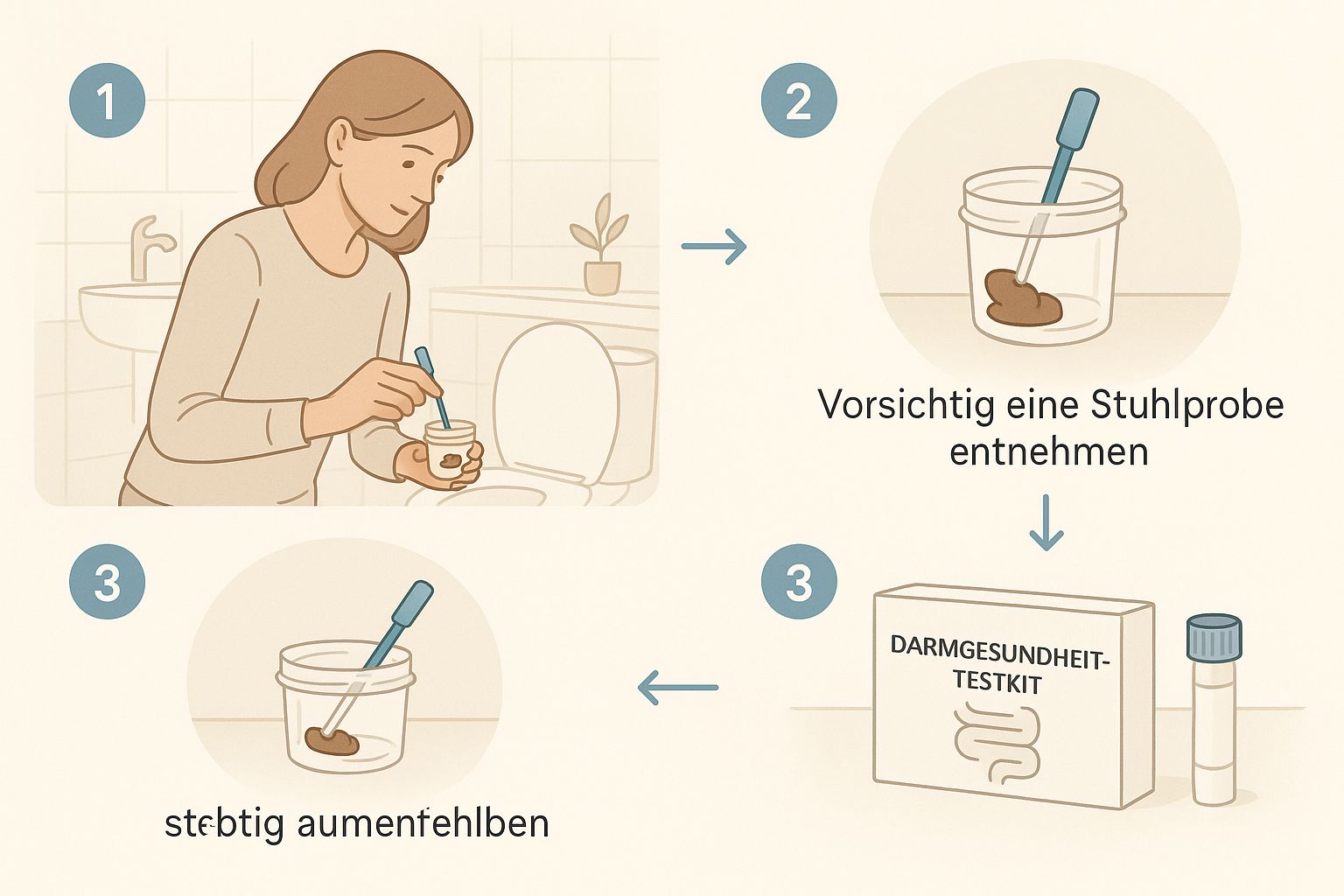 As you can see, the process is entirely designed to offer you maximum comfort and discretion.
In the lab, the real science comes into play. Using state-of-the-art gene sequencing (the 16S rRNA method ), the genetic material of the bacteria in your sample is read like a book. This creates a precise profile of your gut flora, showing exactly which types of bacteria are present and their relative proportions.
You don't need to be an expert to take this important step for your health. The entire process is designed to make it as easy as possible for you to access valuable insights.
A home stool test is therefore an incredibly simple method to finally gain clarity about your gut feeling. If you'd like to know more details, take a look at our article on how to perform a home stool test . Consider it the first, uncomplicated step on the path to a better understanding of your body.
What your test result really means – and what you can do now
It's finally here: your personal report. A document full of data, figures, and charts. It might seem overwhelming at first, but don't worry – think of us as your personal translator. We'll show you how to decipher this valuable information. Your test result isn't just a dry analysis; it's the starting point for a targeted journey toward greater well-being.
Each test result is as unique as a fingerprint of your microbiome and provides concrete answers to the truly important questions. One of the key metrics is your personal diversity score . Think of it as an indicator of the biodiversity in your inner garden. A high score? Great! A low one? That's a clear indication that your ecosystem could use some support.
Your microbiome profile: A reflection of your lifestyle
Your report goes much deeper, though. You not only learn how diverse your gut flora is, but also which specific strains of bacteria are dominant and whether there are any imbalances. Often, patterns emerge that are surprisingly closely linked to your everyday life.
Let's look at two typical examples:
- The stressed type: In people who are constantly under pressure, we often find less diversity and fewer anti-inflammatory bacteria like Faecalibacterium prausnitzii . The body is essentially in a permanent state of alert, and your gut feels that immediately.
- The sugar lover: A diet high in sugar and simple carbohydrates primarily feeds the bacteria that thrive on fermentation. This can lead to bloating and simultaneously displaces the beneficial bacteria that should actually be processing fiber.
Sure, these are simplified profiles. But they perfectly illustrate how your daily life shapes your microbiome. A gut health test finally makes these invisible connections tangible.
The real treasure of your test results isn't just knowing what 's going on in your gut. It lies in receiving clear and actionable instructions on how you can specifically support it.
From knowledge to action: Your personal roadmap
Every single finding from your report is directly linked to a concrete recommendation for action. That's the crucial point, because knowledge alone doesn't change anything. So you don't just get data, but your very own personal roadmap.
This turns abstract information into a simple tip for your everyday life. For example, are you lacking bacteria that produce short-chain fatty acids? Then the recommendation could be to eat more resistant starch from cooled potatoes or legumes. Easy, right?
Preventing digestive problems is extremely important. Diseases of the digestive organs are among the most common health problems in Germany – so much so that 2.1 million people required inpatient treatment for them in 2021 alone. A proactive approach, such as a gut health test, is a crucial step towards taking control of your own health. Studies suggest that up to 70% of all cancers could be prevented. You can find out more about the importance of prevention at dgvs.de.
For an even more detailed breakdown of your results, the mybody-x test result analysis booklet offers a valuable and in-depth supplement.
Optimize your diet specifically for your gut health
Your test results are the starting point – now it's time to get down to business. They are your personal guide to putting your new knowledge directly into practice. Don't see the recommendations as a strict diet, but rather as an invitation to give your body exactly what it craves. It's about cultivating your inner garden with intention.
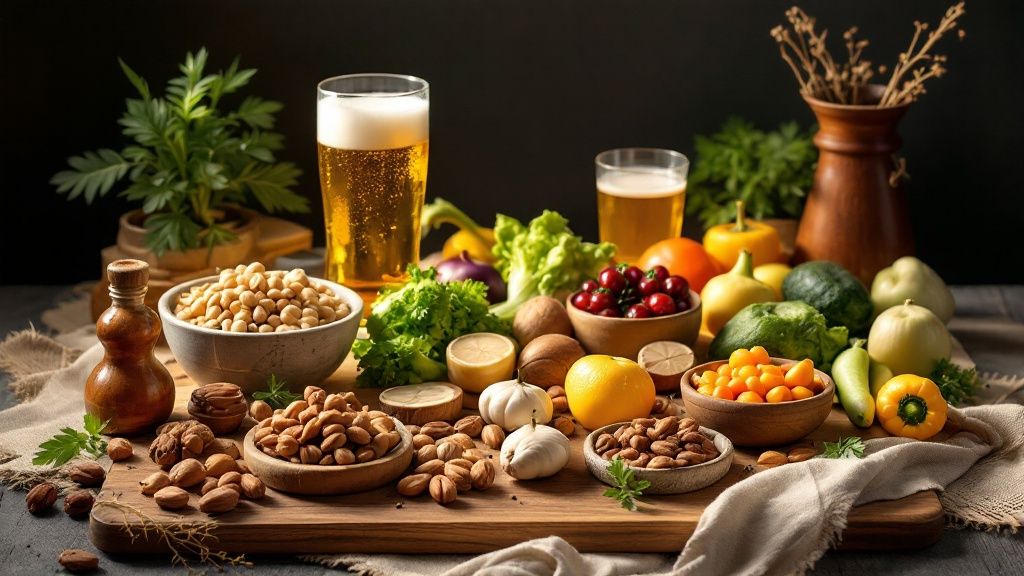
The key lies in two central concepts: prebiotics and probiotics . Think of probiotics as the hardworking little gardeners (beneficial bacteria) that you introduce into your gut. Prebiotics are their favorite food – the fertilizer that allows them to grow and thrive. A gut health test will show you exactly what kind of "fertilizer" your gut flora needs most.
Prebiotics: The food of your beneficial bacteria
Prebiotics are special dietary fibers that are indigestible for us humans. However, they are a true feast for our beneficial gut bacteria. They stimulate their growth and promote the production of valuable short-chain fatty acids such as butyrate, which serves as the main energy source for your intestinal cells.
Your test might reveal, for example, that your microbiome is lacking in bacteria that thrive on fiber. Then it's time to add more prebiotic power to your diet.
- Inulin and fructans: These are abundant in chicory, artichokes, onions, garlic, and leeks. They particularly promote the growth of bifidobacteria.
- Resistant starch: You can find it in legumes, green bananas, as well as in cooled potatoes, pasta or rice.
- Pectins: These are found in apples, berries, and carrots. They support a healthy intestinal lining.
- Polyphenols: These powerful antioxidants from dark berries, green tea, nuts and dark chocolate also have a prebiotic effect.
Your personalized recommendation could therefore be: "Integrate a handful of blueberries into your breakfast every day" or "Eat a serving of lentils three times a week." Targeted gut health can be that simple.
Probiotics: Live helpers for your gut
Probiotics are live microorganisms that, when consumed in sufficient quantities, offer genuine health benefits. They colonize the gut and can help restore balance. They are particularly valuable after antibiotic therapy or in cases of diagnosed dysbiosis.
Which probiotic foods are best for you also depends on your individual profile.
- Yogurt and kefir: These dairy products are rich in lactic acid bacteria such as lactobacilli and bifidobacteria. They are a great way to get started.
- Sauerkraut and kimchi: Fermented vegetables not only provide probiotics, but also valuable vitamins and enzymes. Make sure to buy unpasteurized varieties.
- Kombucha: A fermented tea drink containing a variety of yeasts and bacteria.
Your test results will help you choose the right supplements. You might specifically need lactobacilli, which are abundant in kefir, to boost your digestion. If you'd like to delve deeper into the topic, you'll find many more tips for a gut-friendly diet and overall well-being in our guide.
An example for your first week
Getting started doesn't have to be complicated. Here's a simple idea of how you can directly implement the findings from your gut health test without completely turning your daily routine upside down.
Example of a week's start
| day | Breakfast | Lunch | Dinner |
|---|---|---|---|
| Monday | Natural yogurt with blueberries and flax seeds | Large mixed salad with chickpeas | Lentil soup with a slice of wholemeal bread |
| Tuesday | Oatmeal with grated apple and nuts | Leftover lentil soup | Oven-roasted vegetables with chicken or tofu |
| Wednesday | Smoothie with kefir, green banana and spinach | Quinoa salad with bell peppers and cucumber | Potato salad (made from cooled potatoes) |
Even small, conscious adjustments can have a big impact. Your gut will thank you – with more energy, a better feeling in your stomach, and improved health.
Colorectal cancer screening and the role of the microbiome
A healthy gut is so much more than just a good feeling – it's one of the most important cornerstones of your long-term health. Science is increasingly understanding how closely our gut flora is linked to the prevention of serious diseases like colon cancer.
Early detection is crucial. A severe imbalance in the microbiome, a so-called dysbiosis, can be an early signal to take a closer look and take action.
Your microbiome as an early warning system
Imagine your microbiome as a sentinel, constantly on guard. Certain harmful bacteria can silently fuel chronic inflammation or produce substances that negatively impact cell growth. A gut health test can uncover such risky imbalances long before they cause serious problems.
This isn't about scaring you. Rather, we want to show you that you can take control of your health. Colorectal cancer is one of the most common cancers in Germany – in 2020 alone, there were around 54,770 new cases . This high number clearly demonstrates the importance of proactive screening. Fortunately, more and more people are taking advantage of screening examinations, as recent data from the Felix Burda Foundation shows. You can read more about this in the detailed figures for Colorectal Cancer Awareness Month here .
A healthy gut isn't a matter of chance, but the result of conscious choices. By taking a test, you take responsibility and use a powerful tool for your long-term health care.
Still have questions about the gut health test? Here are the answers.
Are you considering taking a gut health test but still have a few questions? That's perfectly understandable. Here we answer the most frequently asked questions.
How often should I get tested?
To begin with, a single test is perfectly sufficient to give you a comprehensive overview of your microbiome. However, things get really exciting when you make changes based on the results – for example, adjusting your diet or integrating new habits into your daily routine.
Then we recommend a second test after about 3 to 6 months . This way you'll see in black and white whether your efforts are paying off and your gut flora has developed positively. A test can also be useful after a course of antibiotics to monitor the rebuilding of your microbiome.
Does the test replace a visit to the doctor?
Absolutely not. Think of the test as a kind of preventative health check for your gut, helping you optimize your well-being. It provides incredibly valuable insights and tailored lifestyle recommendations.
However, if you are suffering from acute, severe, or persistent symptoms, your first step should always be to see a doctor . The test is a tool for prevention and optimization, not for diagnosing or treating diseases.
Good to know: A gut health test is not the same as a colonoscopy. The test analyzes the diversity of your gut bacteria and provides information about the state of your microbiome. A colonoscopy, on the other hand, is a medical examination in which a doctor uses a camera to examine the inside of your colon for visible changes such as polyps.
Both methods have completely different, but equally important, goals. The test supports your daily well-being, while the colonoscopy primarily serves the purpose of early cancer detection.
Are you ready to take the first step towards a better gut feeling? Rediscover your body and gain clarity with the gut microbiome test from mybody-x . Learn more here and start your analysis.


Share:
Strengthen your immune system in autumn
More energy through autumn: Identify and overcome the causes of fatigue