

Losing weight without giving anything up really works: Here’s how to find your balance
The fact is: losing weight without giving anything up isn’t just achievable; in the long term, it’s the only sensible path to reaching a weight you feel comfortable with. Instead of tormenting yourself with rigid restrictions that only trigger cravings anyway, it’s about something much better: a flexible diet, mindful enjoyment, and finally learning to understand your body’s signals properly again.
Why strict diets are doomed to fail
Let’s be honest: Imagine reaching your goal weight but never being allowed to have another slice of your favorite pizza or a piece of chocolate. It doesn’t just sound unrealistic—it sounds pretty bleak too, doesn’t it? That’s exactly the problem with most traditional diets: they’re built around restrictions and a long list of “bad” foods.
This approach almost always backfires. Psychologically, it’s quite simple: As soon as you forbid yourself something, you want it even more. This “forbidden fruit effect” is a direct route to the next binge and, sooner or later, the dreaded yo-yo effect. Once the diet is over, old habits creep back in—and the pounds come with them.

The key is balance, not deprivation
The path to sustainable success isn’t about cutting out everything you enjoy eating. It’s about finding a healthy balance. Lose weight without giving anything up means making mindful choices and seeing enjoyment as a regular part of your life. Instead of asking yourself what you’re not allowed to eat, focus on what’s good for your body.
A few simple basic principles can help:
- Enjoy mindfully: Learn to listen to your body again. What are hunger and fullness telling you? Eat slowly and savor every bite instead of mindlessly shoveling down meals on the go.
- Find smart alternatives: You don’t have to give up everything. Often, small adjustments are all it takes. How about a lighter sauce for your pasta or dark chocolate instead of milk chocolate?
- Build a strong foundation: Make sure your body is primarily fueled by nutrient-rich foods. When this foundation is solid, there’s still plenty of room for the things you eat purely for enjoyment—and you can enjoy them without feeling guilty.
It is not about short-term prohibitions, but about building healthy habits. Your journey should give you more energy and enjoyment of life, not make you feel like you constantly have to give something up.
If you would like to learn more about how to lose weight healthily without punishing yourself, read our detailed article on the subject. This approach is not only more effective, it is also a hell of a lot more fun.
Laying the foundations for a flexible diet
Losing weight without giving anything up? That sounds almost too good to be true. But it works—and without any complicated rules. The key is not to obsessively count calories, but to develop a genuine understanding of the building blocks of your food and use this knowledge cleverly to your advantage.
This approach is no longer a secret tip. According to a survey, around 42 percent of people in Germany have tried to lose weight without completely giving up their favorite foods. Flexible concepts such as the 80/20 principle are very popular, as the findings from Statista also show.
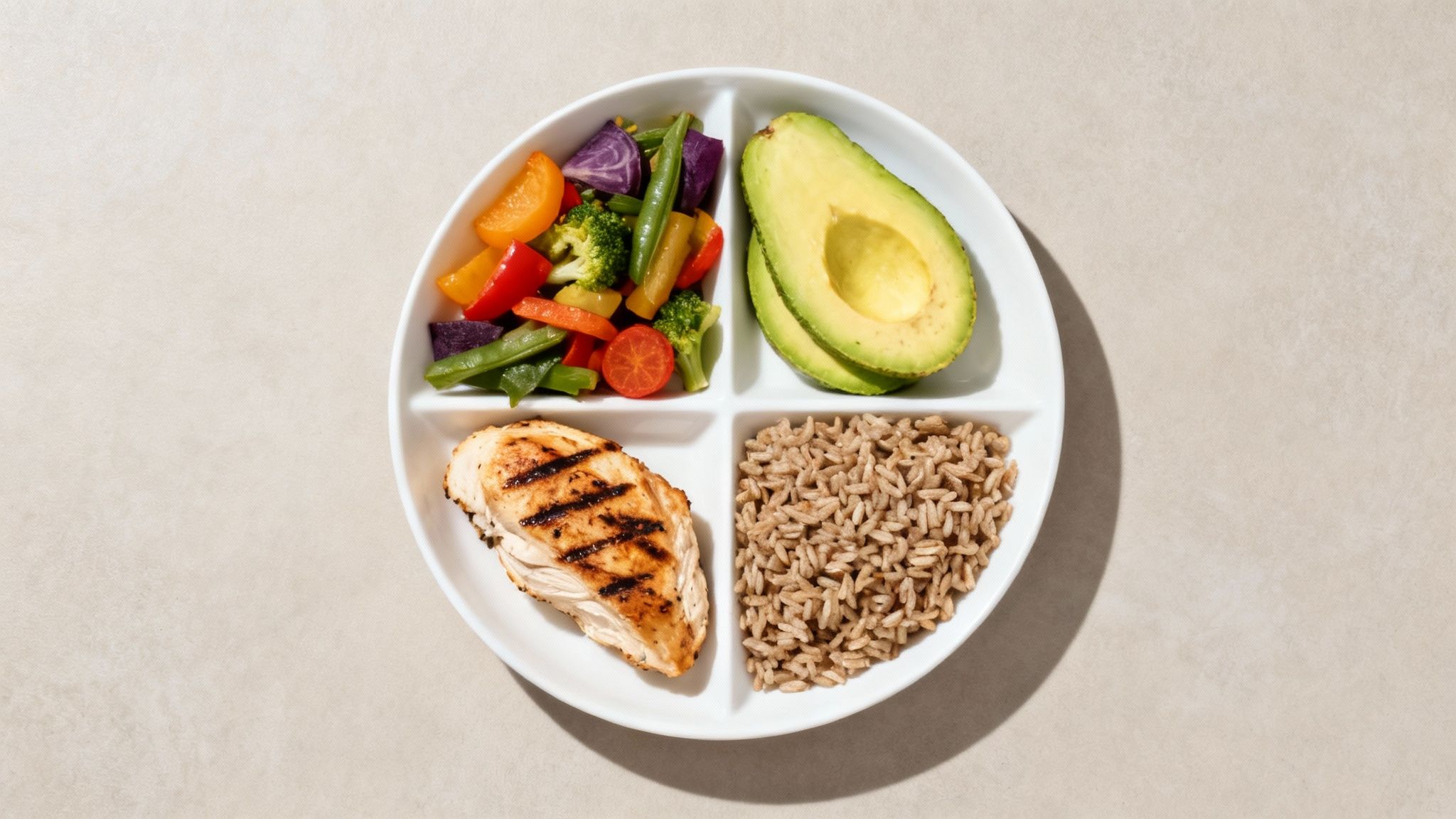
Understanding the power of macronutrients
Your body is not a machine that only burns calories. It needs energy and building materials to function optimally. It gets them from the three main nutrients, also known as macronutrients: proteins, fats, and carbohydrates. Each of them has its own important role.
- Proteins: They are the building blocks for everything—from muscles and cells to hormones. Above all, they are the ultimate champion of satiety. A protein-rich meal demonstrably keeps you full for longer and is the best weapon against cravings.
- Fats: Don’t let anyone tell you that fat makes you fat. Healthy fats are vital, for example, for absorbing vitamins and producing important hormones. They also provide plenty of energy and create a deep, long-lasting feeling of fullness.
- Carbohydrates: They are the preferred fuel for your brain and muscles. The trick is choosing the right ones: Complex carbohydrates from whole-grain products or legumes keep your blood sugar levels stable and prevent the dreaded afternoon slump.
It’s about finding a good balance of these three building blocks in every meal. So don’t just ask yourself, “How many calories does this have?” Instead, ask: “Is my body getting everything it needs here to feel full, strong, and satisfied?” In our article on healthy eating for weight loss, we explore this in even greater detail.
The secret of energy density
Another factor that changes everything is the concept of energy density. It sounds scientific, but it’s incredibly simple. It merely describes how many calories a food contains per gram. Foods with a low energy density provide plenty of volume and valuable nutrients, but only a few calories.
Picture a huge salad plate with crisp vegetables and some chicken breast. It fills your stomach, leaves you completely satisfied, yet has comparatively few calories. A small chocolate bar beside it is the exact opposite: high energy density, tiny volume, and hardly any satiety.
By focusing on foods with a low energy density, you can eat large, filling portions without blowing your calorie budget.
What does this look like in everyday life? It’s simple:
- Pasta upgrade: Instead of using only regular pasta, choose whole-wheat noodles and mix in a large portion of zucchini noodles (“zoodles”). Suddenly, you have more volume, more nutrients, and fewer calories in the same portion size. Brilliant, right?
- Snack alternative: Instead of reaching for a small bag of chips, choose a large bowl of vegetable sticks with a light herbed quark dip. You can eat a huge amount of it and still feel fit and energized afterward.
- Drink swap: Instead of a sugary soda, try water with fresh mint and lemon or unsweetened iced tea. This way, you can easily save hundreds of “empty” calories while also providing your body with important fluids.
With these small, smart adjustments, you can optimize your favorite dishes without ever feeling like you have to give anything up. This way, you build a solid foundation that will help you reach your goal in the long term—and, above all, with enjoyment.
Practical strategies for your everyday life
Theory is all well and good, but the real challenge begins in the chaos of everyday life. Between work, family, and social commitments, there is often barely enough time to spend hours in the kitchen. This is exactly where our strategies come in, helping you integrate the principle of “losing weight without giving anything up” into your life simply and stress-free.

Live by the 80/20 principle
One of the smartest methods for a flexible and sustainable diet is the 80/20 principle. It’s as simple as it is brilliant: 80% of your meals are nutrient-rich, balanced, and aligned with your goals. The remaining 20%? They’re for pure enjoyment.
What does this mean in practice? You don’t have to give up that slice of cake at a birthday celebration or pizza with friends. As long as the foundation of your diet is sound, these moments of enjoyment aren’t a setback. On the contrary, they are an essential and important part of your journey.
This balance prevents you from feeling like you have to give something up and makes it much easier to stick with it in the long term. It’s not about perfection, but about consistently moving in a healthy direction.
This table shows an example week based on the 80/20 principle and illustrates how easily mindful enjoyment and a healthy diet can be combined.
The 80/20 principle in everyday life
| Day of the week | Focus on 80% (Nutrient-rich) | Example of 20% (Mindful enjoyment) |
|---|---|---|
| Monday | Chicken breast with quinoa and broccoli | A small piece of dark chocolate in the evening |
| Tuesday | Large salad with lentils and vegetables | - |
| Wednesday | Salmon fillet with sweet potatoes and spinach | A glass of wine with dinner |
| Thursday | Greek yogurt with berries and nuts | - |
| Friday | Whole-grain wrap with hummus and plenty of vegetables | Pizza night with friends |
| Saturday | Scrambled eggs with avocado and whole-grain bread | A slice of cake at your favorite café |
| Sunday | Homemade lentil soup | - |
As you can see, these moments of enjoyment are deliberately planned and don’t disrupt the healthy foundation at all. This keeps motivation high and guilt at bay.
Meal prep as your secret to less stress
“No time to cook”—that’s probably the most common excuse for abandoning good intentions and reaching for takeout instead. The solution has a name: Meal Prep. It’s the art of cleverly planning and preparing meals in advance.
Simply set aside an hour or two on the weekend to prepare meals for the days ahead. This not only saves an incredible amount of time during the week, but also gives you complete control over the ingredients and portion sizes.
This is how you can get started with meal prepping with ease:
- Build a solid foundation: Cook a larger batch of brown rice, quinoa, or potatoes. They will easily keep for several days in the fridge.
- Prepare your vegetables: Chop bell peppers, broccoli, or carrots in advance. That way, they're ready to use in salads or stir-fries.
- Cook your proteins: Fry chicken breast, hard-boil eggs, or prepare a large batch of lentil bolognese.
- Have smart snacks on hand: Hard workdays often tempt us to choose unhealthy snacks from vending machines. Instead, prepare healthy alternatives. Find out how to do this best in our guide to healthy snacks.
With this preparation, you'll only need to quickly put your meals together during the week. This protects you from cravings and thoughtless decisions.
Mindfulness is the key to noticing your body's signals—such as hunger and fullness—again. It's about experiencing food consciously instead of consuming it on the side.
Learning to eat mindfully again
In our hectic world, many of us have forgotten how to listen to our own bodies. We eat in front of the television, at our desks, or on the go, and often don't even notice when we're actually full. Mindful eating is the counterpoint to this unconscious consumption.
Why not try incorporating these small habits into your daily routine:
- Eat slowly and chew thoroughly: Your feeling of fullness only sets in after about 20 minutes. Give your body time to send the signal at all.
- Put your cutlery down between bites: Take short breaks, breathe, and check in with yourself.
- Avoid distractions: Focus entirely on your food—without your smartphone or television. Consciously notice the colors, aromas, and taste.
These simple techniques not only help you manage your portion sizes better, but also increase the enjoyment of every meal. You'll be surprised how much more satisfying eating becomes when you give it your full attention. This turns enjoyment into a tool for your goals rather than an obstacle.
Naturally supporting your metabolism
Does your metabolism sometimes feel like a handbrake pulled tight, especially when you're trying to lose a few kilos? The good news is: you're not helplessly at the mercy of this feeling. With the right impulses, you can get your internal engine revving and turn it into your most important ally. This is a crucial step toward losing weight without giving anything up.
A well-functioning metabolism helps your body use energy efficiently and burn calories more effectively—even at rest. This creates the perfect conditions for reaching your comfortable weight sustainably and without a constant struggle.

Internal heat through nutrition
Did you know that your body burns calories while digesting food? This is called the thermic effect of food. Certain foods really fire up your metabolism because they intensify this effect.
At the very top of the list: protein. Your body has to expend significantly more energy processing protein than it does processing fats or carbohydrates. About 20–30 % of the calories from protein are used up directly during digestion. A clever trick, right?
You can also give your metabolism a boost with specific spices:
- Chili and cayenne pepper: The capsaicin it contains can temporarily raise your body temperature and thus slightly boost calorie consumption.
- Ginger: Like chili, ginger is also known to promote heat production in the body (thermogenesis).
- Green tea: The combination of catechins and caffeine can also have a positive effect on your metabolic rate.
Movement you enjoy
Don’t worry—you don’t have to sweat on the treadmill for hours to increase your basal metabolic rate. Every form of movement counts and helps get your metabolism going. The key is to find an activity you genuinely enjoy and that fits easily into your daily routine.
Even small changes can make a huge difference:
- Regular walks: A brisk walk during your lunch break or in the evening not only gets your circulation going, but also burns calories along the way.
- Strength training at home: Muscles are true metabolism boosters. Even at rest, they burn more energy than fat tissue. Short workouts using your body weight or light dumbbells are enough.
- Move more in everyday life: Take the stairs instead of the elevator, run small errands on foot, or ride a bike. It’s the little things that add up.
Your body is made to move. The more active you are, the more efficiently your metabolism works. Find a routine that suits you and simply stick with it.
The foundation must be solid
Two often underestimated but extremely important factors for a healthy metabolism are getting enough sleep and maintaining good hydration. Lack of sleep can seriously disrupt your hormones, which not only regulate metabolism but also increase your appetite for unhealthy foods.
Water is also essential. It is involved in virtually all metabolic processes in the body. If you don't drink enough, these processes practically run on low power.
Would you like to support your metabolism even more specifically? In our guide, you'll find many valuable tips on how to naturally boost your metabolism. Products such as the metabolism formula from mybody-x.com can be a useful addition to optimize this process and help you reach your goals more easily.
Staying motivated and dealing with setbacks
Your journey to a comfortable weight is a marathon, not a sprint. It may sound clichéd, but it is the most important truth. There will be days when your motivation is at rock bottom or the delivery pizza calls louder than the salad in your fridge. That is completely human and absolutely okay.
What matters is not the slip-up itself, but how you deal with it afterward. This is the key to lasting success if you truly want to lose weight without giving anything up.
The biggest enemy on this journey? All-or-nothing thinking. A slice of cake at your colleague's birthday doesn't mean the whole week is ruined. It's simply a slice of cake. Instead of letting guilt paralyze you, consciously enjoy the moment. At your next meal, simply return to your normal, balanced routine. It's that simple.
Realistic goals are your anchor
Set achievable goals from the start. No one loses ten kilos overnight—and those who try usually fail. Instead, focus on small, manageable habits that fit easily into your everyday life. For example, aim to take a brisk walk three times a week or eat a handful of vegetables with every main meal.
Small, tangible successes are pure gold for your mental well-being. Every milestone you reach, no matter how small, releases feel-good hormones and boosts your confidence. Celebrate these moments!
- Reward yourself, but not with food: Treat yourself to a relaxing bath, that new book you've been wanting to read for ages, or an outing in nature.
- Keep a success journal: Write down what went well and what you’re proud of. On days when things don’t go so well, it will be your personal motivation boost.
This creates a positive cycle that carries you forward and helps you quickly get back on track even after a slump.
A setback is not failure. It is information. An opportunity to learn from it. Be kind to yourself and simply focus on taking the next step in the right direction.
Build a supportive environment
You don’t have to take this journey alone. A strong social network can make a huge difference. Talk openly with your friends and family about your goals. Explain why this matters to you and how they can support you—perhaps by picking you up for a walk or considering a healthy option at your next shared meal.
The relevance of this topic in society is enormous. Over the past two decades, the prevalence of overweight in Germany has steadily increased. Between 2003 and 2023, the prevalence of obesity among adults rose from 12.2 percent to 19.7 percent. When around two-thirds of men and half of women are considered overweight, it becomes clear how urgently we need sustainable, practical solutions for everyday life. You can find more interesting insights into overweight statistics here.
By strengthening your mindset, maintaining realistic expectations, and seeking support, you’ll gradually make your new lifestyle feel natural. This will not only keep you motivated but also create a solid foundation for lasting well-being.
Common questions and honest answers about losing weight without deprivation
When you suddenly hear that losing weight can also work without strict prohibitions, almost always the same questions and uncertainties arise. That’s no wonder, because it challenges everything crash diets have taught us for years.
We’ve collected the most common questions we’re asked again and again so you can pursue your journey with a truly good and confident feeling.
Do I really have to count calories to lose weight?
A clear no. Obsessive calorie counting is not a ticket to success. Much more important is regaining a sense of the quality of your food instead of staring only at numbers.
Instead, focus on putting together meals that truly fill you up and satisfy you—in other words, meals rich in protein and fiber. When you learn to pay attention again to your body's genuine hunger and fullness signals, your calorie intake often regulates itself. Intuitive eating is the key here.
What if I get a craving for something sweet?
Cravings are not a character flaw; they are almost always a signal from your body that something is missing. Instead of trying to suppress them with all your might, it's much smarter to deal with them strategically. The more you forbid yourself from having something, the stronger the craving becomes.
Here are a few strategies that have proven effective in practice:
- Enjoy treats with a plan: Consciously include a small portion of your favorite sweet treat in your day. Ideally, have it directly after a balanced main meal; this helps keep your blood sugar level stable.
- Have smart alternatives ready: A protein-rich snack such as Greek yogurt with a few berries or a piece of dark chocolate can work wonders. It satisfies your craving for something sweet without sending your blood sugar on a roller coaster.
- Become a detective: Cravings often stem from more than just a desire for sugar. Lack of sleep, stress, or an unnoticed nutrient deficiency are common triggers. It's worth taking a closer look.
Losing weight without deprivation doesn't mean you'll never be allowed to eat chocolate again. It means regaining control and enjoying it mindfully instead of letting it control you.
How quickly will I see the first results on the scale?
Sustainable change to your body is a marathon, not a sprint. So please don't expect miracles overnight. A healthy and, above all, realistic rate of weight loss is around 0.5 to 1 kilogram per week.
Anything that happens significantly faster is usually just lost water and comes back just as quickly. Give your body the time it needs to adjust to new, healthier habits. Patience and consistency are your very best friends on this journey.
Do you want to know exactly which nutrients your body really needs and how your metabolism works? With the scientifically grounded analyses from mybody-x.com, you receive a personalized roadmap for your health. Discover the tests that can optimally support you on your journey at https://mybody-x.com.



Share now:
Understand matcha green tea and use it for yourself
Top nutrient test kits reviewed – expert comparison 2025