
Understanding Matcha Green Tea and Making It Work for You
Welcome to the fascinating world of Matcha Green Tea. This vibrant green powder is much more than just a trendy drink—it is packed with special nutrients derived from a unique production process. The crucial difference from regular green tea? Instead of merely steeping the leaves, with matcha you consume the entire tea leaf, ground into a fine powder. This allows you to benefit from the full power of all its ingredients.
What Really Makes Matcha Green Tea Special
You probably know the feeling after a cup of coffee: a quick burst of energy, often followed by an equally rapid slump and a certain restlessness. Matcha Green Tea offers a completely different experience. The key lies in the special combination of its ingredients.
Matcha also contains caffeine, but it is bound to other molecules. As a result, your body absorbs it much more slowly and evenly. The result is gentle but long-lasting energy that carries you through several hours—without the dreaded caffeine crash.
The Special Synergy of L-Theanine and Caffeine
The real secret behind matcha's unique effects is the amino acid L-theanine. Although it is found in all tea plants, its concentration increases significantly because matcha is specially grown in the shade. In the brain, L-theanine promotes the production of alpha waves, which we associate with a state of relaxed alertness.
This very synergy is what makes matcha so special:
- Focused energy: The caffeine keeps you alert, while the L-theanine simultaneously promotes calm and concentration.
- No jitters: L-theanine counteracts the often unwanted, shaky side effects of caffeine.
- Better mood: The amino acid can stimulate the production of feel-good neurotransmitters such as dopamine and serotonin.
Imagine feeling full of energy while still having a clear, calm mind. That perfectly describes the feeling many people experience after a cup of matcha—a state that is ideal for focused work or meditative moments.
More Than Just a Pick-Me-Up
But the benefits go far beyond simply providing energy. Because you drink the whole leaf, you take in a concentrated dose of valuable nutrients and antioxidants that would simply remain in the bag during a normal tea infusion.
This knowledge is the first step toward understanding how matcha can support your well-being. But every body is different. To truly find out how your body responds to specific nutrients or whether you may be lacking something, you need to understand your individual needs. A mybody-x nutrient test can provide clarity here and help you tailor your diet. This ensures that matcha is a truly meaningful addition to your personal health strategy.
The Journey of Matcha from Field to Your Cup

Behind every vibrant green cup of matcha lies an incredibly elaborate, tradition-rich process perfected in Japan over centuries. This journey from tea field to the fine powder in your bowl explains why authentic matcha is such a precious commodity—and why it simply cannot be compared with ordinary green tea.
It all begins in the tea fields, usually in famous growing regions of Japan such as Uji or Nishio. But these are not just any tea plants. Only specific varieties of Camellia sinensis are suitable for matcha production at all. However, the crucial step that gives matcha its unique properties takes place weeks before harvesting.
The Secret of Shading
About 20 to 30 days before picking, the tea fields are covered with large cloths or bamboo mats. This method is called “shaded tea cultivation” (kabusecha) and reduces direct sunlight by up to 90%. But what does this simple trick accomplish?
When the plant receives less sunlight, it responds with a fascinating biochemical process. It increases chlorophyll production to make maximum use of the limited light available for photosynthesis. The result is these deep green, almost jade-green leaves.
At the same time, the plant slows the conversion of the valuable amino acid L-theanine into catechins—the compounds that often make tea bitter. This leaves significantly more L-theanine in the leaf, giving matcha its characteristic mild, subtly sweet “umami” flavor and contributing to its relaxing effect.
Shading is the key moment that makes matcha what it is. It is a deliberate intervention in nature that consciously alters the tea plant’s nutrient profile and maximizes the concentration of its most valuable compounds.
After this careful preparation, only the youngest, most tender tea leaves at the top of the plant are hand-picked. This first harvest in spring, also known as “Ichiban-cha”, yields the very highest quality for ceremonial matcha.
From Harvest to the Finest Powder
Once the leaves have been picked, the process must move quickly to stop oxidation and preserve their fresh color and nutrients. The process follows several traditional steps:
- Steaming: The freshly harvested leaves are heated briefly (approximately 15–20 seconds) with steam. This stops fermentation and preserves the bright green color and nutrients.
- Cooling and Drying: Immediately afterward, the leaves are gently cooled and dried in several stages to remove their moisture.
- Sorting: In an extremely labor-intensive step, the dried leaves are stripped of all stems and veins. What remains is the pure, delicate leaf flesh, known as “tencha”. This step is crucial for the finished product’s fine, silky texture.
- The Slow Grinding Process: The final and perhaps most artisanal step is grinding the tencha into an ultrafine powder. Traditionally, this is done in slowly rotating granite mills. A mill often produces only 30 to 40 grams of matcha per hour—that’s barely the contents of a small tin. This gentle method prevents valuable aromas and nutrients from being lost due to frictional heat.
This demanding and time-consuming process explains why high-quality matcha comes at a premium. Matcha’s price development and market position in Germany clearly demonstrate its status as a premium product. A typical 30-gram packet of raw matcha powder often costs around 40 euros or more at retail, which is directly attributable to its labor-intensive cultivation and processing. You can read more about the market position of matcha on manager-magazin.de.
The Power of Nutrients in Matcha Tea
Matcha is often celebrated as a superfood—but what is actually in it? The crucial difference from regular green tea is that you don’t just drink the infusion; you consume the entire finely ground tea leaf. Think of it as the difference between apple juice and a whole apple—with matcha, you get the full load of valuable nutrients.
When you enjoy a cup of matcha, you give your body an impressive variety of vitamins, minerals, and amino acids. But two ingredients are the hidden stars responsible for matcha’s unique effects: antioxidants and the unbeatable duo of caffeine and L-theanine.
Antioxidants as a Protective Shield for Your Cells
Our bodies are exposed to minor attacks every day – from environmental toxins, stress, or the occasional less-than-healthy meal. This produces so-called “free radicals,” unstable molecules that can damage our cells. That’s where antioxidants come in: They work like a personal shield that neutralizes these attackers.
Matcha is a true powerhouse of a particular group of antioxidants called catechins. The strongest and best-known among them is epigallocatechin gallate, or EGCG for short.
Because you consume the whole leaf, one cup of matcha contains up to 137 times more EGCG than a cup of conventional green tea. This makes matcha one of the strongest natural sources of antioxidants.
This high EGCG content helps your body prevent cell damage and can reduce inflammatory processes in the body. If you’d like to delve deeper into the topic, you’ll find more information about antioxidant foods and their effects in our guide.
L-theanine and caffeine: The perfect synergy
Most people know the quick caffeine kick from coffee – unfortunately, it’s often followed by an equally quick energy slump. Matcha plays in a completely different league. The secret lies in the brilliant interplay between caffeine and the amino acid L-theanine.
Although matcha contains caffeine, L-theanine creates a completely different experience. It stimulates the formation of alpha waves in the brain, a state otherwise associated with relaxed concentration or meditation. The result is a kind of “calm alertness.”
- Sustained energy: The caffeine is released into the body much more slowly and evenly. This gives you a gentle yet long-lasting energy boost over several hours – without the dreaded caffeine crash.
- Improved concentration: While caffeine wakes you up, L-theanine provides a clear head and calm focus. You’re alert, but not jittery.
- Less nervousness: L-theanine elegantly buffers the typical side effects of caffeine, such as a racing heart or inner restlessness.
It’s precisely this synergy that makes matcha the perfect companion for productive workdays, creative hours, or simply moments when you need a clear mind.
Is matcha right for your body?
The impressive nutrient density makes matcha a great addition for anyone who cares about their health. But every body is different. Perhaps you’re wondering whether your constant tiredness is just a minor energy slump or whether a nutrient deficiency could be behind it.
This is exactly where a mybody-x nutrient test can provide clarity. It shows you precisely how well supplied you are with important vitamins and minerals. With this knowledge, you can make informed decisions and find out whether matcha is the right building block for your well-being or whether you should focus on another area.
Matcha vs. coffee: a direct comparison
To make the decision easier for you, we’ve summarized the key differences between these two popular pick-me-ups in a table.
| Feature | Matcha green tea | Coffee |
|---|---|---|
| Caffeine content | Moderate (30–70 mg per cup) | High (80–150 mg per cup) |
| Onset of effect | Slow and gentle | Fast and intense |
| Duration of effect | Long and steady (4–6 hours) | Short and may be followed by a crash (2–3 hours) |
| Feeling | Calm alertness, focus | Stimulation, often with nervousness |
| Antioxidants | Very high (especially EGCG) | Moderate |
| Additional compounds | L-theanine, chlorophyll | Chlorogenic acid |
| Acid formation | Lower, often having an alkalizing effect | Higher, may irritate the stomach |
Ultimately, the choice between matcha and coffee is a very personal one. While coffee is the fast sprinter for an immediate energy boost, matcha proves to be an enduring marathon runner that keeps you focused and calm for hours. Simply try out what feels best for you and your daily routine
Creating your perfect matcha moment
Matcha’s true magic only unfolds when you prepare it properly. It’s about so much more than simply mixing powder with water—it’s a small ritual that gives you a moment of peace and pure enjoyment.
Whether you love the traditional ceremony or prefer a quick, modern version, we’ll show you how to get the most out of your matcha. Preparation is the key to unlocking the full flavor profile and creating a creamy, frothy tea without any lumps. With a few simple tricks, you’ll master it effortlessly.
The traditional ritual at home
You don’t need much for an authentic matcha experience, but the right accessories make a huge difference. A few small helpers are essential for achieving the perfect result.
These three tools are the heart of traditional preparation:
- The bamboo whisk (Chasen): This handcrafted tool made from a single piece of bamboo is simply indispensable. Its fine tines ensure that the powder dissolves completely and create a creamy, fine-bubbled foam—something you can never achieve with a spoon.
- The matcha bowl (chawan): A wide, shallow bowl is ideal. It gives you enough room to whisk the matcha vigorously without anything spilling over the edge.
- The bamboo spoon (chashaku): This spoon allows you to measure the fine powder perfectly. One to two spoonfuls correspond to approximately half a teaspoon.
Preparation is your own personal moment of mindfulness. Focus on the flowing movements, the vibrant green color, and the rising aroma. This transforms a simple cup of tea into a small meditation.
Step by step to perfect matcha
With the right technique, you can make lump-free, perfectly whisked matcha. Simply follow these steps and look forward to your ideal taste experience:
- Sift the powder: Put 1–2 chashaku spoonfuls (about half a teaspoon) of matcha powder through a fine sieve into your bowl. This is the most important step for preventing annoying lumps from the start.
- Add water: Heat fresh, preferably soft water to about 80 °C. Caution: Boiling water would burn the delicate matcha and make it bitter. First, add a small splash of water to the powder and stir both into a smooth paste.
- Whisk: Now add the remaining 70–80 ml of hot water. This is where the chasen comes in: Whisk the mixture in quick, zigzagging “W” or “M” motions. Keep the whisk loose, moving it from the wrist, and be careful to touch only the liquid, not the bottom of the bowl.
- Enjoy: After about 20–30 seconds, a fine, jade-green layer of foam should have formed. Now it’s time to sit back and enjoy the matcha straight from the bowl.
This infographic clearly shows how matcha takes effect in your body—from consumption to the feeling of alert calm.
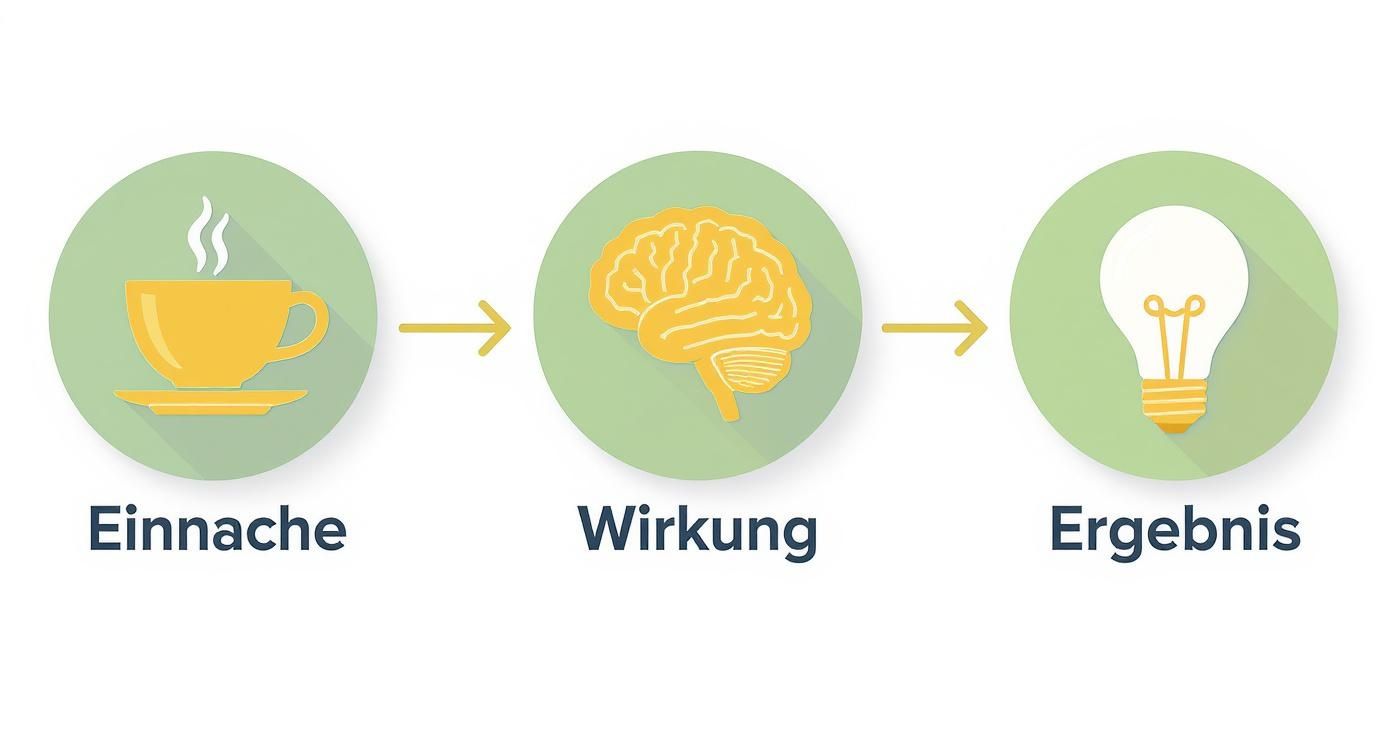
The process makes it clear how the unique combination of ingredients leads to the focused yet relaxed state that so many people love about matcha.
Creative matcha recipes for every taste
Matcha is incredibly versatile and so much more than just a hot beverage. Its tart, slightly sweet note pairs wonderfully with countless other flavors. That’s why a unique matcha culture has developed in Germany, unlike in traditional Japan.
While pure tea takes center stage in Japan, here we love matcha as an ingredient in modern creations. You can also read more about the different consumption habits on japanwelt.de.
Let these ideas inspire you:
- Iced matcha latte: Simply whisk matcha powder with a little cold water until creamy, pour it into a glass filled with ice cubes, and top it up with your favorite milk. Oat or almond milk work wonderfully here!
- Matcha smoothie: Add a teaspoon of matcha to your morning smoothie with banana, spinach, and a little protein powder. It's the perfect energy and nutrient boost to start the day.
- Matcha in muesli: Mix a little powder into your yogurt or porridge. It's a delicious and healthy change that adds color to the breakfast table.
Looking for even more creative ideas? You'll find many more healthy recipes and snack ideas here that fit perfectly into a mindful lifestyle.
Matcha and your individual tolerance
Matcha is undoubtedly a true nutrient powerhouse. But as with everything we consume, the same applies here: Every body is different. Just because many people rave about its positive effects doesn't automatically mean matcha is the ideal choice for you, too. Your personal biochemistry and sensitivity determine how you react to the green powder.
That's why it's so important to listen carefully to what your body is telling you. While some people benefit from the gentle, clear energy, the caffeine content can also cause unwanted reactions in more sensitive individuals.
Listen to your body's signals
The key is to be mindful. This is especially important if you're new to the world of matcha or already know that you react quickly to caffeine. A gentle introduction is essential here.
Instead of starting with the full dose right away, ease into it gradually. A quarter to half a teaspoon is perfect to start with so you can observe what happens in your body.
Pay attention to typical reactions:
- Positive signs: You feel alert yet calm and focused at the same time. Your energy remains stable for hours, without the typical coffee slump.
- Warning signs: You notice inner restlessness, feel nervous, or even experience heart palpitations. You may find it harder to wind down in the evening or have trouble falling asleep.
If you notice such warning signs, there is no reason to panic. It usually just means that the dose was too high for you or that the timing—for example, late in the afternoon—was simply unfavorable.
Your body sends you clear messages. Learn to interpret them. It is not about blindly following a trend, but about finding what personally does you good.
Getting to the root of the real causes
Sometimes, however, the reason for constant fatigue or lack of energy is more complex. Do you reach for matcha because you often feel drained? That is completely understandable, but it is worth getting to the root of the real cause.
Your exhaustion may not be due to a lack of caffeine at all, but to something else entirely. This is exactly where mybody-x self-tests can help you gain clarity and get to the bottom of your inner balance. Ask yourself honestly:
- Are you lacking important nutrients? Persistent fatigue is a classic sign of a deficiency in iron, vitamin B12, or vitamin D. A mybody-x nutrient test shows you precisely whether your stores are well replenished or whether you should take targeted action.
- Do you react to certain foods? Undiscovered intolerances are often what drain the body’s energy and cause a vague feeling of discomfort. If you want to know whether your body reacts to certain foods, a test can provide valuable insights. Find out more in our guide about how to get tested for a food intolerance.
By clarifying these fundamental questions for yourself, you can make a truly informed decision. This will help you determine whether matcha is a meaningful addition for you or whether you should first adjust another, much more important factor to regain your full strength.
Matcha as a mindful part of your lifestyle
We have reached the end of our journey through the fascinating world of matcha tea. You have learned about its rich history, understood the elaborate production process, and discovered its unique ingredients. One thing has become clear: Matcha is so much more than just a trendy drink.
It is a small ritual that can give you moments of calm and mindfulness. A source of gentle yet focused energy and a wonderful companion for your overall well-being. The key to fully enjoying it lies in the quality of the powder, the right preparation, and drinking it mindfully.
Your body has the final say
But the most important insight remains: health is deeply personal. What works for one person may not necessarily be right for you. Your body is constantly sending you signals—it’s up to you to listen to and understand them.
That is exactly the philosophy we live by at mybody-x. We want to encourage you to take charge of your health independently and proactively.
Health is not a coincidence, but the result of conscious decisions based on an understanding of your unique physical needs.
Understand your individual needs
Trends come and go, but knowledge about your own body is the most valuable compass you have. Naturally, the growing popularity of matcha in Germany, reflected in impressive increases in imports, is a great sign of rising health awareness. In the first eight months of a single year alone, around 240 tons of matcha were imported—an increase of 240 percent, strongly driven by social media. You can read more about this social media trend on lebensmittelpraxis.de.
This trend is a wonderful development, but it should never replace looking inward. Our tests, whether a mybody-x nutrient test, hormone test, or intolerance test, are not diagnoses. Rather, they are powerful tools for self-reflection. They provide data-based insights into your biochemistry and help you make informed decisions—whether it concerns matcha, your diet, or your lifestyle in general. This knowledge can even influence how your genes are expressed. Dive into the fascinating world of epigenetics in our science portal.
Your questions, our answers
There are always interesting questions about matcha. So you don’t have to search for long, we’ve collected the most important ones here and answered them briefly and concisely.
When is the best time for a cup of matcha?
Quite simply: in the morning or early afternoon. The caffeine it contains gives you a gentle yet long-lasting energy boost. Perfect for starting the day focused or avoiding the typical afternoon slump.
Because the energizing effect can easily last for several hours, it’s best to avoid it in the late afternoon or evening. This way, you won’t disrupt your sleep rhythm and can wind down peacefully at night.
How can I recognize truly good matcha?
You can easily assess the quality of matcha yourself using your senses. High-quality matcha is not only healthy but also a true experience.
Look for these four characteristics:
- Color: The be-all and end-all is a bright, intense jade green. Does the powder look dull, yellowish, or even brownish? Then steer clear—it indicates poor quality or improper storage.
- Texture: Good matcha powder is ultrafine and silky, almost like powdered sugar. If it feels noticeably grainy, it was probably not ground in traditional granite mills.
- Aroma: The scent should be fresh, slightly sweet, and grassy. A musty smell reminiscent of hay is not a good sign.
- Flavor: A first-rate matcha tastes mild and creamy, with that famous, slightly sweet “umami” note. Excessive bitterness has no place here.
How should I store my matcha powder properly?
Matcha is a bit of a diva when it comes to storage. Light, air, and heat are its biggest enemies, as they destroy its valuable nutrients and delicate aroma in no time.
Therefore, always store your powder in an airtight, opaque container. The best place for it is the refrigerator. The cold slows oxidation and helps protect the vibrant color and full flavor.
A little pro tip: Take the container out of the refrigerator shortly before preparing the matcha, but leave it closed for a moment. This prevents condensation from forming and keeps the fine powder from clumping.
Can I drink matcha every day?
Yes, absolutely! For most healthy adults, one to two cups of matcha per day are perfectly safe and a great addition to everyday life. Regular intake of antioxidants and L-theanine may even sustainably support your well-being.
But always listen to your body. If you know that you react sensitively to caffeine, simply start with a smaller dose—a half teaspoon per cup is often enough. Pay attention to how you feel, because your personal tolerance is ultimately what matters.
Do you often feel tired but aren't sure whether caffeine is the cause or whether a nutrient deficiency might be behind it? mybody-x helps you understand your body better. Our at-home self-tests give you precise insights into your nutrient levels, hormone balance, or possible intolerances.



Share now:
What Is a Metabolic Disorder? Complete Guide
Losing weight without deprivation really works: Here’s how to find your balance