

Vitamin B Complex with Biotin: Effects and Dosage 2026
A vitamin B complex with biotin is a combination of several B vitamins in which biotin (vitamin B7) specifically supports the maintenance of normal skin, hair, and nails. Anyone looking for a product that stops hair loss or repairs nails will be disappointed by many products. The reason is simple: research clearly shows that biotin has measurable effects only when a genuine deficiency is present. This article explains how vitamin B complex with biotin really works, which dosages make sense, what risks you should know about, and when supplementation actually makes sense.
What does vitamin B complex with biotin do for skin, hair, and nails?
Biotin is a water-soluble vitamin and belongs to the group of B vitamins. It plays a central role in the formation of keratin, the structural protein that makes up hair, skin, and nails. Without sufficient biotin, keratin synthesis does not function optimally, which can manifest as brittle nails, dull skin, or increased hair loss.
EU health authorities have approved official health claims for biotin. These allow biotin only for maintaining normal skin and hair, not for growth or repair. Nails are not even included in the approved claims. This is an important distinction that many product claims deliberately obscure.
A complete vitamin B complex contains not only biotin but also vitamin B1 (thiamine), B2 (riboflavin), B3 (niacin), B5 (pantothenic acid), B6 (pyridoxine), B9 (folic acid), and B12 (cobalamin). These vitamins work together in metabolism. In concrete terms, vitamin B for energy means that B1, B2, B3, and B5 are directly involved in converting food into energy. Biotin alone is just one component.

The combination makes the difference. Biotin works in combination with other B vitamins and nutrients, but alone it has only limited, context-specific effects. So anyone taking a combination supplement benefits from the synergistic effect of all the vitamins it contains, not just biotin.
Typical symptoms of biotin deficiency:
- Hair loss and thinning hair
- Brittle, cracked nails
- Flaky, reddened skin around the mouth and eyes
- Fatigue and difficulty concentrating
- Tingling in the hands and feet
Pro tip: If you notice several of these symptoms at the same time, a blood test to determine your vitamin B status is the most sensible first step before you start taking dietary supplements.
Managing expectations is important: Without a proven deficiency, biotin generally has no measurable effects on hair growth or nail quality in healthy individuals. Systematic reviews confirm that biotin provides substantial benefits only in cases of a proven deficiency. So if you are healthy and still take biotin every day, you are spending money without a guaranteed return.
What dosage is recommended for vitamin B complex with biotin?
The German Nutrition Society (DGE) specifies a reference value of 40 µg of biotin per day for adults. Breastfeeding women have a slightly higher requirement of 45 µg per day. With a balanced diet, these amounts can easily be obtained from foods such as eggs, nuts, legumes, and whole-grain products.
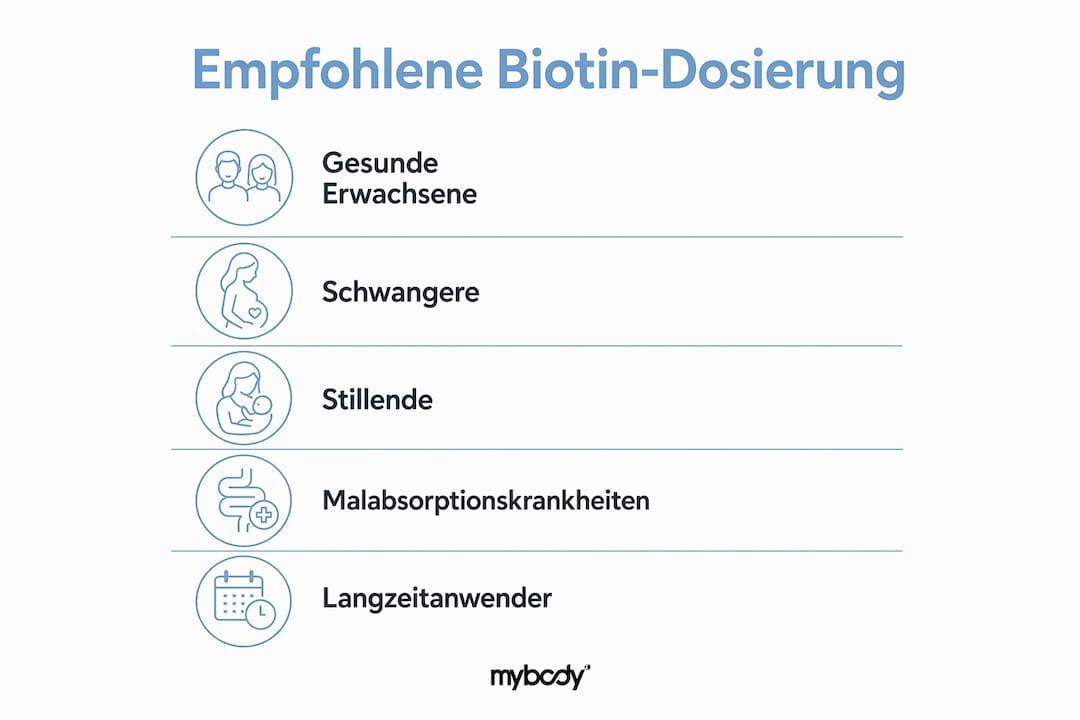
However, many commercially available dietary supplements contain significantly higher amounts. Typical products in the B vitamin supplements category provide 150 µg of biotin or more per daily dose. That is three to four times the DGE reference value. These higher doses do not increase effectiveness in healthy individuals, but they do increase the risk of laboratory interference.
How to take it:
- First determine your needs through a blood test or medical consultation.
- Choose a supplement with a biotin dosage close to the DGE reference value (40 µg) if no deficiency is present.
- If a deficiency has been diagnosed, your doctor may recommend higher doses, such as 150 µg or more.
- Take the vitamin B complex in the morning with a meal, as B vitamins are water-soluble and absorption may be improved with fat.
- Plan to take it for at least 8 to 12 weeks before expecting to see the first effects on your skin and hair.
Pro tip: Inform your doctor and the laboratory before any blood test if you take biotin in doses above 150 µg per day. This protects you from misinterpretations of your laboratory results.
| Target group | Recommended daily biotin intake | Note |
|---|---|---|
| Healthy adults | 40 µg (DGE) | Usually covered through diet |
| Breastfeeding women | 45 µg (DGE) | Slightly increased requirement |
| People with a deficiency | 150 µg and more | Only after a medical diagnosis |
| Pregnant women | 30 to 40 µg | Consultation with a doctor recommended |
In cases of malabsorption disorders such as Crohn’s disease or after bariatric surgery, the absorption of biotin from food may be severely restricted. In these cases, targeted supplementation under medical supervision may be medically advisable. Certain medications, such as antiepileptic drugs, can also affect biotin metabolism and increase the requirement.
The 8- to 12-week intake period is considered the minimum time needed to notice the first visible improvements in hair and nails when a deficiency is present. Anyone who sees no effect after two weeks and stops has not given the supplement a fair chance. At the same time, anyone who notices no improvement after three months should have other causes investigated.
What risks and limitations does biotin supplementation have?
Biotin is water-soluble and is considered well tolerated. Direct toxic effects from oral intake have not been documented, even at high dosages. This sounds reassuring, but it is only half the truth.
The German Federal Institute for Risk Assessment (BfR) expressly warns of another problem: High-dose biotin of more than 150 µg per day can distort immunoassays in laboratory tests. This means your blood values may appear abnormal even though you are physically healthy. The BfR therefore calls for warnings on biotin products with high dosages.
Which laboratory tests can be affected by biotin:
- Thyroid values (TSH, fT3, fT4): Biotin can produce both falsely high and falsely low values.
- Cardiac markers such as troponin: Falsely low values can conceal a heart attack.
- Hormone levels such as estrogen, testosterone, and progesterone.
- Tumor markers and vitamin D measurements.
“Biotin interference in laboratory diagnostics can lead to misdiagnoses that are medically dangerous. Anyone taking high doses of biotin must actively disclose this before every blood draw.” (Source: BfR warning about biotin)
The risk is not that biotin harms your body. The risk is that a doctor makes an incorrect diagnosis based on distorted laboratory values or delays necessary treatment. This is a medical risk that many consumers underestimate.
When taking more than 150 µg daily, it is recommended to actively inform your doctor and the laboratory. Many laboratories can then choose alternative testing methods that are not affected by biotin. Many people skip this step because they do not know that their dietary supplement can be relevant to laboratory results at all.
Anyone who buys a beauty product containing 500 µg or 1000 µg of biotin because its packaging promises shiny hair should understand these connections. Marketing and scientific reality are clearly far apart here.
When is taking a vitamin B complex with biotin really worthwhile?
The answer is clearer than many manufacturers would like to admit: Supplementation is primarily worthwhile when a genuine deficiency is present or there is an increased risk of deficiency.
At-risk groups with increased needs:
- Pregnant and breastfeeding women (increased needs due to growth and milk production)
- People with malabsorption disorders such as Crohn’s disease or celiac disease
- People who have undergone bariatric surgery
- People with a one-sided or severely restricted diet
- Long-term users of certain medications, such as antiepileptic drugs or antibiotics
Biotin deficiency is rare in the general population. Typical causes include malnutrition, pregnancy, certain medications, or malabsorption disorders. This means that most healthy adults who eat a balanced diet do not have a biotin deficiency and do not need supplementation.
Hair loss is a good example of the common misuse of biotin. Hair loss has many causes, including iron deficiency, thyroid disorders, stress, hormonal changes, and genetic factors. In most cases, biotin is neither the cause nor the solution. Anyone who immediately turns to biotin for hair loss without knowing the actual cause is treating a symptom without a diagnosis.
The correct order is: first, a medical diagnosis for hair loss; then targeted treatment of the underlying cause; and only after that, if a biotin deficiency has been confirmed, targeted supplementation. Information on nutrient deficiencies and hair loss can help you better assess the true causes.
The same principle applies to women looking for the best B vitamins for their health. A complete vitamin B complex with biotin may be beneficial if an individual's needs have been confirmed by testing. Without this basis, supplementation is speculation. General vitamin deficiency symptoms can help you identify initial signs of a possible deficiency.
Key findings
A vitamin B complex with biotin has been shown to support the maintenance of normal skin and hair only when a genuine deficiency is present. Without a diagnosed deficiency, the benefit for healthy individuals remains limited.
| Point | Details |
|---|---|
| Effect in cases of deficiency | Biotin measurably improves skin, hair, and nails only when a biotin deficiency has been confirmed. |
| Dosage according to the DGE | The reference value is 40 µg per day; higher doses increase the risk of laboratory interference. |
| Be aware of laboratory interference | Biotin above 150 µg daily can distort thyroid and cardiac marker tests. |
| Diagnosis before supplementation | Hair loss and skin problems have many causes; a blood test clarifies the actual need. |
| Prefer combination products | B vitamins work synergistically; a complete complex is more effective than biotin alone. |
My assessment: Biotin is not a cure-all, but it is not a myth either
At mybody x, we see every day how many people take supplements without knowing their actual needs. Biotin is a particularly good example. The marketing claims are loud, while the scientific evidence is nuanced and understated.
What really concerns me is the issue of laboratory interference. Many people don't know that their beauty supplement can distort their thyroid results. This is not a theoretical risk. It is a practical problem that leads to misdiagnoses in clinical practice. Anyone taking high doses of biotin without telling their doctor risks receiving the wrong treatment.
At the same time, I don't want to demonize biotin. In cases of a genuine deficiency—for example during pregnancy, with malabsorption, or after prolonged malnutrition—a vitamin B complex with biotin is a sensible and well-tolerated option. The key is an individual diagnosis before supplementation. Anyone who knows their vitamin B status can supplement in a targeted and safe manner. Anyone who supplements blindly spends money and, in the worst case, risks distorted lab results.
My practical advice: Get your levels tested before you buy. A blood test costs less than a year's supply of supplements and gives you real answers instead of guesses.
— MYBODY X
Determine your vitamin B status with mybody x
You now know that biotin only works in cases of genuine deficiency. The logical next step is to find out whether you have a deficiency at all.

At mybody x, you can conveniently test your vitamin B status from home. With a certified laboratory test, you receive a scientifically sound assessment of your individual nutrient status, including personalized recommendations for nutrition and supplementation. This tells you exactly whether a vitamin B complex with biotin makes sense for you, which dosage is right, and whether other nutrients such as iron or vitamin D also need attention. More than 11,300 satisfied customers trust mybody x's ISO-certified quality. Get started now with a sound basis instead of guesswork.
FAQ
What does biotin do in a vitamin B complex?
Biotin (vitamin B7) supports keratin formation and, according to EU health claims, contributes to the maintenance of normal skin and hair. In a complex, it works synergistically with other B vitamins to support energy and cellular metabolism.
How long does it take for biotin to work for hair loss?
In cases of confirmed biotin deficiency, initial improvements can be expected after 8 to 12 weeks of regular use. Without a deficiency, systematic reviews show no consistent effects of biotin on hair growth.
Can biotin distort laboratory results?
Yes. Biotin in doses above 150 µg per day can affect immunological laboratory tests, including thyroid and cardiac biomarker tests. The BfR recommends informing your doctor and laboratory about biotin use before having blood drawn.
Who really needs a vitamin B complex with biotin?
Risk groups in particular, such as pregnant or breastfeeding women, people with malabsorption disorders, or long-term users of certain medications, benefit from targeted supplementation. Healthy adults with a balanced diet generally do not need more.
How much biotin per day is advisable?
The DGE recommends 40 µg of biotin daily for adults. Many products contain 150 µg or more, which increases the risk of laboratory interference without providing additional benefits for healthy individuals. The right dosage depends on individually measured needs.



Share now:
Weight Gain During Menopause: Causes & Solutions 2026
Weight gain despite exercise: The real causes