
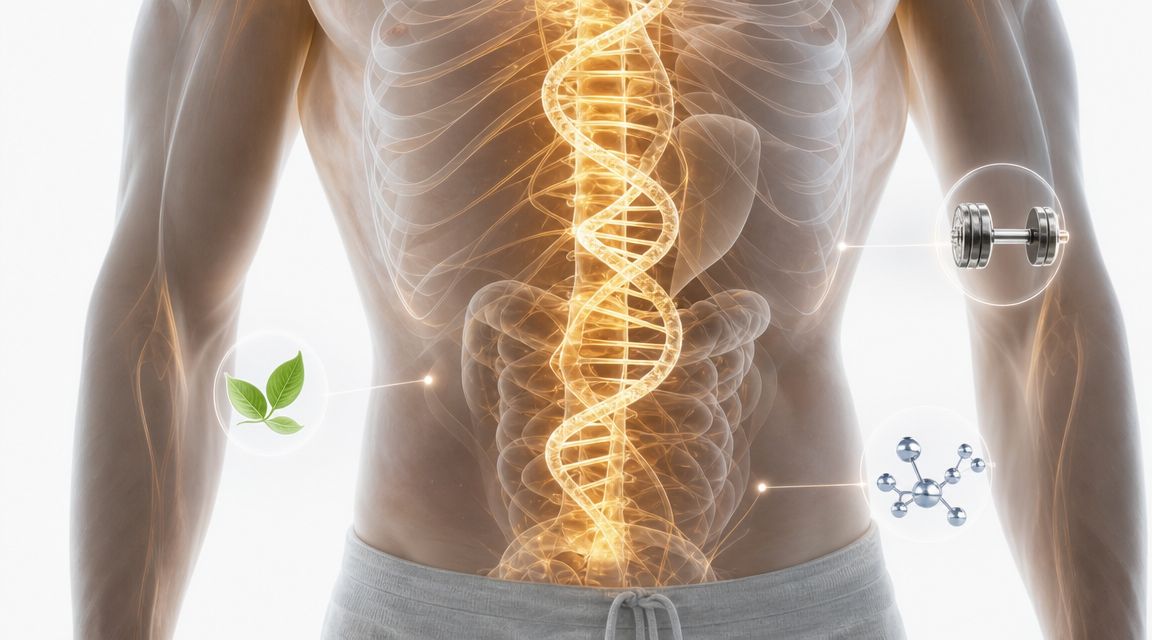
DNA Metabolic Analysis: Your Genetic Code for Success
You try hard. You watch what you eat, try out training plans, maybe even stick to them consistently for a while. And yet, it often feels like your body is playing by its own rules.
This is where the topic of DNA metabolic analysis becomes exciting. Not as a miracle cure. But as a more precise look at your basic genetic patterns, so you can stop constantly working on a trial-and-error basis.
Why you're stuck in a rut despite all your efforts
You're not alone. Many people eat "quite okay," exercise regularly, and yet wonder why energy, satiety, and weight remain so unpredictable. The frustration often runs deep because you quickly think it's due to a lack of discipline.
However, that is often the wrong conclusion.

The actual problem is often a lack of fit
I see it all the time: One person does well with a lot of rice, oatmeal, and endurance training. The next person gets tired, hungry, and feels like they're constantly fighting their appetite. Neither is doing "everything right" or "everything wrong." They simply react differently.
So, if you're wondering why standard tips don't work for you, it's also worth looking at possible reasons for not losing weight despite a calorie deficit. The point is not blame. The point is precision.
You're very likely already on the right track. Your path just isn't tailored enough to your body yet.
Between hope and skepticism
In Germany, this was discussed early on. Der Spiegel reported that Stanford researchers wanted to test in a study with 609 overweight individuals whether DNA-based dietary recommendations would bring measurable benefits. At the same time, the Society for Human Genetics pointed out that the risk of misinterpretation or overinterpretation in private genetic tests was significantly higher than a possible benefit, as Der Spiegel reported on the debate about DNA diets.
This tension is important. It protects you from naive hype. But it doesn't mean the topic is worthless. It just means: A DNA test is not an oracle. It's a tool.
Why trial and error is so demoralizing
Without personal data, you constantly switch between approaches:
- First low carb, then more oats and whole grains again.
- First a lot of cardio, then suddenly strength training.
- First less fat, then more nuts, eggs, and avocado again.
This costs time, nerves, and motivation. Others are already optimizing more specifically, while you're still wondering if your lunch or your training even suits you. This is exactly where a DNA metabolic analysis can be useful. Not to replace everything, but to make the map more precise.
What your genes reveal about fat, carbohydrates, and muscles
A DNA metabolic analysis does not look into your future. Nor does it read "everything" about you. It evaluates certain genetic markers that are related to metabolism, satiety, weight tendency, and training response.

No magic, just markers
A popular German metabolic analysis advertises the examination of six genes with statements on obesity, satiety, and fat loss. This is not a complete genome screening, but a focused marker test, as described on the product page for metabolic analysis.
In my opinion, this is an important classification. Anyone who believes a test will explain the entire body will be disappointed. Anyone who understands that individual genetic clues are brought together here can use the results much more effectively.
Three areas are particularly relevant in everyday life
Fat metabolism
Some people react more tolerantly to a higher fat content in their diet. Others cope less well with it and benefit more from a different macronutrient distribution. This explains why one person feels stable throughout the day with nuts, eggs, and salmon, while another becomes sluggish or overeats with the same foods.
Carbohydrate metabolism
This is often where the biggest "aha" moments occur. Many only realize through an analysis that their body reacts more sensitively to larger amounts of carbohydrates than they thought. Typical signs are afternoon slumps, quick hunger, or the feeling of having difficulty reaching satiety after bread, pasta, or sweets.
Muscles and training
Genes can also provide clues as to whether you respond more to explosive stimuli or endurance approaches. This doesn't mean you can only do one sport. It means your body may naturally respond slightly better to certain training stimuli.
Important: Your genes are not a limit. They are more like your factory settings.
Simply explained using your body's blueprint
Think of your DNA as an instruction manual. Not every chapter is equally important for your daily results. But some pages give you clear clues:
-
On appetite
Some markers are associated with hunger, satiety, and eating behavior. This helps to understand why some people need to eat much more structured to avoid constantly snacking. -
On macronutrient utilization
Other markers indicate whether fat or carbohydrates tend to work better in everyday life. -
On training response
This is exciting for active people. If you've always felt that long runs didn't make much progress, but you respond well to strength training, this could be partly genetically based.
What you should take away practically from this
Science is not there to unsettle you. It's there to give you language for what you may have already observed in yourself. If you feel tired after certain meals, stay full for a long time with others, or thrive much better in a particular training style, that's not your imagination.
A good DNA metabolic analysis makes these patterns more tangible. It doesn't replace your experience. It makes it more measurable and often finally understandable.
The 3 most common metabolic types – Which one are you?
When people first read their DNA results, they almost always spontaneously assign themselves to a pattern. This is helpful as long as you understand one thing: these types are guidance, not a rigid box.
A questionnaire or your gut feeling can give you a rough direction. They don't provide a definitive answer. A genetic analysis is much more precise for that. You can find an initial overview in this guide to metabolic types.
Comparison of metabolic types
| Feature | Carbohydrate-sensitive type | Efficient fat burner | Balanced mixed type |
|---|---|---|---|
| Typical energy feeling | Rather fluctuating after carbohydrate-rich meals | Often stable with fattier, protein-rich meals | Mostly stable when meals are balanced |
| Satiety | Often shorter, especially with little protein | Often good with fat plus protein | Solid with good balance |
| Common challenge | Cravings, afternoon slump, urge to snack | Too many "light" meals without satiety | Often underestimates portion sizes and routine |
| Dietary focus | Control carbohydrates more consciously, prioritize protein | Use healthy fats specifically, often choose carbs more selectively | Balance of protein, fat, and complex carbs |
| Training | Often good with strength training and clear meal structure | Often good with strength plus moderate endurance | Often responds flexibly to mixed programs |
Type 1: The carbohydrate-sensitive type
If you quickly feel hungry again after bread rolls, pasta, or sweet snacks, this is the type many people recognize themselves in. These people often feel that "healthy carbohydrates" don't automatically lead to more energy for them.
Typical indicators are:
- Quick drops in performance after a rather carbohydrate-heavy lunch
- Strong appetite in the evening, even though enough was eaten during the day
- Good effects from protein-rich meals and a clearer snack structure
The most common "aha" moment in practice is precisely this: carbohydrate metabolism. Many only realize through the analysis that they genetically react less favorably to larger amounts of carbohydrates. Then it becomes clear why years of "low fat and lots of whole grains" sounded sensible, but never really felt right.
Type 2: The efficient fat burner
This type often copes surprisingly well with healthy fats. This does not mean that they should eat unlimited amounts of fat. It means that fat as an energy source and satiety factor often works better for them than for others.
Typical characteristics:
- Long-lasting satiety after meals with eggs, fish, nuts, avocado, or olive oil
- Better concentration when meals are not too bread or pasta-heavy
- Less need for snacks if breakfast or lunch is substantial
From a coaching perspective, this is often the type who struggled for years with low-fat concepts and only later realized that this was never their best strategy.
Many are not fighting a lack of discipline, but a dietary strategy that simply doesn't suit them genetically.
Type 3: The balanced mixed type
This is not the boring type. This is often the most flexible type. These people usually do not benefit from extreme diets, but from consistency, quality, and reasonable distribution.
How to recognize them:
- You usually tolerate carbohydrates well, as long as they don't dominate the entire plate.
- You also cope well with healthy fats, as long as the overall meal structure is right.
- Your success depends less on a single macro and more on sleep, portion size, training routine, and everyday life.
Self-assessment is possible. Knowing for sure is not.
You can roughly classify yourself by observing:
- When you get hungry
- Which meals make you tired
- With which macro distribution you feel stable
- Whether you make better progress with cardio or strength training
The problem: Self-observation is prone to error. Stress, lack of sleep, habits, and expectations distort the picture. Therefore, self-assessment is only a starting point.
If you want clarity instead of assumptions, the direct path is a DNA test. This saves you trial & error and brings you much faster to a dietary strategy that truly suits you.
From result to concrete action – Your roadmap
You get your results and suddenly realize why your body reacted so contradictorily to classic diet tips. Many experience their first real "aha" moment right here. Not with fat or calories, but with carbohydrates. For years, bread, oatmeal, or rice were considered "actually healthy." Only with the genetic profile does it become clear why exactly these foods provide stable energy for some and cause cravings, afternoon slumps, or a lack of fat loss for others.

Now you don't need another off-the-shelf diet plan. You need clear translation into everyday life. Nutrition, training, and nutrient strategy must match your profile. If you want a concrete plan for this, this guide to diet after the test result will help you.
Nutrition first, because it decides daily
The biggest effect usually occurs on your plate. Your patterns repeat there every day.
Those who are more sensitive to carbohydrates often recognize themselves in typical situations: a big breakfast, quick hunger afterward. Pasta for lunch, then fatigue in the afternoon. Lots of fruit or a bar as a snack, then even more appetite. This is not a character flaw problem. The meals simply don't fit your metabolic profile well.
If you are rather carbohydrate-sensitive
Then treat carbohydrates purposefully instead of casually.
-
Breakfast
Start protein-rich. Eggs, Skyr, quark, or a hearty breakfast keep many people much more stable than muesli, juice, or sweet pastries. -
Lunch
Eat carbohydrates together with protein, fiber, and a clear portion size. Rice or pasta as a side dish often works better than as the basis of the entire meal. -
Snacks
Choose something that truly sustains you. Yogurt, nuts, cottage cheese, or a hard-boiled egg are often more sensible than pure fast energy.
A simple test for the first two weeks: Reduce isolated carbohydrates in the morning and observe your energy, hunger, and concentration. Many notice the difference faster than expected.
If you are more of a fat burner
Then eat good fats without a guilty conscience and give them a firm place.
- Breakfast with eggs, natural yogurt, nuts, or avocado often keeps you full longer.
- Salads need protein and fat, otherwise they are just a light prelude to the next hunger attack.
- Carbohydrates are still allowed. They should only be consciously placed, rather than automatically dominating every meal.
People of this type often report that they struggled for years with low-fat concepts and yet never felt truly full or efficient.
If you are a mixed type
Then you don't win through extremes, but through clear basic rules:
- Keep protein constant in every main meal.
- Adjust carbohydrates to activity, training time, and satiety.
- Use fats specifically, without making meals unnecessarily heavy.
Practical rule: The best diet is one where energy, satiety, and progress align.
Tailoring training to your profile
Many people train diligently, but without focus. This costs time.
If your genetic profile responds more to explosive strength and muscle building, clear strength stimuli and intense intervals usually bring you more than endless cardio. If you are more endurance-oriented, you benefit more from longer, steady sessions. For a mixed profile, the combination of strength training, everyday movement, and moderate cardio structure often works best.
| Genetic indication | Training focus |
|---|---|
| More strength and explosive power-oriented | More strength training, intervals, short intense stimuli |
| More endurance-oriented | Longer moderate sessions, solid basic endurance |
| Mixed profile | Combination of strength, everyday movement, and moderate cardio structure |
Here, too, there is often an "aha!" moment. Those who for years considered themselves "undisciplined" or "not made for sports" often simply trained against their own predisposition.
Check nutrients specifically instead of blindly supplementing
Genes show tendencies. They do not confirm a current deficiency.
The correct order is clear:
- DNA first, to see long-term patterns
- Blood values next, to check the current status
- Supplements last, when needs, values, and goals align
A genetic nutrition test from mybody x Gesundheit can be a sensible starting point for this. Especially if you finally want to stop trying the next standard solution every few months.
How to implement the first few weeks effectively
Keep it simple. Otherwise, you won't do it long enough.
-
Week one
Adjust breakfast and lunch to your type. This is often where the biggest mistakes with carbohydrates occur. -
Week two
Sharpen your training. You don't have to rebuild everything. You need to set the right focus. -
Week three
Check if blood values or further diagnostics are useful before buying supplements.
The real value is not in the result on paper. It lies in the decisions that become easier from then on. You eat more purposefully, train more appropriately, and finally understand why your body reacts to certain meals the way it does.
More than just genes – limitations and the bigger picture
You receive a DNA report, read something about your carbohydrate metabolism, and immediately want to change everything. This is precisely where most mistakes happen. Genes provide orientation. They do not replace careful observation of your body in everyday life.

Genes provide direction, not the complete result
A good test shows predispositions. It doesn't show how your body reacts today to sleep deprivation, chronic stress, or a chaotic week.
This is often what leads to the next "aha" moment. Someone learns that carbohydrates are genetically processed less effectively, radically cuts them out, and then wonders about cravings, performance drops, and a bad mood. The problem isn't just genetics. The problem is premature implementation.
The honest assessment is therefore: a DNA metabolism analysis is a strong starting point if you use it as a decision-making aid. It is not a free pass for extreme rules and not a definitive explanation for every pound, every meal, and every training day.
What a test cannot capture
Your genes don't reveal your current blood values. They also don't show how you sleep, how high your mental stress is, or whether medications affect your appetite, blood sugar, or recovery.
That's why it's worth looking at the whole picture.
- Sleep affects hunger, recovery, and training quality.
- Stress changes appetite, eating behavior, and energy.
- Blood values show the current status instead of just a predisposition.
- Digestion and gut influence how well you tolerate and utilize food.
- Habits determine whether a good plan works in everyday life at all.
A report can explain why you react more sensitively to large portions of pasta or sweet snacks than others. It doesn't automatically explain why you raided half the kitchen last night. For that, you need to consider sleep, stress, timing, portion sizes, and daily life.
How to recognize quality
Not every test will help you. Many people don't need a pretty PDF with complicated technical terms. They need clear guidance that can be translated into real decisions.
Pay attention to these points:
-
Clean sample collection
The saliva sample must be collected correctly and sent in without contamination. -
Understandable evaluation
Good reports explain what a genetic indication practically means for nutrition, training, and recovery. -
Realistic statements
Reputable providers do not promise guaranteed weight loss or miracles in a few weeks. -
Meaningful classification
In case of complaints, nutrient questions, or hormone problems, additional diagnostics are often needed.
My clear advice
Use DNA for direction. Check the current state with meaningful measurements. Measure your implementation by energy, satiety, training performance, and everyday suitability.
This is how an interesting genetic analysis becomes a plan that truly suits you. And that's when the "aha" moments that stick truly emerge. Not because genes determine everything, but because you finally recognize which adjustments actually have an effect on your body.
Your path to genetic optimization – The next step
If you've been tinkering with nutrition and training for years without really knowing which strategy suits your body, then another general plan is almost certainly not the solution.
The better decision is clarity.
A DNA metabolism analysis cannot answer every question for you. But it can give you what most people lack: a reliable basis for nutrition, training, and sensible supplements. You save yourself unnecessary experimentation. You orient yourself by evidence instead of trends. And you invest once in knowledge that will benefit you permanently.
Others are already optimizing more precisely instead of repeating the same diet mistakes every year. This is not a hype idea, but an efficiency idea. If you are health-conscious and already working on yourself, then precision makes the difference.
Even more important: You're not on the wrong track. You're often just on too general a track. As soon as you understand how your body processes carbohydrates, fats, satiety, and training type, many things suddenly become logical.
You won't get the sure answer through guesswork, quizzes, or your friend's diet. You only get it through a test.
If you want to end your guesswork and make your path more precise, check out the solutions from mybody x Gesundheit. For a reliable answer, the DNA Nutrition Test and the overview of DNA Metabolism Tests are particularly suitable.



Share:
Menopause Weight Gain: Causes & Solutions 2026
Vitamin B Complex with Biotin: Effects and Dosage 2026