

Role of dietary supplements in individual health
More than 60 percent of the European population regularly takes dietary supplements. Many wonder whether these products truly meet their individual needs or even pose risks. Anyone seeking to improve their health in a targeted way can benefit from an overview of legal requirements, different ingredients, and practical tips for safe use in Central Europe.
Table of contents
- What exactly do dietary supplements mean?
- Types, ingredients, and effects explained
- Dietary Supplements versus Medicines: A Comparison
- Opportunities, benefits, and limitations for different user groups
- Legal requirements and safety in Central Europe
- Risks, side effects, and practical pitfalls
Key findings
| Point | Details |
|---|---|
| Dietary supplements complement the diet | They fill nutrient gaps and are not substitutes for a balanced diet. |
| Legal regulations | They are subject to food regulations, require safety standards, and must not make claims about curing illnesses. |
| Individual advice is essential | A doctor or nutritionist should always be consulted before taking them to avoid risks and interactions. |
| Overdosing and risks | Improper use can lead to health problems, especially without professional supervision. |
What exactly do dietary supplements mean?
Dietary supplements are special products that support our daily diet with concentrated nutrients. They are available in various forms, such as tablets, capsules, or powders, and are intended to supplement nutritional requirements in a targeted way. Unlike medicines, they are legally classified as food products.
The main function of dietary supplements is to fill nutrient gaps that may arise from our daily diet. They contain classic nutrients such as vitamins, minerals, omega-3 fatty acids, or plant extracts in concentrated form. It is important to understand that they do not replace a balanced diet but are intended to complement it in a targeted way.
By law, dietary supplements are subject to food regulations and must meet certain safety standards. They must not make health claims about curing illnesses and must be demonstrably safe for the human body. The EU strictly regulates which ingredients may be used and in what concentrations.
Pro tip: Always consult your doctor or nutritionist before taking dietary supplements to clarify your individual needs and possible interactions.
Types, ingredients, and effects explained
Dietary supplements encompass a diverse range of nutrients that specifically support various bodily functions. The types range from vitamins to complex plant extracts, with each component exerting a specific physiological effect in the body.
The main ingredients include vitamins, minerals, trace elements, amino acids, and antioxidants. These nutrients are offered in concentrated form and are intended to fill nutritional gaps. It is important that they do not have pharmacological effects like medicines, but exclusively support nutritional functions.

The various ways dietary supplements work are directed at specific bodily processes. For example, they can strengthen the immune system, support metabolism, reduce oxidative stress, or promote energy production. Their effectiveness depends greatly on individual factors such as nutritional status, health status, and lifestyle.
Pro tip: Have an individual nutrient assessment carried out before taking dietary supplements to identify your personal needs specifically.
Here you will find an overview of the most important ingredients in dietary supplements and their typical effects in the body:
| Nutrient | Main function | Typical target group |
|---|---|---|
| Vitamin D | Bone strength, immune defense | Older adults, people with little sunlight exposure |
| Iron | Oxygen transport, energy | Pregnant women, vegans |
| Magnesium | Muscle function, metabolism | Athletes, people experiencing stress |
| Omega-3 fatty acids | Heart health, brain function | People who eat little fish |
| Zinc | Immune function, skin health | Adolescents, adults |
| Vitamin B12 | Nervous system, blood formation | Vegans, older people |
Dietary Supplements versus Medicines: A Comparison
The key difference between dietary supplements and medicines lies in their legal classification and approval process. Dietary supplements are foods, not medicines, and can be sold freely, whereas medicines must undergo a strict approval process.
While medicines pursue specific healing purposes and must scientifically demonstrate their efficacy, dietary supplements serve only to support nutrition. They are intended to fill nutrient gaps and promote general well-being without making therapeutic claims. Medicines, by contrast, aim to treat, alleviate, or cure diseases.
The regulatory framework also differs fundamentally: Dietary supplements are subject to food law and need only meet basic safety standards. They may not make claims of curing diseases and are not tested as comprehensively as medicines. Medicines, by contrast, undergo extensive clinical studies to evaluate their efficacy, side effects, and risks.
Pro tip: Always consult a doctor or nutritionist to find the supplement that is right for you and rule out possible interactions.
The following comparison table contrasts dietary supplements and medicinal products to highlight the key differences:
| Characteristic | Dietary supplements | Medicinal products |
|---|---|---|
| Objective | Supplementing the diet | Treatment of diseases |
| Approval procedures | Food law, safety assessment | Medicines Act, clinical studies |
| Advertising claims | No claims of curing diseases | Permitted therapeutic claims |
| Sales status | Available over the counter | Often available only by prescription |
Opportunities, benefits, and limitations for different user groups
The usefulness of dietary supplements varies depending on individual circumstances and they can provide valuable support for certain population groups. While healthy people with a balanced diet generally do not need additional nutrients, there are stages and situations in life when targeted supplementation may be beneficial.
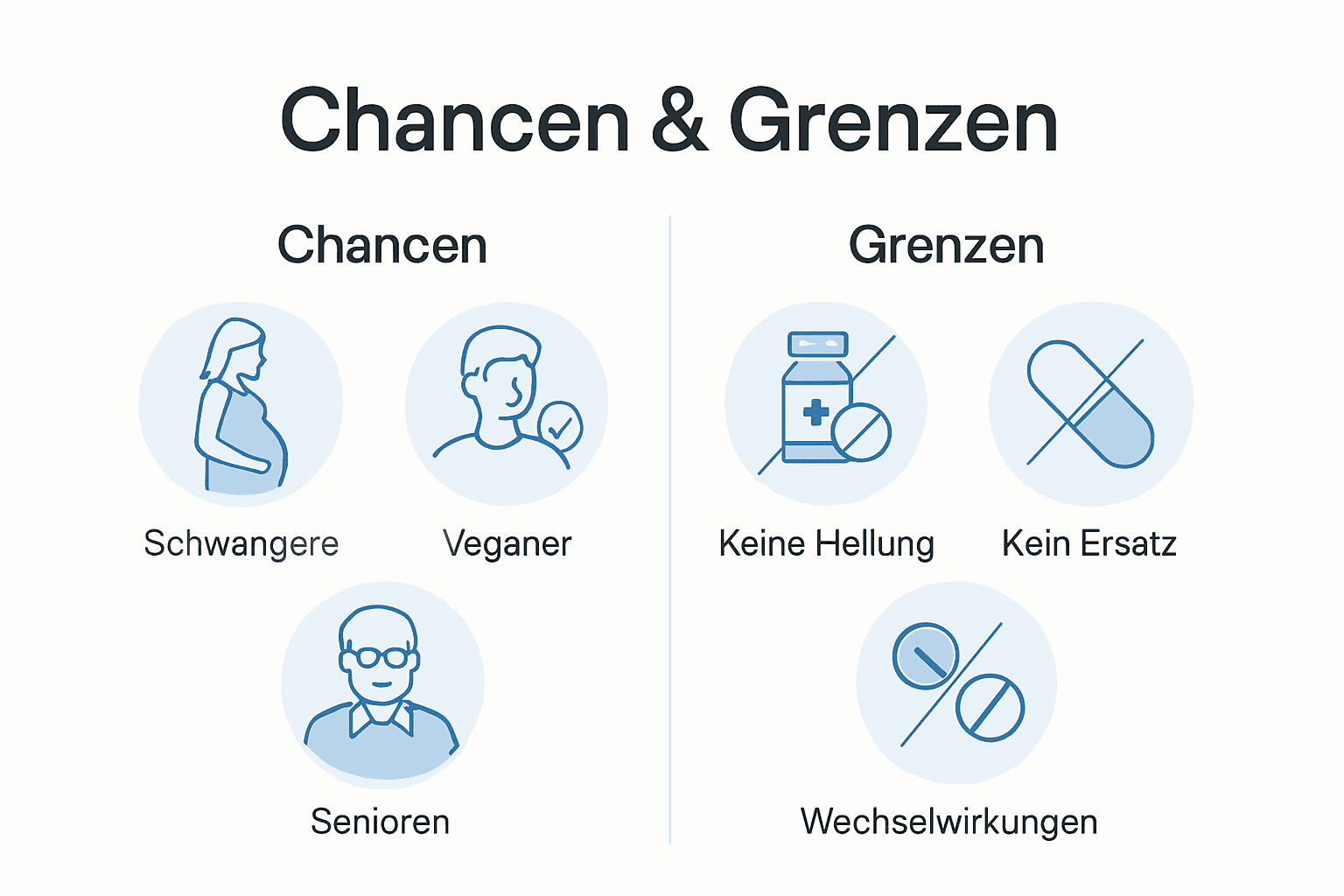
Particularly relevant user groups include pregnant and breastfeeding women, who have increased nutrient requirements; vegans, who may be at risk of deficiencies; older people with reduced nutrient absorption; and individuals with confirmed metabolic conditions. For competitive athletes or people with certain chronic conditions, professionally supervised supplementation may also be beneficial.
The limitations of dietary supplements are clearly defined: They do not replace a balanced diet, cannot serve as cures, and may even pose health risks when taken without proper supervision. Individual advice and, where appropriate, prior laboratory testing are essential to ensure truly beneficial and safe supplementation.
Pro tip: Have a comprehensive health and nutrient assessment carried out before taking dietary supplements to precisely identify your individual needs.
Legal requirements and safety in Central Europe
Dietary supplements are subject to strict legal regulation in Central Europe, with consumer protection at its core. Unlike medicines, they are classified as food products but must nevertheless meet specific safety standards and legal requirements.
Oversight is carried out by official bodies such as the Federal Office of Consumer Protection and Food Safety. Key regulatory mechanisms include mandatory registration, setting maximum levels for vitamins and minerals, and strict monitoring of approved ingredients. Health-related advertising claims are subject to particularly rigorous scrutiny and may be communicated only with scientifically substantiated health claims.
For manufacturers, this means extensive documentation obligations. They must demonstrate that their products have no pharmacological effects, are safe, and comply with statutory limits. Food safety authorities carry out regular inspections and can remove products from the market if regulations are not followed.
Pro tip: When purchasing dietary supplements, look for the quality seal and the manufacturer's documentation to ensure the safety and quality of the products.
Risks, side effects, and practical pitfalls
Dietary supplements pose numerous potential risks in practice, which are often underestimated. Self-medication without professional advice can lead to adverse health consequences, especially when individual metabolic processes and potential interactions are not taken into account.
The most common pitfalls include overdosing, unrecognized interactions with medications, and taking untested products. Misleading advertising claims also encourage consumers to view dietary supplements as cure-alls. In fact, improperly selected supplements can increase health risks instead of reducing them.
Situations in which consumers take dietary supplements without consulting medical professionals are particularly critical. Individual metabolic processes, pre-existing conditions, and genetic characteristics are often not adequately taken into account. Professional advice and targeted laboratory diagnostics are therefore essential to minimize potential health risks.
Pro tip: Have a comprehensive health check before taking dietary supplements and consult a nutritionist or doctor.
Targeted support for individual health with mybody®
Many people face the challenge of knowing their personal nutrient requirements precisely and using targeted supplements without risks or overdosing. This article addresses the topic by highlighting the importance of customized approaches to individual health goals. The realization that not every nutritional gap is the same and that a sound analysis of nutrient status and potential intolerances is essential can improve your well-being in the long term.
With mybody® you can take this next step. Benefit from precise analyses showing which nutrient deficiencies or intolerances are present. Our scientifically validated tests for detecting and preventing nutrient deficiencies – at-home tests and at-home intolerance tests provide you with reliable data. This allows you to tailor your diet and supplementation precisely to your needs. Rely on state-of-the-art laboratory quality combined with individualized recommendations for your health.
Start now with your personal health profile and receive valuable tips for sustainably optimizing your well-being. Visit mybody®x and discover how easy it is to take charge of your health independently and based on sound information.
Frequently Asked Questions
What Are Dietary Supplements?
Dietary supplements are specialized products that contain nutrients such as vitamins, minerals, and plant extracts in concentrated form and are intended to fill nutritional gaps.
Who Should Take Dietary Supplements?
Certain groups, such as pregnant women, vegans, older adults, and competitive athletes, may have increased nutrient needs and could benefit from targeted supplementation.
What Are the Risks of Taking Dietary Supplements?
Risks include overdosing, undetected interactions with medications, and taking untested products, which can lead to adverse health effects.
Are Dietary Supplements a Substitute for a Balanced Diet?
No, dietary supplements are intended to complement a balanced diet, but they cannot replace it and are not a cure-all.
Recommendation
- Proper Nutrition for More Energy and Well-Being – mybody®x
- Vitamins and Minerals – How They Can Improve My Well-Being in the Long Term – mybody®x
- Recognizing Nutrient Deficiencies: 7 Important Signs & Tips – mybody®x
- Nutrition in Old Age: How to Stay Fit and Full of Energy – mybody®x
- What Does Anti-Aging Mean: Understanding and Explanation | B Woman



Share now:
Why test dietary supplements? For targeted prevention
Function of dietary supplements – Better health through targeted nutrient intake