

The Role of Dietary Supplements – Better Health Through Targeted Nutrient Intake
According to studies, at least one in three adults in Switzerland suffers from a nutrient deficiency at least temporarily. It is therefore no surprise that individualized dietary supplement recommendations are increasingly becoming a focus for many health-conscious people in Central Switzerland. Those who specifically use vitamins, minerals, or omega-3 can meaningfully supplement their diet and improve their personal well-being. Here you will learn how dietary supplements actually work, what you need to consider, and how legal frameworks strengthen consumer protection.
Table of contents
- What dietary supplements actually are
- Types and ingredients of dietary supplements
- How dietary supplements work in the body
- Swiss legislation and consumer protection
- Risks, side effects, and appropriate use
Key findings
| Point | Details |
|---|---|
| Dietary supplements are not medicines | They are intended to supplement the diet and not to replace it. |
| A healthy diet is essential | Dietary supplements are usually unnecessary for people with a balanced diet. |
| Individual needs assessment required | Before taking them, you should have a health check by a qualified professional to identify specific deficiencies. |
| Legal frameworks protect consumers | In Switzerland, dietary supplements are subject to strict regulations to ensure quality and safety. |
What dietary supplements actually are
Dietary supplements are specialized products that contain additional nutrients such as vitamins, minerals, or other active ingredients. They are not medicines but are regulated under food law and are intended to close potential nutrient gaps in your daily diet. Dietary supplements are not subject to the same strict approval requirements as medicines.
The primary function of these products is to supplement, not replace, a regular diet. They can be particularly useful if you have demonstrable deficiencies or do not get enough specific nutrients through your diet. It is important to know that dietary supplements are usually unnecessary for healthy people with a balanced diet.
There are various forms of dietary supplements:
- Vitamin supplements
- Mineral complexes
- Trace elements
- Amino acid supplements
- Omega-3 supplements
Important to understand: These products do not replace a balanced diet and should always be taken in consultation with qualified professionals.
Pro tip: Before taking dietary supplements, have your individual nutrient status checked with a blood test so that any deficiencies can be addressed specifically.
Types and ingredients of dietary supplements
Dietary supplements encompass a diverse range of products containing various nutrients in concentrated form. Typical ingredients range from vitamins to plant extracts, with each category serving specific health functions.
The most important types of dietary supplements can be divided into the following main categories:
- Vitamin supplements: Providing essential micronutrients
- Mineral complexes: Supporting metabolic processes
- Trace elements: Promoting biochemical reactions
- Omega-3 supplements: Improving cardiovascular health
- Amino acid supplements: Supporting muscle building and recovery
The dosage forms vary and include tablets, capsules, powders, and drops. Particularly interesting are the diverse bioactive substances in dietary supplements, which go beyond traditional nutrients and may produce additional physiological effects.

It is important to note that dietary supplements are not intended to replace a balanced diet, but only to complement it. They can help fill specific nutrient gaps, but should always be taken mindfully and after consulting healthcare professionals.
The main categories of dietary supplements and their complementary functions in the body are compared below:
| Category | Main function in the body | Common target group |
|---|---|---|
| Vitamin supplements | Supporting the immune system | People with micronutrient deficiencies |
| Mineral complexes | Regulation of metabolic processes | Athletes, seniors |
| Omega-3 supplements | Promoting heart health | People who eat little fish |
| Amino acid products | Muscle building and recovery | Athletes, vegetarians |
| Trace elements | Involvement in cellular functions | Pregnant women, older adults |
Pro tip: Have your individual nutrient status checked with a blood test before taking dietary supplements to accurately identify deficiencies.
How dietary supplements work in the body
Dietary supplements interact with our metabolism in complex ways and support various physiological processes. Vitamins and minerals play a central role in metabolic reactions by serving as catalysts and cofactors for enzymatic functions.
The way dietary supplements work can be divided into several main mechanisms:
- Nutrient balance: Closing nutritional gaps
- Enzymatic support: Promotion of biochemical reactions
- Cell protection: Neutralization of free radicals
- Hormone regulation: Stabilization of endocrine processes
- Immunomodulation: Strengthening defense mechanisms
Bioavailability and effectiveness depend greatly on individual metabolism. Factors such as age, health status, dietary habits, and genetic predisposition influence how effectively nutrients are absorbed and processed by the body.
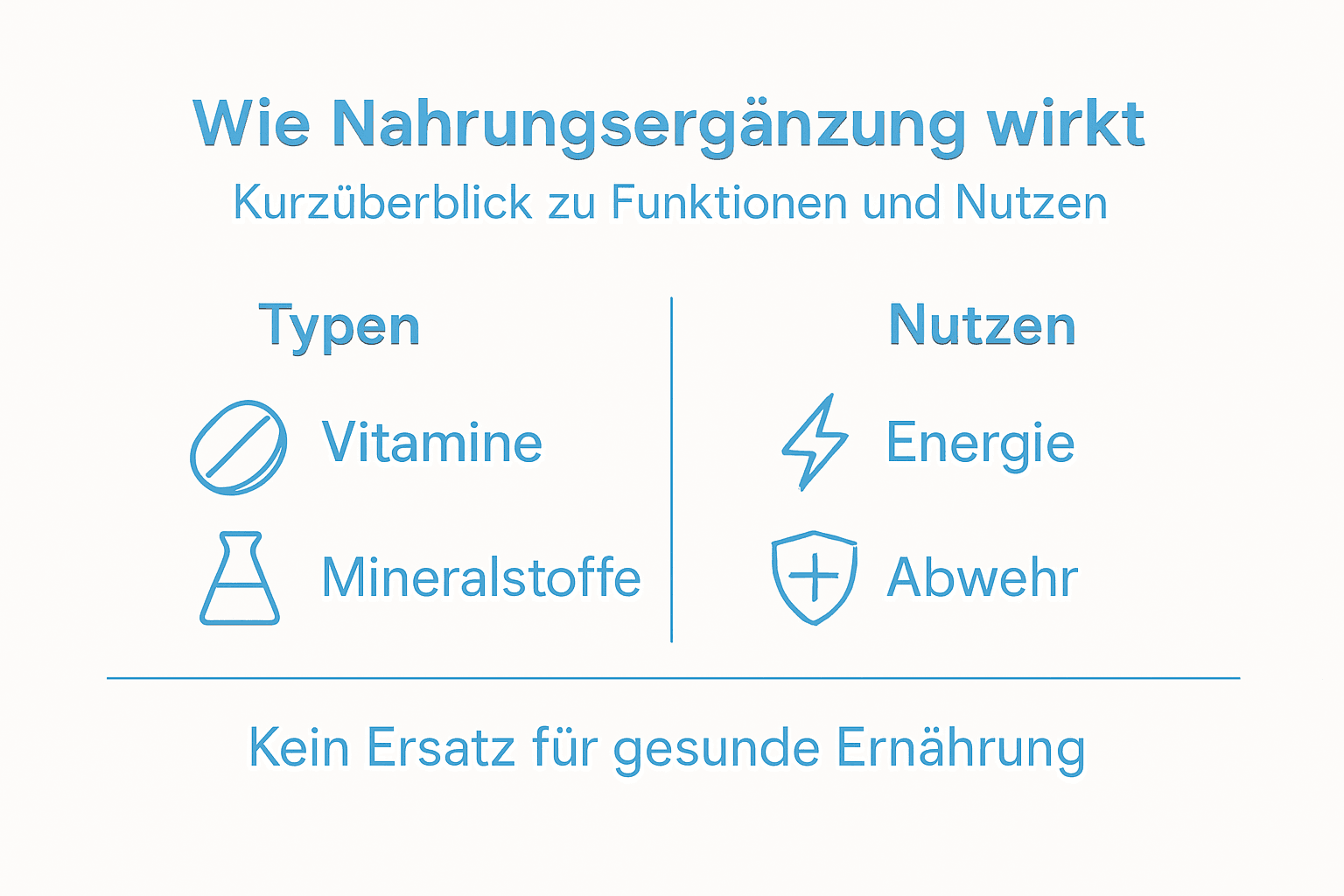
It is crucial to understand that dietary supplements are not miracle cures, but serve as targeted support for individual health needs. They do not replace a balanced diet, but can specifically compensate for nutrient deficiencies.
Pro tip: Consult a nutritionist or doctor to identify your personal nutrient needs through a comprehensive blood test.
Swiss legislation and consumer protection
Dietary supplements are subject to strict food regulations in Switzerland, which ensure consumer protection and product safety. These regulations aim to protect consumers from misleading advertising claims and potentially harmful products.
The most important legal framework includes:
- Mandatory declaration: Complete disclosure of all ingredients
- Maximum quantity regulations: Defined limits for vitamins and minerals
- Advertising restrictions: Ban on misleading health claims
- Regulatory oversight: Regular checks of product quality
- Safety standards: Strict requirements for manufacturing and composition
For manufacturers, this means a high level of responsibility. They must not only comply with legal requirements but also continuously ensure the quality and safety of their products. Transparency and scientific grounding are key criteria in this regard.
Consumers benefit from these regulations because they provide protection against unscrupulous suppliers and potentially harmful products. The legislation builds trust and ensures a high quality standard for dietary supplements.
An overview of the most important Swiss regulations and their significance for consumers:
| Regulation | Everyday benefits for consumers | Manufacturer obligations |
|---|---|---|
| Mandatory labeling | Transparent product information | Complete information on all ingredients |
| Maximum quantity regulations | Protection against harm to health | Compliance with legal limits |
| Advertising restrictions | Avoidance of misleading advertising | No medical claims of healing |
| Quality control | Ensuring product safety | Regular testing and monitoring |
Pro tip: When purchasing dietary supplements, always check for a complete list of ingredients and a reputable source.
Risks, side effects, and appropriate use
Dietary supplements pose potential risks that must be carefully considered. They are not a substitute for a balanced diet and can cause unwanted side effects if taken without proper supervision.
Potential risks and side effects include:
- Overdose: Harmful effects from excessive dosage
- Interactions: Interference with medications
- Allergic reactions: Intolerances to individual ingredients
- Unwanted side effects: Digestive problems, headaches
- Incorrect self-medication: Neglecting medical advice
Appropriate use requires an individual needs assessment and professional advice, especially in the case of pre-existing conditions or ongoing medication. It is important to take dietary supplements only for specific purposes and on a doctor's recommendation.
The decision to take dietary supplements should be based on a thorough analysis of your individual health status. Seek advice from qualified professionals and regularly review their necessity and effectiveness.
Pro tip: Before taking dietary supplements, undergo a comprehensive health check and consult a nutritionist.
Better health through targeted nutrient supplementation – With mybody® on the safe side
The article clearly shows how important an individual needs assessment is for achieving optimal nutrient intake and long-term health. Many people do not know whether they have nutrient gaps or which ones they actually have. The goal is to address deficiencies specifically without unnecessary risks or overdosing. Use Identify and prevent nutrient deficiencies – at-home tests | mybody® – mybody®x to find out which vital nutrients your body really needs.
Choose scientifically validated and ISO-certified analyses from mybody® Lab GmbH today. Benefit from a simple at-home blood collection and receive personalized recommendations for your diet and dietary supplements. This enables you to improve your health independently and sustainably. You can also use our At-home intolerance tests | mybody®x to determine whether hidden allergies could be impairing your nutrient absorption.
Start your journey toward better health today. Visit mybody-x.com and receive your personalized analysis. For a better quality of life through targeted nutrient intake.
Frequently asked questions
What are the most important types of dietary supplements?
Dietary supplements can be divided into several main categories: vitamin supplements, mineral complexes, trace elements, omega-3 supplements, and amino acid products. Each category has specific functions in the body.
Why are dietary supplements important for well-being?
Dietary supplements help fill nutrient gaps, particularly when the body does not receive enough nutrients due to an inadequate diet, health problems, or increased needs.
Can dietary supplements replace my diet?
No, dietary supplements should never replace a balanced diet; they should only complement it to compensate for potential nutrient deficiencies.
What is the best way to take dietary supplements?
It is advisable to take dietary supplements in consultation with healthcare professionals. An individual needs assessment and, if necessary, a blood test can be helpful for supplementing specific nutrients.
Recommendation
- Proper nutrition for more energy and well-being – mybody®x
- Vitamins and minerals – how they improve my long-term well-being – mybody®x
- Recognizing nutrient deficiency symptoms – your guide to greater well-being – mybody®x
- 8 common vitamin deficiency symptoms you should know – mybody®x
- 7 reasons to understand the importance of breakfast - dentalnetcare.it



Share now:
Role of dietary supplements in individual health
Your complete guide to the saliva test for hormones