
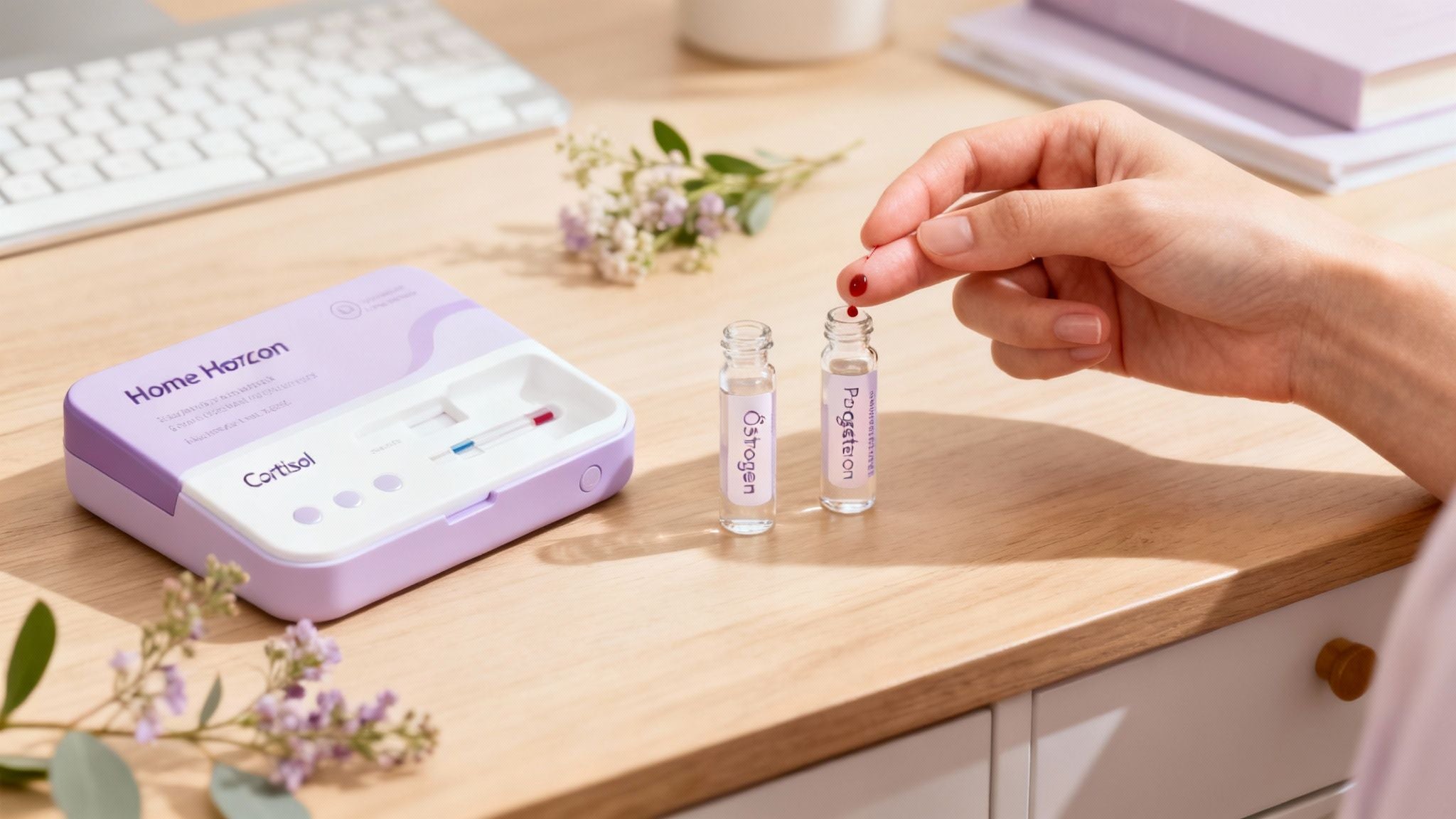
Get your hormone levels tested: Understand your body's signals
Getting your hormone levels tested is often the crucial first step to finally understanding why you constantly feel tired, your mood is on a rollercoaster, or your cycle just isn't running smoothly. It's about interpreting the subtle yet powerful signals of your body and regaining control over your well-being.
Understand your body's signals
Do you know that feeling of fighting against invisible walls? You sleep enough, but you're still chronically exhausted. Your mood swings from overjoyed to utterly despondent for no apparent reason. Perhaps you're also plagued by skin problems, unexplained weight fluctuations, or sleep disturbances that drive you crazy.

These are not "bad days." Often, this is how your body tells you that something is out of balance. Hormones are the chief messengers in your organism – they direct everything from your energy level to your emotions to your metabolism. Even tiny shifts can trigger a domino effect.
When the body calls for help
Imagine you constantly feel overwhelmed and stressed, even though your life is objectively calm. This could be a clear sign of an imbalance in the stress hormone cortisol. Or you struggle every month with severe PMS symptoms and painful periods – often, an unbalanced ratio of estrogen and progesterone is behind this.
These symptoms are not imaginary. They are concrete physical reactions that you should take absolutely seriously. A hormone test here is like a compass that points you to the cause, instead of just covering up the symptoms.
The key is to stop guessing and start measuring. A hormone test from mybody-x provides you with data-driven insights into your body and gives you the power to make informed decisions for your health.
A look at specific life phases
Especially in certain life phases, such as when trying to conceive or during the years before and during menopause, hormones play a central role. In Germany alone, around 9 million women in menopause seek medical advice to finally get clarity about their hormone status. According to recommendations from the German Menopause Society, a hormone test is particularly useful when symptoms are unclear and women are seeking clarity. Learn more about the recommendations for hormone replacement therapy and diagnostics.
Even general complaints like persistent fatigue often have hormonal roots. If you want to delve deeper into this topic, you can find more information about the causes of fatigue and what you can do about it in our guide.
With a mybody-x home hormone test, you can take this first, crucial step yourself – discreetly, easily, and without long waiting times. You don't just get raw numbers, but an understandable evaluation that helps you grasp what's really going on in your body. It's time to listen to your body's signals and take action.
Which hormone values truly matter
When you're thinking about getting your hormones tested, you might feel overwhelmed by all the technical terms and values. But don't worry, you don't need to be an endocrinologist to understand what's going on in your body. It's about knowing the key players that significantly influence your daily well-being.
Imagine your hormone system as a finely tuned orchestra. Each hormone has its role, but they all need to play in harmony for the music – your well-being – to sound harmonious. Here, we'll focus on the main instruments that most often go out of tune.
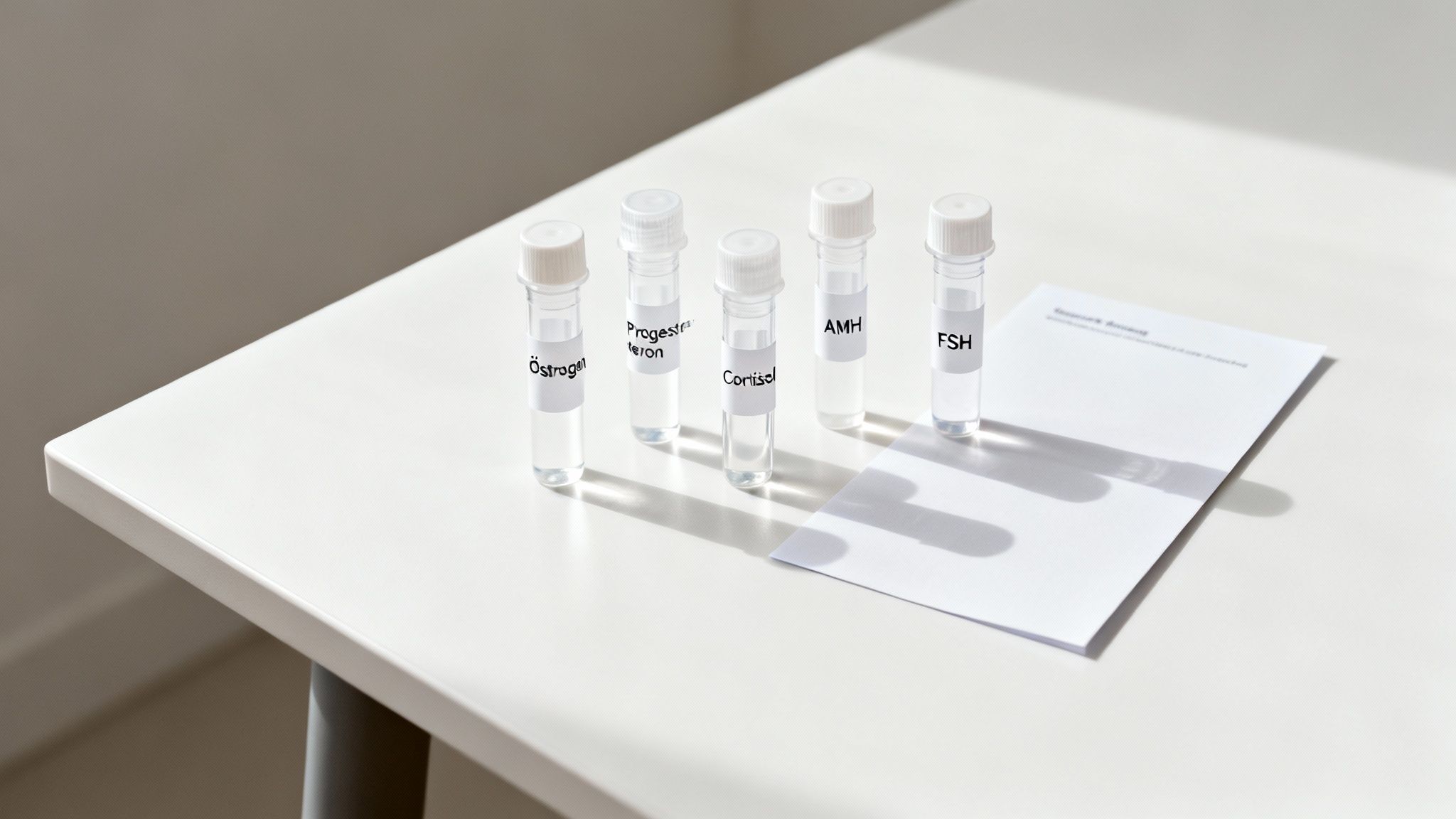
The most important hormones for your balance
To specifically search for the cause of your symptoms, it's invaluable to know which hormone is responsible for which task. An imbalance can manifest itself in very different ways.
Here's an overview of the central players:
- Estrogen: More than just a female sex hormone. Estrogen affects your mood, skin, bones, and even your memory. An imbalance can lead to cycle irregularities, mood swings, or hot flashes.
- Progesterone: Often referred to as the "calming hormone," it ensures balance and good sleep. A deficiency is a common cause of PMS, anxiety, and sleep problems.
- Cortisol: Your stress hormone. Persistently elevated cortisol levels due to chronic stress can lead to exhaustion, abdominal weight gain, and a weakened immune system.
- Thyroid hormones (TSH, fT3, fT4): They are the engine of your metabolism. If something is wrong here, you either feel constantly tired and listless (underactive) or nervous and overactive (overactive).
The mybody-x hormone tests are specifically designed to accurately analyze these crucial values. This gives you a clear picture of which area in your body currently needs support.
To give you a first orientation, we have created a table. It shows you which typical complaints could indicate which hormonal imbalances.
Common symptoms and their hormonal causes
This table helps you associate typical complaints with possible hormonal imbalances and shows which mybody-x test can provide clarity.
| Symptom | Possible hormonal imbalance | Suitable mybody-x test |
|---|---|---|
| Severe PMS, irritability, breast tenderness | Progesterone deficiency, estrogen dominance | Female Hormone Profile |
| Sleep disturbances, waking up at night | High evening cortisol, progesterone deficiency | Female Hormone Profile, Stress & Sleep Test |
| Unexplained weight gain | Hypothyroidism, high cortisol | Thyroid Test, Stress & Sleep Test |
| Constant fatigue, lack of drive | Hypothyroidism, low sex hormones | Thyroid Test, Female/Male Hormone Profile |
| Hot flashes, mood swings | Fluctuating estrogen, declining progesterone (perimenopause) | Female Hormone Profile Plus |
This assignment is, of course, a simplification, but it gives you a good starting point for your search.
Special values in particular life phases
Depending on where you are in life, completely different hormone values come into focus. Your body has different needs in each phase, and a targeted test can provide you with valuable answers.
For example, when trying to conceive, certain values are crucial for better assessing fertility. Hormone tests for women often focus on ovarian reserve here. The AMH value is a central marker: values below 0.7–1 ng/ml indicate a low egg reserve. At the same time, an FSH value below 6 mIU/ml on the third day of the cycle is considered excellent. An elevated prolactin value can also disrupt ovulation and should be checked. Detailed information on this can be found, for example, in this guide on interpreting female hormone values on invitra.de.
Even in perimenopause, the years before the last period, the hormonal interplay changes significantly. Here, tests can help to finally correctly classify the often diffuse symptoms such as sleep disturbances or mood swings.
Your hormone status is not a static quantity. It changes with your cycle, your age, and your lifestyle. A test is always a snapshot – but an incredibly helpful one to understand the current situation and take targeted action.
From insight to action
Knowing which hormones are out of balance is the first step. A mybody-x test not only provides you with data but also the understanding behind it.
For example, if you see in black and white that your progesterone is too low in relation to estrogen (a so-called estrogen dominance), this suddenly explains your agonizing PMS symptoms. A high cortisol level in the evening makes it crystal clear why you lie awake for hours and simply cannot relax.
These insights are incredibly valuable. They allow you to move from passively enduring symptoms to actively shaping your health. Because now you can make targeted changes – be it through adjustments in diet, smart stress management, or other lifestyle measures. The decision to get your hormone levels tested gives you the tools to do so.
Your path to hormone analysis: Doctor's visit or home test?
Okay, you've decided: It's time to get to the bottom of your hormones. A super important decision for your health! Now you're faced with the next question: How do you best approach it? Basically, there are two ways – the classic trip to the doctor's office or the modern, flexible home hormone test. Both have their justification but suit very different needs and lifestyles.
A visit to the doctor is the first thought for many. Of course, here you get direct medical advice and an initial assessment. A doctor can classify your symptoms and, if he considers it medically necessary, order a blood test.
But this is often where the first hurdle lies: Without a clear medical indication – think of an unfulfilled desire to have children or severe menopausal symptoms – preventive or lifestyle-oriented hormone tests are often not covered by health insurance. In addition, there are often long waiting times for a specialist appointment and rigid appointment times for blood collection, which are difficult to fit into a busy schedule.
The modern alternative: the home hormone test
Exactly for these cases there is a smart alternative: a home test, as we offer it at mybody-x. The biggest advantage is obvious: maximum flexibility and discretion. You decide when and where you perform the test – without any waiting room atmosphere and appointment stress. The sample collection takes place in your familiar environment, which can be crucial, especially when measuring stress hormones like cortisol. The stress of a doctor's visit alone could falsify the values.
Many wonder how reliable such tests actually are. An absolutely legitimate question. Even professional societies like the German Society for Endocrinology (DGE) point out that laypeople often find it difficult to interpret the results. At the same time, studies also show that professionally evaluated saliva tests – especially for hormones like progesterone and estradiol – have high reliability. For thyroid hormones, however, a blood test from the vein remains the gold standard.
At mybody-x, we build on this scientific basis. Your sample is analyzed in certified German partner laboratories – the same laboratories that countless doctor's offices trust. This ensures that the quality of the results is identical. So you get medical laboratory quality, but with the comfort of a home test. If you want to know more precisely how a home hormone test works, we have summarized all the important information for you.
Doctor's visit versus mybody-x home test in direct comparison
To make your decision easier, we have contrasted the most important points of the two methods. Use this overview to find out which method best suits your needs and lifestyle.
| Feature | At the doctor / laboratory | mybody-x home test |
|---|---|---|
| Flexibility | Bound to appointments and opening hours | Can be performed anytime, anywhere |
| Waiting time | Often weeks or months of waiting for appointments | No waiting, ready to start immediately after receiving the kit |
| Discretion | Visit to the practice, conversation with staff | Complete anonymity and privacy at home |
| Costs | Covered by health insurance only if medically necessary, otherwise self-pay service | Transparent costs, no hidden fees |
| Sample type | Mostly blood draw from the vein | Simple sample collection (saliva or small finger prick) |
| Result quality | Analysis in certified laboratories | Analysis in the same certified laboratories |
| Consultation | Direct medical contact on site | Understandable results report and recommendations for action |
The table makes it clear: a home test today is far more than just a more convenient option. It is an equivalent and, for many situations, even more suitable method to get a first, well-founded insight into one's own hormone balance.
A home test provides you with the data to proactively shape your health. It is the perfect first step to better understand your body and initiate targeted changes.
Ultimately, the choice depends on you and your goals. If you are looking for quick, uncomplicated, and data-driven insights to optimize your lifestyle, a mybody-x home test is the ideal way. It gives you the opportunity to take the first step yourself and decipher your body's signals.
How to properly prepare for your hormone test
You've decided to test your hormones – a super important step to finally get clarity. But for the results to be truly meaningful and provide an accurate picture of your body, two things are crucial: proper preparation and perfect timing. Don't worry, I'll guide you safely through the process.
The preparation is simpler than you might think, but it makes all the difference. It's primarily about minimizing disruptive factors so that we only measure what should actually be measured – your hormones in their "normal state."
The mybody-x test process is deliberately designed to be straightforward. From ordering the kit to simple sample collection and receiving your results, everything is designed to provide you with your personal health data quickly and reliably.
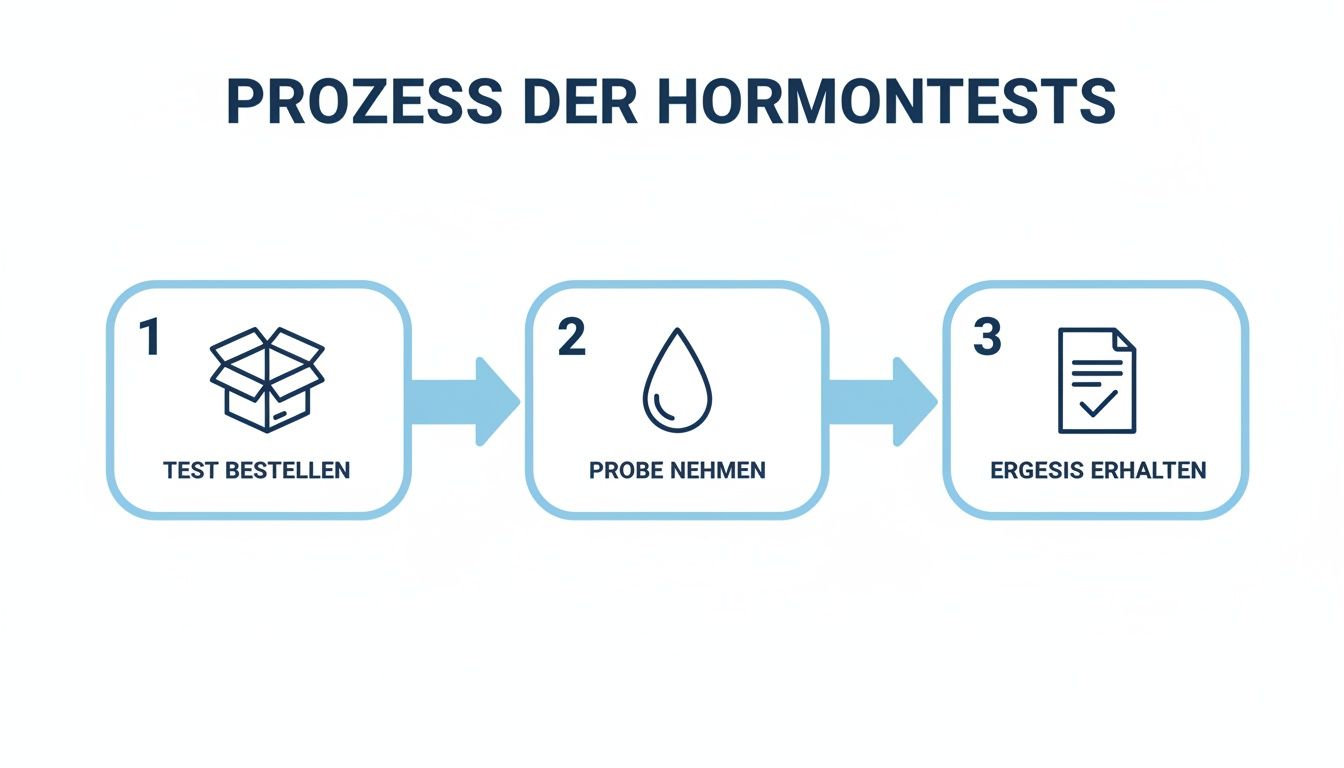
Every step has been optimized so that you can get your values without much effort.
Timing is everything – especially in the female cycle
For women with a regular cycle, the timing of sample collection is absolutely crucial. Hormones like estrogen and progesterone fluctuate significantly throughout the month, and to get a meaningful result, we need to catch them at a very specific point.
- The ideal time: For most sex hormones, especially progesterone, the second half of the cycle is optimal. We recommend taking the sample between day 18 and day 21 of your cycle (assuming a 28-day cycle). During this phase, the luteal phase, progesterone levels should peak. Testing at this time shows whether your body is producing enough of this important "feel-good hormone."
What if my cycle is irregular? No problem. If your cycle fluctuates significantly or you don't have a period at all, simply choose a day in what you estimate to be the second half of your cycle, or any day. The most important thing is to document this timing so we can interpret the values correctly later.
Interfering factors that can affect your results
Your body is not a machine. Many things from your daily life can temporarily influence your hormone levels. To avoid distorted results, you should pay attention to a few things:
- Stress: An extremely stressful day can drive up your cortisol levels. It's best to try and take the sample on a normal day that reflects your typical routine.
- Intense exercise: A hard workout shortly before sample collection can also throw off hormone levels, especially cortisol and testosterone. It's best to take a break from exercise on the test day.
- Sleep: A night of little or poor sleep can also affect your hormone levels.
- Eating and drinking: Shortly before a saliva sample, you should not eat or drink anything (except water) and also not brush your teeth. This could contaminate the sample.
- Medication & Supplements: Certain medications or even high-dose nutritional supplements (like Biotin) can interfere with laboratory analysis. Please always list everything you take regularly in the accompanying questionnaire.
Your checklist for a successful mybody-x test
To ensure everything runs smoothly with your test, we have put together a simple checklist for you. Follow these steps to feel confident and get reliable results.
- Read the instructions: Take five minutes to read the accompanying instructions completely before you start.
- Choose the right time: Determine the correct day in your cycle or a suitable weekday for sample collection.
- Prepare everything: Lay out all parts of the test kit. Important: Wash your hands thoroughly before you start.
- Take the sample: Whether it's saliva or a small finger prick – the instructions include pictures and guide you step-by-step.
- Fill out the questionnaire: Your information about symptoms, cycle, and medications is extremely important for our experts to accurately evaluate your values.
- Activate the test online: Very important – don't forget to activate your test with the code in your mybody-x customer account. This is the only way we can assign your results to you later.
- Pack and send: Pack the sample and documents in the return envelope and take it to the post office. Done.
What your results truly mean
Finally, the moment has arrived: You hold the report of your mybody-x hormone test in your hands or are eagerly looking at the screen. Curiosity is likely mixed with a slight tension. What do all these numbers and graphs specifically mean for you and your well-being? Don't worry, you're not alone now. Your result is the starting signal for your journey, not the destination.

A mybody-x results report is much more than just a dry list of lab values. We prepare your data in a way that makes it truly understandable. Each value is presented clearly and comprehensibly, often with a visual classification that shows you at a glance where you stand.
Learning to understand reference ranges
A central point of your report are the reference ranges. These are statistically determined "normal ranges" based on the values of a huge group of healthy people. Your personal value will always be shown in this context.
However, it is important to understand: These ranges are a guide, not rules set in stone. Just because a value is slightly outside the range does not immediately mean that something serious is wrong. Conversely, a value that is "within the norm" can still cause symptoms if it is simply not optimal for you personally.
A hormone value is always just a number. Only in the context of your individual symptoms, your lifestyle, and your personal situation does it become valuable information.
That's why the questionnaire you fill out when activating your test is so incredibly important. It provides our experts with the necessary context to not just measure your results, but to truly interpret them.
From knowledge to action: Concrete next steps
The actual goal of getting your hormone levels tested is to become actionable. Your mybody-x report therefore not only provides you with the analysis, but also concrete, actionable recommendations tailored directly to your values.
Here are a few typical practical approaches:
- Adjust your diet: Imagine your report indicates estrogen dominance. A recommendation might be to eat more cruciferous vegetables like broccoli or fiber-rich flaxseeds. These help the body break down excess estrogen.
- Optimize stress management: Persistently high cortisol levels in the evening are a clear signal from your body. Targeted relaxation exercises, meditation, or a conscious screen-free hour before sleep can make a crucial difference here.
- Improve sleep hygiene: Low progesterone levels can severely disrupt sleep. Simple measures like a cool, dark bedroom and a consistent routine can positively influence the body's own hormone production.
These are not generic tips, but are based on your personal data. They give you the tools to actively support your hormonal balance. If you want to dive even deeper into what a hormone status can reveal, you can find more information in our guide to determining hormone status.
When a conversation with experts makes sense
A home test is an incredibly valuable tool for initial orientation and taking control yourself. However, it does not replace a medical diagnosis. There are simply situations where the next logical step should be a conversation with a doctor or therapist.
Your mybody-x results report is the perfect basis for this. You no longer go to the doctor with vague symptoms, but bring concrete data. This enables a much more targeted conversation at eye level.
It is particularly advisable to discuss your results with an expert in these cases:
- For strongly deviating values: If one or more values fall significantly outside the reference range.
- For persistent or severe symptoms: If your symptoms severely impair your daily life.
- For a specific desire to conceive: To interpret the results in the context of your family planning.
- Before taking hormone preparations: This should only happen under medical supervision.
See your test result as the beginning of a journey. It gives you a roadmap to better navigate your body and make conscious decisions for your health.
Still have questions? Here are the answers
You have already learned a lot about your body's signals and the world of hormones. Nevertheless, there are often still some last uncertainties before taking the plunge and getting your hormone levels tested. Absolutely understandable! That's why we have collected the most frequent questions here and answered them as we would explain them to a good friend – clearly, honestly, and without jargon.
Does health insurance cover a hormone test?
The question of costs is, of course, one of the first to arise. Generally, statutory health insurance companies usually only cover the costs of a hormone test if there is a concrete medical suspicion behind it. This could be, for example, unfulfilled desire for children, suspected thyroid disease, or really severe symptoms during menopause.
Tests that you do out of pure curiosity, to optimize your lifestyle, or to get to the bottom of vague symptoms such as fatigue and mood swings, are generally considered self-pay services. Therefore, mybody-x home tests must be paid for privately. However, they give you something invaluable: the freedom to get clarity about your hormone status anytime and without a doctor's referral – exactly when you feel it's right.
How reliable is a saliva test compared to a blood test?
An absolutely crucial question! The short answer is: It depends entirely on what exactly we want to measure. Both methods are scientifically recognized and valid for different hormones.
- A blood test is perfect for determining the total concentration of a hormone. It measures both the protein-bound (inactive) and the free (active) hormones. For thyroid values (TSH, fT3, fT4) or certain control hormones like LH and FSH, it is the undisputed gold standard.
- The saliva test, on the other hand, excels with so-called steroid hormones – such as cortisol, progesterone, estrogen, or testosterone. Its great advantage: It measures exclusively the free, biologically active hormones. These are precisely the ones that dock to your cells and perform their work there. For evaluating the actually effective hormone level, it is often much more informative for these messengers.
With mybody-x, however, you don't have to worry about this. For each individual value, we select the method that is scientifically the most precise and meaningful. So you can be sure that your result is reliable, regardless of whether the sample comes from blood or saliva.
Simply put: A blood test shows you what is transported in the blood. A saliva test shows you what actually reaches your cells. We deliberately use both.
Can I do a hormone test if I'm on the pill?
If you use hormonal contraception – whether it's the pill, a hormonal ring, or a hormonal IUD – your natural hormone balance is artificially "shut down." The synthetic hormones from the contraceptive then take over control.
Under these circumstances, a hormone test would unfortunately not provide a meaningful picture of your natural cycle. To determine your true hormone status, you would need to discontinue the contraceptive after consulting with your doctor. It is recommended to wait at least three to six normal cycles afterward to give your body enough time to restart its own hormone production before taking a test.
How quickly will I receive the results of my mybody-x home test?
We know you're eager for the results! That's why we've streamlined the process as much as possible. As soon as your securely packaged sample arrives at our certified partner lab in Germany, analysis usually only takes a few business days.
As soon as the evaluation is complete, you will receive an immediate notification by email. You can then view your detailed and, most importantly, clearly presented results report directly in your secure online customer account. So you don't have to wait weeks for results; you get the clarity you want in a timely manner.
How often should I have my hormone levels tested?
This depends heavily on your personal situation and goals. There is no general rule, but here are some practical guidelines:
- For an initial assessment: A one-time test is the perfect starting point to establish a baseline and find the cause of acute symptoms.
- For follow-up monitoring: If you have made specific changes (e.g., dietary adjustments, stress reduction), a follow-up test after about three to six months can show whether your efforts are bearing fruit.
- For chronic issues: In certain life phases such as perimenopause or with known hormonal imbalances, it may be advisable to check in every six to twelve months to monitor the progression.
Your hormone system is always in motion. A test is a valuable snapshot that helps you take the next right step for your health.
Ready to decipher your body's signals and take control of your health? At mybody-x, you'll find the right hormone test for your individual needs. Discover the possibilities now and start your journey to greater well-being and hormonal balance.
Share:
The Top 10: Fiber-Rich Foods for Gut Health
Stool analysis online: Test your gut health