
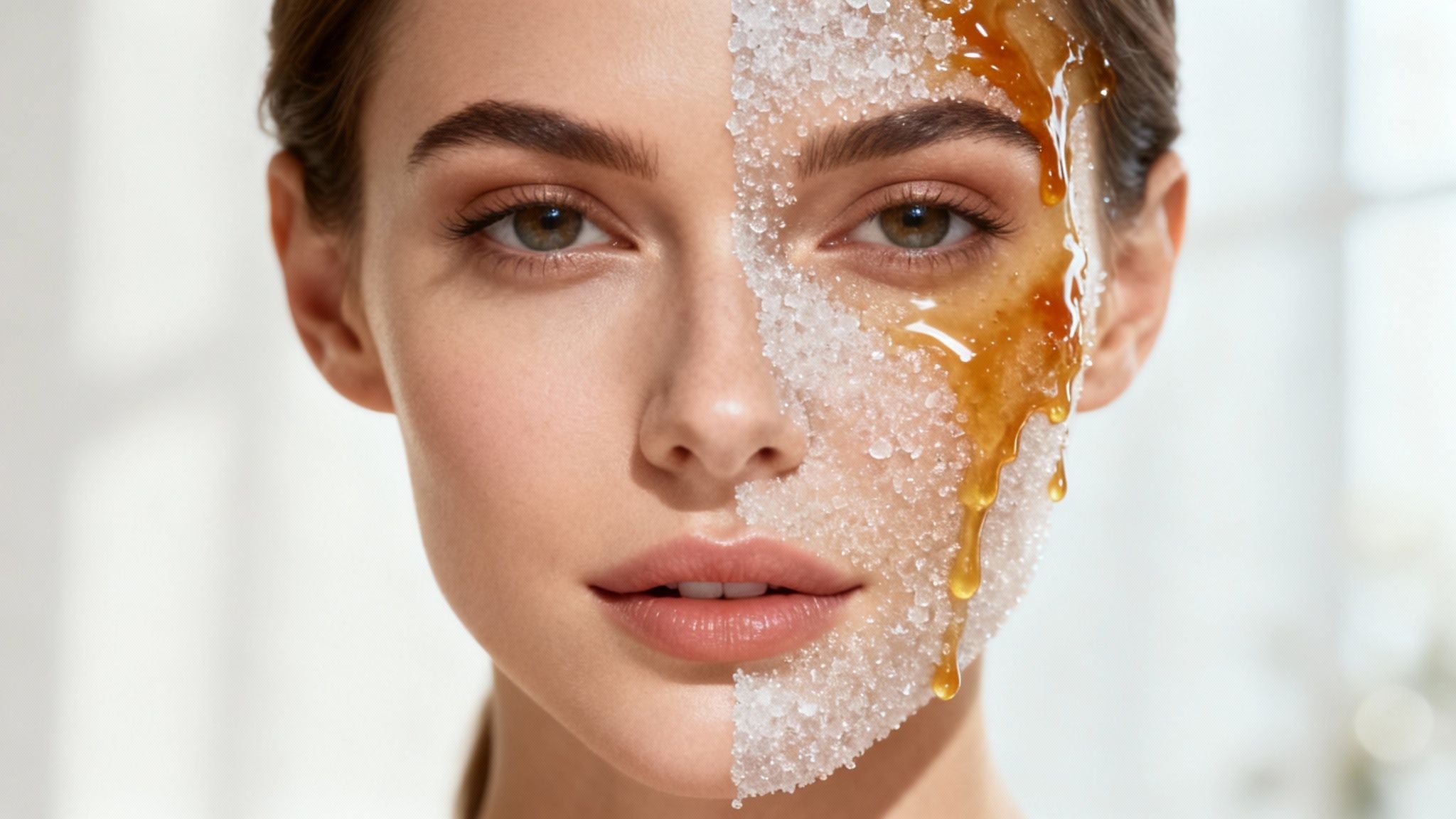
Stop glycation and slow skin aging
Imagine that the sugar in your blood did not just serve as a source of energy, but also slowly glued your cells together from the inside—as if they were “caramelizing.” That is exactly what happens with glycation: a gradual process in which sugar molecules attach to important proteins and interfere with their function. The result? Visible skin aging and silent strains on your health that you often notice only when it is too late.
What glycation really means for your body
Glycation, often also referred to as “sugarification,” is a completely natural chemical reaction in your body. It occurs whenever sugar molecules—especially glucose and fructose—bind to proteins or fats without enzymatic control. You can think of it like toast browning in a toaster: an irreversible change that creates a new, stiffer structure.
This reaction produces harmful compounds known as Advanced Glycation Endproducts (AGEs). These AGEs are like small, persistent troublemakers that accumulate in the body over the years, making tissue inflexible and brittle.
The gradual process of glycation
Think of the proteins in your skin—collagen and elastin. They form a fine, flexible network that keeps your skin firm, smooth, and youthful. Glycation targets precisely this network.
AGEs act like an invisible glue that settles between the flexible collagen fibers. This once-elastic network becomes stiff and brittle as a result. On the outside, you see the result as wrinkles, sagging skin, and a loss of firmness.
But the effects do not stop at the skin. This process takes place throughout the body and can damage a wide range of proteins and structures, with far-reaching consequences for your overall health.
Glycation and its effects at a glance
This table summarizes the most important aspects of glycation, from its causes to its noticeable effects on the body.
| Aspect | Simple explanation | Specific consequence |
|---|---|---|
| The cause | Sugar molecules bind uncontrollably to body proteins. | Formation of harmful AGEs (Advanced Glycation Endproducts). |
| Skin appearance | Collagen and elastin become stiff and inflexible. | Wrinkles, loss of elasticity, dull complexion. |
| Diet | High sugar consumption and heavily heated foods. | Accelerated formation of AGEs in the body. |
| Lifestyle | Oxidative stress (e.g., from UV radiation and smoking). | Weakened defenses, proteins become more vulnerable. |
| Internal health | AGEs accumulate in organs and blood vessels. | The risk of chronic diseases may increase. |
Understanding these connections is the first step toward actively counteracting them and maintaining control over your aging process.
Why Understanding This Is So Crucial
How quickly and severely glycation progresses in your body is largely in your own hands. A diet full of sugar and highly processed foods is the biggest driver. But preparation also plays a role: grilling, searing, or deep-frying at high temperatures can make the amount of AGEs in food literally explode.
These factors particularly fuel glycation:
- High sugar consumption: Every soft drink, chocolate bar, and slice of white bread sends your blood sugar soaring, providing the perfect breeding ground for glycation.
- Oxidative stress: UV radiation, smoking, and environmental toxins produce free radicals. These aggressive molecules damage your proteins and make them even more susceptible to sugar attachment. A strong protective shield is therefore essential. Read here how you can strengthen your antioxidant defenses.
- Genetic predisposition: Your genes also have a say. They influence how well your body produces collagen and defends itself against oxidative damage. Some people are therefore naturally more prone to glycation than others.
Once you understand these connections, you are no longer just a passive observer. You understand which levers you can pull to slow the aging process and protect your health and youthful appearance in the long term.
How Sugar Destroys Your Collagen
Imagine your skin had an internal support structure. It actually does! It consists of the proteins collagen and elastin. Like a fine, elastic network, they ensure that your skin remains firm and taut while flexibly adapting to every movement. Unfortunately, glycation is something like a targeted attack on this very network.
A fresh rubber band is a good way to picture this. You can stretch it, and it immediately contracts again—no problem at all. Healthy collagen behaves in exactly the same way. But when this rubber band comes into contact with a sticky mass of sugar, it becomes hard, brittle, and immobile. It tears at the slightest pull.
That is exactly what happens with glycation in your skin. The AGEs (Advanced Glycation Endproducts) that form literally stick to the flexible collagen and elastin fibers. They create rigid cross-links that harden the once highly dynamic framework and rob it of its elasticity.
This is how “glycation” from within causes the signs of aging that we can see from the outside.
The Visible Consequences of Collagen Damage
This damage caused by glycation does not remain hidden. It shows directly on your skin—in a way that many mistakenly regard as normal, unavoidable signs of aging. In reality, however, they are often the direct result of accelerated glycation.
The consequences for the appearance of your skin are quite clear:
- Deeper Wrinkles: Where the skin once flexibly gave way with every facial expression, the hardened collagen fibers now simply break. Over time, fine lines become deeply etched wrinkles.
- Loss of Firmness: The weakened support structure can no longer keep the skin properly taut. Gravity has an easier time, leading to sagging contours, especially along the jawline and cheeks.
- Dull and Uneven Complexion: AGEs often have a yellowish-brown color. When they accumulate in the tissue, they make the skin look tired, dull, and uneven, and can even intensify age spots.
This visual representation sums up the harmful process of glycation—the reaction of sugar and proteins that produces harmful AGEs.
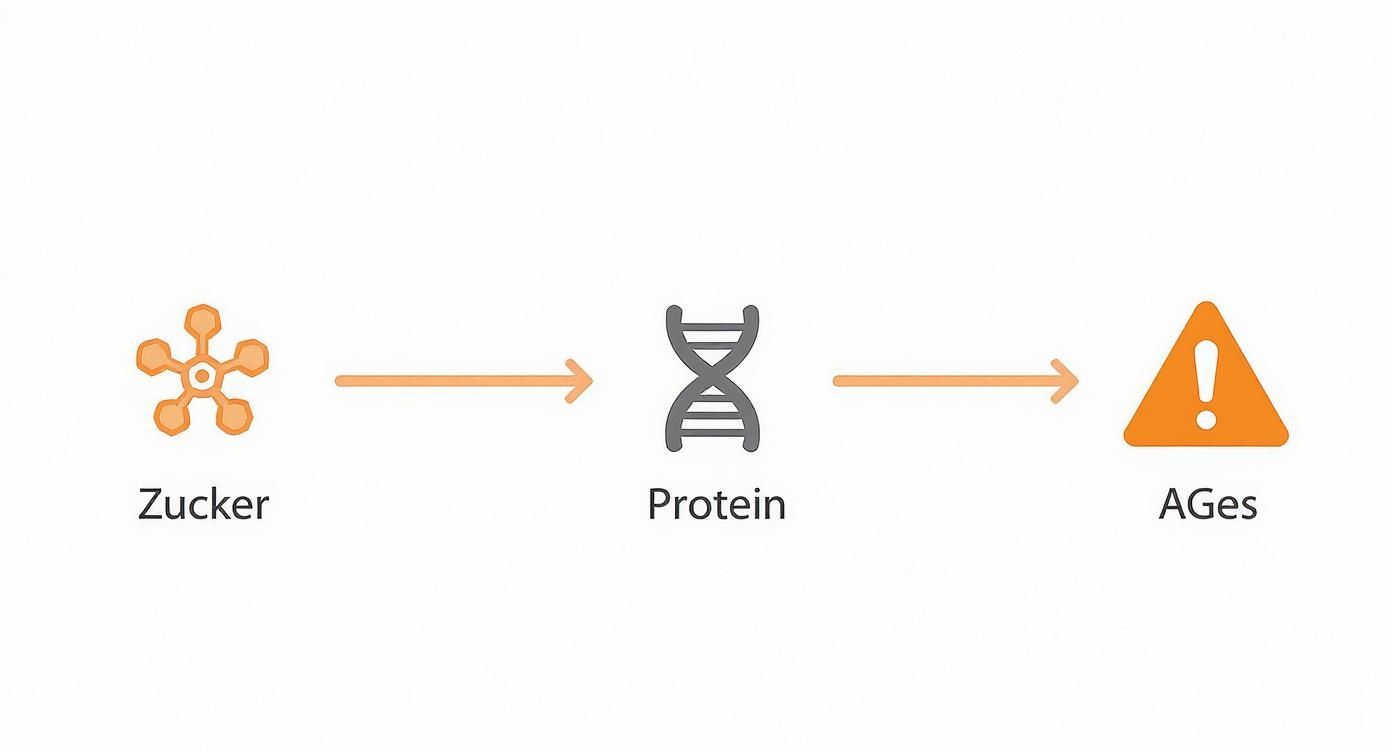
The graphic makes it clear: This simple biochemical step triggers an entire cascade of negative effects that directly affect the appearance of your skin.
More Than Just a Cosmetic Problem
The damage caused by glycation is about far more than just an aesthetic issue. The process severely weakens your skin’s natural ability to regenerate. Damaged collagen can no longer be repaired or replaced with new collagen as easily. In concrete terms, this means wounds heal more slowly, and the skin becomes more susceptible to further damage from environmental influences such as UV radiation.
A truly effective anti-aging strategy must therefore always include a mindful nutrition strategy. Simply supplying the skin with creams from the outside is not enough. The decisive battle against premature aging takes place from within—and specifically through controlling your blood sugar levels.
Choosing the right carbohydrates is a key factor here. Foods that cause blood sugar to rise slowly provide your body with less “material” for glycation. To get a better sense of which foods are beneficial, you can use the glycemic index as a guide. You can learn more in our detailed glycemic index table, which can help you in everyday life.
However, every body reacts differently to sugar. An individual’s tendency toward glycation is also partly genetic. Your personal metabolism plays a crucial role in how efficiently your body processes sugar and how vulnerable your collagen is. This is exactly where personalized analysis comes in. With the Skincare DNA Metabolism Analysis by mybody-x, you can find out what your genetic predisposition looks like regarding collagen breakdown and antioxidant protection. This gives you a scientific basis for tailoring your diet and skincare to your individual needs and proactively counteracting glycation.
The systemic effects of glycation
The idea that sugar causes wrinkles is unpleasant enough. But the truth is that the effects of glycation extend far beyond the skin and penetrate deep into our bodies. It is a systemic process that affects the entire organism—a silent saboteur that quietly undermines the foundations of our health.
The harmful Advanced Glycation Endproducts (AGEs) do not accumulate only in the collagen of the skin; they are found in almost every tissue. They impair organs, blood vessels, and even our nervous system. Understanding this is extremely important because it shows that getting glycation under control is about much more than cosmetic anti-aging. It is a fundamental strategy for preventing chronic diseases.
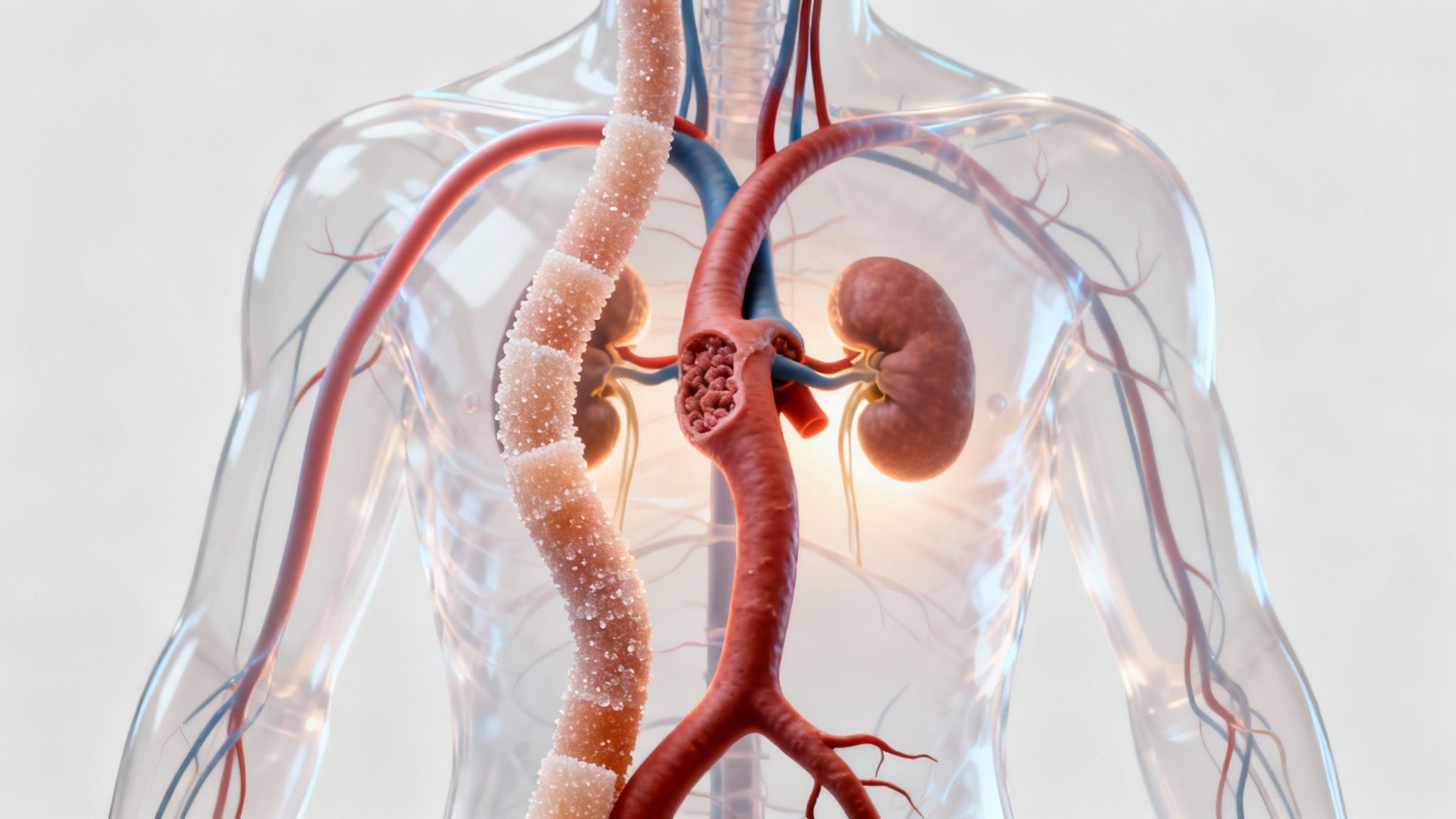
When blood vessels lose their flexibility
Imagine your blood vessels as supple, flexible tubes. With every heartbeat, they expand and contract again to regulate blood flow perfectly. The walls of our arteries, just like the skin, are made of elastic proteins. Glycation attacks these very proteins, making the once-flexible vessels stiff and brittle.
This process is called arterial stiffening or arteriosclerosis. The rigid vessels can no longer properly regulate blood pressure, massively increasing the risk of hypertension, heart attacks, and strokes. You can think of AGEs like mineral deposits in an old water pipe—they make it narrow, brittle, and unable to function.
But that’s not all. AGEs also fuel chronic inflammation in the vessel walls. Normally, inflammation is a useful defense response by the body. However, when it becomes a permanent condition, it causes enormous damage and is a major driver of cardiovascular disease.
A revealing study from Germany, conducted by the German Center for Diabetes Research (DZD) and the German Institute of Human Nutrition (DIfE), shows how real this danger is. For the first time, it also demonstrated a direct link in people without diabetes between elevated AGE levels in the skin and stiffer blood vessels. This makes it clear that the risk affects every one of us, not just known risk groups. You can read more about the study here to better understand the background.
The strain on the kidneys and nerves
Glycation damages not only the major blood vessels but also the tiny capillaries that supply our organs. The kidneys and nervous system are particularly sensitive.
- Kidney damage (nephropathy): Your kidneys are highly complex filtration systems consisting of millions of tiny blood vessels. When AGEs harden these delicate structures, filtration performance declines. In the worst case, this can lead to chronic kidney failure.
- Nerve damage (neuropathy): Our nerves are also supplied with oxygen and nutrients through the tiniest blood vessels. When glycation disrupts these vessels, the nerves suffer. This often manifests as tingling, numbness, or pain, especially in the hands and feet.
These complications are unfortunately particularly widespread among people with diabetes, as persistently elevated blood sugar levels accelerate glycation dramatically.
How to better assess your personal risk
The systemic effects of glycation are closely linked to inflammatory processes that often smolder unnoticed in the body. An important laboratory marker for such silent inflammation is C-reactive protein (CRP). Elevated CRP levels can indicate a general strain on the body—just as a high AGE burden can. If you would like to learn more, read our article about the significance of C-reactive protein levels.
Glycation is a process that varies from person to person. Our genes and individual metabolism play a major role. Not everyone responds to sugar in the same way, and the tendency to form AGEs differs. That is precisely why personalized analysis is so valuable.
The Skincare DNA Stoffwechselanalyse von mybody-x analyzes your genetic predisposition in key areas such as collagen breakdown and your antioxidant defense systems. Instead of general advice, this analysis provides scientifically grounded insights into your body’s individual needs. With this knowledge, you can specifically adapt your diet and lifestyle to combat glycation from the inside out—and thereby protect not only your skin but your overall health in the long term.
Your anti-glycation strategy for everyday life
The good news is that you are not helpless against glycation. Even though this process happens gradually and invisibly, you have the opportunity every day to actively counteract it. By making conscious choices, you can significantly slow the formation of these harmful AGEs.
The biggest and most effective lever is your diet. But your lifestyle—from exercise and sleep to stress management—also plays a crucial role. Let’s take a look together at the specific steps you can take to protect your body from the inside out.

Recognize and reduce sugar as the main driver
The most obvious enemy in the fight against glycation is sugar—in all its forms. Every time your blood sugar spikes after a meal, you create the perfect breeding ground for the glycation of your proteins. The goal, therefore, must be to avoid these blood sugar spikes as much as possible.
In Germany, the calculated per capita sugar consumption in the 2023/24 marketing year was 30.4 kilograms. That is around 83 grams of sugar per day! Although consumption has declined slightly, it is still far above the recommendations. Simple sugars such as fructose and wheat-based foods are particularly problematic because they cause blood sugar levels to rise rapidly. You can read more about the official sugar consumption figures here.
The key is to choose foods that keep your blood sugar stable. Complex carbohydrates from whole grains, legumes, and vegetables are digested more slowly and cause blood sugar levels to rise gradually.
The power of proper preparation
Did you know that not only the contents, but also the preparation of your meals has a huge impact on AGE exposure? High, dry heat acts like a turbocharger for the formation of AGEs directly in food, which you then absorb with every meal.
You should reduce your use of these cooking methods:
- Grilling and searing: The high temperatures produce particularly large amounts of AGEs.
- Deep-frying: One of the worst methods, as high heat combines with fat and carbohydrates.
- Baking at high temperatures: Crispy, brown crusts are a visible sign of the Maillard reaction—a form of glycation.
Gentler alternatives are cooking methods that use water and lower temperatures. They help drastically reduce AGE formation in foods.
Choose these cooking methods instead:
- Steaming: Preserves nutrients and produces few AGEs.
- Boiling: Ideal for soups, stews, and vegetables.
- Poaching: Gently cooking in hot water below the boiling point.
- Braising: Long cooking at a low temperature in liquid.
Choose anti-glycation foods
In addition to what you should avoid, there are many foods that can actively support you in the fight against glycation. They are rich in antioxidants and other bioactive compounds that inhibit AGE formation or protect your cells from damage.
Your best allies are:
- Antioxidant-rich berries: Blueberries, raspberries, and strawberries are packed with compounds that neutralize free radicals.
- Leafy green vegetables: Spinach, kale, and broccoli provide vitamins and valuable plant compounds.
- Spices and herbs: Turmeric, cinnamon, ginger, rosemary, and garlic have been shown to have anti-glycation properties.
- Green tea: The catechins it contains can block the formation of AGEs.
- Nuts and seeds: Provide healthy fats and important antioxidants such as vitamin E.
To help you get started, we have put together a brief overview of which foods you should prefer and which you should avoid.
Foods for reducing glycation
A comparison of foods that promote glycation with those that may inhibit it.
| Food category | Preferred (anti-glycation) | To avoid (pro-glycation) |
|---|---|---|
| Carbohydrates | Whole-grain products, oats, quinoa, legumes, sweet potatoes | White flour products, white rice, sugary cereals, baked goods, chips, French fries |
| Proteins | Fish (steamed/boiled), lean poultry, tofu, lentils | Highly processed meat, processed meats, heavily seared/grilled red meat |
| Fats | Avocados, nuts, seeds, olive oil, flaxseed oil | Trans fats (in fried foods and processed foods), overheated vegetable oils, margarine |
| Vegetables & fruit | Leafy green vegetables, broccoli, berries, citrus fruits, tomatoes | Sweetened canned fruit, candied fruit, fruit juices with added sugar |
| Beverages | Water, unsweetened tea (especially green tea), herbal tea | Soft drinks, energy drinks, sweetened juices, excessive alcohol consumption |
| Spices & herbs | Turmeric, cinnamon, ginger, garlic, rosemary, oregano | Ready-made seasoning mixes with sugar, sugary sauces (ketchup, BBQ sauce) |
This table is intended as a guide. It is not about eliminating everything “forbidden” forever, but about making conscious choices and shifting the balance in favor of protective foods.
More Than Nutrition: Your Lifestyle Matters
A smart anti-glycation strategy does not stop at the plate. Your entire lifestyle has a direct impact on the glycation processes in your body.
-
Regular Exercise: Exercise improves your cells’ insulin sensitivity. This means they can absorb sugar from the blood more efficiently, lowering your blood sugar levels and counteracting glycation. Even a brisk walk after a meal can help.
-
Getting Enough Sleep: Sleep deprivation disrupts your hormonal balance and can lead to insulin resistance. Aim for seven to eight hours per night to give your body the regeneration it needs.
-
Effective Stress Management: Chronic stress causes cortisol levels to rise, which in turn drives up blood sugar levels. Techniques such as meditation, yoga, or simple breathing exercises can make a huge difference here.
Each of these factors affects the others. A holistic approach is therefore the best and most sustainable way to protect your cells and naturally slow down the aging process.
Find Out Your Personal Skin Risk
You now understand: A smart anti-glycation strategy goes far beyond skincare—it is a conscious decision for your entire lifestyle. General advice on nutrition and exercise provides a great foundation, but one crucial question remains unanswered: How prone is your body to “sugar damage”? After all, every one of us is unique and processes sugar differently.
For some people, collagen breaks down faster due to their genes, or their natural protective systems against free radicals are weaker. For them, the risk of suffering visible damage from glycation early on is naturally much higher. Instead of groping in the dark and following general advice, you can take targeted action—provided you know your individual weak points.
More Than Guesswork: Your Genetic Advantage
This is where science comes into play. Instead of guessing how your body works, you can simply find out. A personalized analysis provides exactly the information you need to tailor your prevention—not just well, but perfectly—to your individual needs.
This is exactly where the Skincare DNA Metabolism Analysis from mybody-x comes in. This modern at-home test is no ordinary skin test. It looks much deeper, directly into your genetic blueprint, and deciphers how your body is naturally predisposed when it comes to skin aging.
Think of it this way: Until now, you may have only been treating the symptoms of skin aging. With the test, you address the problem at its root. You discover whether your genes make you more susceptible to rapid collagen breakdown or whether your body is less well equipped to combat oxidative stress—a factor that further fuels glycation.
How the Skincare DNA Test works
The entire process is incredibly easy and can be conveniently completed from home. You take a simple saliva sample, send it to our certified laboratory in Germany, and that's it. There, experts analyze your DNA for specific genetic markers that play a role in your skin's health.
The test provides precise answers to the following questions:
- Collagen breakdown: Does your skin have a genetic tendency to lose the important structural protein collagen more quickly? This knowledge is invaluable for specifically preventing loss of firmness and wrinkles.
- Antioxidant capacity: How well can your body neutralize free radicals? Weaker protection makes your cells more vulnerable to the harmful attacks that drive the glycation process.
- Individual nutrient requirements: The test shows you which vitamins and nutrients are particularly important for your skin to strengthen its protective mechanisms and promote regeneration.
With this scientifically grounded foundation, you can tailor your diet and skincare precisely to your body's needs. Learn more here about the details of the Anti-Aging Skincare DNA Test and how it helps you take control of your skin health.
Looking beyond the obvious: Your overall health
Knowing your personal glycation risk is important not only for smooth skin. It is also a crucial indicator of your overall health. The prevalence of diabetes mellitus in Germany is already between 7 and 10 percent, and as blood sugar levels rise, the likelihood of progressive glycation increases dramatically.
Particularly alarming: The number of unreported type 2 diabetes cases is estimated at 2 percent. This means that many people unknowingly carry a high risk of the harmful effects of glycation.
An insight into your genetic predisposition therefore helps you not only protect your skin, but also take preventive measures for your long-term health. You are not just investing in a youthful appearance, but above all in your well-being tomorrow. With the knowledge from the Skincare DNA Metabolism Analysis by mybody-x, you can turn uncertainty into targeted, effective action.
The most frequently asked questions about glycation—answered briefly and concisely
You have already learned a great deal about glycation—from the biochemistry and visible effects to the risks to your health. To ensure that no questions remain unanswered, we have summarized the answers to the most common questions here. Short, concise, and to the point.
Can damage caused by glycation be reversed?
To be completely honest: Once formed, Advanced Glycation Endproducts (AGEs) are extremely persistent. Your body can get rid of these stable compounds only with great difficulty, especially when they have become embedded in long-lasting structures such as the collagen in your skin or the walls of your blood vessels. According to current knowledge, completely reversing this damage is unfortunately not possible.
That is precisely why prevention is the absolute key. The best strategy is to avoid the formation of new AGEs from the outset. With a conscious diet that keeps your blood sugar balanced and a healthy lifestyle, you can significantly slow down the “sugarification process” and effectively minimize further damage. The goal is to act proactively instead of having to repair the consequences later.
Is all sugar equally harmful to the skin?
No, there are actually enormous differences. While glucose (dextrose) is the best-known culprit, there is an even more aggressive adversary: fructose, or fruit sugar.
Studies show that fructose is approximately ten times more reactive than glucose. This means it accelerates the formation of harmful AGEs even more strongly.
Particularly insidious is isolated fructose, found as fructose-glucose syrup in countless soft drinks and processed foods. In a whole fruit, fructose is cleverly packaged—surrounded by fiber, vitamins, and water, which slows its absorption. The isolated version, on the other hand, hits your metabolism with full force. So it is worth looking not only at the sugar content, but above all critically questioning products with added fructose.
Are there other factors besides diet?
Yes, absolutely! Diet is your biggest lever, but glycation is not an isolated problem. Another crucial factor is oxidative stress. Imagine free radicals as small, aggressive particles that attack your cells. This stress is massively increased by various lifestyle and environmental factors.
The most important accelerants of glycation include:
- UV radiation: Too much sun generates a flood of free radicals in the skin. These damage proteins such as collagen and make them more susceptible to “sugar-related damage.”
- Smoking: Nicotine not only constricts blood vessels and disrupts the supply of nutrients to your skin—the smoke itself releases countless substances that cause massive oxidative stress.
- Environmental toxins: Air pollution and other toxins can also increase the burden of free radicals in the body.
A holistic approach is therefore the best way forward. You build your strongest defense by combining a low-sugar, antioxidant-rich diet with good sun protection, avoiding nicotine, and managing stress mindfully.
How quickly can you see results from an anti-glycation strategy?
This requires a little patience. While your general well-being—such as more stable blood sugar levels or increased energy—may improve after just a few days or weeks, visible effects on the skin take a little longer. Although your skin renews itself in a cycle of approximately 28 days, the regeneration of deeper collagen is a much slower process.
The greatest benefit of a consistent anti-glycation strategy lies in preventing future damage. You actively slow the formation of new wrinkles and the loss of elasticity. Nevertheless, many people report that their skin already looks fresher and more radiant after just a few weeks, often due to improved circulation and reduced inflammation. But the greatest reward is knowing that you are sustainably protecting your youthful appearance and health. Every day you make conscious choices is an investment in your future self.
Every body reacts differently to sugar and environmental stress. Your genetic predisposition plays a major role in how quickly your collagen breaks down and how well your internal defense systems function. An analysis of your genes can provide a scientific basis for making your measures even more targeted.
Understand your personal risk and tailor your strategy accordingly. The Skincare DNA Metabolism Analysis by mybody-x analyzes your genetic predisposition regarding collagen breakdown and antioxidant capacity, so you know exactly where to start. Learn more about your skin at https://mybody-x.com/products/skincare-test.



Share now:
Healthy Vegan: Your Guide to a Nutrient-Rich Diet
Your exact daily protein requirement: Find out what your body really needs