
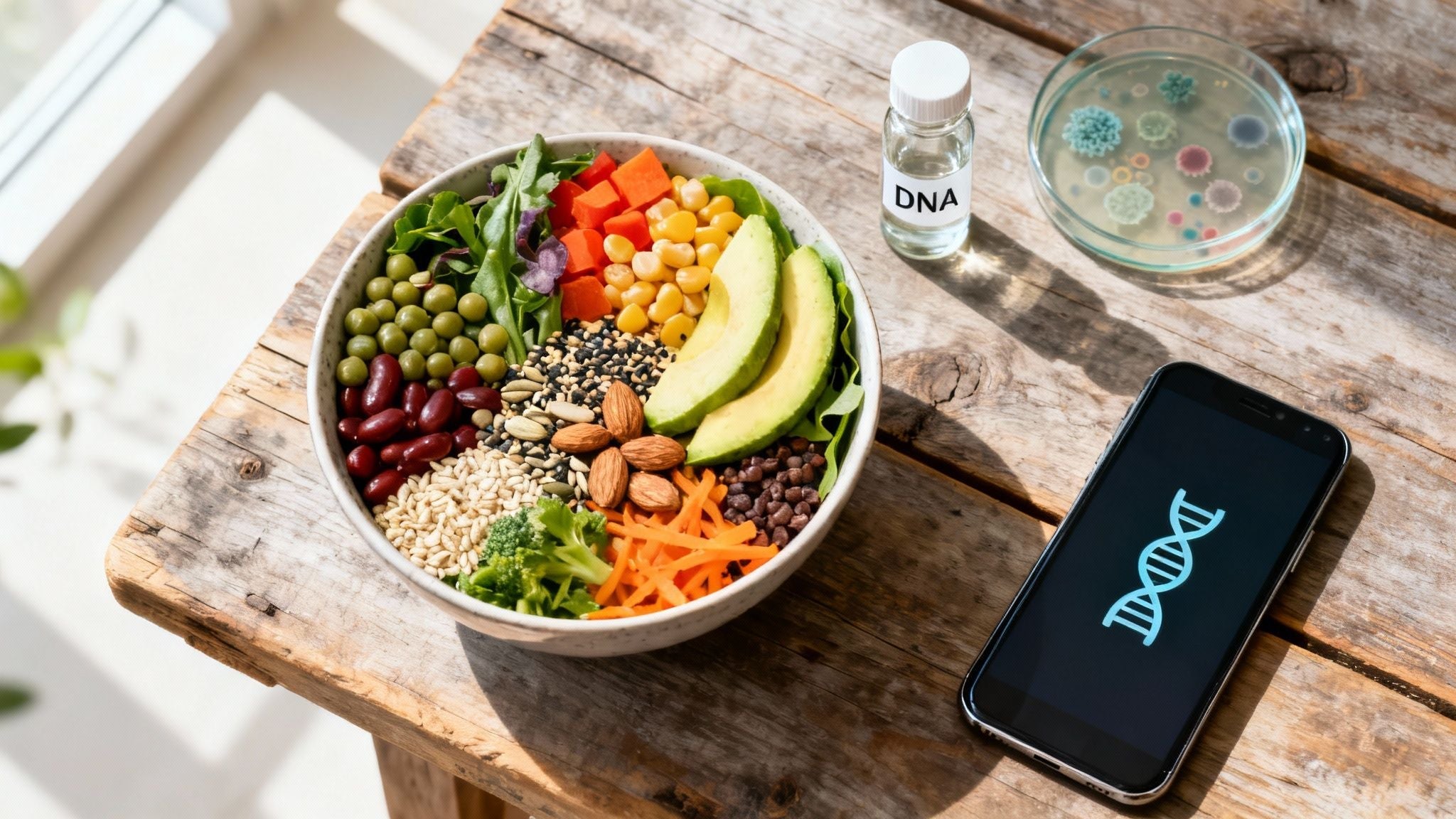
Healthy Vegan Living: Your Guide to a Nutrient-Rich Diet
Are you considering going vegan, or do you want to make sure you are doing it properly? Perfect. A healthy vegan diet is so much more than simply avoiding animal products. It is about consciously and deliberately giving your body everything it needs for full energy and well-being.
What Healthy Vegan Living Really Means
Of course, giving up meat, milk, and eggs is the first step. But a truly healthy vegan diet only begins after that.
It is not about simply leaving things out. Instead, you are thoughtfully redesigning your meal plan to make it nutritious and rich in nutrients. A bag of chips and a cola may be vegan, but they are obviously miles away from being “healthy.”
A well-planned plant-based diet focuses on whole, unprocessed foods. Think of your plate as a colorful mosaic made up of different building blocks that come together to form a strong foundation for your health.
The Basics: Nutrient-Rich Foods
To eat a healthy vegan diet, you should focus on nutrient-dense foods. These are foods rich in vitamins, minerals, and phytonutrients. The most important groups are:
- Vegetables and fruit: Your source of vitamins, antioxidants, and fiber.
- Legumes: Lentils, beans, and chickpeas are fantastic sources of plant-based protein and iron.
- Whole grains: Oatmeal, quinoa, and whole-grain bread provide you with complex carbohydrates for long-lasting energy.
- Nuts and seeds: They are packed with healthy fats, such as omega-3 fatty acids, and important minerals.
Switching to a vegan diet is easier today than ever before. In Germany, around 1.7 million people already eat an entirely plant-based diet. This trend is driven by growing awareness of sustainability, animal welfare, and health, which is also reflected in supermarkets: Germany leads the world in launching new vegan products. You can find some fascinating facts about this here.
More Than Just Food
Eating a healthy vegan diet also means understanding your own body and knowing what it individually needs. You are making a conscious decision for your health and taking responsibility for it.
An important part of this is understanding the role of the individual building blocks of our food. If you would like to explore this in more depth, you can learn here exactly what a nutrient is and what functions it performs.
The key to a healthy vegan diet lies not in deprivation, but in consciously choosing and combining foods that optimally nourish and strengthen your body.
In the following sections, we will show you step by step how to determine your personal nutrient profile, create balanced meals, and avoid common beginner mistakes. This way, your journey toward a healthy vegan lifestyle will not only be successful but also genuinely enjoyable.
Your personal nutrient analysis as a foundation
You have decided to live vegan—a great decision for you, the animals, and the planet. But what does “healthy” actually mean for your body? One thing is clear: Each of us is unique. Your genetics, lifestyle, and even your gut bacteria determine how well you can absorb and utilize nutrients from your food.
That is why the very first and most important step on your journey is to move away from blind guessing and toward targeted knowledge. Instead of casually reaching for supplements because you read about them somewhere online, you should take an honest inventory. Where do you really stand?
This is where modern health analyses come in. They are like a personal compass that guides you toward optimal nutrition.
Understand your body from the inside
In the past, a blood analysis at the doctor’s office was the only way to look inside your body. Fortunately, today you have many more tools at your disposal to better understand your body:
- DNA analyses: Your genes can reveal whether you have a predisposition to metabolize certain vitamins, such as B12 or folate, less efficiently. With this knowledge, you can take targeted action from the outset instead of waiting for a deficiency to develop.
- Microbiome tests: Your gut flora is a whole universe of its own. It helps determine how well you can absorb nutrients from lentils, broccoli, and the like. An analysis shows whether your gut bacteria are supporting you optimally or whether you should feed them the right dietary fibers.
- Blood tests: The classic option gives you a clear picture of how well you are supplied with critical nutrients such as iron, vitamin D, or omega-3 fatty acids. This is the unvarnished truth about your current status.
The following graphic illustrates this journey beautifully—from conscious abstinence through targeted nutrient intake to lasting well-being.
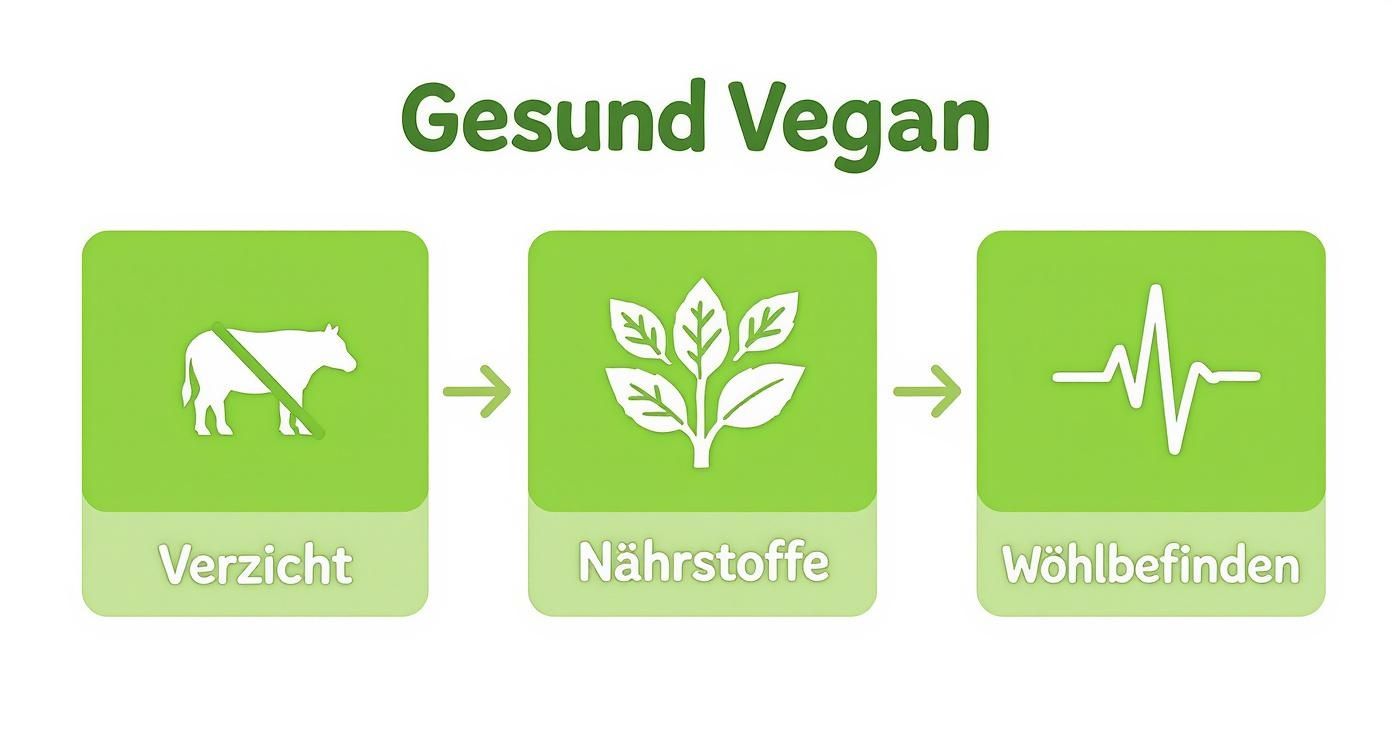
It’s immediately clear: A well-founded nutrient intake is the central link. It transforms the desire to live vegan into genuine, tangible health.
Your data-driven roadmap
Imagine knowing exactly that your body activates vitamin D slowly, or that your gut flora needs more lentils and chickpeas to function optimally. Insights like these are worth their weight in gold.
They enable you to fine-tune your diet and any supplements to your needs. You are no longer acting on the basis of assumptions, but on the basis of facts about yourself. This not only saves money on unnecessary products, but above all gives you the confidence that you are truly well nourished.
Your body is not a black box. With the right analyses, you create a solid, data-driven foundation for making your vegan diet healthy and successful from the very beginning.
If you would like to delve deeper into the topic, you can find detailed information in our guide on how to get tested for a nutrient deficiency. With the self-tests from mybody-x.com, you can conveniently take this important first step from home. You receive a scientifically sound evaluation as the basis for your next steps, laying the foundation for lasting well-being.
The cornerstones of your vegan diet
Okay, the personal analysis has now given you a better sense of what your body particularly needs. Great! Now we can build a solid foundation for your diet.
Don’t worry, a healthy vegan diet isn’t a complicated puzzle. It’s based on a few, but crucial, building blocks. Once you know them and regularly include them on your plate, you’re already well on your way to excellent nutrition.
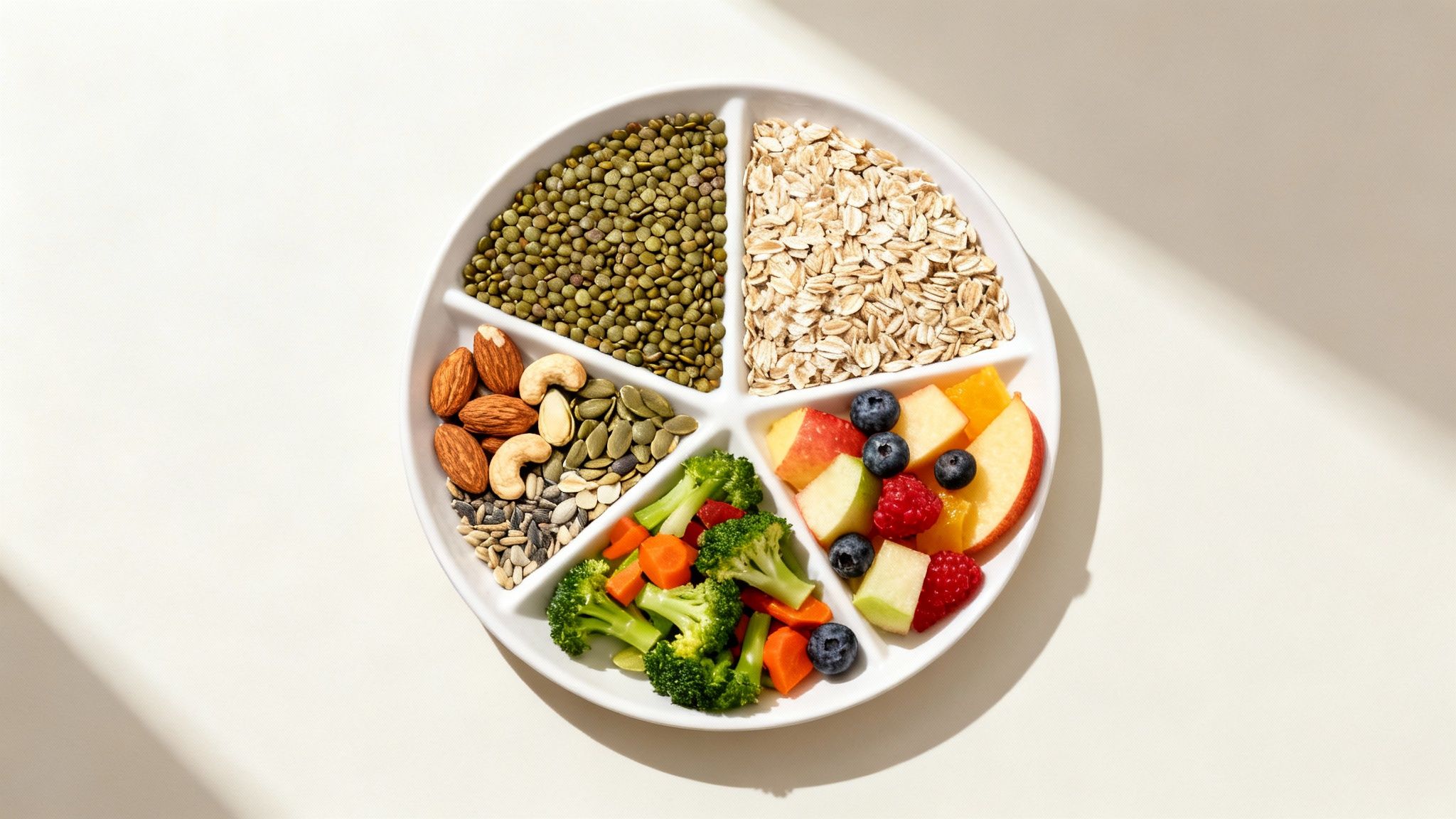
Simply imagine that you put together every meal according to a simple building-block principle. This model, often referred to as the “vegan plate,” helps you cover all the important nutrient groups without having to think for long. This turns every meal into a small power plant for your body.
The five pillars of your vegan plate
For your next meal, simply think of these five groups. They’re your cheat sheet for the supermarket and your kitchen. This way, you can make sure you get everything you need for a healthy vegan lifestyle.
- Protein-rich legumes: This is the powerhouse of your diet. Lentils, chickpeas, black beans, or tofu provide not only essential amino acids for muscles and cells, but also important fiber, iron, and zinc. Lentil dal or chickpea curry are perfect examples of a protein-rich and truly filling meal.
- Energy-boosting whole grains: Quinoa, oats, brown rice, or millet are your main sources of energy. Unlike products made with white flour, they provide complex carbohydrates that keep your blood sugar levels stable and supply you with lasting energy. They’re also rich in B vitamins and minerals such as magnesium.
- Healthy fats from nuts & seeds: Fat isn’t your enemy—quite the opposite! Walnuts, flaxseeds, chia seeds, and avocados provide valuable omega-3 fatty acids, which have anti-inflammatory effects and are extremely important for your brain. A tablespoon of ground flaxseeds in your muesli or a handful of walnuts as a snack are incredibly simple ways to meet your needs.
- Varied vegetables: Broccoli, kale, bell peppers, sweet potatoes—they’re packed with vitamins, minerals, and antioxidants that protect your cells. This group should make up the largest part of your plate.
- Fresh fruit: Berries, apples, and oranges are not only delicious sources of vitamin C, but also provide important fiber for healthy digestion.
The key lies in variety. Eat the rainbow! The more colorful your plate, the broader the range of vitamins, minerals, and phytonutrients you provide your body.
To better understand the effects of your diet on your body, it’s helpful to learn the basics and understand how metabolism works. This knowledge helps you understand exactly why combining these food groups is so effective.
What it could look like in practice
To give you a concrete idea, here’s an example of what such a day could look like. Of course, this is just inspiration—the possibilities are endless!
Example of a balanced vegan day
This is what a nutrient-rich vegan day could look like, to inspire you when planning your own meals.
| Meal | Example dish | Key nutrients |
|---|---|---|
| Breakfast | Oatmeal porridge with berries, flaxseeds & walnuts | Complex carbohydrates, omega-3, fiber, antioxidants |
| Lunch | Large mixed salad with chickpeas, quinoa & bell pepper dressing | Protein, iron, vitamins, complex carbohydrates |
| Dinner | Lentil Bolognese with whole-wheat pasta and nutritional yeast | Protein, fiber, B vitamins (B12 from yeast), zinc |
| Snack | Apple with a handful of almonds | Healthy fats, vitamins, fiber |
As you can see, it is about combining foods cleverly without having to spend hours in the kitchen.
These cornerstones are not rigid rules, but rather a helpful guide. They give you the freedom to get creative and put together meals that are not only healthy but also taste really good.
Next, we will look at how you can supplement this foundation in a targeted way to cover all the critical nutrients.
Supplement wisely with what you really need
Even the most colorful and carefully planned vegan diet has its limits. That is perfectly normal. Living healthily vegan also means taking an honest look at where a purely plant-based diet needs a little support from outside. It is not about taking pills indiscriminately, but about deliberately filling the gaps that your individual diet and lifestyle may leave behind.
By far the most important candidate here is clearly vitamin B12. Since it is found almost exclusively in animal products, supplementation is not merely a recommendation for vegans but an absolute must. A deficiency can cause serious and even irreversible neurological damage—so there is definitely no room for experimentation here.
Targeted support instead of a one-size-fits-all approach
Besides B12, there are a few other nutrients that could become scarce. Whether you really need a supplement, however, depends heavily on your personal circumstances: Where do you live? How much sun do you get? What does your diet look like in detail, and how is your body built?
The usual suspects are:
- Vitamin D: The famous “sunshine vitamin.” Our bodies produce it themselves, but they need enough direct sunlight on the skin to do so. Especially in our latitudes, this is often a problem during the darker months from October to March. The sun is simply too low in the sky.
- Iodine: This trace element is the fuel for your thyroid. Since good plant-based sources are relatively rare, using iodized table salt or consciously supplementing, for example with algae, is a smart idea.
- Omega-3 fatty acids (EPA & DHA): Flaxseeds and walnuts do provide the ALA precursor, of course. However, for many people, the conversion into the truly important long-chain fatty acids EPA and DHA is quite inefficient. Algal oil is a fantastic direct plant-based source to help ensure you’re getting enough.
Your body deserves nutrition based on facts, not assumptions. A personal nutrient analysis shows you clearly where you stand and which supplements can really make a difference for you.
When you have your test results in hand, you can make an informed decision. The personalized products from mybody-x.com are designed precisely for this purpose. Instead of a standard multivitamin, you get exactly the nutrients, in the dosage, that your body actually requires according to your analysis data.
When it comes to vitamin B12 in particular, it’s important to understand the background. If you want to take a deeper look at why a deficiency is so critical and how to safely prevent it, you’ll find all the important information in our guide to vitamin B12 deficiency. This lays the foundation for a healthy vegan diet in the long term, without compromise.
Putting healthy vegan eating into practice every day
The theory of a healthy vegan diet often sounds great—but how is it supposed to work in a hectic everyday life? Don’t worry, it’s easier than you think. With a few smart habits, it quickly becomes a relaxed routine that even saves you time and stress.
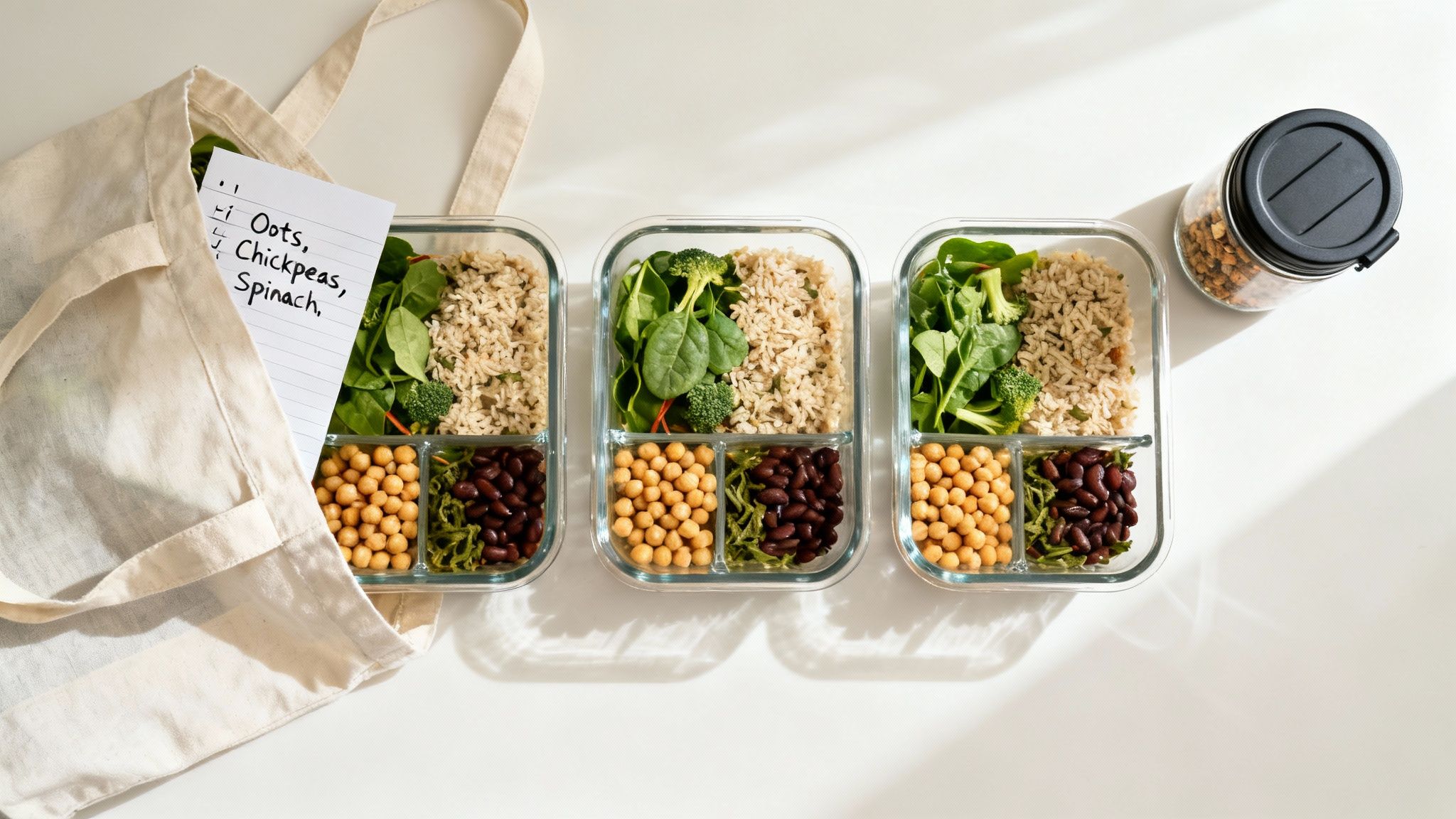
As so often, the key lies in preparation. When hunger strikes, we usually reach for whatever is quickest. That’s exactly where smart meal prepping comes in.
Plan smart with meal prep
Take an hour or two over the weekend to prepare the basics for the week ahead. It doesn’t have to be a huge effort. Even a few small steps make a tremendous difference and ensure that you always have a healthy option on hand.
- Cook basic ingredients in advance: Prepare a large portion of grains such as quinoa, millet, or brown rice. Stored in the refrigerator, they make the perfect base for quick bowls or salads during the week.
- Prepare vegetables: Wash and chop a batch of vegetables—bell peppers, carrots, broccoli. That way, you can toss them straight into the pan or enjoy them as a raw snack.
- Mix sauces & dressings: A delicious peanut dressing or creamy hummus can be made in just a few minutes. They enhance even the simplest dish and keep easily for a few days in the refrigerator.
A good breakfast is half the battle. Overnight oats are ideal for this: Let oats, plant-based milk, and chia seeds soak in the refrigerator overnight, then simply top them with fresh fruit and nuts in the morning. If you're wondering why this is such a good idea, you can read here whether oats are healthy and why they are a fantastic foundation for starting your day.
On the Go and in Social Situations
Living a healthy vegan lifestyle doesn't mean you have to give up social events. A little preparation helps here too.
Most restaurants now offer vegan dishes or can adapt existing meals. A quick look at the online menu or a friendly call beforehand will clarify things and save you stress on site. Be confident and simply ask—kitchen teams are often more creative than you might think.
Are you confronted with critical questions from friends or family? Stay relaxed. Explain your motivation calmly and objectively, but don't start justifying yourself. The skepticism usually fades on its own when the people around you notice how well your decision is working for you.
Healthy snacks are worth their weight in gold when you get a little hungry between meals. Instead of reaching for processed bars, pack a small box of nuts, an apple, vegetable sticks with hummus, or homemade energy balls. That way, you're prepared for anything and won't fall into the trap of making unhealthy impulse purchases.
Your takeaway: A journey, not a sprint
You can see that a healthy vegan diet is not a rigid checklist that you tick off once and for all. Rather, it is a personal journey, a dynamic process. It is about developing an awareness of your body and learning how to give it exactly what it needs. The insights from this guide are your toolkit for that journey.
You now know how important a sound nutrient analysis is as a starting point, rather than simply taking supplements at random. You know the five pillars with which you fill your plate, and you understand how to specifically supplement what your body really needs. And most importantly, you have practical tips for integrating all of this into your daily life without stress.
Your Path Is Unique
The key to long-term success and genuine well-being is staying flexible. Your life is constantly changing—sometimes you have more stress, sometimes you train more intensely, and sometimes you sleep less. All of this affects your nutrient needs. What works perfectly for you today may no longer do so in a year.
Always remember: It's not about perfection, but about well-being. Make conscious choices that benefit you without putting yourself under pressure.
Stay curious, try out new recipes, and don't be afraid to adjust your course when you realize something no longer suits you. With the knowledge from this article, you have a solid foundation for making the right decisions for yourself in an informed and confident way.
More Than Just Personal Health
By the way, your decision to follow a well-planned vegan diet has an impact that extends far beyond your own plate. A plant-based diet is one of the most effective ways to reduce your ecological footprint. Studies show that making the switch can reduce diet-related greenhouse gas emissions by up to 70%. If you want to learn more about these impressive connections, you can read the details here.
Choosing to live healthily as a vegan is a decision for yourself, for animals, and for our planet. You now have everything you need to follow this path successfully and joyfully. Your best compass is and always will be your own body—learn to listen to it.
Are you ready to stop guessing and finally know what your body really needs? The health analyses from mybody-x.com provide a scientifically sound basis for your nutrition. Discover the right tests for you now and start your journey toward lasting well-being.



Share now:
Understand and positively shape the aging process
Stop glycation and slow skin aging