
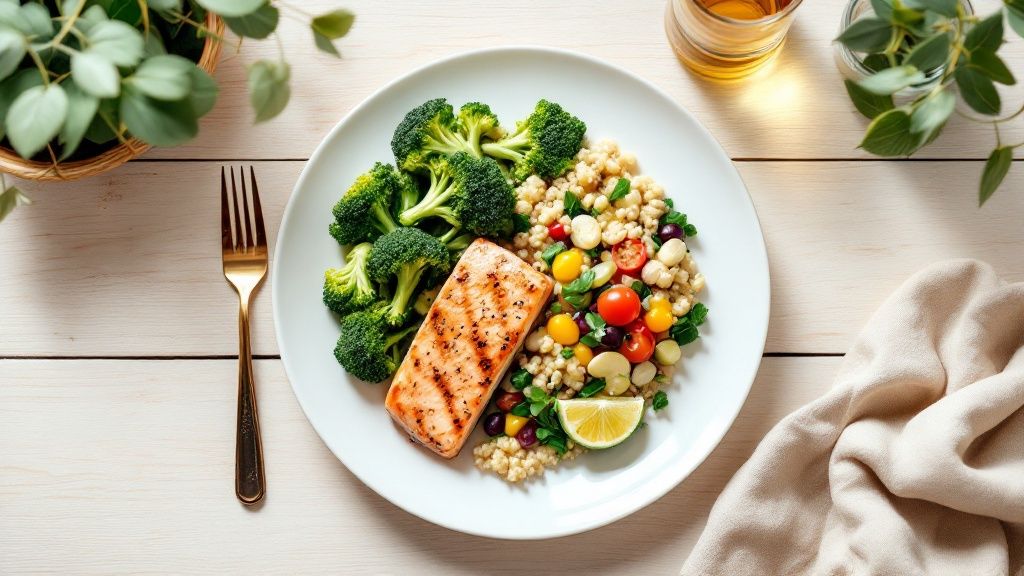
Healthy eating for weight loss—how to make it easy
If you want to lose weight healthily, you really only need to internalize one simple principle: Eat real, nutrient-rich foods that truly fill you up, and aim for a moderate calorie deficit. It’s not about going hungry. The key is to focus on the quality of your diet and give your body exactly what it needs for an active metabolism.
Why healthy eating is the key to success
The desire to lose weight quickly drives many people into the arms of strict diets that often consist of nothing but deprivation and hunger. The problem? This approach is not only extremely difficult to maintain, but usually counterproductive as well. Healthy eating for weight loss is not a sprint, but a marathon. It’s about establishing habits you can maintain in the long term.
The decisive factor isn’t eating as little as possible, but eating the right things. When you give your body high-quality nutrients, it can function optimally—burning fat while protecting valuable muscle mass. Radical starvation diets, on the other hand, signal an emergency to the body. It then slows down the metabolism and clings to every single calorie. The dreaded yo-yo effect is practically inevitable.
More than just counting calories
Of course, calorie balance—meaning burning more calories than you consume—is the foundation of any weight loss. But the quality of those calories ultimately determines your success and well-being.
Just imagine eating 500 calories in the form of candy. Now imagine eating 500 calories from a meal with chicken breast, broccoli, and quinoa. The number of calories is identical, but the effect on your body could not be more different.
- Nutrient-rich foods: They provide you with protein, healthy fats, fiber, vitamins, and minerals. This smart combination keeps your blood sugar stable, keeps you feeling full for longer, and prevents cravings.
- Empty calories: Sugar and highly processed products send your blood sugar soaring, only to make it crash just as quickly. The result? You feel tired and hungry again after a short time.
A healthy calorie deficit doesn’t mean you have to go hungry. It means making smart choices and choosing foods that nourish and satisfy you instead of providing only empty calories.
Laying the foundation for sustainable weight loss
A truly sustainable approach recognizes that every body works differently. It's about finding a way of eating that not only helps with weight loss but can also be integrated comfortably into your everyday life over the long term. A healthy diet for weight loss lays the foundation for so much more: more energy, better sleep, and a strong immune system.
This is more relevant than ever in Germany. The obesity rate rose from 14.7% in 2009 to 16.8% in 2021—a trend that shows how important it is to focus on balanced, calorie-conscious meals. This not only helps with weight loss but also prevents related conditions such as diabetes and cardiovascular problems. You can find more information about these statistics at marcusknispel.com.
So before you get lost in complicated diet rules, focus instead on the basics: Eat fresh, unprocessed foods and learn to listen to your body's signals again. In our related article, we show you what a diet for weight loss without giving anything up can look like. This is the first step toward regaining control over your health and achieving your goals in a way that simply feels good and right.
Develop your personal nutrition strategy
Standard diets often fail for one simple reason: Every body is unique. What leads to quick success for one person may result in stagnation or even backfire for you. The reason lies deep within your biology—in your metabolism, genetics, and the composition of your gut microbiome.
A truly healthy diet for weight loss is therefore not a one-size-fits-all solution, but a personalized strategy tailored specifically to you. Generic online calculators that estimate your calorie needs only scratch the surface and cannot possibly account for the complex processes in your body. That's why it's so important to learn to understand your body's signals and use them to your advantage.
Learn your body's language
Your body is constantly communicating with you. It sends you clear signals that tell you exactly what it needs. The key is to learn to listen again and interpret these signals correctly.
Before every meal, ask yourself: Am I really hungry? Or is it just appetite out of habit or boredom? Learn to distinguish between genuine physical hunger and emotional cravings. That alone is a huge step.
Also pay attention to your sense of fullness. It takes about 20 minutes for the signal to travel from your stomach to your brain. When you eat slowly and mindfully, you give your body the time it needs to tell you when it has had enough.
Another important signal is your energy level after eating. Do you feel energized and fit, or rather tired and bloated? Your body is showing you directly which foods and portion sizes are good for it.
The genetic blueprint of your metabolism
Your genes play a decisive role in how your body processes and stores nutrients. Some people can convert carbohydrates into energy more efficiently, while others respond better to a diet higher in fat and protein. This predisposition explains why one person celebrates success with low-carb, while another struggles with it.
This is where modern, scientifically grounded analyses come into play. The approach used by mybody-x is based precisely on this: giving you accurate insights into your body. Instead of guessing which diet is right for you, such analyses provide you with concrete data.
Think of it as a personal map of your body. This map shows you, for example:
- Your metabolic type: Do you process fats, proteins, or carbohydrates particularly well?
- Your genetic predispositions: Are you more prone to being overweight, or do you have a higher need for certain vitamins?
- The needs of your microbiome: What food do your gut bacteria need to optimally support your digestion and immune system?
The key lies in personalization. By tailoring your diet to your unique biological makeup, you create the best conditions not only to achieve your goals, but also to maintain the results over the long term.
From analysis to practical implementation
With this knowledge, you can finally develop a nutrition strategy that truly suits you. You no longer rely on generic advice, but make informed decisions based on your own body data. This takes the guesswork out of the equation and gives you back control.
This does not mean that you have to do everything perfectly overnight. Start with small, targeted adjustments. If your analysis shows, for example, that your body processes protein particularly well, you could begin by increasing the protein content of your breakfast. Observe how this affects your sense of fullness and your energy levels in the morning.
This personalized approach is the most effective way to sustainably integrate healthy eating for weight loss into your everyday life. You work with your body, not against it. If you would like to explore the topic in greater depth, you’ll find valuable information in our guide on how healthy weight loss can really work. Ultimately, developing your personal nutrition strategy is a journey of self-discovery that brings you closer to your goal with every step.
Understanding the role of macronutrients
When you think of healthy eating for weight loss, calories are probably the first thing that comes to mind. But that’s only half the story. Much more important is where those calories come from. The answer lies in the three major building blocks of our food: protein, fat, and carbohydrates. They are the strategic levers that determine your weight-loss success.
Rather than rigidly following rules and cutting entire food groups from your diet, the goal is to find a smart balance. Once you understand the role each of these “macros” plays in your body, you can put together your plate in a way that keeps you full for a long time, prevents cravings, and gets your metabolism working optimally.
Protein: Your satiety anchor and muscle protector
Protein is much more than just fuel for your muscles. If you want to lose weight healthily, it is your most important ally. The reason is quite simple: Of all three macronutrients, protein keeps you full the longest.
Imagine starting the day with a sugary cereal. There’s a good chance your stomach will start rumbling again after a short time. If you have a protein-rich scrambled egg dish with vegetables instead, you’ll often feel pleasantly full until lunchtime. This simple effect makes it much easier to stick to your calorie deficit without constantly having to fight hunger.
At the same time, getting enough protein also protects your valuable muscle mass during a diet. After all, you want to burn fat, not muscle.
A higher proportion of protein in your diet is not a secret from the bodybuilding scene, but one of the smartest strategies for staying full and preventing the yo-yo effect.
Practical sources of protein for your everyday life:
- Animal-based: Lean meat such as chicken or turkey, fish (especially salmon and tuna), eggs, low-fat quark, and Greek yogurt.
- Plant-based: Lentils, chickpeas, beans, tofu, tempeh, and quinoa.
This graphic illustrates a commonly recommended distribution of macronutrients that has proven effective for a balanced diet when losing weight.
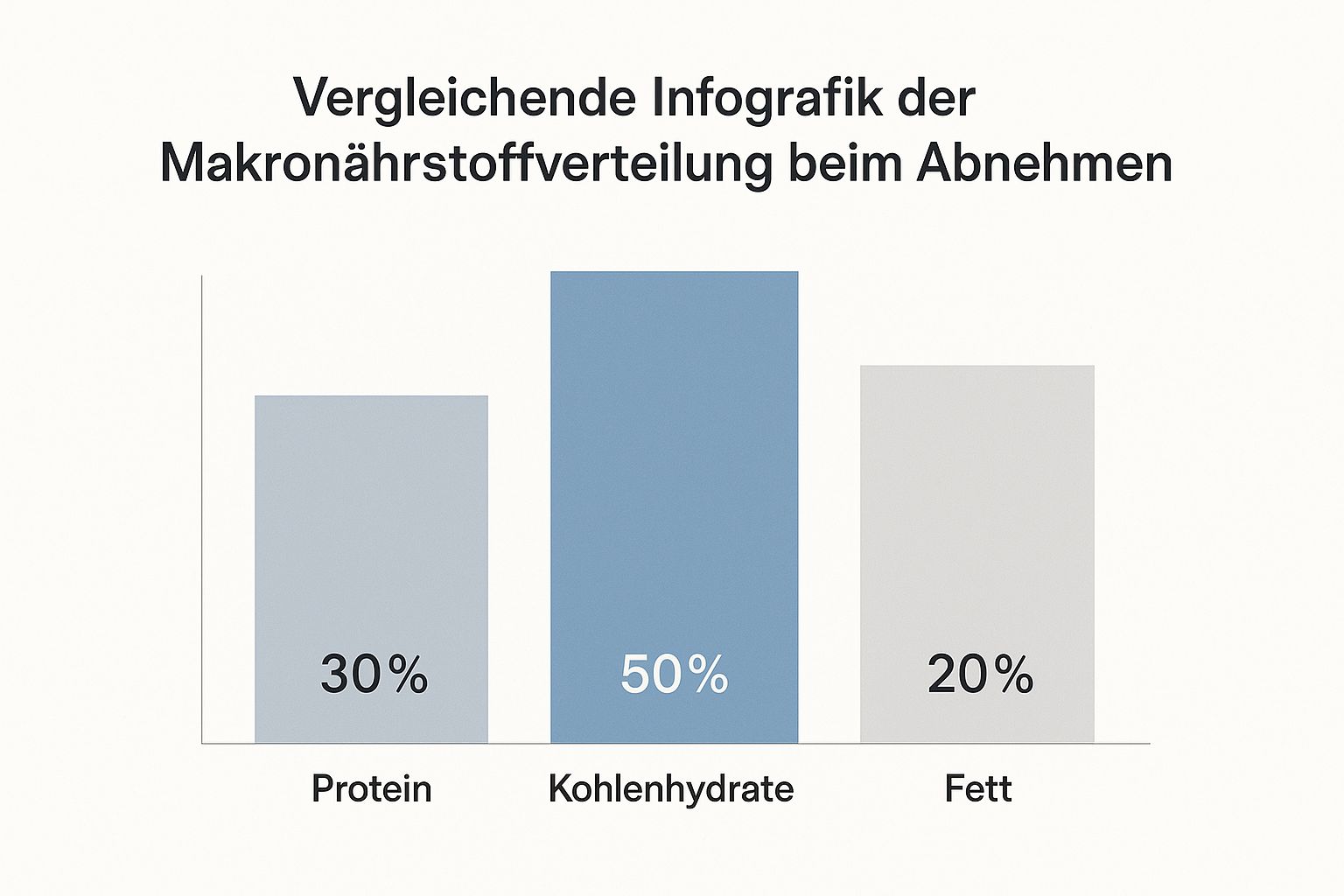
This makes one thing very clear: Successful weight loss is not based on radical restriction, but on a well-planned and balanced combination of nutrients.
Healthy fats: Your metabolism booster
Does fat make you fat? Fortunately, this myth has long since been debunked. In reality, the right fats are vital for your body. They regulate hormone production, help absorb fat-soluble vitamins (A, D, E, K), and are essential for every single cell.
When losing weight, unsaturated fatty acids are particularly important. They can help counteract inflammation in the body and keep your metabolism running smoothly. At the same time, healthy fats provide long-lasting satiety and slow digestion, which in turn helps keep blood sugar levels stable.
Top sources of healthy fats:
- Avocados: Packed with monounsaturated fatty acids and valuable fiber.
- Nuts and seeds: Walnuts, almonds, chia seeds, and flaxseeds provide valuable omega-3 fatty acids.
- High-quality oils: Cold-pressed olive oil, flaxseed oil, and avocado oil should be a staple in every kitchen.
- Fatty fish: Salmon and mackerel are excellent sources of omega-3.
Carbohydrates: Your smart source of energy
Carbohydrates have been unfairly criticized in recent years. The fact is: Your body—and especially your brain—needs them as its primary energy source. The trick is not to eliminate them, but to choose the right ones. Simply focus on complex carbohydrates.
Unlike sugar or white-flour products, which send your blood sugar on a roller coaster ride, complex carbohydrates provide consistent, long-lasting energy. They are packed with fiber, which stimulates digestion and helps keep you feeling full.
Data from the National Nutrition Survey II paint a clear picture: In Germany, 66% of men and 51% of women are overweight. Interestingly, men eat twice as much meat on average, while both genders fall significantly short when it comes to consuming plant-based foods. This suggests that a conscious, plant-focused diet with high-quality carbohydrates can be an extremely effective lever for sustainable weight loss. You can find out more in the study summary.
A personalized diet tailored to your body’s individual needs is the most effective approach. You can read about how your genes influence the way you metabolize macronutrients in our article on the basics of nutrigenetics.
How Your Body Works: The Unbeatable Duo of Nutrition and Exercise

People who want to lose weight often think in two separate worlds: diet on one side, exercise on the other. But the real magic happens only when both work together perfectly. The idea that you can simply “work off” a poor diet at the gym is unfortunately a persistent myth. That is simply not how our bodies work.
Sustainable success only comes when you intelligently integrate both areas. It is about giving your body the right nutrients at the right time to improve performance, maximize fat burning, and accelerate recovery.
Think of your body as a high-performance engine. Your diet is its fuel. If you give it low-quality fuel, it will sputter and never perform at its full potential—no matter how hard you press the accelerator.
The Complex Dance Between Exercise and Appetite
Regular exercise boosts your metabolism and increases your daily calorie expenditure. That is great news for your weight-loss goal. But there is a psychological counterforce: exercise can also stimulate your appetite.
After a strenuous workout, your body practically cries out for energy. This is a completely normal and healthy mechanism. The real challenge is responding wisely to this signal instead of falling into the trap of immediately replacing the calories you just burned with the wrong snack.
A study by the Technical University of Munich and the University of Nebraska examined exactly that: physical activity not only temporarily increases energy expenditure, but also appetite. To lose weight successfully, you therefore need to consciously adjust your diet to your increased activity and avoid impulsive food choices. You can learn more about these study findings here and better understand the connections.
The key to success lies in preparation. If you have healthy, protein-rich options ready to go after exercising, you won't give cravings a chance to take control.
Smart meal timing
What and when you eat can make a huge difference to your training performance and results. It's not about complicated rules, but rather a few simple basic principles that you can easily integrate into your everyday life.
Before training: A light, carbohydrate-rich meal about 60-90 minutes before exercising replenishes your energy stores and gives you the boost you need to really go all out.
- Practical tip: A banana or a small bowl of oatmeal are ideal sources of energy that won't burden your stomach.
After training: Within one to two hours after your workout, your body is particularly receptive to nutrients. A combination of protein and some carbohydrates supports muscle repair and replenishes the energy you have used.
- Practical tip: Low-fat quark with berries or a protein shake is perfect for kick-starting recovery without breaking your calorie budget.
Find the right balance for you
It's not about sweating in the gym for hours every day. Much more important is finding a form of exercise you genuinely enjoy and can permanently incorporate into your everyday life.
Whether it's brisk walks, cycling, dancing, or strength training—every activity counts. Combine your healthy diet for weight loss with regular exercise. This way, you will not only lose weight but also tone your body, lift your mood, and improve your overall health. This synergy is the true driving force behind long-term success that goes far beyond the number on the scale. A well-thought-out approach that also takes aspects such as longevity into account plays an important role here. You can find out more in our article on the principles of longevity nutrition.
Anchor healthy habits in your everyday life

The best knowledge about macronutrients and workout plans is of little use if putting it into practice gets lost in the hectic pace of everyday life. The truly decisive step on the way to your desired weight is to firmly integrate a healthy diet for weight loss into your daily routines. It must become second nature—almost like brushing your teeth.
This is exactly where most diet attempts fail: they're too complicated, too time-consuming, and simply don't fit into a busy life. But there's another way. With the right strategies, you can create an environment where the healthy choice is always the easiest one.
Plan smart and save time
One of the biggest hurdles in everyday life is spontaneous hunger, which often tempts us to make unhealthy choices. The solution sounds simple but is incredibly effective: planning. A well-thought-out plan removes the stress from the equation and ensures that you always have nutritious options on hand.
Meal prep as your secret to success: The term “meal prep” may sound like a lot of work, but in reality it's your biggest time-saver. Simply set aside an hour or two on the weekend to prepare for the coming week.
- Cook basic ingredients in advance: Prepare larger portions of basics such as quinoa, rice, or roasted vegetables. You can then combine them into different dishes in no time during the week.
- Prepare vegetables: Wash and cut vegetables such as bell peppers, carrots, or broccoli and store them in airtight containers in the refrigerator. That way, everything is ready to use for salads or stir-fries.
- Portion healthy snacks: Divide nuts, Greek yogurt, or vegetable sticks into small containers. When hunger strikes, you'll automatically reach for the healthy alternative instead of the chocolate bar.
A well-structured shopping list is already half the battle. Plan your meals for the week and buy only what you really need. This protects you from impulse purchases and saves money along the way.
By preparing your meals, you make a conscious choice for your health before hunger and stress take control. That's a real turning point.
The art of eating healthily away from home
Even with the best planning, we don't always eat at home. Whether it's a business lunch, an evening with friends, or lunch at the office—eating out doesn't have to sabotage your goals.
Most restaurants now offer healthy alternatives. Simply look at the menu online beforehand and make your choice at your leisure. And don't hesitate to ask for small adjustments. You can almost always ask for the salad dressing to be served separately or swap the fries for a vegetable side dish.
Common restaurant pitfalls and how to avoid them:
- The bread basket: Politely ask the waiter not to bring the bread basket to the table at all. Out of sight, out of mind.
- Sauces and dressings: Ask for light vinaigrettes or simply order sauces on the side so you can control the amount yourself.
- Portion sizes: Restaurant portions are often huge. Share a main course with someone or ask to have half of it packed up for the next day.
Understanding and overcoming emotional eating
Stress, boredom, frustration—we often eat not because of physical hunger, but to compensate for unpleasant feelings. This cycle of emotions and eating can seriously hinder weight-loss success. The first step toward change is recognizing this pattern in yourself.
Try keeping a simple food diary for a week. Don’t just note what you eat, but also how you feel while eating. This will quickly reveal connections. If you notice that you reliably reach for chocolate after a stressful day at work, you can deliberately think of alternative strategies.
What you can do instead:
- Exercise: A short walk in the fresh air can work wonders to clear your head.
- Relaxation: Try simple breathing exercises, a short meditation, or listen to your favorite music.
- Social contact: Call a friend and talk about what’s on your mind.
It’s about finding new, healthier ways to deal with your emotions instead of numbing them with food. This mindful approach to your feelings is a key building block for a sustainable and healthy diet for weight loss.
Common questions on the journey to your desired weight
People who change their diet to lose weight healthily often face the same obstacles and uncertainties. That’s completely normal, because you’re breaking old habits and introducing new rules for your body. To give you more confidence along the way, we’ll answer the most common questions here—without myths, but with clear, practical answers.
Do I really have to give up carbohydrates?
The quick and clear answer is: No, absolutely not! The myth that carbohydrates are universally the enemy has persisted, but it has long since been scientifically disproven. Your body, and especially your brain, relies on carbohydrates as its most important and fastest source of energy.
So it’s not about cutting them out, but about choosing the right ones and eating the right amount.
- Focus on quality: Focus on complex carbohydrates. You can find them in whole-grain products, oats, quinoa, legumes, and starchy vegetables.
- Stable blood sugar: These “good” carbs only cause your blood sugar level to rise slowly. This keeps you feeling full much longer and effectively prevents cravings.
- Packed with nutrients: At the same time, they provide valuable fiber, vitamins, and minerals that are essential for healthy digestion and your overall well-being.
Rather than demonizing an entire food group, you should reduce simple carbohydrates such as sugar, white-flour products, and sweets. Simply replace them with nutrient-rich alternatives.
How many meals per day are optimal?
There is no magic number that works for everyone. Whether three larger meals or five smaller ones spread throughout the day work better for you depends entirely on your rhythm, hunger cues, and daily routine.
Two other factors are far more important than frequency: your total daily calorie balance and the quality of your food. Simply listen to your body's signals. Do you feel energized and satisfied with three meals? Perfect, then stick with that. But do you notice that you become unfocused between main meals and cravings start to set in? Then smaller, protein-rich snacks in between could be exactly the right solution.
Choose the meal frequency that feels best for you and prevents you from eating uncontrollably out of sheer hunger. Your body gives you the best answer.
What helps with evening cravings?
Evening cravings are an extremely common problem. However, they are usually just a symptom, not the actual cause. Often, your body is simply signaling that it has been missing something important throughout the day.
Make sure that each of your main meals contains a good portion of protein and fiber. These two components provide deep, long-lasting satiety and keep your blood sugar levels stable. A typical trigger for evening cravings, for example, is a lunch that is too high in carbohydrates, leading to an energy slump in the late afternoon.
But your lifestyle also plays a huge role. Lack of sleep and chronic stress completely disrupt your hunger hormones (ghrelin and leptin). This can significantly intensify cravings for sweet or fatty foods. So make sure you get enough rest and find ways to actively reduce stress.
Do you finally want clarity about which nutrition strategy is truly right for your unique biology? At mybody-x.com, we analyze your metabolism and genetics to provide you with a personalized roadmap to better health. Discover the tests that can help you truly understand your body and achieve your goals sustainably: Find the right test for you here.



Share now:
Diet for irritable bowel syndrome: what the guideline recommends and what it does not
Healthy snacking – the best alternatives for more energy and fewer cravings