
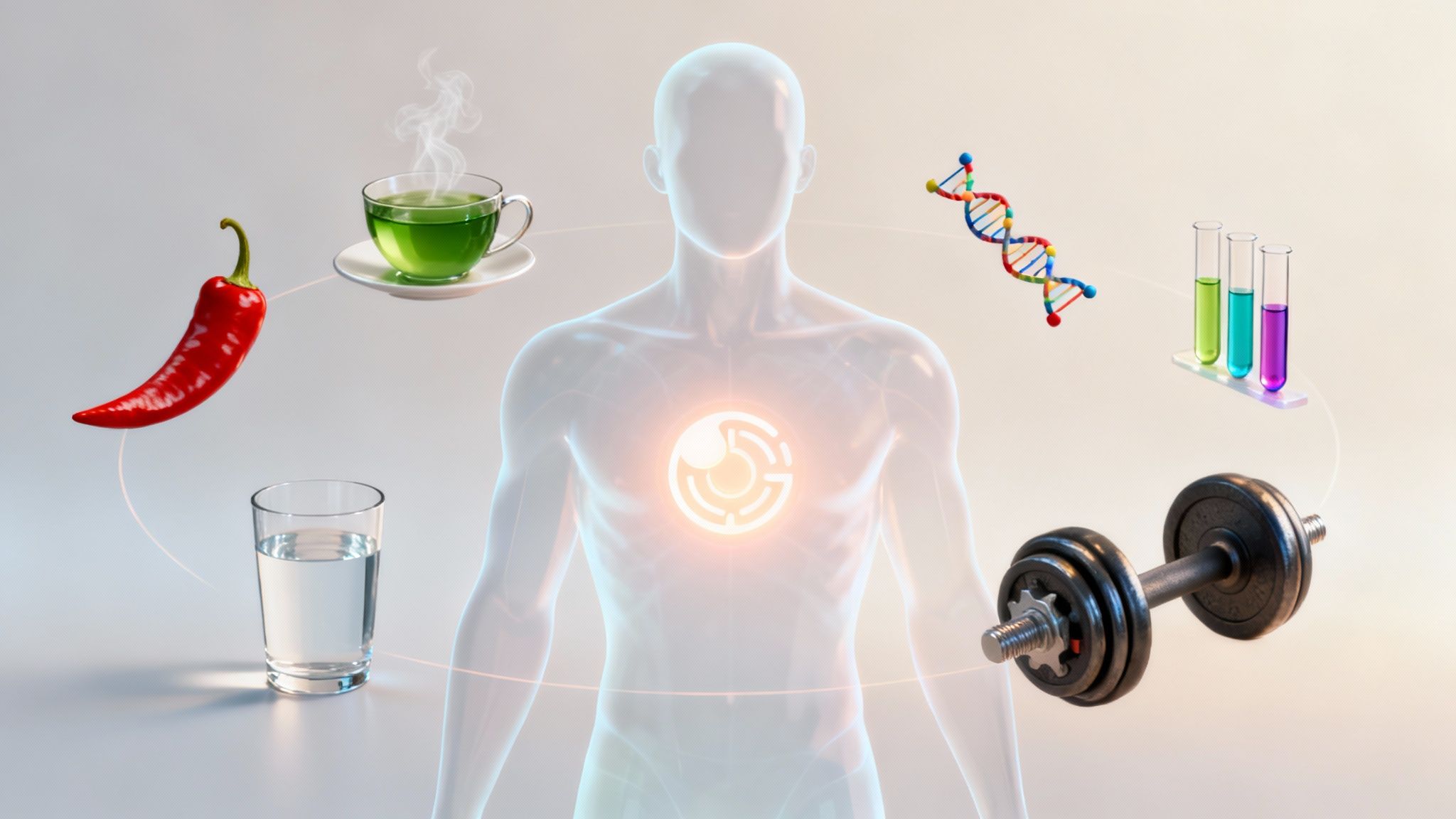
What stimulates the metabolism and how you can naturally speed it up?
Do you sometimes feel like your inner engine is sputtering while others seem to be running effortlessly at full speed? That's no coincidence; it's all to do with your metabolism. It's far more than just a calorie burner – it's your body's powerhouse, converting food into pure life energy.
To get it running at full speed, you basically only need to understand two things: basal metabolic rate and activity-related energy expenditure .
Think of your basal metabolic rate like your car's idle speed. It's the energy your body uses when you're doing absolutely nothing – just to maintain vital functions like breathing, your heartbeat, and your body temperature. Your activity level is everything on top of that: every movement, every thought, every workout.
Your very personal energy consumption
Your energy needs are as individual as your fingerprint. They depend on your age, gender, genetics, and especially your muscle mass. And contrary to popular belief, metabolism doesn't simply crash with age. A large study has shown that it remains surprisingly stable.
However, there is a clear drawback: excess weight can slow down your metabolism and reduce your daily calorie needs by up to 300 calories . But here's the good news: exercise is the perfect booster! Just 30 minutes of jogging can increase your post-workout energy expenditure by a whopping 20–30% .
The following graphic sums it up and shows how your energy consumption is composed.
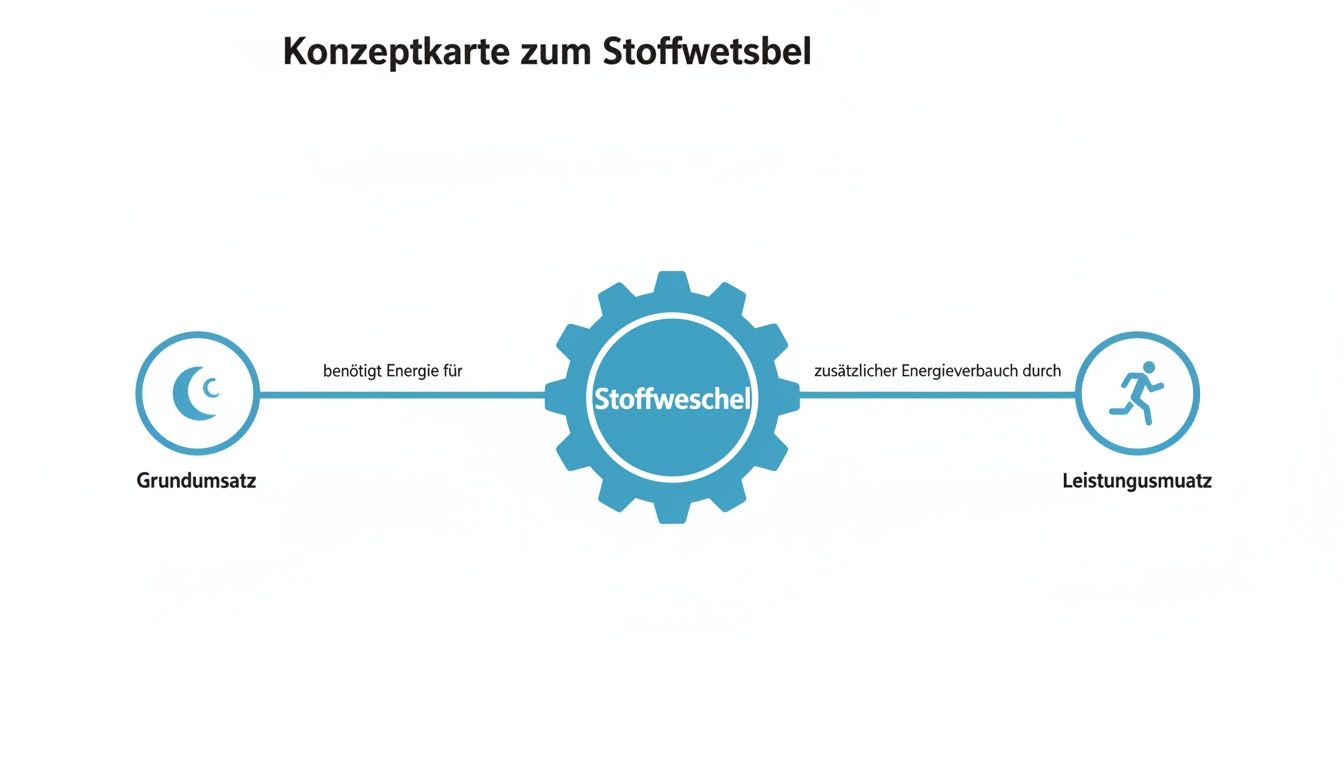
As you can see, if you want to boost your metabolism, you need to adjust both factors – your basal metabolic rate and your activity level. We explain exactly how these processes work and how you can use them to your advantage in our guide, which explains metabolism in simple terms . This knowledge is the perfect foundation for implementing the following tips effectively and finally gaining a better understanding of your body.
Using proper nutrition as fuel
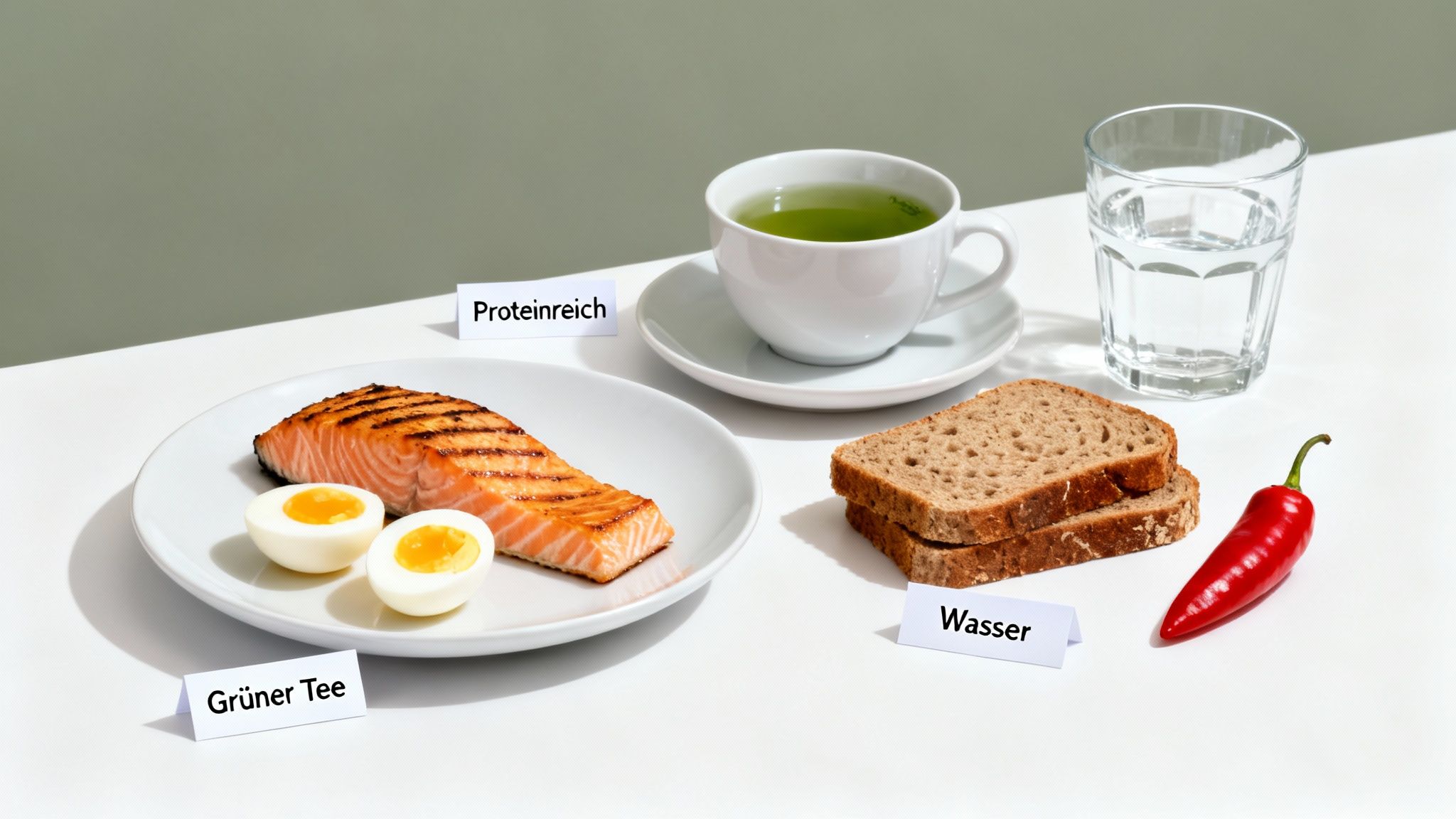
Imagine being able to give your body exactly the fuel it needs to perform at its best with every meal. No tricks, no miracle cures, just the smart choice of your food. The key lies in a concept called the thermic effect of food (TEF).
What does that mean? Quite simply: your body uses energy to digest, absorb, and process food. Every meal is essentially a mini workout for your digestive system. The cool thing is: not all nutrients require the same effort.
Protein as a powerhouse for metabolism
Protein is the undisputed champion here. While fats and carbohydrates have only a very low thermic effect (around 0–5%), your body has to work hard to utilize protein.
Up to 30% of the calories from protein are burned directly during digestion. In other words, if you eat 100 calories from a pure protein source, only about 70 of them actually reach your body.
This mechanism is one of the most powerful ways to naturally boost your metabolism. A protein-rich diet also keeps you feeling full longer, prevents cravings, and protects your muscles – and more muscle mass automatically means a higher basal metabolic rate. A win-win situation.
Foods that will start your engine
Besides proteins, there are a few other clever helpers that really fire up your metabolism. They stimulate heat production in the body and thus incidentally increase energy consumption.
Works particularly well here:
- Spicy spices: Chili, cayenne pepper, or ginger contain substances like capsaicin and gingerol. They noticeably warm you up, temporarily increasing your body temperature and thus also your calorie consumption.
- Green tea: The combination of caffeine and special plant substances (catechins) makes it a gentle but effective booster for metabolism and fat burning.
- Coffee: The classic, and for good reason. The caffeine stimulates the central nervous system and can noticeably increase your energy expenditure for several hours.
- High-fiber foods: Whole grains, legumes, and vegetables challenge your digestion. At the same time, they help keep blood sugar levels stable – another plus for a balanced metabolism.
The underestimated power of water
One last, often overlooked factor is water. Even mild dehydration is enough to slow down your metabolism by up to 2% . So make sure you drink enough to ensure all processes in your body run smoothly.
By consciously integrating these foods into your daily routine, every meal becomes a small energy booster. You can find a detailed list and further background information in our article about foods that stimulate metabolism .
Maximize the afterburn effect with targeted training

Sure, nutrition is a huge factor. But the second crucial element for really boosting your metabolism is targeted exercise. And by that, I don't mean sweating monotonously on the treadmill for hours. It's about setting the right stimuli – and two methods are absolute game-changers here: strength training and high-intensity interval training (HIIT).
The key to these training methods isn't just the calorie burn during the session. It's about the so-called afterburn effect . Imagine flipping a switch after your workout that forces your body to run at full speed for hours afterward. That's exactly what happens here. Your metabolism remains elevated because your body is busy with regeneration and repair processes.
Why muscles are your best allies
If you want to increase your basal metabolic rate in the long term, muscle mass is your strongest ally. Simply put: muscles are the most metabolically active tissue we have. They are essentially small power plants that burn energy even when you're lying on the sofa.
One kilogram of muscle mass burns roughly three times as many calories at rest as one kilogram of fat tissue. More muscle mass therefore means a higher basal metabolic rate – 24 hours a day, 7 days a week.
The most direct way to more muscle? Consistent strength training. It forces your body to adapt, grow, and thus gradually transform itself into a more efficient calorie-burning machine.
HIIT: The turbo boost for your metabolism
The second key strategy is high-intensity interval training, or HIIT for short. The principle sounds simple, but it's quite intense: you alternate between short, explosive bursts of activity and brief recovery periods. A typical HIIT workout often lasts only 15–20 minutes , but pushes your heart rate to its absolute limit.
This intense stimulus challenges your body so much that it's still working for up to 24 hours after the workout to compensate for the oxygen debt and regain balance. This is the afterburn effect in its purest form and a real turbo boost for your metabolism.
What can you do about it? Here are a few examples:
- Burpees: The brutal but ingenious full-body exercise that combines strength and endurance.
- Kettlebell swings: These explosively train your entire back and immediately raise your heart rate.
- Sprints: Whether on the bike, the treadmill or outdoors – short all-out sprints are pure HIIT.
Such intense workouts not only boost energy expenditure, they also improve your maximum oxygen uptake. In our guide, we show you how to specifically improve your VO2max value – a factor directly linked to a more efficient metabolism. So, by cleverly combining strength training and HIIT, you create the perfect conditions for a permanently active metabolism.
The underestimated everyday factors that slow down your metabolism
Your metabolism doesn't just react to what's on your plate or how hard you train at the gym. It's an extremely sensitive system that listens to your entire lifestyle. Often, it's the small, almost invisible habits that either get your internal engine running smoothly or unknowingly block it.
Two of the most powerful, yet most frequently ignored, adversaries are sleep and stress. They operate in the background but can massively sabotage your progress if you ignore them.
The power of sleep and relaxation
If you don't get enough sleep, your hormonal balance is completely disrupted. Your body releases more of the hunger hormone ghrelin , while at the same time the production of the satiety hormone leptin is reduced. The result? You have a bigger appetite, especially for high-calorie foods, and your metabolism switches into energy-saving mode.
The process is very similar with chronic stress. Your body floods itself with the stress hormone cortisol . If this level is permanently elevated, it signals your body to store energy – preferably in the form of belly fat. This process is an evolutionary remnant that, in our modern world, does more harm than good.
Stress and lack of sleep are like an invisible handbrake on your metabolism. They disrupt your hormones and promote fat storage, even if you otherwise eat healthily and exercise.
Small changes, big impact
The good news is: you can achieve a great deal with simple adjustments. It's not about turning your life upside down overnight, but about creating conscious routines and taking small breaks for yourself.
- Improve your sleep hygiene: Try to maintain a regular bedtime and keep your bedroom cool and dark. Very important: Avoid blue light from screens for at least an hour before bedtime.
- Active stress management: Find a method that works for you. This could be as simple as 10 minutes of meditation a day, a short walk in nature, or conscious breathing exercises.
- Integrate regular exercise: Moderate training, such as 150 minutes per week , can increase the basal metabolic rate by 10–15% and reduce stress hormones.
These factors are closely linked to your body weight. Even a weight loss of just 5–10% can improve insulin sensitivity by up to 30–50% , which significantly reduces the strain on your metabolism. Since around 67% of adults in Germany are overweight, this is a crucial factor. If you'd like to delve deeper, you can find fascinating insights into how weight changes affect metabolism in the linked study from the German Center for Diabetes Research.
When the engine stutters: When a detailed analysis is really useful
You're giving it your all – watching your diet, exercising regularly, and trying to keep stress under control. And yet, you feel like your metabolism is running with the handbrake on. If, despite all your efforts, nothing seems to change, it's time to take a closer look. Sometimes the causes lie deeper.
Perhaps you're familiar with this: constant fatigue, unexplained weight gain despite not eating more, or that persistent feeling of being cold. These are typical signs that your metabolism isn't running smoothly and needs more than just the usual lifestyle tips.
When the body calls for help
A sluggish metabolism can be caused by underlying medical conditions or nutritional deficiencies. One of the most common causes is an undiagnosed underactive thyroid . Think of the thyroid gland as the pacemaker for your energy consumption – if it produces too few hormones, the entire system slows down.
A deficiency in certain micronutrients can also cause the engine to sputter considerably. The following are particularly important:
- Iron: Absolutely essential for oxygen transport in the blood and energy production in the cells. Without iron, there's no power.
- Vitamin D: A true all-rounder that plays a key role in hormone regulation and overall metabolic health.
- B vitamins: They are, so to speak, the spark plugs for countless metabolic processes.
Metabolic disorders are not uncommon and can have serious consequences. In Germany alone, at least 8.9 million people live with type 2 diabetes, a disease closely linked to metabolic problems. Data from the German Diabetes Health Report 2024 vividly illustrates the importance of early intervention.
Instead of groping in the dark and becoming increasingly frustrated, it makes much more sense to gain clarity. A focused look at your individual values can finally provide you with the answers you're looking for.
So instead of continuing to guess what your body might be lacking, you can use modern analyses to specifically investigate the cause. A thorough nutrient check reveals potential deficiencies, while a microbiome analysis shows you the state of your gut health – another key factor for a functioning metabolism.
With a DNA analysis from mybody-x.com, you go even further and learn how your body is genetically predisposed. This creates the foundation for a strategy that truly suits you and your body. If you'd like to learn more, read our article on how to get your metabolism tested .
Your roadmap to a more active metabolism
Okay, enough theory. You now understand which levers you need to pull to get your metabolism going. But knowledge alone doesn't change anything – now it's about putting that power into action. Forget radical plans that you'll abandon in frustration after two weeks. The key lies in small, consistent habits.
This roadmap is your cheat sheet. It summarizes the most important points and helps you get started step by step. Your body is a creature of habit, so give it the chance to gradually adjust to the positive changes.
Your personal checklist
Think of these points as a kind of menu. Choose one or two new habits each week that you want to incorporate into your daily routine. Trying to do everything at once will only lead to frustration.
Nutrition – Your Fuel:
- Include protein in every meal: Consciously incorporate a protein-rich component such as quark, eggs, legumes, or lean meat. This forces your digestive system to work harder and ensures a long-lasting feeling of fullness.
- Water, your best friend: Keep a bottle on your desk and make sure you drink at least 2 liters throughout the day. Every single metabolic process needs fluids to function smoothly.
- Smart boosters: Use small helpers strategically. A green tea in the afternoon or a pinch of chili in your food will gently warm your body without you even noticing.
Movement – Your engine:
- Strength before endurance: Block out two fixed appointments per week in your calendar for strength training. More muscle mass is and remains the most effective way to permanently increase your basal metabolic rate.
- Short and sweet: Supplement this with one or two short HIIT sessions. Often, just 15 minutes is enough to activate the afterburn effect for hours.
Lifestyle – Your foundation:
- Prioritize sleep: Aim for 7-8 hours per night. Establish a consistent evening routine and banish your phone from the bedroom – your metabolism will thank you.
- Actively manage stress: Find your own way to unwind. Whether it's 10 minutes of breathing exercises, a walk during your lunch break, or regular sauna sessions that stimulate circulation and metabolism – the important thing is that you do it.
Your body is constantly sending you signals. Learn to listen to them again. Patience is your most important ally, because a healthy metabolism is not a sprint, but a marathon.
If you're ready to stop guessing and unleash your body's full potential, the personalized analyses from mybody-x.com can give you the decisive edge. Instead of general tips, you'll receive clear, scientifically sound guidance precisely tailored to your genetic predisposition and current needs.
Frequently asked questions about metabolism
Finally, we'll address the most frequently asked questions on this topic. Here you'll find short, concise, and scientifically sound answers to help you separate the most persistent myths from the facts and gain clarity for your everyday life.
We know how many half-truths are circulating out there – here you get reliable guidance.
Can I permanently change my metabolism?
Yes, that's absolutely possible, but it's not a sprint, more like a marathon. The most sustainable and smartest way is to build muscle mass through targeted strength training. Why? Because muscles burn more energy than fat tissue, even when you're sitting on the sofa – so this increases your basal metabolic rate in the long run.
To cement this effect, you need the right habits:
- A consistently high-protein diet keeps the thermic effect of your food high (your body burns more calories during digestion).
- Regular exercise in everyday life ensures that your energy expenditure remains stable.
- Sufficient sleep and good stress management prevent hormonal blockages.
This combination will gradually but surely help your body settle into a higher energy level and maintain it. You could say your metabolism is being recalibrated step by step.
What role does age really play?
Contrary to the widespread belief that metabolism rapidly declines after the age of 30, recent, comprehensive studies paint a completely different picture. Metabolism remains remarkably stable until around the age of 60. Only after that does it begin to slow down very gradually.
A slower metabolism in middle age is therefore less a matter of years and more a consequence of changing lifestyles. A gradual loss of muscle mass and a less active daily routine are usually the real causes.
And that's fantastic news! It means you're in control. By maintaining your muscles through exercise and simply staying active, you can effectively counteract age-related decline in performance.
Are there any foods that instantly boost metabolism?
Some foods do indeed have a small, short-term turbo effect. Spicy foods like chili (thanks to the active ingredient capsaicin), green tea (due to catechins and caffeine), or a strong coffee can slightly boost thermogenesis – that is, your body's heat production – for a short time.
The truly decisive and sustainable factor, however, is a protein-rich diet . Your body has to expend significantly more energy to digest protein than fats or carbohydrates. This effect lasts longer and, unlike short-term boosters, contributes to a sustained increase in energy expenditure.
Are you ready to stop the guesswork and understand your metabolism based on your unique biology? The personalized analyses from mybody-x.com give you clear, scientifically sound insights into your DNA, microbiome, and nutrient status. Find out what your body truly needs and start your journey to more energy and well-being today. Discover the right tests for you now at mybody-x.com .



Share:
Epigenetics Test – How Your Genes Influence Your Life
Where to get a metabolic analysis done – Your guide to doctors, laboratories & home tests