


Epigenetics Test - How Your Genes Influence Your Life
ca. 9 Minuten

Over 90 percent of people underestimate how strongly environmental factors can influence their gene activity. An epigenetics test reveals how your lifestyle actually affects your genes and offers far more than conventional DNA analyses. If you want to know how nutrition, stress, and exercise truly shape your health, the latest diagnostic methods can reveal personalized ways to prevent health problems and optimize your well-being.
Table of contents
- What is an epigenetics test and how does it work
- Understanding the difference between epigenetics and DNA analysis
- Epigenetics Test Process and Methods
- Applications: health, nutrition, prevention
- Risks, costs, and data protection for epigenetic tests
Key findings
| Point | Details |
|---|---|
| Epigenetics test: | An epigenetics test shows how environmental factors and lifestyle influence gene activity, unlike conventional DNA analyses, which examine only innate genetic traits. |
| Control over gene expression: | The analysis makes it possible to positively influence gene expression through targeted lifestyle changes and take an active role in your health. |
| Adaptability: | Epigenetics tests provide personalized recommendations for optimizing nutrition, stress management, and health strategies. |
| Data protection & costs: | Pay attention to test costs, which range from 100 to 500 euros, and the protection of personal data in accordance with GDPR guidelines. |
What is an epigenetics test and how does it work
An epigenetics test is a modern diagnostic method that goes beyond conventional genetic analyses. Unlike traditional DNA tests, which examine only your innate genetic traits, an epigenetics test shows how environmental factors and lifestyle actually affect your gene activity.
The test works by analyzing specific methylation sites on DNA. Bilanz experts show that these tests can measure biological age and provide insights into health status. Specifically, the test examines how factors such as diet, stress, exercise, and environmental influences can literally “switch your genes on and off.”
While a traditional genetic test reveals your innate genetic predisposition, an epigenetics test shows how your lifestyle actually affects your health. It provides precise information about which of your genes are currently active and how you can positively influence your gene expression through targeted changes.
Pro tip for understanding epigenetics: Think of your genes as an orchestra - the epigenetics test shows you which instruments are playing right now and how you can compose the melody of your health yourself.
For example, the test can show whether your eating habits promote inflammation or whether stress negatively affects your metabolic regulation. These insights enable you to actively and personally shape your health strategy.
Pro tip for interpreting results: Think of the epigenetics test as a personal health compass that shows you how to positively influence your gene expression through targeted lifestyle changes.
Understanding the difference between epigenetics and DNA analysis
While DNA and epigenetics analyses both provide important insights into your genes, they differ fundamentally in their approach and predictive value. DNA analysis examines your inherited genetic makeup, while epigenetics analysis reveals how environmental factors actually affect your gene activity.
The Baden-Württemberg Health Industry explains that epigenetic analyses examine gene functions without changing the DNA sequence, while genetic tests identify the original hereditary information. This means that DNA analysis reveals your inherited risks and predispositions, while an epigenetics test shows how your lifestyle directly affects your gene activity.
A specific example: A DNA analysis might reveal an increased risk of cardiovascular disease. An epigenetics test, on the other hand, can show how diet, exercise, and stress management can actually reduce this risk. Epigenetics gives you back control and shows that your genes are not your unchangeable destiny.

Epigenetics analysis allows you to actively influence your gene expression. It precisely shows which lifestyle factors positively or negatively affect your health - a kind of personal health roadmap that goes far beyond traditional genetic tests.
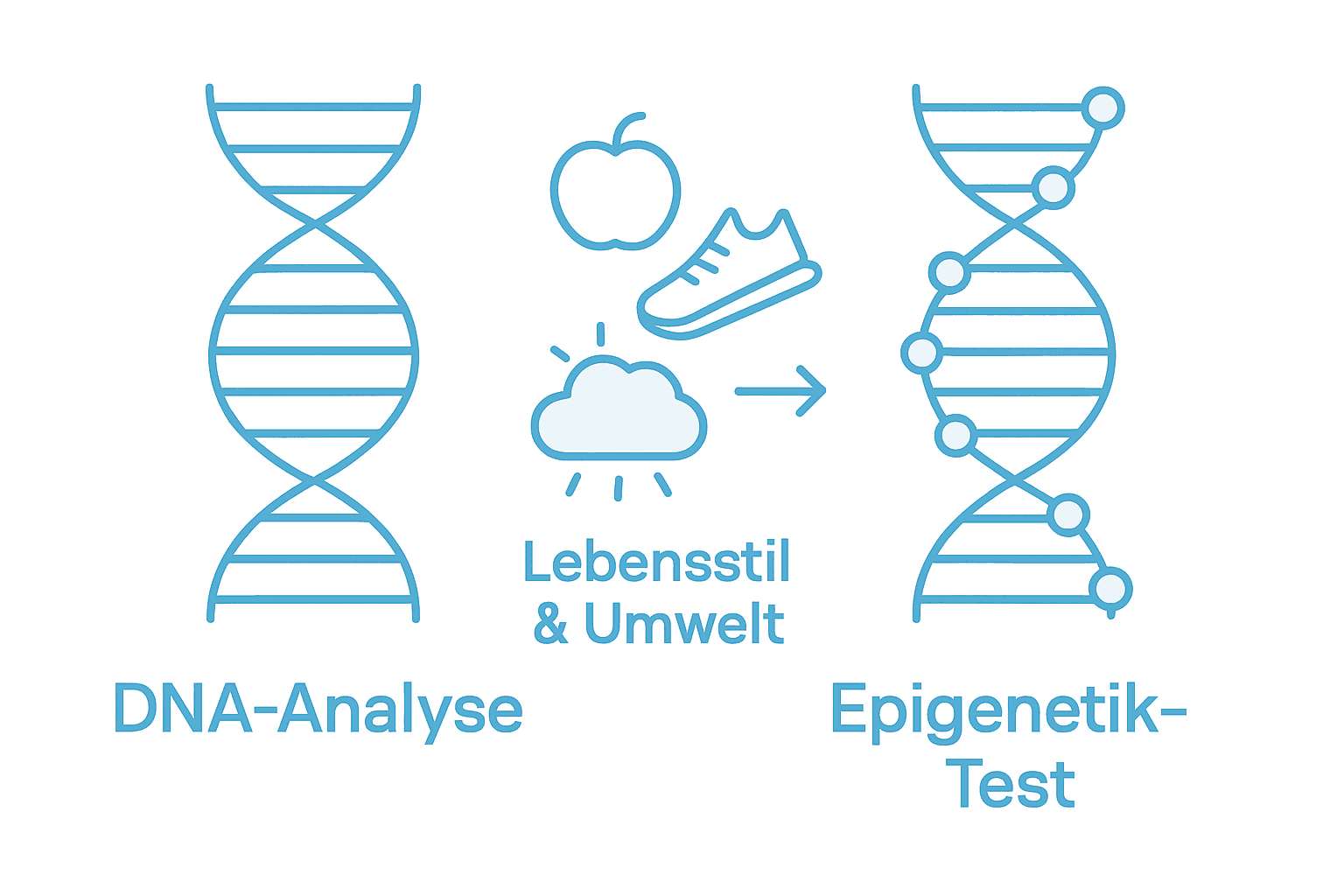
Pro tip for analysis: Think of your epigenetics results as a dynamic map of your health that you can shape yourself. Small changes in your diet and lifestyle can have a big impact.
To clarify the differences between DNA and epigenetics analyses, here is an overview table:
| Type of analysis | Focus of the analysis | Influence of lifestyle | Predictive value for prevention |
|---|---|---|---|
| DNA analysis | Inherited genetic traits | None | Reveals genetic risks |
| Epigenetics analysis | Gene activity and environmental factors | Very high | Provides personalized recommendations |
Epigenetics Test Process and Methods
An epigenetics test involves several precise scientific steps to analyze your individual gene activity. The process usually begins with a simple saliva or blood sample, which you can conveniently collect at home.
The centerpiece of the analysis is bisulfite sequencing, a highly precise molecular biology method for determining DNA methylation. In this process, the DNA is chemically treated so that unmethylated cytosines are converted into uracils, while methylated regions remain unchanged. This enables researchers to identify exactly which gene segments are active or inactive.
After the sample is collected and prepared, a complex laboratory analysis is carried out. Modern epigenetics tests do not just examine individual genes; they comprehensively analyze how environmental factors such as nutrition, stress, and exercise influence your gene expression. The results are compiled into a detailed, personalized report that provides you with specific recommendations for your lifestyle.
The analysis identifies various epigenetic markers that provide insights into your metabolic activity, tendency toward inflammation, nutrient utilization, and ability to recover. This gives you a comprehensive picture of your individual genetic dynamics.
Pro tip for preparation: Take the test while fasting and well-rested. Avoid extreme stress and unusual dietary changes in the days beforehand to ensure representative results.
Applications: health, nutrition, prevention
Epigenetic tests are much more than just a scientific method - they are your personal key to a holistic understanding of your health. They reveal complex connections between your lifestyle and genetic activity, and provide precise starting points for prevention and health optimization.
Barmer explains how nutrition can directly influence gene function and how a healthy diet rich in vegetables and fruit can reduce the risk of diseases such as colorectal cancer. Epigenetics shows us that our dietary choices can literally control our gene expression - a groundbreaking insight for preventive medicine.
The applications are diverse and cover various areas of health. An epigenetics test can provide insights into your individual metabolic response, nutrient utilization, tendency toward inflammation, and even your ability to recover. It helps you develop tailored strategies for nutrition, exercise, and stress management.
These insights are especially interesting for areas such as skin health, weight management, and aging. Expert studies show that conscious choices such as sun protection and a balanced diet can slow the aging process by positively influencing gene expression.
Pro tip for optimizing your health: Think of your epigenetic test as a personal health map. Use the insights to make small but targeted changes to your lifestyle - every decision counts.
This table summarizes typical applications and benefits of epigenetic tests:
| Area of application | Potential benefits | Case study |
|---|---|---|
| Nutrition | Optimizing nutrient intake | Adjusting your meal plan |
| Stress management | Improving stress resilience | Developing a relaxation program |
| Skin health | Prevention of premature aging | Sun protection recommendations |
| Weight management | Support with weight management | Personalized training plans |
Risks, costs, and data protection for epigenetic tests
When considering epigenetic tests, you should carefully consider three key aspects: costs, risks, and the protection of your personal data. An epigenetic test is an investment in your health, but it should be planned carefully.
Experts at Bilanz point out that while epigenetic tests can provide insights into your health, they cannot replace comprehensive medical diagnostics. Costs vary by provider and scope, ranging from 100 to 500 euros. Be sure to check in advance which services are included in the test package and whether a personal consultation to discuss the results is included.
Data protection should be a top priority when choosing an epigenetic test. Reputable providers follow strict data protection policies, pseudonymize your samples, and destroy them after analysis. Make sure the provider fully complies with GDPR guidelines and gives you a transparent explanation of how your data is processed.
The potential risks of an epigenetic test are manageable, but should not be underestimated. The results could cause psychological distress. Not everyone is equally comfortable dealing with scientific health information. The results can also cause uncertainty or be misinterpreted.
Pro tip for minimizing risks: Seek professional advice before testing. Talk to your doctor about your personal health goals and ask them to explain whether an epigenetic test makes sense for your specific situation.
Shape your health with a personalized epigenetic approach
Feel how environmental factors and lifestyle actively influence your genes and determine your well-being. The epigenetic test described in this article clearly shows how you can positively change your gene expression through targeted nutrition, exercise, and stress management. For anyone seeking greater control over their health, DNA metabolism tests for your optimal diet – mybody®x are the perfect complement. These tests help you receive personalized dietary recommendations and understand the influence of your genes on metabolism and weight.
Benefit now from state-of-the-art laboratory quality and scientifically sound analyses with mybody®x. Our range also includes at-home hormone tests – triglycerides, cortisol, testosterone & more – mybody®x, so you can also identify and manage hormonal influences on your gene activity effectively. Take this opportunity to support your health with a tailored plan. Discover how easy and effective modern health analyses at home can be, with no obligation. Start your personal health journey today and actively shape your future.
Frequently asked questions
What is an epigenetic test?
An epigenetic test analyzes how environmental factors and lifestyle affect your gene activity by examining specific methylation sites on the DNA.
How does an epigenetic test work?
The test is generally performed using a simple saliva or blood sample, followed by bisulfite sequencing to determine DNA methylation, which can identify active and inactive genes.
What benefits does an epigenetic test offer for my health?
An epigenetic test can help you understand how your lifestyle affects your gene activity. This provides you with targeted recommendations to optimize your health, diet, and stress management.
Are there any risks or costs I should consider with an epigenetic test?
Epigenetic test costs range from 200 to 500 euros, depending on the provider and the scope of the test. Data privacy and possible psychological stress caused by the test results are additional aspects to consider.


