

How to effectively prevent pregnancy stretch marks: What really helps
Hardly any expectant mother can avoid this topic: pregnancy stretch marks. Experts also call them striae gravidarum, but to you they may simply be the fine lines that appear on your belly, breasts, or hips. However, that is only half the story. Behind them is a complex interplay of hormones, genes, and the rate at which your baby grows.
If you notice this change in yourself, you are in good company. Let’s take a closer look at what is actually happening in your body and how you can best support it.
What pregnancy stretch marks really are
Imagine your connective tissue as an extremely stretchy, finely woven net. The main players in this net are collagen and elastin fibers—they give your skin strength and the ability to contract again. During pregnancy, however, this net is put to the test.
The most obvious reason is, of course, the enormous growth of your belly. In just a few months, the skin has to stretch considerably to make room for your baby. If this process happens too quickly, the collagen and elastin fibers in the deeper layer of the skin (the dermis) can become overstretched and develop fine tears.
These small tears are what we see as stretch marks. At first, the blood vessels beneath them show through, giving them a reddish to purple color. Later, they heal and leave behind lighter, pearly lines.
The myth that only the stretching of the skin is responsible for pregnancy stretch marks persists. In reality, hormonal changes play an equally important role, as they affect the stability of your skin from within.
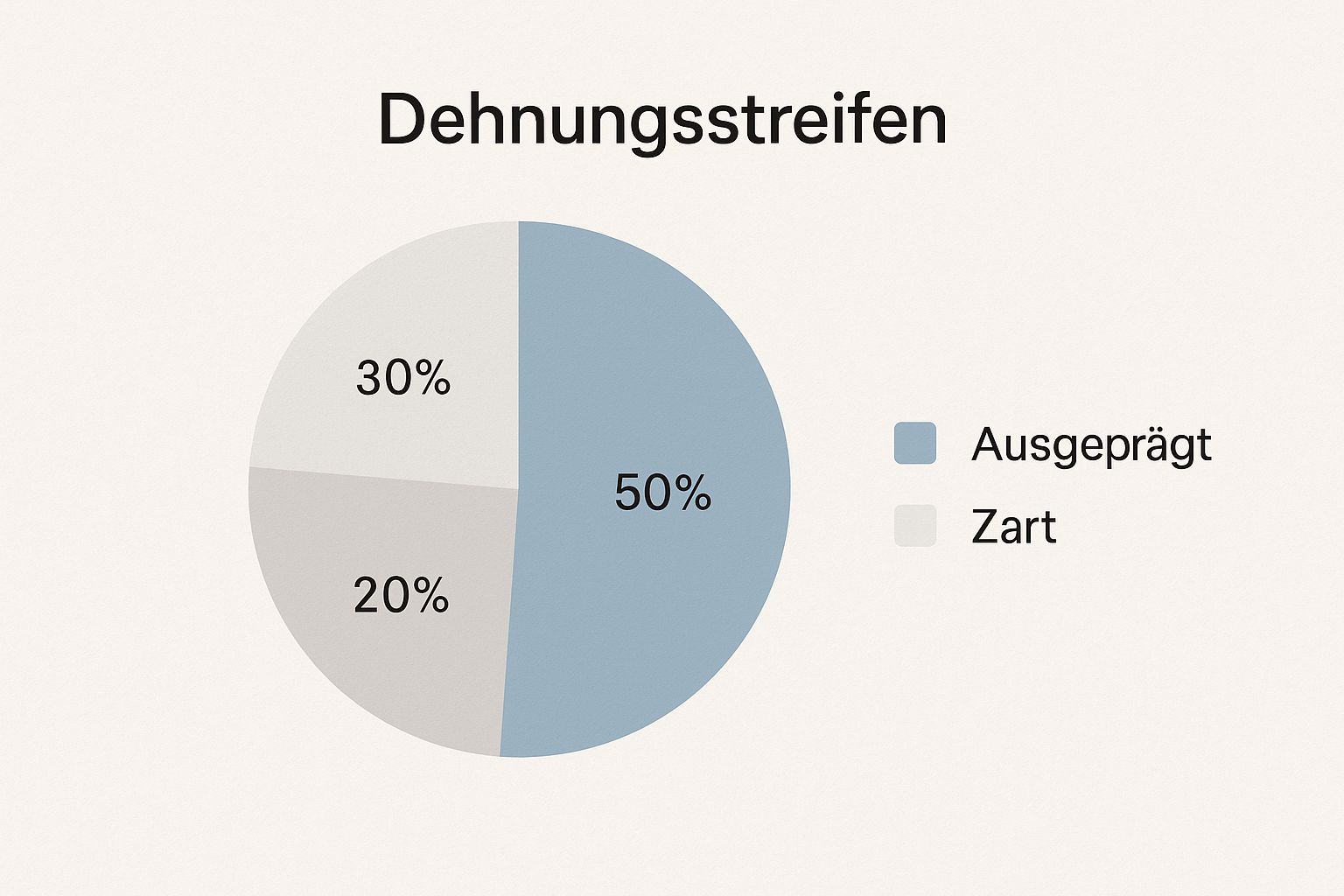
And you are far from alone: studies show that approximately 70 to 90% of all pregnant women in Germany are affected. The risk increases especially between the sixth and eighth months, when your baby experiences a significant growth spurt. You can find more information about the scientific background in this article on aerzteblatt.de.
The close-up illustrates why it is so important to support the skin at a deeper level instead of relying solely on surface-level creams.
Causes and risk factors at a glance
This table summarizes the main reasons why stretch marks develop during pregnancy and gives you a quick overview.
| Factor | Description |
|---|---|
| Rapid weight gain | The skin is stretched significantly in a short period, overloading the collagen fibers. |
| Hormonal changes | Hormones such as cortisol can weaken connective tissue and reduce the skin’s elasticity. |
| Genetic predisposition | If your mother is prone to stretch marks, there is a higher chance that you will get them too. |
| Multiple pregnancies | Multiple babies mean even stronger and faster stretching of the abdomen. |
| Younger age | Younger skin is often firmer and may therefore be more prone to tearing under severe stretching. |
Each of these points shows that it is an interplay of internal and external influences.
That’s why a holistic approach is key
The development of stretch marks is therefore a puzzle made up of several pieces. In addition to mechanical stretching, hormones, your genes, and even subtle inflammatory reactions play a role. Learn more about how you can recognize inflammation on the skin in our health portal.
This is exactly where it’s time to rethink things. Instead of relying only on oils and creams, you should strengthen your skin from within. A personalized approach that takes your individual predisposition into account is by far the most effective way.
The Skincare DNA Metabolism Test by mybody-x.com can help you with exactly that. It analyzes how your genes influence your skin’s health—from collagen production to susceptibility to inflammation. This way, you can finally understand what your skin really needs to get through this special time strong and healthy.
Your skin doesn’t lie: The role of genetics and hormones
Have you ever wondered why your best friend sails through pregnancy without getting a single mark on her skin, while you may already be noticing the first fine lines on your belly? The answer often lies deeper than any cream could ever reach—it is rooted in your DNA and your hormonal orchestra.
Your genes are, so to speak, the blueprint for your connective tissue. They determine how firm and stretchable your skin is naturally. So if your mother or grandmother already struggled with stretch marks, there is unfortunately a higher chance that you are also prone to them.
Your skin’s genetic fingerprint
Genes act like little directors in your body. They determine how much collagen and elastin is produced and what quality it has. These two proteins are your skin’s absolute superheroes: Collagen provides the necessary firmness, while elastin gives it elasticity.
However, some gene variants can cause your body to produce less stable collagen naturally or break it down more quickly. Think of your connective tissue like a rubber band: A high-quality band can be stretched again and again without tearing. But another one with a tiny weak spot will give way at exactly that point under heavy strain.
The same applies to your skin. Genetic predisposition is a key factor in the development of stretch marks. Studies show that women whose mothers had stretch marks face a significantly higher risk. Certain gene variants that control collagen and elastin production are crucial here. A German study confirms that skin structure and elasticity are strongly hereditary and cannot be outsmarted through external care alone. You can read more about the research findings on genetic predisposition here.
The hormonal ups and downs during pregnancy
In addition to your genes, your hormones also play a major role. During pregnancy, your entire body undergoes hormonal changes, and your connective tissue feels the effects directly.
Two hormones in particular play a crucial role:
- Cortisol: This hormone, also known as the stress hormone, rises during pregnancy. It has the unpleasant effect of slowing collagen production and weakening the elastic fibers in the tissue. As a result, your skin becomes more vulnerable and less able to withstand the intense stretching.
- Estrogen: This hormone does create the famous pregnancy “glow” by storing water in the connective tissue and making the skin look plumper. At the same time, however, high estrogen levels can loosen the structure of the collagen network to prepare the body for childbirth. If you would like to learn more about the diverse effects of this hormone, read our detailed article about estrogen and its function in the body.
This hormonal interplay causes your connective tissue to become softer and more yielding. This is absolutely necessary for childbirth, but it also makes the skin more susceptible to the tears we know as stretch marks.
Why a personalized analysis makes all the difference
It now also becomes clear why a standard skincare cream often fails to achieve the desired effect. It only works on the surface, while the real causes of stretch marks lie much deeper—in your genes and your hormonal balance. Simply applying cream without knowing your individual weaknesses is like searching in the fog.
This is exactly where the Skincare DNA Metabolism Test from mybody-x.com comes in. It takes a look behind the scenes of your skin health. Instead of guessing what your skin needs, the test provides clear, scientifically backed answers to the most important questions:
- Your collagen predisposition: How well is your body genetically prepared to produce collagen? Might you be prone to faster breakdown?
- Your connective tissue firmness: How stable is your connective tissue by nature?
- Your ability to retain moisture: How well can your skin cells bind water to stay smooth and elastic?
Imagine knowing exactly where your skin needs targeted support. With these personal insights, you can finally tailor your skincare and nutrition precisely to your needs. You stop spending money on products that do not work for you anyway and instead invest in measures based on your unique predisposition. This strengthens your skin not only from the outside but also gives it the power it needs from within during this special time.
How you can actively prevent stretch marks
The best strategy against stretch marks? Take action yourself and support your skin before the major stretching even begins. Instead of simply waiting to see what happens, you can specifically strengthen the resilience of your connective tissue with the right measures. The key lies in a holistic approach that goes far beyond daily moisturizing.
It is about optimally nourishing your skin from the inside and outside. When you combine targeted nutrition, adequate hydration, and the right external skincare, you can truly make a difference. This creates the best conditions for your skin to successfully cope with the challenges of pregnancy.

Building blocks for your skin: nutrition from within
Your connective tissue needs specific nutrients to form strong, elastic collagen fibers. Think of it like building a sturdy house—without high-quality bricks and mortar, it simply won't work. For your skin, these building blocks are vitamins, minerals, and amino acids.
Here are the most important helpers for strong skin:
- Vitamin C: This vitamin is absolutely essential for collagen production. Without enough vitamin C, your body cannot build a stable collagen network. It is abundant in peppers, broccoli, citrus fruits, and berries.
- Zinc: This trace element plays a key role in cell division and wound healing. It supports repair processes in the skin and is found, for example, in oats, lentils, and nuts.
- Amino acids: Glycine and proline in particular are the direct building blocks of collagen. Your body can produce them itself, but you can support it with protein-rich foods such as legumes, eggs, and lean meat.
Many people believe that expensive collagen powders are a must during pregnancy. But the truth is: A balanced, nutrient-rich diet naturally provides your body with everything it needs to produce its own collagen.
Hydration is about more than just drinking
You’ve surely heard it countless times before, but it’s simply true: Drinking enough water is essential for elastic skin. Your skin cells need water to stay plump and supple. Well-hydrated skin is more stretchable and withstands stress much better.
Try to drink at least 2 to 2.5 liters of water or unsweetened tea every day. This is not only good for your skin but also supports your overall metabolism and circulation during pregnancy.
In addition to staying hydrated, you can strengthen your skin with essential fatty acids. Omega-3 fatty acids are known to strengthen the skin barrier and help the skin retain moisture. You can find them in oily fish such as salmon, as well as in flaxseeds and walnuts.
The power of touch: Massages for supple tissue
Regular massages are one of the most effective methods for preparing the skin for the stretching ahead. They promote circulation, deliver more oxygen and nutrients to the tissue, and keep the connective tissue nice and flexible.
One particularly well-established technique is the pinching massage:
- Preparation: Take a high-quality body oil and spread it over your belly, hips, and breasts.
- Technique: Gently grasp small sections of skin between your thumb and forefinger.
- Application: Gently lift the skin, carefully pinch it, and release it again. Work your way bit by bit across the areas at risk.
It’s best to do this massage daily for about five to ten minutes. It not only strengthens your tissue but is also a beautiful ritual for building a loving connection with your baby.
When you combine these three pillars—nutrition, hydration, and massage—you give your skin the best possible support to help prevent the development of stretch marks during pregnancy as much as possible. This way, you work with your body instead of merely fighting the symptoms on the surface.
The right care for your skin: Oils and creams put to the test
Drugstore shelves are packed with products promising you stretch-mark-free skin during pregnancy. But what really helps, and what is pure marketing? Let’s take a closer look at which active ingredients can actually support your skin, so you know what matters.
It’s not about buying the most expensive product, but the one that suits your skin’s needs. And those needs vary from woman to woman—they depend on your skin type and genetic predisposition.
Active ingredients under the microscope: What really helps
Some ingredients are true skincare stars because they bind moisture, stimulate collagen production, or reduce inflammation. That is exactly what your skin needs now to withstand significant stretching.
Here is an overview of the most important helpers:
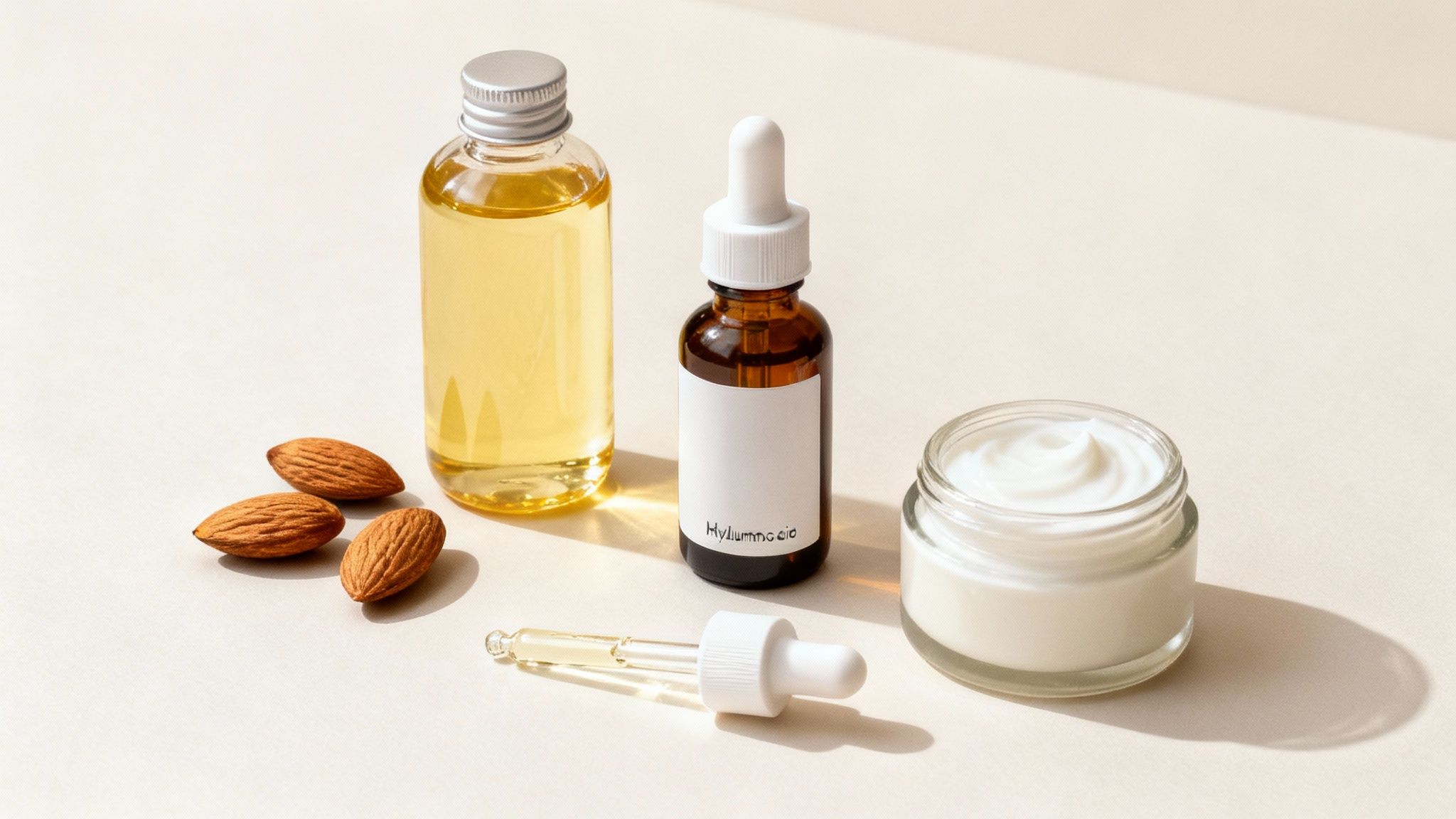
- Hyaluronic acid: Imagine it as a small sponge in your skin. Hyaluronic acid binds enormous amounts of water and plumps the skin from within. Well-hydrated skin is more elastic and less likely to tear.
- Centella Asiatica (tiger grass): This plant extract is a real insider tip. It is known for its wound-healing properties, soothes the skin, and boosts collagen production—a key building block for firm connective tissue.
- Vitamin E (tocopherol): As a powerful antioxidant, vitamin E protects skin cells from stress and damage. It strengthens the skin barrier and helps retain moisture in the skin.
- Almond oil: This classic skincare oil is rich in valuable fatty acids and vitamin E. It absorbs well, provides intensive nourishment, and makes the skin wonderfully supple—ideal for a daily massage routine.
What does science say? Studies examining the effectiveness of creams and oils have produced mixed results. A large scientific analysis has shown that products containing Centella Asiatica or hyaluronic acid can actually have a small but measurable effect in preventing stretch marks. By contrast, products containing cocoa butter or olive oil showed no better effect than a placebo in controlled studies. So it really comes down to choosing the right ingredients.
Tip: The best active ingredient is useless if it just sits in the cupboard. Make your daily skincare routine your own personal ritual. Your skin will thank you.
Comparing active ingredients in skincare
To make your choice easier, we have summarized the most common active ingredients and their proven effectiveness in a table.
| Active ingredient | Mode of action | Evidence of effectiveness |
|---|---|---|
| Hyaluronic acid | Binds moisture and increases skin elasticity. | Moderate; demonstrated in clinical studies. |
| Centella Asiatica | Promotes collagen production and has anti-inflammatory effects. | Moderate; demonstrated in clinical studies. |
| Vitamin E | Antioxidant, protects cell membranes, and helps retain moisture. | Effective as a supporting ingredient, but less studied on its own. |
| Almond oil | Nourishes, keeps the skin supple, and is rich in fatty acids. | Good for skincare, but no specific evidence against stretch marks. |
| Cocoa butter / olive oil | Form a protective film and keep the skin supple. | No superiority over placebo demonstrated in studies. |
This overview shows that it is worth paying attention to the ingredients instead of being guided solely by attractive packaging.
Oil or cream: Which is better for you?
Whether you prefer a rich oil or a light cream is primarily a matter of how it feels on your skin and your skin type. Both have their advantages and disadvantages.
Rich oils are great for dry skin. They form a protective film over the skin and prevent moisture from escaping. Oils are ideal for an extensive pinching massage because the hands glide gently over the skin.
Light creams and lotions absorb more quickly and leave no greasy film. This makes them perfect for use in the morning or if you have normal to oily skin. Look for formulas containing moisturizing ingredients such as hyaluronic acid.
Ultimately, you decide what feels right for you. More important than the texture is ensuring your skin gets the right nutrients. If you no longer want to guess and would rather know exactly what care your skin needs, a personalized skin type analysis can help. Based on your genetic predisposition, it reveals which active ingredients and skincare approaches are best suited to you.
What can you do if the stretch marks are already there?
Sometimes pregnancy stretch marks appear even though you have lovingly cared for your skin. This is completely normal and absolutely no reason to doubt yourself—after all, your body has accomplished something incredible. The only important thing is this: if you decide you want to do something about the stretch marks, there are genuinely effective options after pregnancy and breastfeeding.
The first step is to understand what condition your stretch marks are currently in. It makes a huge difference whether they are fresh or older. This has a major impact on the success of treatment.
Red or white? The subtle but important difference
Very fresh stretch marks, medically known as striae rubrae, have a reddish to purplish color. That's a good sign! It means the tissue is still actively receiving blood flow and the healing process is in full swing. At this stage, the skin is extremely receptive to treatments because its regenerative capacity is working at full speed.
After a while, the color fades. The lines become lighter, almost pearly, and often sink in slightly. This is when they are referred to as striae albae. At this stage, blood circulation is significantly reduced and the scar tissue has hardened. Treatment is now more challenging, but by no means hopeless.
The earlier you start targeted treatment after weaning, the better your chances of achieving visibly smoother-looking skin. Fresh scar tissue is simply much more receptive to regenerative stimulation.
Professional help after pregnancy
When creams and oils reach their limits, dermatological procedures can make a real difference. They specifically stimulate the body’s own collagen production and help the skin renew itself from within. Important: You should only consider such treatments after pregnancy and breastfeeding.
Two methods in particular have proven effective:
- Fractional laser therapy: Imagine tiny, controlled pulses of light penetrating deep into your skin. The laser creates targeted micro-injuries that activate the skin’s self-healing mechanism. Your body begins to produce new, stable collagen that fills in and smooths the marks from below.
- Microneedling: This procedure uses tiny, fine needles that penetrate the skin and trigger a similar wound-healing process. It is like a wake-up call for your fibroblasts—the small factories in your skin responsible for producing fresh collagen and elastin.
Especially for older, white stretch marks (striae albae), fractional laser therapy is considered one of the most effective methods. German dermatology centers report a 50% to 75% improvement in skin appearance after several sessions. Microneedling also delivers great results, especially when combined with active ingredients such as platelet-rich plasma (PRP therapy). However, it is also clear that these treatments are often costly and require some patience, as several appointments are usually necessary. If you want to delve deeper into the subject, you can find more here about the scientific principles behind these treatment methods.
Stay realistic: It is rarely possible to make the marks disappear completely. But a significant visible improvement is absolutely achievable. Talking to an experienced dermatologist can help you find the best method for your skin type and goals.
Your body tells a story: acceptance and a positive self-image
With all the tips on skincare and how best to prevent stretch marks during pregnancy, we want to talk about what really matters: your attitude toward yourself. Your body has just achieved something incredible. The marks left by pregnancy are an integral part of your very personal story.
The pressure from society and the unrealistic image of the perfect “after-baby body” can really wear you down. But instead of viewing stretch marks as a flaw, we want to encourage you to see them for what they are: signs of your body’s incredible achievement. Every single line is like a chapter in the story of your motherhood.
Embracing your body anew
It is about building a loving and accepting relationship with your changed body. Honoring it for what it has accomplished. Mindful care should always come from a sense of self-care, not dissatisfaction or the urge to chase an ideal.
Psychological studies in Germany on postpartum body image paint a clear picture: Up to 70% of women feel uncomfortable in their skin after giving birth, with stretch marks often being a major concern. But research also offers hope. Women who practice self-acceptance and mindfulness have significantly higher self-esteem and are less likely to suffer from postpartum depression. Connecting with other mothers and focusing on what the body can do, rather than on what looks different, is extremely important for emotional balance. If you would like to learn more, you can read the findings on postpartum body image and its impact on mental health here.
Paths to self-acceptance
A positive mindset does not appear out of nowhere. It is a conscious decision you can make anew every day. Here are a few ideas to help you:
- Positive self-talk: Speak kindly to yourself and about your body. Instead of thinking, “My belly is ruined,” you could think: “My belly gave my baby a home.”
- Practice mindfulness: Take a moment each day to consciously tune into your body. Feel its strength instead of focusing only on the changes.
- Avoid comparisons: Social media often paints a distorted picture. Remember that every body and every pregnancy is unique.
True beauty lies not in perfection, but in the strength and story your body tells. Your stretch marks are not a sign of weakness, but a symbol of your strength.
True skin health begins with truly understanding your own needs. The Skincare DNA Metabolism Test from mybody-x.com can help you get to know your body on an entirely new level by showing you what your skin really needs genetically. This allows you to build your skincare routine on knowledge rather than uncertainty and celebrate caring for your body as a genuine act of self-love.
What you may still be wondering about: The most important questions and answers
Finally, we would like to answer a few questions that expectant mothers ask us again and again. Here you will find our answers, briefly and to the point.
Do stretch marks ever completely disappear?
To be completely honest: No, stretch marks do not disappear completely. But—and this is the good news—they become much, much less noticeable over time.
At first, the tears in the connective tissue are fresh and appear as reddish lines (Striae rubrae). Over time, however, they fade and take on a light, almost pearlescent color. They are still there, but are then barely visible. Anyone who wants to do a little more after breastfeeding can further improve their appearance with professional treatments.
When should I start taking care of my skin?
Ideally, start immediately! Begin your skincare routine as soon as you know you are pregnant—long before your belly starts to grow. Why so early? Because this gives your skin the best possible preparation for extreme stretching.
Skin that is well moisturized and kept elastic from the very beginning is simply more resilient. A daily skincare routine with oil or cream and a gentle massage is the perfect way to strengthen your skin.
The earlier you start, the better. Every individual skincare session helps your skin prepare for the challenging period during the final trimester of pregnancy.
Does my weight really play such a major role?
Yes, definitely. Above all, the speed at which you gain weight is crucial. If your weight increases too quickly, your skin’s elastic fibers simply cannot keep up and may tear.
Slow and steady weight gain, as recommended by your doctor or midwife, is key. It gives your skin time to stretch and significantly reduces the risk of stretch marks.
Do massages really help?
Absolutely! Regular massages are incredibly beneficial and one of the most effective methods of prevention. Gentle pinching massages stimulate circulation and make the connective tissue more elastic.
Massage can also help valuable oils and creams penetrate much deeper into the skin and develop their effects. It is precisely this combination of high-quality ingredients and the mechanical stimulation of massage that makes the difference.
Do you no longer want to guess what your skin needs, but know for sure? The Skincare DNA Metabolism Test from mybody-x.com shows you your personal tendency toward collagen breakdown and the condition of your connective tissue. This helps you make decisions that are truly right for you. Discover your personal skincare analysis.



Share now:
Targeted treatment of skin inflammation: What your genes reveal
Find the best stretch mark cream: What your skin really needs