

Finding the best stretch mark cream: What your skin really needs
A good stretch mark cream can make a noticeable difference—the skin is moisturized, feels more elastic, and the marks may become lighter. But how effective it really is depends on the ingredients, your consistency in applying it, and above all, your individual skin type. Instead of guessing blindly, you can use a modern approach to find out what your skin really needs.
How stretch marks really develop
Stretch marks, medically known as striae, are much more than just a minor cosmetic annoyance. They are the visible sign that the connective tissue in your skin has reached its limits.
Imagine your connective tissue as a fine, highly elastic network made primarily of collagen and elastin fibers. These fibers are the superheroes of your skin—they provide firmness and resilience. But when the skin is suddenly stretched significantly, this network can be overstretched and literally tear.
The elastic fibers in the deeper layer of the skin (the dermis) give way. The result? First, tiny inflammations and bleeding beneath the skin, which appear as reddish-purple lines. This is the acute phase, when a stretch mark cream has the best chance of making a difference. Over time, these tears fade and leave behind pale, scar-like lines.
The underlying causes of skin tears
You may wonder why some people hardly get any stretch marks while others are severely affected. This is due to several factors that often work beneath the surface:
- Genetic predisposition: The quality of your connective tissue is largely encoded in your DNA. Is your skin genetically prone to lower collagen production or elasticity? Then the risk of developing stretch marks is higher.
- Hormonal fluctuations: Certain hormones, such as the stress hormone cortisol, can slow collagen production. That's why the body is more susceptible during phases such as puberty, pregnancy, or periods of severe stress.
- Rapid changes: Whether it's rapid muscle growth at the gym, growth spurts during adolescence, or quickly gaining weight, any sudden stretching is a real stress test for your skin.
This graphic does a pretty good job of showing what a tear in the fiber network beneath the skin's surface actually looks like.
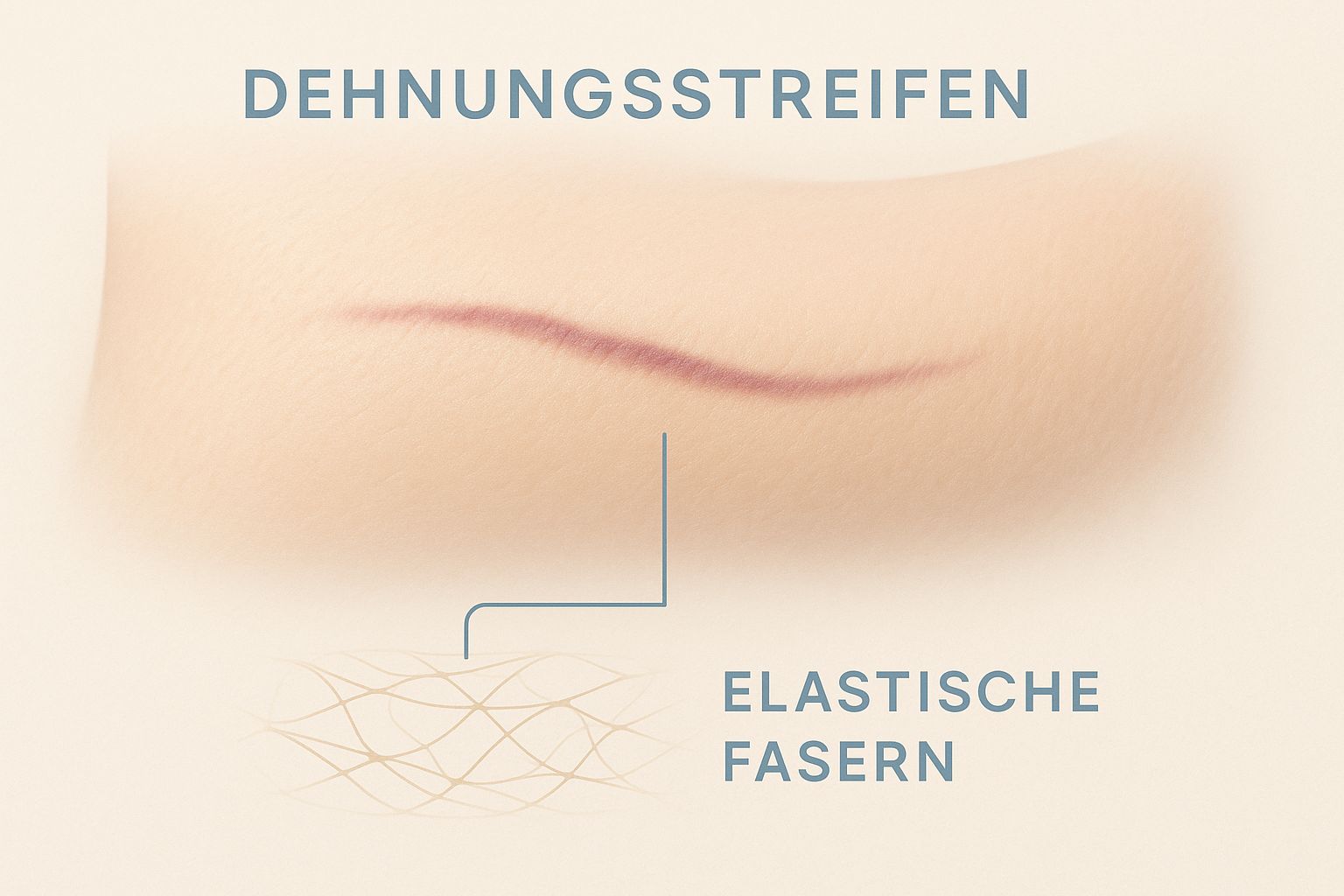
You can see immediately: Stretch marks are not a superficial problem but develop deep inside the skin.
So it is not just about the stretching itself, but about how well your skin can withstand this strain. And this is exactly where skincare tailored to your individual genetic needs comes in.
During pregnancy in particular, many women know this problem all too well. Estimates suggest that around 50% of women in Germany develop stretch marks during or after pregnancy. If you would like to explore the topic in more depth, you can learn more in our guide about stretch marks during pregnancy.
Which active ingredients your skin really needs
The skincare market is a real jungle. Products with grand promises are tempting you everywhere, but in the end, only one thing matters: what is actually inside. Instead of trusting blindly, let’s take a look at the labels together and find out which active ingredients make the crucial difference.
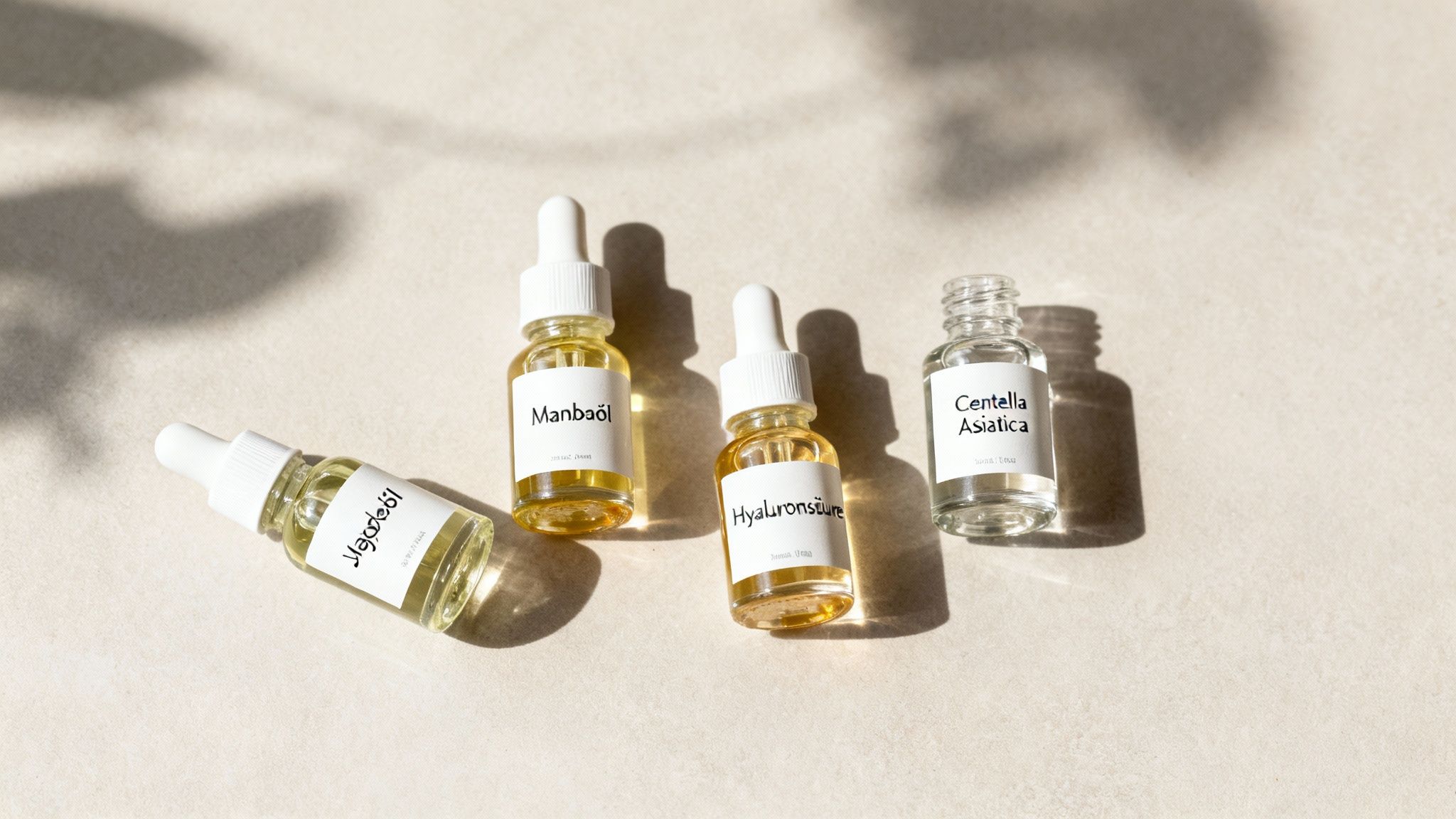
The right stretch mark cream is like a perfectly assembled toolbox for your skin. Each ingredient has a very specific task: improving elasticity and stimulating regeneration.
The moisture boosters: The be-all and end-all for elastic skin
It all starts with plump, well-hydrated skin. Think of dry skin like a brittle rubber band—it is less stretchy and much more prone to tearing. This is exactly where natural oils and moisture reservoirs come into play.
- Almond and jojoba oil: These two are true friends to the skin because they closely resemble the skin’s natural fats (lipids). They penetrate deeply, supply the skin with valuable moisture and essential fatty acids, and do not clog the pores.
- Hyaluronic acid: This active ingredient is a true moisture magnet. It can bind up to 1,000 times its own weight in water. This plumps the skin from within, making it fuller and significantly more resilient.
The regeneration helpers: First aid for stressed tissue
When fine tears have already developed in the tissue, your skin needs targeted support with repair. This is when vitamins and plant extracts come into their own.
Vitamin E (Tocopherol) is a powerful antioxidant and practically the bodyguard for your skin cells. It protects them from damage caused by free radicals and actively supports the healing process. It is often combined with Vitamin A (retinoids), which stimulates cell renewal and gets collagen production going. This helps renew the skin’s structure and visibly smooth the appearance of stretch marks.
Another star among plant-based active ingredients is Centella Asiatica, perhaps better known as tiger grass. This extract is renowned for its wound-healing and anti-inflammatory properties. It soothes the skin, promotes collagen production, and strengthens the skin barrier—ideal for fresh, reddish stretch marks.
Overview of the top active ingredients in stretch mark creams
To give you a better overview, we have summarized the most important powerful active ingredients in a table. Here you can see at a glance what each ingredient can do and what it is best suited for.
| Active ingredient | Main function for the skin | Particularly effective for |
|---|---|---|
| Hyaluronic acid | Binds moisture and plumps the skin | Prevention and treatment of all stretch marks |
| Vitamin A (Retinoids) | Promotes cell renewal & collagen production | Older, white stretch marks |
| Vitamin E (Tocopherol) | Protects cells and supports healing | All types of stretch marks |
| Centella Asiatica | Soothes, reduces inflammation, and strengthens the skin | Fresh, reddish stretch marks |
| Almond/Jojoba oil | Nourishes, moisturizes, and improves elasticity | Prevention and care of dry skin |
| Collagen/Peptides | Supports skin structure and promotes firmness | Older, sunken stretch marks |
The right combination makes all the difference. A good cream not only provides moisture but also actively stimulates the skin's own repair processes to achieve visible results.
The individual factor: Your DNA
Have you ever wondered why a cream works wonders for your friend but barely makes a difference for you? The answer often lies in our genetics. Your individual blueprint determines how efficiently your skin produces collagen and how strong its natural protection against oxidative stress is.
This is exactly where the mybody-x Skincare DNA Metabolism Test comes in. It examines your genetic predispositions and tells you which active ingredients your skin really needs. Is your skin genetically predisposed to faster collagen breakdown? Then you know to specifically look for creams containing peptides or vitamin C.
If you would like to learn more about how nutrition can also strengthen your skin from within, read our guide on antioxidant-rich foods. With this knowledge, you can make an informed decision and invest in care that is precisely tailored to you and your skin.
How to get the most out of your skincare routine
Even the best stretch mark cream can only unleash its superpowers if you apply it correctly. This is about much more than just quickly applying some cream. A consistent, regular routine is the key to truly strengthening your skin and visibly improving the appearance of the marks.

The most important factor for success? Consistency. Your skin loves routine. Make it a habit to care for the affected areas twice a day—ideally in the morning and evening. This gives your skin a constant supply of moisture and valuable active ingredients.
The right massage technique makes all the difference
A gentle massage is a real game-changer. It not only stimulates circulation, improving the tissue's nutrient supply, but also helps the active ingredients penetrate much deeper into the skin. A super-effective method is the pinching massage:
- Prepare: Take a generous amount of the cream and warm it briefly between your hands.
- Apply: Spread it over your stomach, hips, thighs, or wherever you need it, using circular motions.
- Pinching: Now gently take small areas of skin between your thumb and index finger and pull them slightly upward—almost as if you were pinching them. Gently roll the skin back and forth before releasing it.
- Repeat: Work your way over the entire area step by step. The important thing is that it should always feel good and never hurt.
This technique is worth its weight in gold because it promotes the elasticity of your connective tissue and makes your skin highly receptive to skincare.
The perfect time for your skincare routine is right after showering or bathing. Your skin is still slightly damp and your pores are open—ideal conditions for the active ingredients to penetrate deeply.
Patience and realistic expectations are everything
Skincare is not a sprint but a marathon. Your skin needs time to regenerate. If you stick with it consistently, you can see the first visible improvements after about four to twelve weeks.
But remember: Every person's skin is different. What works quickly for one person may take a little longer for another. Instead of guessing which active ingredients and routine are right for you, you can also find out exactly.
The mybody-x Skincare DNA Metabolism Test examines your genetic predispositions. For example, it can reveal whether your skin tends to break down collagen more quickly or needs special protection against oxidative stress. With this knowledge, you understand your skin on an entirely new level and can adjust your skincare routine for maximum effectiveness.
Why Your DNA Knows the Perfect Skincare
Does this sound familiar? Your friend raves about an expensive stretch mark cream that works wonders for her—but nothing seems to happen for you. Why is that? The answer lies in your genetic code, because every skin type is unique and has its own blueprint.
The constant trial and hope for a lucky hit are now over. Instead of testing countless products, you can approach your skincare in a targeted, scientifically grounded way. It is about truly understanding your skin from the ground up rather than merely working on the surface.
Your Personal Skin Blueprint
Just imagine being able to look behind the scenes of your skin. What if you knew exactly how quickly your skin cells break down collagen or how strong your natural protection against environmental influences is? That is precisely what is possible today—and it is the key to skincare that truly makes a difference.
These genetic factors determine how your skin responds to stressors such as rapid stretching. They determine whether your connective tissue is naturally firm and resilient or tends to be weak. A standard cream cannot take these individual needs into account—and therefore often remains ineffective.
Your DNA is like a personal map of your skin. It shows you exactly where your skin needs additional support to stay healthy, elastic, and strong.
With this knowledge, you take a huge step forward: away from general skincare and toward your own highly personal, precise skin strategy.
From Guesswork to Knowledge: How DNA Analysis Helps
This is where the mybody-x Skincare DNA Metabolism Test comes in. It is essentially your personal translator for the language of your skin. Instead of continuing to feel in the dark, this simple at-home test provides clear facts about your skin’s genetic strengths and weaknesses.
Among other things, the test takes a close look at the following key areas:
- Collagen breakdown: Is your skin genetically predisposed to breaking down its supporting collagen framework more quickly?
- Antioxidant protection: How well is your skin naturally equipped to defend itself against oxidative stress caused by free radicals?
- Moisture balance: Is your skin genetically predisposed to dryness, or can it retain moisture well?
- Elasticity and firmness: What is the genetic basis for your skin's resilience?
The results are not complicated science, but clear and easy-to-understand guidance for you. For example, you will learn whether your skin particularly benefits from active ingredients such as peptides, which stimulate collagen production, or whether powerful antioxidants such as vitamin E are indispensable for you.
With this knowledge, you will read the ingredient list of a stretch mark cream from a completely different perspective. You are no longer looking for a product that is supposed to work well for everyone, but for one that contains exactly the active ingredients your skin most urgently needs according to its DNA.
If you know your skin's genetic needs, you can perfect your skincare routine and achieve maximum results. Would you like to learn more about the background and process? You can find all the details on our page about the Skincare DNA skin type analysis.
Avoid common mistakes when treating stretch marks
On the path to smoother skin, there are a few classic pitfalls that can quickly undermine the success of your skincare routine. Many of these mistakes happen completely unconsciously, but they cost valuable time and effort. Once you know them, you can deliberately avoid them and maximize the effectiveness of your stretch mark cream.
The biggest faux pas is probably starting your skincare routine too late. Once stretch marks have faded and turned white, they are old, hardened scar tissue. Treatment then becomes significantly more difficult and time-consuming. Fresh, reddish stretch marks are a completely different story: The chances of improvement are much better because the skin is still in the middle of its regeneration process.
The most common skincare mistakes
Another key issue is consistency. Applying a cream only when you happen to remember will hardly help you reach your goal. Your skin needs a constant supply of active ingredients to improve its elasticity and keep its repair processes running.
The biggest mistakes at a glance:
- Inconsistent application: Skincare must become a daily habit, ideally in the morning and evening. This is the only way to build up a consistent level of active ingredients in the skin.
- The wrong product choice: Not every cream is right for everyone. Without knowing your individual skin needs, choosing a product is often a matter of pure chance. A test such as the Skincare DNA Metabolism Analysis can provide clarity.
- Unrealistic expectations: A good cream can dramatically improve the appearance of stretch marks, but it can’t make them disappear overnight. Patience is the key to success here.
- External skincare isn’t everything: True skin health also comes from within. An unbalanced diet and too little water can undermine even the best cream.
Many people mistakenly believe that external skincare alone is enough. True skin health is always a combination of targeted external care, a nutrient-rich diet, and sufficient water.
Data shows that around 22% of women in Germany try several creams before finding the right product for them. This highlights how important it is to know your own skin’s needs precisely instead of testing products blindly. Learn more about the background behind this product selection here.
By avoiding these common mistakes, you’re laying the foundation for successful treatment. Often, small adjustments to your daily routine make the biggest difference and bring you much closer to your goal of visibly smoother, better-cared-for skin. If you notice that your skin reacts sensitively despite your skincare routine, undetected skin inflammation could also be playing a role and should be investigated.
Your questions about stretch mark creams
There are plenty of questions and uncertainties when it comes to stretch mark creams—that’s completely normal. After all, every person’s skin is unique, and what works wonders for a friend may do nothing for you. We’ve collected the most frequently asked questions and answered them here so you can get a clear picture and make the best decision for your skin.
When should I start using a stretch mark cream?
Absolutely—the best time is before the stretch marks are even visible. Prevention is truly everything here. If you’re planning a pregnancy, entering puberty, or expecting a significant change in weight, you should start taking action early.
During pregnancy, the ideal time is no later than the third month. That is when the skin on the abdomen, hips, and breasts begins to stretch significantly. It is always easier to support the skin's elasticity from the outset than to try to repair connective-tissue tears that have already formed later.
Can a cream also help with old, white stretch marks?
White stretch marks are essentially healed scars in the tissue. A cream cannot simply make them disappear—that would be a false promise. But a good product can significantly improve their appearance.
Active ingredients such as retinoids or hyaluronic acid can smooth the skin's structure, reduce the color contrast with the surrounding skin, and make the skin look fuller overall. The result? The stretch marks simply stand out less and blend in better with the rest of your skin.
A cream cannot turn back time. But it can visibly refine the appearance of the skin and improve the texture of old stretch marks so they are less noticeable.
How exactly does the Skincare DNA Test help me choose products?
Think of the test as a look behind the scenes of your skin. It analyzes how your genes control, for example, collagen production, moisture balance, or protection against free radicals. In the end, you find out where your skin is genetically strong and where it needs support.
Does your DNA indicate that your skin is prone to rapid collagen breakdown? Then you know exactly that you need to look for a cream with collagen-stimulating ingredients such as peptides or vitamin C. You no longer buy blindly; instead, you deliberately choose the ingredients your skin truly needs.
Are expensive creams automatically better than inexpensive ones?
Absolutely not. Price alone says nothing about quality. What matters much more is what is inside—and in what concentration. Some expensive creams consist mainly of inexpensive fillers, while some affordable products contain a highly effective formula.
Instead of focusing on the price, take a closer look at the INCI list (the list of ingredients). Are the important active ingredients listed near the top? The mybody-x Skincare DNA Metabolism Test gives you a real advantage here: You know exactly what to look for and can assess a product's true value much more accurately.
Stop guessing and find out what your skin really needs. The mybody-x Skincare DNA Metabolism Test gives you the scientific foundation for skincare perfectly tailored to you.



Share now:
Effectively prevent stretch marks: What really helps
Antioxidant effect for your skin and cells