
Treating skin inflammation effectively: What your genes reveal
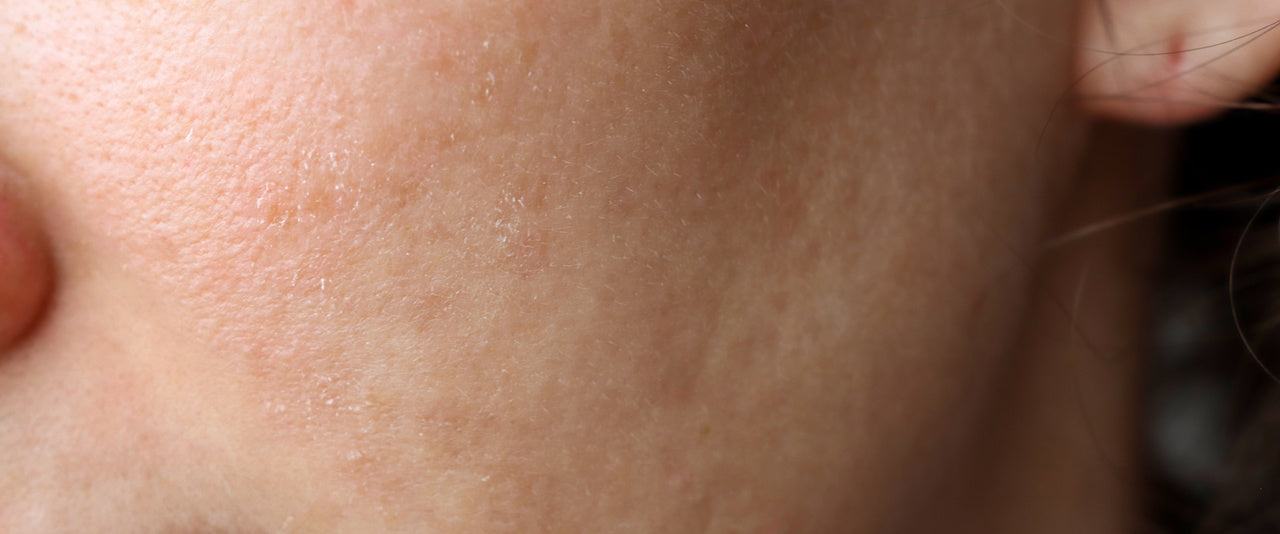
Does your skin itch, burn, and look like a battlefield? These are not random quirks, but clear alarm signals from your body. Skin inflammation is essentially a completely natural and even clever defensive response. Your immune system mobilizes to keep intruders such as bacteria, allergens, or internal stress factors at bay and repair any resulting damage.
What is really behind inflamed skin?
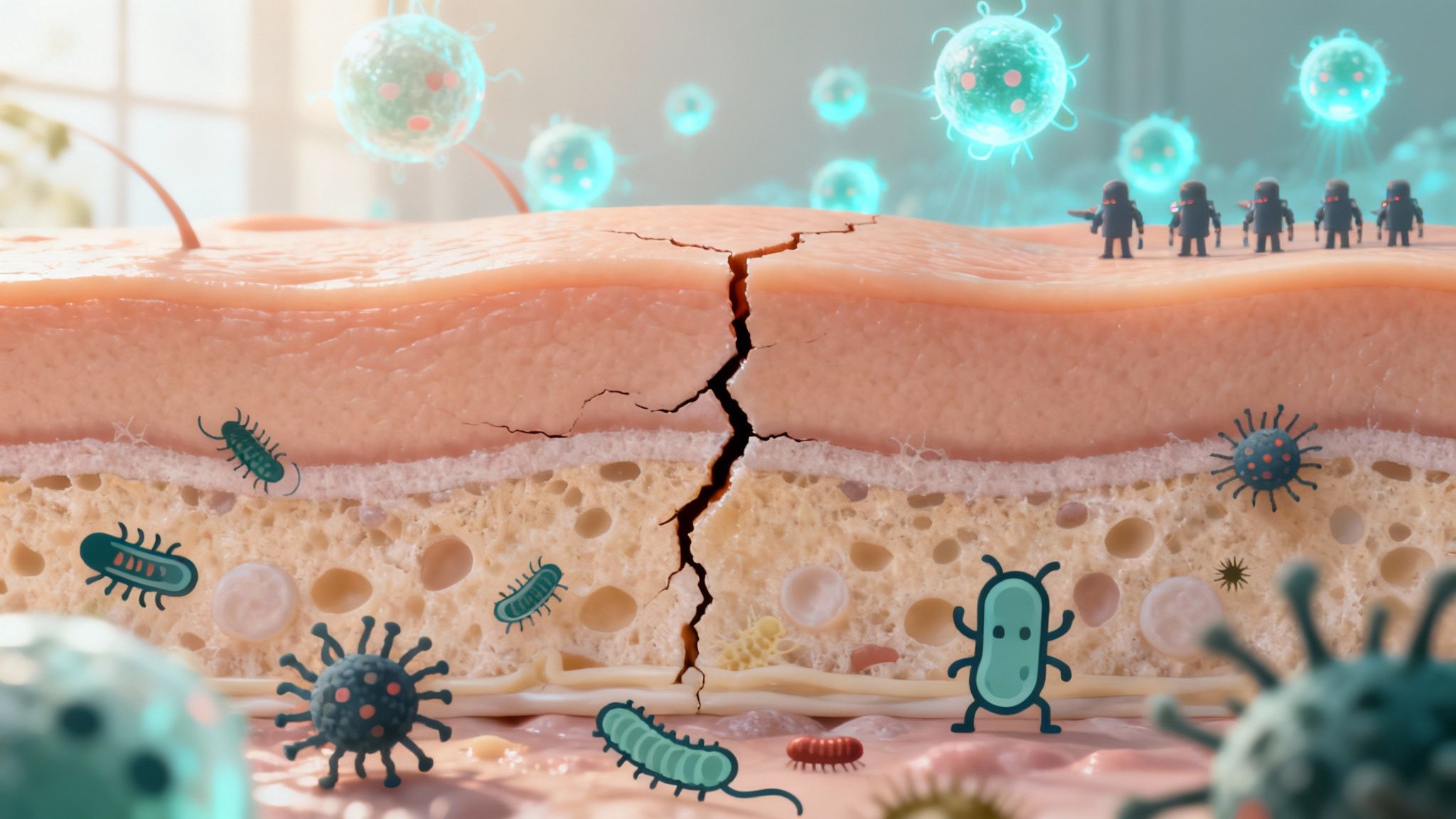
Imagine your skin as a high-tech protective wall that shields you from the outside world. When this wall—your skin barrier—is damaged, whether by a small scratch, harsh skincare products, or too much sun, your immune system immediately sounds the alarm. It promptly sends out a kind of “repair and defense team” to neutralize the threat and restore everything to normal.
That very action is inflammation: a clever and vital protective mechanism. Sometimes, however, this system gets out of balance. Instead of retreating once its work is done, the inflammation simply remains active. This can then lead to chronic problems such as persistent redness, swelling, and that unpleasant feeling of irritated skin.
The five classic signs of inflammation
When your skin is inflamed, it sends unmistakable signals. These five classic signs tell you that your immune system is working at full speed to fight off a threat.
The following table summarizes the classic symptoms that indicate an inflammatory reaction in your skin and briefly explains the biological processes behind them.
The five main signs of skin inflammation
| Symptom (Sign) | Description (What happens in your skin) |
|---|---|
| Redness (Rubor) | The blood vessels dilate so that more immune cells can quickly reach the “site of action.” This causes the characteristic red color. |
| Swelling (Tumor) | Fluid and immune cells leave the dilated blood vessels and enter the surrounding tissue. The result is visible swelling. |
| Warmth (Calor) | Increased blood flow warms the affected area. It feels noticeably warmer than the rest of the skin. |
| Pain (Dolor) | Certain messenger substances released during inflammation irritate the nerve endings, causing the sensation of pain. |
| Impaired function (Functio laesa) | Swelling and pain can impair the skin’s normal functions, such as its elasticity. |
So these symptoms are not merely nuisances, but valuable indications that your body is healing itself. These internal battles can often even be detected in the blood, for example through inflammatory markers. You can learn more about what your blood reveals about inflammation in our article on the significance of CRP levels.
Do not view skin inflammation as an enemy, but as a signal. Your body is communicating with you and showing you that something is disrupting its natural balance—whether from the outside or within.
It is crucial to read these signals correctly. Short-term inflammation is usually a good sign—a healing process that is working properly. However, if inflammation keeps recurring or does not go away, deeper causes are often behind it. These can range from your diet and stress levels to your genetic predisposition, which we will explore in more detail later.
The hidden triggers of your skin problems
Inflammation on the skin is rarely a coincidence. Usually, it is your body's visible signal that something has fallen out of balance. Imagine that your skin is constantly balancing on a tightrope—and various internal and external influences keep throwing it off balance.
These triggers, also called triggers, weaken your natural skin barrier and keep your immune system on constant alert. To regain control over your skin health, the first step is to identify these troublemakers in your everyday life.
External attackers that weaken your skin barrier
Every day, your skin is exposed to countless external influences that can attack its protective function. Often, they are completely ordinary things that unknowingly trigger a chain reaction that ultimately leads to inflammation.
The most common external triggers include:
- Aggressive skin care: Products containing a lot of alcohol, overpowering fragrances, or harsh exfoliants can literally strip away your skin's protective acid mantle. They deprive it of valuable lipids and moisture, making the skin barrier porous and sensitive to irritants.
- Environmental factors: UV radiation is probably the best-known enemy of healthy skin because it causes oxidative stress and damages cells. But fine dust, exhaust fumes, and dry heated air also take a toll on the skin and weaken its defenses.
- Allergens: Certain substances in cosmetics, detergents, or simply pollen can trigger an allergic reaction in sensitive people. The immune system overshoots the mark—the result is redness, itching, and swelling.
Imagine your skin as a fortress wall. External triggers are the attackers trying to punch holes in this wall. Once the wall is weakened, inflammation can flare up and spread more easily.
Internal factors that kindle the fire
While external influences attack the skin directly from the outside, the most persistent triggers may come from within. Your lifestyle, diet, and hormonal balance play a huge role in how resilient your skin really is.
Chronic stress: If you are constantly under pressure, your body releases more of the hormone cortisol. Persistently high cortisol levels can not only disrupt immune function but also stimulate sebum production—an invitation for inflammation and blemishes.
Unbalanced diet: A diet high in sugar, highly processed foods, and unhealthy fats can fuel low-grade inflammation throughout the body. This often shows up first on the skin, for example as acne, redness, or eczema. Certain foods can also trigger intolerances. If you are sensitive to histamine, for instance, this can also lead to skin problems. In our guide, you can find out how to test for a possible histamine intolerance.
Hormonal fluctuations: Women in particular know this: hormonal changes during the menstrual cycle, pregnancy, or menopause can completely change the appearance of the skin. An imbalance between estrogen and androgens can overstimulate the sebaceous glands, thereby promoting inflammatory processes.
The gut–skin axis: It may be hard to believe, but your gut and skin are directly connected. If your gut flora is out of balance (dysbiosis), the intestinal wall can become more permeable. This can allow undigested particles and toxins to enter the bloodstream and cause trouble throughout the body—including in the skin.
Every person is different, and the same applies to our skin. What triggers a severe reaction in one person may leave another completely unaffected. Often, it isn’t just a single factor, but an unfortunate combination of several triggers that pushes things over the edge and throws your skin off balance.
Understanding acne, rosacea, and atopic dermatitis
Inflammation isn’t simply inflammation. It can manifest in very different ways, and each type needs its own appropriate response. So when your skin rebels, it’s crucial to know exactly which “opponent” you’re dealing with. A standard treatment for everything rarely leads to success.
Let’s take a closer look at the most common inflammatory skin conditions. If you know the typical differences between acne, rosacea, atopic dermatitis, and psoriasis, you can interpret your body’s signals much better right away.
This infographic summarizes the typical appearances of acne, rosacea, and atopic dermatitis, clearly showing the differences at a glance.
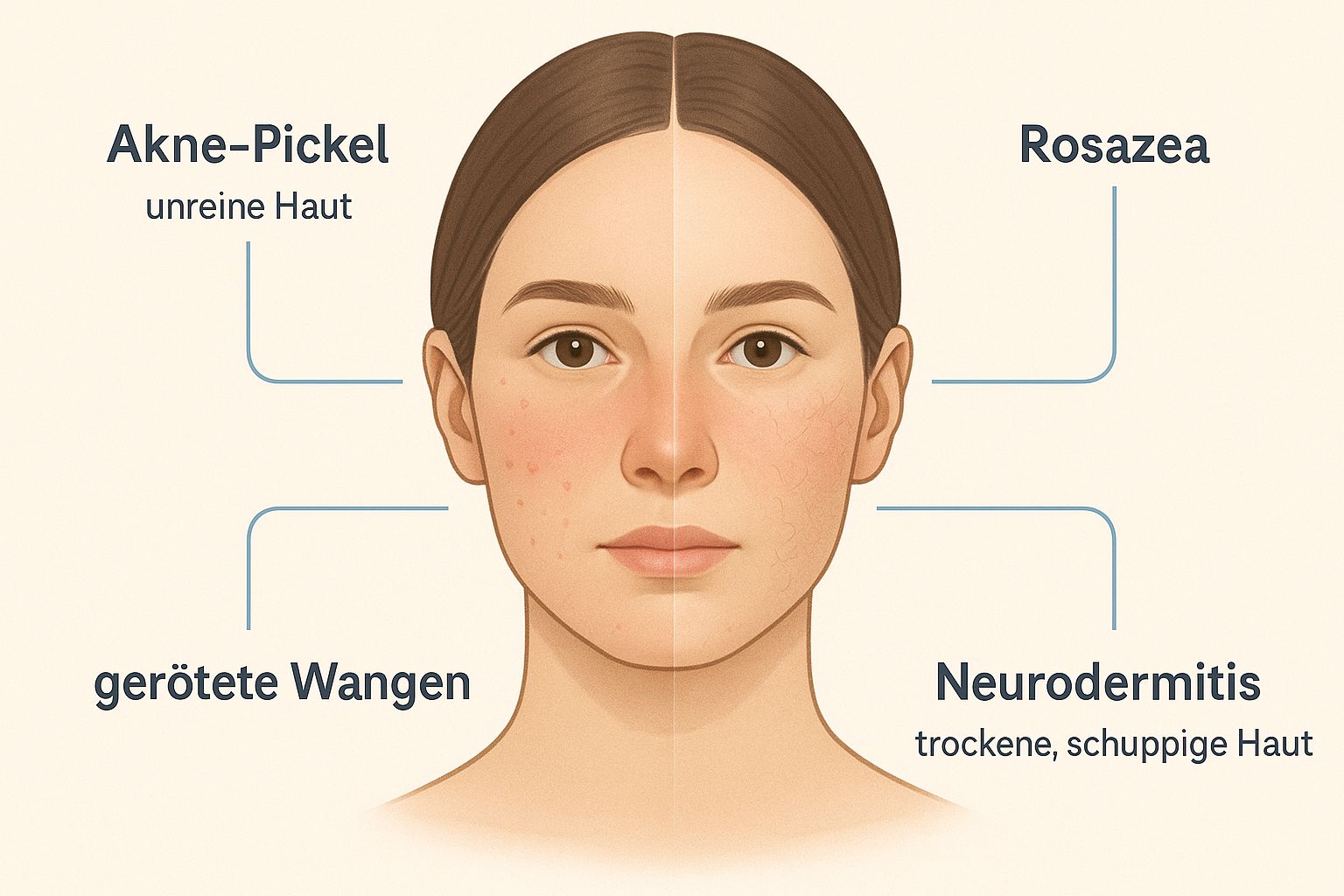
You can see immediately: Although all three conditions are inflammations of the skin, the affected areas and symptoms differ fundamentally.
Acne: The clogged sebaceous gland
Acne is probably the best-known skin condition—and by no means just a teenage problem. At its core, it is inflammation of the pilosebaceous follicles. When too much sebum is produced and a keratinization disorder is also present, the pores become clogged. The result? A perfect breeding ground for bacteria.
- Typical symptoms: It often starts with blackheads (comedones), followed by inflamed papules (small red bumps) and pustules (the classic pus-filled pimples). In severe cases, painful nodules and cysts may also develop.
- Affected areas: Usually the face, but also the back, chest, and shoulders—in other words, anywhere with particularly many sebaceous glands.
- What happens in the skin? The interaction of excess sebum, dead skin cells, and bacteria triggers local inflammation, which we then see as pimples.
Rosacea: Sensitive facial skin
Rosacea is often mistakenly labeled “adult acne,” but it is an entirely different condition. It is not about clogged pores, but about chronic inflammation of the tiny blood vessels in the face. The exact causes are not yet fully understood, but genetics and an overactive immune system are known to play a major role.
Unlike with acne, you will look in vain for blackheads with rosacea. Instead, the key symptom is persistent redness.
Rosacea is a condition that comes and goes in flares. Certain triggers, such as spicy food, alcohol, stress, or too much sun, can suddenly cause symptoms to flare up and make the face glow red.
Atopic dermatitis: The impaired skin barrier
Atopic dermatitis, also known as atopic eczema, is a chronic inflammatory skin condition that often appears in childhood. The underlying problem is a genetically determined weakness in the skin barrier. Simply imagine your skin’s protective wall as full of gaps and fragile.
These gaps cause the skin to lose a great deal of moisture, making it extremely dry. At the same time, allergens and irritants have an easy time getting through: They penetrate the skin and provoke an excessive immune response.
- Typical symptoms: Extremely dry, scaly skin, agonizing itching, and red, inflamed patches of eczema. Constant scratching makes everything worse; the skin can thicken, and oozing areas may develop.
- Affected areas: Classically, the skin folds around the joints, such as behind the knees or in the crooks of the elbows. But the neck, hands, and face can also be affected.
Psoriasis: Overactive cell renewal
Psoriasis, known to most people as plaque psoriasis, is an autoimmune disease. This means that the immune system mistakenly attacks the body itself—in this case, the skin cells. It signals them to renew themselves far too quickly.
This process, which normally 28 What takes days normally happens within just a few days in psoriasis. The skin cannot keep up with shedding the excess cells, so they accumulate on the surface. The result is the typical thick, silvery-white scaling on intensely reddened, sharply defined patches of skin.
Psoriasis is one of the most common chronic inflammatory skin diseases in Germany. It is estimated that about 2 to 3% of the population is affected—around 2 million people.
All these differences make it clear why a one-size-fits-all treatment rarely works. Whether your skin is more prone to acne, rosacea, or eczema is often deeply rooted in your genetic predisposition. An analysis of your DNA can show you where your individual weaknesses lie. You can learn more in our article about the importance of a DNA test for your skin health.
How your genetic code affects your skin
Have you ever wondered why your skin reacts completely differently to stress, certain foods, or new skincare products than your friends’ skin does? While some people seem to tolerate everything, you may constantly struggle with redness, blemishes, or dry patches. A crucial part of the answer lies not in your bathroom cabinet, but deep within your body—in your DNA.
Your genetic code is essentially your body’s personal blueprint—and therefore your skin’s, too. It determines how robust your skin barrier is by nature, how quickly your cells age, how well they can defend themselves against attackers such as UV rays, and how strongly your immune system tends toward inflammation in the skin.
Your personal skin script is genetically determined
Imagine that your genes write the script for your skin. Some people are cast from birth in the leading role of a “resilient skin type,” whose skin barrier is thick and robust. Others, however, are predisposed to the role of a “sensitive skin type,” whose natural protective wall is somewhat thinner and more permeable.
These genetic differences directly affect several key areas of your skin health:
- Tendency toward inflammation: Certain gene variants can keep your immune system in a state of constant alert, so it sends out its “inflammation troops” at the slightest provocation, which can lead to chronic redness or skin conditions such as rosacea.
- Skin barrier stability: Your genes control the production of important building blocks such as ceramides and filaggrin. When these are lacking due to a genetic predisposition, the skin barrier becomes fragile—much like a poorly built wall. The result: dryness and greater susceptibility to eczema, such as atopic dermatitis.
- Managing oxidative stress: Free radicals caused by UV radiation, air pollution, or stress are real accelerators of skin aging. How effectively your body can neutralize these attackers with its own antioxidants is written in your DNA. A lower innate protective function simply leads to wrinkles and a dull complexion more quickly.
Your genes are not your destiny, but they are your starting point. Knowing them gives you the opportunity to stop working against your skin and start working with it, giving it exactly what it needs according to its blueprint.
No more guesswork—the answer lies in your DNA
For years, skincare was a pure trial-and-error game for many of us. You buy products, hope for the best, and get frustrated when they don’t work or even irritate your skin further. But instead of continuing to feel your way in the dark, you can now take a direct look at your personal blueprint.
This is exactly where the mybody-x Skincare DNA Metabolism Test comes in. It’s like a key that gives you access to your skin’s most closely guarded information. Using a simple saliva sample, our laboratory analyzes highly specific genetic markers that are crucial to your skin’s health.
This screenshot shows an excerpt from the results of the Skincare DNA Test, illustrating the genetic predisposition for various skin characteristics.
The results provide you with clear, easy-to-understand insights into how your genes influence, for example, your collagen production, antioxidant protection, or sensitivity to inflammatory triggers.
With this knowledge, you no longer have to guess which skincare is right for you. The test gives you specific, DNA-based recommendations for active ingredients, treatments, and even your diet. For example, if your genes indicate lower collagen production, you’ll know that ingredients such as vitamin C or retinoids are especially valuable for you. If your analysis shows a tendency toward skin inflammation, you can specifically focus on anti-inflammatory nutrients and soothing active ingredients.
This is how you can turn your skincare routine from a game of chance into a precise, scientifically based strategy. It is the most direct way to sustainably restore balance to your skin and give it the best possible support. If you would like to explore the topic in greater depth, our article explains how you can understand your genes through DNA analysis for nutrition and health.
Your personal strategy for calm skin
Knowing your genetic predispositions is the first and most important step toward regaining control. Instead of always reacting to the next skin irritation, you can finally take a proactive approach. A truly effective strategy against skin inflammation is built on three strong pillars: targeted nutrition, a mindful lifestyle, and skincare that is genuinely right for you.

All the tips that follow can be directly linked to the results of your Skincare DNA Metabolism Test. This makes it easy to translate the insights from your analysis into concrete measures for your everyday life—and develop your very own personal health strategy.
Pillar 1: The right nutrition from within
What you eat shows directly on your skin. Certain nutrients can act like an internal firefighting team and calm inflammatory hotspots. If, for example, your DNA test reveals that you are prone to stronger inflammatory responses, this area is doubly important for you.
It’s best to focus on these nutrient groups:
- Omega-3 fatty acids: These are the superstars of an anti-inflammatory diet. You can find plenty of them in oily fish such as salmon, mackerel, and herring, as well as in flaxseeds, chia seeds, and walnuts.
- Antioxidants: These little helpers neutralize free radicals that fuel inflammation. The simple rule is: Eat a rainbow! Berries, dark leafy greens, bell peppers, and tomatoes are packed with them.
- Zinc: This trace element is not only crucial for wound healing, but also regulates the immune system. Good sources include oats, pumpkin seeds, and lentils.
At the same time, you should cut back on foods that tend to promote inflammation. These include, above all, sugar, highly processed products, white flour, and too many omega-6-rich plant oils such as sunflower oil.
Pillar 2: A balanced lifestyle
Your daily routine can either soothe your skin or add to its stress. Chronic stress, too little sleep, and a lack of exercise disrupt your body’s delicate balance and can literally fuel inflammation. If your DNA analysis shows that you are particularly sensitive to stress, you have a powerful opportunity here to achieve calmer skin.
Think of your lifestyle as the conductor of your inner orchestra. Good sleep and little stress create a harmonious melody. Sleep deprivation and hecticness, on the other hand, create dissonance that shows directly on your skin.
A balanced lifestyle means, above all:
- Targeted stress management: Find out what helps you switch off. Whether it’s yoga, meditation, a walk in nature, or simply a good book—anything goes.
- Getting enough sleep: Your entire body, including your skin, regenerates while you sleep. Try to get seven to eight hours per night so these important repair processes can take place without interruption.
Skin inflammation, such as acne, is widespread in Germany and is often accompanied by psychological distress. According to an AOK survey, 96% of 14- to 29-year-olds have experienced skin blemishes, with 32% reporting severe problems. More than half (57%) even say that their self-esteem suffers as a result—a clear sign of how important a holistic approach is. You can read more about the results of this survey on skin health here.
Pillar 3: Personalized skincare
The best skincare is not the most expensive, but the skincare that perfectly matches your skin’s individual needs. That is exactly what your Skincare DNA Test helps you identify. For example, it can reveal whether your skin has a genetically weaker barrier function or is prone to faster collagen breakdown.
With this knowledge, you can specifically look for active ingredients that balance out your individual weaknesses.
- For a weakened skin barrier: Ceramides, niacinamide, and hyaluronic acid are invaluable for repairing your skin’s protective barrier and locking in moisture.
- For a tendency toward blemishes: Salicylic acid (BHA) can help keep pores clear, while niacinamide regulates sebum production and soothes inflammation.
- For low antioxidant protection: Vitamin C, vitamin E, and ferulic acid protect your skin from environmental influences and oxidative stress during the day.
With this three-pillar approach, you transform the knowledge from your DNA into a powerful, personalized strategy. You are no longer working against your skin; instead, you are giving it exactly the support it needs according to its genetic blueprint to stay strong, healthy, and balanced.
The most frequently asked questions about skin inflammation
Now that we have taken a deep dive into the world of skin inflammations, a few very specific questions often remain. Here you will find clear and quick answers to what many people in your situation are wondering about.
When should I see a doctor about skin inflammation?
A very important question! The rule of thumb is: If you are unsure, it is better to see a doctor once too often than once too rarely. A professional diagnosis gives you peace of mind and ensures that you do not experiment blindly.
But there are also a few clear warning signs when you should not hesitate:
- Sudden and severe reactions: Is your skin swelling significantly, oozing, or causing severe pain? See a doctor!
- No improvement in sight: You are taking careful care of your skin and have adjusted your lifestyle, but after a few weeks it simply is not getting better—or is even getting worse? Time to see a specialist.
- Signs of infection: Is pus forming, is the redness spreading, or do you even have a fever? This could indicate a bacterial infection.
- Suspicious skin changes: Any mole that changes in shape, color, or size should always be examined by a dermatologist to rule out skin cancer.
A doctor can not only make the correct diagnosis but also check whether an underlying condition inside your body may be causing your skin problems.
Can skin inflammation go away on its own?
Yes, absolutely! It happens quite often, in fact. Many skin inflammations are simply your body’s natural reaction to a short-term irritant—whether it’s a mosquito bite, a small scratch, or contact with something you cannot tolerate. Your immune system does its job, healing begins, and the redness subsides on its own.
It only becomes critical when the inflammation simply does not stop and becomes chronic. This happens when the trigger remains—for example, ongoing exposure to allergens—or when your immune system has become dysregulated and is constantly overreacting. In such a case, the problem rarely disappears on its own and requires a targeted strategy.
Think of it this way: Acute inflammation is like the fire department putting out a fire. Chronic inflammation is a persistent false alarm that needs your attention.
Can skin inflammation be healed through diet alone?
"Cure" is a big word, but the influence of your diet is enormous. It can be the decisive factor that either fans the flames in your skin or puts them out. An anti-inflammatory diet packed with omega-3 fatty acids, antioxidants, and essential nutrients is like a toolbox for your body, helping it manage inflammation more effectively.
On the other hand, consuming a lot of sugar and highly processed foods can fuel inflammation throughout the body. Diet is therefore one of the strongest pillars of your personal strategy, but it is usually part of an overall approach that also includes the right skincare and a healthy lifestyle.
Are skin inflammations contagious?
We hear this concern often, but in the vast majority of cases, the answer is very clear: No. Chronic skin conditions such as atopic dermatitis, rosacea, or psoriasis are not contagious. They develop through a combination of genes and personal triggers. So you cannot infect anyone else, and you cannot catch them from anyone either.
The only exception is when the inflammation is caused by viruses, bacteria, or fungi. A classic example would be an infected wound or a fungal skin infection. In these cases, the pathogens themselves can of course be transmitted.
Does my job play a role in skin inflammation?
Absolutely! The workplace is an often underestimated but extremely common trigger for skin problems. In fact, work-related skin inflammation is among the most common occupational diseases in Germany. In 2023, there were around 15,000 reported cases of severe skin diseases caused by constant contact with water, cleaning products, or chemicals. Overall, skin diseases lead the ranking among occupational diseases, with almost 30,000 reports. You can find out more in this statistic on work-related skin diseases from Statista.
So if you work in a profession where your hands are often wet or come into contact with irritants—for example, in healthcare, hospitality, or hairdressing—good skin protection is essential.
Your skin is unique, just like its needs. Instead of continuing to guess which cream or diet is right, take a look at your personal blueprint. The mybody-x Skincare DNA Metabolism Test analyzes your genes and gives you clear, scientifically sound recommendations. Find out what your skin really needs and start your journey toward healthy, calm skin today.


Share now:
Biological age test: What your result really reveals
Effectively prevent stretch marks: What really helps