



DNA Metabolism Analysis | incl. 28-day plan & recipe book


You keep feeling:
Overweight and unsure how to lose weight?
Overweight, metabolism, and thyroid function are closely interconnected and play significant roles in regulating body weight.
The interaction between these factors is crucial for understanding changes in weight and can provide important insights into aspects of health. Being overweight can therefore develop in many ways: metabolic dysfunction, hormonal imbalances, or specific thyroid disorders may play a role.
Thus, a deeper understanding of your body’s functions is essential for developing effective approaches to weight management and promoting overall health.
mybody® gives you valuable clarity
Highest quality standard
Our analyses are not only ISO-certified, but are also recognized as medical self-tests.
Personal customer service
You will receive a free consultation and discussion of your results reports from us.
Scientific analyses
Our detailed reports are based on your information and analysis results.

Frequently Asked Questions
What are DNA metabolism, blood, gut, and self-tests?
- DNA metabolism tests (saliva): show genetic tendencies related to fat/carbohydrate utilization, appetite regulation, and exercise tolerance – the basis for personalized nutrition and sports. Learn more. mybody®x
- Blood tests (capillary blood): check vitamins, minerals, hormones, and inflammation markers – ideal for prevention and monitoring. Blood tests. mybody®x
- Gut/microbiome tests (stool): analyze bacterial diversity and dysbiosis and provide nutritional recommendations for a stable gut flora. Microbiome tests. mybody®x
- Self-tests: tested home kits with laboratory analysis – simple, discreet, and without a doctor’s appointment. All self-tests. mybody®x
Are the mybody tests ISO-certified laboratory analyses?
Yes. mybody® repeatedly states that the analyses are carried out in ISO-certified laboratories and are recognized as medical self-tests. This ensures reproducibility, accuracy, and quality-assured processes—the basis for reliable results and clear recommendations. mybody®x+1
Are mybody products also available through a subscription?
A classic subscription with savings is currently not promoted as a standard option on the website. However, there are promotions/bundles as well as payment options such as installment payments or “buy now, pay later” that are communicated in several places. For recurring benefits, we recommend subscribing to the newsletter and checking combination sets; this way, you can secure discounts and seasonal deals (e.g., Black Week).
Is a DNA metabolic analysis the same as the measurement conducted by a sports medicine specialist?
No. Two different methods share the same name here. The sports medicine measurement uses your breath to determine how much energy your body burns today, and this value fluctuates with sleep, stress, and training status. DNA analysis describes your predisposition, which remains the same. Anyone who wants to know how much they burn today needs the measurement.
Do I have to retake the test later?
No. Your DNA does not change, so one test is enough for your entire life. The report remains valid even if your weight, age, or diet changes. What grows is the research surrounding it. Your result stays the same; only the knowledge about it grows. In practice, this means you pay once. You do not need to store anything either, because the report remains accessible in your customer account.
What do I need the 28-day plan and the recipe book for?
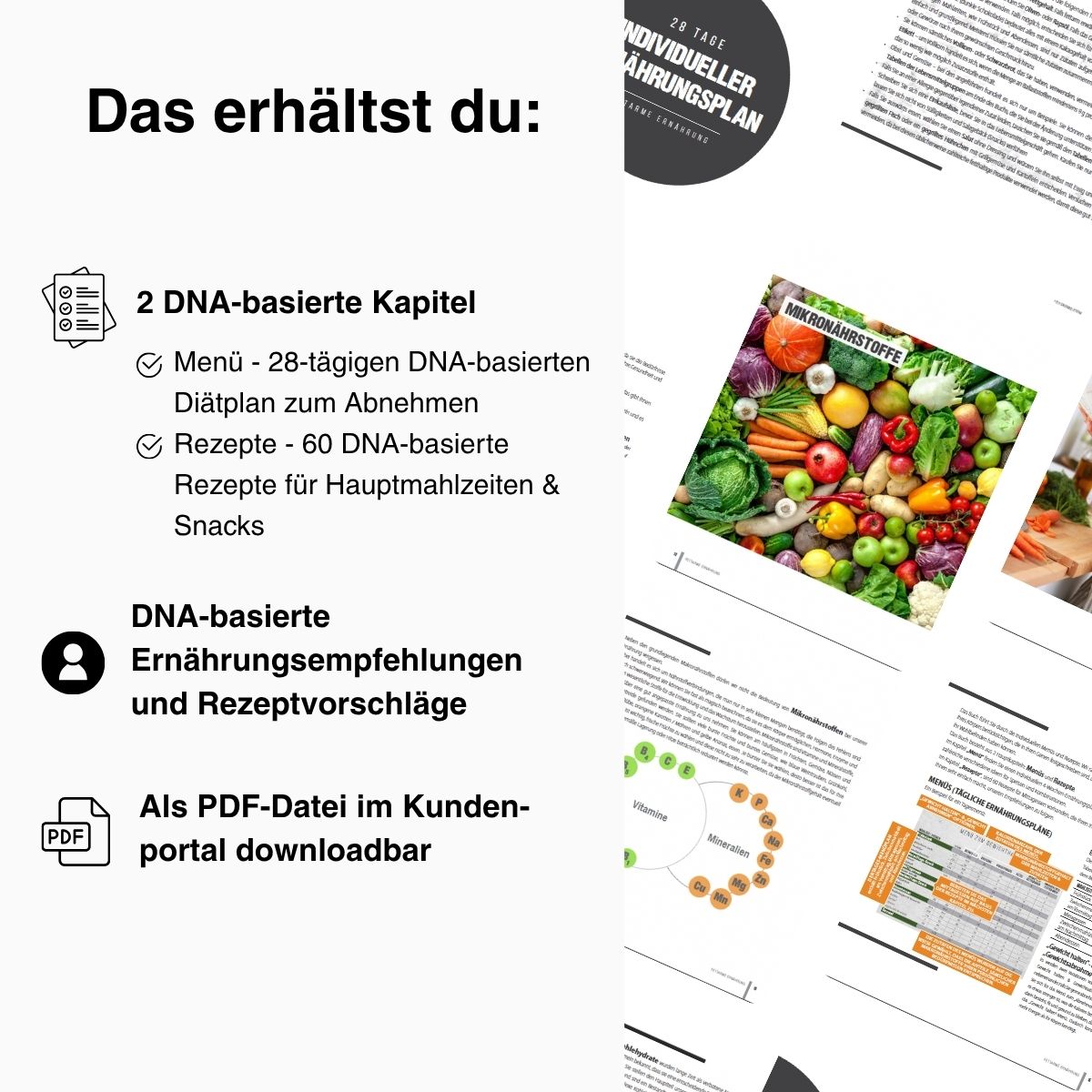
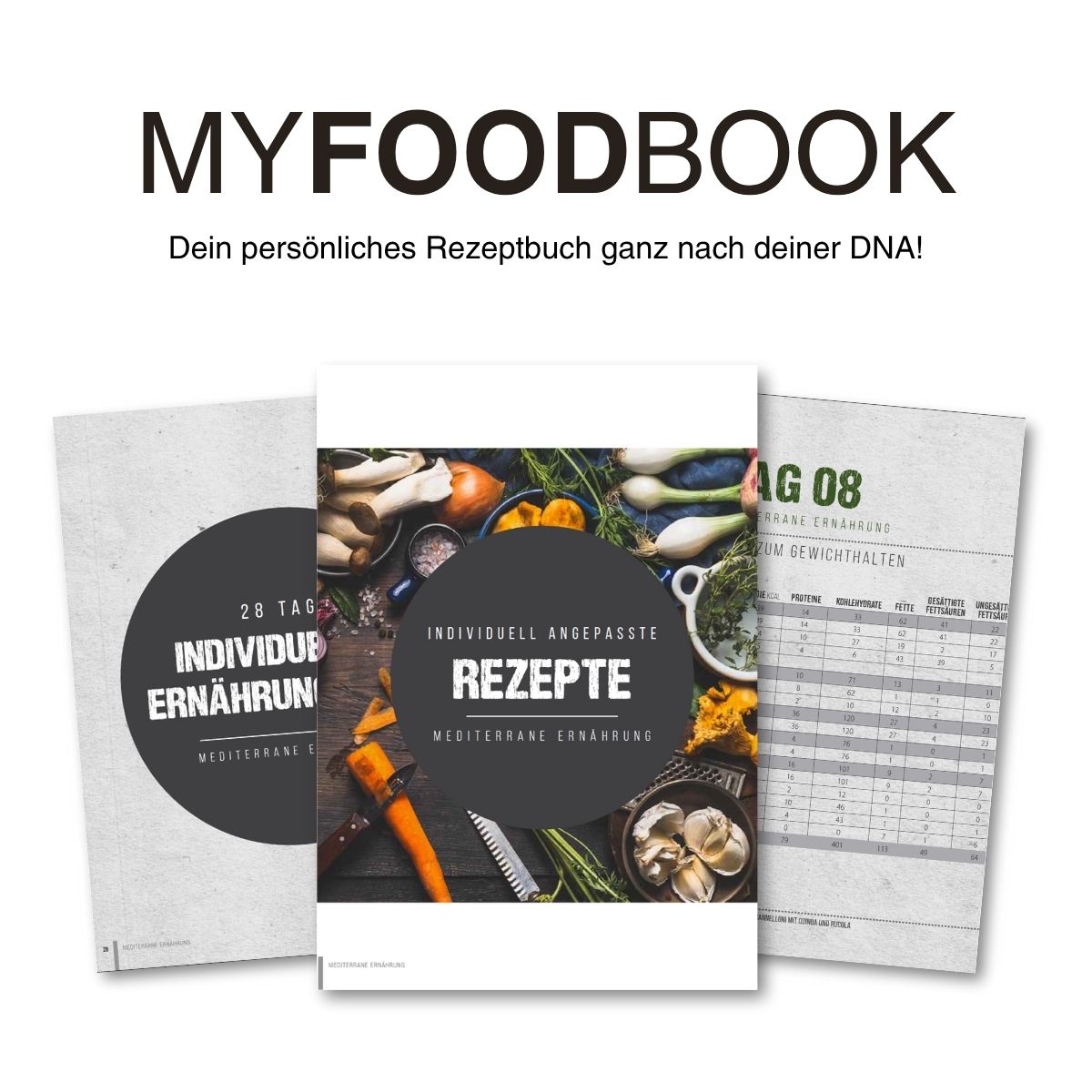
Because most people don't fail because of the results, but because of the week that follows. The 28-Day Plan provides four weeks of structure, without restrictions and without a diet plan, while the recipe book offers dishes that suit your genetic makeup. Both are included in the DNA Metabolism Analysis. Anyone who already has a DNA test can find the recipe selection as MY FOODBOOK + Diet Plan.
In this overview, you’ll find answers to common questions about the mybody tests.
DNA test for weight loss: what it shows, what it does not show, and which one is right for you
Buy a DNA test for weight loss if diets never work for you
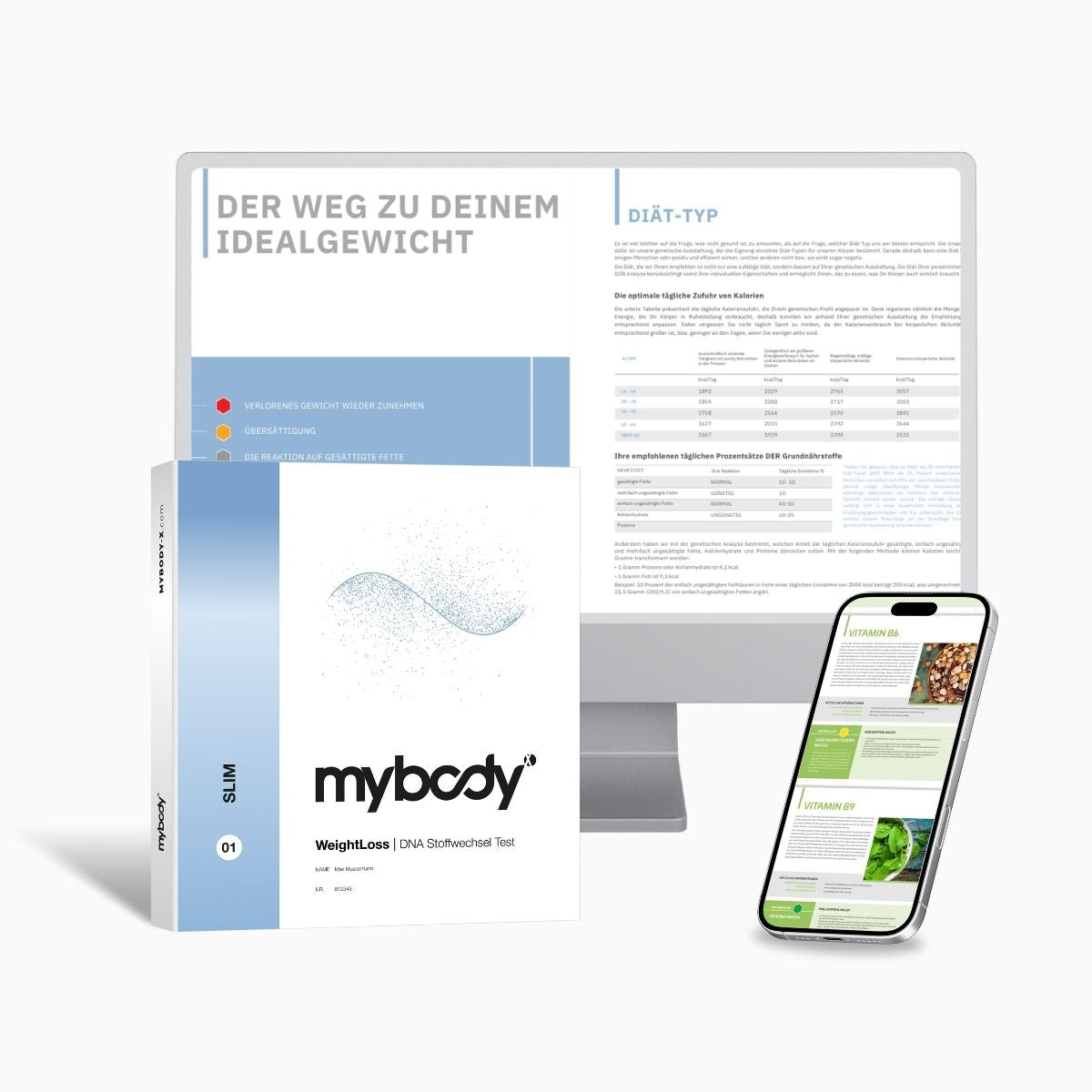
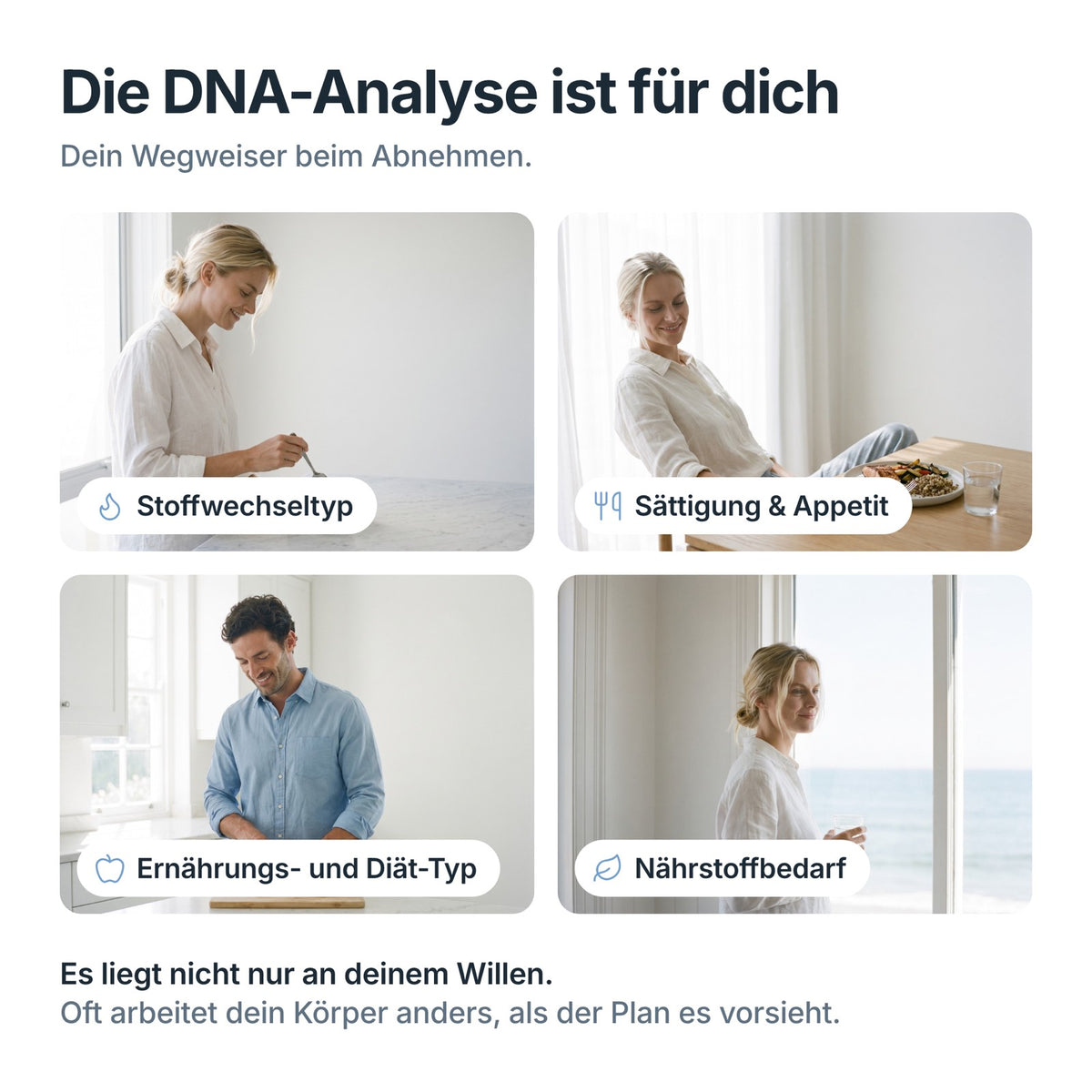
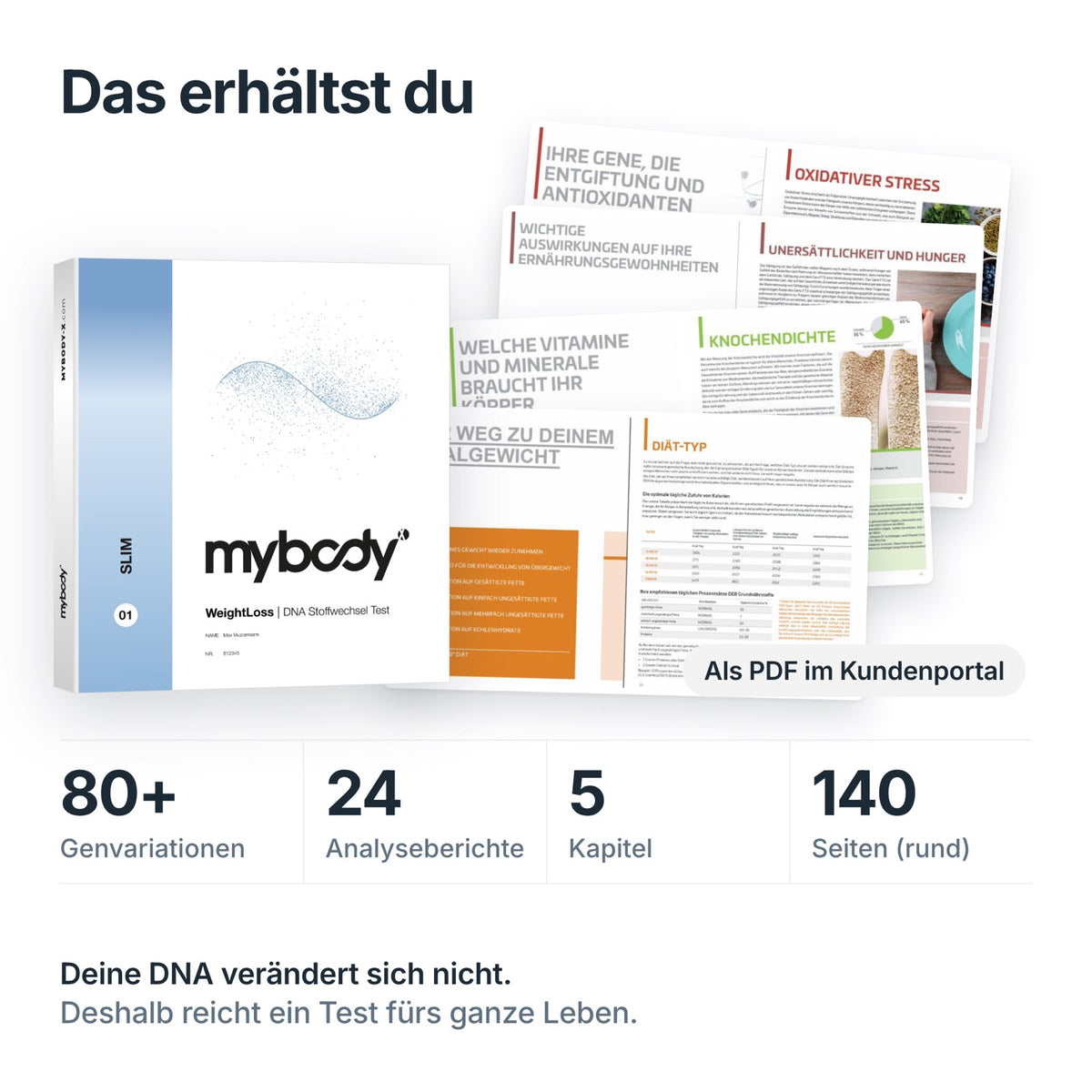
The WeightLoss SLIM DNA Test is the starting point for anyone whose plans do not work as promised. More than 80 genetic variations from your saliva are analyzed and presented in 24 analysis reports, 5 chapters, and around 140 pages. It explains how your body processes carbohydrates and fats, how strong your sense of fullness is, and which training stimuli you are more likely to respond to. The test is designed for people who have tried several diets and are looking for an objective starting point instead of the next set of rules. The kit includes the collection materials, return envelope, and digital report. What is not included is stated in the text, not hidden in the fine print: an assessment of more than 1,000 foods is not part of it. The report does not prescribe anything for you; it provides context. If you are planning to change your diet, this is the objective starting point beforehand, not the evaluation afterward.
Your predisposition stays the same, your everyday life changes daily
This is exactly where two things that are often lumped together diverge. A predisposition describes how your body fundamentally deals with food, and it remains the same throughout your life. A snapshot shows your current state: your weight or your blood count. Both answer different questions, and both are useful. Genetic analysis can explain why portion control requires more effort for some people than for others. It cannot tell you whether you have not drunk enough this week. What remains important is this: A variant describes a probability in population groups, not a fixed outcome for you personally. Sleep and physical activity also play a role, and you can change more about those than about your genes. In practical terms: You read the genetic findings once and keep them, while you repeat a snapshot when something has changed. Anyone who keeps these two levels separate will no longer expect the wrong test to provide the answer. The tests under Nutrition & Intolerances provide the snapshot.
Being overweight can have many causes, including genetic predispositions that affect your metabolism. With the DNA metabolism test, you gain insights into your genetic predispositions and how they influence your energy expenditure and fat burning. Find out how your body responds to certain nutrients and which nutrition and fitness strategies suit you best. With this knowledge, you can take targeted measures to manage your weight in the long term. Let your genes work for you and find the right path to a healthy lifestyle!
Being overweight is often associated with an underactive thyroid. Hypothyroidism can slow down the metabolism and contribute to weight gain. With the thyroid TSH self-test, you can easily check from home whether your thyroid is functioning properly. This test measures the concentration of the TSH hormone, which is crucial for regulating thyroid function. If the results are abnormal, you can seek targeted medical support. Understand the connection between the thyroid and weight and find out whether there is a hormonal cause.
Being overweight can be influenced by many factors—from genetic predispositions to hormonal imbalances such as thyroid problems. Our collection offers two effective tests: the DNA metabolism test and the thyroid TSH self-test. Both tests help you better understand the causes of being overweight. Whether genetic influences or an underactive thyroid, these tests provide valuable information to help you better understand your body and take targeted action.
Losing weight is often not just a matter of willpower, but also of having the right information. The DNA metabolism test and the thyroid TSH self-test give you the opportunity to better understand your metabolism and thyroid function—two key factors that influence weight. These tests help you take the measures that are right for you, whether through dietary changes, exercise, or medical advice. Find out which strategy is best for you to lose weight healthily and sustainably.