

Your body, your values, your decision
A health test is only as good as what underlies it: the method, the laboratory, and the disclosure of what is being evaluated. That’s why this page shows how our tests work—from DNA analysis and blood values to the gut microbiome. Here, we name the procedures, cite the standards with their reference numbers, and disclose the scope of the evaluation in advance.
For us, working scientifically doesn’t mean impressing people with technical terms; it means being verifiable. That includes an honest answer to the question of what a self-test cannot do: it does not replace a medical diagnosis. We provide the data and explain what it means. What you do with it is up to you.
What makes our tests scientific?
Behind every mybody®x health test is the same scientific standard: A sample you collect at home is analyzed using established laboratory methods in a laboratory in Germany certified to ISO 9001 and ISO 13485. Whether DNA, blood values, or gut flora, the measurement is taken from your sample, not from a questionnaire or an estimate. The same care applies to your data: It is processed in accordance with ISO 27001 and the GDPR.
But science involves more than measurement. A result only becomes useful when it is put into context: What falls within a typical range, what is normal variation, and where is it worth taking a closer look? That is exactly what your report does. It translates laboratory results into understandable guidance for nutrition and everyday life, without giving them more significance than the research supports. A finding describes a condition, not a cause—that too is part of honest interpretation.
But science also includes recognizing its limits: A self-test is not a diagnostic procedure and does not replace a medical examination. If you notice warning signs, do not take a test—make an appointment instead. That is why this page openly explains what our tests can and cannot do, together with the methods, standards, and what happens to your sample and data. This allows you to assess for yourself what you are relying on.
How does a test work?
The process is the same for all types of tests. You order the test kit online, collect the sample at home (saliva, capillary blood, or stool), and send it to the laboratory in the enclosed return bag. After the analysis, you receive your digital report with recommendations.
Your sample is pseudonymized: it bears a code instead of your name.
Order test kit
Online; shipping to you is listed separately
Collect sample
At home: saliva, capillary blood, or stool
Send back
To the laboratory in the enclosed return bag
Receive report
Digital, with recommendations and context
Processing times vary depending on the method. Blood tests take 3 to 5 business days after the sample is received, stool tests take 5 to 10 business days, and DNA tests take 15 to 25 business days.
How do DNA, blood, and gut tests differ?
The three types of tests answer different questions because they measure over different time scales.
DNA — never changes
Your DNA does not change. That is why a DNA analysis once in your lifetime is sufficient.
Analysis: 15–25 business days
Blood — current state
Blood values change over several months. For monitoring changes, every 6 to 12 months.
Analysis: 3–5 business days
Gut — responds within weeks
The gut microbiome is the part of your body that you can influence yourself most quickly.
Analysis: 5–10 business days
Research will continue, and in the future we will be able to read more from the same DNA data. Your results will not change as a result. Only what we infer from them will grow.
What methods do we use to analyze your samples?
DNA analysis
Our DNA analyses use SNP genotyping, the targeted examination of more than 700,000 predetermined individual positions in the genome, known as SNPs. We therefore do not sequence your entire genome; instead, we read precisely the positions that research has linked to nutrition, metabolism, training, and skin aging.
A DNA analysis from mybody®x does not predict disease. Genetic variants describe probabilities in population groups, not fixed outcomes for individuals. Your predisposition is not your destiny—you decide what you do with your results.
Blood tests
Our blood tests use capillary blood: a few drops taken from your fingertip that you collect yourself at home. Depending on the test, we analyze values such as vitamin D, ferritin—the storage form of iron—or the thyroid hormone TSH.
A blood value shows your current state. A single laboratory value is, in the sense of IQWiG (2025), one component of an overall diagnosis, not a verdict. A measurement is a data point, not an answer. Your report helps you put each value into context—and an abnormal value does not automatically mean illness, but is a reason to take a closer look.
Microbiome analysis
Our microbiome tests analyze the stool sample using DNA sequencing: the laboratory reads the genetic material of the bacteria in your sample and thereby also detects species that cannot be cultivated on a nutrient medium. This identifies more than 1,500 bacterial species, from which more than 6,000 microbiome biomarkers are analyzed—including the species themselves as well as metabolites and ratio values.
The two figures describe different things: more than 1,500 identified species and more than 6,000 markers analyzed from them.
How do you know what is analyzed before buying?
The most common question before a test is: Is my value included at all? You don’t have to buy anything to find out. Three searchable glossaries disclose the scope of the analysis in advance.
This disclosure is not an extra service for us, but part of our scientific rigor: an analysis whose scope no one can verify in advance cannot be properly assessed afterward either.
What standards does the laboratory work according to?
Analysis is carried out in a laboratory in Germany certified according to ISO 9001 and ISO 13485. Your data is processed according to ISO 27001 and the GDPR.
ISO 9001
General quality management
ISO 13485
Quality management for medical devices
ISO 27001
Information security
GDPR
Data protection under European law
“ISO-certified” without a standard number says little. That’s why the numbers are listed here: you can look up what each standard requires.
A certificate secures the process, not the truth—it proves that work is carried out according to reviewed, documented procedures. We claim neither more nor less.
What happens to your sample and your data?
Your saliva sample and the DNA sequence obtained from it are completely destroyed two months after the analysis is completed. All samples are pseudonymized, the transmission of your results is SSL-encrypted, and processing complies with the GDPR and ISO 27001.
Code instead of name on the sample SSL-encrypted transmission Destruction after two months
Health data is the most sensitive data there is. That’s why we prefer to answer the question of data protection concretely rather than ceremoniously: with a code instead of your name on the sample and with fixed deadlines for destruction.


What can’t our tests do?
No mybody®x test is a diagnostic procedure. Our products are not intended to diagnose, treat, cure, or prevent diseases. Specifically, this means: A DNA analysis does not predict disease or weight-loss success. A microbiome test does not detect chronic inflammatory bowel disease, tumors, infections, or celiac disease. An abnormal blood value does not automatically mean illness.
If you notice warning signs, don’t take a test—make an appointment. Your doctor remains the authority for diagnosis and treatment. Our reports are designed to help you prepare for that conversation: with values you can bring and questions you can ask.
We also prefer to be precise rather than convenient when it comes to the evidence. In 2022, the German Nutrition Society (DGE) concluded that genetic, blood, and microbiome analyses in studies “generally showed no statistically significant improvements in dietary behavior,” although they did show moderate effects through increased motivation. That is exactly where the honest benefit of a self-test lies: It gives you a starting point and structure for changes you already want to tackle. Motivation instead of promises of a cure.



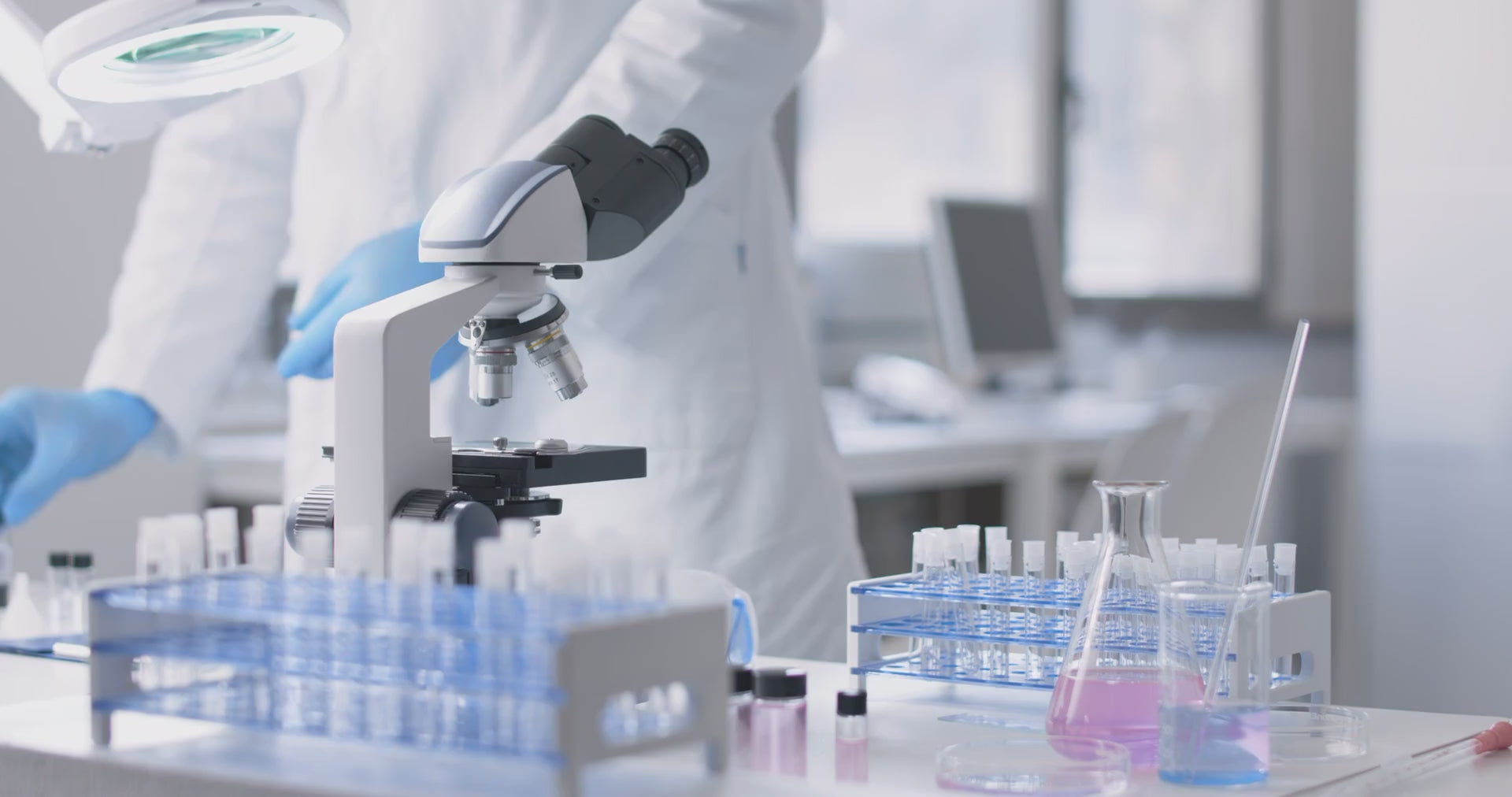
The tests are conducted in our ISO-certified laboratory in Germany.
Our saliva, blood, and stool analyses are carefully performed to the highest laboratory standards, giving you detailed insight into your genetic predisposition, including personalized recommendations for action.

Frequently Asked Questions
How reliable are the analyses?
Each sample is analyzed in a laboratory in Germany certified according to ISO 9001 and ISO 13485, while data processing complies with ISO 27001 and the GDPR. The certificates confirm audited, documented processes from sample receipt through to the report. Nevertheless, a self-test does not replace medical diagnostics: An abnormal result is a reason to consult a doctor, not a diagnosis.
Why is a DNA test performed only once, while blood and gut tests are repeated?
Your DNA does not change, so one DNA analysis is sufficient for your lifetime. Blood values change over the course of months, so repeating the test every 6 to 12 months is advisable for monitoring changes. The gut microbiome changes within weeks: After changing your diet, a follow-up test after 3 months is advisable, and then every 6 to 12 months.
What happens to my sample and my data?
Your saliva sample and DNA sequence are completely destroyed two months after the analysis is completed. All samples are pseudonymized and carry a code instead of your name, the transmission of your results is SSL-encrypted, and processing complies with the GDPR and ISO 27001, the standard for information security.
How long does the analysis take?
Blood tests take 3 to 5 business days after the sample is received, gut tests take 5 to 10 business days, and DNA tests take 15 to 25 business days. Shipping the test kit to you takes place beforehand and is listed separately so that you can plan both stages. As soon as your report is ready, you will receive it digitally, with a free consultation about your results available on request.
Would you like to learn more about our DNA tests? Feel free to contact us :)!
General Health Disclaimer
Medical Notice. Our products are not intended to diagnose, treat, cure, or prevent diseases.
The DNA analysis is intended to provide nutrition and lifestyle guidance. It is not a diagnostic procedure, does not predict disease, and does not replace a medical examination or consultation. Genetic variants describe probabilities in population groups, not predetermined outcomes for individuals.
The content is provided for general information and does not replace medical advice, diagnosis, or treatment. Reference ranges depend on the laboratory, method, and age—your report always provides the authoritative information.
The information provided on this website is for informational purposes only and does not replace advice from doctors or other medical professionals.
The content of this page should not be used to diagnose or treat health problems or as a substitute for prescribed medications or other medical treatments.
Please consult a doctor or qualified healthcare professional before starting a diet, exercise, or supplement program, or before taking medications or dietary supplements—especially if you suspect that you have a disease or already have health problems.
Weight Loss Disclaimer
Weight loss is achieved through a healthy, calorie-conscious diet and regular exercise. Results may vary from person to person.