
Is coffee healthy? Your genes know the answer
Do you love your coffee but are unsure whether it is really good for you? The short answer: Yes, for most of us, coffee in moderation is not only harmless but genuinely healthy. It is packed with antioxidants and can give us a real boost, both physically and mentally.
But—and this is the decisive point—how healthy coffee is for you personally depends greatly on your genetic predisposition. How your body metabolizes caffeine is determined by your DNA—and that is precisely what decides whether you benefit from its advantages or feel its drawbacks instead.
Your daily companion under the microscope

So is coffee friend or foe? Many of us ask ourselves this question almost every day. This aromatic hot beverage is so much more than just a morning pick-me-up—it is a ritual, a small moment of enjoyment, and an indispensable part of everyday life for countless people.
Behind its familiar taste lies a complex world of more than 1,000 bioactive substances that affect every body differently.
The good news first: Science now gives coffee an overwhelmingly positive verdict. In Germany, many of us drink an average of three to four cups a day—a quantity experts consider harmless and even beneficial to health. Long-term coffee consumption has even been linked to a lower risk of various diseases, such as type 2 diabetes and dementia.
This is due not only to the well-known caffeine, but also to an impressive amount of antioxidants. These secondary plant compounds help neutralize harmful free radicals in our bodies, thereby protecting our cells. You can find more about these fascinating connections at Apotheken Umschau.
The decisive factor: Your genetics
But why can your colleague effortlessly drink five cups a day while you become restless and experience a racing heart after just the second cup? The answer lies in your DNA. Whether caffeine is healthy for you personally depends largely on how your body processes it.
Your personal genetic blueprint determines how efficiently your body metabolizes caffeine. Broadly speaking, there are two types:
- Fast caffeine metabolizers: Your body breaks down caffeine rapidly. You usually feel its stimulating effects for only a short time and can often tolerate more coffee without experiencing negative effects such as sleep disturbances.
- Slow caffeine metabolizers: In their case, caffeine remains in the system significantly longer. As a result, they react much more sensitively, and the positive health effects may not take effect to the same extent.
So there is no one-size-fits-all answer to the question “Is coffee healthy?” It is a deeply personal matter, and the answer lies hidden in your genes.
Understanding how your body works is the first step toward a truly personalized health strategy. Instead of blindly following general recommendations, you can learn what works best for you personally. This is where a DNA metabolism analysis comes in. With such a DNA test, you can find out how your caffeine metabolism works. This allows you to optimally adapt your coffee consumption to your genetic makeup, fully harness the benefits, and minimize potential drawbacks.
Coffee benefits at a glance
Coffee is far more than just a pick-me-up. Research in recent years has uncovered an impressive list of potential health benefits that may take effect with moderate consumption. The following table summarizes the key points:
| Health aspect | Potential benefit | Active compound |
|---|---|---|
| Cardiovascular system | Lower risk of heart attack & stroke | Caffeine, antioxidants |
| Metabolism | Reduced risk of type 2 diabetes | Chlorogenic acid, caffeine |
| Brain performance | Improved concentration & memory | Caffeine |
| Neuroprotection | Lower risk of Alzheimer’s & Parkinson’s | Caffeine, polyphenols |
| Liver protection | Protection against cirrhosis & liver cancer | Various bioactive compounds |
| Cell protection | Neutralization of free radicals | Antioxidants |
This overview impressively demonstrates how diverse the positive effects can be. Nevertheless, individual genetics remain the key factor determining the extent to which you personally benefit from these advantages.
What coffee can do for your health
Your daily coffee is so much more than just a liquid alarm clock. Think of it instead as a complex natural powerhouse, packed with over 1,000 bioactive compounds. When properly dosed, these tiny helpers can make a real difference to your well-being.
So it is time to leave behind the old image of coffee as an unhealthy indulgence. The question “Is coffee healthy?” cannot be answered with a simple yes or no. As is so often the case, it depends on the details—and on the fascinating compounds found in every bean.
A shield for your cells
Perhaps the most impressive benefit of coffee is its abundance of antioxidants. You can think of them as a personal bodyguard team for your cells. Day after day, your body is exposed to attacks by “free radicals”—unstable molecules produced by stress, environmental toxins, or normal metabolic processes.
These free radicals cause oxidative stress, which damages our cells and accelerates the aging process. This is precisely where the antioxidants in coffee come into play, especially polyphenols such as chlorogenic acid. They neutralize these attackers and thus help keep your cells healthy.
For many people in the Western world, coffee is actually the primary source of antioxidants—often even ahead of fruit and vegetables.
Coffee is not only something to enjoy, but also a powerful source of cell-protecting antioxidants. Through moderate consumption, you actively support your body’s defenses against everyday stress at the cellular level.
This protective mechanism is one of the main reasons why science now attributes so many positive properties to coffee.
A strong heart thanks to coffee beans
For a long time, the myth that coffee was bad for the heart persisted. Today we know that with moderate consumption, the opposite may be true. Numerous studies show that regular coffee consumption does not increase the risk of various cardiovascular diseases, but may even reduce it.
Of course, caffeine can briefly raise your pulse and blood pressure slightly. With regular consumption, however, the body quickly gets used to it. Much more important are the long-term positive effects. Analyses suggest that two to eight cups a day are associated with a lower risk of cardiovascular disease. This applies particularly to coronary heart disease and strokes, as coffee compounds such as polyphenols improve blood vessel function.
Read more about the exciting findings on cardiovascular health at quantumleapfitness.de.
Prevention of type 2 diabetes
Another scientifically well-established benefit of coffee is its protective effect against type 2 diabetes. This metabolic disease is on the rise worldwide, often encouraged by our modern lifestyle.
How does the protective mechanism work? The compounds in coffee, especially chlorogenic acid, can slow the absorption of sugar from food into the bloodstream. At the same time, they improve the cells’ insulin sensitivity. This means your body can use the hormone insulin more efficiently to regulate blood sugar levels.
This dual mechanism helps stabilize blood sugar levels and eases the burden on the pancreas. Studies show that coffee drinkers have a significantly lower risk of developing type 2 diabetes. So every sip makes a small contribution to a stable metabolism.
But be careful: These benefits depend heavily on how your individual body processes caffeine—a topic we will examine more closely in the next section.
Your genes determine how healthy coffee is for you
Have you ever wondered why your colleague sleeps like a log after a late espresso, while you are already lying wide awake in bed after an afternoon coffee? The answer has nothing to do with willpower; it is deeply rooted in your DNA. Your genes are essentially the directors pulling the strings behind the scenes and determining how your body responds to caffeine.
That is why there is no blanket answer to the question “Is coffee healthy?” The truth is much more personal and directly connected to your individual caffeine metabolism. To understand this, we need to take a quick look inside your body’s control center—your liver.
Your personal caffeine-processing plant
Imagine your liver as a highly efficient factory specializing in breaking down substances such as caffeine. A very specific team of enzymes works in this factory, and its most important employee is called CYP1A2. This enzyme is primarily responsible for removing caffeine from your bloodstream.
Here is the crucial point: Not everyone has exactly the same CYP1A2 enzyme. Small but significant genetic differences—different blueprints, so to speak—mean that this “caffeine factory” runs in turbo mode for some people, while for others it operates more gently in energy-saving mode.
This is exactly where the paths diverge, and we can distinguish between two main types of caffeine metabolism:
- Fast caffeine metabolizers: Your genes give you a highly active CYP1A2 enzyme. Caffeine is broken down and eliminated from the body in no time. Its stimulating effect is often shorter, and the risk of negative effects with higher consumption is lower.
- Slow caffeine metabolizers: In their case, the CYP1A2 enzyme works significantly more slowly. The caffeine remains in the bloodstream much longer before being broken down. The effects last longer, but this also means that caffeine can accumulate in the body.
Whether you are traveling on the fast track or the leisurely country road of caffeine metabolism is determined by your genetic predisposition. This knowledge is the key to assessing the health effects of coffee for you personally.
The health effects of your metabolism type
This genetic predisposition is far more than just an interesting fact. It has very concrete effects on how healthy or unhealthy coffee is for you personally.
For fast metabolizers, the positive aspects of coffee often outweigh the negative ones. Since caffeine leaves the body quickly, the risk of negative long-term effects such as high blood pressure or sleep disturbances is relatively low with moderate consumption. They generally benefit more from the protective effects coffee can have on the heart, liver, and metabolism.
For slow metabolizers, things look a little different. Because the caffeine remains in the body for up to twice as long, the stimulatory effects can be more intense and last longer. High coffee consumption can be more likely to cause nervousness, sleep problems, or a persistently slightly elevated blood pressure in this type. This does not mean that coffee is off-limits for them—but moderation and timing are particularly important here. If you want to learn more about how genes affect sleep and caffeine, read our in-depth article on the subject.
The following infographic summarizes how different amounts of coffee can statistically affect your health, although individual genetics always play a role.
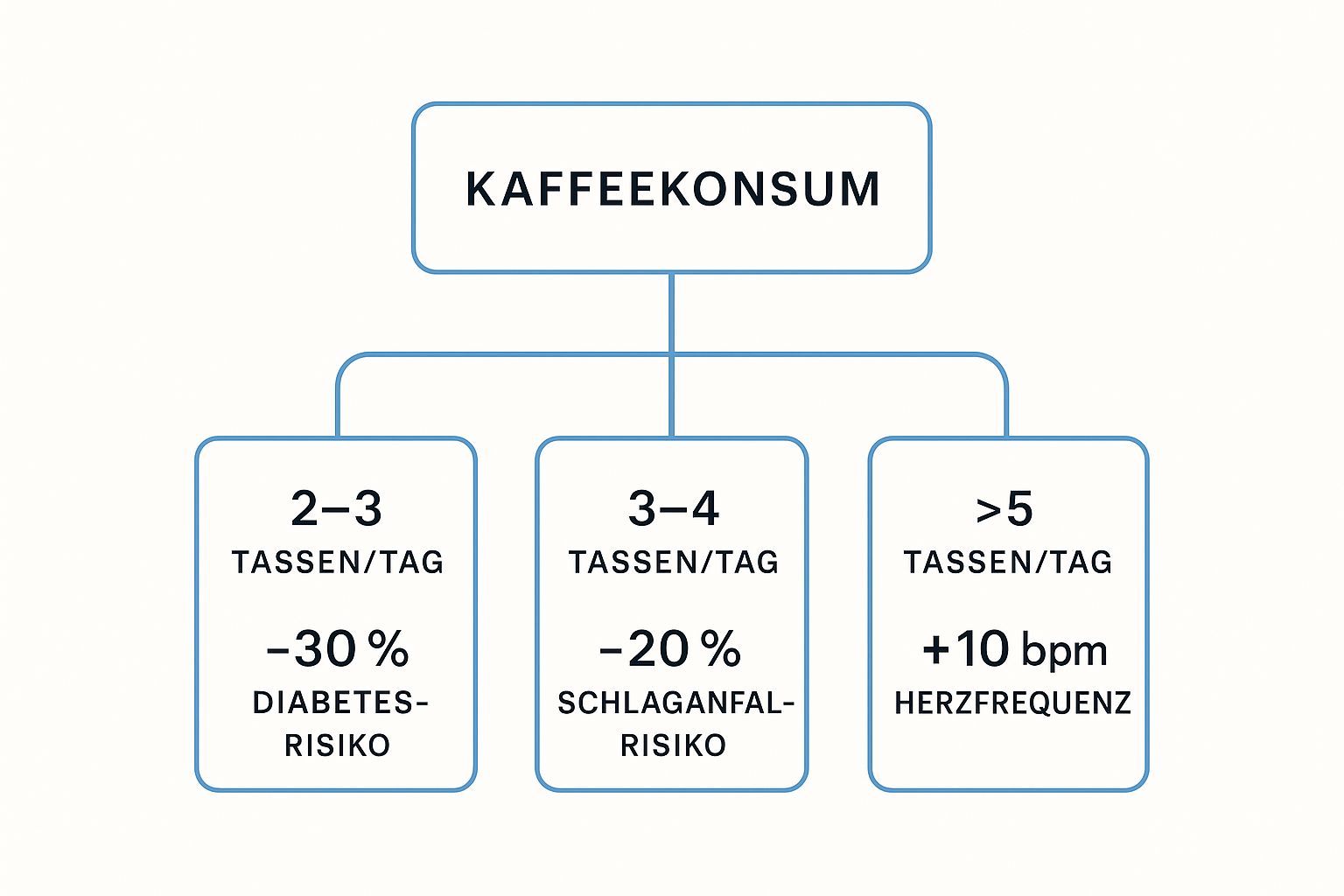
The graphic clearly shows that moderate consumption is often associated with positive effects such as a reduced risk of diabetes, while very high amounts can, for example, affect your heart rate.
So knowing your personal metabolism type is not a prohibition, but a kind of superpower. It gives you back control and allows you to enjoy coffee in a way that truly benefits your body. Instead of guessing, you make a conscious decision—based on the facts of your own biology.
Find your coffee type with a DNA metabolism analysis

So now you know: When it comes to coffee, your genes are the secret instruction manual for your body. But how do you find out exactly what is written in your personal manual? Instead of continuing to wonder why you react differently to coffee than your friends or colleagues, there is a direct, scientifically sound way to answer this question once and for all.
The solution lies in a DNA metabolic analysis. It is the perfect tool to finally provide clarity and find out whether caffeine is genetically healthy for you. With a DNA test, you can find out how caffeine metabolism works specifically for you. It is the step from speculation to certainty.
How a simple saliva test can turn your knowledge of coffee upside down
When you think of DNA analysis, you may imagine complicated doctor’s appointments and incomprehensible technical reports. Forget that. Today, the process is remarkably simple and can be conveniently completed from home.
At the heart of it all is a simple saliva sample. No blood draws, no needles. A simple swab of your oral mucosa is enough to obtain all the genetic information needed.
- Simple and painless: The test kit is discreetly delivered to your home. You follow the instructions, collect a small saliva sample—and you are done.
- Scientific precision: Your sample is then analyzed in an ISO-certified laboratory. There, experts precisely decode the genetic markers responsible for your caffeine metabolism.
- Easy-to-understand results: You do not receive a dry laboratory report, but a clear and actionable report. It explains in plain language whether you are a fast or slow caffeine metabolizer.
A DNA metabolic analysis is like a personal conversation with your body. It translates the language of your genes into practical advice that you can apply immediately in your everyday life to improve your well-being.
This analysis puts you back in control. You are no longer a passive consumer, but an active shaper of your health. You understand the connections and can finally make informed decisions. If you want to dive deeper, you can learn the basics of DNA metabolic analysis here.
From knowledge to practical everyday application
So what does this knowledge actually mean for you? It is about so much more than simply knowing whether coffee is “good” or “bad” for you. It is the foundation for tailoring your lifestyle.
Rather than condemning coffee across the board or drinking it unreflectively, you can tailor your consumption. If you’re a slow metabolizer, that doesn’t mean you have to give up your beloved coffee. It means you can enjoy it more mindfully—perhaps one cup less, your last cup earlier in the day, or by choosing a milder roast.
If, on the other hand, you’re a fast metabolizer, you have confirmation that you can probably fully enjoy coffee’s health benefits. You can enjoy your coffee without a guilty conscience, knowing that your body processes it efficiently.
These insights directly affect important areas of life:
- Energy levels: You can time your coffee consumption to avoid energy slumps and optimize your performance.
- Sleep quality: Slow metabolizers learn when their personal “caffeine deadline” is, helping ensure deep and restorative sleep.
- Overall well-being: You avoid unpleasant side effects such as restlessness or heart palpitations because you know exactly where your personal limit lies.
A DNA test is therefore more than just an analysis; it is a compass for your health. It shows you the path to a lifestyle that perfectly suits your unique biology and helps you get the best out of yourself every day.
Practical tips for enjoying coffee
Okay, you now know that your genes write the script for your coffee consumption. Understanding this is the first and most important step. But how do you put this knowledge into practice in everyday life? It’s simple: by learning to enjoy coffee consciously and strategically instead of drinking it purely out of habit.
Whether you’re a fast or slow caffeine metabolizer, a few smart adjustments can help you fully enjoy the positive effects of your favorite drink while minimizing the potential drawbacks.
Tips for fast caffeine metabolizers
Are you one of the lucky people whose bodies break down caffeine at lightning speed? Great—then you can usually make full use of coffee’s benefits. For you, the main goal is to use this genetic advantage wisely.
- Timing for maximum performance: Use coffee strategically as a performance booster. A cup about 30 to 60 minutes before exercise or an important task can noticeably improve your concentration and endurance.
- Quality over quantity: Even if your body can tolerate more, you should pay attention to quality. High-quality, gently roasted coffee is packed with valuable antioxidants and contains fewer irritants.
- Pay attention to your cortisol: Don’t drink your first coffee immediately after waking up. Your body naturally releases plenty of cortisol in the morning to wake you up. It’s better to wait 60 to 90 minutes—then the coffee will have a much more effective impact.
Tips for slow caffeine metabolizers
If your body processes caffeine rather slowly, that is absolutely no cause for concern. You do not have to give up coffee; you simply need to incorporate it into your day a little more strategically.
- Set a deadline: Your most important rule is to set a personal “coffee deadline.” For most slow metabolizers, no coffee after 2 p.m. helps ensure that your precious nighttime sleep is not disturbed.
- Reduce the amount: Find your personal comfort level. Often, one or two cups in the morning are entirely sufficient to keep you awake and focused without making you feel overstimulated or nervous.
- Choose mild varieties: Opt for lower-caffeine alternatives. Arabica beans naturally contain less caffeine than Robusta. Decaf coffee is also a great option because it provides healthy antioxidants without the stimulating effect.
Your metabolic type is not a verdict but your personal compass. It helps you enjoy coffee in a way that gives you energy instead of taking it away—especially when it comes to restorative sleep.
To make getting started easier, I’ve summarized the most important recommendations for you in a table. This lets you see at a glance what matters for your type.
Coffee strategies for your metabolic type
| Aspect | Recommendation for fast metabolizers | Recommendation for slow metabolizers |
|---|---|---|
| Timing | Targeted as a performance booster 30–60 min. before exercise/work | Last coffee no later than around 2 p.m. |
| Amount | Moderate consumption depending on tolerance, usually 3–4 cups | Less is more—often, 1–2 cups in the morning are ideal |
| Variety | High-quality beans for maximum antioxidants | Lower-caffeine varieties (e.g., Arabica) or decaf |
| Sleep | Usually unproblematic, but still avoid consuming it late | Strict deadline to avoid compromising sleep quality |
Use this table as a guide, but above all, listen to your body's signals. It knows best what is good for you.
What matters for everyone
Regardless of your genetics, there are a few general rules that make drinking coffee healthier for everyone. The preparation method and what else you add to your cup play a huge role.
The preparation method makes the difference
Not all coffee is the same. How you prepare it has a major influence on which compounds ultimately end up in your cup.
- Filter coffee: Considered one of the healthiest methods. The paper filter retains the coffee oils cafestol and kahweol, which can affect cholesterol levels in larger amounts.
- Espresso & portafilter: The high pressure and short contact time extract fewer acids and bitter compounds. This often makes espresso gentler on the stomach, even though it is more concentrated.
- French press (plunger pot): All the compounds remain in the drink, including the coffee oils. So enjoy this method in moderation, especially if you are watching your cholesterol levels.
The thing about sugar and milk
Black coffee is practically calorie-free and delivers the bean's pure power. Every spoonful of sugar or splash of flavored syrup can unfortunately quickly turn your healthy drink into a calorie bomb.
Milk or a plant-based alternative can soften coffee's acidity, which can be very pleasant for sensitive stomachs. Here too, however, it's best to choose unsweetened varieties. Often, whether you prefer coffee or tea determines your daily routine. But in both cases, the same applies: The less processed, the better for your body.
More than just caffeine: What coffee does for your liver, digestion, and performance
When we talk about coffee and health, the conversation almost always turns to caffeine. But your favorite drink is so much more than just a pick-me-up. It's a complex natural product whose positive effects extend throughout the body—from the liver and digestion to athletic performance.
It's easy to overlook these benefits, but they paint a much more complete picture of coffee as a true all-rounder. So it's worth looking beyond the surface of the coffee bean.
A protective shield for your liver
Your liver is your body's power plant and is responsible for detoxification. A real workhorse. And coffee can lend it a helping hand. Numerous studies suggest that regular coffee consumption has a protective effect on this vital organ and may reduce the risk of various liver diseases.
This also includes serious diagnoses such as liver cirrhosis (in other words, scarring of the tissue) and the widespread condition of non-alcoholic fatty liver disease. It appears that the bioactive substances in coffee have anti-inflammatory effects and reduce fat accumulation in the liver. Coffee may even have positive effects when liver values are already elevated.
The German Coffee Association confirms that three to five cups per day are not only safe for most healthy people, but may even make an important contribution to liver health. The acids and bitter compounds they contain also stimulate digestion. You can find more about the scientific background at the German Coffee Association.
Coffee is more than just a beverage to enjoy; it is a valuable partner for your liver health. Its compounds can actively help protect this vital organ from damage.
Fuel for digestion and performance
Does this sound familiar? A cup of coffee after a meal—and digestion gets moving. This is no coincidence. The bitter compounds and acids in coffee stimulate the production of stomach acid and bile, both of which are crucial for breaking down food and digesting fats.
Coffee can thereby speed up the digestive process and counteract an unpleasant feeling of fullness. Would you like to learn more about how you can support your digestion? Our article on improving gut health contains many more useful tips.
But coffee is also a real insider tip for sports. It can boost your physical performance on several levels:
- Greater endurance: Caffeine helps delay fatigue. You can simply keep going for longer.
- Reduced effort: Training feels subjectively less strenuous.
- Improved lung function: In the short term, coffee can slightly widen the airways—a real advantage in endurance sports.
All of this makes coffee a natural and effective companion for an active lifestyle.
Your coffee knowledge at a glance: The most frequently asked questions
After all that information, you may still have one or two questions on your mind. Completely normal! To wrap things up, let’s clear up some of the most persistent myths and uncertainties so you can enjoy your coffee with a truly good feeling in the future.
Does coffee really dehydrate the body?
No, that’s one of the biggest myths that stubbornly persists. It is true that caffeine briefly stimulates the kidneys and therefore has a mild diuretic effect.
However, the fluid you take in with the coffee itself more than offsets this effect. The German Nutrition Society (DGE) even confirms that coffee counts normally toward your daily fluid intake. With moderate consumption, you don’t need to worry at all.
How much coffee per day is too much?
For most healthy adults, up to 400 mg of caffeine per day is considered safe. That’s approximately four cups of filter coffee. This recommendation comes from the European Food Safety Authority (EFSA) and serves as a general guideline.
But as you now know, that’s only half the truth. The perfect amount is entirely individual and depends on your genes—in other words, on whether you’re a fast or slow caffeine metabolizer.
Knowledge instead of guesswork: If you’re a slow metabolizer, you’re better off with one or two cups a day. Fast metabolizers, on the other hand, can often drink a little more without immediately becoming restless or lying awake at night.
Is coffee addictive?
Caffeine can cause mild physical dependence, yes. If you drink plenty of coffee every day and then suddenly stop, your body may react with withdrawal symptoms such as headaches, fatigue, or irritability.
But don’t worry: These symptoms are usually mild and disappear on their own after a few days. Compared with genuinely addictive substances, caffeine has an extremely low potential for dependence. Experts therefore do not classify it as a serious addiction.
Is decaf coffee a healthy alternative?
Absolutely! Decaf coffee is a great choice, especially if you’re a slow metabolizer or simply don’t want to give up the taste in the evening.
The best part is that it provides almost all the health benefits of the original. The valuable antioxidants and polyphenols that protect your cells and support your liver are still there—just without the stimulating effect. So you get the full enjoyment without disturbing your sleep.
Are you curious about what coffee secret is hidden in your genes? A DNA analysis from mybody-x.com gives you the scientific basis to tailor your coffee—and your entire diet—perfectly to your body. Take control of your health and discover what’s really inside you. Find out now at mybody-x.com.



Share now:
What is a Slim DNA analysis? Understand the basics
Guide to Metabolic Analysis: Understanding and Explaining