
Biological age test: What your result really reveals
A biological age test is much more than just a number—it is a scientific snapshot of your cellular health. The result tells you how well your body is doing compared with your years of life and how strongly your lifestyle is truly influencing your aging process.
Why your passport doesn’t tell the whole truth
Do you sometimes feel younger or older than your ID says? This feeling is more than just a personal perception; it has a solid scientific basis. Your chronological age—the number of candles on your birthday cake—is only one side of the coin. The far more interesting and meaningful metric is your biological age.
Imagine two cars, both built in 2010. One was meticulously maintained, always kept in the garage, and driven gently. The other was left outside in all kinds of weather, accumulated countless miles on poor roads, and rarely saw a repair shop. Although both are chronologically exactly the same age, their condition—their “biological age”—will be worlds apart.
Your body as a reflection of your life
The same applies to your body. Your biological age reflects the true health of your cells, tissues, and organs. It is a dynamic value that shows how well your internal systems are functioning.
Two major factors play a particularly important role here:
- Your genetics: They are essentially the foundation—the “factory settings” you start life with. They establish a certain predisposition. If you’re interested in the basics, our article explains what genetics actually is.
- Your lifestyle: This is by far the more powerful lever! Your daily choices regarding diet, exercise, stress, and sleep shape your body and directly influence how quickly or slowly your cells age.
The following infographic clearly illustrates the difference between the fixed date in your passport and the dynamic state of your cells.
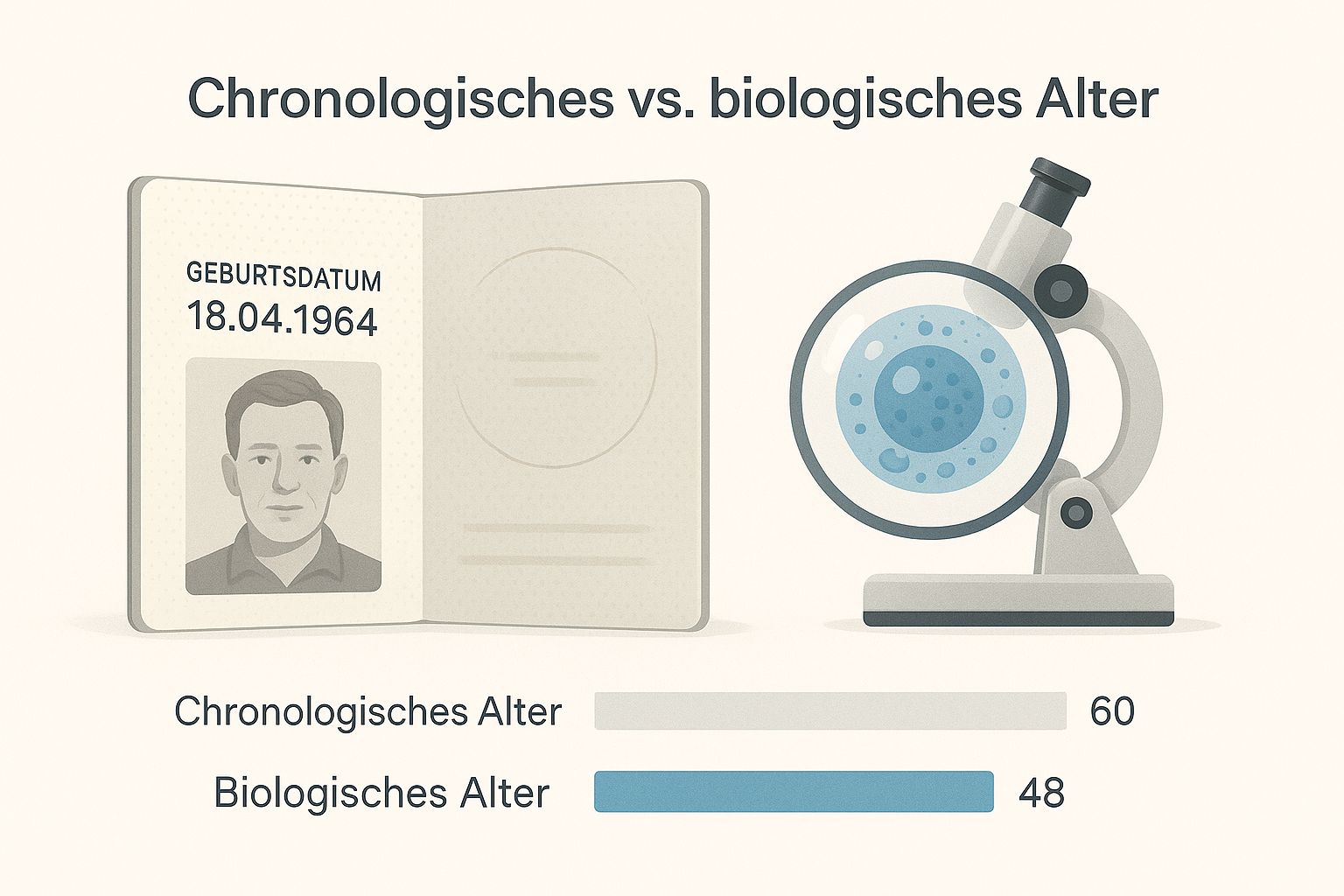
The illustration makes it clear: Your date of birth is merely a fixed point of reference in time. The health of your cells, on the other hand, reflects the actual aging state of your body.
You’re in control
The distribution of influence is quite astonishing and, at the same time, extremely encouraging. Studies show that in Germany, only around 30% of the aging process is predetermined by our genes. The remaining, decisive 70% is shaped by our lifestyle and environmental factors such as diet and exercise.
This means you are not simply at the mercy of your aging process. You have the power to intervene actively and take charge of your health.
A biological age test is therefore not just a nice gimmick, but a valuable tool that provides you with an honest assessment. It shows you exactly where you stand and gives you the information you need to initiate targeted changes. By understanding how your body works, you can make the right decisions to slow down your aging process and actively extend your healthy lifespan.
How Modern Tests Decode Your Biological Age
But how exactly can a test determine your biological age? At first, it sounds like science fiction, but it is based on remarkably solid science. Let’s take a look behind the scenes and demystify how a biological age test actually works.
The centerpiece of modern analysis is the so-called epigenetic clock. It is now considered the most precise method for measuring the aging process at the cellular level. A simple analogy can help explain this.
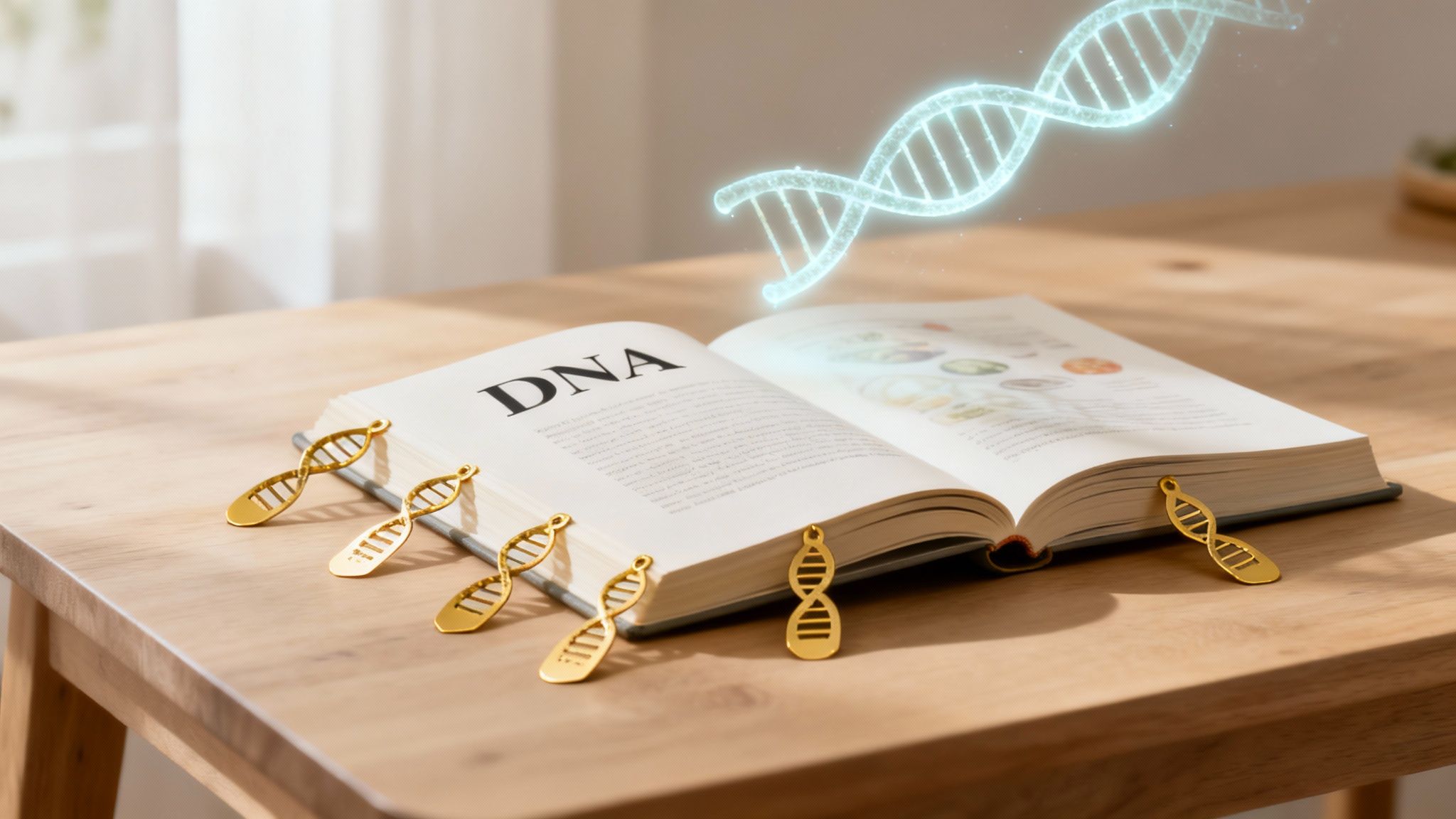
Imagine your DNA as a gigantic cookbook. This book contains all the recipes (your genes) your body will ever need. Epigenetics is like a layer of notes and bookmarks placed over this cookbook. These epigenetic markers determine which recipes are read aloud clearly and which are only whispered or completely ignored.
The Bookmarks of Your Life
Your lifestyle—in other words, your diet, stress levels, sleep, and physical activity—constantly changes these “bookmarks.” If you sleep poorly or eat a lot of processed foods, notes may be placed in unfavorable locations, activating genes associated with inflammation. If, on the other hand, you meditate regularly and eat a balanced diet, protective genes may be highlighted.
This is exactly where a modern biological age test comes in. It analyzes these tiny chemical changes in your genetic material, known as DNA methylation. The pattern of these methylations tells scientists an enormous amount about how quickly your cells are truly aging. If you want to explore this fascinating topic in greater depth, feel free to read our article about what epigenetics actually is.
An epigenetic test therefore does not read the cookbook itself (your genes), but rather the notes and bookmarks in it. It creates a snapshot of how your genes are currently being used and derives your biological age from this.
A decisive breakthrough in this field came in Germany at the end of 2018 with the development of the so-called “Genetic Age Test.” Using a special algorithm, this test analyzes only around 140 of these epigenetic markers and already achieves an impressive accuracy of ±2.5 years.
Different paths lead to the result
Of course, epigenetic analysis is not the only method. There are many different approaches to estimating biological age, which vary considerably in their accuracy, effort required, and informative value.
Here is an overview of the most common methods to shed some light on the subject.
Common biological age testing methods compared
This table compares different approaches to determining biological age in terms of their accuracy, cost, and underlying methodology.
| Test method | What is measured? | Accuracy | Your effort |
|---|---|---|---|
| Questionnaires & calculators | Lifestyle factors (diet, exercise, etc.) | Low | Very low, online in minutes |
| Blood biomarkers | Inflammation markers, cholesterol, blood sugar | Medium | Moderate, requires a blood draw |
| Telomere length measurement | Length of the protective caps on chromosomes | Medium to low | Moderate, requires a blood or saliva sample |
| Epigenetic analysis | DNA methylation patterns at specific genetic loci | Very high | Low, simple saliva or blood sample |
As you can see, epigenetic analysis is currently the gold standard. It measures the aging process directly at its source—where your genes are regulated—and thus provides the most comprehensive picture of your biological age.
The insights from such a test go far beyond mere curiosity. They form the basis for a much deeper understanding of your body and are the perfect starting point for targeted health measures.
From test result to personalized health strategy
You are holding the result of your test in your hands and now know your biological age. This is a fantastic first step—and an important indicator of your cellular health. But what now? This number is not a final verdict, but the starting point for an exciting journey toward a deeper understanding of your body. The real question is: Why is your biological age what it is?
The answer often lies deeper, namely in your individual metabolism and genetic predisposition. Your biological age is significantly influenced by how efficiently your body produces energy, processes nutrients, and manages inflammatory processes. This is precisely where the true strength of personalized health analysis comes into play.
Metabolism as the engine of your cellular health
Imagine your metabolism as a car engine. Some engines naturally run great on gasoline, while others need diesel to deliver their full performance. If you put in the wrong fuel, the engine sputters, emits soot, and wears out faster. Your body works the same way: your genes determine which “fuel”—that is, which type of macronutrients—is optimal for you.
A DNA metabolic analysis examines this genetic blueprint of your engine in detail. It tells you whether you are the type who burns carbohydrates quickly and efficiently or whether your body prefers fats as its primary energy source.
This insight is fundamental because it explains why a generalized diet works for one person but not for another. A high proportion of healthy fats may have an anti-inflammatory effect for one metabolic type, while placing a burden on another and even accelerating the aging process.
Combining the results of your biological age assessment with knowledge of your genetic metabolic profile is the key to genuine, personalized prevention. It transforms a “what” (your age) into an understandable “why” (your genetic predisposition).
How your DNA determines your meal plan
A diet tailored to your genes is one of the most powerful levers for actively reducing your biological age. Let’s look at two specific examples to make this tangible.
Example 1: The carbohydrate type Let’s assume your DNA analysis shows that you metabolize carbohydrates very well. Your body can use sugar efficiently to produce energy without quickly causing blood sugar spikes and subsequent inflammatory reactions.
- Your strategy: A diet rich in complex carbohydrates such as whole grains, legumes, and plenty of vegetables may be ideal for you. Your body derives stable energy from them, which protects your cells.
- The effect: By fueling your body correctly, you avoid chronic micro-inflammation, which is considered one of the main drivers of aging. Your biological age can stabilize or even decrease.
Example 2: The fat type Imagine your genetics show that you can process fats particularly well, while your body reacts more sensitively to a high carbohydrate intake.
- Your strategy: A diet higher in healthy fats (avocado, nuts, olive oil) and moderate in protein could be optimal for you. You should avoid sugar and simple carbohydrates instead.
- The effect: By giving your body the fuel it was designed for, you reduce metabolic stress. This not only helps with weight control but also directly lowers inflammatory markers in the blood, slowing the aging process of your cells.
This personalized approach goes far beyond general advice. It enables you not only to combat symptoms but also to tackle the root causes of an accelerated aging process. If you want to understand what profound information is contained in your genetic makeup, learn more in our comprehensive article about the possibilities of DNA analysis.
The biological age test sets your goal, while your DNA metabolic analysis provides the personalized map to reach that goal by the fastest and most effective route for you.
Practical steps to rejuvenate your body
Knowledge is the first step, but the real magic happens in putting it into practice. You now know what your biological age means and how closely it is linked to your metabolism. Now it’s time to get specific: Here you’ll find a clear roadmap for turning the results of your biological age test into a noticeably younger and more vibrant lifestyle.
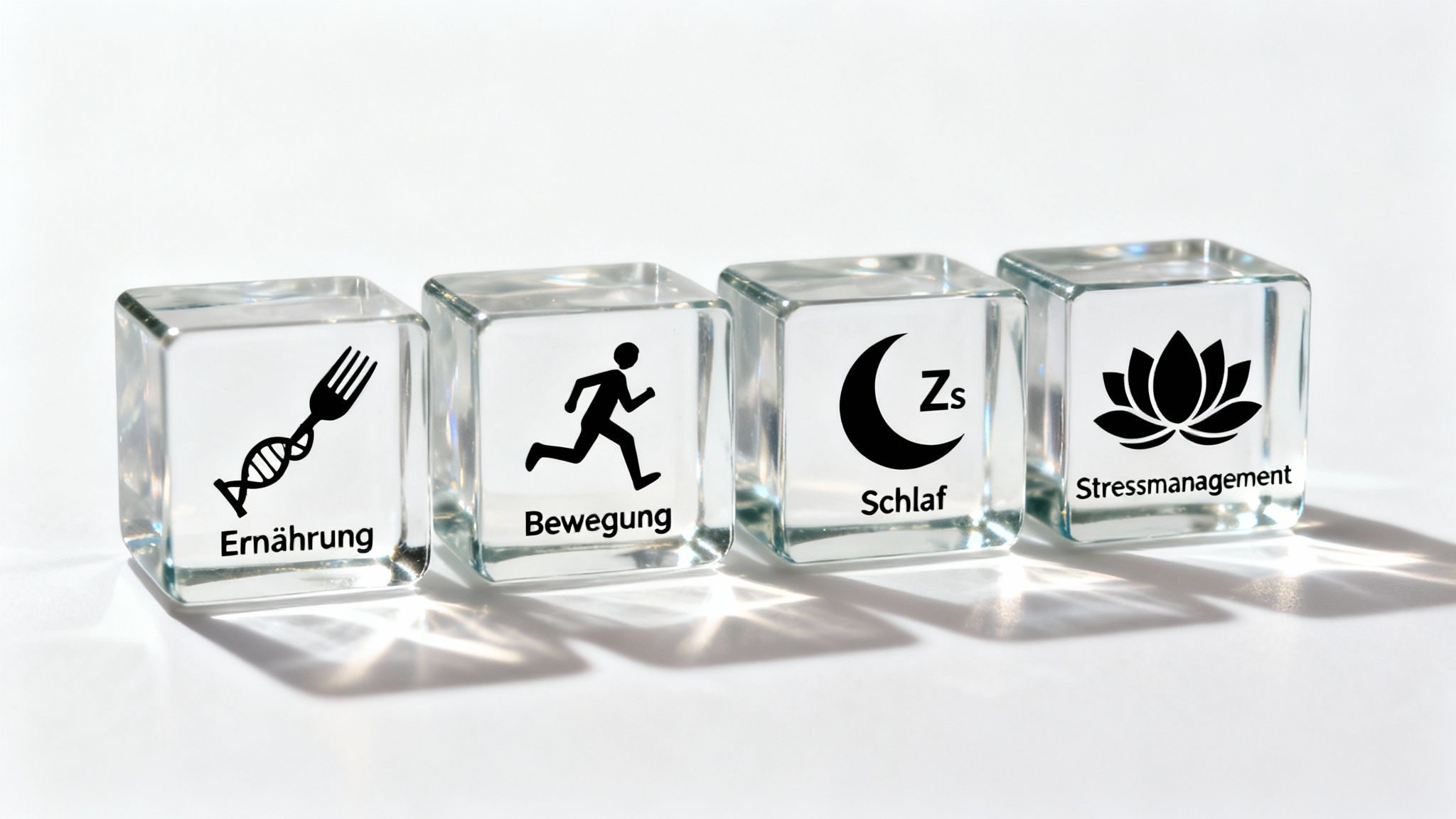
We’ll skip the usual general advice. Instead, we’ll focus on four key areas that have been proven to have the greatest impact on your cellular health. Think of them as the four pillars of your personal rejuvenation strategy—together, they unleash their full power.
Nutrition as your personal cellular fuel
The most powerful lever for turning back your epigenetic clock is on your plate. There is no one-size-fits-all “healthy diet.” What is the perfect fuel for one person may slow another down. This is exactly where your DNA metabolic analysis becomes your personal compass.
- Are you a carbohydrate type? Then choose complex carbohydrates from whole grains, legumes, and vegetables. It is important to always combine them with proteins and healthy fats. This keeps your blood sugar level stable and prevents cravings.
- Or are you more of a fat-and-protein type? Your sources of energy are high-quality fats such as avocado, nuts, and good olive oil, as well as lean proteins. You should avoid simple carbohydrates and sugar to avoid placing unnecessary strain on your metabolism.
But no matter what type you are, some basic rules apply to everyone who wants to slow the aging process at the cellular level. The most important point: consistently choose anti-inflammatory foods.
Every meal is information for your cells. With the right food, you send signals of regeneration and longevity directly to your genes.
Try enriching your diet specifically with antioxidants and polyphenols. These powerful plant compounds act like a shield for your cells. You can find plenty of them in dark berries, leafy green vegetables, broccoli, nuts, and green tea. If you want to explore the topic in greater depth, our article on the principles of longevity nutrition offers plenty of valuable inspiration.
Movement that renews your cells
Exercise is not all the same when it comes to rejuvenating your body. Of course, every form of movement is beneficial, but certain types of training are particularly effective at slowing cellular aging.
- High-intensity interval training (HIIT): Short, intense bursts of activity alternating with brief breaks are the ultimate boost for your mitochondria—the tiny power plants in your cells. More and healthier mitochondria mean more energy and slower aging. Just 2–3 sessions per week of only 15–20 minutes make a huge difference.
- Strength training: Muscles are your metabolic engine. Strength training builds them and prevents age-related loss (sarcopenia). Strong muscles also improve insulin sensitivity, which in turn reduces inflammation in the body.
- Endurance training: Moderate exercise such as running, swimming, or cycling strengthens your cardiovascular system, improves the oxygen supply to your cells, and helps you break down stress hormones.
The best strategy? A smart combination of all three areas. This way, you get all the benefits and keep your motivation high.
Smart stress management for inner calm
Chronic stress is pure poison for your cells. The stress hormone cortisol has been shown to accelerate the shortening of telomeres—the protective caps on your chromosomes—and fuel low-grade inflammation. The good news is that you can actively counteract it.
- Breathing exercises: Set aside just 5 minutes a day for deep, mindful breathing (e.g., using the 4-7-8 technique). This immediately calms your nervous system and lowers your cortisol levels.
- Mindfulness & meditation: People who practice regularly respond to stress more calmly. Apps like Headspace or Calm are a great way to get started.
- Time in nature: A walk in the woods, also known as “forest bathing,” has been proven to reduce stress and strengthen your immune system.
Find what works for you and make it a regular habit—just like brushing your teeth every day.
Sleep as the ultimate regeneration program
While you sleep, your body is working at full speed. Cells are repaired, growth hormones are released, and your brain is essentially detoxified. Poor or insufficient sleep disrupts these vital processes and causes you to age biologically faster.
With a few simple tricks, you can greatly improve your sleep hygiene:
- Consistent sleep schedule: Try to go to bed and get up at roughly the same time every day—yes, even on weekends.
- Screen-free zone: Keep the blue light from your phone, tablet & co. out of sight for at least an hour before bedtime.
- Cool, dark environment: Ideally, your bedroom should be cool (around 18 °C), completely dark, and quiet.
By strengthening these four pillars in your life, you build a solid foundation for lasting health and a vitality you can feel. Start small, but stick with it. Every single step is an investment in a younger you.
Why knowing your biological age is so important today
The subject of age concerns us all. But we usually think only of the number in our passport. Yet in a world where we are statistically living longer and longer, a much more important question is coming to the forefront: How do we spend these additional years? It is no longer just about how old we get, but how we age.
This is precisely where a decisive change takes place: away from mere lifespan and toward healthspan. This refers to the number of years we can truly enjoy in good health, full of energy, and without major limitations. The greatest challenge—and at the same time the greatest opportunity for our quality of life—is to prevent chronic diseases that are often mistakenly dismissed as normal signs of aging.
More than just a number on your ID
Your chronological age is a fixed number. It says absolutely nothing about your actual state of health. Your biological age, on the other hand, is a dynamic value and a much better indicator of how high your personal risk of typical age-related diseases really is.
Studies demonstrate this impressively: Biological age is a significantly more reliable predictor of risks such as cardiovascular disease, dementia, or stroke than your date of birth. It reveals how differently people age and the dramatic consequences this can have. If you want to delve deeper into the fascinating research, you can find fascinating insights into a corresponding study here.
The gap between lifespan and healthspan
Imagine living to the age of 90—an impressive lifespan. But what if the last 15 or 20 of those years were defined by illness, pain, and dependence? The goal must be to keep the gap between how long we live and how long we live in good health as small as possible.
- Reactive medicine: The conventional system often only becomes active once diseases are already present and causing symptoms. At that point, it is only about treatment and damage control.
- Proactive health: Knowing your biological age is the key to a proactive approach. You do not wait for problems to arise; instead, you actively shape your health to protect it.
A biological age test is therefore so much more than just an interesting novelty. It is a wake-up call. It motivates you to take responsibility for your health into your own hands again by making the invisible aging process in your cells visible—and therefore influenceable.
Knowing your biological age is the first step toward becoming the active pilot of your own health journey instead of a passive passenger. It gives you the power to make decisions today that will determine your quality of life in 10, 20, or 30 years.
When you know where you stand, you can take targeted action. If your biological age is higher than your chronological age, it is a clear signal to rethink your lifestyle. If it is lower, it is the best confirmation that you are already doing many things right—and the perfect motivation to keep it up.
Ultimately, examining your biological age is an investment in your most valuable resource: your time in good health. It is not just about adding years to your life, but above all about adding life to your years. To achieve that, you need to know which levers to pull. Gaining deeper insight into your body, for example through a DNA metabolic analysis from mybody-x.com, can help you do exactly that.
Frequently asked questions about biological age testing
You have now read quite a lot about your biological age and the fascinating insights provided by modern diagnostics. But as is often the case, a few very specific questions remain at the end. That is exactly what we want to clarify here—honestly and directly, so that you can make the right decisions for yourself.
How reliable is such a test?
This is probably the most important question of all. The good news is that modern epigenetic tests based on the analysis of your DNA methylation patterns are now considered extremely reliable. We are talking about an accuracy of around ± 2.5 to 3 years. That is impressively precise when you consider how incredibly complex the aging process actually is.
However, it is important to understand that the result is not an immutable truth. Think of it instead as a scientifically grounded snapshot—honest feedback from your cells. Your result is therefore not a verdict, but a valuable guide that depends heavily on your lifestyle and can consequently change for the better.
Who can benefit from a biological age test?
Essentially, it is for any health-conscious adult who prefers to take proactive action rather than merely react to problems. Such a test is particularly valuable if you find yourself in one of these situations:
- You want an honest assessment: You simply want to see in black and white how your current lifestyle is really affecting your cells.
- You need a real boost of motivation: Sometimes, a clear number is the best incentive to finally take action. Your biological age can be exactly that wake-up call.
- You want to measure the success of your efforts: Have you changed your diet or started exercising regularly? A test shows you objectively whether your efforts are really having an impact at the cellular level.
- You are simply curious: You want to understand your body better and discover the fascinating connections between your daily life and your internal clock.
What should I do if my biological age is higher than my chronological age?
First things first: take a deep breath. A higher biological age is no reason to panic. On the contrary, it is a wake-up call and a huge opportunity. You now have clarity and the perfect starting point for positive change.
See the result as your personal starting signal. Ask yourself honestly where the causes might lie: Is it constant stress at work? The lack of sleep that has crept in over the years? Or a diet that may not actually be optimal for you?
The crucial step after receiving such a result is not worry, but action. Use the clarity the test provides as motivation to make targeted and, above all, personalized changes.
This is exactly where a DNA metabolic analysis can give you the decisive advantage. It helps you understand why your body works the way it does and which nutritional strategy is best suited to your genetic makeup to turn back your biological clock.
Can I lower my biological age again?
A clear yes! That is the most important and best news of all. Your biological age is not your destiny. Since it depends to a huge extent—studies estimate about 70 % — depending on your lifestyle and daily choices, you are in control.
You can actively influence it. By making targeted adjustments in the four major areas of nutrition, exercise, stress management, and sleep, you can demonstrably slow down—and in some cases even reverse—the aging process of your cells. It is a dynamic value that responds to your efforts. Every healthy step is a direct deposit into your biological age account.
Are you ready not only to understand your biological age, but also to find out which levers you can adjust most effectively? mybody® Lab GmbH offers you a scientifically grounded roadmap for your personal health strategy with its DNA metabolic analysis. Find out what your body really needs.



Share now:
Treat cellulite for smoother skin
Targeted treatment of skin inflammation: What your genes reveal