

DNA test nutrition experiences: 6 real insights that will help you
Are you wondering if a genetic test can truly revolutionize your diet? Away from general advice and towards a plan tailored just for you – that's the promise of personalized nutrition based on your DNA. But what do people who have tried it say, and what are the real experiences with DNA-based nutrition tests ?
In this article, we share six concrete insights from real-world experience. We analyze what worked, what obstacles arose, and how you can use these insights for yourself. Instead of just presenting success stories, we examine each experience closely and show you how to directly apply the insights gained.
We'll explore how specific genetic predispositions—from fat processing (ApoE) and folic acid metabolism (MTHFR) to caffeine breakdown—determine your optimal diet. Our goal is to give you a clear and honest understanding so you can make an informed decision about whether a DNA test like the one from mybody-x.com is the right next step for your personal health goals. Let's take a look behind the scenes together and discover what this science can actually mean for what you eat.
1. Experience: App-supported precision – DNA test & nutrition app
Imagine your nutrition plan wasn't a guessing game anymore, but a precise, data-driven strategy tailored directly to your genes. This is exactly where the combination of DNA analysis and digital tracking tools comes in. This method combines the genetic insights from a DNA test with daily logging in apps like MyFitnessPal. Your DNA test-based nutrition experience thus becomes an interactive and dynamic process.
The idea behind it is simple, yet effective: The genetic test provides your body's "blueprint"—how efficiently you absorb certain vitamins, how you react to fats or carbohydrates, and whether you have a genetic predisposition for specific intolerances. These personalized recommendations are then integrated directly into a nutrition app. This way, you not only see what you're eating, but also why it's optimal for your body. The app becomes your personal coach, reminding you daily of your genetic needs.
What you can learn from this
The true strength of this method lies in its seamless integration into everyday life.
- Increased motivation: Users report that they adhere to their diet plans much better. Knowing that a recommendation is based on your unique genetics increases your motivation to follow it.
- Holistic tracking: By pairing with wearables such as a smartwatch, a 360-degree view of your health is created, in which genetics, nutrition, sleep and exercise are intertwined.
- Proactive health promotion: Such concepts are also used in corporate health management to proactively promote the health of employees.
The following infographic illustrates the performance of this method using two key performance indicators: the increase in adherence and the analytical accuracy.
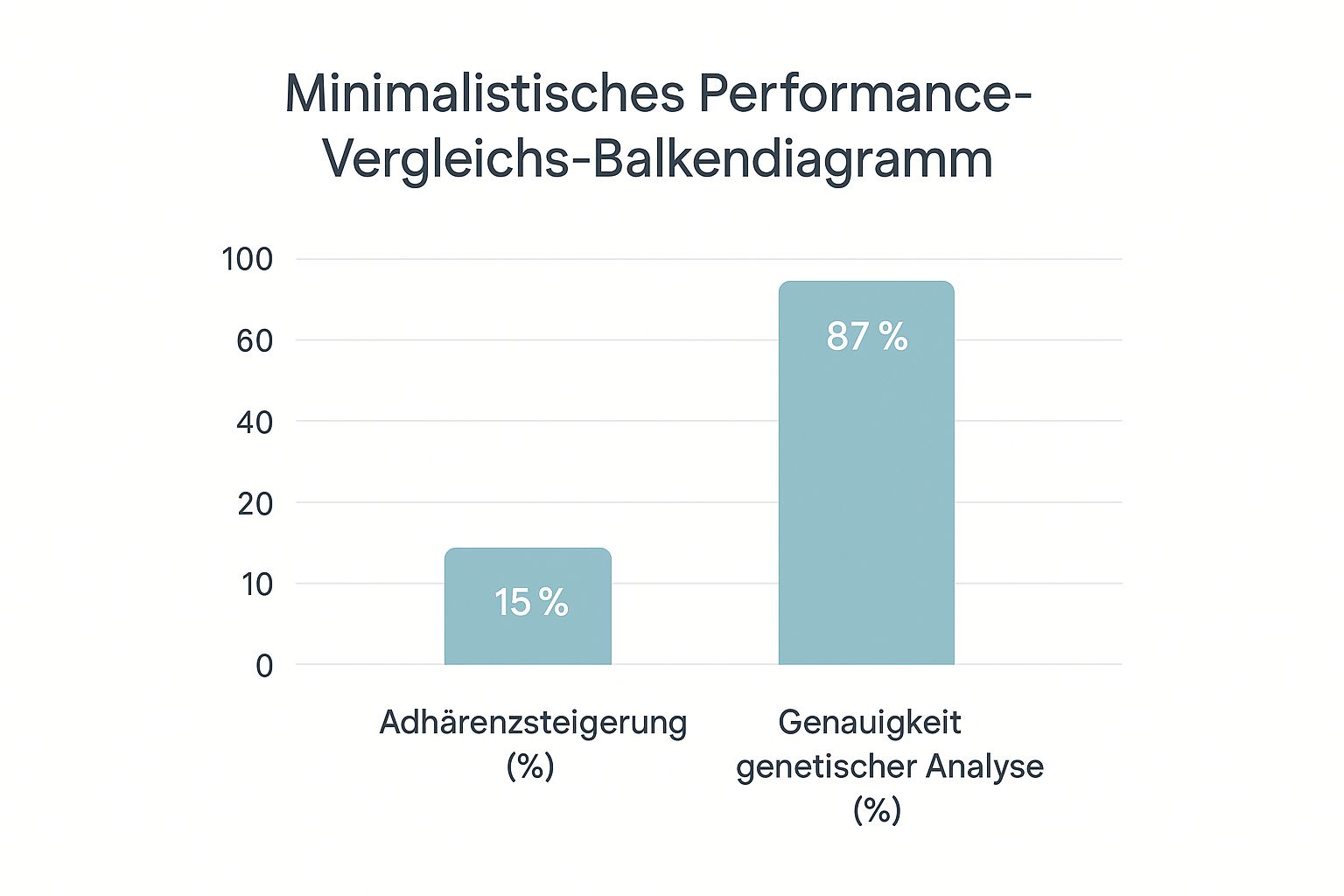
As the diagram illustrates, the combination of high analytical accuracy and a noticeable improvement in plan adherence is the decisive factor for success.
How you can use this approach for yourself
Would you like to use this precision for yourself? Here are concrete steps:
- Combine data points: Don't rely on genetics alone. Combine DNA results with current blood test results and professional nutritional advice to get a complete picture.
- Start with a focused approach: Begin with the basic genetic markers for macronutrient metabolism (fat, carbohydrates, protein) before delving into more complex analyses.
- Stay curious: Research in this field is developing rapidly. What's true today may be supplemented by new findings in two years. Regularly check whether your provider offers updates to your analysis.
2. DNAfit: When nutrition meets fitness
Imagine being able to tailor not only your diet but also your training precisely to your genetic predisposition. Tests like DNAfit take exactly this specialized approach. They focus on the intersection of genetics, nutrition, and fitness to provide you with a hyper-personalized plan. Your DNA test and nutrition experience, therefore, goes beyond mere nutrition and also incorporates your physical performance.
The underlying philosophy is that every body reacts differently to nutrients and training stimuli. The test therefore specifically analyzes genetic markers that reveal how you process macronutrients like carbohydrates and fats, how your body responds to endurance versus strength training, and how quickly you recover after exertion. Based on these findings, you receive concrete nutrition and training plans designed to maximize your potential. Whether a DNA test can improve nutrition depends heavily on the quality of such personalized recommendations. To learn more about the scientific basis, you can find further information about DNAfit Personalized Nutrition Plans at mybody-x.com .
What you can learn from this
The true strength of this approach lies in its targeted optimization for specific goals, from competitive sports to effective weight management.
- Optimization in professional sports: Olympians and professional teams use DNA tests to genetically control training loads and recovery phases. For example, an athlete with a predisposition for slower recovery can receive targeted nutritional strategies to reduce inflammation.
- More efficient weight loss: Studies suggest that genetically tailored nutrition plans can lead to better weight loss results than standardized diets. The reason: The plans are adapted to the individual's metabolic rate and macronutrient utilization.
- Breakthroughs in training: Personal trainers integrate DNA results into their clients' care to break through plateaus and make training plans more efficient from the start.
How you can use this approach for yourself
Do you want to optimize your fitness and nutrition based on your DNA? Here are some concrete steps:
- Determine your starting point: Before you begin, undergo performance diagnostics or a basic fitness test. This will give you a clear baseline to measure your progress with the genetically tailored plans.
- Think in cycles: Track the results over a fixed period, for example, 12 weeks. At the end, analyze how your performance, well-being, and body composition have changed.
- Listen to your body: Genetics is your blueprint, but your body gives you daily feedback. Adjust the recommendations if you notice something isn't working in practice or your energy levels are dropping. Your DNA provides a direction, but it's not a rigid law.
3. Habit: When the DNA test is just the beginning
Imagine your DNA test is just the beginning of a comprehensive health analysis. The "Habit" concept (now part of Viome) takes exactly this approach by combining genetic data with blood biomarkers and metabolic tests. Instead of a one-time recommendation, you receive a dynamic system with ongoing, professional support. Your DNA test and nutrition experience thus evolves from a snapshot into continuous, personalized health management.
The approach is holistic: DNA provides the genetic foundation, blood tests reveal your current nutrient status, and metabolic measurements show how your body processes energy. A coach brings these pieces of the puzzle together and develops a plan based not only on your genetics but also on your current physical condition. This plan is regularly adjusted based on your progress and new measurements. It's the ultimate combination of science and personalized support.
What you can learn from this
The strength of this system lies in its continuous optimization and support, which makes it particularly effective for complex goals.
- Higher success rate: Clinical studies based on this combined approach showed an average weight loss of 7.5%. This underscores the effectiveness of combining genetic predispositions and current body data.
- Maximum performance: Leaders use such in-depth analyses to maximize their performance. The combination of data and coaching helps manage stress and improve cognitive function through targeted nutrition.
- Support for chronic conditions: People with diabetes or metabolic disorders report improved blood sugar levels and increased energy. The coach helps to precisely tailor genetic recommendations to specific medical needs.
This approach shows that while a one-time genetic analysis is valuable, the real transformation lies in continuous adaptation and professional support.
How you can use this approach for yourself
Would you like to embark on a similarly profound path? Here are concrete steps:
- Be prepared for the process: These programs require commitment. Plan for a period of at least three months to give your body time for measurable changes.
- Keep a detailed log: Not only note what you eat, but also how you feel. Symptom diaries are invaluable for your coach to identify connections between nutrition and well-being.
- Think holistically: Your metabolism reacts strongly to stress. Supplement your diet plan with techniques like meditation or yoga to achieve the best results. Learn more about how to optimally use a genetic nutrition test for weight loss based on your DNA .
4. Experience: The ApoE gene variant – Targeted fat adaptation for heart and brain
Imagine being able to specifically reduce your risk of cardiovascular disease or neurodegenerative diseases like Alzheimer's through your diet, because you know exactly how your body metabolizes fats. This is precisely what the analysis of the ApoE gene variant makes possible. Your DNA test results and nutritional insights become a preventative health strategy based on one of the most important genetic markers for fat metabolism.
The apolipoprotein E (ApoE) gene plays a central role in the transport of fats and cholesterol in the body. Depending on which variant you carry (ApoE2, ApoE3, or ApoE4), your body reacts differently to saturated fats and cholesterol in your diet. In particular, carriers of the ApoE4 variant have a genetically increased risk of high LDL cholesterol levels and Alzheimer's disease. A diet tailored to this finding is therefore not a trend, but an essential preventative measure. Learn more about DNA-based dietary adjustments and their scientific basis.
What you can learn from this
Adjusting the diet based on ApoE status is a prime example of personalized preventive medicine.
- Targeted risk reduction: Users identified as carriers of the ApoE4 variant report significant improvements in their blood lipid levels after significantly reducing their saturated fat intake. This often occurs through switching to a Mediterranean or plant-based diet.
- Early prevention: Cardiology practices and prevention programs use the ApoE test to identify high-risk patients early and provide them with highly effective, non-drug strategies.
- Optimizing brain health: Pioneers like Dr. Dale Bredesen have developed protocols in which the ApoE-based diet is a core component for the prevention and even potential reversal of cognitive decline.
The real advantage lies in the clarity and the targeted recommendations for action. Instead of general advice like "eat less fat," you receive precise instructions that are directly linked to your genetic predisposition.
How you can use this approach for yourself
Do you want to tailor your diet specifically to your genetics? Here are the crucial steps:
- Know your status: Determine your ApoE gene variant through a specific DNA test. This is the absolute basis for all further measures.
- Focus on the right fats: Concentrate on unsaturated fats from sources like olive oil, avocados, nuts, and oily fish (omega-3). At the same time, reduce saturated fats from red meat, butter, and processed foods.
- Check your levels: Have your blood lipid levels (especially LDL cholesterol and triglycerides) checked regularly to objectively measure the success of your dietary changes and adjust them if necessary.
5. MTHFR-based folate optimization: More energy and well-being
Imagine a single gene could influence your energy levels, mood, and even fertility. That's precisely what the MTHFR gene does. A targeted nutritional strategy that addresses variations of this gene is one of the most profound DNA-tested nutritional experiences you can have, as it directly targets a fundamental metabolic pathway.
The idea behind this is highly specific: The MTHFR gene is responsible for converting folic acid (vitamin B9) into its active form, methylfolate. In people with certain genetic variants, this process is impaired. A DNA test reveals this predisposition and allows you to adjust your diet so that you directly provide your body with the active form. Instead of relying on synthetic folic acid, which your body has difficulty absorbing, you focus on methylated B vitamins and folate-rich foods.
What you can learn from this
Adjusting folate intake based on MTHFR status is a prime example of precise nutrigenomics with noticeable everyday consequences.
- Increased energy levels: Many users of MTHFR variants report a significant increase in their energy and a reduction in chronic fatigue after switching to the active form of folic acid.
- Support for couples trying to conceive: MTHFR analysis has become an important component of fertility medicine. Optimized folate intake can improve the chances of success when trying to conceive and reduce risks.
- Mood management: Methylfolate plays a crucial role in the production of neurotransmitters such as serotonin and dopamine. Targeted supplementation is therefore often used as a supportive measure in the treatment of mood disorders.
This targeted approach demonstrates how a single piece of genetic information can transform your entire health strategy. It's not about a general "healthy diet," but about providing the exact nutrient format your body needs.
How you can use this approach for yourself
Do you want to find out if this is your key to greater well-being? Here are some concrete steps:
- Avoid synthetic folic acid: Check the ingredients of your supplements and fortified foods. Replace products containing "folic acid" with those containing "methylfolate" or "5-MTHF".
- Focus on natural folate sources: intentionally integrate foods such as green leafy vegetables (spinach, kale), legumes (lentils, beans) and liver into your diet.
- Check your homocysteine levels: Elevated homocysteine levels in the blood can indicate insufficient methylation. A doctor or naturopath can check this level and help you adjust your B vitamin dosage.
6. Experience: Genetic caffeine analysis – Precise timing for energy and sleep
Have you ever wondered why your colleague sleeps like a baby after an espresso at 4 pm, while you lie awake half the night after a coffee at lunchtime? The answer often lies in your genes, more specifically in the CYP1A2 gene . A DNA test can show you exactly how quickly your body metabolizes caffeine. This information is key to optimizing energy, sleep, and even athletic performance. Your DNA test results will become a tool for your daily biohacking.
Analyzing your CYP1A2 gene variants reveals whether you are a "slow" or "fast" caffeine metabolizer. This genetic predisposition determines how long the stimulating effect lasts. Instead of avoiding or consuming caffeine altogether, this knowledge allows you to time your intake strategically. You'll learn when to drink your last coffee of the day to avoid disrupting your sleep and when to time an espresso for maximum concentration or performance.

What you can learn from this
Applying this genetic information can fundamentally change your everyday life.
- Improved sleep quality: Users identified as "slow" metabolizers report a drastic improvement in their sleep quality after shifting their last coffee to mid-morning. The time it takes to fall asleep decreases, and deep sleep phases become longer.
- Performance enhancement in sports: Athletes utilize their genetic profile to strategically use caffeine before training or competition. Athletes with fast metabolisms can consume caffeine closer to the start time to receive the performance boost precisely when needed.
- Productivity at work: In a work context, this knowledge helps you avoid the "afternoon slump" without sacrificing sleep. A person with a fast metabolism can enjoy a coffee after lunch, while someone with a slow metabolism can opt for a decaffeinated alternative. Learn more about the connection between genes, sleep, and caffeine at mybody-x.com .
How you can use this approach for yourself
Want to perfect your caffeine timing? Here are some concrete steps:
- Test your genetics: A DNA test that analyzes the CYP1A2 gene is the first and most important step to understanding your individual predisposition.
- Keep a sleep and caffeine diary: For two weeks, record when you consume caffeine and how your sleep quality changes (e.g., using a fitness tracker). Compare this data with your genetic results.
- Adjust gradually: Don't change everything at once. If you have a slow metabolism, gradually push your last cup of coffee forward by an hour and observe the effects.
- Pay attention to your reaction: Listen to your body. Monitor not only your sleep, but also signs like nervousness or restlessness to find your personal caffeine tolerance level.
Comparing the approaches: Which one suits you best?
| 🔄 Implementation complexity | 💡 Resource requirements | 📊 Expected results | 💡 Ideal use cases | ⭐ Main advantages |
|---|---|---|---|---|
| Medium to high: DNA test, app integration, long-term use | High costs, subscriptions, data privacy is important | Improved diet adherence (~15%) | Health-conscious users, corporate programs | Scientifically sound, personalized |
| Medium: DNA test plus fitness tracking | Moderate costs, fitness commitment | Performance enhancement, improved fat and recovery tolerance | Sports enthusiasts, professional athletes | Fitness focus, clear recommendations for action |
| High: DNA, blood tests, coaching, monitoring | Very high costs, time-consuming | Weight loss, health goals (78% success) | Patients with complex health goals | Holistic care, clinical results |
| Means: Focus on ApoE genotypes | Low to medium, specialized | Improved cardiovascular health | People at risk for heart disease/Alzheimer's | Strong scientific foundation |
| Low to medium: MTHFR gene analysis | Low cost, supplements required | Improved energy, methylation optimization | People with MTHFR variants, fertility | Cost-effective, clear supplement recommendations |
| Low: Single gene analysis CYP1A2 | Minimal, no elaborate equipment | Optimized caffeine consumption, improved sleep quality | Caffeine users, athletes, shift workers | Immediate application, behavior change |
Your personal roadmap: What these experiences mean for you
The journey through the various experiences with DNA tests and nutrition has clearly shown one thing: genetics is not a rigid set of instructions, but rather a personalized map to your health. The examples, from the ApoE variant to caffeine metabolism, impressively demonstrate that our biological blueprint provides valuable clues about how we can best support our bodies. It's not about submitting to strict rules, but about making informed decisions.
The experiences presented here are more than just success stories. They are proof of a fundamental shift in the understanding of health: away from general recommendations and towards a precise strategy tailored to you. Your body has unique needs, and a DNA test unlocks part of this individual instruction manual.
Key findings at a glance
The analysis of the testimonials reveals recurring patterns and key benefits that are also relevant to you:
- Efficiency instead of guesswork: Instead of trying countless diets, you get a direct indication of which macronutrients (fats, carbohydrates, proteins) your body prefers. This saves time and frustration and leads to faster results.
- Prevention as a tool: Knowledge of genetic predispositions, such as the MTHFR or ApoE gene variants, allows you to take proactive countermeasures. You can specifically adjust your diet to minimize long-term health risks before they become a problem.
- Understanding your body: Many people who have had DNA tests and nutritional advice report an "aha moment." Suddenly, it makes sense why you react strongly to certain foods or why your evening coffee disrupts your sleep, while others remain unaffected. This deeper understanding is the foundation for lasting change.
Your next step: From knowledge to action
So what do these findings mean for you? It's about taking control of your own life. A DNA test provides the data, but the implementation is up to you. It's the starting point for a more conscious approach to your diet and lifestyle.
Don't see the results as a limitation, but as an empowerment. You're given the opportunity to tailor your meals, training, and even your recovery periods to perfectly match your genetic makeup. The key to success lies in using these personalized recommendations as guidelines and gradually integrating them into your daily life. The sum of many small, genetically informed adjustments ultimately leads to a significant, positive transformation in your well-being.
Are you ready to have your own, very personal DNA test nutrition experience and solve the mysteries of your metabolism? The DNA metabolism test from MYBODY Lab GmbH offers you a scientifically sound analysis of your genetic predisposition and translates the complex results into clear, actionable recommendations for your everyday life. Start your journey to a better understanding of your body now at MYBODY Lab GmbH .


Share:
DNA test for nutrition: Your personal guide to optimal nutrition
Gene Diet: How your DNA optimizes your diet