

What Are Gut Bacteria? A Complete Health Guide
Did you know that more than 100 trillion bacteria thrive in your gut? These tiny inhabitants perform daily tasks that go far beyond digestion. They protect you from illness, produce important vitamins, and regulate your mood. A closer look at this fascinating world reveals how you can benefit from a strong gut flora and what happens when your microbiome becomes unbalanced.
Table of Contents
- Definition and role of gut bacteria
- Important species of the gut microbiota
- Functions in the human body
- Impact on digestion and the immune system
- Risks of dysbiosis and disorders
- Analyze and optimally support your gut flora
Key insights
| Point | Details |
|---|---|
| Role of gut bacteria | Gut bacteria are active health partners that perform important functions in digestion, immune defense, and vitamin production. |
| Health through microbiota | A balanced composition of gut bacteria is crucial for physical and mental health. |
| Risks of dysbiosis | Dysbiosis can lead to chronic digestive problems, a weakened immune system, and psychological changes. |
| Supporting the gut flora | A diet rich in fiber, exercise, and stress reduction are important for gut flora health. |
Definition and role of gut bacteria
Your gut bacteria are not merely passive inhabitants of your digestive system, but true health partners. They form a complex community of microorganisms that lives in your gut and performs numerous vital functions.
According to fibl, these microorganisms are more than simple components of our bodies—they actively interact with one another and with our organism. They form stable communities that are fundamental to our health.
The composition of your gut bacteria is as unique as a fingerprint. eufic emphasizes that environmental factors and diet are crucial to the development of diverse gut microbiota. The foundations for long-term health are established particularly during the early years of life.
Your gut bacteria perform essential tasks:
- Digestion of nutrients
- Production of important vitamins
- Support for the immune system
- Protection against harmful bacteria
Our microbiome test explained: how gut flora analysis works can help you better understand your individual gut flora.
Important species of the gut microbiota
Numerous bacterial species live in the human gut, each performing different functions. This complex community of microorganisms can be divided into various main groups that together form a balanced ecosystem.
The main bacterial groups in your gut include:
Here you can see a comparison of the main bacterial groups in the gut and their primary functions:
| Bacterial group | Main functions |
|---|---|
| Firmicutes | Energy production Carbohydrate digestion |
| Bacteroidetes | Breakdown of dietary fiber |
| Actinobacteria | Vitamin production Strengthening the immune system |
| Proteobacteria | Involvement in metabolic processes |
- Firmicutes: Help with energy production and carbohydrate digestion
- Bacteroidetes: Support the breakdown of dietary fiber
- Actinobacteria: Produce important vitamins and strengthen the immune system
- Proteobacteria: Play a role in metabolic processes
A healthy gut flora is characterized by a balanced distribution of these bacterial groups. Imbalances can lead to various health problems.
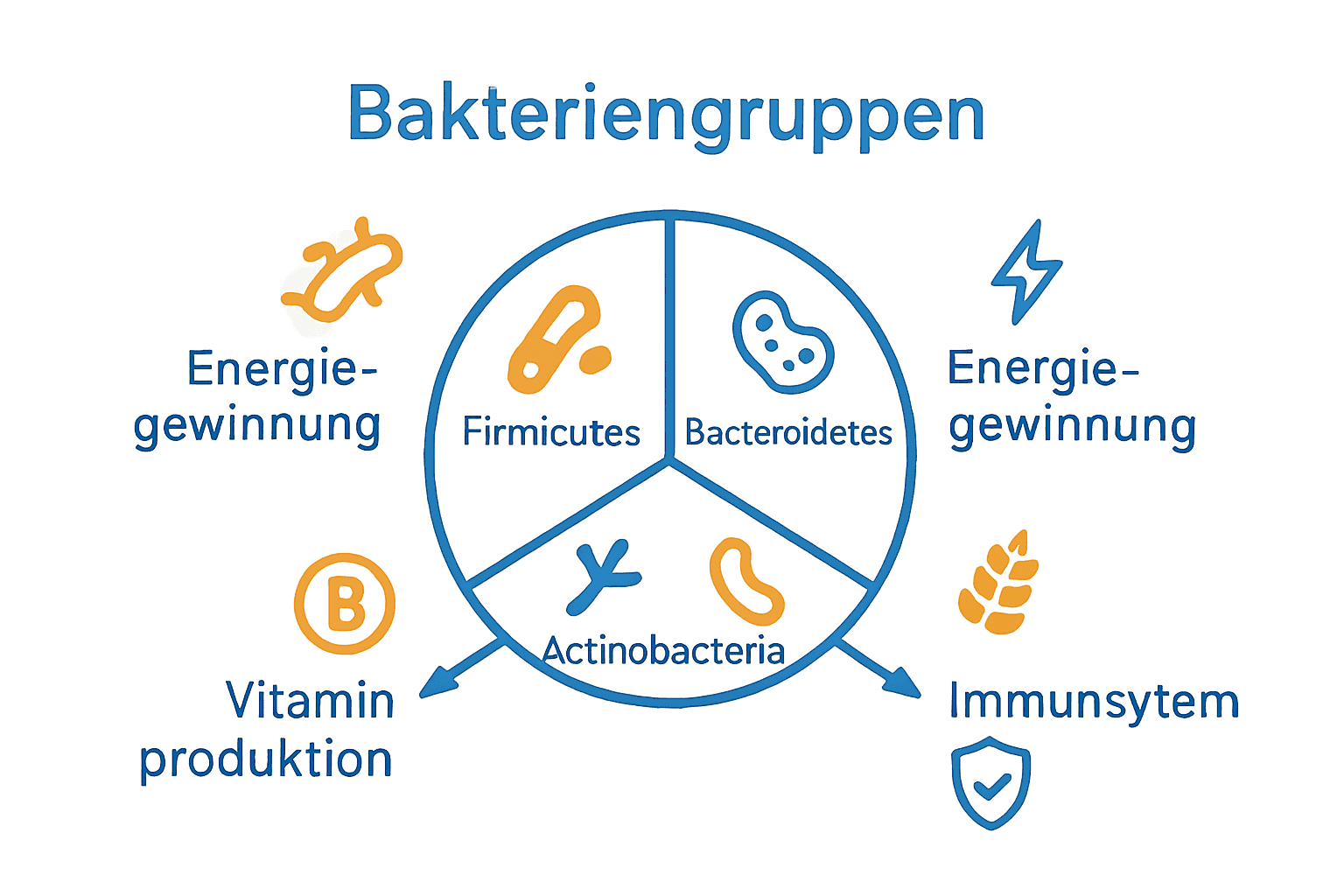
With our Microbiome Test: Your Guide to Better Gut Health, you can precisely analyze and understand the composition of your individual gut microbiota.

Functions in the human body
Your gut bacteria are true all-rounders and perform numerous vital functions in your body. They are far more than passive observers—they are active health partners that regulate millions of processes every day.
The main functions of your gut bacteria include:
- Digestion: Breakdown of complex food components
- Immune defense: Protection against harmful microorganisms
- Vitamin production: Synthesis of vitamin K and B-complex vitamins
- Hormone regulation: Influence on metabolism and the hormonal system
- Anti-inflammatory effects: Reduction of inflammatory markers
The complex interaction between gut bacteria and the human organism is fascinating. They influence not only your physical health but also affect your mental state and mood regulation.
Would you like to learn more about your individual gut health? Our Right Nutrition for More Energy and Well-Being offers deeper insights into the importance of your gut bacteria.
Impact on digestion and the immune system
Your gut bacteria play a central role in digestion and immune defense. They are like a complex defense system that is simultaneously responsible for metabolism and nutrient absorption.
According to eufic, the gut microbiota affects not only physical health but also mental health. Environmental factors and diet play a crucial role, especially during the developmental stage.
The immune functions of your gut bacteria include:
- Defense against pathogens
- Production of defensive substances
- Regulation of inflammatory responses
- Support of the gut barrier function
- Activation of immune cells
The complexity of these processes is reflected in the interaction between gut bacteria and the immune system. They communicate constantly and adapt dynamically to changes.
Our article Gut Health Nutrition: Your Immune System Booster for Fall offers more insights into this fascinating world.
Risks of dysbiosis and disorders
Dysbiosis describes an imbalance in your gut bacteria that can have serious health consequences. When harmful bacteria become predominant, your entire microbiome falls out of balance.
Possible risks and symptoms of dysbiosis include:
- Chronic digestive problems
- Weakened immune system
- Inflammatory processes
- Metabolic disorders
- Psychological changes such as mood swings
The causes of dysbiosis are varied: antibiotics, an unbalanced diet, stress, and environmental influences can seriously disrupt the sensitive balance of bacteria. Chronic inflammation and autoimmune diseases may result.
You can find more information about gut disorders in our article Leaky Gut Syndrome: What Really Lies Behind It.
Analyze and optimally support your gut flora
Your gut flora is a complex ecosystem that requires precise attention and care. A targeted analysis can provide valuable insights into your individual microbiome composition and identify starting points for improvement.
Options for analyzing your gut flora:
- Microbiome saliva and stool samples
- Genetic analyses
- Blood tests to measure inflammatory markers
- Food diaries
- Individual metabolic checks
To optimally support your gut flora, you should pay attention to the following factors:
- A fiber-rich diet
- Adequate exercise
- Stress reduction
- Probiotic and prebiotic foods
- Adequate sleep
Would you like to take a detailed look at your personal gut health? Our Building a Healthy Gut Flora: Your Nutrition Guide to a Healthy Gut will help you understand and support your gut flora in a targeted way.
Understand your gut bacteria and actively shape your health
Your gut bacteria are the key to a healthy body and well-being. If you suffer from digestive problems or want to know how to strengthen your immune system and energy through a balanced gut microbiome, you've come to the right place. Dysbiosis or an imbalance in the microbiome can cause many complaints. That's why it's important to analyze your gut health precisely and provide personalized support.
With the Gut microbiome analysis – For a healthy gut microbiome - mybody®x, you can have your personal gut bacteria composition analyzed in detail. This gives you valuable insights and scientifically sound recommendations for optimizing your nutrition and improving your lifestyle. Don't waste any time—discover now how you can strengthen your digestion and effectively protect your immune system. You may also want to visit Understanding and alleviating digestive problems | mybody®x.
Start your health journey today at https://mybody-x.com and take the opportunity to benefit from highly precise, personalized laboratory analyses from Switzerland. Your gut bacteria are waiting to help you achieve your best sense of well-being.
Frequently asked questions
What are gut bacteria?
Gut bacteria are a diverse group of microorganisms that live in the human gut and perform essential functions for health, including digesting nutrients and producing vitamins.
What functions do gut bacteria perform in the body?
Gut bacteria support digestion, strengthen the immune system, produce important vitamins, and help regulate inflammation and hormones.
What are the consequences of dysbiosis?
Dysbiosis, the disrupted balance of gut bacteria, can lead to chronic digestive problems, a weakened immune system, inflammation, and psychological changes.
How can I support my gut microbiome?
To support your gut microbiome, you should focus on a high-fiber diet, get enough exercise, reduce stress, and consume probiotic and prebiotic foods.
Recommendation
- Microbiome test explained: How gut microbiome analysis works – mybody®x
- Gut health nutrition: Your immune system booster for autumn – mybody®x
- Healthy gut: How to strengthen your gut microbiome | Gut health – mybody®x
- Building a healthy gut microbiome: Your nutrition guide to feeling good from within – mybody®x



Share now:
Celiac Diet: What You Can Eat – Complete Guide
The food pyramid: Everything you need to know