
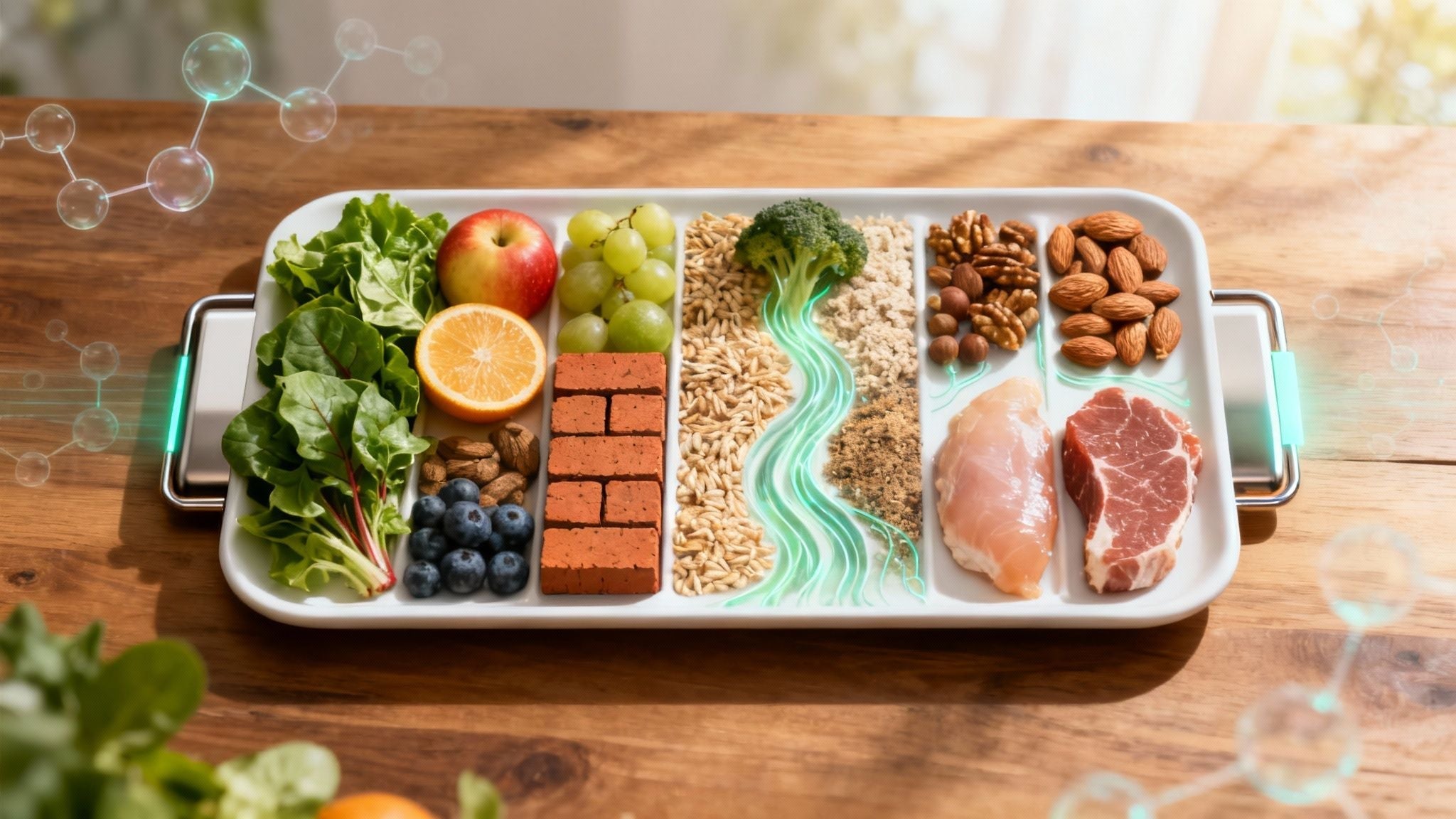
Proper Nutrition for More Energy and Well-Being
Proper nutrition is not a rigid set of rules; it means consciously providing your body with exactly the nutrients it needs for energy, regeneration, and a strong immune system. It is about understanding your own body and deliberately giving it what it needs for optimal well-being.
What Does Proper Nutrition Really Mean?
Forget complicated diet rules and confusing trends that raise more questions than they answer. At its core, proper nutrition is surprisingly simple: it is a conscious decision to view your body as your partner and support it in the best possible way.
Imagine your body is a high-performance engine—you would only fill it with the best fuel to keep it running smoothly, right? That is exactly what food does. It is about not seeing nutrition as a restriction, but as your most effective tool for health and vitality.
The trick is to consciously notice and correctly interpret your body's signals—such as hunger, fullness, and your energy level—again. This helps you make decisions that perfectly suit your individual lifestyle instead of blindly following a plan.
The Foundation for Lasting Well-Being
The first step is to understand the foundation. A balanced supply of all the essential building blocks is the key, and there are the main players as well as important helpers working behind the scenes:
- Macronutrients: These are the big three—carbohydrates, fats, and proteins. They provide the energy for your everyday life and the building blocks for your cells and muscles. Without them, nothing works.
- Micronutrients: These include vitamins, minerals, and trace elements. They are the invisible managers that ensure all the processes in your body—from metabolism to immune defense—run smoothly.
A basic understanding of what a nutrient actually is is the perfect starting point for any mindful approach to nutrition.
Proper nutrition does not merely nourish your body; it also communicates with it. Every bite is information for your cells and directly influences how you feel, think, and perform.
However, reality shows that putting this into practice in everyday life is often challenging. Despite growing health awareness, only a small proportion of people in Germany manage to live truly healthily. According to the DKV Report 2025, just two percent meet all the criteria for a fully healthy lifestyle.
At least 34 percent already manage to follow the recommendations for a balanced diet, underscoring the enormous importance of this issue. You can learn more about the study results on healthy living in Germany at lebensmittelverband.de. This is the crucial first step toward taking control of your own well-being.
The building blocks of your body: Understanding macronutrients
To understand what healthy eating really means, we need to start with the basics: the three major sources of energy for your body. We call them macronutrients. Think of them as the core team for your well-being, with each member having a very specific and indispensable role.
The perfect balance of these three powerhouses—proteins, carbohydrates, and fats—is the key. They provide not only pure energy but also regulate repair processes, hormone production, and countless other vital functions. Once you understand them, you can finally take control of your diet in a targeted way.
The following infographic illustrates how a balanced diet strengthens the three core areas of energy, regeneration, and the immune system.
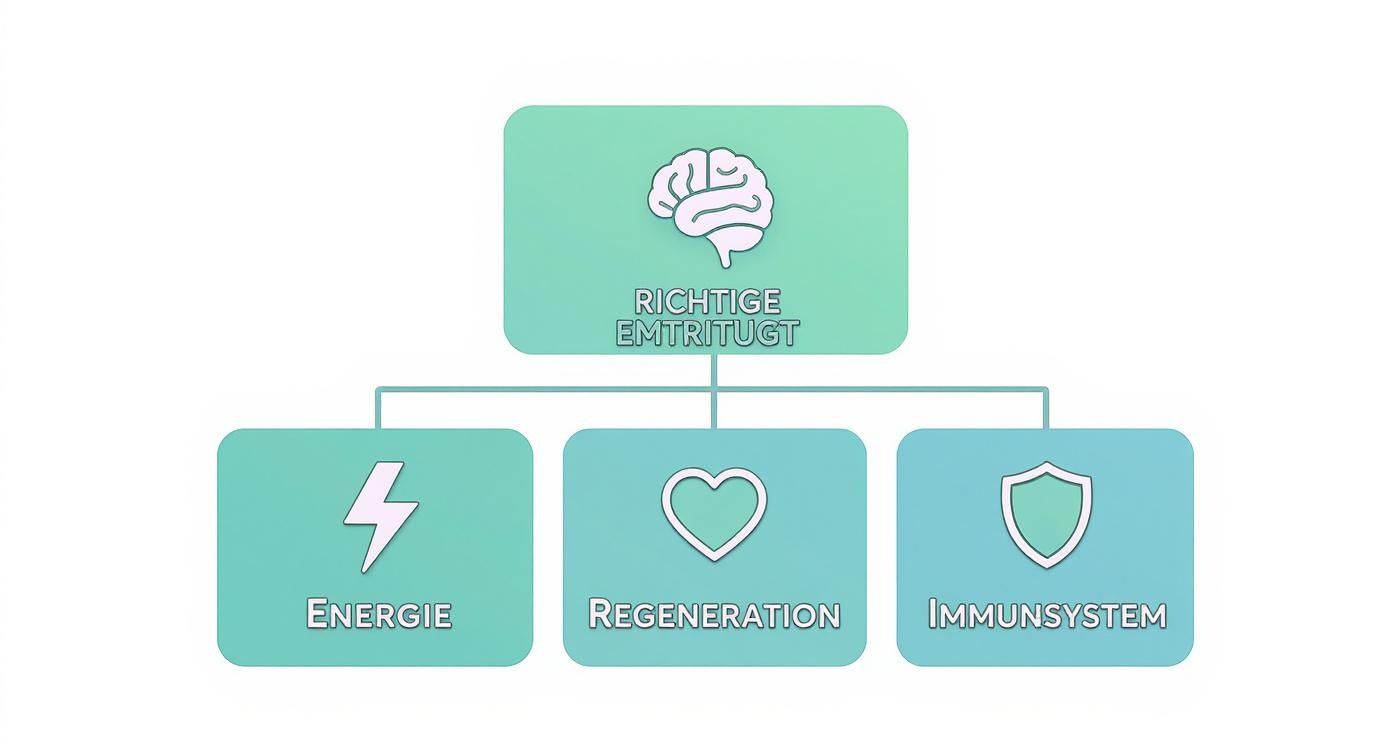
You see: These pillars are the foundation of your health. And macronutrients are the building material from which they are made. Let's take a closer look.
Proteins: The building blocks of your body
Proteins, often also called protein, are so much more than just "muscle fuel." They are the literal building blocks of almost everything in your body—from cells, skin, and hair to enzymes and hormones. If you lack protein, important repair and growth processes grind to a halt.
One crucial point: Your body cannot really store protein. That is why regular intake through your diet is so important. Another advantage: A protein-rich meal keeps you full for a long time and helps you keep cravings at bay and manage your weight more effectively.
Fortunately, there are plenty of good sources of protein, regardless of how you eat:
- Animal-based sources: Lean meat, fish, eggs, and dairy products such as quark or yogurt.
- Plant-based sources: Legumes such as lentils and chickpeas, tofu, tempeh, nuts, and seeds.
If you want to learn more, our article will help you calculate your personal daily protein requirement.
Carbohydrates: The fast fuel for the brain and muscles
Carbohydrates often have a bad reputation—and completely undeservedly so. They are the preferred and fastest source of energy for your brain and muscles. The key is not whether, but which ones.
It is not about whether you eat carbohydrates, but which ones. Choose wisely to experience consistent energy instead of rapid crashes.
Complex carbohydrates, such as those found in whole-grain products, oatmeal, potatoes, or legumes, are the champions here. They are digested slowly, cause your blood sugar level to rise gently, and provide you with steady energy for hours.
The exact opposite is simple carbohydrates from white flour or sugar. They may give you a quick boost, but shortly afterward they leave you feeling tired, unfocused, and drained.
Fats: The important managers of hormones and cell protection
Fats are absolutely essential for life—forget the old "low-fat" myths. They are crucial for the absorption of fat-soluble vitamins (A, D, E, K), protect your internal organs, and provide the foundation for producing important hormones.
Quality matters here, too. Unsaturated fatty acids are the true heroes. You can find them in avocados, nuts, seeds, and high-quality plant oils such as olive or flaxseed oil. They support brain function and may even have anti-inflammatory effects.
However, saturated fats from highly processed foods or fatty meat should be enjoyed consciously and in moderation. Choosing the right sources of fat is a simple yet extremely effective way to support your long-term health.
Here is a brief overview to help you keep track:
Overview of macronutrients and their main functions
This table shows the three macronutrients, their most important functions in the body, and examples of healthy food sources to make it easier to maintain a balanced diet.
| Macronutrient | Main function in the body | Good sources |
|---|---|---|
| Proteins | Building and repairing cells, muscles, and skin; hormone and enzyme production | Lean meat, fish, eggs, quark, lentils, chickpeas, tofu, nuts |
| Carbohydrates | Main source of energy for the brain and muscles; provides fiber for digestion | Whole-grain products, oatmeal, potatoes, quinoa, fruit, vegetables |
| Fats | Hormone production, absorption of fat-soluble vitamins, cell protection, energy storage | Avocados, nuts, seeds, olive oil, flaxseed oil, fatty fish (salmon) |
With this knowledge, you already have the foundation for planning your meals more mindfully and nourishing your body optimally.
The Invisible Helpers: Micronutrients and Their Power
While we often focus on the major building blocks such as proteins, fats, and carbohydrates, a group of quiet but extremely powerful managers works behind the scenes: micronutrients. They are the invisible helpers that ensure your inner orchestra plays in harmony—from energy production in every cell to defending against pathogens.
Without them, even the best macronutrients could not unleash their full effects. Think of it like a construction site: Proteins and their companions are the diligent workers, while vitamins and minerals are the site managers who read the plans, give instructions, and ensure that everything runs smoothly.
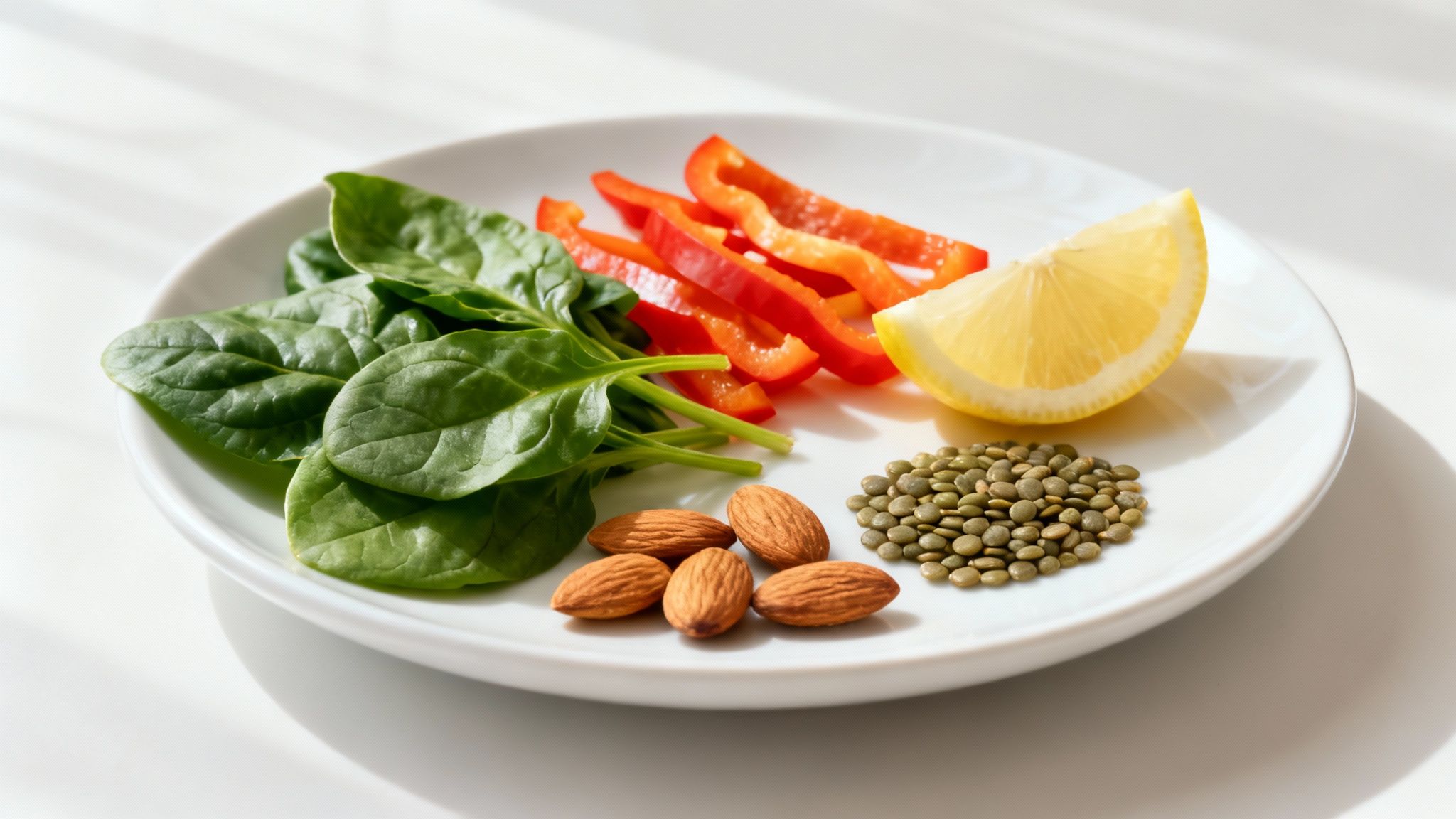
Most of the time, we take them for granted. Only when a deficiency develops do we realize how fundamentally important they really are. A deficiency often shows up subtly—in the form of fatigue, difficulty concentrating, a weakened immune system, or poor skin. That is precisely why understanding these small powerhouses is essential for a proper diet.
Why Vitamins and Minerals Are Essential
Unlike macronutrients, vitamins and minerals do not provide direct energy. Instead, they act as cofactors in countless metabolic processes. This means they activate the enzymes that, in turn, set the chemical reactions in motion—reactions your body could not survive without.
A perfect example is energy production. For your body to turn carbohydrates and fats into energy (ATP), it needs a whole array of B vitamins. Without them, the engine runs at only half power. You feel sluggish even though you have actually filled up with enough “fuel.”
Micronutrients are the spark plugs of your metabolism. Without them, the engine will not start, no matter how full the tank is. Your well-being depends directly on getting enough of them.
Their functions are incredibly diverse and fit together perfectly. A brief look at a few key players shows just how complex and important their interplay really is.
Key Micronutrients in Focus
Every single micronutrient has its own area of expertise. Here are some of the most important players and their key roles, so you can get a better sense of their significance:
- \Magnesium: A true all-rounder. This mineral is involved in more than \300 enzymatic reactions\, from muscle function and blood pressure regulation to energy production. Muscle cramps, fatigue, or inner restlessness may indicate a deficiency. You can find plenty of it in whole-grain products, nuts, and leafy green vegetables.
- \Zinc: Think of zinc as your immune system’s bodyguard. It is essential for wound healing and healthy skin and plays an important role in cell division. Pumpkin seeds, lentils, and oatmeal are excellent sources of zinc.
- \Iron: As the core component of the red blood pigment hemoglobin, iron transports oxygen throughout your body. Do you often feel tired and look pale? This could be a sign of iron deficiency. Meat is a well-known source, but plant-based foods such as lentils and spinach also provide a good dose.
- \Vitamin D: The “sunshine vitamin” is crucial for strong bones because it regulates calcium absorption. At the same time, it has a huge impact on your immune system and mood. Although your body can produce it itself with sunlight, supplementation is often advisable, especially during the darker months.
- \Vitamin C: This vitamin is a powerful antioxidant that protects your cells from damage caused by free radicals. It boosts your immune system and is essential for building collagen—the framework for your skin, bones, and teeth. Citrus fruits, bell peppers, and broccoli are true vitamin C powerhouses.
If you want to delve even deeper into this fascinating world, our guide has everything you need to know about the most important \\vitamins and minerals\\.
When your needs may increase
Normally, a balanced, varied diet easily covers your need for micronutrients. However, there are phases and situations in which your body needs significantly more of these little helpers:
- \During intense exercise: Those who sweat a lot lose important minerals such as magnesium and zinc. At the same time, metabolism and recovery are working at full speed, increasing the need for B vitamins.
- \During periods of stress: Chronic stress is a real nutrient drain. The body consumes huge amounts of magnesium, B vitamins, and vitamin C to manage the stress response.
- \During pregnancy and breastfeeding: Not only the mother but also the child must receive optimal nourishment. The need for folic acid, iron, and iodine increases dramatically.
- With certain diets: Anyone following a purely plant-based diet should keep a close eye on their intake of vitamin B12, iron, and zinc, as these are less available from plant-based sources.
Especially at times like these, a particularly nutrient-dense diet is worth its weight in gold. Targeted analyses, such as those offered by mybody-x, can help you assess your individual status and identify potential gaps before they become a problem. This ensures that your invisible helpers are always present in full and ready for action.
Find your personal path—this is how nutrition becomes your strength
You now know the building blocks of a healthy diet—macros, micros, all clear. But honestly, knowledge alone doesn’t fill you up, let alone make you fitter. The truly decisive step comes now: How do you translate all of this into a plan that works for you and your life?
Forget about the perfect textbook diet. It doesn’t exist. What would be invaluable to a marathon runner would be far too much for someone with an office job. Your body, your metabolism, your everyday life, and yes, even your preferences—all of these are unique. That’s why healthy eating isn’t about rigid dogmas, but about finding your own personal path.
Understand what you really need
Before you change anything about your diet, get a sense of your actual energy needs. They broadly consist of two parts:
- Basal metabolic rate (BMR): This is the energy your body burns in a state of complete rest—basically while you sleep. Just to keep your heart, lungs, and brain functioning.
- Activity expenditure (PAL): This is everything on top of that. Every walk, every flight of stairs, every workout. This is the energy used for movement and activity.
Together, these make up your total daily requirement. Online calculators can give you a rough initial estimate. But please see these figures only as a starting point, not as a law set in stone. Your body isn’t an Excel spreadsheet.
Learn to listen to your body again
Much more important than tracking every single calorie is something we’ve often unlearned in our hectic world: paying attention to our body’s signals. Real hunger feels completely different from the appetite that arises from boredom, stress, or habit.
Your body is constantly talking to you. You just need to learn to listen again. Learn to distinguish real hunger from mere appetite—that’s your most reliable compass for a healthy diet.
Try a little experiment: Before and after each meal, take a moment to check in with yourself. Ask yourself: Am I really hungry? And afterward: How do I feel now? Energized and satisfied, or rather full and sluggish? This small mindfulness exercise alone can give you an incredibly good sense of what truly does you good.
Make everyday life easier
The smartest nutrition strategy is useless if it gets lost in the chaos of everyday life. You don’t have to become a Michelin-star chef or spend hours in the kitchen to eat well. It’s about developing smart habits that stick.
Here are a few tried-and-tested tips you can put into practice right away:
- The plate trick: Imagine your plate as a pie. Fill half of it with colorful vegetables or salad. One quarter gets a high-quality source of protein, such as fish, tofu, or chicken. Reserve the final quarter for complex carbohydrates—think potatoes, quinoa, or whole-grain rice.
- Meal prep smartly: Set aside an hour or two on the weekend. Cook a large batch of quinoa, chop vegetables for the week, or make a large pot of soup. That way, you’ll always have a healthy base ready when hunger strikes and time is short.
- Keep healthy snacks within reach: When hunger strikes, whatever is available fastest often wins. Make sure healthy options such as a handful of nuts, an apple, or Greek yogurt are always close at hand. That way, you won’t be tempted in the first place.
This flexibility is the key to long-term success. And it fits perfectly with the spirit of the times: More and more people, especially young adults, want to shape their diets independently and flexibly. It’s about bringing health, enjoyment, and sustainability together. If you’d like to read more about current nutrition trends, take a look at milchland.de.
This individual approach is precisely the heart of a modern, proper diet. It’s about creating a flexible routine that doesn’t feel like a burden, but like genuine support for your well-being.
Overcoming typical everyday obstacles
The best intentions for a healthy diet rarely fail because of a lack of knowledge. They fail because of real life—the hectic daily routine between work, family, and the desire for social balance. Healthy meals can quickly feel like another item on an endless to-do list. But that is precisely where the key lies: It’s not about perfection, but about clever, realistic strategies that adapt to your life.
You’re not alone. Studies repeatedly show that most of us know what would be healthy, but putting it into practice is where things get stuck. The most common reasons? Lack of time, the high cost of fresh food, and the feeling of being overwhelmed by information. But there is a simple, practical solution to each of these problems.

Outsmarting a lack of time
The classic excuse: “I don't have time to cook.” But healthy food doesn't have to take hours. The secret used by so many fit people is called Meal Prep. It sounds like a lot of work, but in reality, it's the smartest shortcut to a stress-free week.
Simply set aside one hour on the weekend. Often, that's all it takes to set things in motion.
- Build a foundation: Cook a large portion of quinoa, rice, or millet. It's the perfect base for bowls, salads, or quick skillet dishes.
- Prepare vegetables: Chop bell peppers, carrots, or cucumbers and store them in airtight containers. That way, you always have something ready to grab.
- Pre-cook proteins: Pan-fry a batch of chicken breasts, hard-boil a few eggs, or prepare some lentils. Perfect as a snack or to upgrade a meal.
These small preparations may seem insignificant, but they save you an incredible amount of mental and physical energy during the week. When hunger strikes, all you have to do is put the ready-made components together—which is faster than even opening a food delivery app.
Understanding and managing emotional eating
A tough day, stress at the office—and suddenly your whole body is crying out for chocolate or pizza. This “stress eating” is a perfectly normal outlet for dealing with negative feelings. The most important first step is to recognize it without judging yourself for it.
Cravings are often not a physical but an emotional signal. Your body doesn't want sugar; it wants a break, comfort, or simply some relaxation.
The next time you feel that urge, pause for a moment. Ask yourself honestly: What do I really need right now? Often, the answer isn't food, but a short walk, a warm glass of tea, or a call with a good friend. Emotional hurdles are a major issue, not only when it comes to nutrition—the article on dealing with emotional and mental challenges while traveling also offers interesting insights into this.
By the way, a sluggish metabolism can also contribute to cravings. If you want to learn how to naturally boost your metabolism, you’ll find plenty of valuable tips in our guide.
How to handle social occasions without stress
Dinner invitations or restaurant visits don’t have to derail your goals. They’re part of a fulfilling life! With a few simple tricks, you can easily integrate them into a healthy routine.
- The precaution: Have a small, protein-rich snack at home before you leave—a handful of nuts or some Greek yogurt. That way, you won’t arrive ravenously hungry and can make much more mindful choices.
- The restaurant hack: Take a look at the menu online beforehand. Focus on grilled or steamed dishes and simply order an extra serving of vegetables as a side.
- The bring-along trick: Invited to someone’s home? Offer to bring a large, colorful salad. This not only takes some pressure off the host but also ensures there’s an option you can enjoy without feeling guilty.
With these strategies, you can enjoy social events without feeling like you have to give anything up. This way, your diet becomes a flexible companion that adapts to your life—not the other way around.
Frequently asked questions about proper nutrition
Finally, let’s dispel a few myths. Many half-truths persist in the nutrition jungle and cause confusion. Here you’ll get clear, honest answers so you can put your final doubts to rest and confidently follow your own path.
How many meals per day are optimal?
The age-old question: Three large meals or preferably five or six small ones? The truth is, there is no rule that works for everyone. The perfect number depends entirely on your personal rhythm, daily routine, and your body’s signals.
Much more important than the sheer number is eating regularly and paying attention to quality. Some people do great with three filling meals. This keeps their blood sugar stable and prevents cravings. Others, especially if they are very active or have a fast metabolism, simply feel more energized with smaller, more frequent snacks throughout the day.
So the decisive factor is you. Learn to listen to your body again: Are you really hungry, or are you just eating out of habit? Do you feel energized after eating, or rather tired and full? Simply try out what feels good and carries you through the day instead of forcing yourself into a rigid pattern.
Do carbohydrates in the evening really make you fat?
This myth is probably one of the most persistent of all. The clear answer: No, carbohydrates in the evening do not automatically make you fat. Your body is not a machine that stops burning calories punctually at 6 p.m. What counts at the end of the day is your overall energy balance.
If you consume more calories throughout the day than you burn, you gain weight—regardless of what time you ate. The fear of eating pasta in the evening is based on the simple idea that unused energy goes directly into fat stores at night. Fortunately, your metabolism does not work quite that simply.
It is not the timing of your meals, but the overall balance and quality of the nutrients that determine your weight. A wisely chosen evening snack can even improve your sleep.
In fact, complex carbohydrates can even have positive effects in the evening. A serving of sweet potatoes, quinoa, or whole-grain bread can stimulate the production of the feel-good hormone serotonin, which has a relaxing effect and helps you sleep better. The key lies in the choice: A plate of whole-wheat pasta with vegetables is something completely different from a bag of chips in front of the TV.
Are dietary supplements really necessary?
A balanced, varied diet is and always will be the foundation. Plenty of vegetables, fruit, whole grains, and high-quality protein lay the groundwork for your health. Dietary supplements are exactly what their name says: a supplement, not a replacement.
Nevertheless, there are stages of life or specific situations in which your nutrient needs increase so significantly that they can barely be met through a normal diet. In such cases, targeted support can be absolutely worthwhile to prevent deficiencies and improve your well-being.
Your needs may be higher in these situations:
- Intense exercise: Those who train a lot sweat out minerals such as magnesium and zinc and use more B vitamins for energy production.
- Chronic stress: Stress is a real nutrient thief. Your body literally burns through B vitamins, vitamin C, and magnesium to keep stress hormones in check.
- Vegan or vegetarian diet: With a purely plant-based diet, you should keep an eye on vitamin B12, iron, zinc, and iodine, as these are less readily available from plants.
- Winter months: During the darker time of year, we often lack enough sunlight to produce sufficient vitamin D. Yet this is crucial for our immune system and bones.
It's about taking targeted action instead of randomly taking any pills. Modern analyses, such as those offered by mybody-x, show you exactly what your nutrient status looks like. This allows you to fill gaps precisely and ensure that your body gets exactly what it needs to perform at its best.
How much water should I actually drink?
The general recommendation of two to three liters per day is a good guideline, but it's not set in stone. Your personal needs are dynamic and depend on several factors. Knowing them allows you to adjust your fluid intake much more effectively.
Your individual needs depend on:
- Physical activity: If you exercise or do physical work, you sweat more and lose fluids. Your needs can quickly increase by one or two liters.
- Ambient temperature: In hot weather, your body cools itself by sweating—which also significantly increases fluid loss.
- Nutrition: If you eat plenty of water-rich foods such as cucumbers or melons, you already cover part of your needs. A very salty diet, on the other hand, increases thirst.
A super-simple indicator is the color of your urine: If it's light yellow, everything is in the green zone. Dark yellow is a clear signal that you should drink more. Make drinking water part of your routine: Put a bottle of water on your desk or use an app as a reminder. Drinking enough is one of the simplest and most effective measures for your health and energy levels.
You can see: Proper nutrition isn't rocket science; it's a deeply personal journey. It's about understanding the basics, staying curious, and listening to your body. Find out what feels good for you.
If you're ready to take things one step further and elevate your nutrition to the next level—based on your unique genetics and current nutrient needs—then mybody-x's analyses are the logical next step. Find out what your body really needs and use scientific data to take control of your well-being.
Learn more here about mybody-x.com's personalized health analyses


Share now:
Improving your VO2 max made easy
Nutrition in old age: How to stay fit and full of energy