

The food pyramid: Everything you need to know
Almost one in two people in Germany say they feel unsure when choosing healthy foods. Healthy eating is no longer a niche topic and directly affects well-being and performance. The food pyramid gives you an easy-to-understand system that enables you to combine foods purposefully, eat a balanced diet, and strengthen your health in the long term.
Table of contents
- Explaining the basics of the food pyramid
- Levels and food groups in detail
- Recommended amounts and daily portions
- Everyday use and challenges
- Personalized nutrition and modern analyses
Key findings
| Point | Details |
|---|---|
| Food pyramid | The food pyramid serves as a graphic model for a balanced diet and shows which food groups should be consumed and in what quantities. |
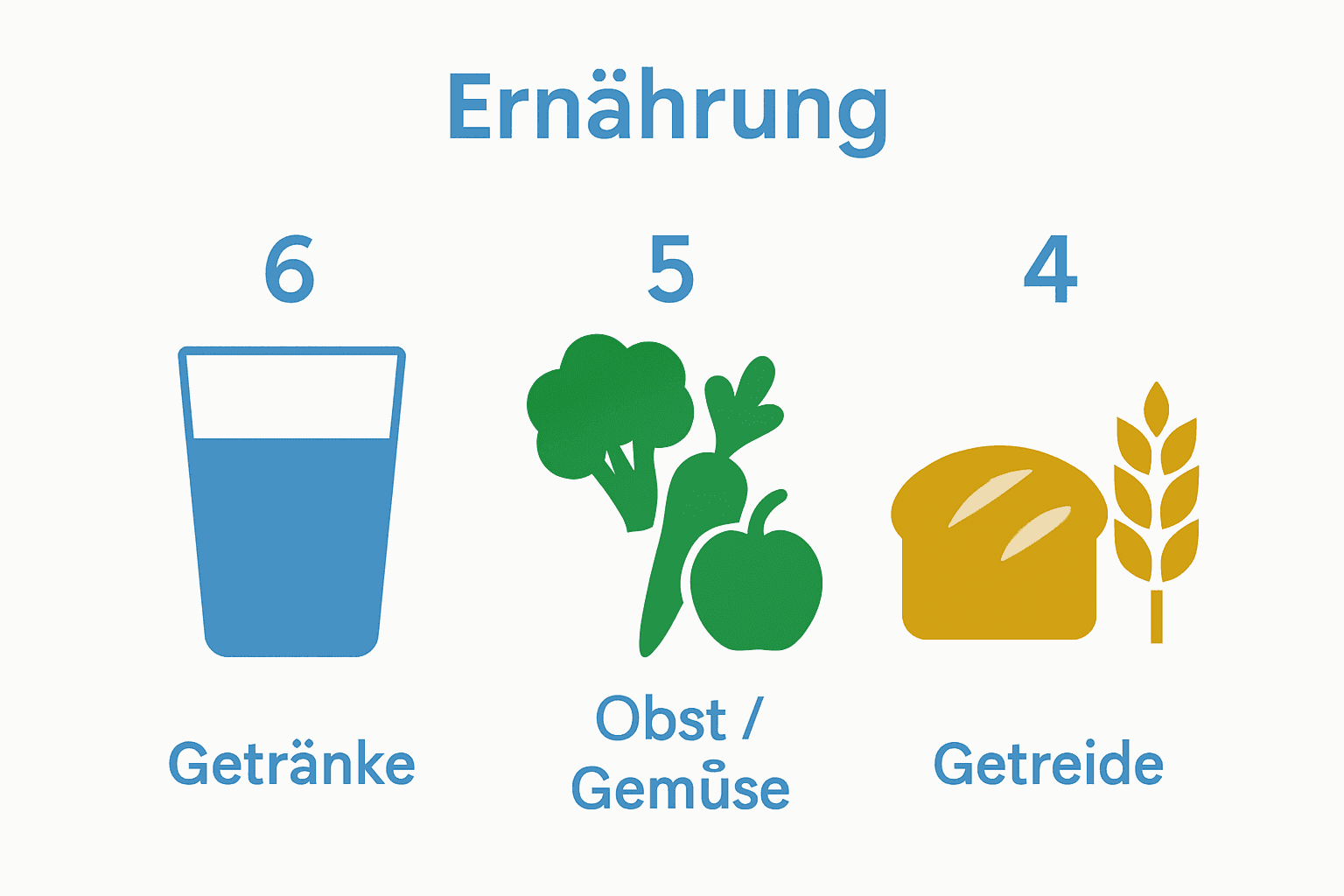
| Daily servings | A healthy diet includes specific recommended servings: 6 servings of beverages, 5 servings of fruit and vegetables, and 4 servings of grain products per day. |
| Flexible adjustments | The recommendations of the food pyramid are flexible and should be adjusted to individual needs, such as age and activity level. |
| Practical application | Integrating the food pyramid into everyday life requires planning, flexibility, and small steps toward lasting dietary changes. |
Explaining the basics of the food pyramid
The food pyramid is a graphic model that helps you make your diet balanced and healthy. According to Alimentarium, this concept was developed in Sweden as early as the 1970s to present food groups clearly and understandably.
Its central principle is simple: The lower a food group is on the pyramid, the more frequently and abundantly you should include it in your diet. The foundation consists of foods such as vegetables, fruit, and whole-grain products, which you should eat every day. As you move higher up, the recommended amount decreases—you should enjoy fats, sweets, and other foods at the top only in moderation.
According to the Federal Center for Nutrition, the German food pyramid is based on the recommendations of the German Nutrition Society (DGE). It comprises six different levels, which use traffic-light colors to illustrate the recommended amounts to consume:
- Green: Foods that you can consume generously every day
- Yellow: Foods for moderate consumption
- Red: Foods that you should consume only in small quantities
This color coding makes the food pyramid an intuitive tool for a healthy and balanced diet.
 It helps you make conscious choices about your food and identify the right quantities. This allows you to optimize your diet in a targeted way and benefit from improved health in the long term.
Levels and food groups in detail
The food pyramid is divided into various food groups that make it easier for you to follow a balanced diet. The Federal Center for Nutrition shows that the pyramid consists of six central levels, which precisely define how many portions of which foods you should consume each day.
The levels at a glance are as follows:
Here is a structured overview of the levels and food groups in the food pyramid:
| Pyramid level | Food group | Recommended portions per day |
|---|---|---|
| 1 (base) | Beverages | 6 |
| 2 | Fruit and vegetables | 5 |
| 3 | Bread, grains and side dishes | 4 |
| 4 | Milk and dairy products | 2 |
| 5 | Protein sources (meat, fish, eggs) | 1 |
| 6 (top) | Oils and fats | 2 |
| Extras | Nuts Sweets |
1 portion each |
- Beverages: 6 portions daily
- Fruit and vegetables: 5 portions
- Bread, grains and side dishes: 4 portions
- Milk and dairy products: 2 portions
- Protein sources (legumes, meat, fish, eggs): 1 portion
- Oils and fats: 2 portions
In addition, there is a portion of nuts and a portion for extras such as sweets. Swissmilk adds that this grouping helps you plan your food intake consciously and in a balanced way. The lower a group is positioned in the pyramid, the more of it you should eat.
Beverages, fruit and vegetables, and grain products at the base of the pyramid are particularly important. They provide essential nutrients, vitamins, and fiber. As you move higher up the pyramid, the recommended consumption decreases—sweets, salty snacks, and alcoholic beverages should be consumed only in very small amounts. This approach helps you maintain a balanced and health-conscious diet.
Recommended amounts and daily portions
The portion recommendations of the food pyramid are a precise tool for optimizing your daily food intake. The Bundeszentrum für Ernährung defines clear guidelines for the daily intake of various food groups, with one portion simplified as one handful.
Here are the detailed recommendations for your daily diet:
- Beverages: 6 portions (1–2 liters of unsweetened beverages)
- Fruit and vegetables: 5 portions (ideally 3 portions of vegetables and 2 portions of fruit)
- Grain products: 3–4 portions
- Dairy products: 2–3 portions
- Protein sources: 1 portion (meat, fish, eggs, tofu)
- Oils, fats, nuts: 2–3 tablespoons
Impuls adds that these recommendations are flexible and can be adapted to individual needs. It is important to consume sweets, salty snacks, and alcoholic beverages only very sparingly.
The portion sizes are deliberately defined as handfuls to provide individualized and practical guidance.
 This method takes into account that people have different body sizes and metabolic types. Your personal needs may vary depending on your age, gender, activity level, and health status.
Everyday use and challenges
The food pyramid is more than just a theoretical model—it is a practical guide for your everyday diet. The Wirtschaftsförderungsinstitut emphasizes that it serves as a guide to meeting nutritional needs and preventing diet-related diseases.
Nevertheless, there are several challenges when putting it into practice:
- Time management: Planning and preparing healthy meals takes time
- Financial aspects: High-quality, fresh foods can be more expensive
- Social situations: Implementing dietary recommendations when dining at restaurants or attending family gatherings
- Changing habits: Breaking ingrained eating patterns is challenging
Federal Ministry of Social Affairs recommends practical strategies such as consuming regional and seasonal foods and reducing meat consumption in favor of plant-based alternatives.
To successfully integrate the nutrition pyramid into your everyday life, flexibility and small steps are essential. Start with simple changes such as putting more vegetables on your plate, shopping more mindfully, and cooking with fresh ingredients. Perfectionism is not the goal—every positive change counts.
Personalized nutrition and modern analyses
Nutrition is as individual as you are. Federal Center for Nutrition confirms that the nutrition pyramid offers flexible recommendations that can be adapted to personal preferences and individual needs. An approach that takes the diversity of human metabolic processes and lifestyles into account.
Modern forms of analysis enable even more precise nutritional counseling:
- DNA-based nutrition analyses
- Metabolic function diagnostics
- Microbiome analyses
- Genetic compatibility tests
Federal Food Authority emphasizes that personalized recommendations must take factors such as age, gender, physical activity, and life circumstances into account.
Personalized nutrition can offer so much more than generic diet plans. It enables a tailored nutrition strategy precisely aligned with your individual genetic and metabolic needs.
Optimize your nutrition pyramid individually
The food pyramid shows you the path to a balanced diet, but every person is unique. The real challenges often lie in figuring out how to tailor theoretical recommendations to your personal needs and metabolism. If you feel that general guidelines are not enough and you truly want to improve your diet in a way that is tailored to you, DNA Metabolism Tests for Your Optimal Diet – mybody®x could be the key.
Start now with a scientifically based analysis that takes your individual genetic predisposition and metabolism into account. This will show you exactly which food groups are ideal for you and how to follow your food pyramid perfectly. More than 11,300 satisfied customers also appreciate the convenient at-home tests and personal consultation. If you also want to strengthen your overall health, visit our Product Overview – Exercise for Active Lifestyles – mybody®x and discover how exercise and nutrition work together.
Take the opportunity to sustainably improve your everyday eating habits and take control of your health. Learn more now at mybody-x.com and take the next step toward a healthier life.
Frequently Asked Questions
What is the food pyramid?
The food pyramid is a graphical model that helps you create a balanced and healthy diet by showing food groups and their recommended amounts.
How is the food pyramid structured?
The food pyramid consists of six levels. The foundation consists of beverages, fruit, and vegetables, which you should consume generously every day, while fats and sweets are at the top and should be consumed only in moderation.
How many servings should I eat daily according to the food pyramid?
According to the food pyramid, you should consume 6 servings of beverages, 5 servings of fruit and vegetables, 3–4 servings of grain products, 2–3 servings of dairy products, 1 serving of protein sources, and 2–3 tablespoons of oils and fats every day.
How can I integrate the food pyramid into my everyday life?
To effectively incorporate the food pyramid into your everyday life, you should plan healthy meals, include more fruit and vegetables in your diet, and consciously choose regional and seasonal foods.


Share now:
What Are Gut Bacteria? Complete Health Guide
Guidance for weight problems: Everything important explained