

Celiac Disease Diet: What You Can Eat – Complete Guide
Did you know that approximately 1 to 2 out of 100 people in Germany have celiac disease, many without knowing it? People who experience abdominal pain or other symptoms after eating certain foods often face a daily mystery. With the right knowledge, however, following a gluten-free diet becomes easier, and common pitfalls when shopping and cooking can be avoided.
- Understanding celiac disease and gluten intolerance
- Gluten-free and gluten-containing foods at a glance
- How to avoid hidden gluten in everyday life
- Combination with other intolerances and testing options
- Tips for eating safely in everyday life
- Personalized recommendations through modern laboratory tests
Key insights
| Point | Details |
|---|---|
| Celiac disease is a serious autoimmune disorder | It affects approximately 1–2% of the population and requires a gluten-free diet for treatment. |
| A gluten-free diet is crucial | Avoiding gluten-containing foods is essential to prevent inflammatory reactions. |
| Hidden gluten can pose risks | Hidden gluten is often found in processed foods, so checking the ingredients list is essential. |
| Modern laboratory tests provide precise diagnoses | Highly sensitive tests enable accurate identification of celiac disease and personalized dietary recommendations. |
Understanding celiac disease and gluten intolerance
Celiac disease is a serious autoimmune disorder in which consuming gluten—a protein found in wheat, rye, and barley—triggers an inflammatory reaction in the lining of the small intestine. The condition affects approximately 1–2% of the population and can lead to serious health problems if it is not diagnosed and treated.
In people with celiac disease, gluten triggers an immune reaction that damages the tiny intestinal villi and impairs nutrient absorption. Symptoms vary widely, ranging from mild digestive problems to severe nutritional deficiencies. Typical signs include:
- Chronic diarrhea
- Abdominal pain and bloating
- Unintentional weight loss
- Tiredness and exhaustion
- Skin rashes
- Anemia
For an accurate diagnosis, a professional celiac disease test is essential. Only a targeted test can give those affected clarity about their health and help them develop an appropriate treatment strategy. The only effective treatment remains a strict gluten-free diet, which can heal the intestinal lining and prevent further damage.
Gluten-free and gluten-containing foods at a glance
For people with celiac disease, distinguishing between gluten-containing and gluten-free foods is crucial for their health. Gluten-containing foods must be completely avoided to prevent inflammatory reactions and intestinal damage.
Here is an overview of the most important food groups:
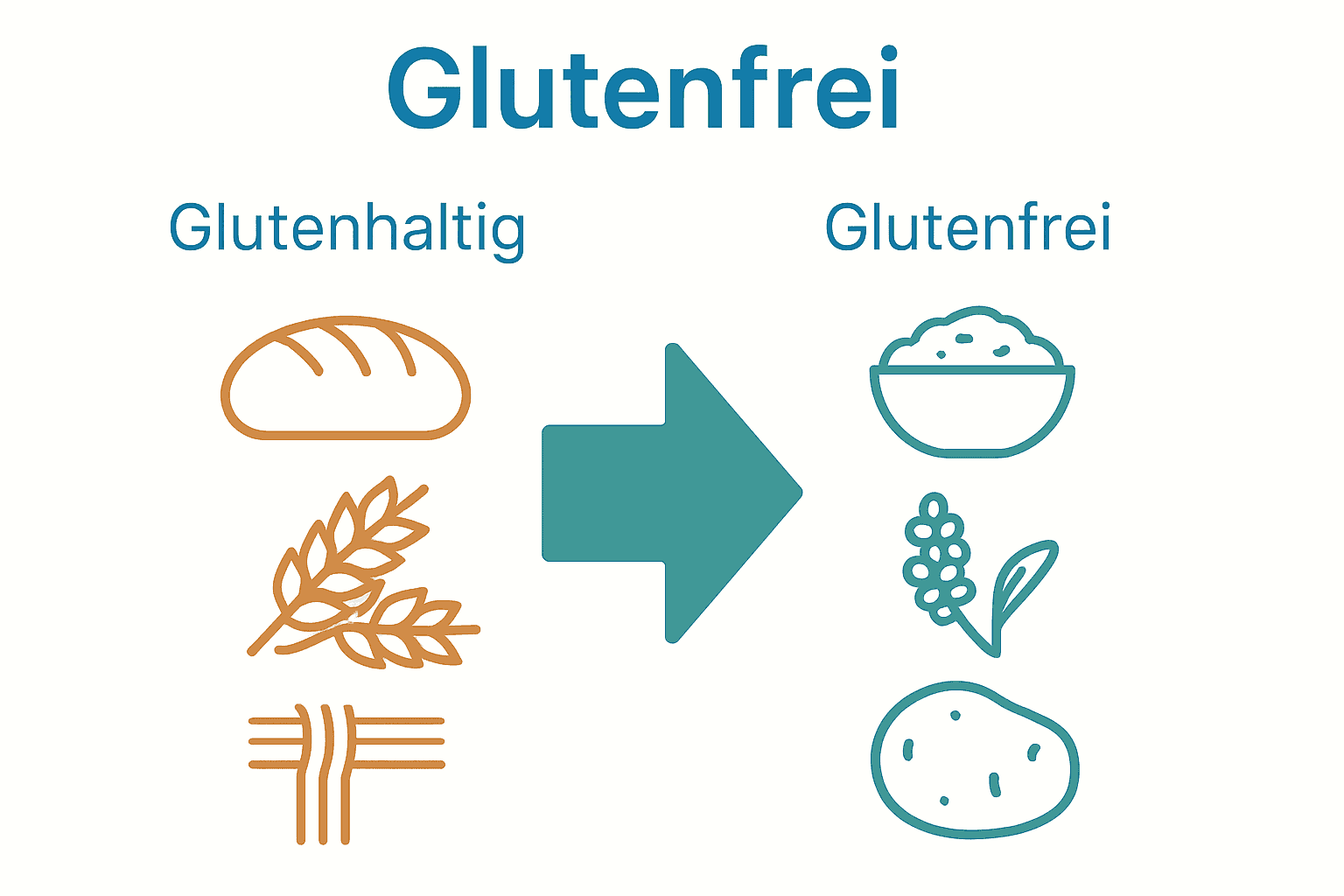
Here is a comparison of typical gluten-containing and gluten-free foods:
| Food group | Gluten-containing (to avoid) | Gluten-free (safe) |
|---|---|---|
| Grains | Wheat Rye Barley Spelt Bulgur Couscous |
Rice Corn Quinoa |
| Bread/grain products | Bread Pasta Baked goods |
Potatoes Gluten-free baked goods |
| Ready-made products | Breadcrumbs Regular couscous |
Special gluten-free products |
| Other groups | - | Meat Fish Dairy products Fruit Vegetables Legumes |
Gluten-containing foods (to avoid):
- Wheat
- Rye
- Barley
- Spelt
- Couscous
- Bulgur
- Grain products such as bread, pasta, and baked goods
Gluten-free foods (safe):
- Rice
- Corn
- Potatoes
- Quinoa
- Legumes
- Meat and fish
- Dairy products
- Fruit and vegetables
For people with celiac disease, eating with celiac disease offers many delicious alternatives. A balanced gluten-free diet can not only alleviate health problems but also be very varied and enjoyable. It is important to always check the ingredients list of ready-made products and watch out for hidden sources of gluten.
How to avoid hidden gluten in everyday life
Hidden gluten is a major challenge for people with celiac disease. Unintentional gluten consumption can lurk in many everyday products where it is least expected.
According to the Consumer Advice Centre, gluten can be hidden in processed foods such as sauces, soups, dressings, ready meals, and sausage products. Therefore, carefully checking the ingredients list is essential.
Caution with the following products and ingredients:
- Spice blends
- Sauces and dressings
- Meat and sausage products
- Sweets and baked goods
- Instant products
- Cosmetics and medications
Important terms that indicate hidden gluten:
- Wheat starch
- Barley malt
- Modified starch
- Bulgur
- Couscous
- Breadcrumbs
A professional tip: Always study the ingredients list carefully when shopping and contact the manufacturer if in doubt. Many products now offer a gluten-free version. If you are unsure, you can also consult the Celiac Disease & Gluten Intolerance Guide, which provides valuable tips for safe eating.
Combination with other intolerances and testing options
Celiac disease often occurs in combination with other intolerances and allergies, which can make dietary changes even more complex. People with celiac disease often have an increased risk of developing additional food reactions.
Common accompanying intolerances include:
- Lactose intolerance
- Milk protein allergy
- Fructose intolerance
- Histamine intolerance
- Soy intolerance
For those affected, a comprehensive intolerance test is recommended to precisely identify all reactions. This enables a targeted and individually tailored dietary change.

Important to know: Not every intolerance automatically means an allergy. While an intolerance usually causes digestive problems, an allergy triggers an immune response. Professional diagnostics help clarify the exact connections and develop a suitable nutritional strategy.
Tips for eating safely in everyday life
A gluten-free diet requires more than simply avoiding wheat products. A successful dietary change requires strategy, knowledge, and concrete recommendations for action.
Practical tips for everyday life:
- Planning ahead is crucial
- Plan meals in advance
- Keep gluten-free snacks on hand
- Prepare recipes and shopping lists
- Make the kitchen gluten-free
- Use separate kitchen utensils
- Avoid cross-contamination
- Label toasters and baking trays with gluten-free areas
Nutrition for gut health is not only about avoidance but also about actively supporting the immune system. A balanced diet and strengthening the gut flora are important.
As a professional tip: Keep a personal food diary. Document your reactions, symptoms, and progress. This will help you identify individual triggers and continuously optimize your nutritional strategy.
Personalized recommendations through modern laboratory tests
Modern laboratory tests are revolutionizing the diagnosis of celiac disease and enabling a precise, individually tailored nutritional strategy. Unlike in the past, when diagnoses were often vague and time-consuming, today’s highly sensitive testing methods can quickly and reliably provide clarity.
According to ARD Alpha, celiac disease is diagnosed through specific blood tests for antibodies, which are confirmed by a small-intestinal biopsy. These modern laboratory tests enable an accurate diagnosis and can support personalized nutritional recommendations.
Benefits of personalized laboratory tests:
- Precise identification of gluten intolerance
- Early detection of possible comorbidities
- Individually tailored nutritional recommendations
- Avoidance of unnecessary elimination diets
- Scientifically based health assessment
For an even more in-depth analysis, the DNA test for nutrition is recommended. It provides additional genetic insights into metabolic predispositions. This allows people affected by celiac disease not only to manage the condition but also to understand their overall health holistically.
Full control over your celiac disease diet with mybody®
A celiac disease diagnosis brings many challenges. Eating suddenly becomes a daily balancing act between health and symptoms. You want to safely avoid gluten-containing foods while also avoiding hidden sources of gluten. Clear insights and an individually tailored strategy are important for strengthening gut health and effectively alleviating symptoms. This is exactly where mybody® comes in, with modern, ISO-certified at-home laboratory tests.
Whether you want to accurately identify your gluten intolerance or rule out associated intolerances, our range of at-home intolerance tests provides reliable results. In addition, a targeted gut flora analysis supports the restoration of your gut health and promotes your long-term well-being. Get started now at mybody-x.com and take the path to enjoyable, safe nutrition with scientifically validated tests. Don’t wait until symptoms return—take action now and benefit from personalized insights into your health.
Frequently asked questions
What are typical symptoms of celiac disease?
Typical symptoms of celiac disease include chronic diarrhea, abdominal pain, bloating, unintentional weight loss, fatigue, skin rashes, and anemia.
Which foods should be avoided with celiac disease?
If you have celiac disease, gluten-containing foods such as wheat, rye, barley, spelt, couscous, and products such as bread, pasta, and pastries should be avoided.
Which gluten-free alternatives can I eat?
Gluten-free alternatives include foods such as rice, corn, quinoa, potatoes, as well as fresh fruit and vegetables, meat, and fish.
How can I avoid hidden gluten in everyday life?
Hidden gluten is often found in processed foods such as sauces, dressings, and ready-made meals. It is important to check the ingredients list carefully and look out for terms such as wheat starch or modified starch.



Share now:
The Importance of Gut Health: The Complete Practical Guide
What Are Gut Bacteria? Complete Health Guide